I-601A Provisional Waiver Attorney: Keep Your Family Together
October 10, 2026
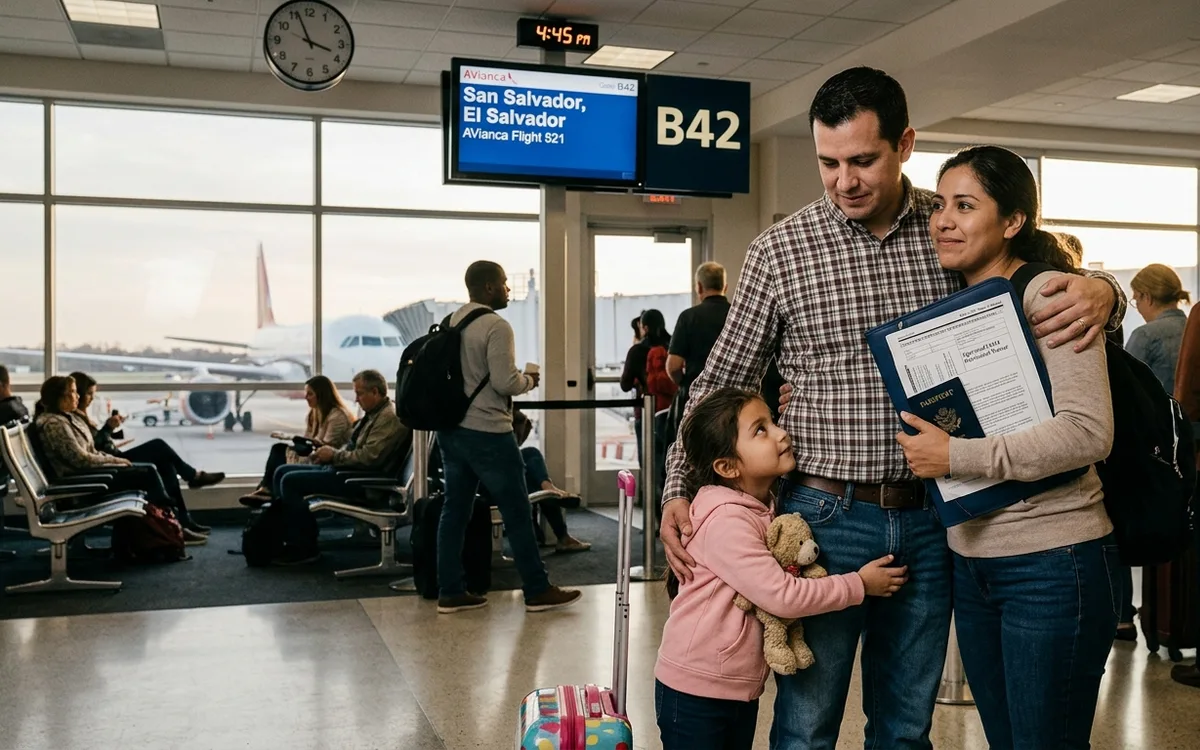
Last updated June 2025. You paid the National Visa Center fee invoice. Now USCIS wants Form I-601A before you leave for the consular interview, and the thought of boarding that flight to Ciudad Juárez or Tegucigalpa without knowing whether you'll be let back into the country is the worst part of this process.
Your spouse is a U.S. citizen. Your children were born here. Everyone keeps telling you this is routine. It is not routine when the thing at stake is whether you see your family again in six months or in ten years.
A provisional unlawful presence waiver, filed and decided before you leave, exists for exactly this situation. You still have to travel for the consular interview — that part doesn't change. What changes is when you find out whether unlawful presence will keep you out: at home, with time to prepare, instead of abroad and separated from your family.
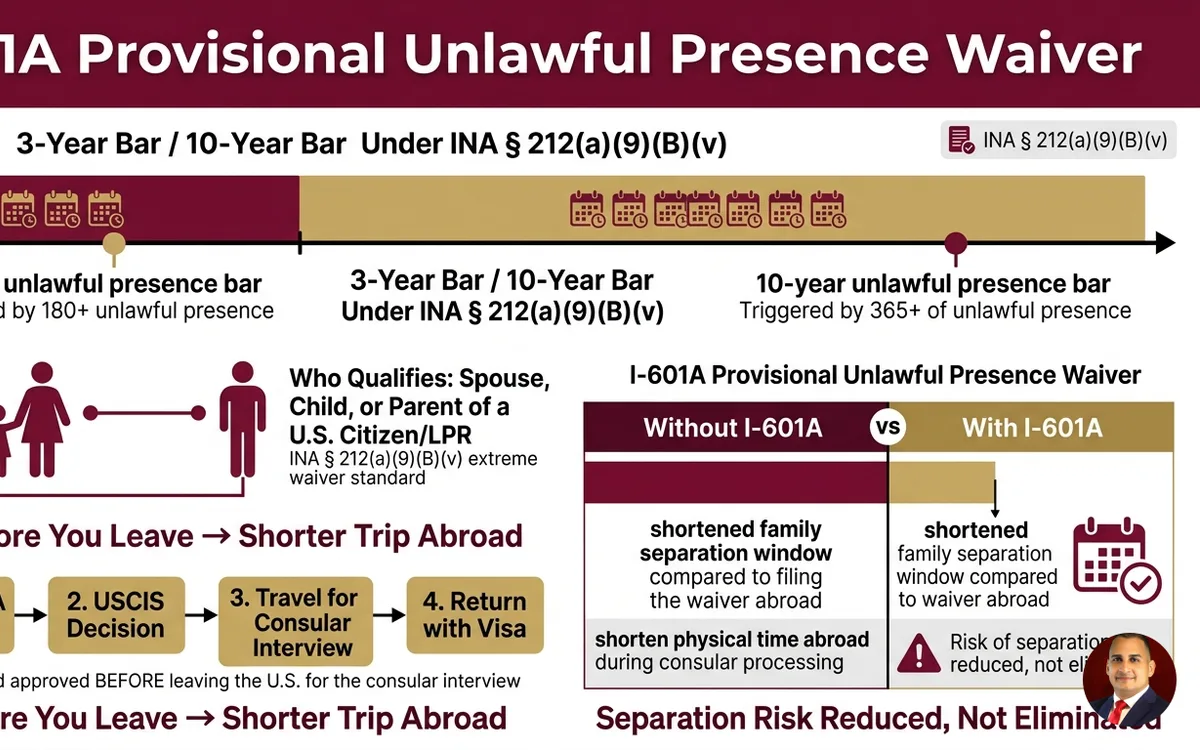
An I-601A provisional unlawful presence waiver lets the undocumented spouse, child, or parent of a U.S. citizen or lawful permanent resident ask USCIS to forgive a 3- or 10-year unlawful presence bar (INA § 212(a)(9)(B)(v)) before leaving for the consular interview, so the trip abroad is shorter and the family's separation risk is lower, not eliminated.
The Hard Truth
The Hard Truth About I-601A Approval
Provisional approval is not assumed. USCIS grants an I-601A waiver only if your qualifying relative, meaning your U.S. citizen or lawful permanent resident spouse or parent, would suffer extreme hardship if you are not admitted to the United States. The standard comes from the multi-factor test in Matter of Cervantes-Gonzalez, 22 I&N Dec. 560 (BIA 1999), applied through USCIS Policy Manual, Volume 9, Part B, Chapter 4.
A child's hardship, however severe, does not qualify you for a waiver on its own. INA § 212(a)(9)(B)(v) names only a spouse or parent as the qualifying relative. If your only U.S. citizen relative is a child, there may be no I-601A pathway available at all, a fact worth knowing before you spend months building a hardship record around the wrong relative.
USCIS publishes its own aggregate I-601A approval and denial figures by fiscal year in its Immigration and Citizenship Data library. We are not quoting a percentage here, because an aggregate number describes every filer that year, not your file, your qualifying relative, or your evidence. What does matter in every case: an I-601A approval is provisional. The consular officer can still find a different problem at your interview, a prior removal order, a fraud finding, certain criminal grounds, that the provisional waiver never reached.
What Happens If You Wait
What Delay Actually Costs You
The National Visa Center closes an immigrant visa case after one year of inactivity if you have not completed every requested step, including paying the fee invoice and submitting Form DS-260 (U.S. Department of State, NVC case status guidance). A closed case does not vanish quietly. Reopening it means refiling fees and resubmitting documents, and every month spent restarting is a month your qualifying relative keeps living with the hardship you are trying to prove.
Filing the I-601A requires the NVC fee invoice and DS-260 confirmation first, under 8 C.F.R. § 212.7(e). If you wait to gather hardship evidence until after the invoice arrives, the fee-bill clock and the one-year inactivity clock run at the same time, not one after the other. Unlawful presence also keeps accruing every day you remain in the United States without status. Once total unlawful presence passes 365 days, a 3-year bar becomes a 10-year bar under INA § 212(a)(9)(B)(i)(II).
There is a quieter cost too: a stale hardship record. A psychological evaluation, a treatment plan, or a financial hardship letter written two years before you file reads as outdated to an officer at the USCIS National Benefits Center. Wait long enough, and the case doesn't get easier to prove — the proof just gets older.
Step-by-Step Process
How the I-601A Process Works, Step by Step
1. Confirm your immigrant visa petition is approved. You need an approved Form I-130 (or other immigrant petition) and an open immigrant visa case with the National Visa Center before USCIS will accept an I-601A.
2. Pay the NVC fee invoice and file Form DS-260. USCIS will not approve an I-601A without the paid invoice and DS-260 confirmation number, per 8 C.F.R. § 212.7(e).
3. Build the extreme hardship case. This is the real work: medical records, psychological evaluations, country-condition evidence for the qualifying relative if they would relocate, financial documentation, and sworn statements, organized around the Cervantes-Gonzalez factors.
4. File Form I-601A with USCIS. Check the current fee on USCIS's official fee schedule before you file. Fees change, and filing with the wrong amount gets the application rejected outright.
5. Attend biometrics. USCIS schedules this at an Application Support Center, which for many South Florida clients means the ASC in Hialeah, FL. Clients near the USCIS Orlando or Tampa Field Office service areas are scheduled through those offices instead.
6. Wait for the National Benefits Center to adjudicate. USCIS's own processing times tool lists the current median for Form I-601A. Check it the week you file, not the week you first looked into this, because the number moves every few months.
7. If approved, schedule the consular interview through NVC. Provisional approval resolves the unlawful presence ground before you leave, but the trip abroad still isn't risk-free. See our consular processing guide for what the interview itself involves.
8. Attend the interview and reaffirmation at the U.S. consulate, often in Ciudad Juárez, San Salvador, or Tegucigalpa depending on your country of origin. The consular officer reaffirms the waiver unless a new issue surfaces.
9. If a new ground of inadmissibility appears at the interview, the case may be referred back to USCIS for a standard Form I-601 waiver, filed and decided while you remain abroad, which is the separation scenario the provisional process is built to avoid.
A Real-World Example
A Composite Example: How One Filing Actually Moves Through the System
Marisol (a composite, not a real client) is undocumented, married to a U.S. citizen, and living in Hialeah, FL. Her husband has a documented anxiety disorder that worsens when they discuss her possibly leaving the country. Their I-130 petition was already approved; they had just received the NVC fee invoice when they came in for a consultation.
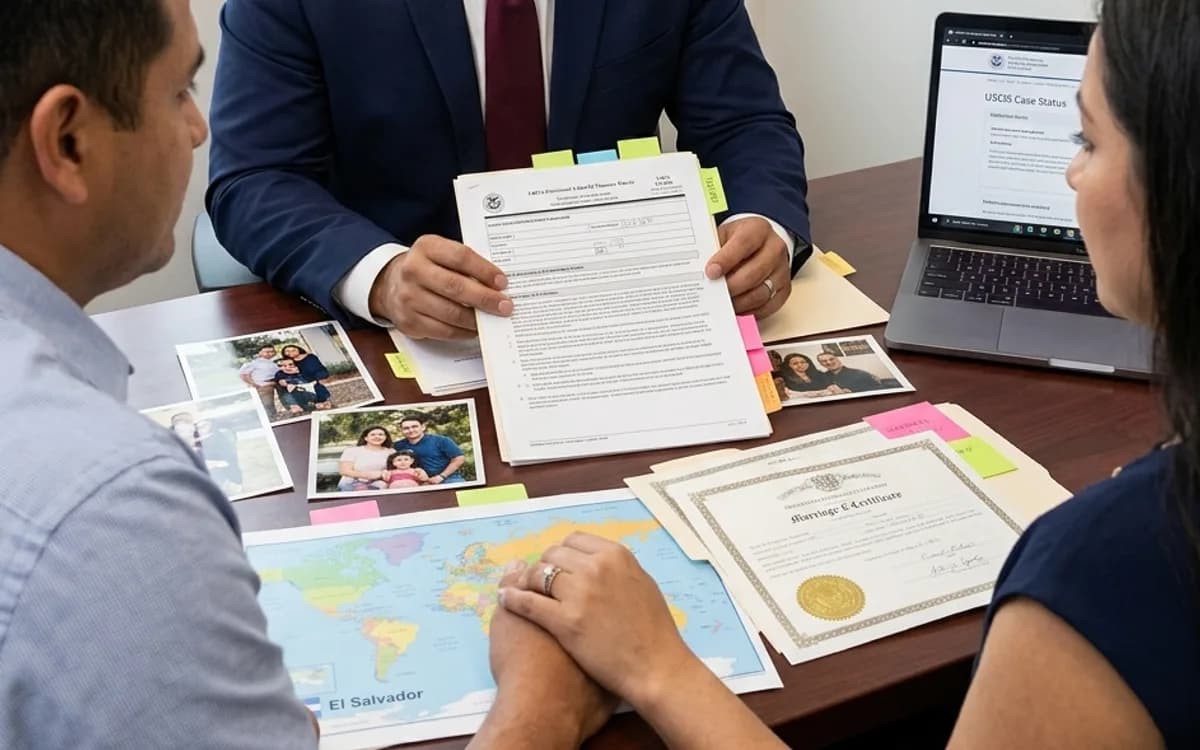
The first meeting focused on one question: is there enough here to build a genuine extreme hardship case, or is it too early to tell? Our attorney reviewed the approved petition, the NVC invoice, and the husband's existing medical records, then referred him to a licensed psychologist for a formal evaluation, since a diagnosis alone does not establish hardship. The functional impact does.
Over the following weeks, Marisol's team gathered her husband's treatment records, a country-conditions packet addressing what his life would look like if he relocated with her, and financial records showing the household's dependence on her income. The I-601A was filed once the DS-260 and fee invoice were confirmed. Marisol attended her biometrics appointment at the Hialeah Application Support Center about a month later.
As of this point in the timeline, the filing sits with the USCIS National Benefits Center awaiting adjudication. That wait is the honest state of most filings at this stage: evidence submitted, biometrics complete, decision pending. Neither USCIS's timeline nor the outcome is something any attorney can promise in advance.
About the Attorney Handling Your Case
Immigration cases, including I-601A and I-601 waivers, are decided by federal agencies: USCIS, the National Visa Center, and the Executive Office for Immigration Review. No state court has any role in this process. William J. Vasquez holds federal immigration-bar standing that authorizes him to represent clients in these federal matters nationwide, independent of any particular state's court system.
He has spent more than a decade focused on immigration waiver work and removal defense, including I-601A and I-601 filings for clients across Florida and other states. That focus means hardship evidence gets built with direct attorney involvement starting at the first consultation, not handed to a call center after intake. You can review his background on his attorney profile page.
Every I-601A case in this practice starts the same way: a direct review of whether a qualifying relative and a genuine hardship argument exist before any client commits to a consular trip.
Key Terms Explained
Key Terms Used on This Page
I-601A (Provisional Unlawful Presence Waiver): A USCIS application asking the agency to forgive a 3- or 10-year unlawful presence bar before the applicant leaves the U.S. for a consular interview. Governed by INA § 212(a)(9)(B)(v) and 8 C.F.R. § 212.7(e).
I-601 (Waiver of Grounds of Inadmissibility): A broader waiver filed after a consular interview, used when a ground of inadmissibility other than (or in addition to) unlawful presence is found, or when I-601A was never available. Decided while the applicant remains abroad.
Extreme Hardship: The legal standard a qualifying relative must meet for a waiver to be granted, evaluated under the multi-factor test from Matter of Cervantes-Gonzalez, 22 I&N Dec. 560 (BIA 1999) and USCIS Policy Manual, Vol. 9, Part B, Ch. 4.
Qualifying Relative: For I-601A purposes, only a U.S. citizen or lawful permanent resident spouse or parent. A U.S. citizen child's hardship cannot support the waiver on its own.
NVC (National Visa Center): The State Department office that processes the immigrant visa fee invoice and Form DS-260 before and after USCIS adjudicates the I-601A.
NBC (National Benefits Center): The USCIS office that receives and adjudicates Form I-601A applications.
DS-260: The online immigrant visa application submitted to NVC; confirmation of this filing is required before I-601A can be filed.
Reaffirmation: The step at the consular interview where the officer confirms the provisional waiver still applies, after reviewing the case in person. A new ground of inadmissibility discovered at this stage can require a separate I-601.
Frequently Asked Questions
Common Questions About I-601A Waivers
Q: How long does USCIS take to decide an I-601A in 2025? A: Check USCIS's own processing times tool for Form I-601A the week you file. Per USCIS's published data (checked June 2025), the reported median has run between roughly two and three years in recent cycles and shifts every few months, so confirm the current figure yourself rather than relying on an older number you read elsewhere.
Q: Can I travel internationally while my I-601A is pending? A: Leaving the United States while an I-601A is pending generally means abandoning the application and can trigger the unlawful presence bar on reentry. Most applicants should not travel abroad until the waiver is decided and the consular process actually begins.
Q: What happens if my I-601A is denied after I already paid the NVC fee invoice? A: The invoice and DS-260 confirmation stay valid. A denial does not erase your underlying immigrant visa case, but you remain in the United States while unlawful presence continues to accrue, and you can refile a new I-601A with stronger evidence or wait for the consular interview to pursue a standard I-601 instead.
Q: Is there a waiver option if my only U.S. citizen relative is my child, not a spouse or parent? A: Not under I-601A. INA § 212(a)(9)(B)(v) limits the qualifying relative to a spouse or parent, so a case built only around a U.S. citizen child needs a different strategy, which is worth discussing directly rather than assuming no waiver exists at all.
Q: What is the difference between I-601A and I-601 if my case is denied at the consulate? A: I-601A is decided before you leave the U.S. and only reaches unlawful presence. I-601 is filed after the consular interview if a different or additional ground of inadmissibility surfaces, and it is decided while you remain abroad, which is the separation period I-601A is designed to avoid.
Q: My case has been stuck in "reaffirmation" at the consulate after provisional approval. What does that mean? A: Reaffirmation is the consular officer's in-person confirmation that your provisional waiver still applies. A delay at this stage usually means the officer flagged something for additional review, such as new information in your file, and it is worth having an attorney contact the consulate's inquiry channel directly rather than waiting indefinitely.
What Clients Say
Clients who come through this office for I-601A and I-601 matters consistently describe two things in their feedback: direct contact with the attorney handling the hardship evidence, and a clear explanation of what the National Benefits Center is actually doing with the file during the wait. We do not publish star counts or outcome statistics here. Florida Rule of Professional Conduct 4-7.13(b)(2) bars quoting case results as a marketing claim, and an honest review of a pending federal waiver cannot promise what USCIS will decide. What reviewers can verify directly is responsiveness: calls returned, documents explained, and a realistic answer on timing.
You do not have to decide tonight whether your husband's anxiety diagnosis or your mother's heart condition is enough to meet the extreme hardship standard. That is exactly the kind of judgment call that benefits from a second set of eyes before you spend months gathering the wrong evidence or, worse, buy a plane ticket before the case is ready.
Schedule a case evaluation focused specifically on your I-601A eligibility and your qualifying relative's hardship evidence before you commit to a consular trip. Reach our office or request a consultation through our contact page to start with a direct review of your NVC invoice, your DS-260 status, and what your hardship case would need to show the National Benefits Center.