Green Card Family Separation Lawsuit: Your Rights in Florida
October 10, 2026
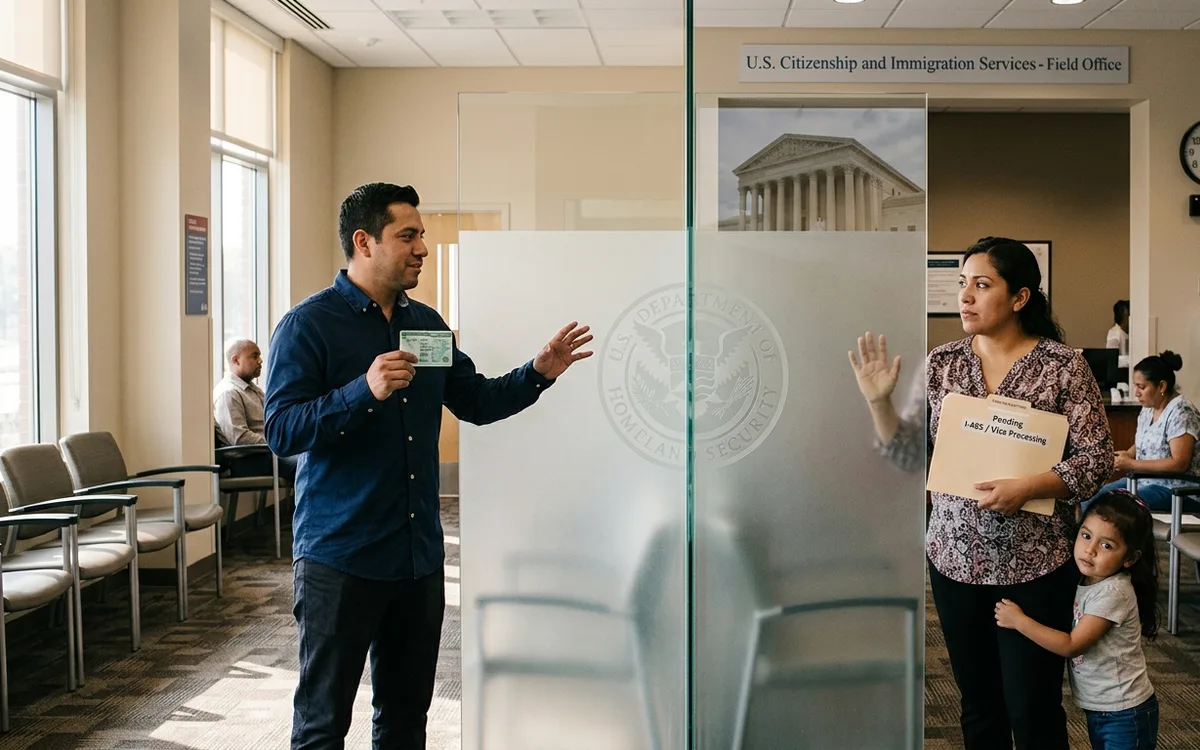
You saw a headline about a lawsuit over families being separated during green card processing, and your stomach dropped. Maybe your own Form I-130 has been pending for more than a year. Maybe someone in your family is at Krome North Service Processing Center right now, and you don't know what happens to the petition while they're there.
A federal lawsuit filed in 2025 does not change your case today. It also doesn't mean nothing can be done. There are specific, concrete steps a Florida family can take this week, independent of how or when that litigation resolves.
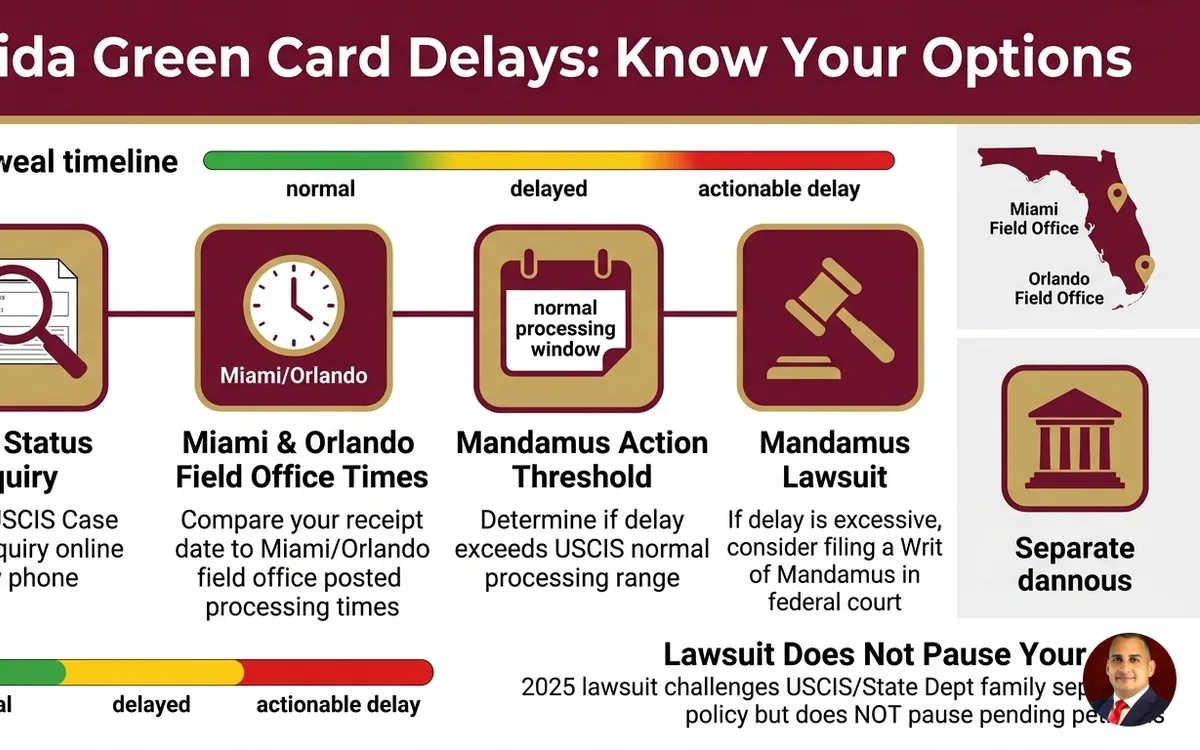
A 2025 federal lawsuit challenges USCIS and State Department policies accused of separating families during green card processing. The case does not pause or fix pending petitions. Florida applicants facing delays should request a case status inquiry through USCIS, track Miami or Orlando field office processing times, and consider a mandamus action if delays exceed normal limits.
The Hard Truth
This lawsuit will not fix your case
This lawsuit will not fix your case, even if the plaintiffs win. Courts that rule against USCIS or the State Department in cases like this typically issue a declaratory judgment or an order changing a policy going forward. They do not reach into the pending inventory and approve, reopen, or expedite any specific family's Form I-130 or Form I-485.
Class action vs. individual relief: what actually happens next
If the case proceeds as a class action under Federal Rule of Civil Procedure 23, only people who meet the certified class definition benefit automatically, and certification itself is often litigated for a year or more before any relief takes effect. If it proceeds instead as an Administrative Procedure Act claim brought by a small number of named plaintiffs, relief usually applies to those plaintiffs specifically, not to every pending applicant nationwide.
That distinction matters right now. Most Florida families dealing with a stalled petition cannot wait on this case to work its way through federal court. The individual remedies described later on this page, a case inquiry, a FOIA request, or your own mandamus action, remain the only way to move your specific file while the broader litigation plays out.
What Happens If You Wait
What delay actually costs you
Delay is not neutral. It compounds against you on at least three separate clocks.
The first is the Child Status Protection Act (CSPA) clock. A child's eligibility to immigrate as a derivative beneficiary on a parent's petition depends on a formula tied to their age, the visa priority date, and how long USCIS took to adjudicate the underlying petition. The U.S. Supreme Court addressed the limits of that formula for derivative beneficiaries in Scialabba v. Cuellar de Osorio, 573 U.S. 41 (2014). If your child turns 21 while the I-130 sits in backlog, they can lose their derivative spot and need an entirely new petition, adding years to the wait.
The second is the Request for Evidence (RFE) clock. If USCIS issues an RFE, you typically get between 30 and 87 days to respond depending on the request type, per 8 C.F.R. §103.2(b)(8). Miss that window and USCIS denies the petition outright. There is no automatic extension.
The third clock runs in Florida family court. If a parent is detained at Krome North Service Processing Center in Miami-Dade County while a green card case is pending, the immigration case and any custody dispute move on separate, unsynchronized timelines. Neither court waits for the other to finish.
Step-by-Step Process
What should I do if my green card case is delayed?
Step 1: Confirm where your case actually sits
Check your priority date against the U.S. Department of State's monthly Visa Bulletin before doing anything else. If your category is current but your Form I-485 has not moved, the delay is on USCIS's side, not the visa numbers.
Step 2: Check the actual processing time for your field office
USCIS's Processing Times tool (uscis.gov/processing-times) shows the current range for Form I-130 and Form I-485 at the Miami and Orlando Field Offices, updated monthly. Check it before you call anyone, including us.
Step 3: File a case inquiry
If your case is outside the posted processing time, submit a case inquiry (e-Request) through your USCIS online account. USCIS generally responds within 15 to 30 days. This step is free and does not require an attorney.
Step 4: Request your A-file through FOIA
A Freedom of Information Act request to USCIS produces your full administrative file, showing what has happened to your case and what, if anything, is holding it up. USCIS must respond within 20 business days under 5 U.S.C. §552(a)(6)(A). See our FOIA request guide (/immigration/foia-requests) for how to file one yourself.
Step 5: Consider a mandamus action or APA claim
If your case has been pending well beyond the posted processing time and a case inquiry hasn't moved it, you can file a mandamus action in federal district court, the Southern District of Florida for Miami-based cases, the Middle District for Orlando-based cases, asking a judge to compel USCIS to decide. A mandamus order can compel USCIS to make a decision. It does not force USCIS to approve the case. Learn more about our mandamus litigation practice (/immigration/mandamus-lawsuits) for delayed USCIS cases.
Step 6: If detention creates a Florida custody issue
If a parent's detention at Krome triggers a custody or relocation dispute, Florida Statute §61.13001 governs relocation of a minor child, and Fla. R. Gen. Prac. & Jud. Admin. 2.530 allows a detained parent to appear remotely in a Florida family court hearing. This is state-law territory. Our immigration team coordinates with Florida-licensed family law counsel on these cases; we do not appear in Florida state family court ourselves. If detention has escalated into removal proceedings, see our removal defense page (/immigration/removal-defense).
A Real-World Example
A composite example: how a stalled I-130 plays out
The following is a composite, built from the kind of fact pattern that comes up often. It is not a real client and describes no outcome.
A Florida petitioner files Form I-130 for a spouse in 2022. Two years later, the case is still pending at the Miami Field Office, well outside the range posted on USCIS's Processing Times tool. The couple's teenage child, a derivative beneficiary, is approaching 21.
Step one: the family submits a case inquiry through their USCIS online account. Thirty days pass with no substantive update beyond a status of pending. Step two: they file a FOIA request for the A-file, which arrives six weeks later and shows the case has not been touched by an officer in over a year.
With the clock on the CSPA calculation running against the child, the family's attorney files a mandamus action in the Southern District of Florida. USCIS has 60 days to respond to the complaint. In this composite, the agency's response is a motion asking the court to treat the case as resolved once an officer is finally assigned, a common agency response to mandamus filings. At the point this composite was written for illustration, the underlying petition was still pending adjudication, and no decision, favorable or otherwise, had been made. That is a realistic middle point for this kind of case, not a guaranteed ending for yours.
William J. Vasquez is licensed by the North Carolina State Bar and admitted to practice before the U.S. Courts of Appeals for the Fourth, Fifth, and Eleventh Circuits. Immigration proceedings before USCIS, the Executive Office for Immigration Review, and the Board of Immigration Appeals are federal matters. Under 8 C.F.R. §1292.1, an attorney licensed and in good standing in a single U.S. state bar, with federal immigration standing, can represent clients before them nationwide. His work on the matters described on this page is scoped to federal immigration practice: petitions, waivers, and federal district court actions such as mandamus and APA claims against USCIS and the State Department.
He has filed mandamus actions in federal district court for applicants whose Form I-130 and Form I-485 cases remained unadjudicated well past USCIS's posted processing times, and has handled CSPA aging-out disputes for families with derivative beneficiaries approaching 21.
Florida custody and family law matters are governed by state law and require a Florida-licensed family law attorney. Our immigration team coordinates with Florida-licensed family counsel when a client's immigration case intersects with a pending state custody matter; we do not represent clients directly in Florida state family court.
Key Terms Explained
Key terms used on this page
Form I-130 (Petition for Alien Relative): the USCIS petition a U.S. citizen or lawful permanent resident files to establish a qualifying family relationship with a relative seeking a green card.
Form I-485 (Application to Register Permanent Residence or Adjust Status): the application filed to become a lawful permanent resident once a visa number is available.
Priority Date: the date USCIS received the underlying petition; it determines your place in line under the annual visa caps set out in 8 U.S.C. §1255 and related provisions.
Visa Bulletin: the U.S. Department of State's monthly publication showing which priority dates are currently eligible to proceed to a green card interview or adjustment of status.
RFE (Request for Evidence): a USCIS notice asking for more documentation before it will decide a case; response deadlines run 30 to 87 days under 8 C.F.R. §103.2(b)(8).
CSPA (Child Status Protection Act): a federal law that, under some circumstances, lets a derivative beneficiary keep a younger calculated age even after turning 21, so they don't automatically lose their place in line. The formula's limits were addressed in Scialabba v. Cuellar de Osorio, 573 U.S. 41 (2014).
Mandamus Action: a lawsuit asking a federal judge to order a government agency to perform a duty it is legally required to perform, such as deciding a pending petition, under 28 U.S.C. §1361.
APA Claim: a claim under the Administrative Procedure Act, 5 U.S.C. §706(1), asking a court to find that an agency has unreasonably delayed or unlawfully withheld required action.
FOIA (Freedom of Information Act): the federal law, 5 U.S.C. §552, that lets you request your own A-file or other agency records.
A-File: the complete administrative file USCIS and EOIR keep on a noncitizen, including every filing, note, and internal action taken on the case.
EOIR Accredited Representative: a non-attorney authorized under the EOIR Accreditation Program to represent people before Florida's immigration courts in Miami and Orlando at reduced or no cost, typically through a recognized nonprofit organization.
Board Certification (Florida Bar): a credential The Florida Bar awards in specific practice areas, such as Marital & Family Law or Criminal Trial. The Florida Bar does not currently offer a certified specialty in immigration law, so no Florida attorney can accurately describe themselves as board certified in immigration law.
Frequently Asked Questions
Frequently asked questions about the green card family separation lawsuit
Q: Does the 2025 family separation lawsuit pause my green card case while it's pending? A: No. Filing a lawsuit does not place an automatic hold on USCIS or State Department processing of any individual case. Your Form I-130 or Form I-485 keeps moving, or not moving, through the normal process while the litigation proceeds separately.
Q: How do I find out if the lawsuit applies to my situation? A: Track the case through CourtListener (courtlistener.com) or PACER, the federal judiciary's electronic record system, since the specific case name and docket were still being confirmed through primary court records as of this writing. If the case proceeds as a class action, the court's certification order will define exactly who is covered.
Q: My spouse is detained at Krome and our I-130 is still pending. What happens to the petition? A: Detention does not automatically cancel a pending Form I-130 or Form I-485. It does make the case harder to manage, since you may need to coordinate USCIS filings with removal proceedings in Miami Immigration Court and, if custody is in dispute, with a Florida family court under Fla. Stat. §61.13001.
Q: Can I file a case inquiry or FOIA request myself, without a lawyer? A: Yes. Both are free, direct processes through USCIS, and Florida's EOIR Accredited Representatives can also help with case inquiries for no or reduced cost. A lawyer becomes more useful once you're deciding whether to file a mandamus action or need to coordinate immigration and family court deadlines.
Q: Is a mandamus action the same as an appeal? A: No. A mandamus action asks a federal judge to order USCIS to make a decision on an unreasonably delayed case. It does not ask a court to review a decision USCIS already made; that would be a different kind of federal court action.
Clients describe our team's communication and follow-through more often than any other factor in their reviews, which matches what we hear directly: most people contacting us about a delayed case have already spent months getting vague answers from a USCIS call center. We don't publish outcome statistics; case results depend on facts specific to each petition, the officer or judge assigned, and the posted processing times at the time of filing, none of which any firm controls. What we can tell you is how we work: we explain the actual procedural options, including the ones that don't require hiring us, before recommending a federal court filing.
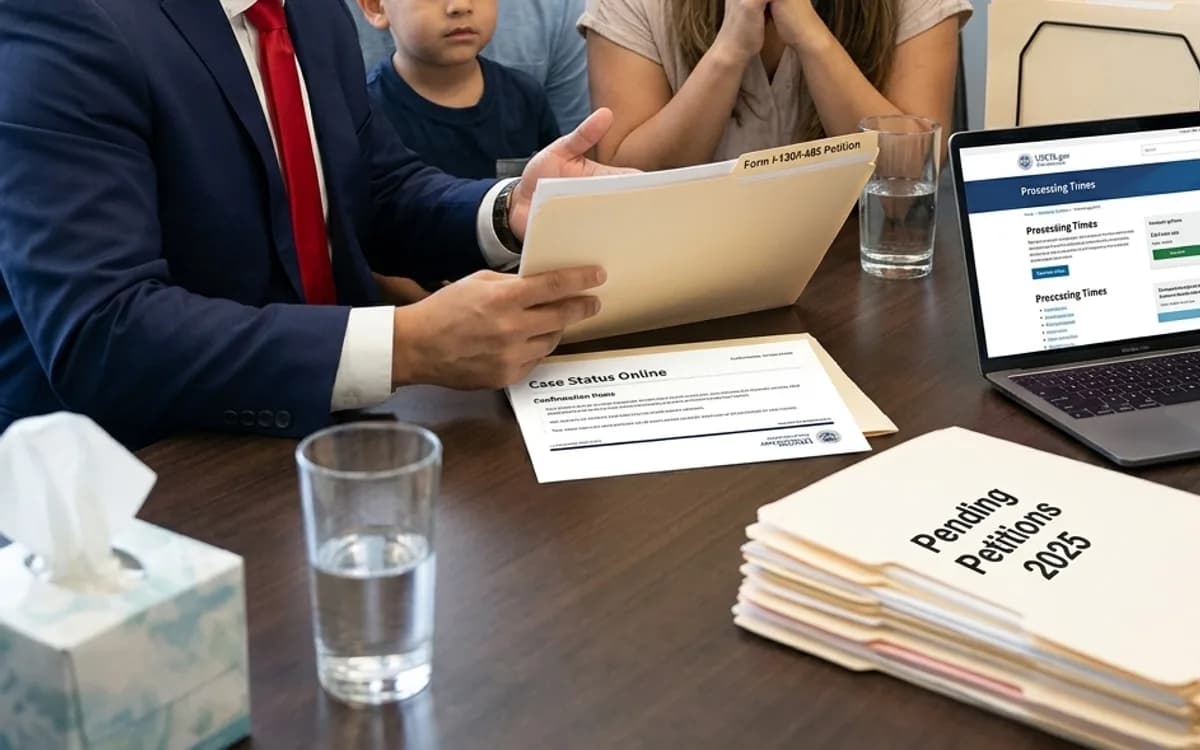
Reading about a lawsuit in the news is not the same as knowing what's happening inside your specific file. Before you decide whether a case inquiry, a FOIA request, or a mandamus action makes sense for you, it helps to have someone look at your actual processing timeline, your priority date, and any detention or custody issue layered on top of it.
If your Form I-130 or Form I-485 has been pending well beyond USCIS's posted processing time for the Miami or Orlando Field Office, schedule a consultation with our immigration team to review your case history and discuss whether a case inquiry, FOIA request, or mandamus action in federal court fits your situation. Call our office or use our online scheduling to set up a case review focused specifically on stalled family-based green card petitions.