Employment Visa Attorney Florida
October 10, 2026
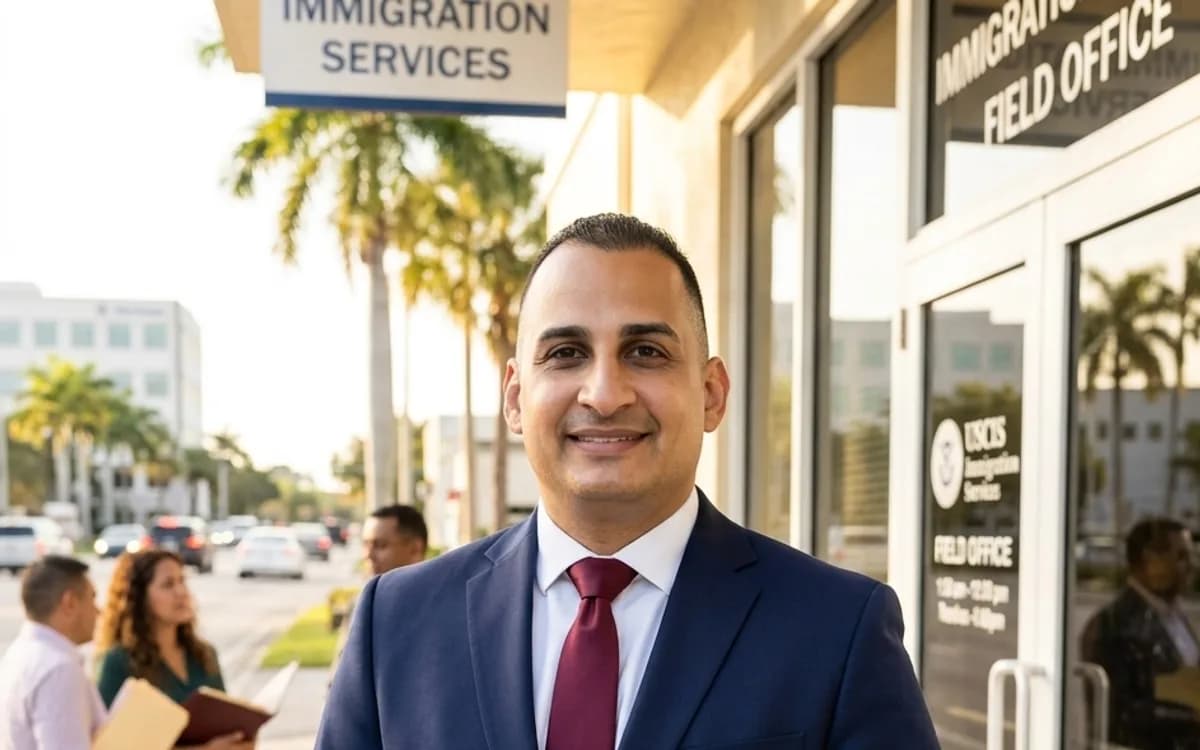
Your company found the right engineer, nurse, or researcher, and then the paperwork took over. Maybe the H-1B registration wasn't selected in the lottery. Maybe the PERM recruitment ad pulled in a technically qualified applicant you have to document and reject properly. Maybe your employee's priority date moved backward instead of forward. Employment-based immigration in Florida runs through two federal agencies, USCIS and the Department of Labor, and neither one works on your hiring timeline.
Florida employers sponsoring H-1B, L-1, or PERM-based green card workers deal with two federal agencies: USCIS and the Department of Labor. A Florida employment visa attorney prepares the labor certification, employer petition, and adjustment of status filings, and coordinates with the USCIS Miami and Tampa Field Offices and CareerSource Florida recruitment rules.
The Hard Truth
The H-1B cap is fixed by statute, not by demand. INA § 214(g), 8 U.S.C. § 1184(g), sets the annual cap at 65,000 regular slots plus 20,000 for applicants with a U.S. master's degree or higher. Demand regularly exceeds that number, which is why USCIS runs a registration lottery before accepting any H-1B petition at all. PERM labor certification, required for most employment-based green card sponsorships, needs 30 to 180 days of documented recruitment under 20 C.F.R. § 656.17 before the Department of Labor will even accept the filing, and DOL adjudication adds several more months after that. For employees born in India or China, the visa bulletin priority date backlog can add years on top of filing and adjudication time, no matter how complete the petition is. None of this moves faster because the paperwork is well written. The agency timelines are the agency timelines.
What Happens If You Wait
An H-1B worker who loses their job gets a 60-day grace period to find a new sponsor, change status, or leave, under 8 C.F.R. § 214.1(l)(2). Miss that window and unlawful presence starts accruing, which can trigger a three-year or ten-year reentry bar under INA § 212(a)(9)(B) once the person leaves the country. A PERM recruitment step done wrong, such as skipping the required Sunday print ad or the CareerSource Florida job order, forces the whole recruitment process to restart, often adding another six months before DOL filing is even possible. An H-1B worker whose worksite moves to a new Metropolitan Statistical Area without an amended petition, as required under Matter of Simeio Solutions, LLC, 26 I&N Dec. 542 (AAO 2015), is out of status at the new location even though the original petition is still approved. Every one of these is a procedural failure that becomes a status failure, and a status failure becomes a deportation risk.
Step-by-Step Process
For an H-1B hire: the employer submits an electronic registration during the annual registration period set by USCIS, pays no fee at that stage, and waits for the lottery result. Selected registrations get 90 days to file Form I-129 with supporting evidence of the specialty occupation and the worker's qualifications. For a green card through PERM: the employer first requests a prevailing wage determination through the Department of Labor's FLAG system, then conducts recruitment, including a job order with CareerSource Florida and two Sunday newspaper ads, under 20 C.F.R. § 656.17. After a 30-day quiet period to review applicant responses, the employer files Form ETA-9089. Once DOL certifies it, the employer files Form I-140 with USCIS, typically adjudicated at the Texas Service Center for Florida-filed cases, with premium processing available for an additional fee if speed matters. The worker then files Form I-485 to adjust status, which can include an interview at the USCIS Miami Field Office or USCIS Tampa Field Office, with biometrics usually scheduled at an Application Support Center in Orlando.
A Real-World Example
A composite example: a Tampa-based software company sponsors a mechanical engineer on H-1B after a successful lottery selection. Eight months into the three-year petition, the company opens a second office in Orlando and moves the engineer there full time. Under Matter of Simeio Solutions, LLC, that worksite change outside the original Metropolitan Statistical Area requires an amended H-1B petition before the employee can keep working at the new location, even though nothing about the job duties changed. The employer files Form I-129 as an amendment, includes an updated Labor Condition Application reflecting the Orlando worksite, and the engineer continues working while the amended petition is pending, under current USCIS guidance on H-1B portability during review. The point of this example is the sequence: worksite change, LCA update, amended filing, continued work authorization during adjudication, not any particular result from USCIS.
William J. Vasquez holds admission to the North Carolina State Bar and to the U.S. Courts of Appeals for the 4th, 5th, and 11th Circuits. Employment-based immigration practice, including H-1B, PERM, L-1, O-1, and E-2 filings, runs through USCIS and the Department of Labor under federal law. Representing employers and workers in these matters requires federal immigration-bar standing, which does not depend on which state bar an attorney belongs to. From this firm's Florida office, he and the team prepare petitions, respond to Requests for Evidence, and track filings through USCIS Service Centers and the Miami and Tampa Field Offices.
Key Terms Explained
PERM: the Department of Labor's electronic labor certification process under 20 C.F.R. § 656.17, required before most employment-based green card petitions, confirming no qualified U.S. worker is available for the position.
Prevailing Wage Determination: a DOL finding, requested through the FLAG system, of the minimum wage an employer must offer for a sponsored position based on occupation and geographic area.
Form I-140: the Immigrant Petition for Alien Worker, filed with USCIS after PERM certification (or without it for certain categories), adjudicated for Florida filings at the Texas Service Center.
Adjustment of Status: the process under Form I-485 by which an eligible worker already in the U.S. converts to lawful permanent resident status without leaving the country.
Request for Evidence (RFE): a USCIS notice asking for additional documentation before it will decide a pending petition.
Simeio Solutions rule: the requirement from Matter of Simeio Solutions, LLC, 26 I&N Dec. 542 (AAO 2015), that an H-1B employer file an amended petition when an employee's worksite moves to a new Metropolitan Statistical Area.
Cap-exempt employer: a university, nonprofit research organization, or affiliated institution that can sponsor H-1B workers without being subject to the annual numerical cap under INA § 214(g)(5).
TN visa: a nonimmigrant classification under the United States-Mexico-Canada Agreement for Canadian and Mexican professionals in specific listed occupations.
Frequently Asked Questions
Q: How long does PERM labor certification take in 2026? A: Recruitment alone takes 30 to 180 days under 20 C.F.R. § 656.17, and DOL adjudication of the ETA-9089 filing adds several more months after that, so employers should plan for roughly a year from start of recruitment to certification.
Q: Can my H-1B worker move to a different Florida office without a new petition? A: It depends on whether the new worksite is in a different Metropolitan Statistical Area; under Matter of Simeio Solutions, LLC, a move across MSA lines generally requires an amended I-129 petition even if job duties stay the same.
Q: Is there a cap on L-1 or O-1 visas like there is for H-1B? A: No, neither L-1 intracompany transfers nor O-1 extraordinary ability petitions are subject to an annual numerical cap under INA § 214(g); the H-1B cap of 65,000 plus 20,000 for advanced degrees applies only to that category.
Q: What happens if my H-1B worker is laid off? A: They get a 60-day grace period under 8 C.F.R. § 214.1(l)(2) to find a new sponsor, change to another status, or depart; after that window, unlawful presence can begin accruing.
Q: Do Florida employers have any PERM recruitment steps that differ from other states? A: The substantive recruitment requirements come from federal regulation at 20 C.F.R. § 656.17, but Florida employers post their required job order through CareerSource Florida, the state workforce agency, as part of that same federal recruitment process.
Clients describe a firm that explains each federal filing step before it happens and returns calls when an agency notice arrives. Reviews point to clear explanations of RFE deadlines and recruitment requirements rather than vague reassurance. That pattern matters most in employment immigration, where a missed Department of Labor deadline or an unanswered USCIS notice can cost a worker their status.
If your company is weighing H-1B, PERM, L-1, or another route for a specific hire, the right category depends on the role, the worker's background, and your filing timeline. A short conversation can map out which process actually fits before you commit months of recruitment or a filing fee to the wrong one.
Schedule a consultation with our team to review your company's hiring plans or your own pending employment-based case, and get a specific procedural roadmap for your situation rather than a generic overview.
- H-1B Cap Registration and Lottery Process
- PERM Labor Certification for Florida Employers
- L-1 Intracompany Transfer Visas
- O-1 Extraordinary Ability Petitions
- E-2 Treaty Investor Visas
- Employment-Based Green Card (I-140) Process
- RFE Response Strategy
- USCIS Miami and Tampa Field Office Procedures