Orlando Citizenship Lawyer for N-400 Naturalization Cases
October 10, 2026
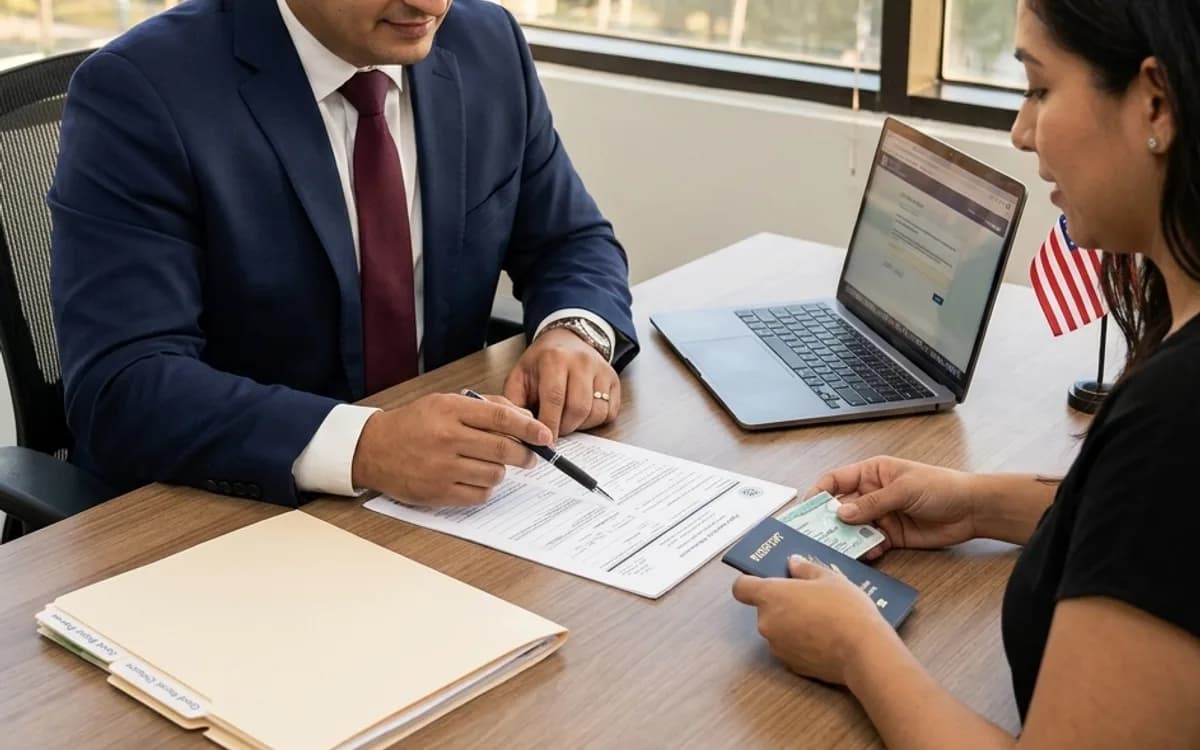
You have carried a green card for years, maybe waited out the five-year clock, and now the next step feels riskier than it should. An old DUI, a late tax filing, a long trip abroad, any of it can sit in your head at night as a reason USCIS might say no. Most people who call us do it before filing, usually because one of these issues is sitting unresolved and they want a straight answer before anything goes to USCIS.
Naturalization is not automatic once you hit the eligibility date. USCIS reviews your entire record, and a denial does not just mean filing again later. It can mean a reopened question about whether you should have had your green card at all. Getting the filing right the first time matters more than most applicants realize until they are sitting across from an officer at the USCIS Orlando Field Office on West Gore Street.
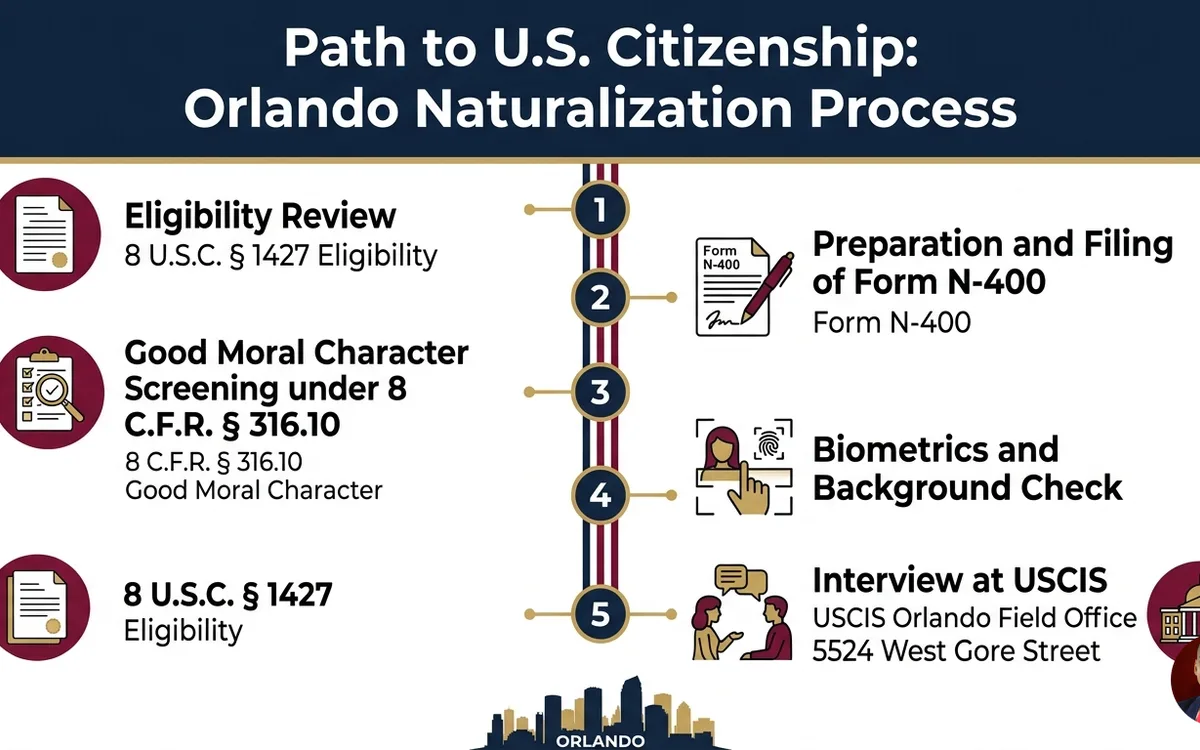
A citizenship lawyer in Orlando reviews your eligibility under 8 U.S.C. § 1427, prepares Form N-400, and represents you at your interview at the USCIS Orlando Field Office, 5524 West Gore Street. If good moral character issues exist under 8 C.F.R. § 316.10, early legal review before filing matters most.
The Hard Truth
Most naturalization applications are straightforward and do not need a lawyer to get approved. We tell people that directly. The cases worth paying for are the ones with a wrinkle: an old arrest, a gap in continuous residence, a missed tax return, a prior removal of conditions that went sideways, or a disability that keeps you from passing the civics and English test.
Good moral character under 8 C.F.R. § 316.10 is not a one-time check. USCIS looks back five years from your filing date, three years if you are filing on the three-year marriage provision, and further back than that if the conduct is serious enough. An old conviction does not automatically bar you, but it has to be disclosed and explained, and a misrepresentation on the N-400 itself can be worse than the underlying conduct. The Supreme Court's decision in Fedorenko v. United States, 449 U.S. 490 (1981), is still cited in cases where a misstatement during the naturalization process later becomes grounds to revisit someone's citizenship. We walk clients through those stakes early, well before any N-400 gets signed, so nothing about the interview comes as a surprise.
What Happens If You Wait
If you are a conditional resident, your I-751 to remove conditions has to be filed within the 90-day window before your second anniversary of permanent residence, per 8 C.F.R. § 216.4. Miss it, and USCIS can terminate your conditional status before you ever reach naturalization eligibility.
Once you are eligible to file the N-400, you can submit up to 90 days before your five-year (or three-year, if married to a U.S. citizen) anniversary. Filing late does not cost you a deadline in the same way, but every month you wait is a month where a new arrest, a new tax issue, or a long trip abroad can reopen the good moral character review period and push your eligibility date back further than where you started.
If USCIS denies your N-400, you have 30 days to request a hearing on Form N-336 under 8 U.S.C. § 1447(a). If that hearing also results in denial, review in U.S. District Court under 8 U.S.C. § 1421(c) has its own filing clock. If you wait until the denial letter arrives before calling a lawyer, part of that 30-day window is already gone by the time you pick up the phone.
Step-by-Step Process
Eligibility review. Before anything is filed, we check continuous residence, physical presence, and the good moral character period against 8 U.S.C. § 1427 (INA § 316), including any arrests, tax issues, or prior immigration filings that need disclosure or documentation.
Form N-400 preparation and filing. We prepare the application, assemble supporting records (certified court dispositions, tax transcripts, marriage and residence evidence), and file with USCIS.
Biometrics. USCIS schedules a biometrics appointment at an Application Support Center; for most Orlando-area applicants this is the Orlando ASC.
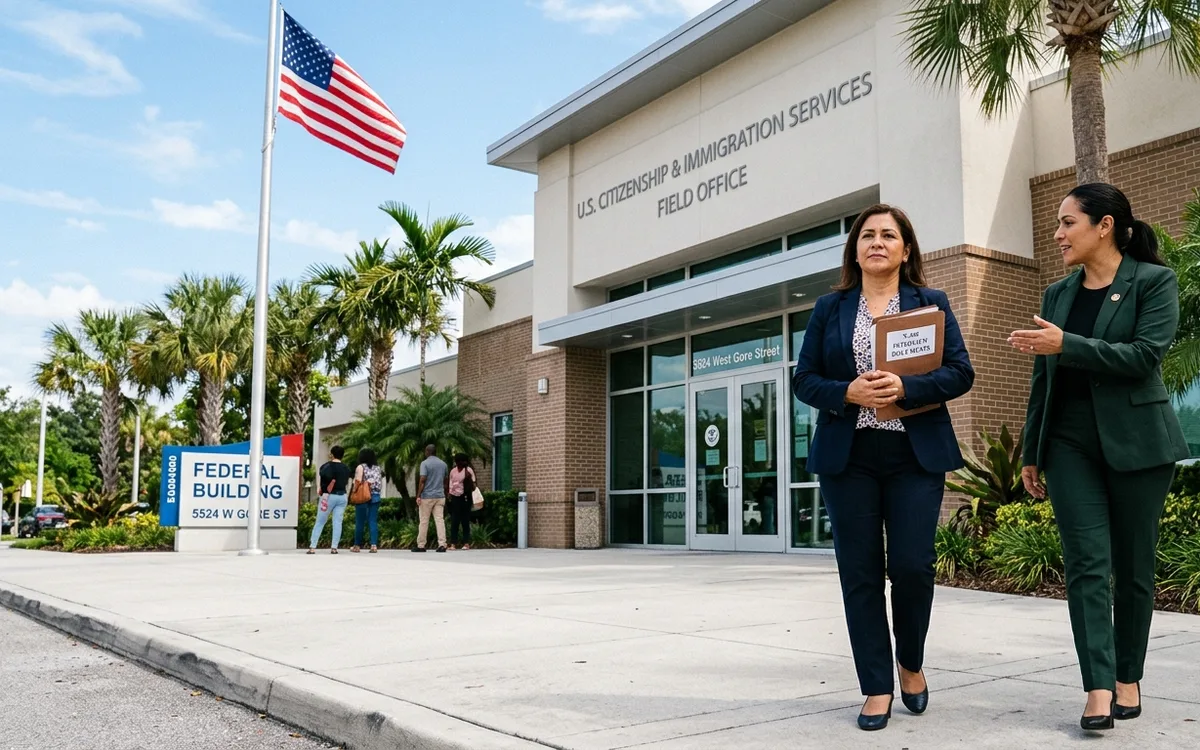
Interview. You appear at the USCIS Orlando Field Office, 5524 West Gore Street, Orlando, FL, for your civics and English test and an interview on your application.
Decision. USCIS approves, continues the case for more evidence, or denies it. A denial can be challenged with a Form N-336 request for a hearing within 30 days under 8 U.S.C. § 1447(a).
Oath ceremony. If approved, naturalization is completed at an oath ceremony, often held at the Orlando federal courthouse. If you cannot attend on the scheduled date, USCIS allows a request to reschedule.
District court review. If the N-336 hearing also results in denial, you can seek review in U.S. district court under 8 U.S.C. § 1421(c). Naturalization proceedings in district court follow Federal Rule of Civil Procedure 81(a)(3), which sets out how these cases are handled differently from ordinary civil suits.
A Real-World Example
A composite example, not an actual client. A lawful permanent resident of six years comes in three months before her N-400 eligibility date. She has a DUI conviction from four years earlier, already resolved, probation completed. The real issue is whether the conviction falls inside the five-year good moral character look-back window under 8 C.F.R. § 316.10, and how USCIS will want it documented.
The certified disposition comes from the court first, confirming the sentence and any conditions attached to it, and from there we put together a written explanation to include with the N-400. Her tax filings and any trips abroad longer than six months get checked too, since either one can affect continuous residence. She files, attends biometrics at the Orlando ASC, and later appears for her interview at the USCIS Orlando Field Office.
At the interview, the officer asks about the DUI directly, confirms the disposition matches what was filed, and asks follow-up questions about her residence history. The officer tells her a decision will follow by mail. That is where the file stands until USCIS issues its decision, approval, a request for more evidence, or denial with the right to request an N-336 hearing.
William J. Vasquez is licensed by the North Carolina State Bar and admitted to practice before the U.S. Courts of Appeals for the Fourth, Fifth, and Eleventh Circuits. Naturalization and citizenship matters, including USCIS N-400 applications, N-336 hearings, and proceedings before the Board of Immigration Appeals, are federal matters, and federal immigration-bar standing allows an attorney to handle them nationwide regardless of state bar admission.
He is a member of the American Immigration Lawyers Association and has built his career around federal immigration practice rather than a mix of unrelated practice areas. His work on naturalization cases is scoped to federal filings, federal agency proceedings, and federal court review of USCIS decisions, not to any state tribunal.
Key Terms Explained
Form N-400: The USCIS application for naturalization, filed by eligible lawful permanent residents to become U.S. citizens.
Good moral character (8 C.F.R. § 316.10): A regulatory standard USCIS applies by reviewing an applicant's conduct, usually over the five years (or three years, for marriage-based filers) immediately before filing, though serious conduct outside that window can still be considered.
Form N-648: A medical certification used to request an exception from the English and/or civics testing requirements based on a physical or developmental disability or mental impairment.
Form N-336: The form used to request a hearing before a USCIS officer after an N-400 denial, filed within 30 days under 8 U.S.C. § 1447(a).
Oath ceremony: The final step in naturalization, where an applicant takes the Oath of Allegiance and is granted a Certificate of Naturalization.
Removal of conditions (Form I-751): The process by which a conditional resident (typically a spouse of fewer than two years at the time of green card approval) petitions to remove conditions on residence before becoming eligible to naturalize.
District court review (8 U.S.C. § 1421(c)): The right to ask a federal district court to review a naturalization denial after exhausting the USCIS administrative hearing process.
Frequently Asked Questions
Q: How long does naturalization take if I apply through the Orlando Field Office? A: Processing times vary by field office and change throughout the year; USCIS publishes current estimates at uscis.gov/processing-times under the Orlando Field Office listing. Build your plans around that published range rather than guessing at a fixed number of months.
Q: Can an old DUI stop me from becoming a citizen? A: Not automatically. USCIS reviews it under the good moral character standard in 8 C.F.R. § 316.10, and the outcome depends on how long ago it happened relative to your filing date, whether it is the only incident, and how it is documented and disclosed on the N-400.
Q: Does the United States allow dual citizenship for green card holders who naturalize? A: U.S. law does not require you to give up another nationality to naturalize, though your country of origin may have its own rules on the subject. You take the Oath of Allegiance to the United States; whether you also keep your other citizenship depends on that other country's law, not U.S. law.
Q: I am married to a U.S. citizen. Do I really only need three years as a permanent resident? A: The three-year provision under 8 U.S.C. § 1430 applies if you have been a permanent resident for three years, have been married to and living with the same U.S. citizen spouse for those three years, and your spouse has been a citizen that entire time. All three conditions have to hold; the three-year residence mark alone is not enough.
Q: What if I missed my oath ceremony date? A: USCIS allows a request to reschedule an oath ceremony. Contact the field office handling your case as soon as you know you cannot attend; failing to appear without rescheduling can cause delays in completing naturalization.
Q: Does active military service change the naturalization timeline? A: Yes. Service members may qualify for naturalization under 8 U.S.C. § 1439 without the usual continuous residence and physical presence requirements, and in some cases without the standard waiting period at all, depending on the type and length of service.
Clients come to us after reading a USCIS notice three times and still not knowing what it means for their case. What they tell us afterward is less about any single result and more about understanding, for the first time, what the officer is actually asking and why the timeline looks the way it does. We do not publish star ratings or outcome counts on this page; naturalization decisions belong to USCIS and, where applicable, the federal courts, not to any law firm's marketing.
If you have a filing date coming up, an old conviction you are not sure how to disclose, or a denial letter you just received, the next step should be a conversation about the specific facts of your record rather than a generic checklist. Every one of the issues above, good moral character, continuous residence, conditional status, turns on facts particular to your case.
Schedule a consultation with our immigration team to review your naturalization eligibility, prepare your Form N-400, or respond to an N-400 denial before your N-336 deadline passes. Call our Orlando office or request a consultation through our website, and we'll look at what's actually in your file rather than giving you a one-size-fits-all answer.
- N-400 Naturalization Application Help
- Good Moral Character and Naturalization Denials
- N-336 Hearing Requests
- Removal of Conditions (Form I-751)
- Federal Immigration Appeals
- Orlando Immigration Consultation