Asylum Lawyer Georgia
October 10, 2026
You got a Notice to Appear, or someone you love is sitting inside Stewart Detention Center in Lumpkin right now, and nobody has explained what happens next. Asylum cases in Georgia move on two different tracks: one through USCIS, one through immigration court, and which track applies to you was decided before you ever spoke to a lawyer. Atlanta Immigration Court has granted asylum in roughly one out of every ten cases decided in recent years, one of the lowest rates of any immigration court in the country, per TRAC Immigration's judge-by-judge asylum data. That number should worry you a little. It should also tell you that how the case is documented and argued matters more here than in most other courts. This page was last reviewed in March 2025 to reflect current EOIR backlog figures and Atlanta-specific asylum data.
A Georgia asylum lawyer represents people seeking protection from persecution under INA § 208, appearing before the Atlanta Immigration Court, the Atlanta Asylum Office in Decatur, and, for detained cases, the docket covering Stewart Detention Center in Lumpkin. The attorney prepares Form I-589, represents clients at credible fear reviews, bond hearings, merits hearings, and appeals to the Board of Immigration Appeals.
The Hard Truth
Atlanta Immigration Court's low asylum grant rate is not an anomaly. It reflects a court that has applied a stricter reading of what counts as a 'particular social group,' especially after Matter of A-B-, 27 I&N Dec. 316 (A.G. 2018), which narrowed protection for domestic-violence-based claims and cases built on private, non-governmental harm. A well-documented case with credible corroborating evidence can still be denied here. Filing Form I-589 does not put you on a fast track, either. EOIR reported more than 3.7 million pending cases nationwide in its fiscal year 2024 data, and Atlanta's docket is part of that backlog, per TRAC Immigration. If you are detained at Stewart, the calculus changes again: detention adds pressure to accept a quick hearing date that may not leave your attorney time to gather country-condition evidence, expert declarations, or witness statements. No attorney can promise a grant of asylum. What an attorney can do is build the record the way this specific court expects to see it, with corroboration and a legal theory that holds up under cross-examination by DHS counsel.
What Happens If You Wait
The one-year filing deadline under INA § 208(a)(2)(B) is not flexible for most applicants. If you do not file Form I-589 within one year of your last arrival in the United States, you may be barred from asylum entirely unless you can show changed circumstances or extraordinary circumstances excusing the delay. Missing a filing deadline set at a master calendar hearing can result in the judge pretermitting your application before you ever get a merits hearing. Failing to appear at a hearing can result in an in absentia removal order under INA § 240(b)(5), which is far harder to reopen than to avoid in the first place. If you are detained at Stewart and do not request a bond hearing promptly, you may spend months in custody while your case proceeds; Stewart, operated by CoreCivic under contract with ICE, holds well over a thousand people at any given time, and hearing dates are not scheduled around your convenience. A negative credible fear finding is especially time-sensitive: under 8 C.F.R. § 208.30(g), you generally have a narrow window to request immigration judge review before removal moves forward.
Step-by-Step Process
Step one is figuring out which track applies to you. If you are not already in removal proceedings, you file affirmatively with USCIS; if you already have a Notice to Appear, you raise asylum defensively before the Atlanta Immigration Court, 180 Ted Turner Dr SW. Step two is filing Form I-589 within one year of your last U.S. arrival, unless you qualify for a changed- or extraordinary-circumstances exception under INA § 208(a)(2)(D). Step three, if you were detained at entry, is the credible fear interview: a USCIS asylum officer interviews you, usually by phone or video from Stewart, and a negative finding can be reviewed by an immigration judge under 8 C.F.R. § 208.30(g). Step four, if you remain detained, is requesting a bond hearing on the Stewart docket, where the judge weighs flight risk and danger to the community based on the record your attorney submits. Step five is merits-hearing preparation: written declarations, country-condition reports, corroborating documents, and, where available, witness or expert testimony. Step six is the hearing itself, either a merits hearing at Atlanta Immigration Court or an interview at the Atlanta Asylum Office in Decatur. If the judge denies the case, step seven is a Notice of Appeal to the Board of Immigration Appeals within 30 days under 8 C.F.R. § 1003.38. If the BIA denies the appeal, step eight is a petition for review to the U.S. Court of Appeals for the Eleventh Circuit within 30 days under INA § 242(b)(1). Separately, if detention itself becomes prolonged or unlawful, a habeas corpus petition can be filed in the U.S. District Court for the Northern District of Georgia.
A Real-World Example
Consider a composite based on the kind of file our team sees out of Stewart: a man from Guatemala is detained after arriving at a port of entry and placed in expedited removal. He tells the officer he fears returning home, which triggers a credible fear interview with a USCIS asylum officer, conducted by phone from Stewart within a couple of weeks of detention. The officer finds credible fear, and DHS issues a Notice to Appear referring his case to the Atlanta Immigration Court's Stewart docket. His attorney requests a bond hearing, gathers a sponsor letter and proof of community ties, and prepares declaration evidence describing the threats that led him to flee. At the bond hearing, the immigration judge reviews that record and weighs flight risk against danger to the community. Meanwhile, Form I-589 is filed, and the attorney starts collecting country-condition reports on gang violence in his home region and identifying a witness who can corroborate the pattern of threats. Before the merits hearing, he reviews his written declaration line by line with his attorney, because at the hearing he will need to testify consistently with it and answer cross-examination questions from DHS counsel about specific dates and details. Whatever the judge decides at that hearing, the next procedural step is either continued proceedings, an appeal to the Board of Immigration Appeals within 30 days, or, if the case is denied and appeals are exhausted, a decision about further options under the Eleventh Circuit's petition-for-review process.
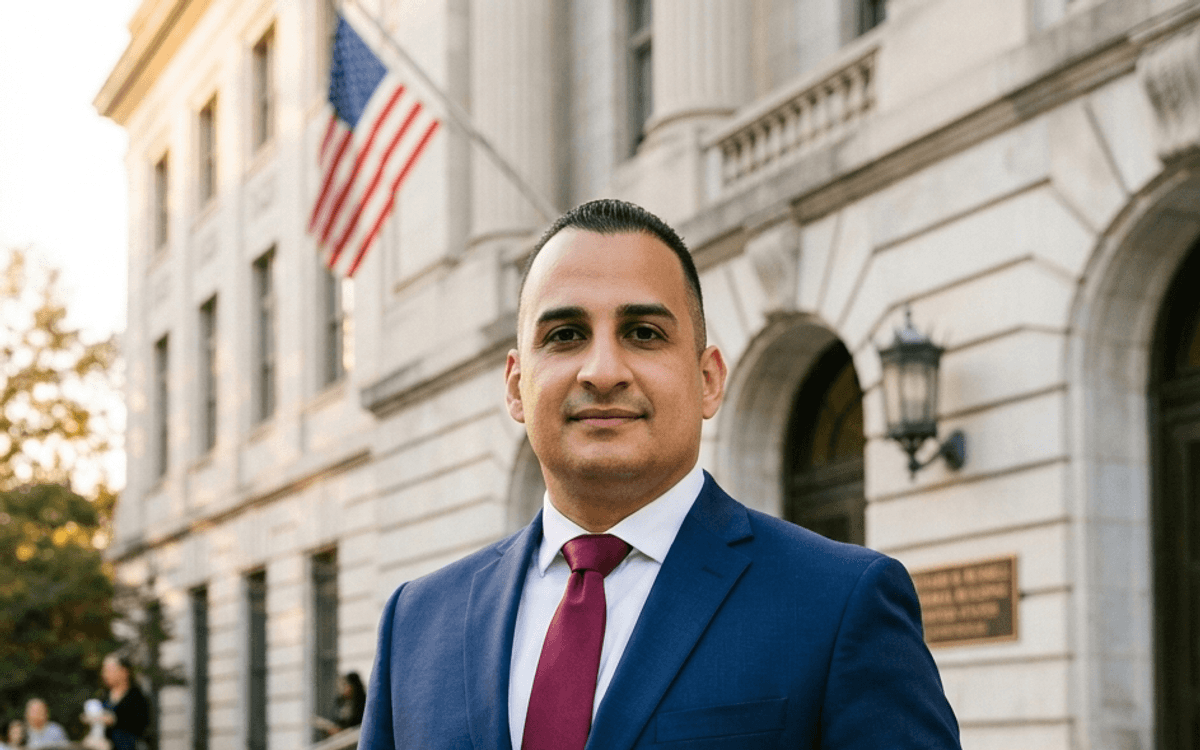
William J. Vasquez is admitted to the North Carolina State Bar and to practice before the U.S. Courts of Appeals for the Fourth, Fifth, and Eleventh Circuits. Immigration proceedings, including cases before the Atlanta Immigration Court, the Atlanta Asylum Office, and the Board of Immigration Appeals, are federal matters, and it is federal immigration-bar standing, not state bar admission, that allows an attorney to appear in them. Vasquez has spent more than a decade representing clients in asylum, bond, and removal proceedings, including cases arising out of Stewart Detention Center. 'I've sat across from clients at Stewart who had been in detention for months before anyone explained the difference between a credible fear interview and a merits hearing,' Vasquez says. 'The paperwork moves fast. The explanation usually doesn't happen unless someone makes it happen.' The firm's office is based in Florida; Vasquez's authority to appear in Georgia asylum matters comes from federal immigration practice, not Florida state-court admission, and he does not appear in Florida state-court proceedings.
Key Terms Explained
Form I-589: the Application for Asylum and for Withholding of Removal, filed with USCIS or, in removal proceedings, with the immigration court. Credible fear interview: a screening interview by a USCIS asylum officer, required before a detained person in expedited removal can pursue an asylum claim, under 8 C.F.R. § 208.30. Particular social group (PSG): one of five protected grounds under INA § 101(a)(42); courts require a group defined with particularity and social distinction, an analysis narrowed for domestic-violence claims by Matter of A-B-. Master calendar hearing: a short, often 5 to 15 minute, procedural hearing where the judge confirms identity, takes pleadings, and sets filing deadlines; it is not the hearing where your case is decided. Merits hearing: the full evidentiary hearing where you testify and the judge decides your asylum claim. In absentia order: a removal order entered automatically when a respondent fails to appear at a scheduled hearing, under INA § 240(b)(5). BIA: the Board of Immigration Appeals, the administrative body that reviews immigration judge decisions. Petition for review (PFR): the filing that asks a federal court of appeals, here the Eleventh Circuit, to review a final BIA order. Habeas corpus petition: a civil filing in federal district court challenging the legality of continued detention. EAD: Employment Authorization Document, the work permit available to asylum applicants generally 150 days after filing Form I-589 under 8 C.F.R. § 208.7.
Frequently Asked Questions
Can I still file for asylum if it's been more than a year since I arrived? Sometimes. INA § 208(a)(2)(D) allows late filing if you show changed circumstances materially affecting eligibility, or extraordinary circumstances that caused the delay, and you file within a reasonable time after the circumstances end. What happens at a bond hearing for someone detained at Stewart? The immigration judge on the Stewart docket reviews evidence about flight risk and danger to the community, community ties, and the underlying asylum claim; there is no fixed bond amount, and the judge's decision depends on the specific record submitted. What if the Atlanta Immigration Court denies my asylum case? You have 30 days from the written decision to file a Notice of Appeal with the Board of Immigration Appeals under 8 C.F.R. § 1003.38; missing that deadline generally forfeits the appeal. Can a domestic violence survivor still win asylum after Matter of A-B-? Domestic-violence-based claims remain viable, but they require careful particular social group framing and corroboration showing the government was unwilling or unable to protect the applicant; the standard is harder to meet than it was before 2018. Do LGBTQ applicants qualify for asylum in Georgia the same way as other claims? Sexual orientation and gender identity can form a particular social group; the case still requires the same elements as any asylum claim, including a well-founded fear of persecution and the government's unwillingness or inability to protect the applicant. What happens at an interview at the Atlanta Asylum Office in Decatur? A USCIS asylum officer conducts a non-adversarial interview, asks about your background and your fear of return, and may issue a decision, refer the case to immigration court, or schedule a follow-up. Can someone challenge how long they've been held at Stewart? A habeas corpus petition in the U.S. District Court for the Northern District of Georgia can challenge detention that is prolonged or unlawful, separate from the underlying asylum case itself.
Reviews from past clients on Google and Avvo describe direct phone or email contact with the attorney handling their case, plain explanations of what a hearing date does and does not mean, and clear answers about what documents were still needed before a filing deadline. Common themes include being told realistic timelines rather than reassurance, and being walked through what a credible fear interview or bond hearing would actually involve before it happened. We do not publish star averages or success statistics on this page, because case outcomes are not objectively verifiable in the way a review count is, consistent with Florida Rule of Professional Conduct 4-7.13(b)(2).
If you are reading this because a deadline is close, or because someone is currently detained at Stewart, the next useful step is not more research. It is getting your specific facts in front of someone who can tell you which track you are on and what deadline actually applies to you.
Schedule a consultation to go over your Form I-589 timeline, your credible fear posture, or your options for a bond hearing on the Stewart docket. If your case is already on appeal, ask about our BIA appeal and Eleventh Circuit petition for review services specifically, or if you need to know when you can apply for work authorization while your case is pending, see our EAD and work permit page. Call our office or use the consultation request form to start with the facts of your specific case, including your entry date, current detention status, and any prior filings.
- /immigration/asylum
- /immigration/bond-hearings
- /immigration/bia-appeals
- /immigration/eleventh-circuit-appeals
- /immigration/work-permits-ead
- /immigration/detained-removal-defense