Asylum Attorney
October 10, 2026
Last updated: September 2026.
You have one year from the date you entered the United States to file Form I-589, the application for asylum, under INA §208(a)(2)(B) (8 U.S.C. §1158(a)(2)(B)). Miss that date without a recognized exception, and an immigration judge can deny your case on the deadline alone, before anyone even reaches the facts of what happened to you.
If you are reading this because you were just served a Notice to Appear for Miami Immigration Court, or because you are being held at Krome North Service Processing Center in Miami-Dade County, that deadline is already running, or may have already run. If you are weighing whether to file affirmatively with USCIS before any court is involved, the clock works differently. Either way, the first question is not whether you have a strong story. It is whether you are inside a legal window that lets a judge or asylum officer hear that story at all.
An asylum attorney represents applicants seeking protection under INA §208 (8 U.S.C. §1158) because of persecution based on race, religion, nationality, political opinion, or social group. The attorney prepares Form I-589, represents you at the USCIS Asylum Office or in Immigration Court, and handles appeals to the Board of Immigration Appeals if the case is denied.
The Hard Truth
The Backlog Is Real, and It Is Long
Filing Form I-589 does not get you a quick answer. The national immigration court backlog passed 3.7 million pending cases in 2024, according to data compiled by the Transactional Records Access Clearinghouse (TRAC) at Syracuse University from EOIR's own records (trac.syr.edu/immigration). Miami Immigration Court, at 333 S. Miami Avenue, carries one of the largest dockets in the country, and a case filed today can take two to five years to reach a merits hearing, longer if the judge continues it for additional evidence or a change in counsel.
Affirmative cases filed with the Miami Asylum Office move differently, and sometimes faster, but USCIS's own asylum backlog also runs into the hundreds of thousands of pending applications nationwide, per USCIS's published Asylum Division workload reports (uscis.gov/humanitarian/refugees-and-asylum/asylum). A lawyer cannot make the docket move faster. What a lawyer can do is make sure that when your case is finally called, the record is ready.
What Happens If You Wait
What Missing the One-Year Deadline Actually Costs You
INA §208(a)(2)(B) bars asylum for anyone who does not file within one year of their last arrival, unless they can show changed circumstances affecting eligibility or extraordinary circumstances that caused the delay, filed within a reasonable time after the circumstance ended (8 C.F.R. §208.4(a)). Courts read 'reasonable time' narrowly. Waiting an extra six months after a qualifying change, without a documented reason, has been enough for judges to find the exception does not apply.
Missing the deadline does not necessarily end your options. You may still qualify for withholding of removal or protection under the Convention Against Torture (CAT), both of which have no one-year deadline, but both carry a higher burden of proof and neither leads to a green card the way asylum does (see the comparison below). If you are also eligible for another form of humanitarian relief, those programs have their own separate deadlines and agencies, and delay can close those doors too.
There is also a practical cost that has nothing to do with filing dates. Every month your case sits undecided is a month you may not have a valid Employment Authorization Document (see our work authorization and EAD guide), a month your family abroad is not yet eligible to join you, and, if you are detained at Krome, a month longer without resolving your custody and bond status.
Step-by-Step Process
How Asylum Cases Move Through the System in Florida
Step 1: Determine Whether Your Case Is Affirmative or Defensive
If you are not currently in removal proceedings, you file Form I-589 directly with USCIS. That is an affirmative case, adjudicated in South Florida out of the Miami Asylum Office. If you were placed in removal proceedings, through a Notice to Appear served at the border, at Krome, or after an encounter with ICE, your case is defensive, and the same Form I-589 is instead filed with the Immigration Court in Miami or Orlando.
Step 2: File Form I-589 and Attend Biometrics
Form I-589 carries no filing fee, per USCIS's current fee schedule. After filing, USCIS schedules a biometrics appointment, fingerprints and a photo, at an Application Support Center. In a defensive case, biometrics is instead scheduled through the court process, and EOIR's Immigration Court Practice Manual governs filing and service of every motion and document after that.
Step 3: Affirmative Interview or Master Calendar Hearing
Affirmative applicants are called in for a non-adversarial interview with a USCIS asylum officer at the Miami Asylum Office. If the officer does not grant the case and you lack valid status, it is referred to Immigration Court, not simply denied outright. Defensive applicants instead begin with a master calendar hearing, a short procedural hearing, typically 5 to 15 minutes, where the judge confirms identity, takes pleadings on the Notice to Appear, and sets a date for the merits hearing.
Step 4: Apply for Work Authorization While You Wait
Once your asylum application has been pending 150 days, not counting delays you caused, you may file Form I-765 for an Employment Authorization Document under 8 C.F.R. §208.7. USCIS then has up to 30 days to adjudicate that EAD application. See our work authorization page for the full timeline and what counts as a delay that resets the clock.
Step 5: The Merits Hearing
This is the actual trial of the asylum claim. You testify, your attorney submits country-condition evidence and corroborating documents, and ICE's attorney cross-examines you. Merits hearings in Miami and Orlando Immigration Courts commonly run a half day to a full day, and complex claims with multiple witnesses can be scheduled across more than one date, months apart, given docket load.
Step 6: If the Judge Denies the Case, Appeal to the BIA
You have 30 days from the written decision to file a Notice of Appeal (Form EOIR-26) with the Board of Immigration Appeals, under 8 C.F.R. §1003.38. The appeal is decided on the existing record and legal briefing, governed by the Board's procedural rules at 8 C.F.R. §1003.1. See our BIA appeals page for briefing deadlines and what the Board can and cannot do with new evidence.
Step 7: Petition for Review in Federal Court
If the BIA denies the appeal, the next step is a petition for review filed with the federal circuit court covering the immigration court that issued the decision, within 30 days under 8 U.S.C. §1252(b)(1). For Florida-based cases, that is the Eleventh Circuit Court of Appeals.
A Real-World Example
A Composite Example: How a Florida Asylum Case Typically Unfolds
Consider a composite case, not a real client, that illustrates the process rather than any result. 'Ana' is a Honduran national who entered the United States on a visitor visa and overstayed after it expired, then faced escalating threats from a gang tied to her refusal to pay extortion. She did not file for asylum right away, in part because she did not know the one-year deadline existed.
By the time she consulted an attorney, she was at month eleven since entry. Her attorney documented a specific triggering event, a direct threat received after she entered the U.S., as the 'changed circumstance' basis for filing even that late, and filed Form I-589 before the one-year mark. Because she had no pending removal case, hers was an affirmative filing with the Miami Asylum Office.
USCIS scheduled her biometrics appointment within a few weeks, and her interview followed several months later. At the interview, she testified through a Spanish interpreter about the specific threats, dates, and any police reports she had filed in Honduras. Her asylum officer did not issue a decision that day; officers typically issue a written decision afterward, and if a case is not granted outright, it is referred to Immigration Court rather than simply closed.
In this composite scenario, Ana's case was referred, and she is now preparing for a master calendar hearing at Miami Immigration Court, where the judge will set a date for her merits hearing. That hearing, when it comes, is where the full record, her testimony and the country-condition evidence her attorney compiled, will actually be tested.
About the Attorney
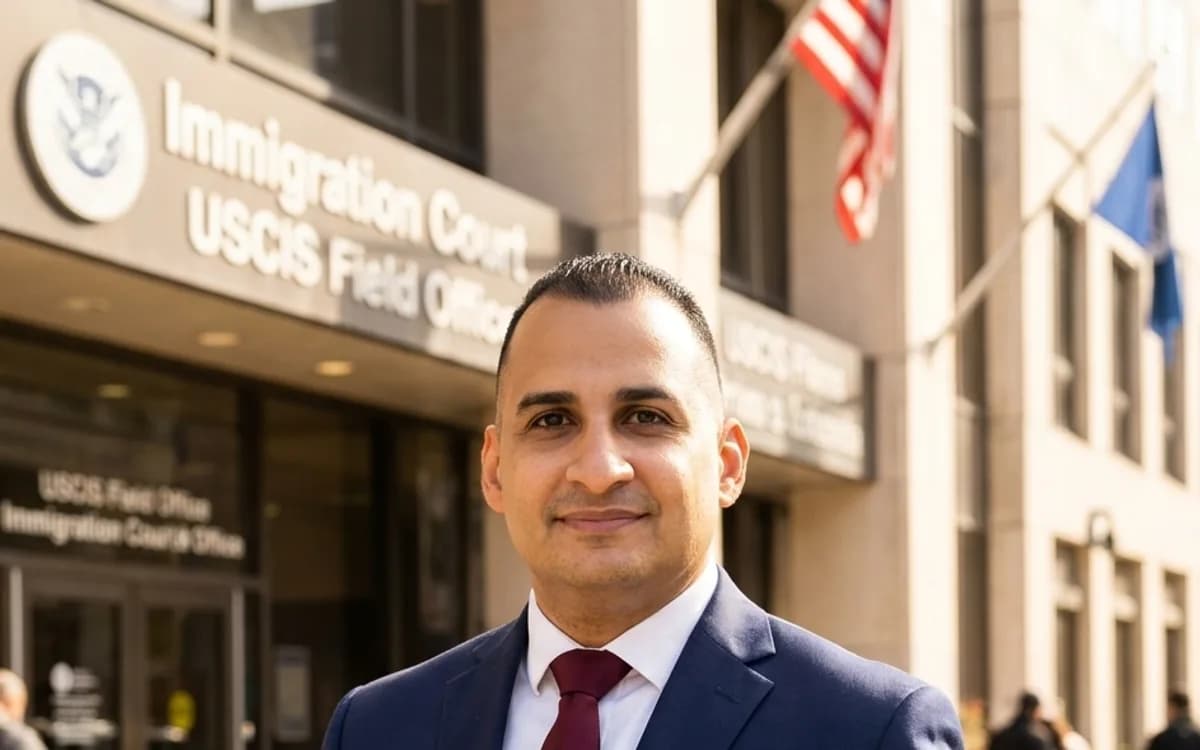
William J. Vasquez represents clients in federal immigration proceedings, including asylum applications before USCIS's Asylum Division and removal defense before the Executive Office for Immigration Review (EOIR). He is a member of the North Carolina State Bar.
Immigration cases, whether filed with USCIS, argued before an immigration judge, or appealed to the Board of Immigration Appeals, are federal matters. Under 8 C.F.R. §1292.1, an attorney licensed and in good standing in any U.S. state may represent clients before EOIR and the BIA nationwide, without a separate Florida law license. For asylum seekers whose cases are based in Florida, that includes representation before the Miami Asylum Office, Miami Immigration Court, and Orlando Immigration Court. If a Florida-based case is denied by the BIA and proceeds to a petition for review, that petition goes to the U.S. Court of Appeals for the Eleventh Circuit, where William J. Vasquez is admitted to practice.
He has represented asylum applicants and respondents in removal proceedings for more than a decade. This page does not cite a number of cases won or any success rate; outcomes in asylum cases depend on facts particular to each applicant, and no attorney can promise what an immigration judge or asylum officer will decide. For his full credentials and case history, see his attorney profile.
Key Terms Explained
Key Terms Used on This Page
Form I-589: The Application for Asylum and for Withholding of Removal, filed with USCIS (affirmative) or the immigration court (defensive). No filing fee, per USCIS.
Credible fear: The screening standard used when someone in expedited removal expresses a fear of return. An asylum officer decides if there is a 'significant possibility' the person could establish eligibility for asylum, a lower bar than the final asylum standard.
Affirmative asylum: A case filed with USCIS by someone not yet in removal proceedings, decided first by an asylum officer at a location such as the Miami Asylum Office.
Defensive asylum: A case raised as a defense to removal, after a Notice to Appear has been issued, decided by an immigration judge at an EOIR court such as Miami or Orlando Immigration Court.
Withholding of removal: Protection under INA §241(b)(3) that bars deportation to a specific country if return is more likely than not to result in persecution. No one-year deadline, but a harder evidentiary standard than asylum, and no path to a green card.
CAT protection: Protection under the Convention Against Torture for someone more likely than not to be tortured by or with the acquiescence of government officials if removed. Like withholding, it blocks removal to one country without granting lawful permanent residence.
EOIR: The Executive Office for Immigration Review, the Department of Justice agency that runs immigration courts and the Board of Immigration Appeals.
BIA: The Board of Immigration Appeals, the administrative body reviewing immigration judges' decisions under 8 C.F.R. §1003.1.
Master calendar hearing: A short, preliminary court hearing for pleadings and scheduling, not the trial of the asylum claim itself.
Merits hearing: Also called an individual hearing, where testimony and evidence are presented and the judge decides the case.
EAD: Employment Authorization Document, the physical work permit issued after Form I-765 is approved.
Frequently Asked Questions
Q: How much does an asylum attorney cost? A: Fees vary by case complexity, whether the case is affirmative or already in removal proceedings, and how much evidence-gathering and witness preparation it needs. Ask for a written fee agreement before signing anything, and raise it directly in your consultation so you know the full cost before you commit.
Q: How long does the asylum process take after filing Form I-589? A: Affirmative cases at the Miami Asylum Office can take from several months to a few years depending on USCIS's current interview backlog. Defensive cases in Miami or Orlando Immigration Court commonly take two to five years to reach a merits hearing, per EOIR's published case processing data (justice.gov/eoir/statistics).
Q: Can I work legally while my asylum case is pending? A: Yes. Once your application has been pending 150 days without delays you caused, you can file Form I-765 for an Employment Authorization Document under 8 C.F.R. §208.7. USCIS then has up to 30 days to decide that application.
Q: What is a credible fear interview, and how is it different from the asylum interview? A: A credible fear interview happens when someone is stopped in expedited removal and tells an officer they fear return; the officer decides only whether there is a 'significant possibility' the person could establish eligibility for asylum, a lower bar than the final standard. If you pass, you are referred to full removal proceedings, where the actual merits hearing happens later.
Q: What happens if I am detained at Krome while my case is pending? A: Detained cases move on an accelerated docket, and you may be eligible to ask the judge for a bond hearing to seek release while the asylum case continues. See our detention and bond hearings page for how that request is made and what the judge considers.
Q: Can my spouse and children be included in my asylum case? A: Yes, a spouse and unmarried children under 21 who are already in the United States can usually be included as derivatives directly on your Form I-589. Family members abroad cannot join the application itself, but once asylum is granted, you can file Form I-730 to petition for a spouse or child to join you, usually within two years of the grant.
Q: What if I missed the one-year filing deadline? A: You may still qualify under the changed-circumstances or extraordinary-circumstances exceptions in 8 C.F.R. §208.4(a), or you may instead pursue withholding of removal or CAT protection, neither of which carries a one-year deadline. Each path has a different burden of proof, covered in the comparison above.
Q: What happens if an immigration judge denies asylum? A: You have 30 days to file a Notice of Appeal with the Board of Immigration Appeals under 8 C.F.R. §1003.38. If the BIA also denies the case, the next step is a petition for review filed with the federal circuit court covering your case, within 30 days under 8 U.S.C. §1252(b)(1).
Q: Can asylum be based on domestic violence or gang-related threats? A: It can, but these claims require careful framing around a specific protected ground, typically a particular social group, and the legal standard has shifted significantly since Matter of A-B-, 27 I&N Dec. 316 (A.G. 2018). These are among the harder categories of claims to establish and need a case-specific evaluation of the facts.
Q: What is the difference between asylum, withholding of removal, and CAT protection? A: Asylum has a one-year filing deadline, a lower burden of proof, and can lead to a green card. Withholding of removal and CAT protection have no filing deadline but require proving persecution or torture is 'more likely than not,' and neither leads to permanent residence. See the comparison table above for the full breakdown.
Clients describe our communication throughout long-pending cases, including regular updates between hearings and plain explanations of what each notice from USCIS or the court actually means. We do not publish star ratings or outcome statistics on this page; asylum results depend on the specific facts and evidence of each case, not on any firm's general track record. If you want context on how we communicate and prepare a case, ask about it directly during your consultation.
None of this changes the fact that your filing deadline, or your next hearing date, is fixed regardless of when you decide to get help. The sooner an attorney can review your entry date, any prior immigration history, and the specific facts of what happened to you, the more options are still open, including exceptions to the one-year deadline that depend on documentation you may not know you need to gather now.
Schedule an asylum and removal defense consultation with our Florida-based immigration team to go over your entry date, your deadline status, and whether your case is better suited to an affirmative filing with USCIS or a defensive filing in Miami or Orlando Immigration Court. Call our office or request a consultation through our website before your next filing deadline or hearing date arrives.
- Work Authorization and EAD After Filing Asylum
- BIA Appeals and Petitions for Review
- Detention and Bond Hearings at Krome
- Humanitarian Relief Options
- Removal Defense in Miami and Orlando Immigration Courts
- Attorney Profile: William J. Vasquez