11th Circuit Immigration Appeal
October 10, 2026
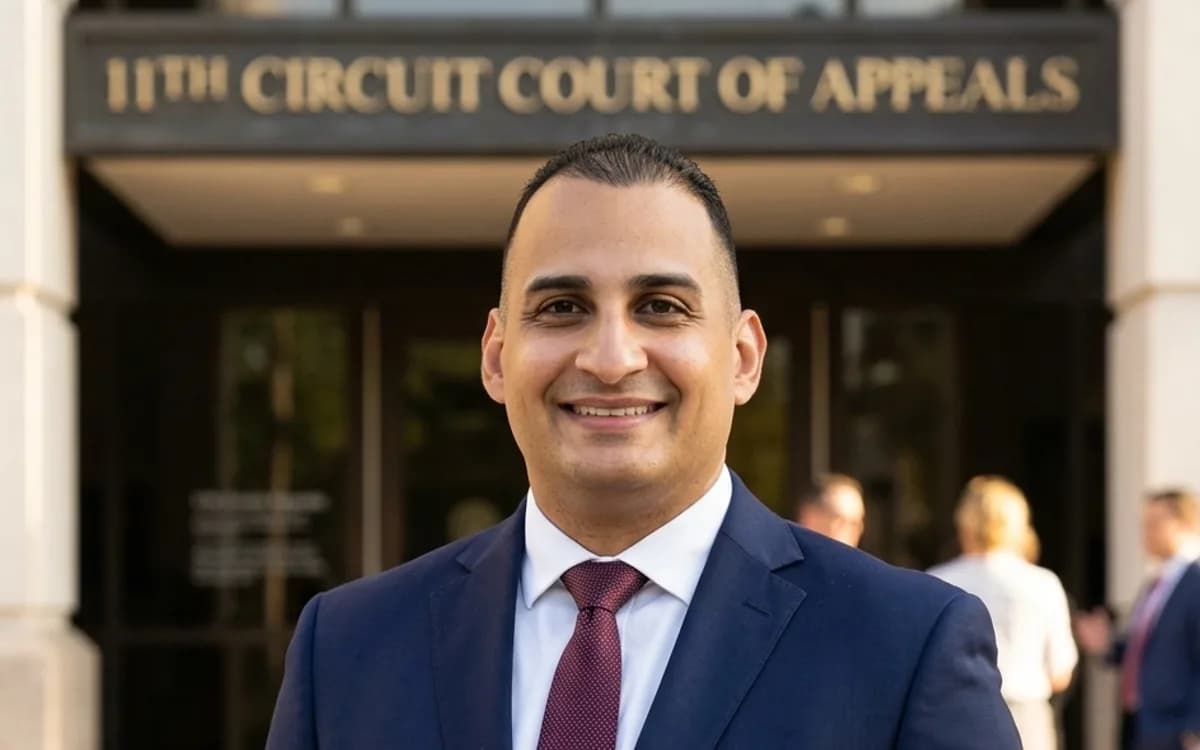
An Eleventh Circuit immigration appeal is a petition for review filed under 8 U.S.C. § 1252 challenging a final order from the Board of Immigration Appeals for cases arising in Florida, Georgia, or Alabama. You have 30 days from the BIA's decision to file, the deadline is strict, and the court reviews factual findings under the deferential 'substantial evidence' standard, not a fresh trial.
Last updated: February 2025.
If you already have a final order from the Board of Immigration Appeals, or expect one soon, and your case was heard in Florida, Georgia, or Alabama, it falls under the Eleventh Circuit Court of Appeals, based in Atlanta. This is a paper appeal built entirely on the record from your immigration court and BIA proceedings. The judges do not retake testimony, admit new evidence, or reweigh credibility findings the way an immigration judge can.
How Long Do I Have to File a Petition for Review?
Thirty days, and it is not thirty days from when the decision arrives in the mail. Under 8 U.S.C. § 1252(b)(1), the clock starts the date the BIA issues its final order, and the Supreme Court has treated this deadline as strict and effectively non-extendable, addressing how motions to reconsider interact with it in Stone v. INS, 514 U.S. 386 (1995). Miss it by even a day and the Eleventh Circuit will dismiss the petition, regardless of how strong the underlying case is. Federal Rule of Appellate Procedure 15 and Eleventh Circuit Rule 15-1 govern the filing mechanics once you're inside that window, including where the petition and record must be docketed.
There's a related deadline problem: you generally must have already raised your legal argument to the BIA. In Santos-Zacaria v. Garland, 598 U.S. 411 (2023), the Supreme Court held that the exhaustion requirement in 8 U.S.C. § 1252(d)(1) is a claim-processing rule rather than a jurisdictional bar. That gives petitioners a bit more room than older Eleventh Circuit decisions assumed, but the government can still raise it, and the court will still enforce it if the objection is timely.
What Standard of Review Does the Eleventh Circuit Use?
The court will not overturn the BIA's factual findings just because it might have weighed the evidence differently. Under the substantial evidence standard from INS v. Elias-Zacarias, 502 U.S. 478 (1992), applied by the Eleventh Circuit sitting en banc in Adefemi v. Ashcroft, 386 F.3d 1022 (11th Cir. 2004), the record has to compel a reasonable factfinder to reach the opposite conclusion. That is a high bar. Legal questions, like whether the immigration judge applied the wrong standard to a particular ground of relief, get reviewed de novo, meaning the court decides them fresh, without deferring to the agency.
This distinction usually decides whether an appeal is worth filing. A petition built on "the judge got the facts wrong" rarely succeeds under this standard. A petition built on "the judge or the BIA misapplied the legal standard, ignored a category of evidence entirely, or never addressed an argument that was properly raised" has a real, briefable issue.
Does Filing a Petition for Review Stop Removal?
No, not by itself. Filing the petition does not automatically stop ICE from executing a removal order. You have to separately ask the Eleventh Circuit for a stay of removal, and that motion has its own standard, laid out in Nken v. Holder, 556 U.S. 418 (2009): a likelihood of success on the merits, irreparable harm without a stay, and a balance of the equities favoring a pause. Courts can and do deny stay motions even in cases where they later grant the petition itself. If a stay is denied and removal happens while the petition is still pending, the case does not automatically end, but litigating it from outside the country becomes far harder in practice.
Petition for Review vs. Motion to Reopen or Reconsider
| Petition for Review | Motion to Reopen / Reconsider | |
|---|---|---|
| Forum | U.S. Court of Appeals (Eleventh Circuit) | Board of Immigration Appeals |
| Deadline | 30 days from the BIA's final order | 30 days (reopen) or 90 days in certain circumstances |
| Effect on removal | No automatic stay; separate stay motion required | No automatic stay; separate stay request usually required |
| New evidence allowed | No, the record is closed | Yes, if the evidence was previously unavailable and is material |
| Typical time to a decision | Roughly 6 months to over a year, depending on caseload and oral argument | Several months to over a year at the BIA, longer if remanded to the immigration judge |
These remedies are not interchangeable, and choosing the wrong one can cost you the deadline on the right one. If you have new facts, such as a change in country conditions or newly available evidence, a motion to reopen is usually the correct vehicle. If your argument is that the BIA got the law wrong on the record that already exists, the petition for review is what puts the question in front of a court instead of the agency that just ruled against you.
What Happens After the Eleventh Circuit Rules?
Three things can happen. The court can deny the petition, which generally ends the case unless you pursue rehearing en banc or a certiorari petition to the Supreme Court, both long shots. The court can grant the petition and remand, sending the case back to the BIA to fix a specific, identified error, which restarts part of the administrative process rather than granting relief outright. Or, less often, the court can decide a narrow legal question in your favor directly. A remand is not a grant of relief. It means the BIA has to look at the record again with the court's correction in hand, and the agency can still deny relief on remand for reasons that survive the appeal.
Frequently Asked Questions
How much does an Eleventh Circuit immigration appeal cost? Costs vary with how much of the record already exists and how many legal issues are contested. A petition built on one narrow legal question briefs faster and costs less than one raising multiple grounds against a mixed factual record. Ask any attorney you consult for a written fee agreement that separates the petition itself from a stay motion, since those are billed as distinct pieces of work.
What if I already missed the 30-day deadline? The Eleventh Circuit treats this deadline as strict; petitions filed even a day late have been dismissed. Once missed, a petition for review of that specific BIA order is generally no longer available, though a motion to reopen with the BIA may still be possible if you meet its separate, narrower deadlines and grounds.
Do I need to raise my argument with the BIA before appealing to the Eleventh Circuit? Yes, generally. Under 8 U.S.C. § 1252(d)(1), you need to have raised the specific argument to the BIA first, though Santos-Zacaria v. Garland (2023) clarified this is a claim-processing requirement the government must raise, not an automatic jurisdictional bar the court applies on its own.
How do I request a stay of removal from the Eleventh Circuit? You file a separate motion, typically alongside or shortly after the petition, addressing the four factors from Nken v. Holder: likelihood of success on the merits, irreparable harm, harm to the opposing party, and the public interest. The court can grant the underlying petition and still have denied the stay earlier, so timing the stay motion correctly matters as much as the petition itself.
Can I submit new evidence to the Eleventh Circuit that wasn't in my immigration court record? No. The court reviews the administrative record as it existed when the BIA ruled. New evidence, such as a recent country-conditions report, generally has to go to the BIA first through a motion to reopen, not to the circuit court.
What happens if the Eleventh Circuit remands my case? The BIA has to reconsider the specific issue the court identified, sometimes sending it further down to the immigration judge. It is not a grant of relief; the agency can deny relief again on remand for reasons the court's ruling did not reach.
Is a petition for review the same as an appeal to the BIA? No. The BIA hears the first appeal from an immigration judge's decision. The Eleventh Circuit only reviews the BIA's decision after that internal appeal is finished, and only on the record that already exists.
Can the Eleventh Circuit reweigh credibility findings from my immigration court hearing? Generally no. Credibility findings are reviewed under the substantial evidence standard, meaning the court asks whether the record compels the opposite conclusion, not whether the court would have decided it differently on the same facts.
For related reading, our overview of BIA appeals covers what happens before a case ever reaches federal court, and our page on stays of removal and motions to reopen walks through the paperwork for pausing removal while a case is pending. The firm's federal appellate immigration practice page, which covers petitions for review across circuits generally, goes into more detail on briefing and oral argument.
About the author: William J. Vasquez handles federal immigration appeals, including petitions for review before the Eleventh, Fourth, and Fifth Circuits, under his federal immigration-bar admission. He is admitted to the North Carolina Bar and to the Fourth, Fifth, and Eleventh Circuit Courts of Appeals; his work before the Eleventh Circuit is limited to federal immigration matters arising under the INA, not Florida state-court proceedings. His full appellate case history is available on his attorney profile page.
If you have a BIA decision in hand, check the date on the order today and count 30 days forward. That single number determines whether a petition for review is even possible, and it does not wait for a phone call. If you're still inside that window, contact our office to go over whether your case turns on a legal error worth briefing to the Eleventh Circuit, and whether a stay motion needs to be filed immediately alongside the petition.