USCIS Green Card Removal Proceedings in Florida: Your Guide
Facing USCIS green card removal proceedings in Florida? Learn how to protect your status. Contact Florida Immigration Lawyers for a free consultation today.
USCIS green card removal proceedings in Florida involve eliminating conditions on a two-year conditional green card, usually obtained through marriage or investment. Failing to remove these conditions can terminate your lawful permanent resident status and lead to deportation. This process typically requires filing Form I-751, Petition to Remove Conditions on Residence.
- Conditional green cards are valid for two years.
- Form I-751 is generally filed jointly by spouses.
- Waivers are available for divorce, abuse, or spouse's death.
- Timely filing and strong evidence are critical.
- Consult a Florida immigration lawyer for guidance.
Building a life in Florida as a conditional green card holder brings both joy and significant responsibility. The deadline to remove conditions on your residency can create anxiety, especially regarding USCIS green card removal proceedings in areas like Jacksonville and across the state.
Understanding this essential legal step is vital for securing your permanent residency. This comprehensive guide from Florida Immigration Lawyers will walk you through the intricacies of removing conditions, from filing forms to navigating challenges. We aim to provide clarity and support.
Do not let fear jeopardize your future in the Sunshine State. If you are preparing for USCIS green card removal proceedings or have questions, we are ready to assist. Call Florida Immigration Lawyers at 1-844-967-3536 for a free consultation today.
Understanding USCIS Green Card Removal Proceedings in Florida
Green cards obtained through marriage or investment are often conditional, lasting two years. This temporary status verifies the legitimacy of your marriage or investment. It is a crucial step before obtaining permanent residency.
USCIS imposes these conditions to prevent fraud. What is the 2 year rule for green cards? This rule mandates that conditional residents apply to remove conditions before the two-year period expires to gain permanent status.
Failure to remove conditions can terminate your status, initiating USCIS green card removal proceedings. These formal legal actions can revoke your status and lead to deportation, demanding immediate attention for Florida residents.
Conditional Residency and Its Implications
Conditional permanent residency is a probationary period. USCIS assesses if the qualifying relationship or investment remains valid. If you do not file, or if your petition is denied, your status automatically terminates, making you deportable.
Is USCIS deporting green card holders? Yes, conditional green card holders can face deportation if they fail to meet immigration requirements. This underscores the importance of diligently following the legal process for USCIS green card removal proceedings.
Florida's Immigration Landscape
Florida hosts many immigrants navigating conditional green card processes in cities like Jacksonville, Miami, and Orlando. USCIS field offices in these cities may conduct I-751 interviews. Immigration Courts in Miami and Orlando handle removal proceedings.
Local procedural nuances and USCIS expectations are complex. An experienced Florida immigration lawyer offers invaluable guidance, ensuring your application meets all requirements and current policies.
The Step-by-Step Process for Removing Conditions on Your Green Card (I-751)
To remove conditions on your marriage-based green card, file Form I-751, Petition to Remove Conditions on Residence. Both spouses generally file jointly. Careful attention to detail and adherence to timelines are essential to avoid USCIS green card removal proceedings.
- Timely Filing of Form I-751: File Form I-751 within 90 days before your conditional green card expires. Early or late filing without a valid reason can lead to rejection. USCIS issues a receipt (I-797C) extending your status during processing.
- Gathering and Submitting Comprehensive Evidence: Strong evidence of a bona fide marriage is crucial. This includes documents proving commingled finances, shared residences, and joint responsibilities. Robust evidence can often reduce the need for an interview.
- Attending the Biometrics Appointment: USCIS schedules a biometrics appointment for fingerprints, photos, and signatures. This mandatory step is for background checks. Missing it causes delays.
- Possible Interview with USCIS: USCIS may call you and your spouse for an interview if evidence is insufficient or inconsistencies exist. Interviews verify marriage authenticity, often at a Florida USCIS field office.
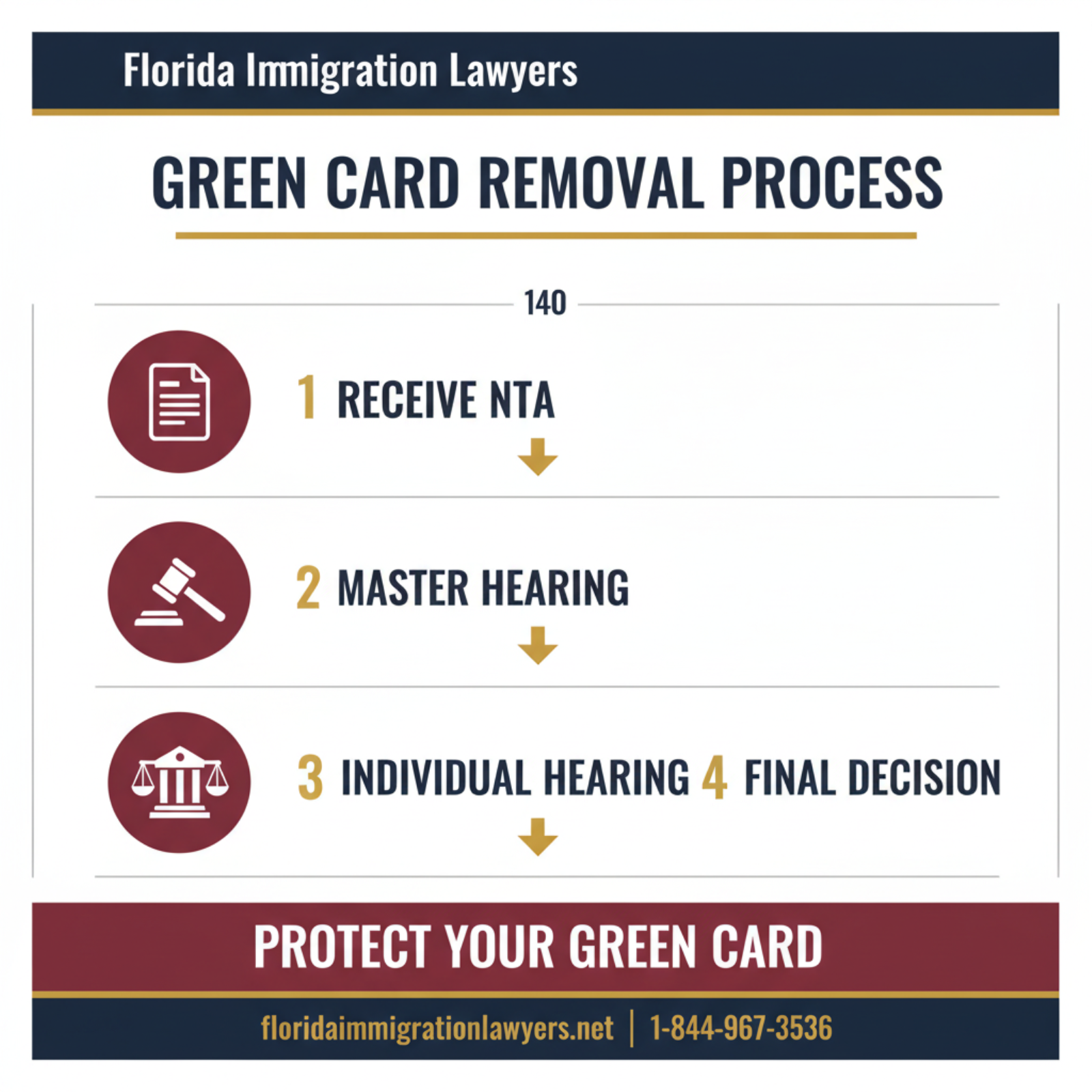
- Receiving a Decision: If approved, you receive a new 10-year permanent resident card. If denied, your conditional status terminates, and USCIS issues a Notice to Appear (NTA). This initiates USCIS green card removal proceedings in Immigration Court.
Waivers for Joint Filing Requirement
What happens if you marry a U.S. citizen and then divorce? If your marriage ends, you may still remove conditions via a waiver. USCIS offers waivers for good faith marriages that ended in divorce, or if you or your child experienced abuse, or in case of your spouse's death. Extreme hardship may also qualify.
Seeking a waiver adds complexity to USCIS green card removal proceedings. Presenting strong evidence is vital. Florida Immigration Lawyers can help prepare a compelling case, even in challenging circumstances.
Essential Documents for Your I-751 Petition
A well-prepared I-751 petition requires robust supporting documents demonstrating your marriage's bona fide nature. This evidence is critical for navigating USCIS green card removal proceedings. Comprehensive and varied evidence strengthens your case significantly.
I-751 Documents Checklist:
- Copy of your conditional green card (front and back).
- Copy of your marriage certificate.
- Birth certificates of any children born to your marriage.
- Affidavits from at least two individuals with personal knowledge of your marriage, plus copies of their government-issued identification.
- Documents showing commingled finances: joint bank statements, credit card statements, tax returns, utility bills, lease agreements, mortgage statements, vehicle titles, insurance policies.
- Documents showing cohabitation: joint lease agreements or property deeds, utility bills in both names at the same address, driver's licenses with matching addresses.
- Evidence of joint assets and liabilities: life insurance policies naming each other as beneficiaries, wills or trusts, joint loan agreements.
- Other evidence of a bona fide relationship: photographs with family and friends (dated, described), travel itineraries, correspondence addressed to both spouses, children's birth certificates (if applicable), evidence of joint memberships.
- If filing a waiver: Specific evidence supporting your waiver (e.g., divorce decree, police reports, medical records, death certificate).
Meticulously organizing these documents is key. A clear, well-indexed evidence package streamlines the review process for your I-751 removal of conditions petition. Always keep copies of everything submitted to USCIS.
Navigating the Timeline and Processing Expectations for I-751
USCIS processing times for Form I-751 vary significantly due to application volume, case complexity, and service center workload. Understanding the typical green card conditional removal processing time is vital for managing expectations and future planning.
Current Processing Times and Factors
I-751 processing can range from 12 to 24 months, or longer. Check current estimates on the USCIS website. These are estimates, not guarantees.
Key factors influencing processing time include:
- Application Completeness: Incomplete forms or missing evidence lead to Requests for Evidence (RFEs), causing significant delays.
- Interview Requirement: If an interview is necessary, scheduling can add months.
- Case Complexity: Waiver cases often require more extensive review.
- Service Center Workload: Fluctuations in application volume affect processing speeds.
During this waiting period, your conditional resident status is extended by the I-797C receipt notice. Carry this notice with your expired green card for work and travel.
What Happens if Your I-751 is Denied?
A denied I-751 petition is serious, terminating your conditional permanent resident status. USCIS will then issue a Notice to Appear (NTA), placing you in USCIS green card removal proceedings before an Immigration Judge.
In removal proceedings, you can present your case again. This includes proving your marriage was bona fide or qualifying for a waiver. This stage is highly complex, requiring a seasoned Florida immigration lawyer to protect your rights.
Understanding the Cost Factors and Fees for I-751 Filings
Budgeting for USCIS green card removal proceedings involves USCIS filing fees and potential legal fees. USCIS fees are standard, while legal fees vary based on case complexity.
USCIS Filing Fees
USCIS charges a fee for Form I-751. Always check the most current fee schedule on the USCIS website before filing. A separate biometrics fee applies. Fees must be exact and typically paid by money order, check, or credit card.
Fee waivers are generally not available for Form I-751. Incorrect or missing fees commonly cause application rejection, delaying your case and potentially impacting the 90-day filing window.
Legal Fees for Immigration Attorneys
Hiring an experienced Florida immigration lawyer, like those at Florida Immigration Lawyers, is a valuable investment. Legal fees cover expert assistance with:
- Eligibility assessment and strategy advice.
- Thorough preparation of Form I-751.
- Compiling and organizing supporting documents.
- Interview preparation and representation (if permitted).
- Responding to RFEs or NOIDs.
- Representation in removal proceedings if I-751 is denied.
Legal representation costs vary with case complexity, waiver needs, and if removal proceedings arise. Florida Immigration Lawyers offers flat fees for I-751 petitions, providing transparency. This investment offers peace of mind and increases success likelihood when facing USCIS green card removal proceedings.
The path to permanent residency involves critical deadlines and complex legal requirements. Navigating USCIS green card removal proceedings alone can lead to costly mistakes and jeopardize your future in Florida. Do not navigate this process alone. Contact Florida Immigration Lawyers today to secure expert legal guidance for your I-751 petition.
Common Mistakes to Avoid During I-751 and Removal Proceedings
Successfully removing conditions on your green card demands meticulous attention. Avoiding common pitfalls significantly improves approval chances and prevents USCIS green card removal proceedings. Here are crucial mistakes to avoid:
- Filing Too Early or Too Late: The 90-day filing window before your conditional green card expires is strict. Filing outside this window without a valid, USCIS-accepted reason can result in rejection and status termination.
- Insufficient or Weak Evidence: Submitting limited or outdated joint documents weakens your case. USCIS requires robust proof of a bona fide marriage that has continued since your initial green card approval.
- Ignoring RFEs or NOIDs: USCIS requests for evidence or notices of intent to deny require comprehensive and timely responses. Failing to respond will almost certainly lead to denial and USCIS green card removal proceedings.
- Inconsistent Information: Providing conflicting details across forms, documents, or during an interview raises red flags for USCIS, suggesting potential fraud.
- Not Updating Address Changes: Legally, you must notify USCIS of any address change within 10 days. Failure to do so can result in missed notices, appointments, and petition denial.
- Believing a Criminal Record is Irrelevant: Certain criminal offenses can impact permanent residency eligibility and trigger USCIS green card removal proceedings. Always disclose criminal history to your attorney. Can a felon get citizenship through marriage? A criminal record, especially a felony, can severely complicate both green card removal and naturalization, potentially leading to inadmissibility or deportation.
- Attending Interviews Unprepared: If an interview is required, going in without reviewing your application and evidence can lead to inconsistencies that harm your case.
- Failing to Seek a Waiver When Eligible: If your marriage has ended or you faced abuse, attempting to file jointly without a valid spouse is a mistake. Recognizing and filing for an appropriate waiver is critical.
- Not Seeking Legal Counsel: Navigating complex immigration law, particularly USCIS green card removal proceedings, without an experienced Florida immigration lawyer dramatically increases error and denial risks.
When to Call a Florida Immigration Lawyer for Your I-751 Petition
While some I-751 cases may seem straightforward, your immigration status has incredibly high stakes. Any misstep can lead to serious consequences, including USCIS green card removal proceedings. Knowing when to seek professional legal help from Florida Immigration Lawyers is crucial.
Consider contacting an attorney if any of these scenarios apply:
- Your Marriage Has Ended: If divorced or annulled, you need a waiver of the joint filing requirement. These cases are complex and require strong evidence of a good faith marriage.
- You Experienced Abuse:
¿Necesita ayuda con Inmigración?
Nuestros abogados de inmigración en Florida ofrecen consultas gratuitas. Llame hoy o programe en línea.
Preguntas Frecuentes
Vasquez Law Firm
Equipo Legal
Por más de 15 años, Vasquez Law Firm ha estado sirviendo a clientes en Florida. Nos especializamos en inmigración, lesiones personales, defensa criminal, compensación laboral y derecho familiar.