Green Card Holder ICE Detention in Florida: Your Legal Rights and Next Steps
Facing ICE detention as a green card holder in Florida? Understand your rights, legal options, and what to do if detained. Get expert legal help from Florida Immigration Lawyers for a free consultation.
Green Card Holder ICE Detention in Florida: Your Legal Rights and Next Steps
As a lawful permanent resident (LPR), commonly known as a green card holder, you have established a life in the United States, often building families, careers, and communities. The idea of being detained by Immigration and Customs Enforcement (ICE) can be terrifying and disorienting, especially when you believe your green card offers full protection. However, green card holders in Florida, and across the U.S., can indeed face ICE detention and even deportation under specific circumstances.
If you or a loved one is a green card holder detained by ICE in Florida, understanding your legal rights and knowing the immediate steps to take is paramount. This guide provides crucial information to help navigate this complex and stressful situation. Remember, time is of the essence, and securing experienced legal representation can make all the difference in protecting your future in the United States.
Understanding ICE Detention for Green Card Holders in Florida
While a green card grants you many rights and privileges, it does not provide absolute immunity from immigration enforcement. Green card holders can be detained by ICE for various reasons, often stemming from criminal convictions, even minor ones, or violations of immigration law. Common triggers include:
- Criminal Convictions: Certain criminal offenses, particularly those classified as 'aggravated felonies' or 'crimes involving moral turpitude' (CIMTs) under immigration law, can lead to detention and removal proceedings, regardless of how long ago the conviction occurred or if the sentence was served.
- Re-entry Issues: Problems arising at a U.S. port of entry after international travel, such as misrepresentation on a visa application or past immigration violations, can trigger detention.
- Violation of Immigration Status: Although less common for LPRs, certain actions could be interpreted as abandoning residency or violating the terms of their green card.
- Asylum Claims: In some cases, green card holders who have previously sought or been granted asylum may face detention if their asylum status is challenged or revoked.
It's vital to recognize that an ICE detention is not the same as a criminal arrest, though it often follows one. It initiates a separate civil immigration process aimed at determining an individual's eligibility to remain in the country. For comprehensive information on various immigration matters, visit our Immigration practice area page.
Your Rights During ICE Detention
Even when detained by ICE, green card holders retain significant legal rights. It is crucial to assert these rights respectfully and consistently:
- Right to Remain Silent: You have the right to refuse to answer questions about your immigration status, country of origin, or how you entered the U.S. You can state, “I do not wish to answer any questions without my attorney present.”
- Right to Legal Counsel: You have the right to speak with an attorney. ICE must provide you with a list of free or low-cost legal services, but you can also request to contact your own attorney or a family member to arrange legal representation.
- Right to Contact Family/Consulate: You have the right to make a phone call to inform your family of your detention and to contact your country's consulate.
- Do Not Sign Anything Without Understanding It: Never sign any document presented by ICE officers without fully understanding its contents and implications, and ideally, without first consulting with an attorney. Signing certain documents, like a Voluntary Departure form, could waive your rights to a hearing and lead to immediate deportation.
- Medical Attention: If you require medical attention, you have the right to request it.
- Access to Documents: You have the right to review any documents ICE intends to use against you in court.
Understanding and asserting these rights can significantly impact the outcome of your case. For more detailed information on legal processes and rights, resources from the U.S. Department of Justice (DOJ) can be helpful at justice.gov.
What to Do If Detained by ICE in Florida
Being detained is a frightening experience, but a clear understanding of what to do can help protect your rights:
- Stay Calm and Do Not Resist: Cooperate physically with officers, but verbally assert your rights. Do not resist arrest or detention.
- Identify Yourself, But Do Not Answer Questions: Provide your name, but do not answer questions about your immigration status, where you were born, or how you entered the U.S. State clearly, “I wish to speak with my attorney.”
- Request to Speak with an Attorney Immediately: This is your most important right. If you have an attorney’s contact information, provide it. If not, request to be given access to a phone to contact one.
- Do Not Sign Anything: As mentioned, do not sign any papers without legal advice. If you are coerced, write “I am signing this under duress” before your signature.
- Note Details: Try to remember the names or badge numbers of the officers, the date, time, and location of your detention, and any questions asked. This information will be vital for your attorney.
- Inform Your Family: If possible, let your family know you have been detained. They can then contact an attorney on your behalf.
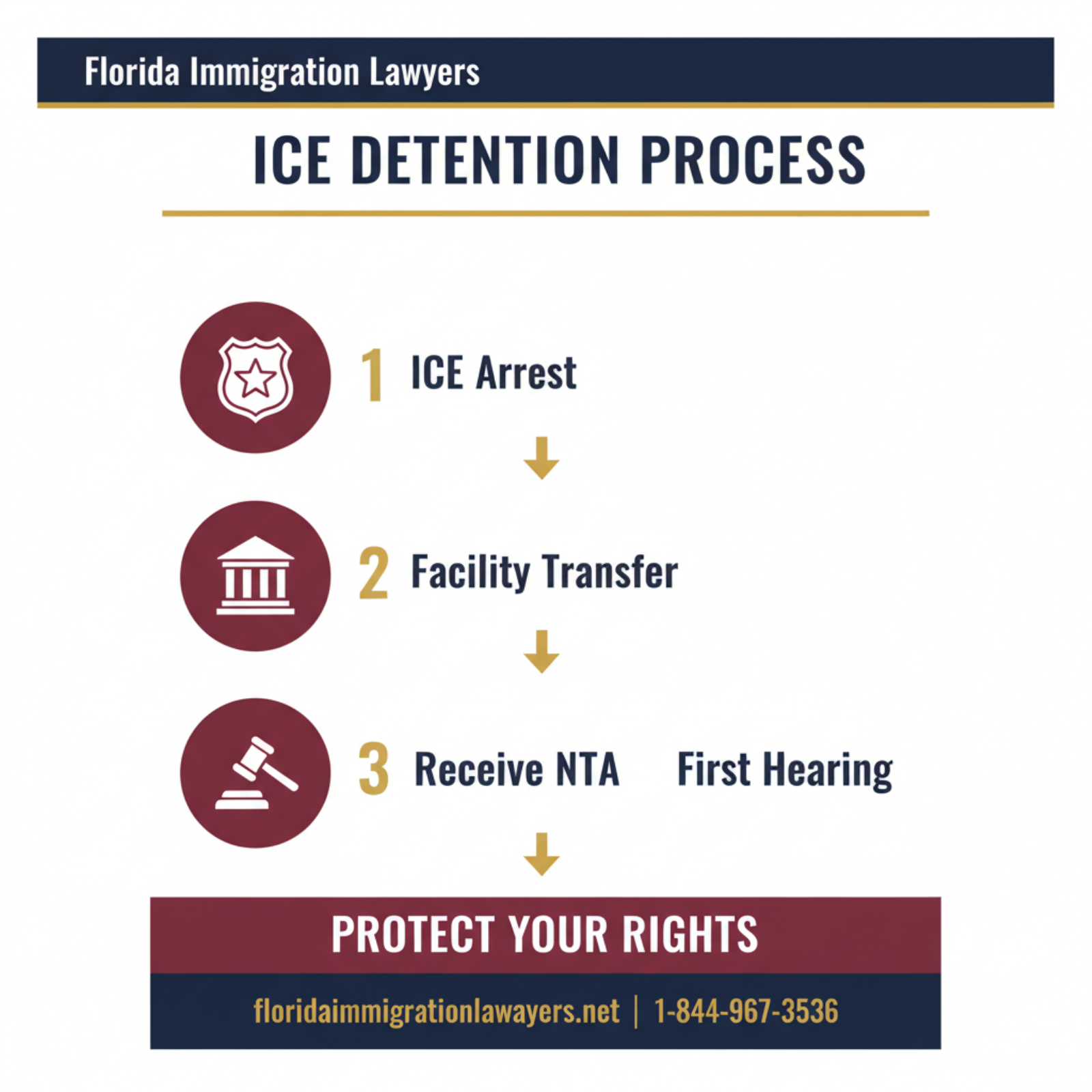
Immediate legal intervention is crucial. Contacting a lawyer as soon as possible is the best course of action. You can reach out to us directly through our contact page.
The Role of an Immigration Attorney
An experienced immigration attorney is your strongest advocate when facing ICE detention. They can:
- Ascertain the Grounds for Detention: Quickly determine why you are being detained and if there are any errors in the process.
- Represent You at Bond Hearings: Argue for your release on bond, potentially reducing the bond amount or securing release without bond.
- Defend Against Deportation: Develop a robust defense strategy against removal proceedings, identifying any available forms of relief, such as cancellation of removal, waivers, or asylum claims. Our firm specializes in deportation defense.
- Navigate Complex Laws: Explain the intricate immigration laws and court procedures in understandable terms.
- Prepare for Court: Help you gather necessary documents and prepare you for appearances before an Immigration Judge.
- File Appeals: If an unfavorable decision is made, your attorney can file appeals to higher immigration authorities.
Having a knowledgeable legal team by your side ensures that your rights are protected and that you have the best possible chance of remaining in the U.S. Learn more about our legal team on our attorneys page.
Navigating the Post-Detention Landscape: What Happens Next?
Release from ICE detention is often just the beginning of a complex legal journey. For green card holders, understanding the subsequent steps and preparing for immigration court proceedings is critical to protecting their status. The period following detention is fraught with deadlines and legal requirements that, if missed, can have severe consequences, including a final order of removal.
Bond Hearings and Release
If you are eligible for bond, an Immigration Judge will determine the amount. Factors influencing this decision include your ties to the community (family, employment, property), your criminal history, and whether you are considered a flight risk or a danger to the community. An attorney can present compelling arguments and evidence to secure a lower bond or even release on your own recognizance. Paying the bond allows you to return home while your case proceeds, but it does not resolve your immigration issue. It merely ensures your appearance at future court dates.
Immigration Court Proceedings
Once released, or even if you remain detained, your case will proceed through the immigration court system. This typically involves two main types of hearings:
- Master Calendar Hearings (MCH): These are preliminary hearings where the Immigration Judge addresses procedural matters, confirms the charges against you, and sets deadlines for filing applications for relief. It's a critical opportunity for your attorney to understand the government's case and outline your defense strategy.
- Individual Hearings (IH): Also known as a merits hearing, this is where your attorney presents your defense against removal. This may involve presenting evidence, calling witnesses, and arguing for forms of relief such as cancellation of removal for certain permanent residents, waivers of inadmissibility, or asylum if applicable. The Judge will hear arguments from both sides and make a final decision on your case.
Potential Outcomes and Appeals
The outcome of your case could range from termination of proceedings (meaning you get to keep your green card) to a final order of removal (deportation). If an unfavorable decision is made, your attorney can help you understand your options for appeal to the Board of Immigration Appeals (BIA) and potentially to federal courts. Navigating these appeals requires specialized knowledge and meticulous attention to detail. Resources like the U.S. Citizenship and Immigration Services website (uscis.gov) provide valuable information on immigration processes and forms, while the Department of State's website (travel.state.gov) offers insights into visa and travel implications that could arise from removal orders.
Each step post-detention is complex and requires expert legal guidance to ensure all deadlines are met and all available avenues for relief are explored. Your attorney will be instrumental in preparing you for each hearing, gathering necessary documentation, and advocating tirelessly on your behalf.
Seeking Legal Counsel in Florida
The stakes are incredibly high when a green card holder faces ICE detention and potential deportation. Your ability to remain in the U.S. with your family and continue your life here depends on a swift and strategic legal response. Do not attempt to navigate this complex system alone.
Our experienced Florida immigration lawyers are dedicated to protecting the rights of green card holders. We understand the nuances of immigration law and the specific challenges faced by individuals in detention. We offer free consultations to discuss your situation, assess your options, and begin building a strong defense strategy immediately.
Your future in the U.S. is worth fighting for. Contact Florida Immigration Lawyers today for compassionate, effective legal representation. Visit our contact page to schedule your free consultation.
Preguntas Frecuentes
Vasquez Law Firm
Equipo Legal
Por más de 15 años, Vasquez Law Firm ha estado sirviendo a clientes en Florida. Nos especializamos en inmigración, lesiones personales, defensa criminal, compensación laboral y derecho familiar.