Withholding of Removal Florida Defense: Protect Your Future
Facing deportation in Florida and fearing return to your home country? Our comprehensive guide explains withholding of removal, a critical form of protection for non-citizens. Learn about eligibility requirements, the step-by-step application process in Fort Lauderdale immigration courts, and essential documents needed for your case. We also detail the differences between withholding of removal and asylum, and how the Convention Against Torture (CAT) can offer additional relief. Discover common mistakes to avoid and when to seek legal help to strengthen your defense. Florida Immigration Lawyers offers free consultations to help you navigate these complex legal challenges.

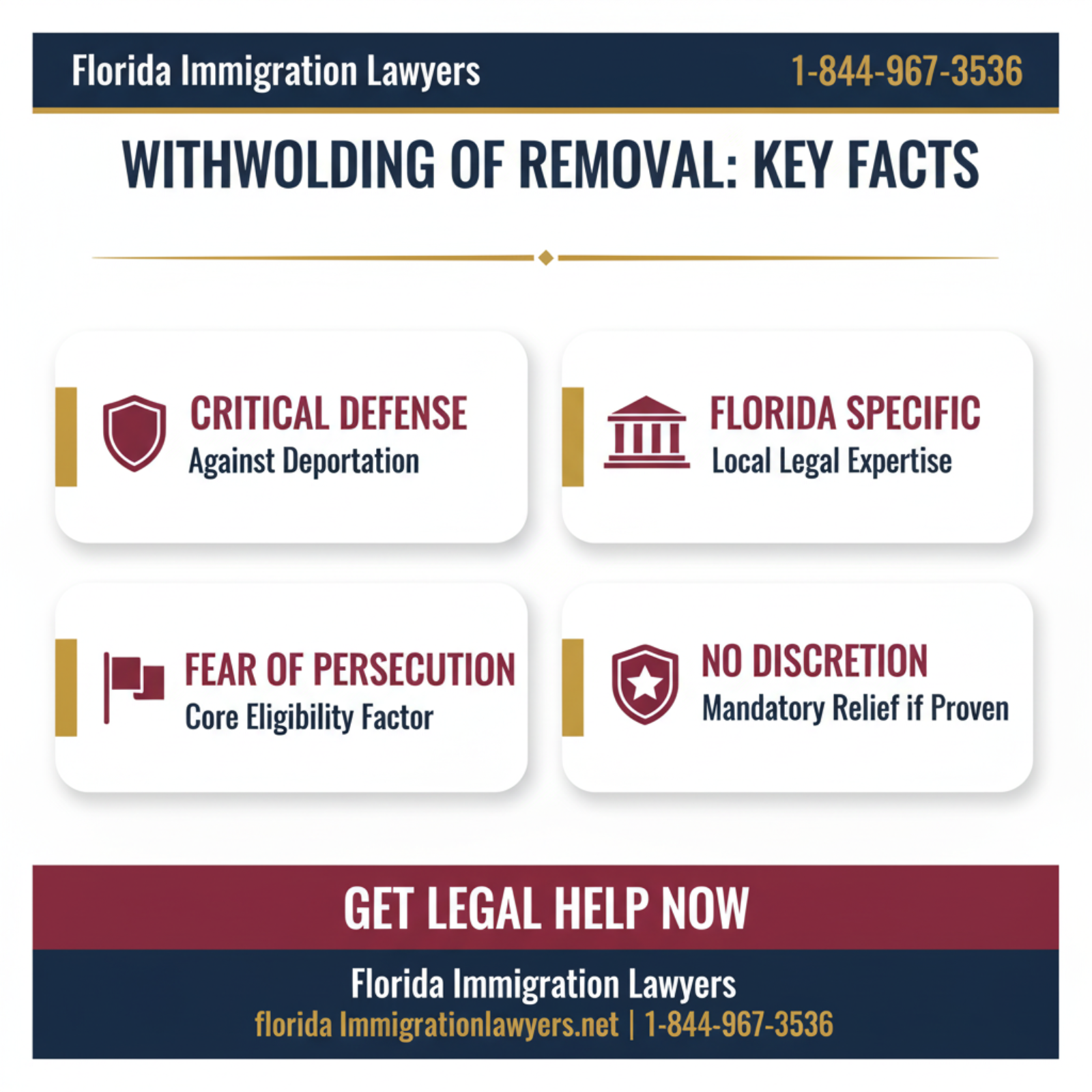
Withholding of removal is a form of protection granted to non-citizens in removal proceedings who face a clear probability of persecution or torture upon return to their home country. Unlike asylum, it does not lead to a green card but allows the individual to remain in the U.S. and work legally. It is a critical defense for those fearing imminent harm.
- Requires demonstrating a clear probability of persecution or torture.
- Does not provide a direct path to lawful permanent residency.
- Protects individuals from deportation to a specific country.
- Often sought in conjunction with asylum applications in immigration court.
- Legal assistance is crucial due to the high burden of proof.
Facing the threat of deportation can be one of the most frightening experiences imaginable. For many non-citizens in Florida, returning to their home country could mean facing grave dangers, including persecution or torture. If you are in removal proceedings and fear for your safety, understanding your options, such as withholding of removal, is absolutely essential.
This comprehensive guide from Florida Immigration Lawyers will walk you through what withholding of removal entails. We will cover eligibility, the application process, required documentation, and critical differences from other forms of relief like asylum. Our goal is to empower you with knowledge and help you navigate this complex legal landscape.
Do not face this daunting challenge alone. Seeking timely legal counsel can significantly impact your case's outcome. Call Florida Immigration Lawyers at 1-844-967-3536 for a free consultation to discuss your specific situation and explore your defense options.
Understanding Withholding of Removal in Florida
Withholding of removal is a form of immigration relief that prevents the U.S. government from deporting an individual to a country where their life or freedom would be threatened. This protection is available under Section 241(b)(3) of the Immigration and Nationality Act (INA), codified at 8 U.S.C. § 1231(b)(3). It is a crucial safeguard for those facing severe risks.
In Florida, as throughout the nation, individuals in removal proceedings before an Immigration Judge can apply for this relief. The primary purpose is to protect individuals from returning to a country where they would likely face persecution based on race, religion, nationality, membership in a particular social group, or political opinion.
What is Withholding of Removal?
Withholding of removal provides protection for non-citizens who can demonstrate that it is more likely than not they would be persecuted or tortured if returned to their country of origin. This standard, known as a 'clear probability,' is a higher burden of proof than the 'well-founded fear' standard required for asylum.
If granted, you will not be deported to the specific country where you fear harm. However, you could potentially be deported to a third country if one is willing to accept you and you do not face similar threats there. This relief is country-specific, offering targeted protection.
Withholding vs. Asylum: Key Differences
While often applied for simultaneously, withholding of removal and asylum are distinct forms of relief. Asylum, granted under INA Section 208 (8 U.S.C. § 1158), allows an individual to eventually apply for lawful permanent resident (LPR) status, commonly known as a green card. Asylum seekers must demonstrate a 'well-founded fear' of persecution.
Withholding of removal, conversely, does not offer a pathway to a green card or U.S. citizenship. It is purely a defense against deportation. The standard of proof for withholding is more stringent: you must show a 'clear probability' (more than 50% chance) of persecution or torture. Furthermore, certain criminal convictions or security grounds that bar asylum may not necessarily bar withholding of removal.
The Convention Against Torture (CAT)
The Convention Against Torture and Other Cruel, Inhuman or Degrading Treatment or Punishment (CAT) provides another layer of protection. Under 8 CFR § 208.16(c), individuals can be granted CAT protection if they can demonstrate that it is more likely than not they would be tortured if removed to the country in question. This protection is available regardless of whether the torture is inflicted by the government or by non-governmental actors whom the government is unable or unwilling to control.
CAT claims are often pursued alongside asylum and withholding of removal applications. The key distinction is that CAT focuses specifically on the threat of torture, rather than persecution, and has fewer statutory bars to eligibility. Our attorneys are adept at presenting strong CAT claims in Fort Lauderdale immigration courts.
Eligibility Requirements for Withholding of Removal
To be granted withholding of removal, you must meet specific eligibility criteria and overcome any potential bars to relief. Understanding these requirements is crucial for building a strong case with Florida Immigration Lawyers.
The core of an eligibility claim rests on demonstrating a 'clear probability' that your life or freedom would be threatened. This must be due to your race, religion, nationality, membership in a particular social group, or political opinion. For CAT claims, the focus is on the likelihood of torture.
Demonstrating a Clear Probability of Persecution or Torture
You bear the burden of proof to show that it is 'more likely than not' you will face persecution or torture. This means providing compelling evidence that reaches a statistical likelihood greater than 50%. This is a high bar and requires thorough documentation and persuasive testimony.
Evidence can include country conditions reports, expert witness testimony, affidavits from witnesses to past persecution, and personal accounts. In Fort Lauderdale, Immigration Judges hear these cases, and the quality of evidence is paramount.
Bars to Withholding of Removal
Even if you meet the 'clear probability' standard, you may be barred from receiving withholding of removal if certain conditions apply. These bars are outlined in INA Section 241(b)(3)(B) and include:
- Persecutor of Others: You participated in persecuting others.
- Serious Non-Political Crime: You committed a serious non-political crime outside the U.S. before arriving.
- Danger to U.S. Security: You are considered a danger to the security of the United States.
- Particularly Serious Crime: You have been convicted of a particularly serious crime in the U.S., making you a danger to the community. The definition of a 'particularly serious crime' can be complex and depends on the nature of the offense and the sentence imposed, as determined by the Immigration Judge and BIA precedent.
Navigating these bars requires sophisticated legal analysis. Our team at Florida Immigration Lawyers has extensive experience in deportation defense, helping clients address potential bars to relief effectively.
The Step-by-Step Process for Withholding of Removal Defense
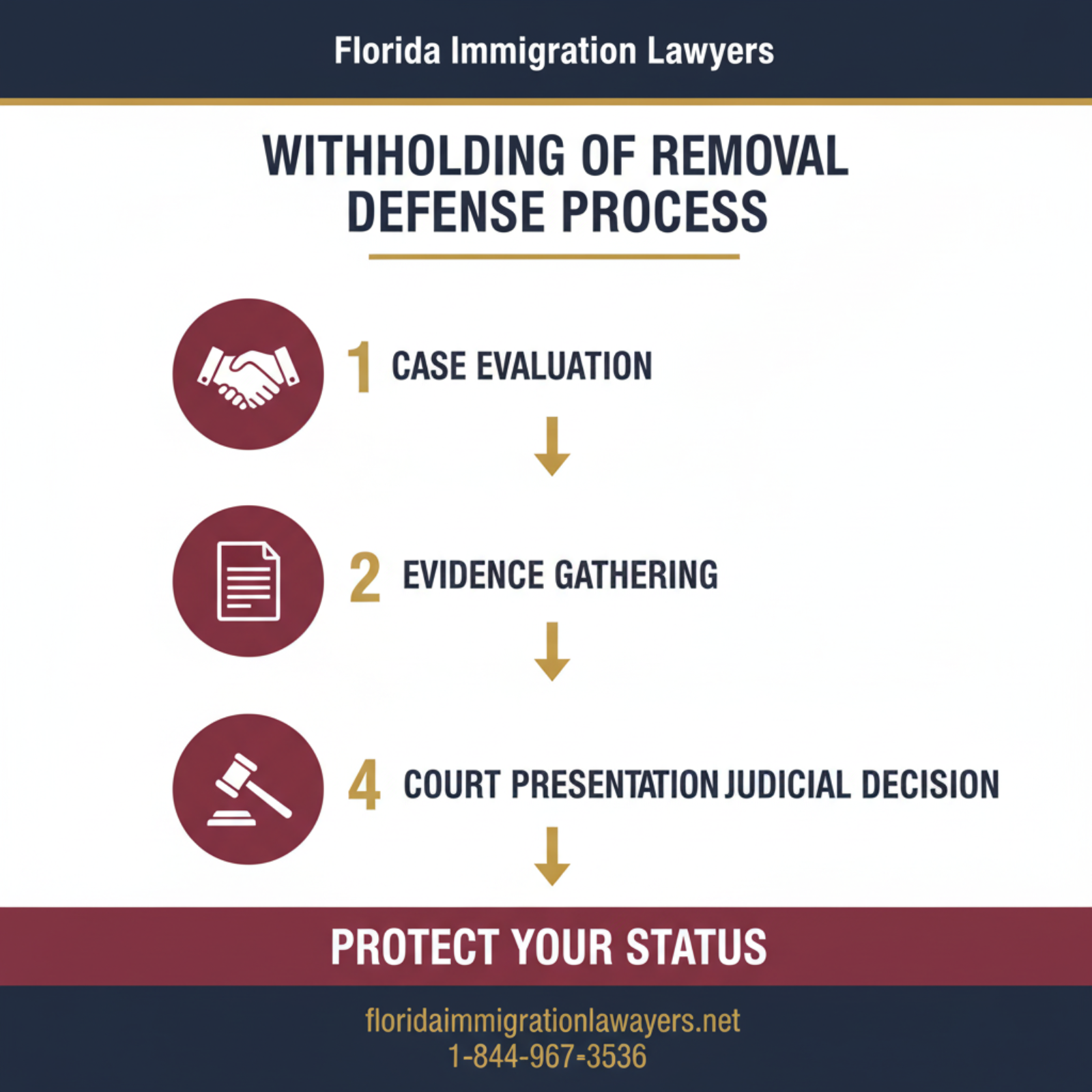
The process for seeking withholding of removal typically occurs within the framework of removal proceedings in immigration court. Here is a general overview of the steps involved:
-
Initial Consultation with an Immigration Lawyer: The first critical step is to seek expert legal advice. A knowledgeable attorney from Florida Immigration Lawyers will assess your eligibility, identify potential challenges, and help you strategize your defense. This initial meeting sets the foundation for your entire case.
-
Filing Form I-589 Application: If you are eligible, your attorney will help you prepare and file Form I-589, Application for Asylum and for Withholding of Removal. This form must be filed with the Immigration Court or USCIS, depending on your case's procedural posture. It details your fear of persecution or torture and the grounds for your claim.
-
Biometrics Appointment: After filing Form I-589, you will typically receive a notice to attend a biometrics appointment. At this appointment, your fingerprints, photograph, and signature will be collected for background and security checks. This is a standard part of the immigration process.
-
Master Calendar and Individual Hearings: Your case will proceed through a series of hearings before an Immigration Judge. Master Calendar Hearings are preliminary, where legal issues are discussed and deadlines set. The Individual Hearing (or Merits Hearing) is where you present your testimony and evidence, and the government attorney presents their case.
withholding of removal - Step-by-Step Process -
Presenting Evidence and Testimony: During the Individual Hearing, you will testify about your fear of persecution or torture. Your attorney will present all supporting evidence, including country conditions reports, affidavits, and expert testimony. Cross-examination by the government attorney is also a part of this stage.
-
Decision by Immigration Judge: After all evidence and testimony have been presented, the Immigration Judge will issue a decision on your application for withholding of removal. This decision may be delivered orally at the end of the hearing or in writing at a later date.
-
Appeals Process: If the Immigration Judge denies your application, you typically have the right to appeal the decision to the Board of Immigration Appeals (BIA). Further appeals can be pursued in the federal circuit courts. Our firm can guide you through the intricate immigration appeals process.
Essential Documents for Your Withholding of Removal Case
A successful withholding of removal case hinges on compelling evidence. Gathering and organizing the right documents is paramount. Here is a checklist of common documents and types of evidence you may need:
- Form I-589: Your completed and signed Application for Asylum and for Withholding of Removal.
- Identity Documents: Copies of your birth certificate, passport, national identity card, and any other relevant identification.
- Evidence of Persecution or Torture: This is the core of your case. It can include:
- Affidavits: Detailed written statements from you and witnesses describing past persecution or fear of future harm.
- Police Reports/Medical Records: Documentation of any physical harm, arrests, detentions, or medical treatment related to persecution.
- Photos/Videos: Visual evidence supporting your claims of harm or dangerous conditions.
- News Articles/Human Rights Reports: Independent documentation of country conditions, political unrest, human rights abuses, or specific threats to your social group. Sources like Amnesty International, Human Rights Watch, and U.S. State Department country reports are often critical.
- Expert Witness Testimony: Statements from academics, country experts, or psychologists who can attest to country conditions or the psychological impact of trauma.
- Threats/Correspondence: Any letters, emails, or messages indicating threats against you or your family.
- Proof of Membership: Documents demonstrating your membership in a particular social group, religious affiliation, or political involvement, if applicable.
- Marriage Certificates/Birth Certificates: If your family members are included in your application or are relevant to your claim.
- Any Other Supporting Evidence: Anything that helps corroborate your story and demonstrates the likelihood of persecution or torture upon return.
Organizing these documents systematically with the help of an experienced attorney is vital for a strong presentation in Fort Lauderdale immigration court.
Timeline and Processing Expectations for Florida Cases
The timeline for withholding of removal cases in Florida can vary significantly. Factors such as the caseload of the Immigration Courts, the complexity of your individual case, and the availability of evidence all play a role. It is important to manage your expectations and prepare for a potentially lengthy process.
In Florida, cases are heard in Immigration Courts located in cities like Miami and Orlando, serving applicants from areas including Fort Lauderdale. These courts, like others nationwide, often face backlogs, which can extend processing times considerably.
Factors Influencing Processing Times
- Court Docket Backlogs: The sheer volume of cases before Immigration Judges is a primary driver of delays.
- Case Complexity: Cases involving extensive evidence, multiple witnesses, or complex legal issues generally take longer.
- Evidence Gathering: The time required to collect all necessary documents, especially from abroad, can extend the timeline.
- Adjournments: Hearings may be postponed for various reasons, including attorney availability, witness issues, or requests for additional evidence.
- Appeals: If an appeal to the BIA or federal courts is necessary, this will add months or even years to the overall process.
While some cases may be resolved within a year, it is not uncommon for a withholding of removal case to take two to five years, especially if appeals are involved. Your attorney can provide a more personalized estimate based on current court trends and your specific circumstances.
Cost Factors and Fee Breakdown in Withholding of Removal Cases
Understanding the potential costs associated with pursuing withholding of removal is an important part of your planning. While there is no government filing fee for Form I-589, other expenses, particularly legal fees, are significant.
Investing in experienced legal representation from Florida Immigration Lawyers can be crucial for the success of your case. Our firm offers transparent fee structures and will discuss all anticipated costs during your initial free consultation.
Typical Cost Components
- Attorney Fees: This is generally the largest expense. Immigration attorneys typically charge either a flat fee for the entire case or an hourly rate. The cost will vary based on the complexity of your case, the attorney's experience, and the amount of work required.
- Translation Costs: If your documents are not in English, you will need certified translations. These costs can add up, especially for extensive evidentiary packets.
- Expert Witness Fees: If your case benefits from expert testimony (e.g., country conditions expert, psychologist), their fees for reports and court appearances will be an additional cost.
- Travel Expenses: If you or your witnesses need to travel to court hearings, these costs will be your responsibility.
- Document Acquisition Fees: Sometimes, obtaining official documents from your home country or other sources may involve fees.
While the overall cost can seem substantial, remember that you are investing in your safety and future in the United States. Many firms, including Florida Immigration Lawyers, offer payment plans to help manage these expenses. Do not let financial concerns deter you from seeking the critical legal help you need.
Do not navigate this complex and high-stakes process alone. The legal nuances of withholding of removal require expert guidance. Contact Florida Immigration Lawyers today to schedule your free consultation and secure experienced legal representation.
Common Mistakes to Avoid in Withholding of Removal Cases
Pursuing withholding of removal is a complex legal endeavor with high stakes. Even minor errors can jeopardize your case. Here are common mistakes to avoid:
-
Missing Deadlines: Immigration courts have strict deadlines for filing documents and responding to requests. Missing these can lead to automatic denial or the inability to present crucial evidence, severely undermining your case for protection.
-
Insufficient or Uncorroborated Evidence: A weak case often stems from a lack of compelling evidence or evidence that cannot be independently verified. Simply stating a fear is not enough; you must provide proof to meet the 'clear probability' standard.
-
Inconsistent Testimony: Any inconsistencies between your written application, your testimony, and supporting documents can damage your credibility. The Immigration Judge will scrutinize all aspects of your story.
-
Failing to Disclose Criminal History: Attempting to hide past criminal convictions, even minor ones, is a serious mistake. It can lead to a finding of lack of credibility and potentially trigger bars to relief, resulting in a denial of your application.
-
Not Addressing Bars to Relief: If there are potential bars to your eligibility, such as a prior conviction for a particularly serious crime, failing to address these directly and legally can be fatal to your case. Your attorney must present arguments to overcome or mitigate these issues.
-
Poor Preparation for Hearings: Appearing unprepared for your Master Calendar or Individual Hearing can lead to delays or a poor impression on the judge. Understanding the questions you will face and how to present your narrative clearly is vital.
-
Ignoring Country Conditions: Your claim must be supported by current and accurate country conditions information. Failing to provide this, or providing outdated information, can weaken your argument that you face a present danger.
-
Trying to Self-Represent: While legally possible, representing yourself in a withholding of removal case is highly inadvisable. The complexities of immigration law, evidentiary rules, and court procedures are overwhelming for non-lawyers. This is especially true for such a high-stakes defense.
-
Not Understanding the Differences Between Asylum and Withholding: Confusing the legal standards or benefits of asylum versus withholding of removal can lead to strategic errors in your application and testimony. Each requires a distinct legal approach.
-
Failure to Update Information: If your contact information, address, or any facts of your case change, failing to update the court and USCIS can result in missed notices, missed hearings, or adverse decisions. Always keep authorities informed.
When to Call a Lawyer for Withholding of Removal Defense
The decision to seek legal counsel for withholding of removal should be made as early as possible. Immigration law is highly complex, and the stakes are incredibly high when your safety and future are on the line. Florida Immigration Lawyers are here to provide the expert assistance you need.
You should contact an attorney immediately if you are:
- In Removal Proceedings: If you have received a Notice to Appear (NTA) and are facing deportation, you need immediate legal representation.
- Fearful of Returning Home: If you genuinely fear persecution or torture in your home country, an attorney can assess your eligibility for various forms of relief, including asylum, withholding of removal, or CAT protection.
- Facing Complex Legal Issues: Cases involving criminal history, previous immigration violations, or complex factual scenarios require the expertise of a seasoned immigration lawyer.
- Considering Self-Representation: The legal system is challenging. An attorney can ensure your rights are protected and your case is presented effectively.
- Seeking to Understand Your Options: Even if you are unsure about your eligibility, a consultation can clarify your legal standing and potential pathways to protection.
Our attorneys at Florida Immigration Lawyers understand the unique challenges faced by immigrants in Fort Lauderdale and across Florida. We are dedicated to providing compassionate and effective asylum and deportation defense services. We will meticulously prepare your case, gather compelling evidence, and represent you vigorously before the Immigration Court. Your future is too important to leave to chance.
About Florida Immigration Lawyers
Florida Immigration Lawyers is a leading law firm dedicated to providing exceptional immigration legal services across the entire state of Florida. With a deep understanding of U.S. immigration law and a commitment to our clients, we offer compassionate and effective representation for a wide range of immigration matters.
Our experienced team specializes in complex cases, including deportation defense, asylum claims, family-based petitions, business immigration, and citizenship applications. We pride ourselves on our client-focused approach, ensuring that each individual receives personalized attention and strategic legal advice tailored to their unique circumstances.
Why choose us? We are available 24/7 to address your urgent needs and offer free consultations to help you understand your options without financial burden. Our bilingual staff provides services in English and Spanish, ensuring clear communication and cultural understanding. We serve all Florida communities, including Fort Lauderdale, Miami, Orlando, and Tampa, bringing expert legal assistance directly to you.
Let Florida Immigration Lawyers be your trusted advocate in navigating the complexities of immigration law. Visit our website at https://www.floridaimmigrationlawyers.net or call us anytime at 1-844-967-3536 to schedule your free consultation. We are here to help you achieve your immigration goals.
Sources and References
- U.S. Citizenship and Immigration Services (USCIS) - Asylum
- Executive Office for Immigration Review (EOIR) - Immigration Court Practice Manual
- 8 U.S.C. § 1231(b)(3) - Withholding of removal
- 8 U.S.C. § 1158 - Asylum
- 8 CFR § 208 - Asylum and Withholding of Removal
- 8 CFR § 208.16(c) - Eligibility for withholding of removal under the Convention Against Torture
- Matter of A-H-, 23 I&N Dec. 774 (BIA 2005) - Precedent decision regarding bars to relief.
This article provides general legal information and is not intended as legal advice. Every case is unique, and outcomes depend on specific facts and circumstances. Contact an attorney for advice about your particular situation. Immigration laws are subject to change.
Do not let the fear of deportation define your future. Take the proactive step to protect yourself and your family. For expert legal guidance on withholding of removal and other deportation defense strategies, call Florida Immigration Lawyers today at 1-844-967-3536 for a free consultation. Se Habla Español - Estamos aquí para ayudarle.
Do Not Navigate This Process Alone
Our experienced immigration attorneys are ready to fight for you. Get a free, confidential consultation today.
Se Habla Español
Frequently Asked Questions
Florida Immigration Lawyers
Immigration Attorney | Founder, Vasquez Law Firm
U.S. Air Force veteran and immigration attorney with thousands of cases resolved. J.D., NCCU School of Law. AILA member. Admitted to the 4th, 5th, and 11th Circuit Courts.
Available 24/7 - Free Evaluations
Related Legal Services
Our Florida immigration attorneys can help you with experienced immigration attorneys, business immigration and asylum protection. Call today at 1-844-967-3536 for a free consultation.
Related Links
Related Topics
Free Legal Consultation
Discuss your case with our experienced attorneys. We're available 24/7.
Se Habla Español - Estamos aquí para ayudarle.
Related Articles
L-1 Visa Transfer for Florida Companies | VLF Florida
Learn about L-1 visa intracompany transfers for Florida companies. Ensure a smooth transition for your employees to Tampa. Call 1-844-967-3536 for expert advice.
H-2A Visa Opportunities for Florida Agricultural Workers
Explore opportunities for Florida agricultural workers under the H-2A visa program. Learn about application steps, costs, and common mistakes.
Derived Citizenship Through Parents in Florida | VLF Florida
Discover how children born abroad can gain U.S. citizenship through their parents in Florida. Learn about eligibility, the application process, and common pitfalls. Contact Florida Immigration Lawyers at 1-844-967-3536 for expert assistance.
Understanding Immigration Bond Hearings in Florida
Navigating an immigration bond hearing in Florida can be complex. Learn about the process, necessary documents, and common mistakes. Call Florida Immigration Lawyers for assistance.