Voluntary Departure vs. Deportation in Florida: A Crucial
Navigating the complexities of U.S. immigration law, especially when facing removal proceedings in Florida, demands a clear understanding of your options. This guide from Florida Immigration Lawyers delves into the critical differences between voluntary departure and deportation. We explore eligibility, the step-by-step process, essential documentation, and the financial implications of voluntary departure. Learn why avoiding a formal deportation order is crucial for your future immigration prospects and discover common pitfalls to avoid. This article emphasizes the importance of legal counsel to protect your rights and explore all available relief.

Voluntary departure allows an eligible individual in removal proceedings to leave the U.S. at their own expense by a specified date, avoiding a formal deportation order. This option is often preferable to deportation, which carries severe penalties, including long bars to re-entry and a permanent mark on one's immigration record. Eligibility depends on factors like good moral character, lack of aggravated felonies, and sufficient funds for travel.
- Voluntary departure avoids a formal deportation order.
- It prevents long bars to future re-entry.
- Eligibility requires good moral character and no serious crimes.
- It allows for a more controlled exit from the U.S.
- Seeking legal counsel is crucial for assessing your eligibility.
Facing immigration challenges in Florida can be incredibly stressful, especially when your future in the United States hangs in the balance. Many individuals find themselves in removal proceedings, grappling with the fear of deportation and its life-altering consequences. Understanding your options, such as voluntary departure, is paramount for making informed decisions that protect your future.
This comprehensive guide from Florida Immigration Lawyers explores the critical differences between voluntary departure and deportation, outlining the benefits, risks, eligibility requirements, and the process involved. We aim to empower you with the knowledge to navigate these complex legal waters in Florida. If you are facing removal proceedings, do not hesitate to seek expert legal guidance. Call Florida Immigration Lawyers at 1-844-967-3536 for a free consultation today.
Understanding Voluntary Departure vs. Deportation in Florida
Navigating the U.S. immigration system, particularly when facing removal, requires a clear understanding of the terms and options available. In Florida, individuals in removal proceedings must differentiate between voluntary departure and deportation, as their outcomes significantly impact future immigration prospects. Making the right choice can mean the difference between a pathway back to the U.S. and a prolonged separation from family.
What is Voluntary Departure?
Voluntary departure is a form of relief that allows a non-citizen in removal proceedings to leave the United States willingly and at their own expense. This option is granted by an Immigration Judge, typically at the individual's request, and requires them to depart by a specific date. The primary benefit of voluntary departure is that it prevents the individual from receiving a formal order of deportation. This distinction is crucial for future re-entry into the U.S.
When you are granted voluntary departure, you are essentially given permission to leave under less severe terms than if you were formally deported. This can make it easier to apply for immigration benefits in the future, as you avoid certain bars to admissibility associated with a deportation order. For residents of Hollywood and other Florida communities, this can be a vital opportunity to plan for their future.
What is Deportation (Removal)?
Deportation, officially known as "removal," is the forcible expulsion of a non-citizen from the United States by the government. An order of deportation is issued by an Immigration Judge after a finding that the individual is inadmissible or deportable under U.S. immigration law. Unlike voluntary departure, deportation is an involuntary process with severe and lasting consequences.
A deportation order creates a significant legal barrier to returning to the U.S. It typically triggers statutory bars to re-entry, often for 5, 10, or 20 years, or even permanently, depending on the grounds for removal and any criminal history. For many families across Florida, a deportation order can mean indefinite separation and immense hardship. Understanding these grave implications underscores why avoiding deportation is often a top priority.
Key Differences and Why it Matters
The fundamental distinction between voluntary departure and deportation lies in control and future consequences. With voluntary departure, you maintain a degree of control over your exit, avoid the formal stigma of a deportation order, and typically face fewer obstacles to future re-entry. Deportation, conversely, is an involuntary removal with harsh, long-lasting penalties, including severe bars to returning to the U.S. Choosing voluntary departure, when eligible, can significantly improve your chances of rejoining your family in Florida or elsewhere in the future.
Who is Eligible for Voluntary Departure in Florida?
Eligibility for voluntary departure is not automatic; it is a discretionary form of relief granted by an Immigration Judge. The requirements vary depending on whether you request voluntary departure before your removal hearing concludes or at the conclusion of your hearing. Generally, an applicant must demonstrate good moral character and have sufficient funds to cover their departure.
Specific criteria under INA § 240B (8 U.S.C. § 1229c) include a minimum period of physical presence in the U.S., typically one year for requests made at the conclusion of proceedings. You must also not have been convicted of an aggravated felony or certain other serious crimes. The Immigration Judge will assess various factors, including your ties to the community, your immigration history, and any potential risks. Our attorneys at Florida Immigration Lawyers can help assess your specific situation and eligibility.
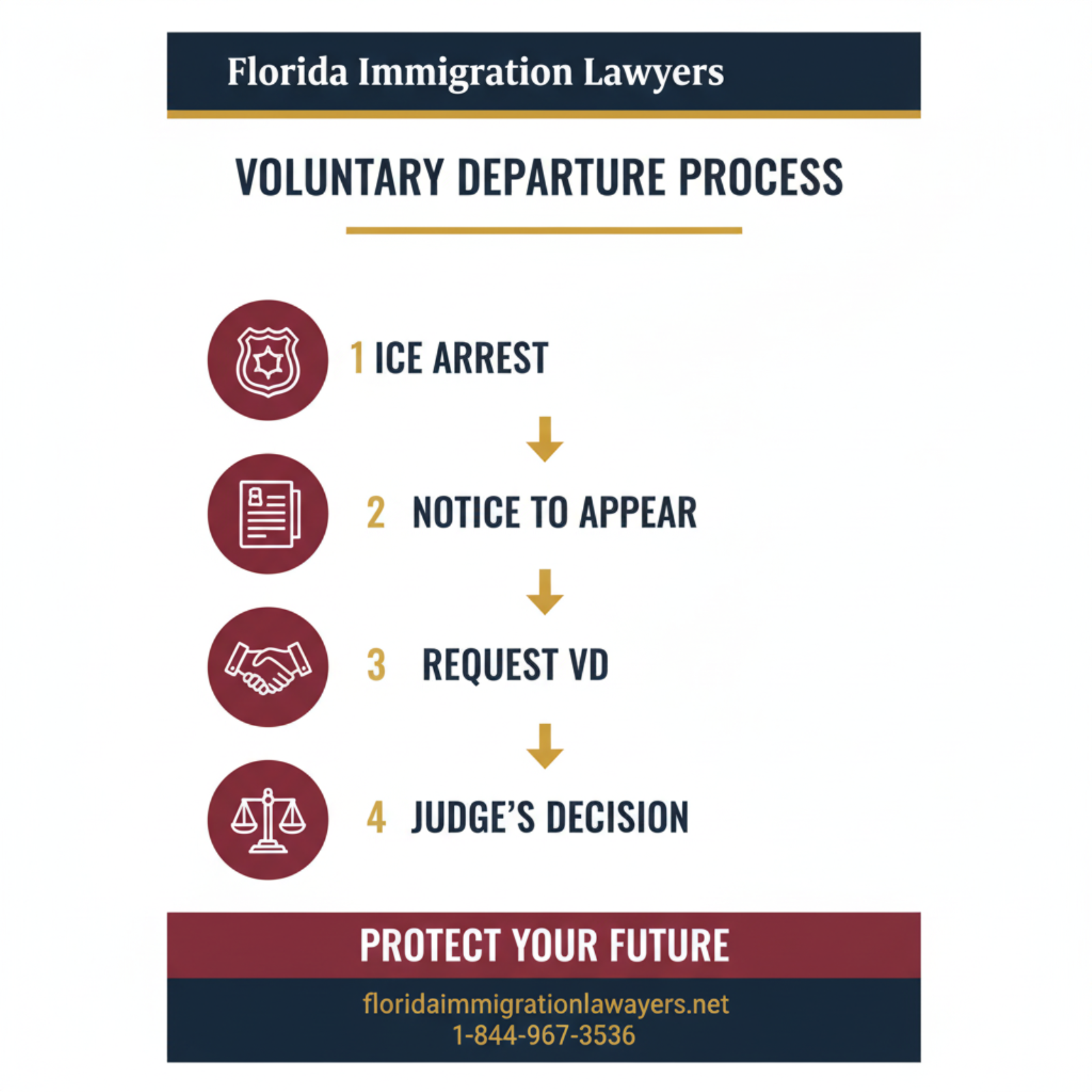
The Process of Seeking Voluntary Departure in Florida
The path to obtaining voluntary departure in Florida involves several critical steps within the immigration court system. This process typically unfolds in immigration courts located in cities like Miami or Orlando, serving communities across the state, including Hollywood. Understanding each stage is vital for a successful outcome.
-
Before Your Master Calendar Hearing:
At this early stage, you might be able to request voluntary departure from the Department of Homeland Security (DHS) counsel. If DHS agrees, they might join in a motion to the Immigration Judge, or you might agree to a stipulated order of voluntary departure. This can be a quicker path if all parties agree, often avoiding prolonged court proceedings. -
During Your Master Calendar Hearing:
If voluntary departure is not granted by DHS, you may request it directly from the Immigration Judge. You must demonstrate your eligibility and willingness to depart. The judge will consider factors like your ability to pay for your departure and your intent to leave. You will typically be required to post a bond to ensure your departure. -
At the Conclusion of Your Individual Hearing:
If you have pursued other forms of relief, such as asylum or cancellation of removal, and those applications are denied, you may still request voluntary departure as a final alternative. At this stage, stricter eligibility requirements apply, including a five-year period of good moral character immediately preceding the application and a physical presence requirement of at least one year prior to the Notice to Appear (NTA). The judge will set a specific departure date, usually 60 or 120 days. -
After Granting of Voluntary Departure:
If granted, you must depart the U.S. by the specified date. Failure to depart timely results in an automatic order of deportation, making you ineligible for certain forms of relief for ten years and subject to significant penalties. You must also provide proof of your departure to ICE. This is a critical period where compliance is non-negotiable.
Essential Documents for Voluntary Departure
Preparing a thorough set of documents is crucial for any immigration proceeding, and voluntary departure is no exception. Having your paperwork in order demonstrates your credibility and commitment to complying with the court's order. Our firm emphasizes meticulous preparation for all our clients in Florida.
-
Identity and Nationality Documents:
You will need your passport, birth certificate, and any other national identity documents. These prove who you are and your country of origin, which is essential for travel arrangements. -
Proof of Financial Ability to Depart:
Evidence such as bank statements, flight reservations, or affidavits from individuals willing to pay for your ticket can demonstrate your financial capacity to leave the U.S. This is a key requirement for the Immigration Judge. -
Evidence of Good Moral Character:
This can include letters of recommendation, proof of employment, community involvement, or absence of criminal records. For those requesting voluntary departure at the conclusion of proceedings, this is a particularly important aspect. -
Immigration History Documents:
Any previous immigration applications, visas, entry/exit records, and Notices to Appear (NTAs) should be compiled. This helps provide a complete picture of your history in the U.S. -
Family and Community Ties (if applicable):
While not always explicitly required, demonstrating strong family or community ties outside the U.S. can sometimes support your claim of intent to depart.
Voluntary Departure Timelines and Expectations
The timeline for voluntary departure can vary significantly depending on when it is requested and the discretion of the Immigration Judge. If voluntary departure is granted before or at the master calendar hearing, the judge typically provides up to 120 days to depart. If granted at the conclusion of the individual hearing, after other relief has been denied, the departure period is usually up to 60 days.
It is imperative to understand that this timeframe is strict. Missing the departure deadline automatically converts the voluntary departure order into a formal order of deportation. This triggers a ten-year bar to re-entry and other severe immigration consequences. Planning your departure logistics well in advance is essential. While you are generally allowed to re-enter the U.S. in the future if you depart voluntarily, you must still apply for a new visa and be found admissible, which can be a complex process. Consult with Florida Immigration Lawyers to understand the specific implications for your case.
Financial Considerations for Voluntary Departure
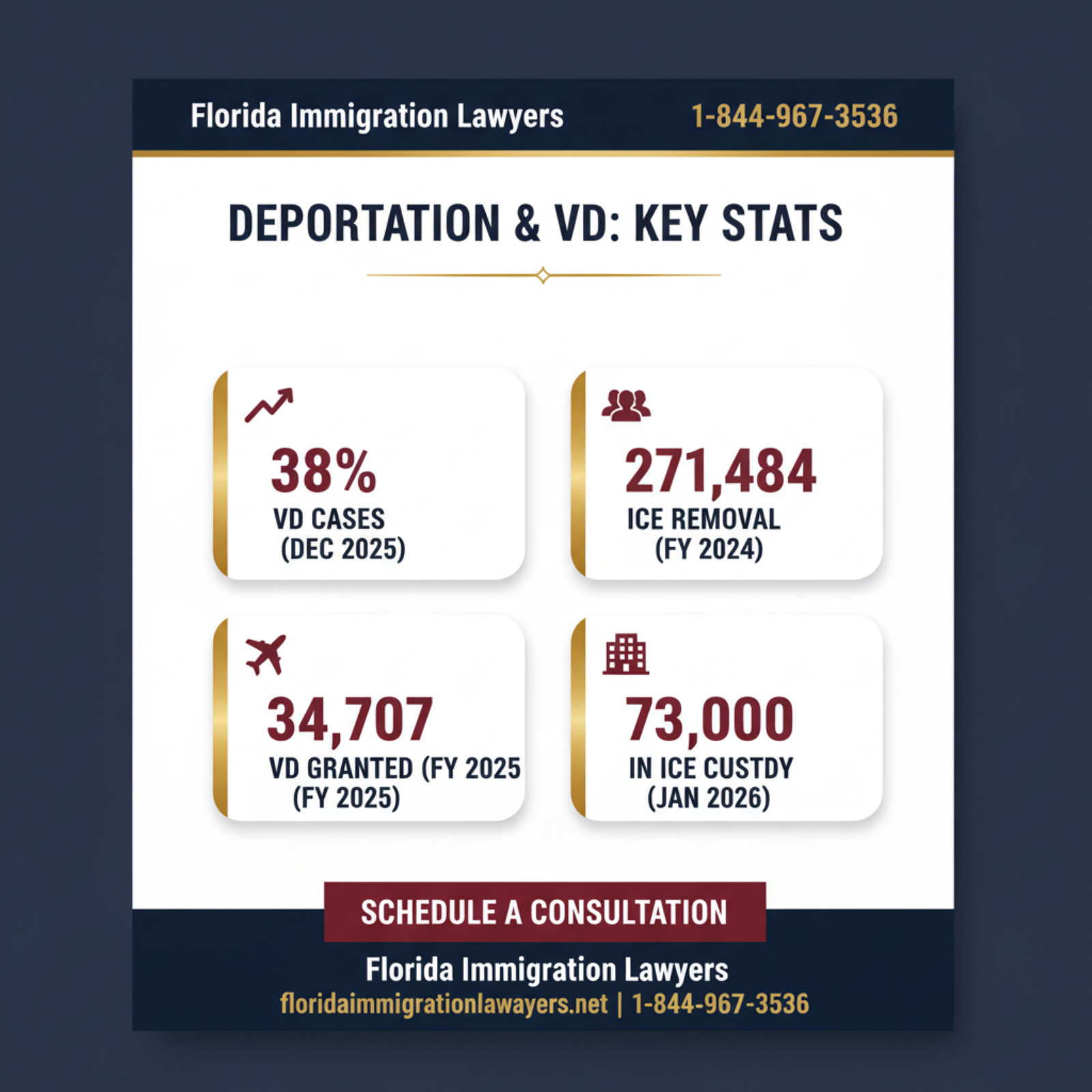
While voluntary departure avoids the severe penalties of deportation, it does involve financial obligations. Understanding these costs is crucial for individuals and families in Florida planning their next steps.
-
Travel Expenses:
The most immediate cost is securing your travel arrangements out of the United States. This includes airfare, ground transportation, and any associated travel fees. -
Voluntary Departure Bond:
In many cases, an Immigration Judge will require you to post a bond to ensure your timely departure. This bond can range from a few hundred to several thousand dollars, depending on the specifics of your case and the judge's discretion. The bond is refunded upon proof of timely departure. -
Legal Fees:
Hiring an experienced immigration attorney is a significant investment but often proves invaluable. Legal fees cover representation in court, assistance with documentation, and strategic advice. While an upfront cost, it can prevent far greater long-term expenses and complications associated with deportation. -
Application Fees (if applicable):
While voluntary departure itself doesn't have a direct application fee to USCIS, any associated applications or motions might incur fees. Your attorney can provide a clear breakdown of potential costs.
Do not navigate this complex process alone. The stakes in voluntary departure and deportation cases are incredibly high, affecting your future and your family's well-being. Contact Florida Immigration Lawyers today to ensure your rights are protected and your case is handled with the expertise it deserves.
Common Mistakes to Avoid in Voluntary Departure Cases
Seeking voluntary departure can be a lifeline, but missteps can turn this opportunity into a permanent bar from the U.S. In Florida, where immigration matters are frequent, avoiding common errors is paramount.
-
Missing the Departure Deadline:
This is arguably the most critical mistake. Failing to depart by the date set by the Immigration Judge automatically results in a formal order of deportation and triggers a 10-year bar to re-entry. This consequence is severe and often irreversible. -
Failing to Provide Proof of Departure:
Even if you leave on time, you must provide verifiable proof of your departure to the Immigration and Customs Enforcement (ICE) office responsible for your case. Without this proof, ICE may assume you overstayed, leading to complications. -
Not Understanding Eligibility Requirements:
Applying for voluntary departure when you are clearly ineligible due to criminal history or other factors wastes time and resources. It can also negatively impact your credibility with the court. -
Lying or Misrepresenting Facts:
Any false statements or fraudulent documents submitted to the court can lead to severe penalties, including a permanent bar from the U.S. for misrepresentation. Honesty and transparency are always best. -
Attempting to Self-Represent in Court:
Immigration law is incredibly complex. Trying to navigate removal proceedings and voluntary departure requests without legal counsel significantly reduces your chances of a favorable outcome. An attorney understands the nuances of the law. -
Ignoring Prior Immigration Violations:
Past overstays, illegal entries, or other immigration violations can impact your eligibility for voluntary departure and other forms of relief. It is crucial to disclose your full immigration history to your attorney. -
Not Having Funds for Departure:
The Immigration Judge must be convinced you have the financial means to leave the country. Failing to demonstrate this can lead to a denial of voluntary departure. -
Failing to Understand the Consequences of Voluntary Departure:
While better than deportation, voluntary departure still means leaving the U.S. and potentially facing bars to re-entry if certain conditions are not met. Understand what it means for your future. For example, if you had unlawful presence, you might still trigger a 3-year or 10-year bar upon departure, even if you avoid a deportation order. -
Not Exploring All Available Relief Options:
Voluntary departure might be an option, but other forms of relief, such as asylum or cancellation of removal, might allow you to remain in the U.S. permanently. A lawyer can help you explore every possibility. -
Failing to Account for Travel Document Expiration:
Ensure your passport or travel documents are valid for the entire period up to and including your departure date. An expired document can prevent timely departure.
When to Seek Legal Counsel for Voluntary Departure or Deportation
The decision to pursue voluntary departure or to defend against deportation is one of the most significant choices an immigrant in Florida can make. Given the complexity and high stakes, consulting with an experienced immigration attorney is not just advisable-it's often essential. Florida Immigration Lawyers are here to help.
You should contact an attorney immediately if:
- You receive a Notice to Appear (NTA) in Immigration Court.
- You are detained by ICE and face removal proceedings.
- You are unsure whether you qualify for voluntary departure or other forms of relief.
- You have a criminal record that might impact your immigration status.
- You have previously been deported or have a history of immigration violations.
- You need assistance gathering documents or preparing for court hearings.
- You want to explore all possible options to remain in the U.S. or minimize future bars to re-entry.
Our skilled attorneys provide comprehensive deportation defense services and can guide you through every step, whether it's navigating the Miami Immigration Court or the Orlando Immigration Court. We understand the local context in Florida and can provide tailored advice. Learn more about our services at our deportation defense page and our general immigration practice areas.
Florida Immigration Lawyers is a leading law firm dedicated to providing exceptional legal representation to immigrants across Florida. With years of experience and a deep understanding of immigration law, our compassionate team is committed to defending your rights and helping you achieve your immigration goals. From our base, we serve clients in Hollywood, Miami, Orlando, and throughout the entire state.
We offer a wide range of services, including deportation defense, asylum applications, family-based immigration, business immigration, and citizenship assistance. Our attorneys are available 24/7 to provide support and guidance. We believe everyone deserves high-quality legal representation, which is why we offer free consultations to discuss your unique situation. Let us be your trusted advocates in the complex world of immigration law. Visit our attorneys page or contact us directly. Phone: 1-844-967-3536. Website: https://www.floridaimmigrationlawyers.net.
Sources and References
- U.S. Citizenship and Immigration Services (USCIS)
- Executive Office for Immigration Review (EOIR) - Immigration Court Practice Manual
- Executive Office for Immigration Review (EOIR)
- 8 U.S.C. § 1229c - Voluntary departure (Immigration and Nationality Act Section 240B)
- 8 C.F.R. § 1240.26 - Voluntary departure
This article provides general legal information and is not intended as legal advice. Every case is unique, and outcomes depend on specific facts and circumstances. Contact an attorney for advice about your particular situation.
Your immigration journey is too important to navigate alone. Whether you are considering voluntary departure or fighting a deportation order in Florida, Florida Immigration Lawyers are here to provide the dedicated and experienced legal support you need. Protect your future and your family. Call us today for a free, confidential consultation. Se Habla Español - Estamos aquí para ayudarle. Phone: 1-844-967-3536.
Do Not Navigate This Process Alone
Our experienced immigration attorneys are ready to fight for you. Get a free, confidential consultation today.
Se Habla Español
Frequently Asked Questions
Florida Immigration Lawyers
Immigration Attorney | Founder, Vasquez Law Firm
U.S. Air Force veteran and immigration attorney with thousands of cases resolved. J.D., NCCU School of Law. AILA member. Admitted to the 4th, 5th, and 11th Circuit Courts.
Available 24/7 - Free Evaluations
Related Legal Services
Our Florida immigration attorneys can help you with immigration practice areas, free immigration consultation and experienced immigration attorneys. Call today at 1-844-967-3536 for a free consultation.
Related Links
Related Topics
Free Legal Consultation
Discuss your case with our experienced attorneys. We're available 24/7.
Se Habla Español - Estamos aquí para ayudarle.
Related Articles
EB-5 Investor Green Card in Florida: Key Insights | VLF Florida
Explore how the EB-5 investor green card program can help you start a new life in Florida. Learn about the benefits, processes, and common pitfalls of this investment immigration path. Call 1-844-967-3536 for expert guidance.
E-2 Visa for Florida Business Investors | VLF Florida
Learn how the E-2 investor visa can help you start a business in Naples, Florida. We cover eligibility, application steps, common mistakes, and when to seek legal help. Contact Florida Immigration Lawyers for a free consultation.
VAWA Immigration Relief: Support in Florida | VLF Florida
Explore VAWA immigration relief options for abuse victims in Hollywood, Florida. Learn about eligibility, application steps, and common mistakes to avoid. Contact Florida Immigration Lawyers for a free consultation.
EB-5 Investor Green Card in Florida: A Comprehensive Guide
Learn how the EB-5 investor green card program can help you gain U.S. residency through investment in Florida. Discover key steps, common mistakes, and when to seek legal advice. Call Florida Immigration Lawyers at 1-844-967-3536 for a free consultation.
