Visa Bulletin October 2025: Florida Immigration Updates &
The Visa Bulletin October 2025 is a crucial publication for Florida residents pursuing green cards, detailing immigrant visa availability for the new fiscal year. It outlines 'Final Action Dates' and 'Dates for Filing Applications,' which dictate when applicants can proceed with their immigration journey. This guide from Florida Immigration Lawyers explains the bulletin's significance, its impact on communities like Homestead, and provides a step-by-step overview of the process. We also cover essential documents, processing timelines, cost factors, and common mistakes to avoid. Understanding these updates is vital for family-sponsored and employment-based categories, as they can significantly affect your path to permanent residency in Florida. Our firm offers expert legal assistance to help you navigate these complexities and ensure your application is handled correctly.

The Visa Bulletin October 2025 outlines immigrant visa availability for the new fiscal year, significantly impacting Florida residents seeking green cards. It details 'Final Action Dates' and 'Dates for Filing Applications,' indicating when applicants can move forward. Understanding these dates is critical for family-sponsored and employment-based categories, especially for those in Homestead and across Florida navigating backlogs and processing changes.
- The Visa Bulletin updates monthly, with October marking the start of a new fiscal year.
- It dictates when immigrants can file for adjustment of status or apply for an immigrant visa abroad.
- Dates vary by visa category and country of chargeability, affecting many Florida communities.
- Consulting an immigration lawyer is crucial to interpret these complex dates and plan your application.
- Homestead residents and others in Florida must monitor these updates closely for their immigration journey.
Are you a Florida resident closely following the ever-evolving world of U.S. immigration? Perhaps you are waiting patiently for your turn to apply for a green card, or you have family members abroad hoping to reunite with you in the Sunshine State. The process can feel overwhelming, filled with complex dates, shifting timelines, and intricate legal requirements. Understanding the Visa Bulletin October 2025 is paramount to your immigration journey.
This comprehensive guide from Florida Immigration Lawyers will demystify the October 2025 Visa Bulletin, explaining its significance, how it impacts applicants across Florida-from Miami to Orlando to Homestead-and what steps you need to take. We will cover everything from understanding priority dates to navigating the application process, ensuring you are well-informed for the new fiscal year. Do not navigate this complex process alone. Call Florida Immigration Lawyers at 1-844-967-3536 for a free consultation today.
Understanding the Visa Bulletin October 2025 for Florida Residents
The Visa Bulletin is a monthly publication by the U.S. Department of State that provides critical information on the availability of immigrant visas. It is essential for anyone applying for a green card, whether through family sponsorship or employment. For Florida residents, especially those in diverse communities like Homestead, understanding these updates is key to planning your immigration strategy.
October is a particularly significant month because it marks the beginning of the new fiscal year for U.S. immigration. This often brings about changes in visa availability, sometimes leading to advancement in priority dates or, in some cases, retrogression. The Visa Bulletin October 2025 will set the tone for the upcoming year, influencing thousands of lives across Florida.
What is the Visa Bulletin and How Do You Read It?
The Visa Bulletin essentially tells you when you can apply for your green card based on your 'priority date.' Your priority date is generally the date your petition (e.g., Form I-130 or Form I-140) was properly filed with USCIS or the Department of Labor. Once your priority date becomes 'current' according to the Visa Bulletin, you may be eligible to proceed with your application.
The bulletin presents two main charts for most preference categories: 'Final Action Dates' and 'Dates for Filing Applications.' The 'Final Action Dates' chart indicates when an immigrant visa can actually be issued, or when USCIS can approve an adjustment of status application. The 'Dates for Filing Applications' chart, often referred to as the 'filing chart,' tells you when you can *file* your adjustment of status application (Form I-485) if USCIS determines that there are more visas available than applicants for final action.
USCIS announces monthly on its website which chart-Final Action Dates or Dates for Filing-should be used for filing adjustment of status applications. It is crucial to check the USCIS website for this specific guidance each month. For those in Homestead, Miami, or Tampa, staying informed about these dates is vital for timely application submission.
Why is October 2025 Significant for Florida Immigration Updates?
As the start of the fiscal year, October often sees the allocation of new immigrant visa numbers. This can lead to significant movement in priority dates for various categories and countries. While there are no guarantees, many applicants hope for progress in their categories during this period.
For individuals and families across Florida, the Visa Bulletin October 2025 could mean the difference between waiting another year or finally being able to take the next step towards permanent residency. Understanding the specific movements for your country of chargeability and visa preference category is essential. This is particularly true for countries with high demand, which often face longer backlogs.
Navigating the Immigrant Visa Process: A Step-by-Step Guide
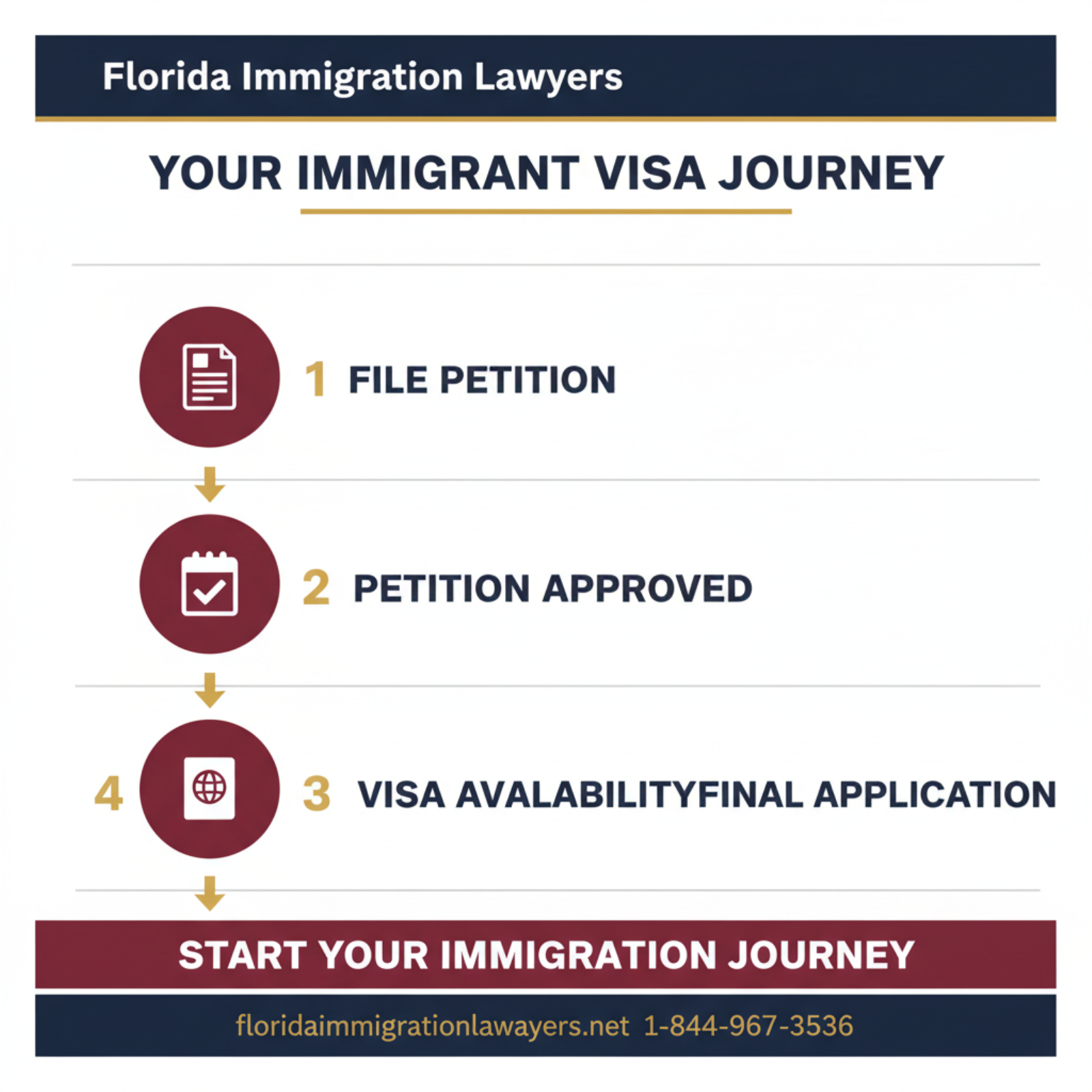
The journey to obtaining a green card can be complex, but breaking it down into manageable steps can help. Whether you are in Fort Lauderdale, Orlando, or a smaller Florida community, the general process remains the same. Here is a typical overview of the immigrant visa process:
-
Step 1: Petition Filing and Approval (I-130 or I-140)
The process usually begins with a U.S. citizen or lawful permanent resident filing a petition on behalf of a relative (Form I-130, Petition for Alien Relative) or an employer filing on behalf of an employee (Form I-140, Immigrant Petition for Alien Worker). This petition establishes the relationship or employment basis for the immigrant visa. Once approved, you receive a 'priority date.' -
Step 2: Monitoring the Visa Bulletin
After your petition is approved and you have a priority date, you must diligently monitor the monthly Visa Bulletin. You are waiting for your priority date to become 'current' in your specific visa category and country of chargeability. The Visa Bulletin October 2025 will be your guide for the start of the new fiscal year. -
Step 3: Filing for Adjustment of Status (I-485) or Consular Processing
If you are already in the U.S. and your priority date is current, you may be eligible to file Form I-485, Application to Register Permanent Residence or Adjust Status, with USCIS. If you are outside the U.S., or if you are ineligible for adjustment of status, you will go through 'consular processing' at a U.S. embassy or consulate in your home country. USCIS field offices in Florida, such as those in Miami, Orlando, or Tampa, handle many adjustment of status interviews. -
Step 4: Biometrics Appointment and Interview
For adjustment of status applicants, USCIS will schedule a biometrics appointment to collect fingerprints, photos, and a signature. Later, an interview will be scheduled at a local USCIS office. Consular processing applicants will have their interview at the U.S. embassy or consulate. This is a critical step where an immigration officer will review your application and documents. -
Step 5: Visa or Green Card Issuance
If your application is approved, you will either receive an immigrant visa stamp in your passport (for consular processing) or your green card will be mailed to you (for adjustment of status). This signifies your status as a lawful permanent resident of the United States. This is the culmination of your journey, allowing you to live and work permanently in Florida.
Essential Document Checklist for Your Green Card Application
Preparing a comprehensive set of documents is crucial for a successful green card application. Missing or incorrect documents can lead to delays or even denials. While the exact list varies by case, here are commonly required documents:
- Forms: Properly completed and signed USCIS forms (e.g., I-130, I-485, I-864 Affidavit of Support, I-765, I-131, I-693 Medical Examination).
- Identity and Civil Documents: Birth certificates, marriage certificates, divorce decrees, passports, national identity cards.
- Proof of Relationship (Family-Based): Marriage certificate, birth certificates of children, photos, joint bank accounts, utility bills, leases.
- Financial Documents: Tax returns, W-2s, employment verification letters, bank statements to demonstrate financial support.
- Medical Examination: Completed by a USCIS-approved civil surgeon (Form I-693).
- Police Clearances/Criminal Records: From all countries where you have lived for a certain period, if applicable.
- Photographs: Passport-style photos meeting USCIS specifications.
- Previous Immigration Documents: Copies of previous visas, I-94 arrival/departure records, prior USCIS notices or decisions.
- Employment-Based Specifics: Employer letters, educational degrees, professional licenses, detailed job descriptions, and proof of experience.
Visa Bulletin October 2025: Timeline and Processing Expectations
Understanding processing times is a common concern for applicants in Florida. The time it takes to get a green card can vary significantly based on several factors: the specific visa category (family-sponsored vs. employment-based), your country of chargeability, and the current workload at USCIS and consular offices. The Visa Bulletin October 2025 will give you a snapshot of current eligibility.
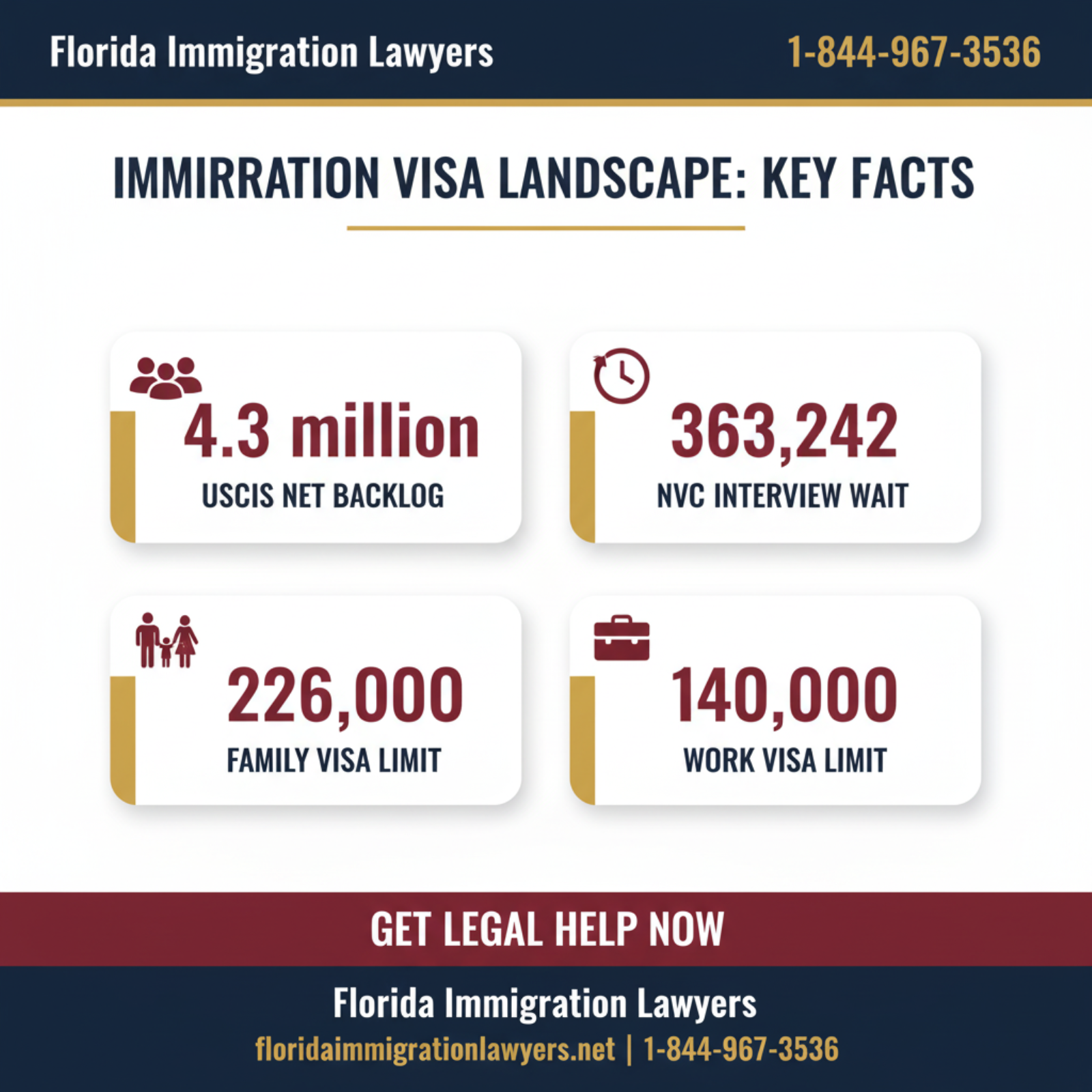
Family-sponsored preference categories (F1, F2A, F2B, F3, F4) generally have longer waiting times than immediate relatives of U.S. citizens (spouses, minor children, parents). Employment-based categories (EB-1, EB-2, EB-3, EB-4, EB-5) also have varying processing times, with EB-1 typically being the fastest due to its extraordinary ability criteria. Countries like India, China, Mexico, and the Philippines often face substantial backlogs due to high demand and per-country limits, as outlined in INA Section 203(e) (8 U.S.C. 1153).
While the Visa Bulletin October 2025 indicates when you can file or have your visa finalized, actual processing times can extend beyond that. USCIS provides an online tool to check average processing times for different forms at specific service centers or field offices. For example, an I-485 application processed at the Miami Field Office might have a different timeline than one at the Orlando Field Office. These times are estimates and can change frequently.
The start of a new fiscal year in October can sometimes lead to an initial forward movement in priority dates as new visa numbers become available. However, this movement is not guaranteed and can be followed by slower progress or even retrogression in subsequent months if demand outstrips supply. It is crucial to manage expectations and prepare for potential delays.
Cost Factors and Fee Breakdown for Immigration Applications
The financial aspect of immigration can be substantial, and it is important to budget accordingly. While specific fees are subject to change, understanding the general categories of costs can help you prepare. USCIS fees are non-refundable and must be paid as required by 8 CFR Part 103.
- USCIS Filing Fees: These are the government fees for filing various forms. This includes the I-130 petition, I-140 petition, I-485 adjustment of status application, I-765 employment authorization, I-131 travel document, and biometrics. These fees can collectively amount to thousands of dollars, depending on the number of applications filed.
- Medical Examination Fees: All adjustment of status applicants must undergo a medical examination by a USCIS-approved civil surgeon. The cost for this exam is separate from USCIS fees and varies by provider, typically ranging from a few hundred dollars.
- Attorney Fees: Retaining an experienced immigration lawyer, such as those at Florida Immigration Lawyers, is a significant investment but often invaluable. Legal fees cover the lawyer's expertise in preparing and filing your petitions, responding to Requests for Evidence (RFEs), and representing you during interviews.
- Other Costs: This can include translation services for foreign documents, postage, travel expenses for interviews (e.g., to the Miami USCIS office from Homestead), and obtaining civil documents like birth certificates.
Remember that USCIS fees can change, so always check the official USCIS website for the most current fee schedule before filing. Planning for these expenses is a crucial part of your immigration strategy in Florida.
Do not navigate this process alone. The complexities of the Visa Bulletin October 2025 and the entire immigration system require expert guidance. Contact Florida Immigration Lawyers today to ensure your application is handled correctly and efficiently.
Common Mistakes Florida Immigrants Should Avoid
Navigating the U.S. immigration system can be challenging, and even minor errors can lead to significant delays or denials. Florida residents must be particularly diligent. Here are some common mistakes to avoid:
-
Misinterpreting the Visa Bulletin: Incorrectly reading the 'Final Action Dates' versus 'Dates for Filing' charts can lead to premature or delayed application submissions. This can result in your application being rejected or missing a crucial filing window. Always verify which chart USCIS is accepting applications from for adjustment of status.
-
Filing Incomplete or Inaccurate Documentation: Submitting an application without all required forms or supporting documents, or with incorrect information, is a leading cause of Requests for Evidence (RFEs) or denials. Ensure every question is answered truthfully and all evidence is provided.
-
Missing Deadlines or Appointments: Failing to respond to an RFE by its deadline, missing a biometrics appointment, or not appearing for an interview can lead to the denial of your application. Keep meticulous records and respond promptly to all USCIS communications.
-
Not Updating Your Address: If you move within Florida or to another state, you must inform USCIS within 10 days using Form AR-11. Failure to do so can result in missed notices, RFEs, or interview appointments, jeopardizing your case.
-
Assuming All Visa Categories Move Equally: The Visa Bulletin shows different movements for various family-sponsored and employment-based categories, as well as distinct country-specific backlogs. What applies to one category or country may not apply to another. Always check your specific category and country of chargeability.
-
Ignoring Legal Advice: Attempting to navigate complex immigration laws without legal counsel can lead to costly errors. An experienced attorney understands the nuances of the law and can help you avoid common pitfalls, especially with dynamic updates like the Visa Bulletin October 2025.
-
Failing to Disclose Criminal History: Any past arrests or convictions, no matter how minor, must be disclosed to USCIS. Failure to do so can be considered misrepresentation and lead to permanent bars from the U.S. Always be truthful and seek legal advice on how to handle such situations.
When to Call a Florida Immigration Lawyer
While some immigration processes appear straightforward, the reality is often far more complex. The Visa Bulletin October 2025, like all immigration regulations, is subject to interpretation and can have profound implications for your case. Knowing when to seek legal assistance can be the difference between success and significant setbacks.
You should strongly consider contacting Florida Immigration Lawyers if you:
- Have a Complex Case: This includes situations involving previous deportations, criminal history, prior visa denials, or complicated family structures.
- Are Unsure How to Interpret the Visa Bulletin: If you are confused about your priority date, category, or how the latest Visa Bulletin October 2025 impacts your eligibility, a lawyer can provide clarity.
- Received a Request for Evidence (RFE) or Notice of Intent to Deny (NOID): These notices require a precise and timely response. An attorney can help you gather the necessary evidence and craft a compelling reply.
- Are Facing Deportation or Removal Proceedings: This is a critical situation where legal representation is absolutely essential. Our firm specializes in deportation defense.
- Need Assistance with Family-Based Petitions: For spouses, children, or other relatives, our team can guide you through family immigration processes, including Form I-130 and adjustment of status.
- Are Applying for Citizenship: Navigating the citizenship process, including naturalization, can be intricate. We can assist with eligibility and application.
- Require Business Immigration Support: For employers or individuals seeking business immigration visas, we offer strategic advice and comprehensive services.
Our experienced attorneys at Florida Immigration Lawyers are dedicated to providing personalized legal strategies for your unique situation. We serve clients across Florida, from the bustling cities to the more rural areas around Homestead, and are prepared to assist you with any immigration challenge.
Frequently Asked Questions About the Visa Bulletin
Which employment-based green card is fastest?
Generally, the EB-1 visa category is considered the fastest employment-based green card path. This category is for individuals with extraordinary ability, outstanding professors or researchers, and multinational managers or executives. Unlike other categories, EB-1 typically has no backlog for most countries, meaning priority dates are usually current. However, eligibility criteria for EB-1 are stringent and require significant evidence of achievement. Other categories like EB-2 and EB-3 can have substantial backlogs depending on the country of origin.
Is USCIS moving faster in 2025?
Whether USCIS is moving faster in 2025 is difficult to predict definitively. Processing times are influenced by many factors, including application volume, agency resources, policy changes, and specific case complexities. While USCIS continually strives to improve efficiency, individual case processing speeds can vary. It is always best to check the official USCIS website for the most up-to-date processing times for your specific form and service center. The Visa Bulletin October 2025 might indicate some movement, but it does not guarantee faster processing for every application.
Why is the Visa Bulletin not moving?
The Visa Bulletin may not move, or may even retrogress, primarily due to high demand exceeding the annual statutory limits for immigrant visas. Each year, there is a cap on the total number of immigrant visas available worldwide, and also per-country caps. When the number of eligible applicants from a particular country or in a specific visa category surpasses the available visas, a backlog forms. This causes priority dates to stall or move backward. Factors like increased petition filings, changes in immigration policy, or global events can also impact visa bulletin movement.
Is the Visa Bulletin changed in November 2025?
Yes, the Visa Bulletin is published monthly, typically around the middle of the preceding month. So, after the Visa Bulletin October 2025 is released, there will indeed be a new Visa Bulletin for November 2025. Each month brings new updates to the 'Final Action Dates' and 'Dates for Filing Applications' for all family-sponsored and employment-based categories. It is essential for applicants to continuously monitor these monthly publications for changes that may affect their eligibility to file or receive a visa.
About Florida Immigration Lawyers
Florida Immigration Lawyers is a premier immigration law firm dedicated to serving individuals, families, and businesses across the entire state of Florida. With years of specialized experience, our team of compassionate and knowledgeable attorneys provides strategic legal solutions tailored to your unique immigration needs. We understand the profound impact immigration matters have on your life and are committed to guiding you through every step of the process.
Our comprehensive services include general immigration assistance, asylum claims, deportation defense, citizenship applications, family-based visas, and business immigration solutions. We pride ourselves on providing clear communication, aggressive advocacy, and unwavering support to our diverse clientele.
Why choose Florida Immigration Lawyers? We offer free consultations, are available 24/7 to address your urgent concerns, and possess a deep understanding of both federal immigration law and the specific needs of Florida's immigrant communities, including those in Homestead. Your success is our priority.
Contact us today:
Phone: 1-844-967-3536
Website: https://www.floridaimmigrationlawyers.net
Serving all of Florida, 24/7 availability for free consultations.
Sources and References
- U.S. Citizenship and Immigration Services (USCIS)
- U.S. Department of State - Visa Bulletin
- Executive Office for Immigration Review (EOIR) - U.S. Department of Justice
- Immigration and Nationality Act (INA) Section 201 - Worldwide level of immigration (8 U.S.C. 1151)
- Immigration and Nationality Act (INA) Section 203 - Allocation of immigrant visas (8 U.S.C. 1153)
- Code of Federal Regulations (CFR) Part 103 - Adjudication of applications and petitions
This article provides general legal information and is not intended as legal advice. Every case is unique, and outcomes depend on specific facts and circumstances. Contact an attorney for advice about your particular situation.
Navigating the complex landscape of U.S. immigration law, especially with critical updates like the Visa Bulletin October 2025, requires professional expertise. Do not leave your future to chance. Our dedicated team at Florida Immigration Lawyers is ready to provide the guidance and representation you deserve. Call us for a free, confidential consultation.
Contact Florida Immigration Lawyers today at 1-844-967-3536 to discuss your immigration options. Se Habla Español - Estamos aquí para ayudarle.
Do Not Navigate This Process Alone
Our experienced immigration attorneys are ready to fight for you. Get a free, confidential consultation today.
Se Habla Español
Frequently Asked Questions
Florida Immigration Lawyers
Immigration Attorney | Founder, Vasquez Law Firm
U.S. Air Force veteran and immigration attorney with thousands of cases resolved. J.D., NCCU School of Law. AILA member. Admitted to the 4th, 5th, and 11th Circuit Courts.
Available 24/7 - Free Evaluations
Related Legal Services
Our Florida immigration attorneys can help you with family immigration services, immigration practice areas and free immigration consultation. Call today at 1-844-967-3536 for a free consultation.
Related Links
Related Topics
Free Legal Consultation
Discuss your case with our experienced attorneys. We're available 24/7.
Se Habla Español - Estamos aquí para ayudarle.
Related Articles
EB-5 Investor Green Card in Florida: Key Insights | VLF Florida
Explore how the EB-5 investor green card program can help you start a new life in Florida. Learn about the benefits, processes, and common pitfalls of this investment immigration path. Call 1-844-967-3536 for expert guidance.
E-2 Visa for Florida Business Investors | VLF Florida
Learn how the E-2 investor visa can help you start a business in Naples, Florida. We cover eligibility, application steps, common mistakes, and when to seek legal help. Contact Florida Immigration Lawyers for a free consultation.
VAWA Immigration Relief: Support in Florida | VLF Florida
Explore VAWA immigration relief options for abuse victims in Hollywood, Florida. Learn about eligibility, application steps, and common mistakes to avoid. Contact Florida Immigration Lawyers for a free consultation.
EB-5 Investor Green Card in Florida: A Comprehensive Guide
Learn how the EB-5 investor green card program can help you gain U.S. residency through investment in Florida. Discover key steps, common mistakes, and when to seek legal advice. Call Florida Immigration Lawyers at 1-844-967-3536 for a free consultation.