Visa Bulletin October 2025 Florida: Essential Immigration
The Visa Bulletin October 2025 brought crucial updates for immigrants across Florida, impacting both family-sponsored and employment-based green card applications. This guide from Florida Immigration Lawyers provides a deep dive into the bulletin's implications, including Final Action Dates, Dates for Filing, and how they affect your immigration journey. We discuss key visa categories, essential document checklists, expected timelines, and associated costs. Understanding these complexities is vital for residents in Jacksonville and throughout Florida. Learn common mistakes to avoid and when professional legal assistance is indispensable. Our firm is dedicated to offering expert guidance for your immigration needs.

The Visa Bulletin October 2025 provided critical updates for immigrant visa applicants across Florida, impacting various family-sponsored and employment-based categories. It outlined the availability of green cards for the start of the new fiscal year, distinguishing between Final Action Dates and Dates for Filing Applications. Understanding these dates is crucial for residents in Jacksonville and throughout Florida planning their next steps in the immigration process.
- The October 2025 Visa Bulletin sets the tone for the fiscal year.
- Priority dates determine when you can file or receive a visa.
- Both family-sponsored and employment-based categories were affected.
- Florida applicants must monitor these updates closely.
- Consulting an immigration lawyer is highly recommended for clarity.
Visa Bulletin October 2025 Florida: Essential Immigration Updates & Guidance
Are you an immigrant in Florida navigating the complexities of U.S. immigration law? The Visa Bulletin October 2025 was a pivotal publication, offering crucial insights into the availability of immigrant visas for the fiscal year. For individuals and families across Florida, from Jacksonville to Miami, these updates directly impact your journey towards permanent residency.
Understanding the nuances of the Visa Bulletin can be challenging. It dictates when you can submit your adjustment of status application or when your immigrant visa interview may be scheduled. This comprehensive guide from Florida Immigration Lawyers will break down the October 2025 bulletin and its implications for you.
Do not let uncertainty delay your immigration goals. If you have questions about how the Visa Bulletin October 2025 affects your case, call Florida Immigration Lawyers at 1-844-967-3536 for a free consultation. Our experienced team is here to provide the clarity and support you need.
Understanding the Visa Bulletin October 2025: A Florida Perspective
The Visa Bulletin is a monthly publication by the U.S. Department of State that summarizes the availability of immigrant visas. The Visa Bulletin October 2025 was particularly significant as it marked the beginning of a new fiscal year. This bulletin often brings new allocations and potential shifts in priority dates for various visa categories.
For immigrants in Florida, these updates are not abstract numbers; they represent tangible progress or potential delays in their lives. Whether you are seeking a family-sponsored visa or an employment-based green card, the dates published in this bulletin are critical. We understand the anticipation and anxiety that often accompany these announcements.
Final Action Dates vs. Dates for Filing Applications
The Visa Bulletin presents two main charts: Final Action Dates and Dates for Filing Applications. The Final Action Dates indicate when a visa can actually be issued or when an adjustment of status application can be approved. This is the ultimate benchmark for visa availability.
The Dates for Filing Applications, on the other hand, allow certain applicants to file their adjustment of status applications with USCIS earlier. This can be a significant advantage, enabling you to secure a place in line and potentially obtain work authorization sooner. USCIS determines monthly whether applicants must use the Final Action Dates or the Dates for Filing for adjustment of status applications.
Impact on Florida's Diverse Communities
Florida is home to a vast and diverse immigrant population, with significant communities in Jacksonville, Orlando, Miami, and Tampa. The Visa Bulletin October 2025 directly impacted individuals from various countries, especially those with high demand in specific visa categories. Understanding how your country of chargeability and visa preference category interact with these dates is essential.
Many Florida residents rely on family-sponsored visas (F1, F2A, F2B, F3, F4) to reunite with loved ones. Others pursue employment-based visas (EB-1, EB-2, EB-3, EB-4, EB-5) to contribute to Florida's economy. Each category has unique challenges and opportunities presented by the monthly bulletin.
Key Categories and Priority Dates Explained for Florida Applicants
The Visa Bulletin categorizes immigrant visas into family-sponsored and employment-based preferences. Each category has an annual limit, and demand often outstrips supply, leading to backlogs. Your priority date is the date your petition was properly filed, and it determines your place in line.
The October 2025 bulletin showed movements, or lack thereof, in various categories. For instance, some family-sponsored categories may have seen slight advancements, while others remained stagnant or even retrogressed for certain countries. Our firm, serving all of Florida, monitors these changes diligently.
Family-Sponsored Preference Categories
These categories are for specific relatives of U.S. citizens and lawful permanent residents (LPRs). The Visa Bulletin October 2025 detailed the priority date cut-offs for each:
- F1: Unmarried Sons and Daughters of U.S. Citizens.
- F2A: Spouses and Children of Permanent Residents.
- F2B: Unmarried Sons and Daughters (21 years of age or older) of Permanent Residents.
- F3: Married Sons and Daughters of U.S. Citizens.
- F4: Brothers and Sisters of U.S. Citizens.
Retrogression in these categories can mean longer waiting times for families hoping to reunite in Florida. It is crucial to monitor the bulletin monthly, especially if your priority date is nearing the published cut-off.
Employment-Based Preference Categories
Employment-based visas are vital for professionals and skilled workers coming to Florida. The October 2025 bulletin also provided updates for these categories:
- EB-1: Priority Workers (persons of extraordinary ability, outstanding professors/researchers, multinational executives).
- EB-2: Professionals Holding Advanced Degrees and Persons of Exceptional Ability.
- EB-3: Skilled Workers, Professionals, and Other Workers.
- EB-4: Certain Special Immigrants (e.g., religious workers, broadcasters).
- EB-5: Immigrant Investors.
For those considering business immigration to Florida, understanding the movement in these categories is paramount. Certain countries, particularly China and India, often face significant backlogs in the EB-2 and EB-3 categories.
Navigating Your Immigration Journey: A Step-by-Step Guide
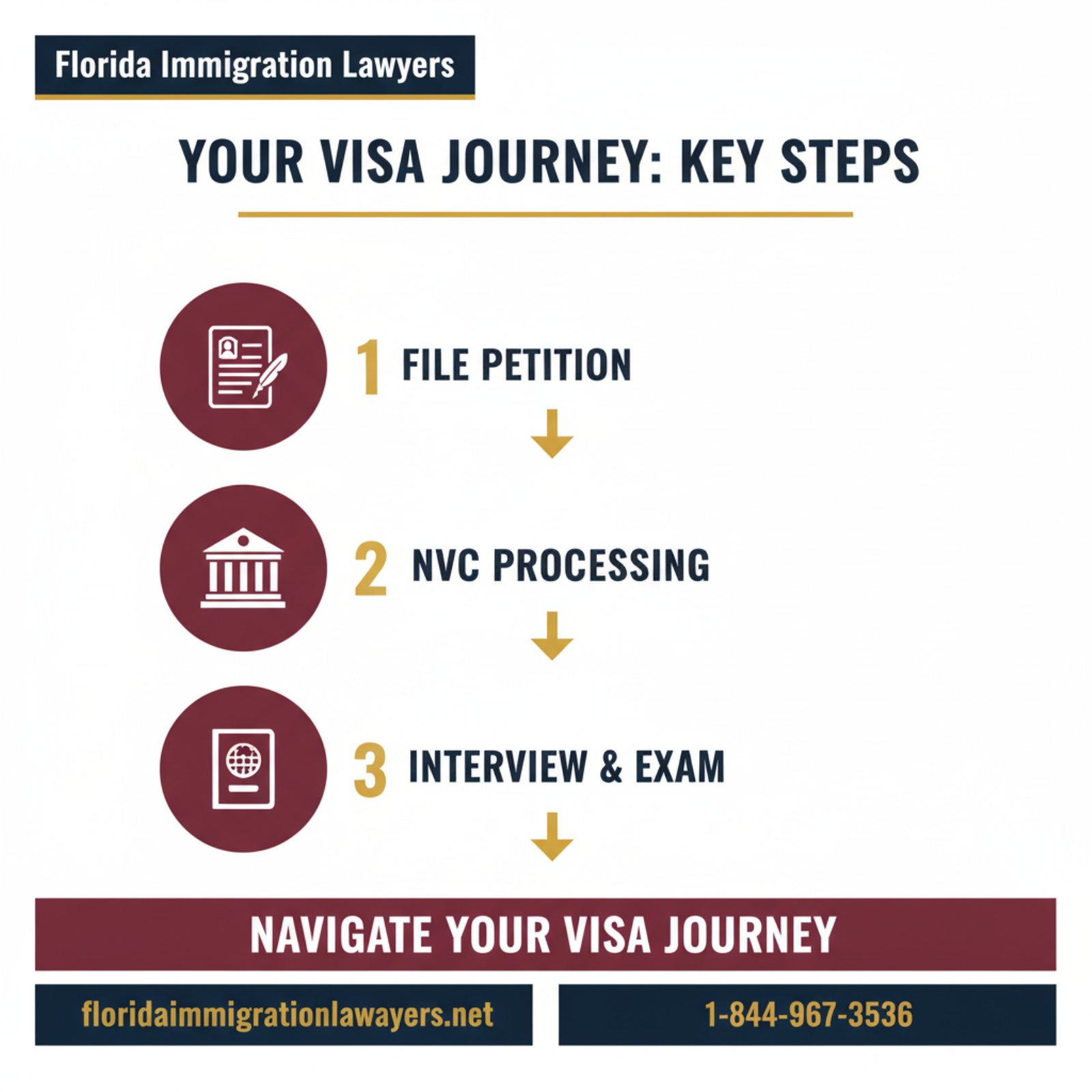
The immigration process can feel overwhelming, especially with constantly shifting priority dates. Here is a general step-by-step guide for those impacted by the Visa Bulletin October 2025:
-
Determine Your Eligibility and Category: First, confirm which visa category you fall under (e.g., F2A, EB-3). This is based on your relationship to the petitioner or your employment offer. Understanding your specific situation is the foundational step.
-
File the Initial Petition (I-130 or I-140): Your U.S. citizen or LPR relative will file Form I-130, Petition for Alien Relative. For employment-based visas, your employer typically files Form I-140, Immigrant Petition for Alien Worker. The date USCIS accepts this petition becomes your priority date.
-
Monitor the Visa Bulletin: Regularly check the U.S. Department of State's Visa Bulletin. Pay close attention to the Final Action Dates and Dates for Filing Applications for your specific country and visa category. This is where the Visa Bulletin October 2025 becomes highly relevant.
-
Prepare for Adjustment of Status or Consular Processing: Once your priority date is current (or falls within the 'Dates for Filing' chart if USCIS permits), you can either file Form I-485, Application to Register Permanent Residence or Adjust Status, if you are in the U.S., or proceed with consular processing if you are abroad. Consular processing involves an interview at a U.S. embassy or consulate in your home country.
Step-by-Step Process Guide -
Attend Biometrics Appointment: For adjustment of status applicants, USCIS will schedule a biometrics appointment to collect fingerprints and photos. This is a standard part of the background check process.
-
Attend Interview (if required): Most applicants will have an interview with a USCIS officer (for adjustment of status) or a consular officer (for consular processing). Be prepared to answer questions about your petition and eligibility.
-
Receive Your Green Card: Upon approval, you will receive your permanent resident card, commonly known as a green card. This allows you to live and work permanently in the U.S., including anywhere in Florida.
Essential Documents for Your Green Card Application in Florida
A successful green card application hinges on submitting a complete and accurate set of documents. Missing or incorrect documents can lead to significant delays, particularly when dealing with the time-sensitive nature of the Visa Bulletin October 2025 cut-off dates. This list is a general guide; your specific case may require additional items.
- Completed Form I-485, Application to Register Permanent Residence or Adjust Status (if applicable).
- Form I-130 (Petition for Alien Relative) or Form I-140 (Immigrant Petition for Alien Worker) approval notice.
- Copy of your birth certificate.
- Copy of your passport biographical page.
- Copies of all previous U.S. visas and I-94 arrival/departure records.
- Two passport-style photos.
- Form I-693, Report of Medical Examination and Vaccination Record (completed by a USCIS-approved civil surgeon).
- Form I-864, Affidavit of Support (for family-based petitions).
- Form I-765, Application for Employment Authorization (optional, but recommended).
- Form I-131, Application for Travel Document (optional, but recommended).
- Marriage certificate (if applicable).
- Divorce decrees or death certificates for any prior marriages (if applicable).
- Police clearance certificates from countries where you lived for six months or more since age 16 (for consular processing).
- Evidence of your relationship (e.g., photos, joint bank accounts for family petitions).
- Employment offer letter and educational/professional credentials (for employment-based petitions).
Do not navigate this process alone. Contact Florida Immigration Lawyers today to ensure your application is complete and error-free.
Visa Bulletin October 2025: Timelines and Processing Expectations
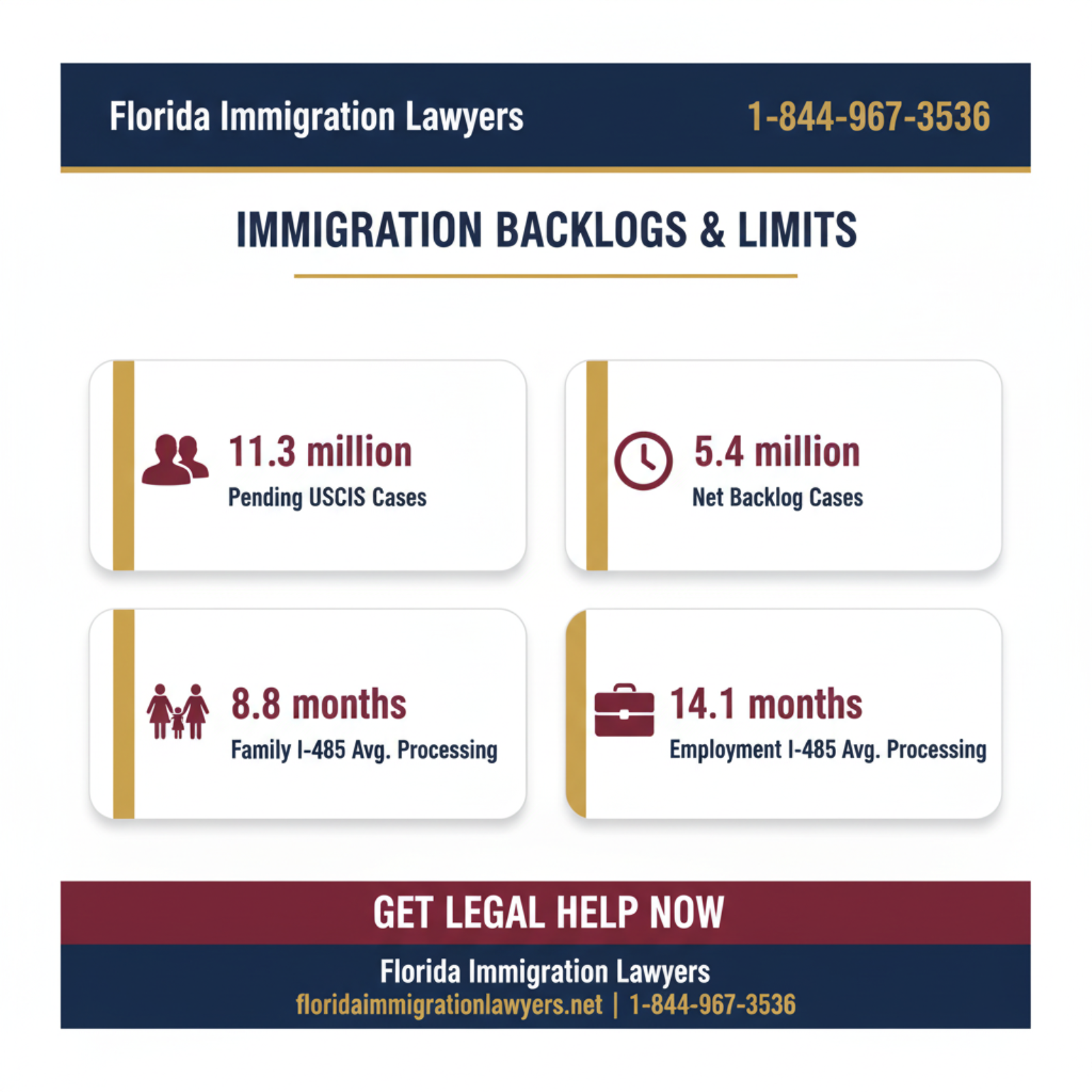
Understanding the processing times associated with your green card application is crucial for planning your life in Florida. The Visa Bulletin October 2025 gives an indication of when visas become available, but actual processing times by USCIS and the Department of State can vary significantly. These times are influenced by factors like case complexity, volume of applications, and individual office workloads.
For those filing for adjustment of status in Florida, processing times can range from several months to several years. USCIS publishes average processing times on its website, which can give you a general idea. However, these are estimates, and your experience may differ. For example, processing at the USCIS Tampa Field Office or the Miami Field Office might have different averages.
Factors Affecting Processing Speed
Several elements can influence how quickly your case moves forward:
- Visa Category: Some categories, like F4 (siblings of U.S. citizens), typically have longer wait times due to high demand and limited visa numbers.
- Country of Origin: Applicants from high-demand countries such as India, China, Mexico, and the Philippines often face longer backlogs.
- Completeness of Application: Any Requests for Evidence (RFEs) for missing documents or additional information will extend your processing time.
- USCIS Workload: The overall volume of applications and the resources available to USCIS can impact how quickly cases are reviewed.
- Interview Schedules: Delays in scheduling interviews, especially at busy field offices in Florida, can prolong the process.
While the Visa Bulletin October 2025 tells you *when* a visa number is available, USCIS processing times tell you *how long* it might take for your application to be adjudicated. It is a two-part equation that requires careful monitoring.
Cost Factors and Immigration Fee Breakdown for Florida Residents
Pursuing a green card involves various fees, which can be a significant consideration for Florida residents. These fees are set by USCIS and the Department of State and are subject to change. It is important to budget for these costs throughout your immigration journey.
Generally, you can expect to pay fees for the initial petition (I-130 or I-140), the adjustment of status application (I-485) or immigrant visa application, biometrics services, and the medical examination. There are also potential costs for attorney fees, document translation, and travel for interviews or appointments.
Typical Fees Associated with Green Card Applications
- Petition Filing Fee: For Form I-130 or I-140.
- Form I-485 Filing Fee: This often includes the biometrics fee.
- Medical Examination: This fee is paid directly to the civil surgeon and varies.
- Immigrant Visa Processing Fee: For consular processing applicants.
- USCIS Immigrant Fee: Paid after visa issuance for consular processing.
These fees can add up, and it is crucial to have a clear understanding of all financial obligations. Florida Immigration Lawyers can help you understand the current fee structure and plan accordingly. We believe in transparency and helping you prepare for every aspect of your case.
Frequently Asked Questions (FAQs) About the Visa Bulletin
Navigating the immigration system often brings up many questions. Here are some common inquiries we receive, particularly concerning the Visa Bulletin October 2025 and its implications for Florida residents.
Which employment-based green card is fastest?
Generally, the EB-1 (Priority Workers) category is the fastest employment-based green card. This is because it typically has no backlog for most countries, meaning visas are usually immediately available. EB-2 (Professionals with Advanced Degrees) with a National Interest Waiver can also be relatively fast for qualified individuals, as it bypasses the PERM labor certification process.
Is USCIS moving faster in 2025?
USCIS processing times are subject to change and vary by form type, service center, and field office. While USCIS continually works to improve efficiency, specific improvements in 2025 are hard to generalize. You should always check the official USCIS website for the most current processing times for your specific application. Keep in mind that fluctuations are normal.
Why is the Visa Bulletin not moving?
The Visa Bulletin's dates can remain stagnant or even retrogress due to several factors. These include high demand for visas in specific categories or countries, the annual numerical limits set by Congress, and global events that impact processing. When the number of eligible applicants exceeds the available visas for a given period, the priority dates will not advance or may move backward.
What is the October Visa Bulletin?
The October Visa Bulletin is the first bulletin of the new U.S. government fiscal year, which begins on October 1st. It is highly anticipated because it often reflects the allocation of new visa numbers for the entire year. This bulletin can set the trend for visa availability and processing for the subsequent months, often bringing significant movements or indications of future trends in priority dates.
Common Mistakes to Avoid in Your Immigration Journey
Navigating the immigration system is complex, and even small errors can lead to significant delays or even denials. For Florida residents dealing with the Visa Bulletin October 2025 and beyond, avoiding these common pitfalls is essential.
-
Missing Deadlines or Filing Too Early: Failing to file your application when your priority date is current, or filing before it is current (unless using Dates for Filing, and USCIS permits it), can lead to rejection. Always verify the current bulletin dates.
-
Submitting Incomplete or Incorrect Forms: Even a single missing signature or an incorrectly answered question can result in a Request for Evidence (RFE) or outright rejection. This significantly delays your case.
-
Not Providing Sufficient Supporting Documentation: A lack of compelling evidence for your eligibility, relationship, or employment can weaken your case. Always provide clear and comprehensive documentation.
-
Failing to Notify USCIS of Address Changes: If you move within Florida or to another state, you must inform USCIS promptly. Failure to do so can result in missed notices, appointments, or even a denial due to perceived abandonment.
-
Misrepresenting Information: Any false statements or misrepresentations on your application can lead to severe penalties, including a permanent bar from the U.S. Always be truthful and accurate.
-
Attempting to Navigate Complex Cases Alone: While some straightforward cases might seem manageable, complex situations involving criminal history, previous immigration violations, or nuanced eligibility criteria often require professional legal guidance. Self-representation can be risky.
-
Ignoring USCIS Communications: Do not ignore any mail or notifications from USCIS. These often contain critical information, requests for evidence, or interview notices that require timely responses.
-
Not Preparing for Your Interview: Approaching your interview without preparation can lead to misunderstandings or an inability to properly explain your case. Practice answering questions and gather necessary documents.
-
Overlooking Medical Examination Requirements: Failing to get a medical examination from a USCIS-approved civil surgeon or submitting an outdated one can halt your application process.
-
Assuming Visa Bulletin Dates Will Always Advance: Priority dates can retrogress or remain stagnant. Do not make critical life decisions based on an assumption that dates will continually move forward.
When to Call a Lawyer for Visa Bulletin October 2025 Guidance
While this article provides general information, your immigration journey is unique. The complexities introduced by publications like the Visa Bulletin October 2025 often necessitate professional legal assistance. Florida Immigration Lawyers are here to help you understand your specific situation and navigate the path forward.
You should consider contacting our firm if:
- Your priority date is approaching the current cut-off, and you need to prepare your application.
- You are unsure whether to use the Final Action Dates or Dates for Filing Applications.
- Your case involves previous denials, criminal history, or other complex issues.
- You received a Request for Evidence (RFE) or a Notice of Intent to Deny (NOID) from USCIS.
- You need assistance with preparing and organizing a thorough document package.
- You have questions about consular processing versus adjustment of status.
- You want to explore other immigration options if your current category is backlogged.
- You are an employer in Florida seeking to sponsor foreign workers and need guidance on employment-based categories.
Our attorneys serve clients across Florida, including Jacksonville, Orlando, Tampa, and Miami. We are committed to providing personalized and effective legal strategies for your immigration needs.
About Florida Immigration Lawyers
Florida Immigration Lawyers is a leading law firm dedicated to providing comprehensive immigration services across the entire state of Florida. Our team of experienced attorneys understands the intricacies of U.S. immigration law and is committed to helping individuals, families, and businesses achieve their immigration goals.
We offer a wide range of services, including family immigration, business immigration, asylum claims, deportation defense, and naturalization. Our firm prides itself on its compassionate approach, diligent advocacy, and unwavering commitment to client success.
Why choose Florida Immigration Lawyers?
- Experienced Attorneys: Our legal team possesses extensive knowledge of immigration law.
- Client-Centered Approach: We prioritize your needs and provide personalized attention.
- Proven Track Record: We have successfully represented countless clients throughout Florida.
- Bilingual Services: Se Habla Español – our team is ready to assist you in English and Spanish.
- Free Consultations: We offer a free initial consultation to discuss your case.
- Available 24/7: We understand immigration matters can arise at any time.
Contact us today to schedule your free consultation and learn how we can assist you. Call us at 1-844-967-3536 or visit our website at https://www.floridaimmigrationlawyers.net.
Sources and References
- U.S. Citizenship and Immigration Services (USCIS)
- U.S. Department of State Visa Bulletin
- Executive Office for Immigration Review (EOIR)
- 8 U.S.C. Chapter 12 - Immigration and Nationality Act (INA)
- INA § 203 - Preference System for Immigrant Visas
- 8 CFR Part 245 - Adjustment of Status to that of Person Admitted for Permanent Residence
- USCIS Policy Manual
This article provides general legal information and is not intended as legal advice. Every case is unique, and outcomes depend on specific facts and circumstances. Contact an attorney for advice about your particular situation. Immigration laws are subject to change.
The Visa Bulletin October 2025 was a significant milestone for many immigrants in Florida. Whether you are in Jacksonville, Orlando, or anywhere else in the Sunshine State, understanding these updates is vital for your immigration journey. Do not leave your future to chance.
Our dedicated team at Florida Immigration Lawyers is ready to provide the expert legal guidance you deserve. We can help you interpret the latest Visa Bulletin, prepare your application, and represent you throughout the process. Schedule your free consultation today by calling 1-844-967-3536. Se Habla Español - Estamos aquí para ayudarle.
Do Not Navigate This Process Alone
Our experienced immigration attorneys are ready to fight for you. Get a free, confidential consultation today.
Se Habla Español
Frequently Asked Questions
Florida Immigration Lawyers
Immigration Attorney | Founder, Vasquez Law Firm
U.S. Air Force veteran and immigration attorney with thousands of cases resolved. J.D., NCCU School of Law. AILA member. Admitted to the 4th, 5th, and 11th Circuit Courts.
Available 24/7 - Free Evaluations
Related Legal Services
Our Florida immigration attorneys can help you with business immigration, asylum protection and deportation defense. Call today at 1-844-967-3536 for a free consultation.
Related Links
Related Topics
Free Legal Consultation
Discuss your case with our experienced attorneys. We're available 24/7.
Se Habla Español - Estamos aquí para ayudarle.
Related Articles
Immigration Lawyer Services in Miami, Florida | VLF Florida
Explore comprehensive immigration lawyer services in Miami, Florida. From asylum to deportation defense, our attorneys are ready to assist you. Call Florida Immigration Lawyers at 1-844-967-3536 for a free consultation.
DACA Renewal Guide for Dreamers in Florida 2026 | VLF Florida
Navigate the 2026 DACA renewal process in Florida with our comprehensive guide. Learn the steps, avoid common pitfalls, and ensure your application is successful. Call Florida Immigration Lawyers for a free consultation.
Immigration Lawyer Miami: Services in Florida | VLF Florida
Explore the comprehensive immigration lawyer services available in Miami, Florida, offered by Florida Immigration Lawyers. Whether you need assistance with visas, green cards, or deportation defense, our skilled attorneys are here to help. Call us at 1-844-967-3536 for a free consultation.
Fraud Waiver Immigration in Florida: A Guide | VLF Florida
Discover how a fraud waiver can help you overcome immigration challenges in Florida. Learn about the I-601 waiver process, requirements, and common pitfalls. Call Florida Immigration Lawyers at 1-844-967-3536 for a free consultation.