Visa Bulletin October 2025 Florida: Essential Immigration
The Visa Bulletin October 2025 Florida provides crucial updates on immigrant visa availability, marking the start of a new fiscal year for immigration. This bulletin details 'Final Action Dates' and 'Dates for Filing Applications' for family-sponsored and employment-based categories, directly impacting when Florida residents can file for Adjustment of Status or attend visa interviews. Understanding these dates is vital for anyone pursuing a green card in Florida. Florida Immigration Lawyers helps individuals in Miami, Orlando, and across the state interpret these complex updates and navigate the immigration process. We offer free consultations to discuss how the October 2025 Visa Bulletin affects your case and to guide you through necessary steps, ensuring your application is timely and correct.

The Visa Bulletin October 2025 Florida provides critical updates on immigrant visa availability for the new fiscal year, affecting individuals seeking permanent residency in the U.S., particularly those residing in Florida. It outlines 'Final Action Dates' and 'Dates for Filing Applications' for family-sponsored and employment-based categories, guiding applicants on when they can move forward with their immigration process.
- The Visa Bulletin dictates when you can file your Adjustment of Status or receive an immigrant visa.
- Dates often advance or retrogress based on demand and annual visa limits.
- Family-sponsored and employment-based categories have distinct priority dates.
- Consulting an immigration lawyer is crucial to interpret the bulletin correctly for your specific case.
Visa Bulletin October 2025 Florida: Essential Immigration Updates
Are you an immigrant in Florida dreaming of a green card, or sponsoring a loved one to join you in the Sunshine State? Navigating the complex world of U.S. immigration can feel overwhelming, especially when waiting for your priority date to become current. The U.S. Department of State's monthly Visa Bulletin is a crucial tool that determines when immigrant visas are available.
For those in Miami, Orlando, Tampa, or anywhere across Florida, understanding the Visa Bulletin October 2025 Florida is paramount. This bulletin marks the beginning of a new fiscal year for immigration, often bringing significant changes to visa availability. It directly impacts when you can file your Adjustment of Status application with USCIS or attend your immigrant visa interview at a U.S. embassy or consulate abroad.
At Florida Immigration Lawyers, we understand the anxieties and hopes tied to these updates. Our dedicated team is here to help you decipher the latest information and guide you through every step of your immigration journey. Don't leave your future to chance.
Call Florida Immigration Lawyers at 1-844-967-3536 for a free consultation to discuss how the October 2025 Visa Bulletin may impact your case. We serve clients across all of Florida.
Understanding the Visa Bulletin for Florida Immigrants
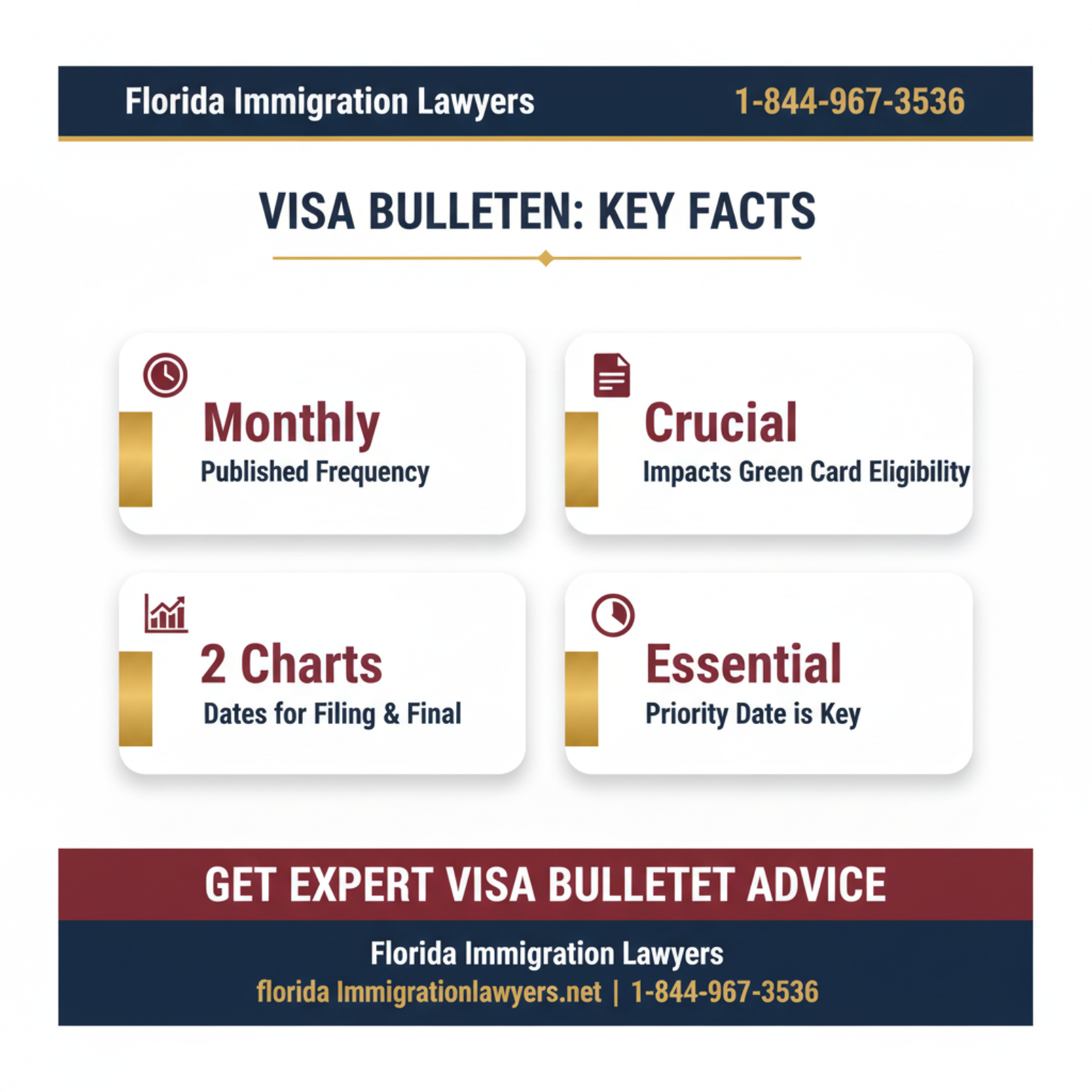
The Visa Bulletin is a monthly publication by the U.S. Department of State that summarizes the availability of immigrant visas. These visas are subject to annual numerical limitations set by Congress under the Immigration and Nationality Act (INA). The bulletin is divided into two main charts for various preference categories: 'Final Action Dates' and 'Dates for Filing Applications.'
For Florida residents, understanding these dates is critical for planning the next steps in your immigration process. Whether you are applying for a family-sponsored visa or an employment-based green card, your priority date must be current according to the Visa Bulletin. This means your petition must have been filed on or before the date listed in the bulletin for your specific category and country of chargeability.
Family-Sponsored Preferences and Their Impact in Florida
Family-sponsored visas allow U.S. citizens and lawful permanent residents (LPRs) to bring certain family members to the United States. These categories are often oversubscribed, leading to long wait times. The Visa Bulletin for October 2025 will indicate the movement of these dates.
Categories include:
- F1: Unmarried Sons and Daughters of U.S. Citizens.
- F2A: Spouses and Children (under 21) of LPRs.
- F2B: Unmarried Sons and Daughters (21 or older) of LPRs.
- F3: Married Sons and Daughters of U.S. Citizens.
- F4: Brothers and Sisters of U.S. Citizens.
Florida, with its diverse population and strong family ties, sees a high volume of applications in these categories. The October bulletin is particularly important as it resets for the new fiscal year, potentially offering new opportunities or continuing existing backlogs. We often see significant demand in South Florida, impacting wait times for various family preferences.
Employment-Based Categories and Florida's Economy
Employment-based visas are crucial for Florida's dynamic economy, attracting skilled workers and professionals. These categories also have annual numerical limits, and their availability is detailed in the Visa Bulletin. The October 2025 bulletin will be closely watched by businesses and professionals across the state, from tech startups in Miami to agricultural industries in central Florida.
Key employment-based categories include:
- EB-1: Priority Workers (persons of extraordinary ability, outstanding professors/researchers, multinational executives/managers).
- EB-2: Professionals Holding Advanced Degrees and Persons of Exceptional Ability.
- EB-3: Skilled Workers, Professionals, and Other Workers.
- EB-4: Certain Special Immigrants (e.g., religious workers).
- EB-5: Immigrant Investors.
The movement of priority dates in these categories directly affects employers and foreign nationals planning to work and live in Florida. Understanding if USCIS is moving faster in 2025 for these categories requires careful review of the bulletin's trends, which we can help you analyze.
Final Action Dates vs. Dates for Filing Applications
The Visa Bulletin presents two critical charts:
- Final Action Dates (Chart A): This chart indicates when a visa can actually be issued, or when an applicant can be granted permanent residence. Your priority date must be on or before the date listed in Chart A for your category and country for your case to be finalized.
- Dates for Filing Applications (Chart B): This chart allows certain applicants to file their Adjustment of Status application (Form I-485) with USCIS earlier than their Final Action Date, provided USCIS accepts Chart B for that month. This can significantly speed up the processing time for many individuals in Florida.
USCIS determines each month whether applicants can use Chart B. Always check the USCIS website for their specific announcement regarding which chart to use for filing Adjustment of Status applications. This is a critical step for Florida residents.
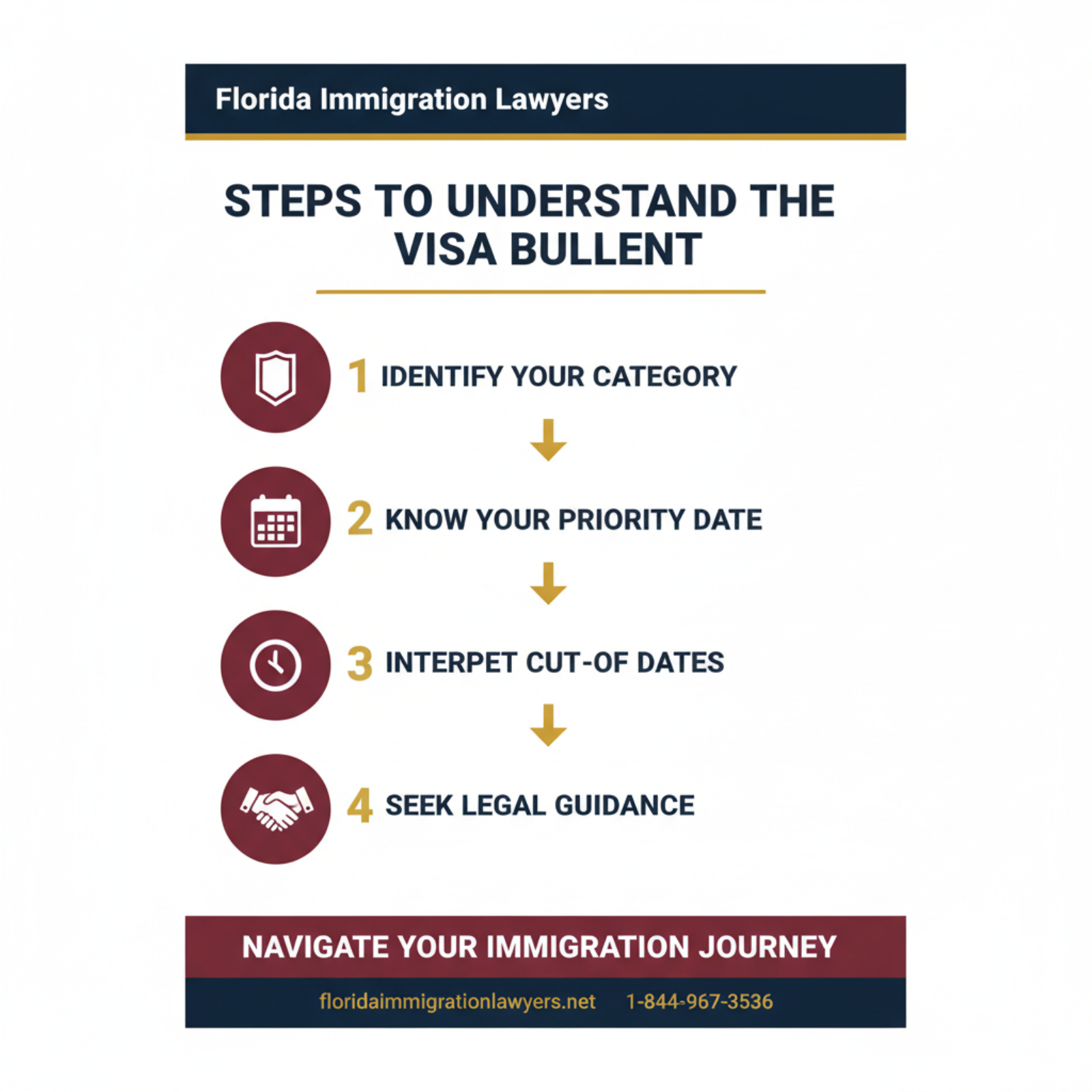
Navigating the Visa Bulletin: A Step-by-Step Guide for Florida Residents
Understanding the Visa Bulletin for October 2025 is a multi-step process. Here's a general guide for Florida residents:
- Locate Your Priority Date: Your priority date is established when your petition (e.g., Form I-130 for family, Form I-140 for employment) was properly filed with USCIS or the Department of Labor. This date is found on your I-797 approval notice.
- Identify Your Visa Category and Country of Chargeability: Determine if you are applying under a family-sponsored (F1, F2A, F2B, F3, F4) or employment-based (EB-1, EB-2, EB-3, EB-4, EB-5) preference category. Your country of chargeability is generally your country of birth, not necessarily your current residence or citizenship.
- Review the Latest Visa Bulletin: Access the U.S. Department of State's Visa Bulletin for October 2025. Look for your specific category and country.
- Check USCIS Website for Chart B Use: If you are applying for Adjustment of Status from within the U.S., check the USCIS website to see if they are accepting 'Dates for Filing Applications' (Chart B) or if you must use 'Final Action Dates' (Chart A) for that month.
- Compare Your Priority Date: If your priority date is on or before the date listed in the applicable chart for your category and country, you may be eligible to proceed. This means you can either file your I-485 Adjustment of Status application (if in the U.S. and Chart B is open) or schedule your immigrant visa interview (if abroad).
- Prepare and File Your Application: Once your date is current, gather all necessary documents and file your application promptly. Delays can mean missing your window, especially if dates retrogress in subsequent months.
- Seek Legal Guidance: The nuances of the Visa Bulletin can be complex, especially with retrogressions or rapid advancements. Consulting with an experienced Florida immigration lawyer is highly recommended to ensure you understand your eligibility and take appropriate action.
Essential Documents for Visa Applicants in Florida
When your priority date becomes current, you will need to compile a comprehensive set of documents. This list is general and may vary based on your specific visa category and individual circumstances. Ensure all documents are translated into English by a certified translator, if necessary.
- Passport: Valid passport for at least six months beyond your intended period of stay.
- Birth Certificate: Original or certified copy.
- Marriage Certificate: If applicable, original or certified copy.
- Divorce Decrees or Death Certificates: If applicable, for all previous marriages.
- Police Certificates: From all countries where you have lived for six months or more since age 16.
- Court and Prison Records: If you have ever been arrested or convicted of a crime.
- Military Records: If applicable.
- Form I-864, Affidavit of Support: From your petitioner, along with their financial documents (tax returns, W-2s, pay stubs).
- Medical Examination Report: Form I-693, completed by a USCIS-approved civil surgeon in Florida.
- Photographs: Passport-style photographs meeting USCIS specifications.
- Approved Petition: Copy of your I-130, I-140, or other approved petition.
- Form I-485, Application to Register Permanent Residence or Adjust Status: If adjusting status in the U.S.
- Form I-765, Application for Employment Authorization: Optional, if you wish to work while your I-485 is pending.
- Form I-131, Application for Travel Document: Optional, if you wish to travel internationally while your I-485 is pending.
Visa Processing Timelines and Expectations for Florida Cases
The time it takes to process an immigrant visa or Adjustment of Status application can vary significantly. Factors include your visa category, country of origin, the specific USCIS field office (e.g., Miami Field Office, Orlando Field Office) or consulate processing your case, and current backlogs.
While the Visa Bulletin indicates when a visa number is available, it does not guarantee immediate approval. USCIS processing times for Form I-485 can range from several months to several years, even after your priority date becomes current. You can check estimated processing times on the USCIS website, but these are estimates and can change frequently.
For individuals in Florida, the high volume of immigration cases in the state can sometimes contribute to longer processing times. It is essential to be patient but also proactive in responding to any Requests for Evidence (RFEs) or interview notices. Why is the visa bulletin not moving? This often happens due to high demand exceeding the annual visa supply, leading to retrogression or stagnation in priority dates.
Which employment-based green card is fastest? Generally, EB-1 visas (for extraordinary ability, outstanding researchers, and multinational executives) tend to have shorter wait times, often remaining current for most countries. However, eligibility for EB-1 is strict. Other categories like EB-2 and EB-3 can have significant backlogs, especially for certain countries.
Understanding the Costs: Visa Application Fees and Related Expenses
Applying for an immigrant visa or Adjustment of Status involves various fees. These fees are subject to change, so it's always best to check the official USCIS and Department of State websites for the most current fee schedule. Do not send specific fee amounts without verifying them, as they can change.
Typical costs include:
- USCIS Filing Fees: Fees for Form I-130 (Petition for Alien Relative), Form I-140 (Immigrant Petition for Alien Worker), Form I-485 (Application to Register Permanent Residence or Adjust Status), and associated applications like Form I-765 (Employment Authorization) and Form I-131 (Travel Document).
- Department of State Fees: Immigrant visa application processing fees for those applying from abroad.
- Medical Examination Fees: Paid directly to the USCIS-approved civil surgeon. These fees vary by provider and location in Florida.
- Translation Fees: If any documents are not in English, certified translations are required.
- Attorney Fees: For legal representation and guidance through the complex immigration process. While an added cost, a lawyer can prevent costly mistakes and delays.
It is important to budget for all these expenses to ensure a smooth application process. Financial planning is a key component of a successful immigration journey in Florida.
Do not navigate this process alone. The complexities of the Visa Bulletin October 2025 Florida and the broader immigration system require expert guidance. Contact Florida Immigration Lawyers today for assistance with your case.
Common Mistakes to Avoid in Your Immigration Journey
Navigating the immigration process requires meticulous attention to detail. Avoiding common pitfalls can save you time, money, and significant stress.
- Failing to Monitor the Visa Bulletin: Not regularly checking the Visa Bulletin for October 2025 and subsequent months can lead to missed opportunities to file your application when your priority date becomes current. This can delay your green card process by months or even years.
- Submitting Incomplete or Incorrect Forms: Even minor errors or missing information on forms like I-485 or I-130 can result in Requests for Evidence (RFEs) or outright denials, prolonging your case significantly.
- Missing Deadlines: Failing to respond to RFEs or interview notices by the given deadline can lead to your application being denied or abandoned. Keep track of all correspondence from USCIS and the Department of State.
- Providing Insufficient Supporting Documentation: Not providing enough evidence to support your claims (e.g., proof of relationship, financial ability, work experience) can weaken your case and lead to delays or denials.
- Not Disclosing All Relevant Information: Hiding or misrepresenting information about your criminal history, previous immigration violations, or other personal details can result in severe penalties, including a permanent bar from the U.S.
- Traveling Internationally Without Advance Parole: If you have a pending Adjustment of Status application (Form I-485), leaving the U.S. without an approved Advance Parole document (Form I-131) can be considered an abandonment of your application.
- Assuming All Categories Are the Same: Each visa preference category has unique requirements and processing nuances. What applies to an F2A applicant may not apply to an EB-3 applicant. Understand your specific category's rules.
- Not Updating Your Address with USCIS: Moving without informing USCIS by filing Form AR-11 can lead to missed notices, interviews, or RFEs, which can jeopardize your application.
- Failing to Undergo a Timely Medical Exam: The medical examination (Form I-693) is a critical component. If not submitted correctly or if it expires before your case is adjudicated, it can cause delays.
- Ignoring Legal Advice: Attempting to navigate complex immigration laws without legal counsel often leads to preventable mistakes. An experienced lawyer can foresee issues and guide you effectively.
- Paying the Wrong Fees: USCIS fees change periodically. Always verify the current fee amounts directly on the USCIS website. Sending an incorrect fee can lead to your application being rejected.
- Waiting Too Long to Act: Immigration laws and policies can change. If your priority date is current or close to it, acting promptly to file your application is often in your best interest.
When to Call a Lawyer for Your Florida Immigration Case
While this article provides general information about the Visa Bulletin October 2025 Florida, every immigration case is unique. Seeking professional legal guidance from Florida Immigration Lawyers can make a significant difference in the success and efficiency of your application. You should consider calling an attorney if:
- Your Priority Date is Current: Once your priority date is current, it's time to act quickly and accurately. An attorney can help you prepare and file your Adjustment of Status application or guide you through the consular processing steps.
- You Have a Complex Case: This includes past immigration violations, criminal history, previous denials, or complex family situations. These factors can significantly complicate your eligibility.
- You Received a Request for Evidence (RFE) or Notice of Intent to Deny (NOID): These notices require a precise and timely response. An attorney can help you gather the correct evidence and formulate a strong legal argument.
- Your Case Involves Deportation or Removal Proceedings: If you are facing deportation in a Florida immigration court, immediate legal intervention is critical. Our deportation defense attorneys can represent you.
- You are Unsure About Your Eligibility: Immigration law is complex. An attorney can assess your specific situation, determine your eligibility for various visa categories, and advise on the best course of action.
- You are Seeking Asylum: Asylum cases are highly sensitive and require specialized legal knowledge. Our asylum attorneys are here to help.
- You Need Assistance with Business Immigration: For employers or foreign professionals navigating business immigration visas, an attorney can ensure compliance and efficiency.
- You are Applying for Citizenship: While seemingly straightforward, naturalization applications can have hidden complexities.
Florida Immigration Lawyers serves clients across the entire state, including major cities like Miami, Orlando, and Tampa. We are familiar with the local USCIS field offices and immigration courts. Our goal is to provide comprehensive and compassionate legal support for your immigration needs.
About Florida Immigration Lawyers
Florida Immigration Lawyers is a leading immigration law firm dedicated to serving individuals and families across the entire state of Florida. Our experienced attorneys provide compassionate, effective, and results-oriented legal representation for a wide range of immigration matters. We understand the profound impact immigration decisions have on your life and your family's future.
Our firm specializes in various practice areas, including family-based visas, employment-based visas, adjustment of status, deportation defense, asylum, and naturalization. We are committed to staying updated on the latest immigration laws and policies, including the monthly Visa Bulletin, to provide you with the most current and accurate advice.
Why choose Florida Immigration Lawyers? We offer personalized attention, clear communication, and a strategic approach to every case. Our team is available 24/7 to address your concerns and provide peace of mind. Your immigration journey is our priority.
Visit our website at https://www.floridaimmigrationlawyers.net or call us directly at 1-844-967-3536 for a free consultation. Let our expertise guide you towards a successful outcome.
Sources and References
- U.S. Citizenship and Immigration Services (USCIS)
- U.S. Department of State - Visa Bulletin
- Executive Office for Immigration Review (EOIR)
- 8 U.S.C. Chapter 12 - Immigration and Nationality Act (INA)
- 8 CFR (Code of Federal Regulations)
This article provides general legal information and is not intended as legal advice. Every case is unique, and outcomes depend on specific facts and circumstances. Contact an attorney for advice about your particular situation.
Your immigration future in Florida depends on accurate information and timely action. Don't risk delays or denials by navigating the Visa Bulletin October 2025 Florida alone. Florida Immigration Lawyers is here to provide the expert legal support you need.
Call us today for your free, confidential consultation: 1-844-967-3536. Se Habla Español - Estamos aquí para ayudarle.
Do Not Navigate This Process Alone
Our experienced immigration attorneys are ready to fight for you. Get a free, confidential consultation today.
Se Habla Español
Or leave your details and we’ll call you:
Free Evaluation in 24 Hours
Or talk to us right now
AI voice assistant — available 24/7
FreeFrequently Asked Questions

William J. Vásquez
Founding Attorney · Vasquez Law Firm
U.S. Air Force veteran and immigration attorney with years of hands-on U.S. immigration experience. J.D., NCCU School of Law. AILA member. Admitted to the 4th, 5th, and 11th Circuit Courts.
Available 24/7 - Free Evaluations
Reviewed for legal accuracy by William J. Vásquez
Licensed in North Carolina; U.S. immigration is federal practice.
Related Legal Services
Our Florida immigration attorneys can help you with immigration practice areas, free immigration consultation and experienced immigration attorneys. Call today at 1-844-967-3536 for a free consultation.
Related Links
Related Topics
Free Legal Consultation
Discuss your case with our experienced attorneys. We're available 24/7.
Se Habla Español - Estamos aquí para ayudarle.
Related Articles
Stem OPT Immigration Lawyer: 2026 Florida Guide
For F-1 students in Florida, the STEM OPT extension offers a vital 24-month work authorization after their initial OPT. This guide, updated for 2026, covers eligibility, the step-by-step application process, required documents, and critical timelines. Graduates from Florida universities in STEM fields must navigate strict USCIS regulations, including the E-Verify employer requirement. Learn how to avoid common mistakes and when to seek professional legal assistance from a dedicated stem OPT immigration lawyer to ensure a successful application and continued career growth in the U.S. Florida Immigration Lawyers offers expert guidance for students across the state.
Dual Citizenship Lawyer: Navigating Delays in Florida
Facing citizenship delays in Florida can be challenging, but understanding the process and knowing your options is key. Learn how a dual citizenship lawyer can assist you in navigating N-400 processing and USCIS backlogs in Hialeah.
"ina § 208(a)(2)" One-Year Filing Deadline: Florida Asylum
Discover the importance of the "ina § 208(a)(2)" one-year filing deadline for asylum seekers in Florida. Learn about the steps, documents needed, and common mistakes to avoid in your asylum application process.
DV-2027 Registration Period: Your Green Card Lottery Guide
The DV-2027 Diversity Visa (DV) lottery offers a unique pathway to permanent residency for individuals from countries with historically low immigration rates to the U.S. Expected to open in Fall 2025, the registration period requires strict adherence to eligibility criteria, including country of birth and specific education or work experience. This guide from Florida Immigration Lawyers covers the step-by-step application process, essential documents, critical timelines, and associated costs. We highlight common mistakes to avoid and explain when legal counsel is indispensable, especially for residents in Florida. Understanding the nuances of the green card lottery is vital for a successful application. Contact us for expert guidance on your DV-2027 journey.