USCIS Offices in Florida: Locations & Appointments 2026
Discover essential insights into USCIS office Florida locations, focusing on the Orlando field office, and learn how to navigate your immigration journey effectively in 2026. This guide covers appointment scheduling, required documents, processing times, and cost factors. Understand the difference between field offices and Application Support Centers, and identify common mistakes to avoid. Florida Immigration Lawyers provides guidance for all your immigration needs, offering free consultations to help you achieve your goals. Contact us for professional support and peace of mind.
USCIS field offices in Florida, like the one in Orlando, are crucial for immigration processes, primarily handling interviews for various applications and petitions. They serve as a local point of contact after initial filing with a Service Center. Appointments are mandatory, and walk-ins are generally not permitted. Understanding their function and how to prepare is key to a successful immigration journey.
- USCIS field offices conduct interviews for green cards, citizenship, and other benefits.
- Appointments are required; walk-ins are typically not allowed.
- Florida has several field offices, with Orlando being a key location for central Florida residents.
- Application Support Centers (ASCs) handle biometrics, distinct from field offices.
- Consulting an attorney can significantly streamline your interaction with USCIS.
USCIS Office Florida Locations: Your Guide to Field Offices in 2026
Navigating the complex world of U.S. immigration can feel overwhelming, especially when you need to interact directly with U.S. Citizenship and Immigration Services (USCIS). For residents across Florida, understanding the role and locations of USCIS field offices is a critical step in your immigration journey. These offices are where many applicants attend interviews, resolve case issues, and take the final steps toward their immigration goals.
This comprehensive guide from Florida Immigration Lawyers will walk you through everything you need to know about USCIS office Florida locations, focusing on the Orlando field office and other key sites. We will cover how to schedule appointments, what to expect during your visit, and common pitfalls to avoid as of 2026. Do not face the complexities of immigration law alone. Call Florida Immigration Lawyers at 1-844-YO-PELEO for a free consultation today and let us guide you through every step.
Understanding USCIS Field Offices in Florida
USCIS field offices are localized branches of the U.S. Citizenship and Immigration Services. They play a vital role in the immigration process, primarily handling in-person interviews for various applications and petitions. These include applications for adjustment of status (green cards), naturalization (citizenship), and petitions to remove conditions on residence, among others.
For many immigrants living in the Sunshine State, a visit to a USCIS field office in Florida is an inevitable part of their path to legal status. These offices process cases for individuals residing within specific geographical jurisdictions. Knowing which office serves your area is the first step towards a smooth process.
Field Offices vs. Application Support Centers (ASCs)
It is important to distinguish between USCIS field offices and Application Support Centers (ASCs). While both are USCIS facilities, they serve different purposes. Field offices conduct interviews and adjudicate cases. ASCs, on the other hand, are primarily responsible for collecting biometric data, such as fingerprints, photographs, and signatures, which are essential for background checks.
You will typically receive a separate appointment notice for your biometrics appointment at an ASC. This appointment will usually occur before any scheduled interview at a field office. Florida has several ASCs strategically located to serve its large immigrant population.
The Role of Service Centers
Beyond field offices and ASCs, USCIS also operates five Service Centers: California, Nebraska, Texas, Vermont, and Potomac. These centers are responsible for processing various types of petitions and applications that do not require an interview. They handle the initial intake and processing of many forms, such as employment-based petitions or family-based petitions filed by U.S. citizens or lawful permanent residents.
Your case will often start at a Service Center before potentially being transferred to a local USCIS field office for an interview. This distinction is crucial for understanding how your case progresses and where to direct inquiries. For example, a Form I-130 (Petition for Alien Relative) might be processed at a Service Center, but the subsequent Form I-485 (Application to Register Permanent Residence or Adjust Status) may lead to an interview at a Florida field office.
Key USCIS Field Office Locations Across Florida
Florida is home to several critical USCIS field offices, each serving specific regions of the state. These offices are essential for processing immigration cases for hundreds of thousands of residents. Understanding their locations and jurisdictions can help you prepare for your immigration journey.
While USCIS aims to provide services conveniently, it is crucial to remember that your assigned field office depends on your residential address. USCIS will inform you of the correct location in your official notices.
Orlando Field Office: Your Local Hub
The Orlando USCIS Field Office is a significant hub for immigrants in central Florida. Located at 5448 Hoffner Avenue, Orlando, FL 32812, this office serves a broad area including Orange, Seminole, Osceola, and surrounding counties. Many green card interviews, naturalization ceremonies, and other critical appointments take place here.
If you live in or around Orlando, this will likely be the primary USCIS office you interact with for any in-person requirements. Our team at Florida Immigration Lawyers has extensive experience assisting clients with cases processed through the Orlando field office, providing local experience and support.
Other Vital Florida Field Offices
Beyond Orlando, Florida has other key USCIS field offices that serve different parts of the state:
- Miami Field Office: 111 SW 1st Ave, Miami, FL 33130. This is one of the busiest field offices in the country, serving South Florida's vast immigrant community, including Miami-Dade, Broward, and Palm Beach counties.
- Tampa Field Office: 5524 West Cypress Street, Tampa, FL 33607. This office covers the west central Florida region, including Hillsborough, Pinellas, Pasco, and Polk counties.
- Jacksonville Field Office: 4121 Southpoint Drive E, Jacksonville, FL 32216. Serving North Florida, this office handles cases for residents in counties such as Duval, Clay, St. Johns, and Nassau.
- Oakland Park Field Office: 4451 NW 31st Ave, Oakland Park, FL 33309. Located near Fort Lauderdale, this office serves a portion of South Florida, often overlapping with the Miami jurisdiction for certain case types.
Each office handles a high volume of cases, and understanding which one is relevant to your situation is paramount. Always refer to your official USCIS notices for the correct address and appointment details.
Scheduling Your USCIS Field Office Appointment in Florida
Unlike some government agencies, you cannot simply walk into a USCIS field office without an appointment. All visits to a field office, whether for an interview, an InfoPass appointment, or to drop off documents, require prior scheduling. This system ensures efficiency and manages the high demand for services.
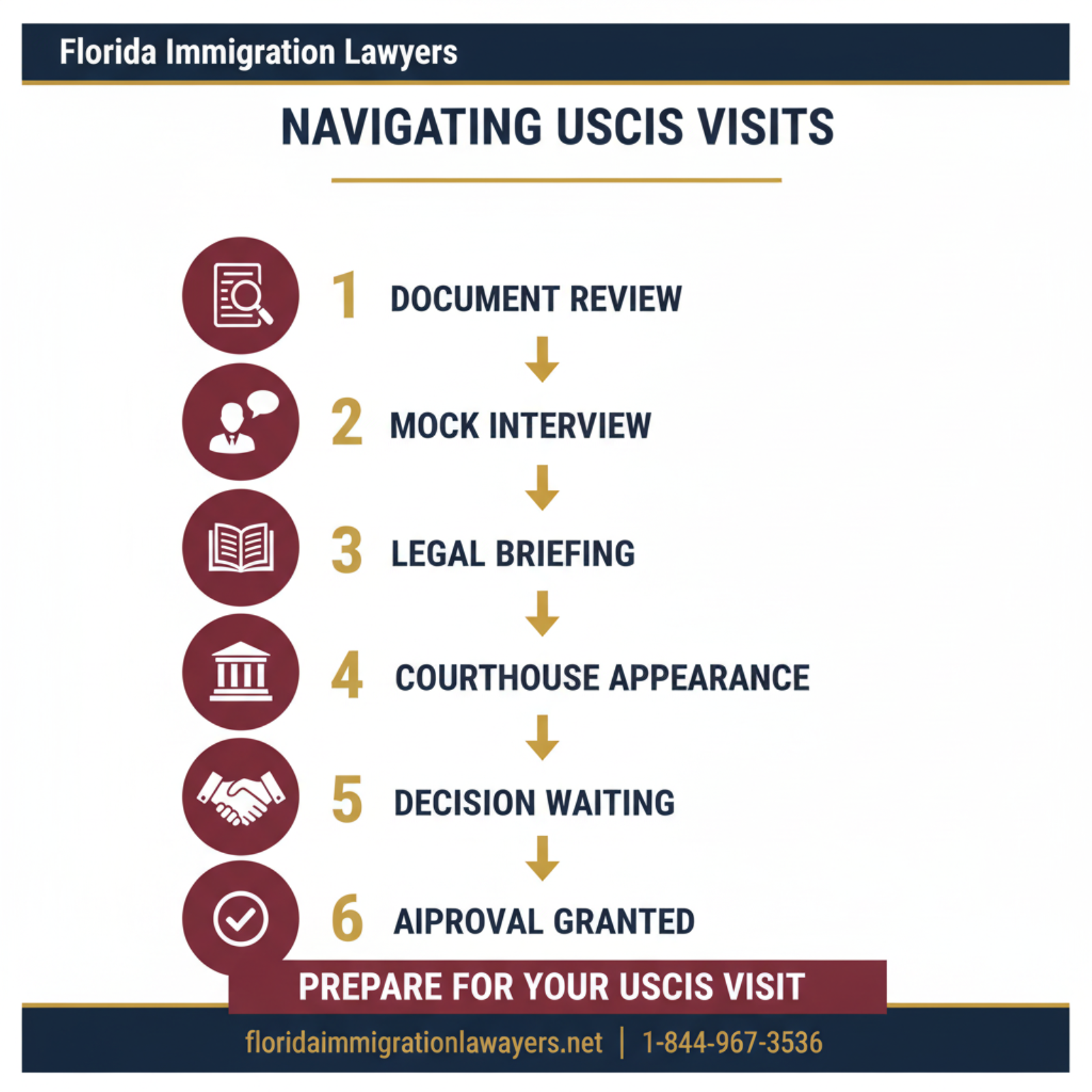
Most appointments are scheduled by USCIS itself. When your application or petition reaches a stage requiring an in-person interview, USCIS will mail you an appointment notice (Form I-797C, Notice of Action). This notice will specify the date, time, and location of your interview, along with a list of required documents.
Preparing for Your Interview
Preparation is key to a successful interview. You should meticulously review your application and all supporting documents. Gather all originals and copies of documents requested in your appointment notice, as well as any other documents that may be relevant to your case. This includes birth certificates, marriage certificates, passports, financial records, and any evidence submitted with your initial application.
It is advisable to arrive at least 15-30 minutes before your scheduled appointment time. Security procedures can take time, and you do not want to risk being late. Dress appropriately, as if for a professional meeting, and bring an interpreter if your English proficiency is limited, unless USCIS specifically states one will be provided.
Rescheduling an Appointment
If you cannot attend your scheduled appointment, it is crucial to notify USCIS as soon as possible. Your appointment notice will typically provide instructions on how to request a reschedule. Generally, you can send a written request explaining your reason for rescheduling. However, USCIS may require compelling reasons for granting a new date.
Unjustified or frequent rescheduling can negatively impact your case. If you miss an appointment without proper notification, USCIS may deny your application or petition. If you find yourself in a situation where rescheduling is necessary, contact Florida Immigration Lawyers immediately for guidance. We can help you draft a compelling request and mitigate potential negative consequences.
Required Documents for Your USCIS Interview
Attending an interview at a USCIS office in Florida requires meticulous preparation, especially concerning documentation. The specific documents you need will vary depending on the type of application you have filed. However, there are general categories of documents that are almost always required.
Failure to bring all necessary documents can lead to delays, requests for additional evidence (RFEs), or even a denial of your case. Always bring originals of all documents, along with a complete set of photocopies. The officer may keep the copies and return your originals.
Document Checklist (General)
While your specific appointment notice will list precise requirements, here is a general checklist of documents you should typically prepare for a USCIS interview:
- Your interview appointment notice (Form I-797C)
- Government-issued photo identification (e.g., passport, driver's license)
- All original passports and travel documents
- Your Form I-94, Arrival/Departure Record
- Original birth certificates for yourself and any family members included in your application
- Original marriage certificate (if applicable) and divorce decrees from all prior marriages (if applicable)
- Medical examination report (Form I-693) in a sealed envelope, if not already submitted
- Affidavit of Support (Form I-864) and supporting financial documents (tax returns, W-2s, pay stubs)
- Evidence of your relationship to the petitioner (e.g., photos, joint bank accounts, leases, utility bills)
- Any criminal records, police reports, or court dispositions (if applicable)
- Evidence of continuous residence (for naturalization)
- Proof of payment for filing fees or fee waiver approval notice
- Any other documents specifically requested in your interview notice or that you believe are relevant to your case.
Organize your documents clearly in a folder or binder. This will help you present them efficiently to the immigration officer. Remember, the goal is to make the officer's job easier and to clearly demonstrate your eligibility.
USCIS Florida Processing Times and What to Expect
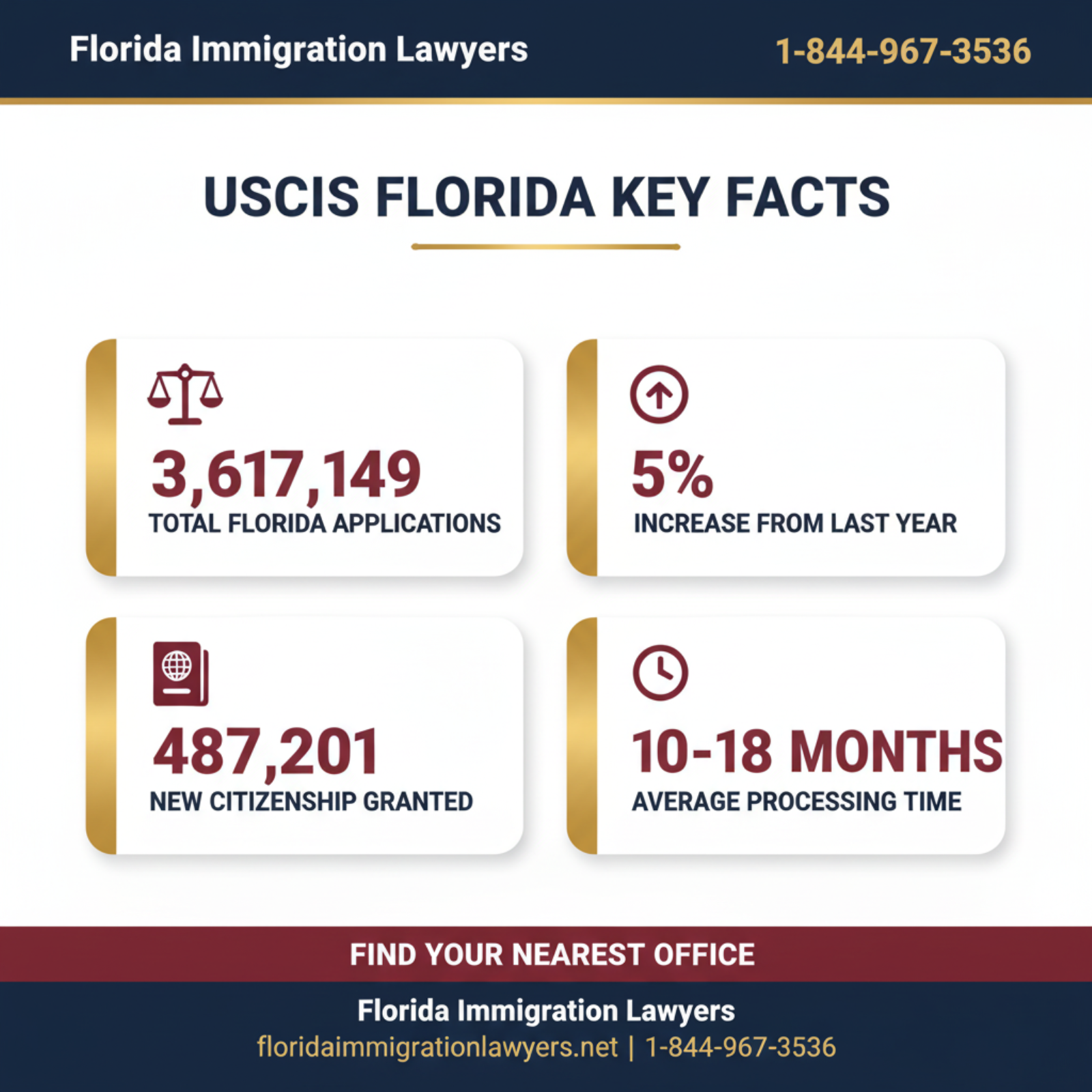
Understanding USCIS Florida processing times is a common concern for applicants. The time it takes for USCIS to process your application can vary significantly based on several factors, including the type of form filed, the specific USCIS Service Center or field office handling your case, and the current workload of that office. As of 2026, USCIS continues to strive for efficiency, but delays can still occur.
For cases requiring an interview at a USCIS office in Florida, the processing time will include the time spent at a Service Center before it reaches your local field office. You can track general processing times on the USCIS website, which provides estimates based on historical data.
Checking Your Case Status
USCIS provides an online tool to check your case status using the receipt number from your Form I-797C, Notice of Action. This tool allows you to see the latest updates on your application, including when it was received, when biometrics were scheduled, and when an interview was scheduled or completed. This is the most reliable way to monitor your individual case progress.
The online tool can be accessed at uscis.gov/casestatus. Regularly checking your status can provide peace of mind and alert you to any necessary follow-up actions. Remember, USCIS will also send physical mail notifications for significant case updates.
Factors Affecting Processing Times
Several factors can influence how long your case takes to process:
- Application Volume: High numbers of applications can lead to backlogs.
- Staffing Levels: The availability of immigration officers and support staff impacts processing speed.
- Case Complexity: More complex cases, those requiring additional evidence, or those with eligibility issues will take longer.
- Policy Changes: New immigration policies or procedures can affect processing.
- Response to RFEs: Delays in responding to Requests for Evidence (RFEs) or Notices of Intent to Deny (NOIDs) will extend your timeline.
While these factors are largely out of your control, ensuring your application is complete, accurate, and well-supported can help minimize unnecessary delays. Florida Immigration Lawyers can assist in preparing robust applications to help expedite the process as much as possible.
Do not navigate this process alone. Contact Florida Immigration Lawyers today for guidance and support through every stage of your immigration journey. Our dedicated team is ready to assist you.
Navigating USCIS Fees: A Cost Breakdown
Applying for immigration benefits involves various fees, which are subject to change by USCIS. These fees are typically non-refundable and cover the cost of processing your application. Understanding the fee structure is an essential part of preparing your immigration case with any USCIS office in Florida.
It is critical to pay the correct fee amount. Incorrect payments can lead to your application being rejected or delayed. Always check the official USCIS website for the most current fee schedule before submitting any application. The fees are generally paid by money order, personal check, cashier's check, or by credit card using Form G-1450, Authorization for Credit Card Transactions.
Understanding USCIS Filing Fees
Each USCIS form has an associated filing fee. For example, forms like the I-485 (Application to Register Permanent Residence or Adjust Status) and the N-400 (Application for Naturalization) have significant fees. These fees contribute to the operational costs of USCIS, including the processing of applications, interviews, and background checks.
In addition to the main filing fee, many applications also require a biometrics services fee. This fee covers the cost of collecting your fingerprints, photograph, and signature at an Application Support Center. This biometrics fee is typically paid along with your main application fee.
Eligibility for Fee Waivers
USCIS recognizes that some applicants may not be able to afford the filing fees. In certain circumstances, you may be eligible for a fee waiver. To request a fee waiver, you must file Form I-912, Request for Fee Waiver, along with your application. You must provide evidence that you meet the eligibility criteria, which typically include:
- Receiving a means-tested benefit (e.g., Medicaid, Food Stamps).
- Your household income is at or below 150% of the Federal Poverty Guidelines.
- You are experiencing financial hardship that makes it impossible to pay the fee.
Not all forms are eligible for fee waivers. For instance, most employment-based petitions or certain family-based petitions do not qualify. It is vital to consult the USCIS website or an experienced attorney to determine if your application is eligible and if you meet the criteria for a fee waiver. Incorrectly requesting a fee waiver for an ineligible form or without sufficient evidence can lead to delays or rejection of your application.
Common Mistakes to Avoid When Dealing with USCIS Field Offices
Interacting with USCIS field offices can be daunting. Avoiding common mistakes can significantly improve your chances of a successful outcome. Here are some pitfalls to watch out for:
- Missing Your Appointment: Failing to attend a scheduled interview without proper notification can lead to the denial of your application. Always prioritize your USCIS appointments.
- Arriving Late: Security checks and long lines are common. Arriving late can result in your appointment being canceled or rescheduled, causing significant delays. Plan to arrive at least 30 minutes early.
- Forgetting Required Documents: Not bringing all original documents and copies listed in your appointment notice will almost certainly result in an RFE or a rescheduled interview, prolonging your case.
- Providing Inconsistent Information: Any discrepancies between your application and your interview statements, or between different forms you have filed, can raise red flags and lead to intense scrutiny or denial.
- Misrepresenting Facts: Lying or providing false information to an immigration officer is a serious offense that can lead to a denial, a finding of inadmissibility, or even deportation proceedings. Honesty is paramount.
- Failing to Update Your Address: If you move, you must notify USCIS within 10 days using Form AR-11. Failure to do so can result in missed notices and critical updates regarding your case.
- Not Bringing an Interpreter (When Needed): If you are not fluent in English, and an interpreter is not provided by USCIS, you must bring your own. The interpreter must be fluent in both English and your native language and cannot be a party to the case.
- Ignoring the Appointment Notice: Your interview notice contains vital information, including the specific documents you need and any special instructions. Read it thoroughly and follow all directives.
- Attempting a Walk-In: USCIS field offices do not generally accept walk-in inquiries or document submissions. All visits must be by appointment only.
- Not Seeking Legal Counsel: Navigating complex immigration laws and procedures without the guidance of an experienced attorney can lead to critical errors, missed deadlines, or an unfavorable outcome.
- Improperly Preparing for Questions: Failing to understand the questions on your application or to adequately prepare for potential interview questions can lead to confusion and doubt in the officer's mind.
- Disrespectful Behavior: Always be polite and respectful to USCIS officers and staff, even if you feel frustrated. Professional conduct is expected and can reflect positively on your case.
When to Call a Lawyer for Your USCIS Field Office Needs
While some immigration processes appear straightforward, the reality is often far more complex. The stakes are incredibly high, and a single mistake can have severe, long-lasting consequences. Knowing when to seek legal counsel is crucial for protecting your rights and ensuring the strongest possible outcome for your case involving a USCIS office in Florida.
You should consider calling an experienced immigration lawyer from Florida Immigration Lawyers in several specific scenarios:
- Complex Cases: If your case involves a criminal history, previous immigration violations, or a complicated family situation, legal expertise is essential.
- Requests for Evidence (RFEs) or Notices of Intent to Deny (NOIDs): Receiving one of these indicates USCIS has concerns about your application. An attorney can help you formulate a comprehensive and persuasive response.
- Interview Preparation: An attorney can thoroughly prepare you for your interview, reviewing potential questions and ensuring you understand how to present your case effectively. This is especially vital for interviews at the Orlando USCIS field office or other Florida locations.
- Denied Applications: If your application has been denied, an attorney can review the decision, advise on appeal options, or help you refile correctly.
- Deportation Concerns: If you are placed in deportation proceedings or fear removal, immediate legal intervention is necessary.
- Difficulty Understanding the Process: If you are confused by forms, instructions, or legal terminology, a lawyer can provide clarity and ensure accuracy.
- Language Barriers: An attorney can help bridge communication gaps and ensure your voice is heard accurately.
- Wanting Peace of Mind: Even for seemingly simple cases, having an expert review your application and represent you can provide invaluable peace of mind.
Florida Immigration Lawyers offers comprehensive immigration services across the state. Our dedicated attorneys understand the nuances of USCIS procedures and local Florida contexts. We can represent you at your interview, assist with document preparation, and advocate on your behalf. Do not leave your future to chance. Visit our attorneys page to learn more about our team and how we can help you.
About Florida Immigration Lawyers
Florida Immigration Lawyers is an immigration law firm dedicated to serving individuals and families across all of Florida. Our mission is to provide compassionate, effective, and results-driven legal representation for a wide range of immigration matters. We understand the profound impact immigration decisions have on your life and are committed to protecting your rights and achieving your goals.
Our experienced team focuses on various areas, including family-based immigration, business immigration, asylum, citizenship, and deportation defense. We pride ourselves on offering personalized attention, clear communication, and strategic legal advice tailored to your unique situation. Our deep understanding of USCIS procedures, including those at the USCIS office Florida locations, positions us as your ideal legal partner.
We believe everyone deserves access to high-quality legal representation. That is why we offer free consultations and are available 24/7 to address your urgent immigration concerns. Choosing Florida Immigration Lawyers means choosing a firm that genuinely cares about your future. Contact us today at 1-844-YO-PELEO or visit our website at https://www.floridaimmigrationlawyers.net to learn how we can assist you.
Sources and References
- U.S. Citizenship and Immigration Services (USCIS)
- USCIS Case Status Online Tool
- U.S. Department of State (travel.state.gov)
- Immigration and Nationality Act (INA) § 245 - Adjustment of Status
- 8 U.S.C. § 1447 - Hearings on denials of applications for naturalization
- 8 CFR § 103.2 - Submission and adjudication of applications and petitions
This article provides general legal information and is not intended as legal advice. Every case is unique, and outcomes depend on specific facts and circumstances. Contact an attorney for advice about your particular situation.
Your immigration journey is too important to navigate without legal guidance. Whether you are preparing for an interview at the Orlando USCIS field office or dealing with complex processing issues, Florida Immigration Lawyers is here to help. Call us today at 1-844-YO-PELEO for a free, confidential consultation. Se Habla Español - Estamos aquí para ayudarle.
Do Not Navigate This Process Alone
Our experienced immigration attorneys are ready to fight for you. Get a free, confidential case review today.
Se Habla Español
Or leave your details and we’ll call you:
Free Evaluation in 24 Hours
Or talk to us right now

AI voice assistant — available 24/7
FreeFrequently Asked Questions

William J. Vásquez
Founding Attorney · Vasquez Law Firm
U.S. Air Force veteran and immigration attorney with years of hands-on U.S. immigration experience. J.D., NCCU School of Law. AILA member. Admitted to the 4th, 5th, and 11th Circuit Courts.
Available 24/7 - Free Evaluations
Reviewed for legal accuracy by William J. Vásquez
Licensed in North Carolina; U.S. immigration is federal practice.
Related Legal Services
Our Florida immigration attorneys can help you with family immigration services, immigration lawyer cost in Florida and experienced immigration attorneys. Call today at 1-844-YO-PELEO for a free case review.
Related Links
Related Topics
Free Legal Case Review
Discuss your case with our experienced attorneys. We're available 24/7.
Se Habla Español - Estamos aquí para ayudarle.
Related Articles
Dual Citizenship Lawyer in Florida: What You Need to Know
For Florida residents, the concept of dual citizenship, or holding two passports, offers a compelling blend of opportunities and challenges. While the U.S. generally permits dual nationality, the path to achieving this status requires a meticulous understanding of both U.S. immigration laws and the citizenship policies of your country of origin. This guide explores the definition of dual citizenship, the detailed step-by-step process for U.S. naturalization, and the significant benefits and potential pitfalls involved. We cover essential documentation, typical timelines, and cost considerations for 2026, providing crucial insights for anyone in Orlando, Miami, or across Florida considering this important legal step. Learn about common mistakes to avoid and understand when to seek professional legal counsel to navigate this complex process successfully. Florida Immigration Lawyers is here to provide expert, bilingual support for your dual citizenship journey.
Immigration Lawyer Orlando Free Consultation in Florida
For individuals and families in Orlando, Florida, navigating the complexities of U.S. immigration law requires expert guidance. An immigration lawyer in Orlando offers crucial support for everything from visa applications and green card processes to naturalization and deportation defense. This comprehensive guide details what a free consultation covers, providing a step-by-step overview of immigration pathways, essential document checklists, and expected timelines in 2026. We also highlight common mistakes to avoid, discuss the critical role of legal counsel in deportation and asylum cases, and explain why choosing a local Orlando immigration attorney is beneficial. Florida Immigration Lawyers is dedicated to serving the diverse community of Orlando with compassionate, effective legal solutions, ensuring you receive personalized advice and robust representation for a successful immigration journey.
EAD Advance Parole Combo Card in Florida 2026
For individuals with a pending Form I-485, Application to Register Permanent Residence or Adjust Status, the EAD Advance Parole Combo Card is an essential document. This single card combines the authorization to work legally in the U.S. (Employment Authorization Document - EAD) with permission to travel internationally and re-enter without abandoning your green card application (Advance Parole). This guide from Florida Immigration Lawyers provides a comprehensive overview for applicants in Florida in 2026, covering eligibility, the step-by-step application process, required documents, expected processing times, and associated costs. We also highlight common mistakes to avoid and when to seek legal counsel to ensure a smooth and successful immigration journey. Understanding this vital card is key to maintaining stability while awaiting your permanent residency approval.
TPS Re-Registration 2026 Deadlines in Florida
Stay informed about TPS re-registration deadlines in Florida for 2026. This article covers essential steps, timelines, and common mistakes to avoid. If you need help, Florida Immigration Lawyers is here to assist you with your immigration needs. Call 1-844-YO-PELEO for a free case review.