USCIS Green Card Removal Proceedings Florida: Your Guide
For many immigrants in Florida, facing USCIS green card removal proceedings is a daunting reality. These proceedings can arise from various issues, including the denial of an I-751 petition to remove conditions on residence, criminal convictions, or alleged immigration fraud. The stakes are incredibly high, as your ability to live and work in the U.S. could be at risk. This guide provides a comprehensive overview of the process, essential documents, timelines, and costs involved. We also highlight common mistakes to avoid and emphasize when to seek professional legal help. Florida Immigration Lawyers offers expert guidance and robust deportation defense to protect your future.
USCIS green card removal proceedings in Florida refer to the legal process initiated by the U.S. government to revoke a non-citizen's permanent resident status, often due to issues like fraud, criminal convictions, or failure to remove conditions on a green card (Form I-751). These proceedings are serious and can lead to deportation. Prompt legal action is essential to protect your right to remain in the U.S.
- Removal proceedings can lead to loss of permanent residency.
- Common causes include I-751 issues, criminal acts, or fraud.
- Timely response and strong legal defense are critical.
- An experienced immigration lawyer is crucial for navigating these complex cases.
- Florida residents facing removal proceedings have specific local resources and courts.
Imagine receiving a letter from the government questioning your right to live in the United States. For many immigrants in Florida, this frightening scenario becomes a reality when they face USCIS green card removal proceedings. These actions can stem from various issues, from failing to properly file an I-751 removal of conditions petition to alleged criminal activities or immigration fraud. Understanding these proceedings is the first step toward protecting your future in the U.S.
The stakes are incredibly high. Your ability to live, work, and build a life in Florida could be at risk. This comprehensive guide from Florida Immigration Lawyers will walk you through the complexities of USCIS green card removal proceedings, offering clear insights and practical advice. We aim to empower you with the knowledge needed to confront this challenging situation head-on. If you or a loved one are facing these serious allegations, do not delay. Call Florida Immigration Lawyers at 1-844-967-3536 for a free consultation today.
Understanding USCIS Green Card Removal Proceedings in Florida
USCIS green card removal proceedings, often referred to as deportation proceedings, are formal legal actions initiated by the Department of Homeland Security (DHS) to remove a non-citizen from the United States. While the term "removal" is now used, it essentially means deportation. These proceedings are handled by immigration courts under the Executive Office for Immigration Review (EOIR) of the Department of Justice, not directly by USCIS, though USCIS actions often trigger them.
For conditional permanent residents in Florida, removal proceedings frequently arise when U.S. Citizenship and Immigration Services (USCIS) denies a Form I-751, Petition to Remove Conditions on Residence. If you obtained your green card through marriage to a U.S. citizen or permanent resident, your initial green card is typically conditional for two years. Before this conditional status expires, you must file Form I-751 to demonstrate your marriage is bona fide and not solely for immigration purposes. Failure to file, or a denial of your I-751 petition, can directly lead to USCIS green card removal proceedings.
Reasons for Removal Proceedings
Beyond I-751 denials, several other factors can trigger USCIS green card removal proceedings for permanent residents in Florida. These include:
- Criminal Convictions: Certain criminal offenses, particularly aggravated felonies or crimes involving moral turpitude, can make a permanent resident deportable under U.S. immigration law.
- Immigration Fraud: Misrepresentation or fraud during the immigration application process, even years after obtaining a green card, can lead to removal.
- Abandonment of Residency: Spending too much time outside the U.S. without proper documentation or intent to return can be seen as abandoning your permanent resident status.
It is crucial to understand that even lawful permanent residents are not immune to deportation. The laws governing removal are complex, and the consequences are severe. Seeking experienced legal counsel from an immigration lawyer in Hollywood, FL, or anywhere in Florida, is paramount.
Legal Citation: The Immigration and Nationality Act (INA) outlines the grounds for inadmissibility and deportability. See INA § 212 (8 U.S.C. § 1182) for inadmissibility and INA § 237 (8 U.S.C. § 1227) for deportability.
The Step-by-Step Process for Responding to Removal Proceedings
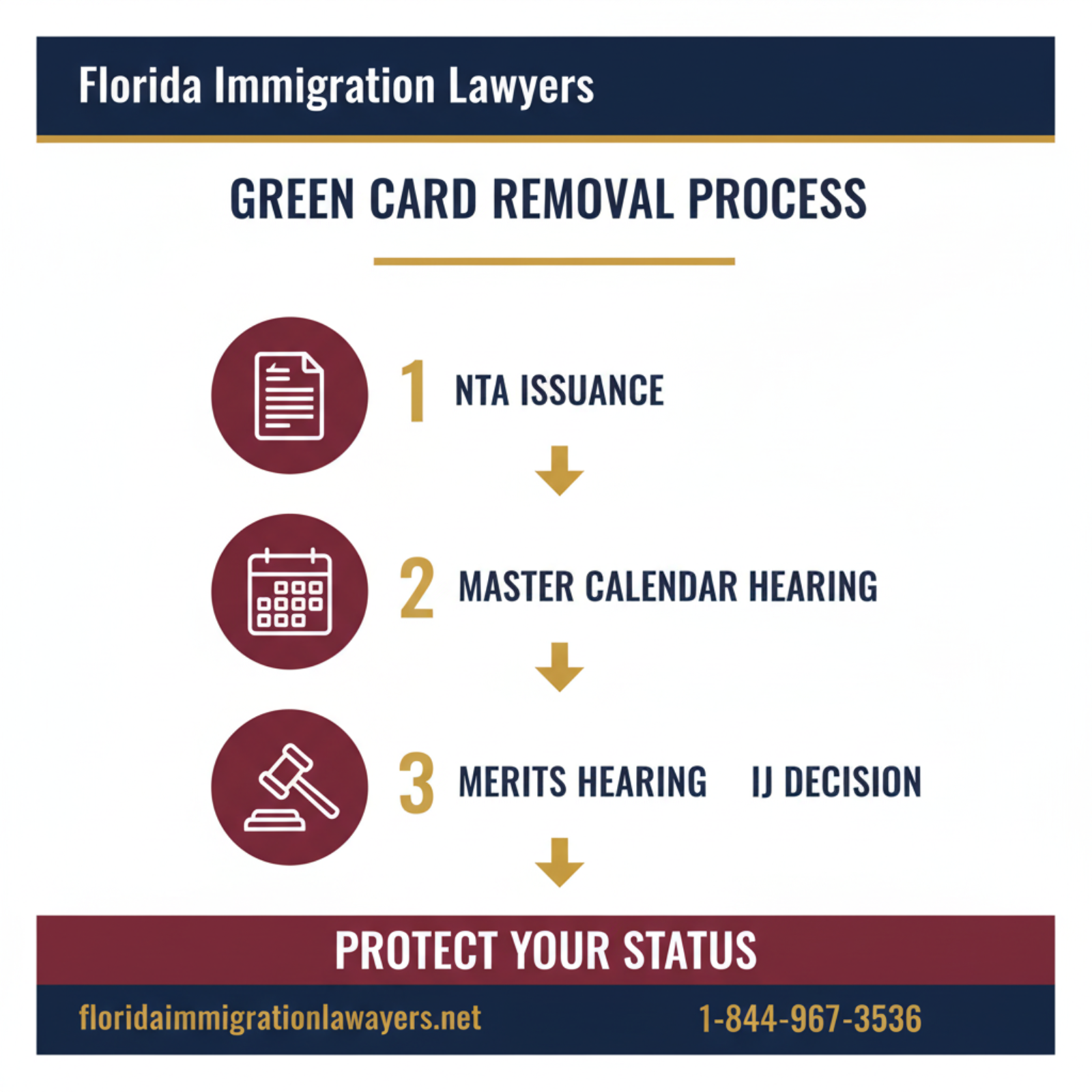
Navigating USCIS green card removal proceedings can feel overwhelming, but understanding the typical steps involved can help you prepare. This process generally begins with a Notice to Appear (NTA) and concludes with a decision from an Immigration Judge.
- Receiving the Notice to Appear (NTA): This is the official document from DHS that initiates removal proceedings. The NTA will state the charges against you and inform you of the time and place of your initial hearing (Master Calendar Hearing) before an Immigration Judge. It is critical to review this document carefully and understand why the government believes you are deportable.
- Master Calendar Hearing (MCH): This is the first appearance in immigration court. During the MCH, the Immigration Judge will confirm your identity, ensure you understand the charges, and ask you to admit or deny the allegations in the NTA. You will also state what form of relief from removal, if any, you intend to pursue. This is a procedural hearing, and having an immigration lawyer in Hollywood, FL, present is highly advisable.
- Pleading and Seeking Relief: If you deny the charges or seek relief, the judge will schedule an Individual Hearing (Merits Hearing). Your attorney can explore various defenses or forms of relief, such as cancellation of removal, asylum, adjustment of status, or waivers. For those with a conditional green card Florida status facing an I-751 denial, a common relief sought is a new review of the I-751 petition directly by the Immigration Judge.
- Individual Hearing (Merits Hearing): This is essentially a trial where both sides present evidence, call witnesses, and make arguments. You will testify, and your attorney will present your case for why you should not be removed. The DHS attorney will present the government's case.
- Decision by the Immigration Judge: After the Individual Hearing, the Immigration Judge will issue a decision. The judge may order you removed, grant you relief from removal, or terminate the proceedings.
- Appeals Process: If either you or the government disagree with the Immigration Judge's decision, you typically have 30 days to file an appeal with the Board of Immigration Appeals (BIA). Further appeals can be made to a federal circuit court.
Each step requires careful preparation and adherence to strict deadlines. Missing a deadline or failing to present adequate evidence can have severe consequences. This is why expert deportation defense Florida is so vital.
Essential Documents for Your Defense
A strong defense against USCIS green card removal proceedings hinges on providing comprehensive and compelling documentation. The specific documents needed will vary based on the grounds for removal and the type of relief you are seeking. However, here is a general checklist for common scenarios, especially for those involved in I-751 removal of conditions issues:
- Your original Notice to Appear (NTA).
- Your conditional green card and any other valid identification.
- Marriage certificate (if applicable, for I-751 cases).
- Joint financial documents: joint bank accounts, joint credit cards, tax returns filed jointly, utility bills in both names.
- Joint property documents: lease agreements, mortgage statements, property deeds showing joint ownership.
- Evidence of cohabitation: utility bills, mail addressed to both at the same address, driver's licenses showing the same address.
- Affidavits from friends, family, and employers attesting to the bona fides of your marriage.
- Photographs of you and your spouse together over time, especially with family and friends.
- Any other documents proving your eligibility for relief or refuting the charges in the NTA.
Organizing these documents thoroughly is a significant undertaking. Your immigration lawyer in Hollywood, FL, can help you identify precisely which documents are most crucial for your specific case and assist in gathering and presenting them effectively.
Navigating Timelines and Processing Expectations
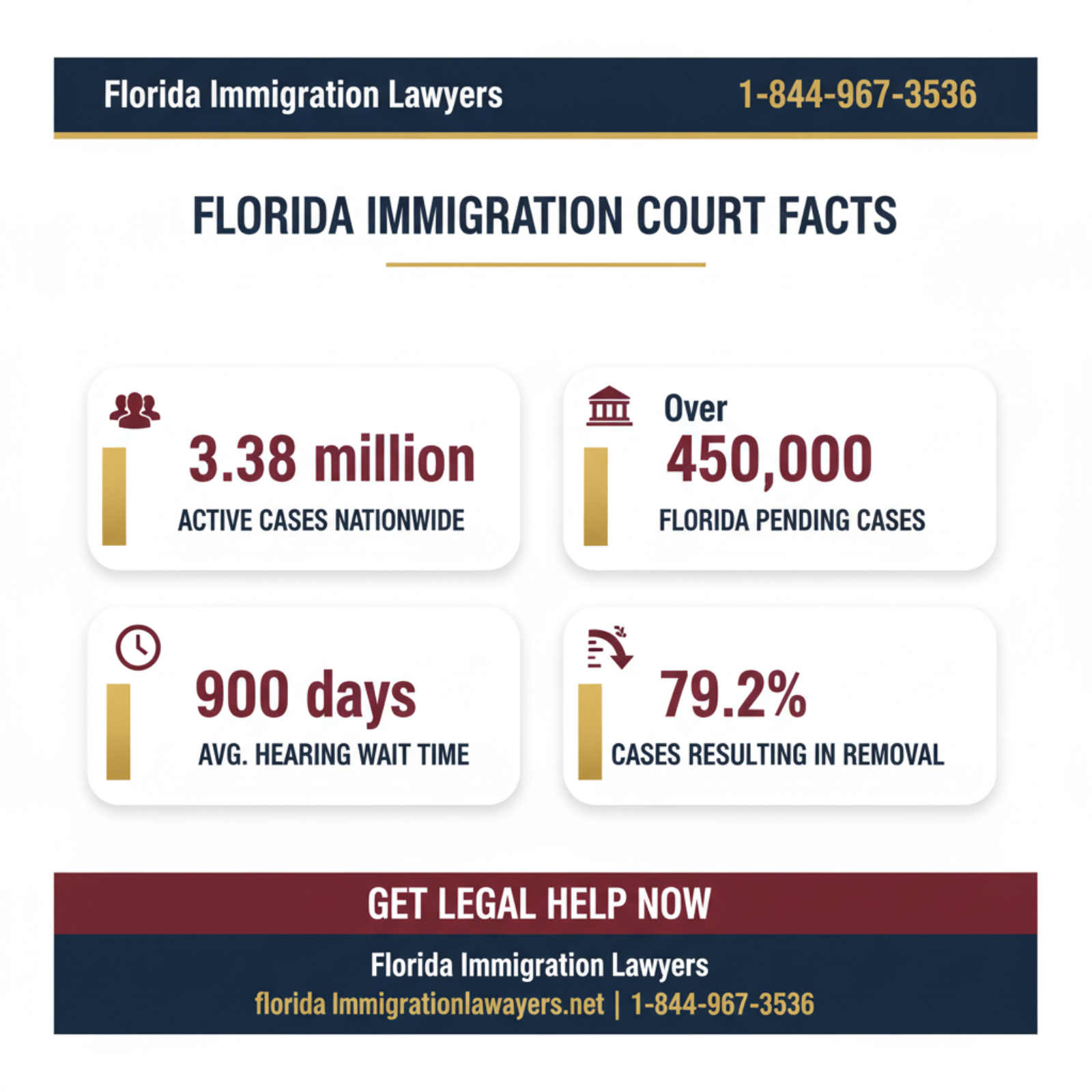
The timeline for USCIS green card removal proceedings in Florida can vary significantly, often stretching for months or even years. Several factors influence how long your case will take, including the specific immigration court (e.g., Miami Immigration Court or Orlando Immigration Court), the complexity of your case, the judge's caseload, and whether an appeal is filed.
I-751 Removal of Conditions Processing Time
For conditional residents, the initial I-751 removal of conditions processing time by USCIS can be lengthy, sometimes exceeding 18-24 months. If USCIS denies your I-751 petition, they will issue an NTA, and your case moves to immigration court. The court process itself then adds to this timeline. While your I-751 is pending, or if you are in removal proceedings after an I-751 denial, your conditional resident status is typically extended, and you should receive an extension notice or stamp in your passport.
Factors Affecting Overall Timeline
- Court Backlogs: Immigration courts, especially in high-volume areas like Florida, often have significant backlogs, leading to delays between hearings.
- Case Complexity: Cases involving extensive evidence, multiple witnesses, or complex legal arguments naturally take longer.
- Appeals: If a decision is appealed to the Board of Immigration Appeals (BIA), this adds several more months to the process, sometimes over a year.
While frustrating, patience is often required. Your deportation defense Florida attorney will keep you informed of your case's progress and any expected delays. It is important to remember that during this period, you typically retain your work authorization and other benefits associated with your green card status, provided you have received proper extensions.
External Link: For official processing times, you can check the USCIS Processing Times page. For information on immigration court backlogs, refer to the Executive Office for Immigration Review (EOIR) website.
Understanding the Costs Involved
Facing USCIS green card removal proceedings involves various potential costs. These can include government filing fees, legal fees, and other associated expenses. It is important to budget for these to avoid financial surprises during an already stressful time.
Government Filing Fees
While there isn't a direct "removal proceedings fee," you may incur fees if you apply for relief from removal. For example, if you are seeking adjustment of status or filing a new I-751 removal of conditions petition with the Immigration Judge, you will be responsible for the associated USCIS filing fees. These fees are subject to change, so it's always best to check the official USCIS website or use the USCIS Fee Calculator for the most current information. Typically, fees are required for applications like Form I-485 (Application to Register Permanent Residence or Adjust Status) or Form I-601 (Application for Waiver of Grounds of Inadmissibility).
Legal Fees for an Immigration Lawyer
The most significant cost for many individuals will be attorney fees. Hiring an experienced immigration lawyer in Hollywood, FL, is a critical investment in your future. Legal fees for removal proceedings can vary widely depending on:
- Case Complexity: A straightforward case with clear defenses will generally cost less than a highly complex case involving criminal history, multiple forms of relief, or extensive litigation.
- Number of Hearings: More hearings mean more attorney time spent preparing and appearing in court.
- Appeals: If the case goes to the Board of Immigration Appeals (BIA) or federal court, additional fees will apply.
Many attorneys offer payment plans, and it is always advisable to discuss fee structures and expectations during your initial consultation. Florida Immigration Lawyers offers transparent fee structures and works with clients across Florida to provide accessible legal representation.
Do not navigate the daunting process of USCIS green card removal proceedings alone. The complexities of immigration law require seasoned expertise. Contact Florida Immigration Lawyers today to protect your rights and your future in Florida. Our team is ready to provide the dedicated legal support you need.
Common Mistakes to Avoid in Removal Proceedings
- Missing Deadlines: Failing to respond to an NTA, file applications, or submit documents by the court's deadlines can lead to an "in absentia" removal order, meaning you are ordered deported without a hearing. This is one of the most critical errors.
- Lying to Immigration Officials: Any misrepresentation or false statements to USCIS or ICE can severely damage your case and lead to charges of immigration fraud, making it nearly impossible to gain future immigration benefits.
- Failing to Update Your Address: If you move, you must notify the immigration court and USCIS of your new address. Failure to do so means you might not receive important notices, potentially leading to missed hearings and removal orders.
- Traveling Internationally Without Legal Advice: Leaving the U.S. while in removal proceedings can be considered self-deportation or abandonment of your case, often preventing your return. Always consult your deportation defense Florida attorney before any international travel.
- Not Gathering Sufficient Evidence: A weak case lacking crucial supporting documents, especially for an I-751 removal of conditions petition or other forms of relief, significantly reduces your chances of a favorable outcome.
- Representing Yourself: While you have the right to self-representation, immigration law is incredibly complex. An experienced immigration lawyer in Hollywood, FL, understands the nuances of the law, court procedures, and available defenses, which vastly improves your chances.
- Ignoring the Notice to Appear: Pretending the NTA doesn't exist will not make the problem go away. It will only escalate the situation and likely lead to a removal order without your input.
Avoiding these common pitfalls is crucial for a successful outcome in USCIS green card removal proceedings. Professional legal guidance is invaluable.
When to Call a Lawyer for Your Green Card Removal Case
If you have received a Notice to Appear (NTA) or any communication from USCIS indicating your green card status is at risk, it is imperative to contact an immigration attorney immediately. Delaying legal consultation can severely jeopardize your case, especially given the strict deadlines involved in USCIS green card removal proceedings.
You should call Florida Immigration Lawyers if:
- You have received a Notice to Appear (NTA) for any reason.
- Your Form I-751, Petition to Remove Conditions on Residence, has been denied or is facing an interview notice with complex questions.
- You have a criminal conviction, even a minor one, that could impact your immigration status.
- You are a conditional permanent resident in Florida and your marriage has ended in divorce or annulment, requiring a waiver for your I-751.
- You have been accused of immigration fraud or misrepresentation.
- You are seeking any form of relief from removal, such as deportation defense, asylum, or adjustment of status.
Our experienced attorneys at Florida Immigration Lawyers specialize in deportation defense Florida and have a deep understanding of the local courts and USCIS offices, including those in Hollywood and throughout the state. We can help you understand your options, develop a robust defense strategy, and represent you effectively throughout the entire process. Protecting your future is our priority.
About Florida Immigration Lawyers
Florida Immigration Lawyers is a leading law firm dedicated to providing exceptional legal representation to immigrants across the entire state of Florida. With a profound understanding of U.S. immigration law and a commitment to our clients, we offer compassionate and effective legal solutions for a wide range of immigration challenges.
Our services include expert guidance on immigration visas, asylum claims, citizenship applications, family-based petitions, business immigration, and, critically, robust deportation defense Florida. We understand the unique needs of our diverse Florida community, from Miami to Jacksonville, and are particularly experienced with cases involving USCIS green card removal proceedings.
Why choose us? Our firm is known for its client-centered approach, relentless advocacy, and proven track record. We are available 24/7, offering free consultations to discuss your case. Let us be your trusted partner in navigating the complexities of immigration law. Visit our website at https://www.floridaimmigrationlawyers.net or call us at 1-844-967-3536.
Answers to Common Questions About Green Card Removal
Here we address some frequently asked questions related to green card removal proceedings and conditional residency concerns, drawing from common public inquiries.
Is ICE deporting people with green cards?
Yes, unfortunately, lawful permanent residents (green card holders) can be placed in removal proceedings and deported by U.S. Immigration and Customs Enforcement (ICE) if they are found deportable under immigration law. Common reasons include certain criminal convictions, immigration fraud, or abandonment of residency. Holding a green card does not grant absolute immunity from deportation, which is why a strong deportation defense Florida is essential.
What happens if you marry a U.S. citizen and then divorce?
If you obtained a conditional green card through marriage to a U.S. citizen and then divorce before filing your Form I-751 removal of conditions, you generally cannot file a joint petition with your spouse. Instead, you must file Form I-751 with a waiver of the joint filing requirement. You will need to prove that your marriage was entered into in good faith, not to evade immigration laws, and that it ended through divorce or annulment. This is a complex situation where legal counsel is highly recommended.
Can you get a green card if you have diabetes?
Generally, having diabetes itself is not a ground for inadmissibility or denial of a green card. U.S. immigration law primarily focuses on communicable diseases of public health significance and certain physical or mental disorders that may pose a threat to the property, safety, or welfare of the applicant or others. Routine medical conditions like diabetes usually do not prevent someone from obtaining a green card, as long as they are well-managed and do not make the applicant a public charge. This question is less directly related to removal proceedings but addresses a common medical concern for immigrants.
Is it true that green card holders are being denied entry?
Lawful permanent residents generally have the right to re-enter the U.S. However, they can be denied entry or placed in removal proceedings at the port of entry if a Customs and Border Protection (CBP) officer believes they are inadmissible or deportable. Reasons might include having certain criminal convictions, attempting to enter after abandoning residency, or misrepresentation upon entry. If this happens, you have the right to a hearing before an Immigration Judge, and immediate legal assistance is crucial.
Sources and References
- U.S. Citizenship and Immigration Services (USCIS)
- Executive Office for Immigration Review (EOIR)
- USCIS: Form I-751, Petition to Remove Conditions on Residence
- USCIS Policy Manual: Conditional Permanent Resident Status
- 8 U.S.C. Chapter 12 - Immigration and Nationality Act (INA)
- INA § 212 (8 U.S.C. § 1182) - Grounds of Inadmissibility
- INA § 237 (8 U.S.C. § 1227) - Grounds of Deportability
- 8 CFR Part 216 - Conditional Basis of Lawful Permanent Residence
This article provides general legal information and is not intended as legal advice. Every case is unique, and outcomes depend on specific facts and circumstances. Contact an attorney for advice about your particular situation.
Facing USCIS green card removal proceedings is an incredibly stressful and complex challenge. Do not risk your future by attempting to navigate these legal waters alone. The experienced immigration lawyers at Florida Immigration Lawyers are here to provide the expert guidance and robust deportation defense Florida residents need. Protect your right to remain in the U.S. Call us today for a free consultation at 1-844-967-3536. Se Habla Español - Estamos aquí para ayudarle.
Need help with Immigration?
Our Florida immigration attorneys offer free consultations. Call today or schedule online.
Frequently Asked Questions
Florida Immigration Lawyers
Legal Team
Our experienced attorneys at Florida Immigration Lawyers have been serving clients across Florida for over 20 years. We specialize in immigration, personal injury, criminal defense, workers compensation, and family law.