Exclusive Citizenship Act of 2025: What Florida Residents Need to Know
The proposed Exclusive Citizenship Act of 2025 is a federal bill (S.3283) that could impact U.S. citizenship and voter registration. For Florida residents, it's crucial to understand that this is not yet law, and existing citizenship pathways remain. This guide clarifies the bill's status, outlines the current naturalization process, and addresses common questions. Learn about eligibility, required documents, timelines, and costs for obtaining U.S. citizenship. Florida Immigration Lawyers provides expert guidance, helping you navigate potential legislative changes and ensuring your application is meticulously prepared. Contact us for a free consultation to protect your rights.
The Exclusive Citizenship Act of 2025 (S.3283) is a proposed federal bill, not current law, that seeks to redefine aspects of U.S. citizenship or voter registration requirements. It aims to establish sole allegiance to the U.S. and may impact voter verification. For Florida residents, it is crucial to understand that current citizenship laws remain in effect while this bill navigates the legislative process. Always consult an attorney for accurate, up-to-date information.
- The Act is a proposed federal bill (S.3283), not an enacted law.
- It seeks to establish sole allegiance and may affect voter registration.
- Existing U.S. citizenship laws, including birthright citizenship, are currently unchanged.
- Its passage is uncertain and would likely face significant legal challenges.
- Consult a Florida immigration lawyer for clarity on current laws and any potential future changes.
Exclusive Citizenship Act of 2025: What Florida Residents Need to Know
Are you a Florida resident concerned about proposed changes to U.S. citizenship laws? The immigration landscape is constantly evolving, and new legislative proposals can create uncertainty for individuals and families pursuing their American dream. Understanding potential federal bills, like the Exclusive Citizenship Act of 2025, is crucial for anyone navigating the path to U.S. citizenship.
At Florida Immigration Lawyers, we understand your concerns. This comprehensive guide will delve into what the proposed Exclusive Citizenship Act of 2025 entails, clarify its current status, and outline the established pathways to U.S. citizenship that remain in effect today. We serve clients across Florida, including Fort Lauderdale, Miami, Orlando, and Tampa, offering dedicated legal support.
For personalized guidance on your immigration journey, call Florida Immigration Lawyers at 1-844-967-3536 for a free consultation. We are here to help you understand your rights and options, regardless of legislative proposals.
Understanding the Proposed Exclusive Citizenship Act of 2025 and Its Context
The Exclusive Citizenship Act of 2025, known as Senate Bill S.3283 in the 119th Congress, is a piece of federal legislation that has garnered attention. It aims to establish that U.S. citizens shall owe sole and exclusive allegiance to the United States. While the specific provisions are subject to legislative debate and amendment, the bill's intent generally revolves around strengthening the definition of U.S. citizenship and potentially impacting voter registration requirements.
It is important to clarify that this is a proposed federal bill, not a current law enacted in Florida or nationally. Its purpose is to spark debate and potentially amend existing statutes related to citizenship. The bill's language, as suggested by its title and legislative summaries, aims to reinforce the idea of singular loyalty to the United States for its citizens.
Current U.S. Citizenship Law: The 14th Amendment and Birthright Citizenship
The foundation of U.S. citizenship rests largely on the 14th Amendment to the Constitution, specifically its Citizenship Clause. This clause states that "All persons born or naturalized in the United States, and subject to the jurisdiction thereof, are citizens of the United States and of the State wherein they reside." This is the basis of birthright citizenship, meaning individuals born on U.S. soil are automatically citizens, regardless of their parents' immigration status.
The proposed Exclusive Citizenship Act of 2025 could be interpreted as an attempt to revisit or challenge aspects of this established interpretation, particularly concerning the "subject to the jurisdiction thereof" phrase. However, any such challenge would face immense legal and constitutional hurdles. As of today, the 14th Amendment and birthright citizenship remain the law of the land.
The Legislative Process: How a Bill Becomes Law
For the Exclusive Citizenship Act of 2025 to become law, it must pass through a rigorous legislative process. This includes introduction in both the House of Representatives and the Senate, committee review, debate, and a vote in both chambers. If passed by both, it then goes to the President for signature or veto. The process is lengthy and complex, with many bills never making it to the final stage.
Understanding this process is vital. A bill's introduction does not mean it will become law, nor does it immediately change existing legal frameworks. Florida Immigration Lawyers closely monitors these developments. We provide our clients with accurate information on current laws and potential future changes. For more information on pathways to citizenship, visit our Citizenship practice area page.
Navigating the Existing U.S. Citizenship Application Process in Florida
While discussions around the Exclusive Citizenship Act of 2025 continue, the established process for becoming a U.S. citizen through naturalization remains unchanged. This process, governed by the Immigration and Nationality Act (INA), requires careful attention to detail and adherence to specific eligibility criteria. Many Florida residents, including those in Fort Lauderdale, pursue this path annually.
Eligibility Requirements for Naturalization
To be eligible for naturalization, you must generally meet several requirements, as outlined in INA § 316 (8 U.S.C. § 1427). These typically include:
- Being 18 years of age or older.
- Being a lawful permanent resident (Green Card holder) for at least five years (or three years if married to a U.S. citizen).
- Having continuous residence in the U.S. for at least half of that period.
- Being physically present in the U.S. for at least half of that period.
- Demonstrating good moral character for the statutory period.
- Being able to read, write, and speak basic English.
- Having a knowledge and understanding of U.S. history and government (civics).
- Demonstrating an attachment to the principles and ideals of the U.S. Constitution.
Step-by-Step Guide to the Naturalization Process
The naturalization process can be complex, but following these steps can help you prepare:
-
Step 1: Determine Your Eligibility. Before applying, ensure you meet all the requirements. Review the USCIS website or consult with a qualified Florida immigration lawyer to confirm your eligibility. This initial assessment is critical to avoid delays or denials.
-
Step 2: Prepare Form N-400, Application for Naturalization. This is the primary application form. Complete it accurately and thoroughly, providing all requested information about your background, residence, and immigration history. Any omissions or inaccuracies can lead to significant issues.
-
Step 3: Gather Supporting Documents. Collect all necessary documents, such as copies of your Green Card, marriage certificate (if applicable), tax returns, and travel records. Ensure all documents are current and correctly organized. We provide a detailed checklist below.
-
Step 4: Submit Your Application to USCIS. File Form N-400 along with all supporting documents and the correct filing fee. You can generally file online or by mail. USCIS has field offices across Florida, including Miami, Orlando, and Tampa, which process applications from areas like Fort Lauderdale.
-
Step 5: Attend Biometrics Appointment. After filing, you will receive an appointment notice for biometrics (fingerprints, photograph, and signature). This is for background checks and identity verification. Do not miss this appointment.
-
Step 6: Complete the Interview. You will be scheduled for an interview with a USCIS officer. During the interview, the officer will review your application, test your English proficiency, and assess your knowledge of U.S. civics. Be prepared to answer questions about your application and eligibility.
-
Step 7: Receive a Decision. After the interview, USCIS will issue a decision: granted, continued (requesting more information), or denied. If denied, you may have options to appeal or reapply.
-
Step 8: Take the Oath of Allegiance. If your application is approved, you will attend a naturalization ceremony to take the Oath of Allegiance. Upon taking the oath, you officially become a U.S. citizen. You will receive your Certificate of Naturalization at this ceremony.
Essential Documents for Your Citizenship Application
A complete application package is critical for a smooth naturalization process. Here is a general checklist of documents you will typically need to submit with your Form N-400:
- Copy of your Permanent Resident Card (Green Card).
- Copy of your state-issued identification (driver's license or state ID).
- Copies of all passports (U.S. and foreign) held during the statutory period.
- Copies of marriage certificates, divorce decrees, or death certificates (if applicable).
- Copies of birth certificates for all children (if applicable).
- Copies of tax returns for the past five (or three) years.
- Evidence of selective service registration (for male applicants aged 18-26).
- Certified court dispositions for any arrests or citations, even if expunged.
- Proof of payment for child support or alimony (if applicable).
- Any USCIS notices or documents related to your immigration history.
This list is not exhaustive, and specific cases may require additional documentation. Always consult the official USCIS instructions for Form N-400 or seek legal advice to ensure you submit everything necessary.
Timeline and Processing Expectations for Naturalization
The time it takes to process a naturalization application can vary significantly. Several factors influence the timeline, including the specific USCIS service center, the complexity of your case, and current caseloads. Generally, the process can take anywhere from 8 to 24 months, or even longer in some instances.
You can check current processing times on the USCIS website by entering your form type (N-400) and the service center or field office with jurisdiction over your Florida residence. For applicants in Fort Lauderdale, this typically falls under the Miami or Oakland Park Field Offices. These estimates are subject to change, so regular checks are advisable.
After filing, you will receive a receipt notice, followed by a biometrics appointment notice. The interview scheduling can take several months. Preparing thoroughly for your interview, including studying for the English and civics tests, can help ensure a positive outcome and prevent delays. Following approval, the oath ceremony is usually scheduled within a few weeks to a few months.
Cost Factors and Fee Breakdown for U.S. Citizenship
Applying for U.S. citizenship involves specific fees charged by U.S. Citizenship and Immigration Services (USCIS). These fees are subject to change, so it is crucial to always verify the most current amounts on the official USCIS website before filing your application. Florida Immigration Lawyers does not provide specific fee amounts due to their variable nature.
The primary cost is the Form N-400, Application for Naturalization, filing fee. This fee covers the processing of your application. In some instances, a separate biometrics fee may also be required, though it is often included in the N-400 fee. USCIS offers fee waivers for certain low-income applicants who meet specific guidelines. You can apply for a fee waiver by submitting Form I-912, Request for Fee Waiver, with your application.
Beyond USCIS fees, you may incur other costs. These can include expenses for obtaining necessary supporting documents, such as certified copies of birth certificates or court records. If you choose to work with an immigration attorney, you will also have legal fees for their services. While not mandatory, legal representation can be invaluable for navigating complex cases or ensuring your application is meticulously prepared.
Do not navigate this complex process alone. Contact Florida Immigration Lawyers today for expert legal assistance.
Addressing Common Questions About Citizenship and Proposed Laws
The discussions surrounding the Exclusive Citizenship Act of 2025 have raised many questions. It is vital to separate current law from proposed legislation and understand the facts.
What happens if an illegal immigrant has a child in 2025?
Under current U.S. law, specifically the 14th Amendment, a child born in the United States is a U.S. citizen, regardless of the immigration status of their parents. This is known as birthright citizenship. The proposed Exclusive Citizenship Act of 2025 does not, as of now, change this constitutional principle. While some legislative efforts aim to challenge birthright citizenship, such changes would require a constitutional amendment or a reinterpretation by the Supreme Court, which are extremely difficult processes. Therefore, if the current law remains, a child born in the U.S. in 2025 would be a U.S. citizen.
What is the new immigration law in Florida 2025?
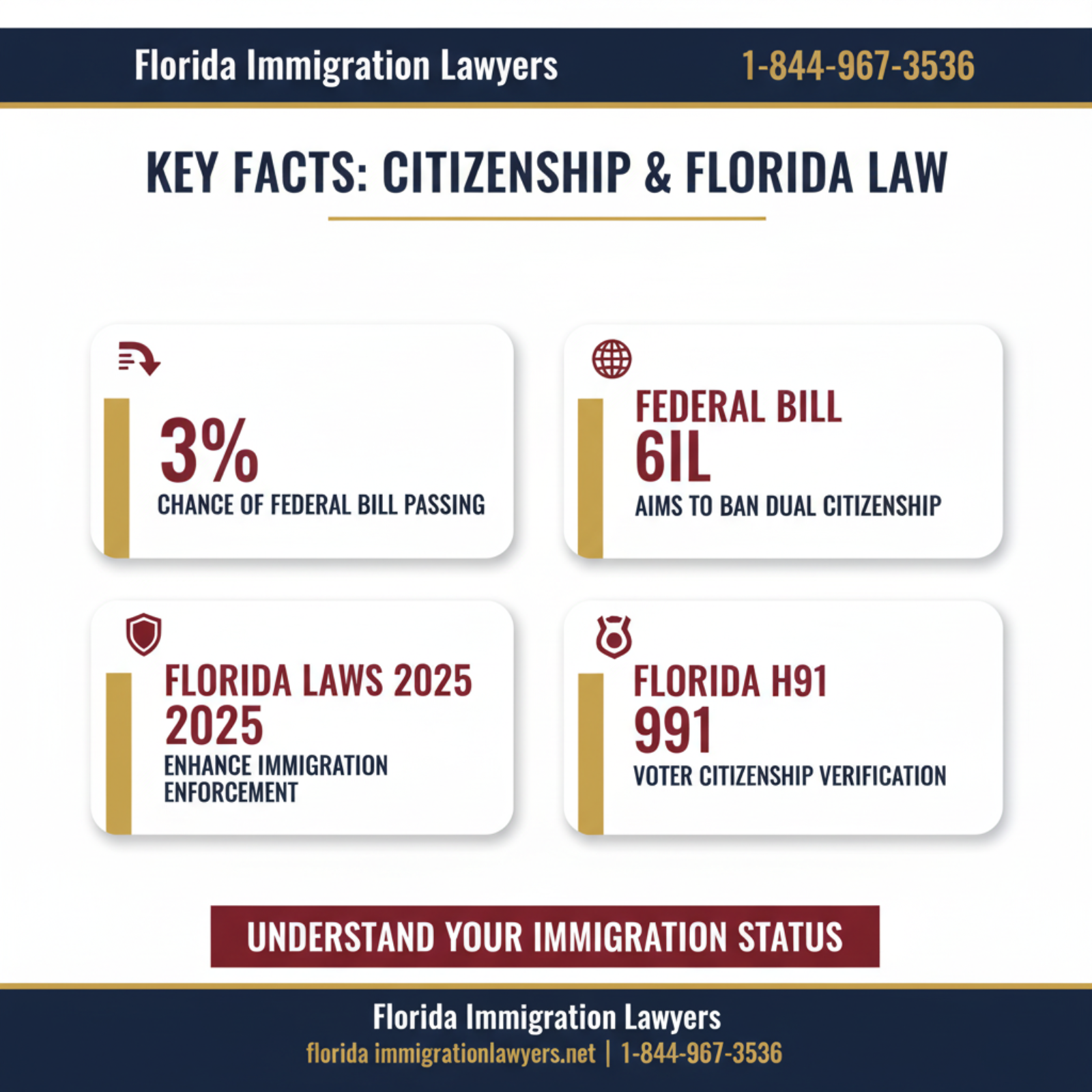
It is important to distinguish between federal and state legislation. The Exclusive Citizenship Act of 2025 (S.3283) is a proposed federal bill, meaning it would apply nationwide if passed. It is not a new immigration law specific to Florida. Florida has enacted its own state-level immigration laws, such as SB 1718, which have significant impacts on undocumented individuals within the state. However, the federal citizenship process and proposed federal bills operate on a national level. Always clarify whether a new "law" is federal or state and whether it has actually been enacted.
How likely is the Exclusive Citizenship Act of 2025 to pass?
Assessing the likelihood of a federal bill like the Exclusive Citizenship Act of 2025 passing is speculative. Federal legislation faces numerous hurdles, including committee approvals, votes in both the House and Senate, and presidential approval. Bills that propose significant changes to foundational legal principles, such as citizenship, often encounter substantial opposition and constitutional challenges. While it is impossible to predict the outcome, bills of this nature typically face an uphill battle. Florida Immigration Lawyers continuously monitors legislative developments and can provide updates as they occur.
What is the new citizenship amendment 2025?
The Exclusive Citizenship Act of 2025 is a bill (S.3283), not a constitutional amendment. A constitutional amendment is a much more difficult legal process, requiring a two-thirds vote in both the House and Senate and ratification by three-fourths of the states. Bills, on the other hand, change existing statutes. While this bill might seek to interpret or modify statutory law related to citizenship, it does not propose an amendment to the U.S. Constitution itself. It is crucial to use precise legal terminology when discussing legislative proposals to avoid confusion.
Common Mistakes to Avoid During Your Naturalization Journey
Navigating the naturalization process requires precision and attention to detail. Avoiding common errors can significantly increase your chances of a successful outcome:
-
Filing with incomplete or inaccurate information. Any missing fields or incorrect data on Form N-400 can lead to Requests for Evidence (RFEs) or even denial. Always double-check all information before submission.
-
Misrepresenting facts. Providing false information or omitting critical details can have severe consequences, including accusations of fraud and potential deportation. Honesty and accuracy are paramount.
-
Failing to disclose all arrests or citations. Even minor infractions, dismissed charges, or expunged records must be disclosed. USCIS conducts thorough background checks, and non-disclosure can be seen as a lack of good moral character. This can lead to serious deportation defense issues.
-
Not meeting physical presence requirements. Long trips outside the U.S. can break your continuous residence or physical presence requirements. Carefully track your travel history to ensure you meet the statutory thresholds.
-
Poor preparation for the civics and English tests. Many applicants underestimate the importance of these tests. Dedicate sufficient time to study U.S. history and government and practice your English speaking, reading, and writing skills.
-
Travel outside the U.S. that breaks continuous residence. Absences of six months or more can interrupt your continuous residence. If you must travel for extended periods, consult with an attorney to understand the potential impact on your naturalization eligibility.
-
Not updating USCIS of address changes. If you move, you must notify USCIS within 10 days using Form AR-11. Failing to do so can result in missed notices, appointments, and even application abandonment.
-
Missing deadlines or appointments. USCIS provides strict deadlines for responding to RFEs and attending interviews or biometrics appointments. Missing these can lead to denial or significant delays.
-
Assuming the proposed "Exclusive Citizenship Act of 2025" is current law. Relying on unconfirmed legislative proposals can lead to incorrect assumptions about your eligibility or rights. Always base your actions on current, enacted law.
-
Not seeking legal counsel for complex cases. If you have a criminal history, previous immigration violations, or other complicating factors, attempting to navigate the process alone can be risky. An experienced immigration lawyer can provide invaluable guidance.
-
Ignoring the "good moral character" requirement. This is a broad requirement that USCIS evaluates based on your entire history. Certain criminal offenses, failure to pay taxes, or other negative behaviors can disqualify you.
-
Failing to understand the Oath of Allegiance. The oath is a solemn promise to the U.S. It requires you to understand its meaning and implications, including renouncing allegiance to foreign states and supporting the Constitution.
When to Call a Florida Immigration Lawyer
While the naturalization process has clear steps, certain situations warrant the expertise of an experienced immigration attorney. This is especially true in Florida, where state and federal laws can intersect, and proposed legislation like the Exclusive Citizenship Act of 2025 can create confusion. Florida Immigration Lawyers is here to help residents in Fort Lauderdale and throughout the state.
Consider seeking legal assistance if you:
- Have a criminal record, even if it seems minor or was expunged.
- Have previously been denied a Green Card or other immigration benefits.
- Have spent significant time outside the U.S. during your permanent residency.
- Are unsure about your eligibility requirements or specific sections of the N-400 form.
- Received a Request for Evidence (RFE) or Notice of Intent to Deny (NOID) from USCIS.
- Are concerned about how the proposed Exclusive Citizenship Act of 2025 or other legislative changes might affect your application.
- Need assistance preparing for your naturalization interview or understanding complex legal questions.
- Have a complicated family immigration history or previous immigration violations.
Our team at Florida Immigration Lawyers can assess your individual circumstances, clarify the legal landscape, and represent you throughout the naturalization process. We ensure your application is accurate and complete, advocating for your best interests. Do not hesitate to contact us for support.
About Florida Immigration Lawyers
Florida Immigration Lawyers is a leading immigration law firm dedicated to serving individuals and families across the entire state of Florida. Our experienced attorneys specialize in a wide range of immigration matters, including family-based petitions, business immigration, deportation defense, asylum claims, and citizenship applications. We understand the complexities of U.S. immigration law and the profound impact it has on our clients' lives.
Our commitment is to provide compassionate, effective, and results-driven legal representation. We pride ourselves on clear communication, meticulous preparation, and a deep understanding of both federal and Florida-specific immigration challenges. Whether you are in Fort Lauderdale, Miami, Orlando, Tampa, or any other part of Florida, our firm is equipped to assist you.
We offer free consultations and are available 24/7 to address your urgent immigration needs. Trust Florida Immigration Lawyers to be your dedicated advocate on your journey to a secure future in the United States.
Phone: 1-844-967-3536
Website: https://www.floridaimmigrationlawyers.net
Sources and References
- U.S. Citizenship and Immigration Services (USCIS)
- Executive Office for Immigration Review (EOIR)
- 8 U.S.C. Chapter 12 - Immigration and Nationality Act (INA)
- INA § 316 (8 U.S.C. § 1427) - Requirements for naturalization
- U.S. Constitution, Fourteenth Amendment, Citizenship Clause
- S.3283 - Exclusive Citizenship Act of 2025 (119th Congress) - Please note: This is a proposed bill, not enacted law. For current status, refer to official legislative tracking sites like Congress.gov.
This article provides general legal information and is not intended as legal advice. Every case is unique, and outcomes depend on specific facts and circumstances. Contact an attorney for advice about your particular situation.
The path to U.S. citizenship is a significant journey, and understanding all legal aspects is paramount. While legislative proposals like the Exclusive Citizenship Act of 2025 may emerge, current laws and established processes remain the guiding principles. Do not let uncertainty deter you from pursuing your goals.
Florida Immigration Lawyers is committed to providing accurate and timely legal counsel to all Florida residents. We are here to answer your questions, clarify complex immigration laws, and represent your best interests. Schedule your free consultation today to discuss your citizenship application or any immigration concerns.
Call us now at 1-844-967-3536.
Se Habla Español - Estamos aquí para ayudarle.
Need help with Immigration?
Our Florida immigration attorneys offer free consultations. Call today or schedule online.
Frequently Asked Questions
Florida Immigration Lawyers
Legal Team
Our experienced attorneys at Florida Immigration Lawyers have been serving clients across Florida for over 20 years. We specialize in immigration, personal injury, criminal defense, workers compensation, and family law.