USCIS Green Card Removal Proceedings in Florida: Expert
Navigating USCIS green card removal proceedings in Florida requires expert legal guidance. If you received your green card through marriage and it's conditional, you must file Form I-751, Petition to Remove Conditions on Residence, before your two-year anniversary. Failure to do so or a petition denial can lead to the termination of your status and initiation of deportation proceedings. This comprehensive guide covers the I-751 process, essential documents, timelines, costs, and common mistakes. Florida Immigration Lawyers offers dedicated support for conditional green card holders, including those facing removal proceedings in Naples, Miami, and Orlando. Contact us for a free consultation to protect your permanent residency.

USCIS green card removal proceedings typically occur when a conditional permanent resident fails to remove the conditions on their two-year green card, usually by not filing Form I-751, Petition to Remove Conditions on Residence, or by having the petition denied. This can lead to the initiation of deportation procedures. Expert legal guidance is crucial to protect your status and navigate the complex requirements.
- Conditional green cards are valid for two years.
- Form I-751 is required to remove conditions and obtain permanent residency.
- Failure to file or denial of I-751 can lead to removal proceedings.
- Waivers are available for certain circumstances, like divorce or abuse.
- Legal representation significantly improves your chances of success.
Imagine building a life in Florida, only to face uncertainty about your permanent residency. For many immigrants in Naples and across Florida, obtaining a green card through marriage is a dream come true. However, if that green card is conditional, a critical step remains: removing those conditions before your two-year anniversary.
Failure to properly navigate the process of removing conditions can lead to serious consequences, including USCIS green card removal proceedings. This article will guide you through the intricacies of conditional permanent residency, the I-751 petition process, and what to do if you find yourself facing removal proceedings in Florida. We at Florida Immigration Lawyers understand the stakes involved and are here to help.
If you are facing USCIS green card removal proceedings in Florida, or need assistance with your I-751 petition, call Florida Immigration Lawyers at 1-844-967-3536 for a free consultation today. Our experienced team is ready to protect your future.
Understanding Conditional Permanent Residency and USCIS Green Card Removal Proceedings
When you obtain a green card based on a marriage to a U.S. citizen or lawful permanent resident, and your marriage is less than two years old at the time of approval, USCIS grants you conditional permanent resident status. This status is valid for a period of two years.
The purpose of this conditional period, established under the Immigration and Nationality Act (INA § 216, codified at 8 U.S.C. § 1186a), is to deter marriage fraud. USCIS wants to ensure that the marriage is legitimate and entered into in good faith, not solely for immigration benefits.
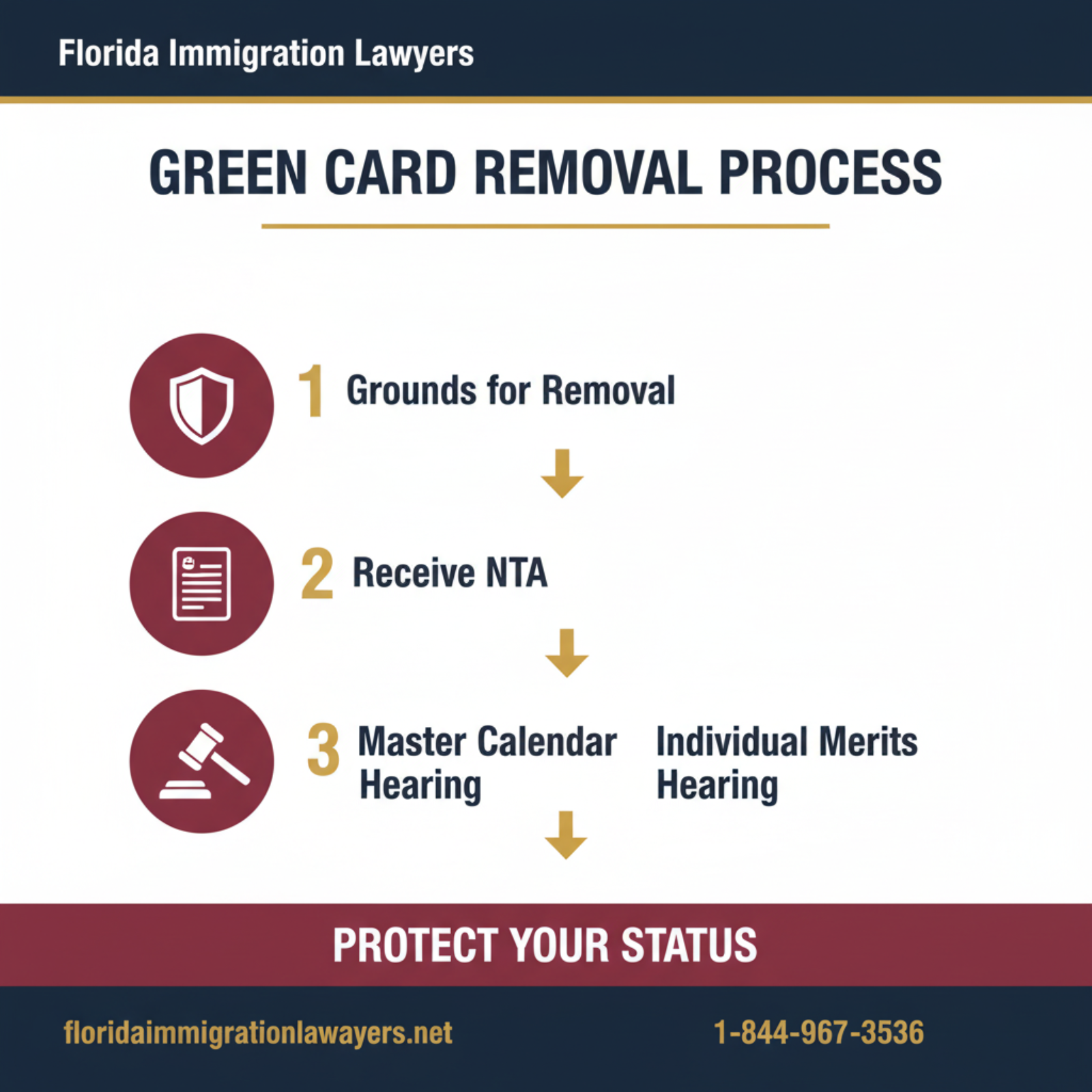
Before your two-year conditional period expires, you must file Form I-751, Petition to Remove Conditions on Residence. If you fail to file this petition, or if USCIS denies your petition, your conditional permanent resident status automatically terminates. This termination can directly lead to USCIS green card removal proceedings, where the government seeks to deport you from the United States.
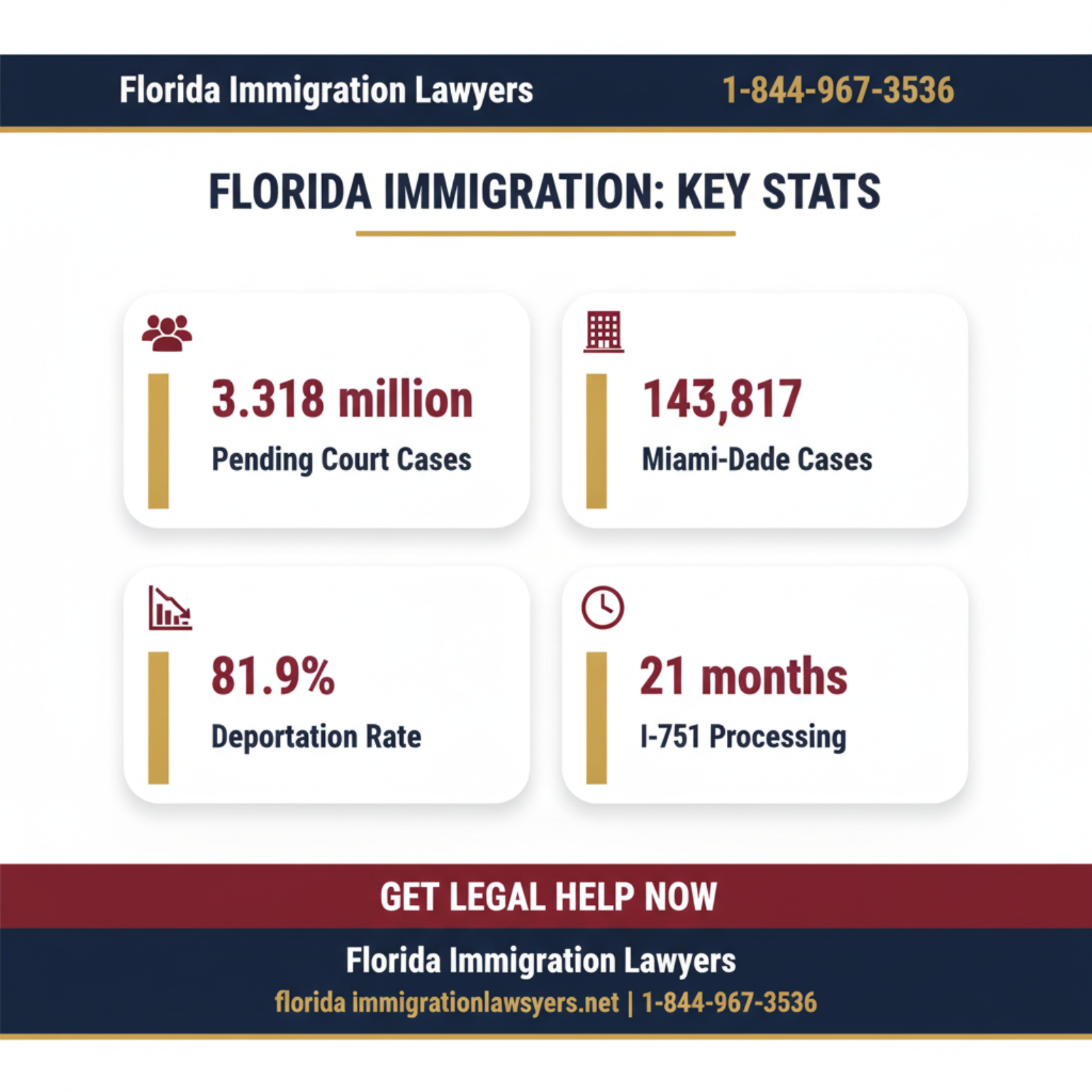
In Florida, a state with a significant immigrant population, understanding these proceedings is especially vital. Immigration courts in Miami and Orlando handle a large volume of cases, and navigating the system without legal counsel can be overwhelming. For families in Naples and surrounding areas, proactive engagement with the I-751 process is key to avoiding these stressful situations.
What Happens if You Marry a US Citizen and Then Divorce?
Divorce during the conditional residency period is a common concern. If your marriage ends in divorce or annulment before you can file a joint I-751 petition, you may still be eligible to remove the conditions on your green card. You will typically need to file Form I-751 with a waiver of the joint filing requirement.
Waivers are also available if you can prove that you entered the marriage in good faith, but the marriage was terminated through divorce or annulment. Other waivers exist for situations involving abuse by your U.S. citizen spouse or extreme hardship if you were to be removed from the U.S. Consulting with an attorney is crucial to determine your eligibility for a waiver.
The I-751 Petition to Remove Conditions: A Step-by-Step Guide
The process of removing the conditions on your green card is critical for maintaining your permanent resident status. Here is a general step-by-step guide:
-
Determine Eligibility and Filing Method: Most conditional residents file a joint petition with their U.S. citizen or lawful permanent resident spouse. However, if your marriage has ended, or if you or your child were subjected to abuse, you may be eligible to file Form I-751 with a waiver of the joint filing requirement. Understanding your specific situation is the first crucial step.
-
Gather Required Documents: This is a critical stage. You must provide ample evidence to prove that your marriage was bona fide and not entered into solely for immigration purposes. This includes joint financial documents, shared property, birth certificates of children, and affidavits from people who know you and your spouse. A comprehensive I-751 documents checklist is essential to ensure you submit all necessary proof.
-
Complete Form I-751: Carefully and accurately fill out Form I-751, Petition to Remove Conditions on Residence. This form can be found on the USCIS website. Ensure all questions are answered truthfully and completely. Any discrepancies or omissions can lead to delays or even a denial.
-
File Your Petition with USCIS: You must file Form I-751 within the 90-day period immediately preceding the expiration date on your conditional green card. If you file a joint petition after this window, you must explain the delay. Mail your completed form, supporting documents, and the correct filing fee to the appropriate USCIS Lockbox facility. You can find the specific mailing address on the USCIS website for Form I-751 instructions.
-
Attend Biometrics Appointment: After filing, USCIS will send you a receipt notice (Form I-797C, Notice of Action) extending your conditional resident status, typically for 48 months. You will also receive an appointment notice for biometrics (fingerprints, photos, and signature). It is mandatory to attend this appointment.
-
Interview (If Required): Not all I-751 petitioners are called for an interview. However, USCIS may request one if they have questions about your marriage or the evidence you submitted. If an interview is scheduled, it's highly advisable to attend with an experienced immigration attorney, especially if you filed with a waiver.
-
Receive Decision: USCIS will send you a written decision. If approved, you will receive a new 10-year green card. If denied, your conditional status will be terminated, and USCIS may initiate USCIS green card removal proceedings. This is when immediate legal action is vital.
Essential Documents for Your I-751 Petition
Providing compelling evidence of a bona fide marriage is paramount for a successful I-751 petition. The more evidence you can provide, the stronger your case will be. Here is a comprehensive I-751 documents checklist:
- Jointly filed federal and state income tax returns for all years of marriage.
- Joint bank account statements, credit card statements, and investment account statements.
- Birth certificates of children born to you and your spouse.
- Lease agreements or mortgage documents showing joint ownership or tenancy of a residence.
- Utility bills (electricity, water, gas, internet) in both names at the same address.
- Auto insurance policies, health insurance policies, and life insurance policies listing each other as beneficiaries.
- Vehicle titles or registrations showing joint ownership.
- Affidavits from friends, family members, or employers attesting to the bona fide nature of your marriage. These should include their full name, address, and how they know you.
- Photographs of you and your spouse together, with family and friends, at various events and over time. Include dates and descriptions.
- Evidence of joint travel, such as airline tickets, hotel reservations, or passport stamps.
- Any other documents that demonstrate commingling of finances, shared responsibilities, or a genuine marital relationship.
Remember, quality and quantity of evidence matter. Organize your documents clearly and provide explanations where necessary. An attorney can help you identify the strongest evidence for your specific case.
Navigating I-751 Timeline and Processing Expectations
The processing time for Form I-751, Petition to Remove Conditions on Residence, can vary significantly. Many conditional residents experience long waits, which can be a source of anxiety. USCIS processing times are subject to change and depend on various factors, including the specific service center handling your case and the volume of applications.
Typically, after filing your I-751 petition, you will receive a receipt notice (Form I-797C) within a few weeks. This notice also serves as an extension of your conditional permanent resident status, often for 48 months, allowing you to continue working and traveling while your petition is pending. You should carry this notice with your expired conditional green card.
The current I-751 removal of conditions green card processing time can range from 18 to over 48 months. If USCIS issues a Request for Evidence (RFE), it will add to your processing time. An RFE means USCIS needs more information or documentation to make a decision. Responding promptly and thoroughly to an RFE is critical.
While Florida does not have its own dedicated I-751 processing center, applications from Florida residents are typically handled by national service centers. Interviews, if required, might take place at local USCIS field offices in cities like Miami, Orlando, or Tampa, depending on your residence. For those in Naples, your interview could be scheduled at the Miami field office.
Cost Factors and Fees for Removing Green Card Conditions
Understanding the financial aspects of filing Form I-751 is important for planning. The fees associated with removing conditions on your green card are set by USCIS and are subject to change. It is always best to verify the most current fees directly on the official USCIS website fees page.
Generally, the removal of conditions green card fee includes a filing fee for Form I-751 itself and a separate biometrics services fee. These fees must be paid at the time of filing. USCIS accepts various payment methods, including money order, personal check, cashier's check, or credit card using Form G-1450, Authorization for Credit Card Transactions.
Beyond the government filing fees, you should also consider potential legal fees if you choose to hire an immigration attorney. While not mandatory, legal representation can be invaluable, especially for complex cases, waiver applications, or if you are facing USCIS green card removal proceedings. An attorney's fees will vary based on the complexity of your case and the services provided.
How Much Does It Cost to Renew Your Green Card in 2026?
It's important to distinguish between removing conditions and renewing a green card. Form I-751 is for removing conditions from a two-year green card to obtain a 10-year permanent green card. Renewing a 10-year green card involves filing Form I-90, Application to Replace Permanent Resident Card. The fees for I-90 are separate from I-751 fees and are also subject to change by USCIS. We recommend checking the USCIS website for the most current fee schedule for 2026 or any other year.
Addressing Common Questions About Conditional Green Cards
Many individuals have questions about their conditional green card status and potential issues. Here are answers to some frequently asked questions:
Is ICE Deporting People with Green Cards?
While green card holders have more protections than undocumented individuals, they are not immune to deportation. Lawful Permanent Residents, including those with conditional green cards, can be placed in removal proceedings and deported for certain criminal convictions, immigration fraud, or other violations of immigration law. This is why it is critical to comply with all immigration requirements, including the timely filing of your I-751 petition. Failure to remove conditions on your green card can directly lead to deportation proceedings initiated by ICE (U.S. Immigration and Customs Enforcement) if your status is terminated by USCIS.
Can You Get a Green Card if You Have Diabetes?
Generally, having diabetes does not automatically prevent someone from getting a green card. U.S. immigration law (INA § 212(a)(1)) outlines specific health-related grounds of inadmissibility, primarily focusing on communicable diseases of public health significance, mental or physical disorders with harmful behavior, drug abuse or addiction, and lack of required vaccinations. Diabetes itself is typically not considered a communicable disease of public health significance. However, if there are severe complications or co-occurring conditions that fall under these inadmissibility grounds, it could be an issue. It's always best to consult with an immigration attorney to discuss specific medical conditions and their potential impact on your case.
Do not navigate this complex process alone. If you are preparing to file your I-751 or are already facing USCIS green card removal proceedings in Florida, contact Florida Immigration Lawyers today for dedicated legal support. Our team serves clients throughout Florida, including Naples, Miami, and Orlando, providing the guidance you need to protect your residency.
Common Mistakes to Avoid in Conditional Green Card Cases
Navigating the I-751 process can be challenging, and even minor errors can lead to significant delays or even denial, potentially triggering USCIS green card removal proceedings. Be aware of these common pitfalls:
-
Missing the Filing Deadline: You must file Form I-751 within the 90-day window before your conditional green card expires. Missing this deadline without a compelling reason can lead to automatic termination of your status and initiation of removal proceedings.
-
Insufficient Evidence of a Bona Fide Marriage: This is one of the most frequent reasons for RFEs or denials. Failing to provide a wide range of strong, credible evidence proving your marriage is real and not just for immigration purposes can jeopardize your case.
-
Filing a Joint Petition After Divorce Without a Waiver: If your marriage has ended in divorce or annulment, you cannot file a joint petition. You must file with an appropriate waiver, explaining the termination of the marriage and demonstrating it was entered in good faith.
-
Failing to Disclose Criminal History: Even minor arrests or convictions, whether or not they resulted in charges, must be disclosed. Concealing information can be seen as misrepresentation and lead to severe immigration consequences.
-
Ignoring RFEs or Interview Notices: Always respond promptly and thoroughly to any Request for Evidence (RFE) from USCIS. Failure to respond or missing an interview can lead to a denial of your I-751 petition.
-
Traveling Internationally Without Proper Documentation: While your I-797C receipt notice extends your status, ensure you carry it with your expired conditional green card when traveling. Consult with an attorney before extensive travel during your I-751's pendency.
-
Assuming USCIS Knows Your Story: USCIS only knows what you submit. Do not assume they have access to information beyond your application. Provide clear, concise, and complete documentation.
-
Not Seeking a Waiver When Eligible: Many conditional residents are unaware of the waivers available for circumstances like divorce, spousal abuse, or extreme hardship. Failing to apply for an eligible waiver can result in an unnecessary denial.
-
Attempting to Represent Yourself in Complex Cases: While some simple cases may proceed smoothly, complex situations involving divorce, criminal issues, or previous immigration violations often require the expertise of an immigration lawyer.
-
Providing Inconsistent Information: Ensure all information provided in your I-751 petition, supporting documents, and any interviews is consistent with previous immigration applications. Inconsistencies can raise red flags and lead to scrutiny.
When to Call a Lawyer for USCIS Green Card Removal Proceedings
While some I-751 cases are straightforward, many situations warrant the expertise of an immigration attorney. If you are facing any of the following scenarios, it is highly advisable to seek legal counsel from Florida Immigration Lawyers:
- Divorce or Annulment: If your marriage has ended, you will need to file Form I-751 with a waiver. This process is more complex and requires strong evidence to prove your good faith marriage.
- Abuse or Extreme Hardship: If you or your child suffered abuse from your U.S. citizen spouse, or if your removal would cause extreme hardship, a waiver petition is necessary. These cases are sensitive and require compassionate, expert legal handling.
- Criminal History: Any past arrests, charges, or convictions, even minor ones, can complicate your I-751 petition and potentially lead to inadmissibility. An attorney can assess the impact and advise on the best course of action.
- Receipt of a Request for Evidence (RFE): An RFE indicates USCIS needs more information. An attorney can help you understand what is missing and craft a comprehensive, timely response.
- Interview Notice: If USCIS schedules an interview, having legal representation can provide invaluable support, helping you prepare and ensuring your rights are protected during the interview.
- I-751 Petition Denial: If your I-751 is denied, your conditional status will be terminated, and you will likely be placed in USCIS green card removal proceedings. Immediate legal intervention is crucial to challenge the denial and defend against deportation.
- Receipt of a Notice to Appear (NTA): An NTA means the Department of Homeland Security has initiated formal removal proceedings against you in immigration court. This is a severe situation requiring urgent legal defense.
Florida Immigration Lawyers has extensive experience in handling I-751 petitions, waiver applications, and defending clients in USCIS green card removal proceedings. We serve clients across Florida, including Naples, Miami, Orlando, and Tampa, offering dedicated and strategic representation.
About Florida Immigration Lawyers
Florida Immigration Lawyers is a leading immigration law firm dedicated to serving individuals and families across the entire state of Florida. With a deep understanding of U.S. immigration laws and a commitment to our clients, we provide compassionate yet aggressive legal representation.
Our firm specializes in a wide range of immigration services, including family-based immigration, business immigration, asylum claims, deportation defense, and citizenship applications. We pride ourselves on offering personalized attention and strategic solutions tailored to each client's unique circumstances.
Choosing Florida Immigration Lawyers means partnering with a team that genuinely cares about your future. We are available 24/7 to address your urgent concerns and offer free consultations to help you understand your options without financial commitment. Our bilingual team is ready to assist you in English and Spanish, ensuring clear communication throughout your legal journey.
Protect your right to live and work in the U.S. Contact Florida Immigration Lawyers today at 1-844-967-3536 or visit our website at https://www.floridaimmigrationlawyers.net. Let us be your trusted advocate in the complex world of immigration law.
Sources and References
- U.S. Citizenship and Immigration Services (USCIS) - Form I-751, Petition to Remove Conditions on Residence
- USCIS Check Case Processing Times
- USCIS Fee Schedule
- Executive Office for Immigration Review (EOIR) - Immigration Court Locations (Florida)
- U.S. Department of State - Conditional Permanent Resident
- 8 U.S.C. Chapter 12 - Immigration and Nationality Act (INA)
- INA § 216 - Conditional Permanent Resident Status (8 U.S.C. § 1186a)
- INA § 212(a)(1) - Health-Related Grounds of Inadmissibility (8 U.S.C. § 1182(a)(1))
- 8 CFR Part 216 - Conditional Basis of Lawful Permanent Residence
This article provides general legal information and is not intended as legal advice. Every case is unique, and outcomes depend on specific facts and circumstances. Immigration laws are complex and subject to change. Contact an attorney for advice about your particular situation.
If you are navigating USCIS green card removal proceedings in Florida, or need assistance with any other immigration matter, don't face the system alone. Your future in the U.S. depends on expert legal guidance. Contact Florida Immigration Lawyers at 1-844-967-3536 for a free, confidential consultation. Se Habla Español - Estamos aquí para ayudarle.
Do Not Navigate This Process Alone
Our experienced immigration attorneys are ready to fight for you. Get a free, confidential consultation today.
Se Habla Español
Frequently Asked Questions
Florida Immigration Lawyers
Immigration Attorney | Founder, Vasquez Law Firm
U.S. Air Force veteran and immigration attorney with thousands of cases resolved. J.D., NCCU School of Law. AILA member. Admitted to the 4th, 5th, and 11th Circuit Courts.
Available 24/7 - Free Evaluations
Related Legal Services
Our Florida immigration attorneys can help you with citizenship and naturalization, family immigration services and immigration practice areas. Call today at 1-844-967-3536 for a free consultation.
Related Links
Related Topics
Free Legal Consultation
Discuss your case with our experienced attorneys. We're available 24/7.
Se Habla Español - Estamos aquí para ayudarle.
Related Articles
EB-5 Investor Green Card in Florida: Key Insights | VLF Florida
Explore how the EB-5 investor green card program can help you start a new life in Florida. Learn about the benefits, processes, and common pitfalls of this investment immigration path. Call 1-844-967-3536 for expert guidance.
E-2 Visa for Florida Business Investors | VLF Florida
Learn how the E-2 investor visa can help you start a business in Naples, Florida. We cover eligibility, application steps, common mistakes, and when to seek legal help. Contact Florida Immigration Lawyers for a free consultation.
VAWA Immigration Relief: Support in Florida | VLF Florida
Explore VAWA immigration relief options for abuse victims in Hollywood, Florida. Learn about eligibility, application steps, and common mistakes to avoid. Contact Florida Immigration Lawyers for a free consultation.
EB-5 Investor Green Card in Florida: A Comprehensive Guide
Learn how the EB-5 investor green card program can help you gain U.S. residency through investment in Florida. Discover key steps, common mistakes, and when to seek legal advice. Call Florida Immigration Lawyers at 1-844-967-3536 for a free consultation.