USCIS Green Card Removal Proceedings Florida Guide for
Understanding USCIS green card removal proceedings in Florida is crucial for conditional permanent residents and others facing the loss of their lawful status. This guide covers the I-751 petition process, what happens if it's denied, and how to navigate immigration court. We detail common grounds for removal, essential documentation, and expected timelines, emphasizing the importance of legal counsel. Learn to avoid critical mistakes and when to seek professional help to protect your green card. Florida Immigration Lawyers offers expert guidance and deportation defense services across Florida, including Tallahassee, with free consultations available.

USCIS green card removal proceedings in Florida are formal legal actions initiated by the U.S. government to determine if a non-citizen, often a conditional permanent resident, should lose their lawful status. These proceedings typically arise from issues like the denial of an I-751 petition to remove conditions on a green card, or other grounds for deportability. Protecting your status requires a strong legal defense.
- Removal proceedings can challenge your right to remain in the U.S.
- Conditional green card holders often face removal if their I-751 is denied.
- Insufficient evidence of a bona fide marriage is a common reason for denial.
- Legal representation is crucial to navigate the complex immigration court system.
- Acting quickly and accurately can help protect your Florida residency.
Imagine building a life in Tallahassee, Florida, believing your green card secured your future, only to receive a notice threatening its removal. This unsettling reality is faced by many immigrants in Florida when they encounter USCIS green card removal proceedings. The process can be daunting, filled with complex legal requirements and significant emotional stress.
Understanding these proceedings is the first step in protecting your right to live and work in the United States. This comprehensive guide will walk you through the intricacies of green card removal, focusing on the challenges faced by conditional permanent residents in Florida. We will cover everything from the initial I-751 petition to navigating immigration court.
Our goal is to provide clear, actionable information to help you understand your situation and available options. If you are facing this serious challenge, do not hesitate to seek professional guidance. Call Florida Immigration Lawyers at 1-844-967-3536 for a free consultation. We are here to help you protect your future.
Understanding USCIS Green Card Removal Proceedings in Florida
USCIS green card removal proceedings, often referred to as deportation proceedings, are formal legal actions initiated by the U.S. government. These proceedings aim to determine whether a non-citizen should be removed from the United States. While the term “removal” generally applies to individuals without a green card, green card holders can also be placed into these proceedings under specific circumstances, particularly if their conditional residency is not properly converted to permanent residency.
For many, particularly those who obtained their green card through marriage, the journey involves a conditional permanent resident status. This status is granted for two years, after which you must file Form I-751, Petition to Remove Conditions on Residence. Failure to successfully remove these conditions or other violations of immigration law can lead directly to USCIS green card removal proceedings.
Florida, with its diverse population and significant immigrant communities in cities like Miami, Orlando, Tampa, and Jacksonville, sees a substantial number of these cases. The Executive Office for Immigration Review (EOIR) operates immigration courts across Florida, including in Miami, Orlando, and Jacksonville. These courts handle removal cases for individuals residing throughout the state, including those in Tallahassee and North Florida.
Conditional Green Cards and the I-751 Process
A conditional green card is issued to immigrants who obtain lawful permanent resident status based on a marriage to a U.S. citizen or lawful permanent resident, and the marriage is less than two years old at the time of approval. This two-year conditional period is designed to prevent marriage fraud. To transition to full, unconditional permanent residency, you must file Form I-751 within the 90-day period before your conditional green card expires.
The I-751 petition is crucial. It serves as your primary opportunity to demonstrate to USCIS that your marriage was, and remains, bona fide – entered into in good faith, not solely for immigration benefits. If USCIS denies your I-751 petition, you will typically be placed into USCIS green card removal proceedings. This means your case will be referred to an immigration judge who will then make the final decision on your residency status.
Grounds for Removal for Green Card Holders
Beyond I-751 denials, green card holders can face removal for various reasons. These grounds for removal are outlined in the Immigration and Nationality Act (INA), specifically 8 U.S.C. § 1227. Common reasons include:
- Committing certain crimes, particularly aggravated felonies or crimes involving moral turpitude.
- Marriage fraud or other misrepresentations during the immigration process.
- Becoming a public charge shortly after admission.
- Failing to register change of address.
- Engaging in activities deemed a threat to national security.
Understanding these grounds is essential. Even if your I-751 is approved, other issues can still jeopardize your green card. For any concerns about your eligibility, it is wise to consult with an experienced immigration attorney. We can help you understand the complexities of immigration law.
Step-by-Step Guide: Navigating USCIS Green Card Removal Proceedings
Navigating USCIS green card removal proceedings can be incredibly complex. This step-by-step guide outlines the typical process, especially for those whose I-751 petition has been denied, leading to an appearance before an immigration judge in Florida.
-
Filing Form I-751, Petition to Remove Conditions on Residence: This is the initial and most critical step for conditional residents. You must file Form I-751 with USCIS within 90 days before your conditional green card expires. You will need to provide extensive evidence to prove the bona fides of your marriage, such as joint bank accounts, property leases, birth certificates of children, and affidavits from friends and family.
If you are filing jointly with your spouse, this is generally straightforward. If your marriage has ended due to divorce, annulment, or your spouse has passed away, you may be eligible for a waiver of the joint filing requirement. This waiver allows you to file the I-751 alone, but requires even stronger evidence and a compelling argument.
-
USCIS Review and Potential Interview: After filing, USCIS will review your petition and supporting documents. They may send you a Request for Evidence (RFE) if they need more information. In some cases, particularly if there are concerns about the marriage or the waiver request, USCIS may schedule an interview at a local field office, such as the USCIS office in Jacksonville that serves North Florida, including Tallahassee residents.
During the interview, an immigration officer will ask questions about your marriage to determine its legitimacy. It is vital to be prepared and honest. Your responses, along with your submitted evidence, will inform USCIS's decision.
-
USCIS Decision: Approval or Referral to Immigration Court: If USCIS is satisfied that your marriage is bona fide, your I-751 will be approved, and you will receive a new 10-year green card. However, if USCIS denies your I-751 petition, they will issue a Notice of Decision. Crucially, they will also typically issue a Notice to Appear (NTA) before an immigration judge.
Receiving an NTA means your case has been transferred from USCIS to the Executive Office for Immigration Review (EOIR) immigration court system. This marks the beginning of formal USCIS green card removal proceedings. Your conditional permanent resident status is automatically extended while your I-751 is pending, and during removal proceedings, until an immigration judge makes a final decision.
-
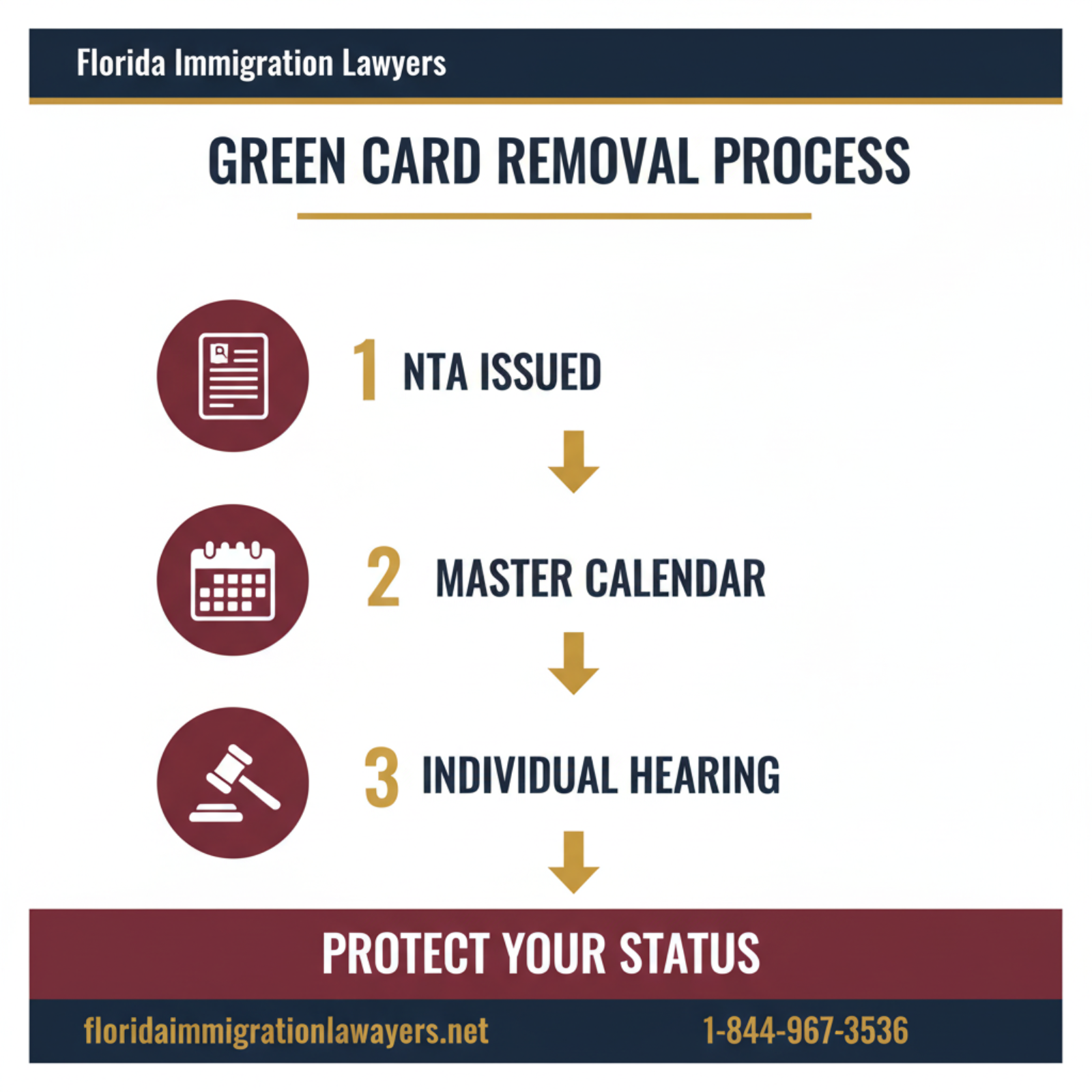
Notice to Appear (NTA) and Immigration Court Proceedings: The NTA is the charging document that initiates removal proceedings. It will state the legal grounds for why the government believes you are removable from the U.S. and will specify the date and location of your first court hearing, known as the Master Calendar Hearing.
In Florida, your hearing could be scheduled at one of the immigration courts in Miami, Orlando, or Jacksonville, depending on your residence. For residents of Tallahassee, it is often the Jacksonville Immigration Court. It is imperative that you attend all scheduled hearings. Failure to appear can result in an order of removal in absentia.
-
Hearings and Presenting Your Case: During Master Calendar Hearings, the judge will confirm your identity, ensure you received the NTA, and ask you to admit or deny the allegations and concede or contest removability. You will also be asked to designate countries for removal if ordered. This is where you or your attorney will present your defenses and apply for any forms of relief from removal, such as a new I-751 petition (if one was never properly filed or was denied without considering all evidence), or a waiver if applicable.
If your case is complex, the judge will schedule an Individual Hearing (also called a Merits Hearing). This is essentially a trial where you and the government's attorney (ICE counsel) present evidence, call witnesses, and make legal arguments. For an I-751 denial, you will have another opportunity to prove the bona fides of your marriage to the immigration judge.
-
Decision by Immigration Judge: After considering all the evidence and arguments, the immigration judge will render a decision. The judge may grant your application to remove conditions, grant another form of relief from removal, or order you removed (deported) from the United States. This decision is legally binding.
-
Appeals Process: If either you or the government are dissatisfied with the immigration judge's decision, you typically have the right to appeal to the Board of Immigration Appeals (BIA) within 30 days. The BIA is the highest administrative body for interpreting and applying immigration laws. Further appeals can sometimes be made to a U.S. Circuit Court of Appeals. Navigating the appeals process is highly technical and almost always requires legal counsel.
Essential Document Checklist for USCIS Green Card Removal Proceedings
Preparing for USCIS green card removal proceedings, especially those stemming from an I-751 denial, requires meticulous documentation. The burden of proof is on you to demonstrate your eligibility to remain in the U.S. Here is a comprehensive list of documents you should prepare, both for your I-751 and for potential immigration court proceedings:
For I-751 Petition (if applicable):
- Copy of your conditional green card.
- Copy of your spouse's green card or U.S. passport/birth certificate.
- Copy of marriage certificate.
- Birth certificates of any children born to the marriage.
- Joint bank account statements (checking, savings, credit cards).
- Joint leases or mortgages for your shared residence.
- Joint utility bills (electricity, water, gas, internet).
- Joint tax returns (federal and state) for the past two years.
- Auto titles or registrations showing joint ownership.
- Life insurance policies, health insurance, or other insurance policies listing each other as beneficiaries.
- Photos of your wedding, family events, and travels together (dated, with descriptions).
- Affidavits from friends, family, and employers attesting to the bona fides of your marriage.
- Evidence of shared financial responsibilities (e.g., joint loans, investments).
- Any other evidence proving your marriage is legitimate and ongoing.
For Removal Proceedings (General):
- All documents submitted for your I-751 petition.
- Your passport and any other travel documents.
- Birth certificate.
- Marriage certificate (if applicable).
- Divorce decrees or death certificates (if applicable, for waivers).
- Police clearance certificates from all places you have lived.
- Any criminal records, even minor offenses (ensure you have certified court dispositions).
- Evidence of hardships if you were removed from the U.S. (e.g., medical records, psychological evaluations, letters from employers/schools).
- Proof of rehabilitation (if applicable, for criminal issues).
- Copies of all immigration documents received from USCIS or the immigration court (NTAs, hearing notices, RFEs, decisions).
- Witness testimony (if applicable, with prepared statements).
Organizing these documents thoroughly is paramount. A well-prepared case with compelling evidence significantly increases your chances of a favorable outcome. We can help you gather and present the necessary documentation to strengthen your defense against removal. Our deportation defense attorneys are ready to assist.
Timeline and Processing Expectations for Conditional Green Card Removal
The timeline for dealing with USCIS green card removal proceedings can vary significantly. It depends on whether your case is initially processed by USCIS (for the I-751) or subsequently referred to an immigration court. Understanding these timelines can help manage expectations and plan your legal strategy.
I-751 Processing Times by USCIS:
As of 2026, USCIS processing times for Form I-751, Petition to Remove Conditions on Residence, can range from 18 to 36 months, or even longer in some complex cases. These times are estimates and can fluctuate based on the volume of applications, the specific USCIS service center handling your case, and whether an interview or Request for Evidence (RFE) is issued. You can check current processing times on the USCIS website.
During this processing period, your conditional permanent resident status is automatically extended, typically for 24 months, while your I-751 is pending. USCIS will issue a receipt notice (Form I-797C) that serves as proof of this extension. It is crucial to keep this notice with your expired conditional green card.
Immigration Court Proceedings Timeline:
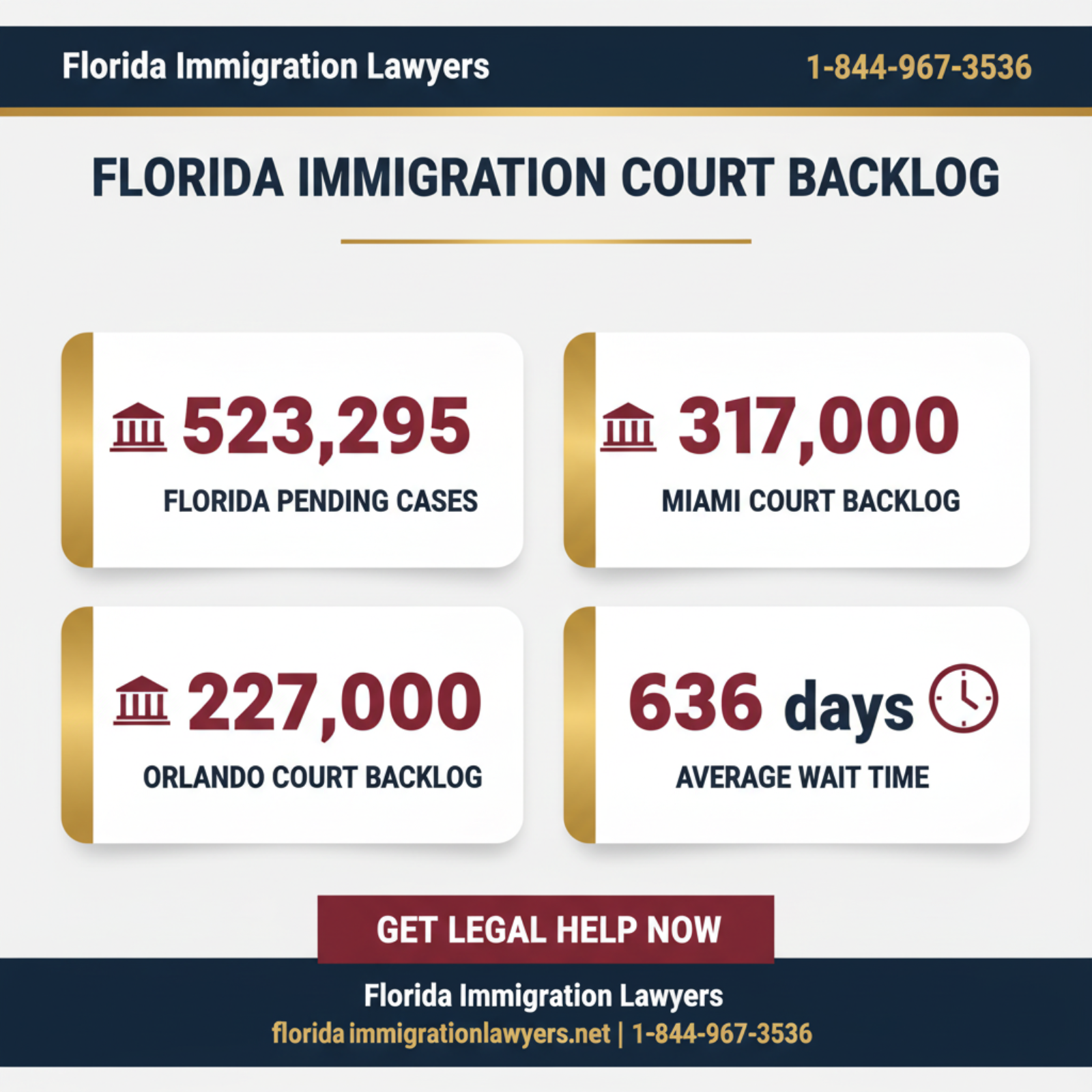
If your I-751 is denied and you are placed into USCIS green card removal proceedings, the timeline becomes even less predictable. Immigration court dockets in Florida, like those in Miami, Orlando, and Jacksonville, are often backlogged. A typical removal case can take anywhere from one to five years, or sometimes even longer, from the date of the Notice to Appear (NTA) to a final decision by an immigration judge.
Factors influencing court timelines include:
- The complexity of your case and the number of hearings required.
- The availability of the immigration judge and court resources.
- Whether you seek various forms of relief from removal, which may require additional hearings.
- Any appeals to the Board of Immigration Appeals (BIA) or federal courts.
Throughout this lengthy process, having consistent legal representation is invaluable. Your attorney can help monitor your case, prepare for hearings, and keep you informed of any developments. We understand the stress these delays can cause and are committed to guiding you through every stage.
Cost Factors and Fee Breakdown for Green Card Removal Proceedings
Understanding the potential costs associated with USCIS green card removal proceedings is an important part of your planning. These costs generally fall into two main categories: government filing fees and legal fees. It is important to remember that government fees are subject to change, and legal fees vary based on the complexity of your case and the attorney's experience.
Government Filing Fees:
- Form I-751, Petition to Remove Conditions on Residence: There is a filing fee for the I-751 petition itself, plus a biometric services fee for each applicant. These fees are set by USCIS and are non-refundable. You can find the most current fee schedule on the official USCIS website.
- Appeals Fees: If you decide to appeal an adverse decision to the Board of Immigration Appeals (BIA), there will be an additional filing fee for Form EOIR-29, Notice of Appeal.
- Other Applications for Relief: If you apply for other forms of relief from removal during your court proceedings (e.g., adjustment of status, waivers), each application will have its own separate USCIS or EOIR filing fee.
It is crucial to use the correct fee amount and payment method, as incorrect payments can lead to your application being rejected and further delays. Always verify current fees directly on the respective government agency websites.
Legal Fees:
Attorney fees constitute a significant portion of the cost of defending against USCIS green card removal proceedings. The total legal fees will depend on several factors, including:
- Case Complexity: Straightforward I-751 cases are less costly than complex removal cases involving criminal issues, multiple hearings, or appeals.
- Attorney's Experience: Highly experienced immigration attorneys, especially those specializing in deportation defense, may charge higher fees.
- Scope of Services: Fees can vary based on whether the attorney is handling just the I-751, or the full scope of removal proceedings from Master Calendar Hearings to Individual Hearings and potential appeals.
- Location: Legal fees can sometimes vary by geographic location, although Florida Immigration Lawyers serves clients throughout Florida.
Many law firms, including Florida Immigration Lawyers, offer free initial consultations to discuss your case and provide an estimate of legal fees. We believe in transparency and will clearly outline our fee structure. Investing in experienced legal counsel can be critical to protecting your green card and your future in Florida.
Do not navigate this process alone. The stakes are too high. Contact Florida Immigration Lawyers today to discuss your situation and learn how we can help protect your residency. We are dedicated to serving immigrants across Florida.
Common Mistakes to Avoid in USCIS Green Card Removal Proceedings
Facing USCIS green card removal proceedings is a serious matter where even minor errors can have significant consequences. Avoiding these common mistakes can greatly improve your chances of a favorable outcome in Florida's immigration courts:
-
Failing to File Form I-751 on Time: For conditional residents, the most critical mistake is not filing the I-751 petition within the 90-day window before your conditional green card expires. This oversight almost guarantees that USCIS will deny your petition and place you into removal proceedings. Always mark your calendar and begin preparing well in advance.
-
Submitting Insufficient Evidence of a Bona Fide Marriage: A weak I-751 petition with limited evidence of a legitimate marriage is a primary reason for denials. USCIS and immigration judges scrutinize these cases heavily. Ensure you provide extensive, compelling, and dated documentation demonstrating commingled finances, shared residence, joint responsibilities, and social integration as a couple.
-
Not Responding to Requests for Evidence (RFEs): If USCIS sends an RFE, it means they need more information or clarification. Ignoring an RFE or providing an inadequate response will almost certainly lead to a denial of your I-751 petition and subsequent referral to immigration court. Always respond thoroughly and on time.
-
Failing to Attend Scheduled Interviews or Hearings: Missing a USCIS interview or an immigration court hearing, especially a Master Calendar or Individual Hearing, can have severe consequences. For court hearings, a failure to appear (FTA) can result in an order of removal in absentia, meaning you are ordered deported without your presence. It is extremely difficult to reopen such a case.
-
Misrepresenting Facts or Submitting Fraudulent Documents: Any attempt to lie, conceal information, or submit false documents to USCIS or the immigration court is a serious offense. This can lead to permanent bars from immigration benefits, criminal charges, and immediate removal. Honesty and transparency are always the best policy.
-
Not Disclosing All Criminal History: Even seemingly minor arrests or convictions, including those expunged or sealed, must be disclosed to immigration authorities. Failure to do so can be considered misrepresentation and lead to denial of benefits or grounds for removal. An attorney can help you understand the immigration consequences of your criminal record.
-
Attempting to Handle the Case Alone: Immigration law is incredibly complex and constantly evolving. Representing yourself in USCIS green card removal proceedings, particularly in immigration court, is extremely risky. You will be up against experienced government attorneys (ICE counsel) who know the law and court procedures inside and out. Without legal counsel, you may miss critical deadlines, fail to present necessary evidence, or overlook available forms of relief.
-
Ignoring Changes in Immigration Law or Policy: Immigration laws and policies are subject to frequent changes. What was true yesterday may not be true today. Staying informed, especially through legal counsel, is vital to avoid relying on outdated information that could jeopardize your case.
-
Lack of Preparation for Interviews or Hearings: Going into a USCIS interview or court hearing without thorough preparation can lead to inconsistent answers or a failure to present your case effectively. Practice answering questions and review all your submitted documents with your attorney.
-
Not Seeking Waivers When Applicable: In some cases, even if you are deportable, you may be eligible for a waiver of inadmissibility or deportability. Many immigrants are unaware of these complex waivers. An experienced attorney can identify if you qualify for any waivers that could allow you to keep your green card or obtain other relief.
When to Call a Lawyer for USCIS Green Card Removal Proceedings
The moment you suspect you might be facing USCIS green card removal proceedings, or if you have already received official notification, is the time to contact an experienced immigration attorney. The stakes are incredibly high, and timely, expert legal intervention can make all the difference in protecting your right to remain in Florida.
Here are specific scenarios where calling Florida Immigration Lawyers is not just recommended, but often critical:
- You Received a Notice to Appear (NTA): This is the official document that initiates removal proceedings. Do not wait until your first court date. Contact an attorney immediately to understand the charges against you and begin building your defense.
- Your Form I-751 Petition Was Denied: A denial of your Petition to Remove Conditions on Residence almost always leads to removal proceedings. An attorney can review the denial, identify potential issues, and prepare your case for immigration court.
- You Have a Criminal Record: Even minor arrests or convictions can have severe immigration consequences for green card holders, potentially making you deportable. An attorney specializing in deportation defense can analyze your criminal history and advise on possible waivers or defenses.
- You Are Considering Filing an I-751 Waiver: If your marriage ended in divorce, annulment, or your spouse passed away, you may need to file an I-751 waiver. These are complex and require substantial evidence. An attorney can guide you through this process and ensure your waiver is strong.
- USCIS Sent a Request for Evidence (RFE) or Notice of Intent to Deny (NOID): These indicate that USCIS has concerns about your application. An attorney can help you gather the necessary evidence and craft a compelling response to prevent a denial and potential removal proceedings.
- You Have Been Detained by ICE: If you or a loved one has been detained by Immigration and Customs Enforcement (ICE), contacting an attorney immediately is paramount. We can work to secure release on bond and begin preparing a defense against removal.
- You Believe You Have Grounds for Asylum or Other Relief: If you fear persecution in your home country, or believe you qualify for other forms of relief like asylum, cancellation of removal, or adjustment of status, an attorney can assess your eligibility and help you apply.
- You Have Missed a Filing Deadline or Court Date: While difficult, sometimes these errors can be rectified. An attorney can evaluate if it is possible to reopen your case or file a motion to reconsider.
At Florida Immigration Lawyers, we understand the fear and uncertainty that come with the threat of losing your green card. Our attorneys are highly experienced in all aspects of USCIS green card removal proceedings and are committed to providing aggressive, compassionate representation. We serve clients across Florida, including those in Tallahassee and surrounding areas. Let us put our expertise to work for you.
About Florida Immigration Lawyers
Florida Immigration Lawyers is a leading immigration law firm dedicated to serving individuals and families across the entire state of Florida. With years of specialized experience, our team of highly skilled attorneys provides comprehensive legal assistance in all areas of immigration law, from family-based petitions to complex deportation defense cases.
We understand the profound impact immigration matters have on our clients' lives. Our firm is built on a foundation of empathy, integrity, and a relentless commitment to achieving the best possible outcomes. Whether you are seeking to obtain a green card, prevent deportation, become a U.S. citizen, or bring family members to the U.S., we are here to guide you through every step of the legal process.
Why Choose Florida Immigration Lawyers?
- Expertise: Our attorneys possess in-depth knowledge of U.S. immigration laws and policies, staying current with all changes to provide the most effective representation.
- Client-Centered Approach: We prioritize your needs and concerns, offering personalized legal strategies tailored to your unique situation. We believe in clear communication and keeping you informed.
- Comprehensive Services: From family immigration and business immigration to citizenship applications and deportation defense, we cover a broad spectrum of immigration services.
- Bilingual Support: We offer full bilingual services (English and Spanish) to ensure effective communication and understanding for all our clients.
- Statewide Reach: No matter where you are in Florida – from Tallahassee to Miami – our firm is equipped to represent you.
Your future in the United States is too important to leave to chance. Trust the dedicated team at Florida Immigration Lawyers to advocate for your rights and navigate the complexities of immigration law. We are available 24/7 to answer your urgent questions and offer a free, confidential consultation.
Visit our website at https://www.floridaimmigrationlawyers.net or call us directly at 1-844-967-3536 to schedule your free consultation today. Let our attorneys be your trusted legal partners.
Sources and References
- U.S. Citizenship and Immigration Services (USCIS)
- USCIS - Form I-751, Petition to Remove Conditions on Residence
- Executive Office for Immigration Review (EOIR)
- EOIR - Florida Immigration Courts
- 8 U.S.C. § 1186a - Conditional permanent resident status for certain alien spouses and sons and daughters
- 8 U.S.C. § 1227 - Deportable aliens
- 8 C.F.R. § 216.4 - Petition for removal of conditions by alien spouse
This article provides general legal information and is not intended as legal advice. Every case is unique, and outcomes depend on specific facts and circumstances. Contact an attorney for advice about your particular situation.
The journey through USCIS green card removal proceedings can be one of the most challenging periods in an immigrant's life. But you do not have to face it alone. Florida Immigration Lawyers is here to provide the experienced, compassionate legal representation you need to protect your future in Florida.
Whether you are in Tallahassee, Miami, Orlando, or any other part of the Sunshine State, our dedicated team is ready to fight for your rights. We offer free, confidential consultations to discuss your case and outline your best course of action.
Don't let the threat of removal proceedings define your future. Take control by seeking expert legal counsel today. Call Florida Immigration Lawyers at 1-844-967-3536. Se Habla Español - Estamos aquí para ayudarle.
Do Not Navigate This Process Alone
Our experienced immigration attorneys are ready to fight for you. Get a free, confidential consultation today.
Se Habla Español
Frequently Asked Questions
Florida Immigration Lawyers
Immigration Attorney | Founder, Vasquez Law Firm
U.S. Air Force veteran and immigration attorney with thousands of cases resolved. J.D., NCCU School of Law. AILA member. Admitted to the 4th, 5th, and 11th Circuit Courts.
Available 24/7 - Free Evaluations
Related Legal Services
Our Florida immigration attorneys can help you with experienced immigration attorneys, business immigration and asylum protection. Call today at 1-844-967-3536 for a free consultation.
Related Links
Related Topics
Free Legal Consultation
Discuss your case with our experienced attorneys. We're available 24/7.
Se Habla Español - Estamos aquí para ayudarle.
Related Articles
Consular Processing for Florida Immigrant Visa Applicants
Learn about consular processing for Florida immigrant visa applicants, key steps, and common pitfalls. For assistance, contact Florida Immigration Lawyers.
Immigration Services in Jacksonville, Florida | VLF Florida
Explore immigration services in Jacksonville, Florida, including visa applications, citizenship processes, and more. Contact Florida Immigration Lawyers for expert guidance and support.
U Visa Certification Law Enforcement in Florida | VLF Florida
Explore the U visa certification process in Florida with a focus on St. Petersburg. Learn about key steps, common mistakes, and when to seek legal help. Contact Florida Immigration Lawyers for expert guidance.
I-360 Widow Petition Florida: Self-Petitioning After Loss
Losing a U.S. citizen spouse can be devastating, but an I-360 widow petition offers a compassionate path to permanent residency for eligible surviving spouses in Florida. This self-petition allows you to seek a green card without your spouse's sponsorship, provided you meet specific criteria like filing within two years of their death and proving a good faith marriage. The process involves meticulous documentation, adherence to strict deadlines, and careful navigation of USCIS requirements. Florida Immigration Lawyers specializes in guiding individuals through this complex journey, offering expert legal advice and compassionate support. Learn about eligibility, required documents, timelines, and common pitfalls to avoid. Our firm is dedicated to helping you secure your future in the United States, offering free consultations across Florida.