USCIS Green Card Removal Proceedings Florida: Your Guide
Facing USCIS green card removal proceedings in Florida can be incredibly stressful, threatening your permanent residency. This guide from Florida Immigration Lawyers explains the process, from understanding conditional green card issues and I-751 petitions to defending against general removal. Learn about essential documents, processing timelines, and cost factors. We cover common mistakes to avoid and when to seek legal counsel, emphasizing the importance of expert deportation defense. Protect your future by understanding your rights and the legal steps involved in these complex immigration cases. Our firm serves all of Florida, offering free consultations.

USCIS green card removal proceedings in Florida are formal legal actions initiated by the U.S. government to determine if a non-citizen should lose their permanent resident status and be deported. This often involves conditional green cards (I-751) or issues like criminal convictions. Protecting your status requires a strong legal defense and adherence to strict procedures.
- Removal proceedings can impact conditional and unconditional green card holders.
- Filing Form I-751 correctly is crucial for conditional residents.
- Certain criminal offenses or immigration violations can lead to removal.
- Legal representation is highly recommended to navigate these complex cases.
- Florida Immigration Lawyers offers defense for those facing removal in Florida.
Navigating the complex landscape of U.S. immigration law can be daunting, especially when your permanent residency is at stake. For many individuals and families in Florida, facing USCIS green card removal proceedings can bring immense stress and uncertainty. Whether you hold a conditional green card or an unconditional one, understanding your rights and the legal process is paramount to protecting your future.
This comprehensive guide from Florida Immigration Lawyers will walk you through the intricacies of green card removal proceedings in Florida. We will cover key aspects, from understanding the grounds for removal to preparing your defense. Our goal is to empower you with the knowledge needed to confront these challenges head-on.
If you or a loved one in Gainesville, Orlando, Miami, or anywhere in Florida are facing USCIS green card removal proceedings, do not delay. Call Florida Immigration Lawyers at 1-844-967-3536 for a free consultation. We are here to help protect your right to remain in the U.S.
Understanding USCIS Green Card Removal Proceedings in Florida
USCIS green card removal proceedings, often referred to as deportation proceedings, are legal actions taken by the U.S. government to remove a non-citizen from the country. These proceedings can affect individuals holding conditional permanent residency or even those with unconditional green cards. It is a serious matter that demands immediate attention and often legal expertise.
In Florida, these cases are heard in immigration courts, typically located in cities like Miami, Orlando, or Bradenton, depending on your jurisdiction. The process begins when U.S. Immigration and Customs Enforcement (ICE) issues a Notice to Appear (NTA), formally charging an individual with being removable from the United States.
Conditional vs. Unconditional Green Cards and Removal
A conditional green card, usually obtained through marriage or certain investor programs, is valid for two years. To become a permanent resident, you must file Form I-751, Petition to Remove Conditions on Residence, before its expiration. Failure to file Form I-751, or if USCIS denies your petition, can automatically trigger USCIS green card removal proceedings. Unconditional green card holders can still face removal for other reasons, such as criminal convictions or violations of immigration law.
Grounds for Removal Proceedings
Various grounds under the Immigration and Nationality Act (INA) can lead to USCIS green card removal proceedings. Common reasons include certain criminal convictions (e.g., aggravated felonies, crimes involving moral turpitude), immigration violations (e.g., marriage fraud, misrepresentation), failure to remove conditions for conditional permanent residency, or abandonment of residency by extended time outside the U.S. Understanding the specific charges is the first critical step in building a defense.
Internal Link: Learn more about deportation defense in Florida with our experienced attorneys.
Navigating the I-751 Petition: Removing Conditions on Your Green Card
For many conditional permanent residents in Florida, the most common encounter with potential USCIS green card removal proceedings stems from the need to remove conditions on their green card. This is done by filing Form I-751, Petition to Remove Conditions on Residence. It is a vital step to transition from conditional to full permanent residency.
You must file Form I-751 within the 90-day period immediately preceding the expiration date on your conditional green card. Timely filing automatically extends your conditional status, and you will receive a receipt notice (Form I-797C). Missing this deadline can lead to serious consequences, including the initiation of removal proceedings.
The I-751 petition proves your marriage was entered into in good faith. Even if your marriage has ended in divorce or your spouse is deceased, you may still be eligible to file for a waiver of the joint filing requirement. This waiver allows you to file the petition alone, demonstrating the bona fide nature of the marriage. Our firm assists clients throughout Florida, including Gainesville, with these complex petitions for removal of conditions green card.
Step-by-Step Guide to Responding to Removal Proceedings
Facing USCIS green card removal proceedings can feel overwhelming, but a structured approach can help. Here is a general step-by-step guide on how to respond:
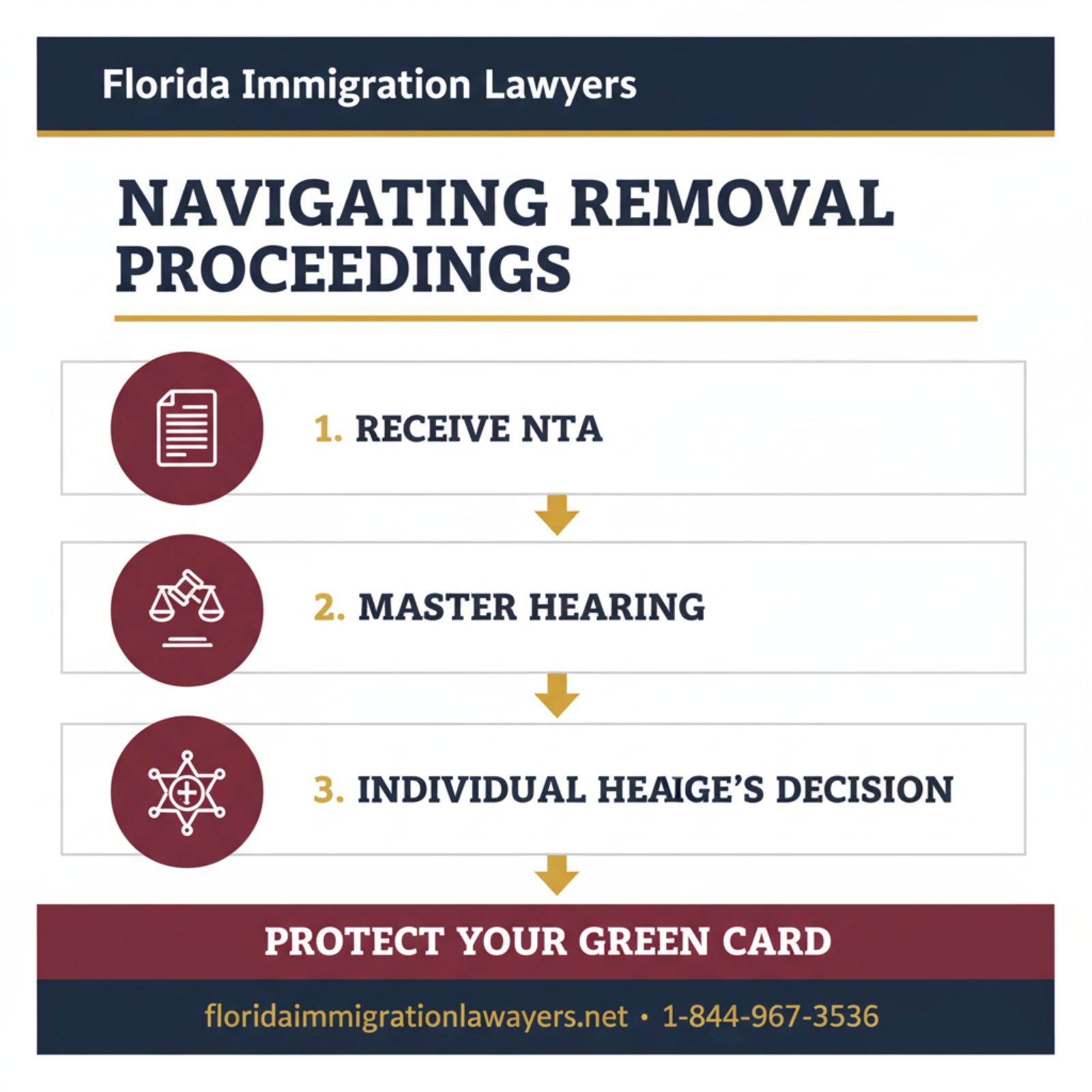
- Receive the Notice to Appear (NTA): This document from ICE officially begins your removal proceedings, stating charges and scheduling your first court hearing (Master Calendar Hearing). Review it carefully.
- Seek Legal Counsel Immediately: This is crucial. An experienced immigration lawyer from Florida Immigration Lawyers can analyze your NTA, identify defenses, and represent you. Do not attend any hearing without consulting an attorney.
- Attend Your Master Calendar Hearing: At this preliminary hearing, you, your attorney, and the immigration judge discuss charges, identify issues, and schedule future hearings. You will enter a plea and designate any forms of relief.
- File Applications for Relief: Your attorney may advise filing applications for relief from removal, such as Cancellation of Removal for Permanent Residents (INA § 240A(a)), adjustment of status, or waivers, depending on eligibility.
- Attend Individual Hearing (Merits Hearing): This is the main hearing where you and your attorney present evidence, call witnesses, and argue your case before the judge. The government attorney also presents their case.
- Receive the Judge's Decision: After the individual hearing, the judge will issue a decision. If relief is granted, your green card status may be preserved. If removal is ordered, you can discuss appeal options.
- Appeal the Decision (If Necessary): If denied, you may appeal to the Board of Immigration Appeals (BIA) within a strict timeframe.
Each step requires meticulous preparation and adherence to deadlines. Missing a deadline or failing to present adequate evidence can have severe consequences. Professional legal guidance is indispensable for anyone in Florida dealing with USCIS green card removal proceedings.
Internal Link: Explore our firm's comprehensive immigration services to understand how we can support your journey.
Essential Documents for Your Green Card Case
Comprehensive documentation is key, whether filing an I-751 petition or defending against USCIS green card removal proceedings. The specific documents required vary based on your individual circumstances.
For conditional residents filing Form I-751, the goal is to prove the bona fide nature of your marriage. This includes:
- Copies of your conditional green card (front and back).
- Copy of your marriage certificate.
- Birth certificates of children born to the marriage.
- Joint financial documents: joint bank statements, tax returns, credit card statements, utility bills.
- Joint property documents: leases or mortgages, property deeds.
- Insurance policies: health, life, auto insurance showing both spouses.
- Affidavits from third parties attesting to the legitimacy of your marriage.
- Photographs: depicting you and your spouse together at various events over time.
- Any other evidence of commingling of assets and shared life.
A detailed I-751 documents checklist is crucial for a complete submission. For those facing general removal proceedings, documentation might include:
- Proof of continuous physical presence in the U.S. (e.g., school, employment records).
- Evidence of good moral character (e.g., police clearances, character letters).
- Proof of hardship to U.S. citizen or permanent resident family members if removed.
- Previous immigration applications or approvals, tax records, and employment history.
Organizing and presenting these documents clearly and accurately is vital. Missing or incorrect documentation can lead to delays, requests for additional evidence, or even a denial, potentially exacerbating your USCIS green card removal proceedings.
Timeline and Processing Expectations for Removal Cases
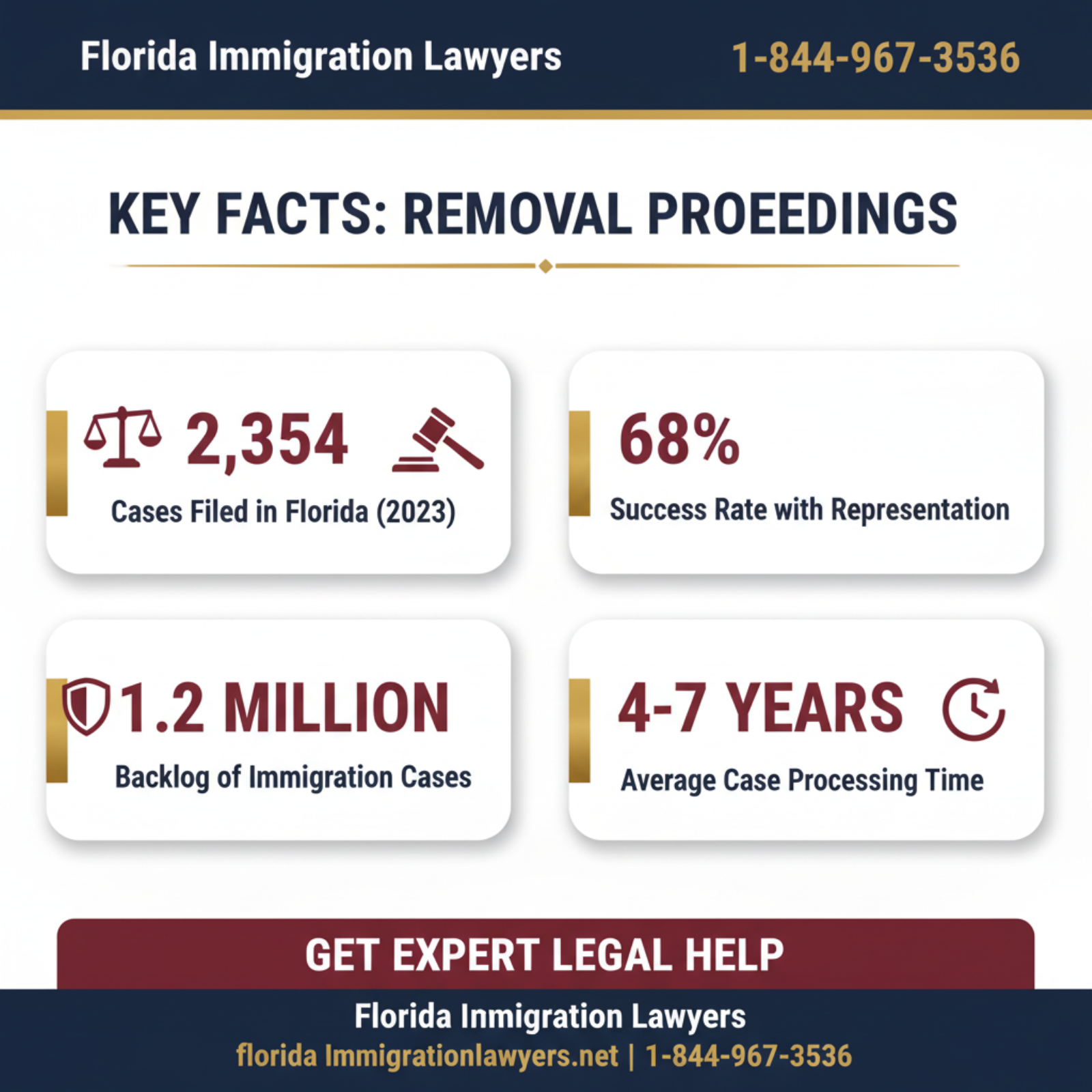
The timeline for USCIS green card removal proceedings and I-751 petitions can vary significantly. Immigration processes are known for their unpredictability, influenced by case complexity, volume at the immigration court or USCIS office, and whether an appeal is necessary.
For I-751 petitions, USCIS typically issues a receipt notice (Form I-797C) extending your conditional status for an extended period, which can be 24 or even 48 months. Processing times for the actual petition can range from several months to several years. An interview at a USCIS field office, such as the one serving Gainesville residents (often Orlando or Jacksonville), may be required, further extending the timeline.
For removal proceedings in immigration court, the process is often lengthy. A Master Calendar Hearing might be scheduled months after the NTA, but an Individual Hearing could be years later. Current backlogs in Florida immigration courts mean cases can take years to resolve. Appeals to the Board of Immigration Appeals (BIA) can add another year or more.
It is important to manage your expectations and remain patient. Your immigration lawyer will keep you informed and help you prepare for each stage. Staying organized and responsive to requests from USCIS or the court is essential.
External Link: You can check current USCIS processing times for Form I-751 and other applications on the official USCIS website.
Cost Factors and Legal Fees in Immigration Proceedings
Understanding the financial aspects of USCIS green card removal proceedings or filing an I-751 petition is important. There are generally two main categories of costs: government filing fees and legal fees.
Government Filing Fees: USCIS charges fees for various forms, including Form I-751 and biometric services. These fees are subject to change, so check the most current fee schedule on the USCIS website. For removal proceedings, there are typically no filing fees for responding to the NTA itself, but fees apply for any applications for relief you might file (e.g., adjustment of status or waiver applications).
Legal Fees: Attorney fees for immigration cases, especially complex ones like USCIS green card removal proceedings, vary widely. Factors influencing legal fees include the complexity of your case, evidence required, number of court hearings or USCIS interviews, and the experience of your attorney. At Florida Immigration Lawyers, we believe in transparent fee structures. We discuss all anticipated costs upfront during your free consultation. Investing in experienced legal representation is critical to protecting your long-term residency. Our team serves clients across Florida, including Gainesville, offering dedicated legal support.
Do not navigate this complex and stressful process alone. The stakes are incredibly high when facing USCIS green card removal proceedings. Contact Florida Immigration Lawyers today to schedule your free consultation. We are ready to review your case and provide the skilled representation you deserve.
Common Mistakes to Avoid in Green Card Removal Cases
Making mistakes during USCIS green card removal proceedings or the I-751 process can have severe, long-lasting consequences. Being aware of these common pitfalls can help you avoid jeopardizing your permanent resident status.
- Missing Deadlines: Failing to file Form I-751 within the 90-day window or missing court hearing dates can lead to automatic denial or an order of removal. Adhere strictly to all deadlines.
- Not Seeking Legal Counsel: Attempting to represent yourself in immigration court or before USCIS is a significant risk. Immigration law is extremely complex, and a lawyer can identify defenses or forms of relief.
- Providing Inconsistent Information: Any discrepancies between your current statements and previous applications, interviews, or documents can be seen as misrepresentation or fraud, leading to denials and potential criminal charges.
- Failing to Provide Sufficient Evidence: For I-751 petitions, inadequate proof of a bona fide marriage is a common reason for denial. For removal proceedings, insufficient evidence to support a claim for relief can be fatal to your case.
- Ignoring Correspondence from USCIS or the Court: All mail from immigration authorities must be taken seriously. Ignoring requests for evidence (RFEs) or notices of hearing can lead to adverse decisions against you.
- Traveling Internationally Without Legal Advice: Leaving the U.S. while in removal proceedings or after filing an I-751 can complicate your case, be seen as abandonment, or prevent re-entry. Always consult an attorney before making travel plans.
- Failing to Update Your Address: USCIS and immigration courts send critical notices to your address on file. Failing to update your address (Form AR-11 with USCIS, or directly with the court) means you might miss vital information, potentially leading to an "in absentia" removal order.
These mistakes underscore the importance of experienced legal guidance. Florida Immigration Lawyers can help you meticulously prepare your case, avoid these pitfalls, and navigate the process successfully.
Frequently Asked Questions (FAQs) About Green Card Removal
We understand that facing USCIS green card removal proceedings can lead to many questions. Here are answers to some commonly asked questions:
Is ICE deporting people with green cards?
Yes, U.S. Immigration and Customs Enforcement (ICE) can initiate deportation (removal) proceedings against individuals who hold green cards under specific circumstances. While green card holders have a more secure status, they are not immune to removal. Grounds include certain criminal convictions, immigration fraud, abandonment of residency, or failure to remove conditions on a conditional green card. A green card does not grant absolute immunity from removal from the U.S.
What happens if you marry a US citizen and then divorce?
If you obtained your conditional green card through marriage to a U.S. citizen and later divorce, you may still be able to remove the conditions on your permanent residence. You would typically need to file Form I-751 with a waiver of the joint filing requirement. To qualify, you must demonstrate that your marriage was entered into in good faith, not to evade immigration laws, and that the marriage was terminated. Provide ample evidence of the bona fide nature of your marriage. An experienced immigration attorney can help you prepare a strong waiver petition.
Can you get a green card if you have diabetes?
Generally, having diabetes itself is not a ground for inadmissibility or removal that would prevent you from getting or keeping a green card. U.S. immigration law primarily considers communicable diseases of public health significance and certain physical or mental disorders that may pose a threat to public safety. While diabetes is serious, it typically does not fall into these categories unless it leads to a specific medical condition that does. However, if it results in a need for significant public assistance, it could potentially raise concerns under the public charge rule. Always disclose all health conditions accurately and consult an attorney if you have concerns.
Why would a green card holder be in removal proceedings?
A green card holder can be placed in USCIS green card removal proceedings for several reasons. The most common include committing certain criminal offenses (especially aggravated felonies or crimes involving moral turpitude), engaging in marriage fraud or other immigration fraud, failing to remove conditions on a conditional green card (e.g., not filing Form I-751 on time or having it denied), or abandoning U.S. residency by spending too much time outside the country. Other reasons can include national security concerns or being deemed inadmissible upon returning to the U.S. The specific grounds for removal are detailed in the Immigration and Nationality Act (INA).
When to Call a Florida Immigration Lawyer
The moment you suspect you might be facing USCIS green card removal proceedings, or if you receive any official communication from USCIS or ICE that concerns your immigration status, it is time to call an attorney. Proactive legal intervention can make a significant difference in the outcome of your case.
You should contact Florida Immigration Lawyers immediately if:
- You receive a Notice to Appear (NTA) from ICE.
- Your Form I-751, Petition to Remove Conditions on Residence, has been denied.
- You are a conditional resident and your marriage has ended in divorce or separation.
- You have been arrested or convicted of any crime, regardless of its perceived severity.
- USCIS sends you a Request for Evidence (RFE) or Notice of Intent to Deny (NOID) regarding your green card.
- You are a green card holder and have spent extended periods outside the United States.
Our firm specializes in deportation defense and complex immigration matters across Florida. From our offices serving the Gainesville area to Miami, Orlando, and Tampa, we provide dedicated support. We understand the specific challenges faced by immigrants in Florida and are committed to protecting your rights and your future. Do not wait for your situation to escalate; let our experienced attorneys provide the guidance and representation you need.
Internal Link: Learn more about how we assist with family immigration cases, which often involve conditional residency.
About Florida Immigration Lawyers
Florida Immigration Lawyers is a leading immigration law firm dedicated to serving individuals and families across the entire state of Florida. With a deep understanding of U.S. immigration laws and the unique needs of our diverse communities, we are committed to providing compassionate, effective, and results-driven legal representation.
Our experienced attorneys specialize in a wide range of immigration matters, including USCIS green card removal proceedings, deportation defense, family-based immigration, business immigration, asylum claims, and citizenship applications. We offer personalized attention to each client, ensuring your case receives thorough analysis and strategic planning.
Why choose Florida Immigration Lawyers?
- Experienced Legal Team: Our attorneys possess extensive knowledge and experience in complex immigration law.
- Client-Centered Approach: We prioritize your needs and goals, providing empathetic support throughout your legal journey.
- Proven Track Record: We have a history of successfully defending clients against removal and securing their immigration goals.
- Accessibility: We are available 24/7 to address your urgent concerns and offer free, confidential consultations.
- Bilingual Services: Our team is fluent in English and Spanish, ensuring clear communication and understanding.
Whether you are in Gainesville, Jacksonville, Orlando, Tampa, or Miami, Florida Immigration Lawyers is here to be your trusted advocate. Visit our website at https://www.floridaimmigrationlawyers.net or call us anytime at 1-844-967-3536 to discuss your case. Let us help you navigate your immigration challenges with confidence.
Internal Link: Meet our dedicated attorneys and learn about their expertise.
Sources and References
- U.S. Citizenship and Immigration Services (USCIS)
- Executive Office for Immigration Review (EOIR) - U.S. Department of Justice
- 8 U.S.C. Chapter 12 - Immigration and Nationality Act (INA)
- 8 CFR Part 216 - Conditional Basis of Lawful Permanent Residence Status
- INA § 240 - Removal Proceedings
- INA § 240A(a) - Cancellation of Removal for Certain Permanent Residents
This article provides general legal information and is not intended as legal advice. Every case is unique, and outcomes depend on specific facts and circumstances. Contact an attorney for advice about your particular situation. Immigration laws are subject to change by legislative or administrative action at any time.
Your future in the United States is too important to risk. If you are facing USCIS green card removal proceedings in Florida, or have questions about removing conditions on your green card, Florida Immigration Lawyers is here to provide the expert legal guidance you need. We offer compassionate, strategic, and zealous advocacy for immigrants across Florida, including Gainesville and surrounding communities.
Do not hesitate. Call Florida Immigration Lawyers today at 1-844-967-3536 for your free, confidential consultation. Se Habla Español - Estamos aquí para ayudarle.
Do Not Navigate This Process Alone
Our experienced immigration attorneys are ready to fight for you. Get a free, confidential consultation today.
Se Habla Español
Frequently Asked Questions
Florida Immigration Lawyers
Immigration Attorney | Founder, Vasquez Law Firm
U.S. Air Force veteran and immigration attorney with thousands of cases resolved. J.D., NCCU School of Law. AILA member. Admitted to the 4th, 5th, and 11th Circuit Courts.
Available 24/7 - Free Evaluations
Related Legal Services
Our Florida immigration attorneys can help you with asylum protection, deportation defense and citizenship and naturalization. Call today at 1-844-967-3536 for a free consultation.
Related Links
Related Topics
Free Legal Consultation
Discuss your case with our experienced attorneys. We're available 24/7.
Se Habla Español - Estamos aquí para ayudarle.
Related Articles
VAWA Self-Petition Florida: Abused Spouses Immigration Guide
For abused spouses in Florida, the VAWA self-petition offers a critical pathway to legal immigration status without the abuser's cooperation. This comprehensive guide details the eligibility requirements, the step-by-step process of filing Form I-360, essential documentation, and expected timelines. Learn how to gather evidence, draft a compelling personal statement, and understand the costs and potential fee waivers. We also highlight common mistakes to avoid and explain when seeking legal counsel from Florida Immigration Lawyers is invaluable. This process is designed to empower survivors to achieve safety, independence, and a secure future, free from the fear of deportation.
Immigration Bond Hearing Florida: Get Released from ICE Detention
Facing an immigration bond hearing in Florida can be daunting, especially for families in Kissimmee, Orlando, and Miami. This comprehensive guide demystifies the process, explaining what an immigration bond hearing entails, who is eligible, and the crucial steps to take. We detail the essential documents required, outline timelines and cost factors, and highlight common mistakes to avoid. Discover why experienced legal representation from Florida Immigration Lawyers is vital to navigate this complex system and secure release from ICE detention. Understand your rights and learn how to present a strong case for bond.
Understanding the Child Status Protection Act in Florida
The Child Status Protection Act helps families in Florida prevent their children from aging out of immigration eligibility. Learn how it works and what steps to take if you're in Miami or elsewhere in Florida.
Dual Citizenship Guide for Florida Residents | VLF Florida
Explore the essentials of obtaining dual citizenship in Florida. Learn the benefits, challenges, and steps involved. Contact Florida Immigration Lawyers for expert guidance.