USCIS Green Card Removal Proceedings Florida: Your Vital
Facing USCIS green card removal proceedings in Florida can be incredibly stressful for conditional permanent residents. This guide provides a detailed overview of the I-751 process, including step-by-step instructions, essential document checklists, and expected timelines. Learn about the common triggers for removal proceedings, such as late filing or denial of your I-751 petition, and other grounds for deportation. We also highlight critical mistakes to avoid and explain when seeking legal counsel from an experienced immigration attorney, particularly in Gainesville and across Florida, is crucial. Protect your status by understanding the process and knowing your rights.

Conditional green card holders in Florida must file Form I-751 to remove conditions, typically after two years. Failure to do so or an I-751 denial can lead to USCIS green card removal proceedings and potential deportation. These legal actions determine if you can keep your permanent resident status, often involving an immigration judge. Acting promptly and with legal guidance is crucial.
- Conditional residence is time-limited and requires action.
- Form I-751 is crucial for removing conditions on your green card.
- Removal proceedings can lead to deportation from the U.S.
- Legal assistance is vital for navigating these complex processes.
- Prompt action is necessary to protect your immigration status.
Imagine building a life in Gainesville, Florida, establishing roots, and contributing to your community, only to face uncertainty about your immigration status. For many conditional permanent residents, the prospect of USCIS green card removal proceedings can be daunting. Understanding this complex area of immigration law is essential for protecting your future in the United States.
This comprehensive guide aims to demystify USCIS green card removal proceedings, focusing specifically on conditional residence and the critical Form I-751 process. We will explore what triggers these proceedings, how to navigate the necessary steps, and why expert legal representation from Florida Immigration Lawyers is indispensable. If you are concerned about your conditional green card or facing removal, do not wait. Call Florida Immigration Lawyers at 1-844-967-3536 for a free consultation and let our experienced team help you understand your options.
Understanding USCIS Green Card Removal Proceedings in Florida
USCIS green card removal proceedings are formal legal actions initiated by the U.S. government to determine if a non-citizen should be deported from the country. For conditional permanent residents, these proceedings often arise from issues related to their conditional green card status. In Florida, individuals facing these challenges require a clear understanding of the process and their rights.
What is Conditional Permanent Residence?
Conditional permanent residence is a specific type of green card status granted for two years. It is typically issued to individuals who obtained their green card through marriage to a U.S. citizen or lawful permanent resident, and the marriage was less than two years old at the time of green card approval. Investors who obtain an EB-5 green card also receive conditional status. This two-year period is designed to ensure the marriage or investment is legitimate and not entered into solely for immigration benefits.
The Immigration and Nationality Act (INA) section 216 governs conditional permanent resident status for certain alien spouses and sons and daughters. This law requires conditional residents to prove the bona fides of their marriage or investment to remove the conditions and become full permanent residents. Failure to do so can have severe consequences, including the initiation of USCIS green card removal proceedings.
The I-751 Petition to Remove Conditions
To transition from conditional to full permanent resident status, conditional green card holders must file Form I-751, Petition to Remove Conditions on Residence. This petition must be filed with U.S. Citizenship and Immigration Services (USCIS) during the 90-day period immediately preceding the second anniversary of receiving your conditional green card. Timely filing is paramount.
Most I-751 petitions are filed jointly by both spouses. However, if circumstances change, such as divorce, abuse, or extreme hardship, waivers are available. These waivers allow the conditional resident to file the I-751 independently. Navigating these waiver options can be complex, and securing the assistance of an experienced family immigration lawyer in Florida is highly recommended.
When Do Removal Proceedings Begin?
USCIS green card removal proceedings can be triggered in several ways for conditional residents. The most common scenarios include:
- Failure to File Form I-751: If you do not file your I-751 petition within the designated 90-day window, your conditional permanent resident status automatically terminates. USCIS may then issue a Notice to Appear (NTA), initiating removal proceedings.
- Denial of Form I-751: If USCIS reviews your I-751 petition and determines that the marriage or investment was not bona fide, or if you fail to provide sufficient evidence, your petition may be denied. A denial typically results in the issuance of an NTA and referral to an immigration judge for removal proceedings.
- Other Grounds for Removal: Beyond I-751 issues, a conditional resident can also face removal proceedings based on other grounds, such as certain criminal convictions (INA 237), immigration fraud, or misrepresentation in their initial application.
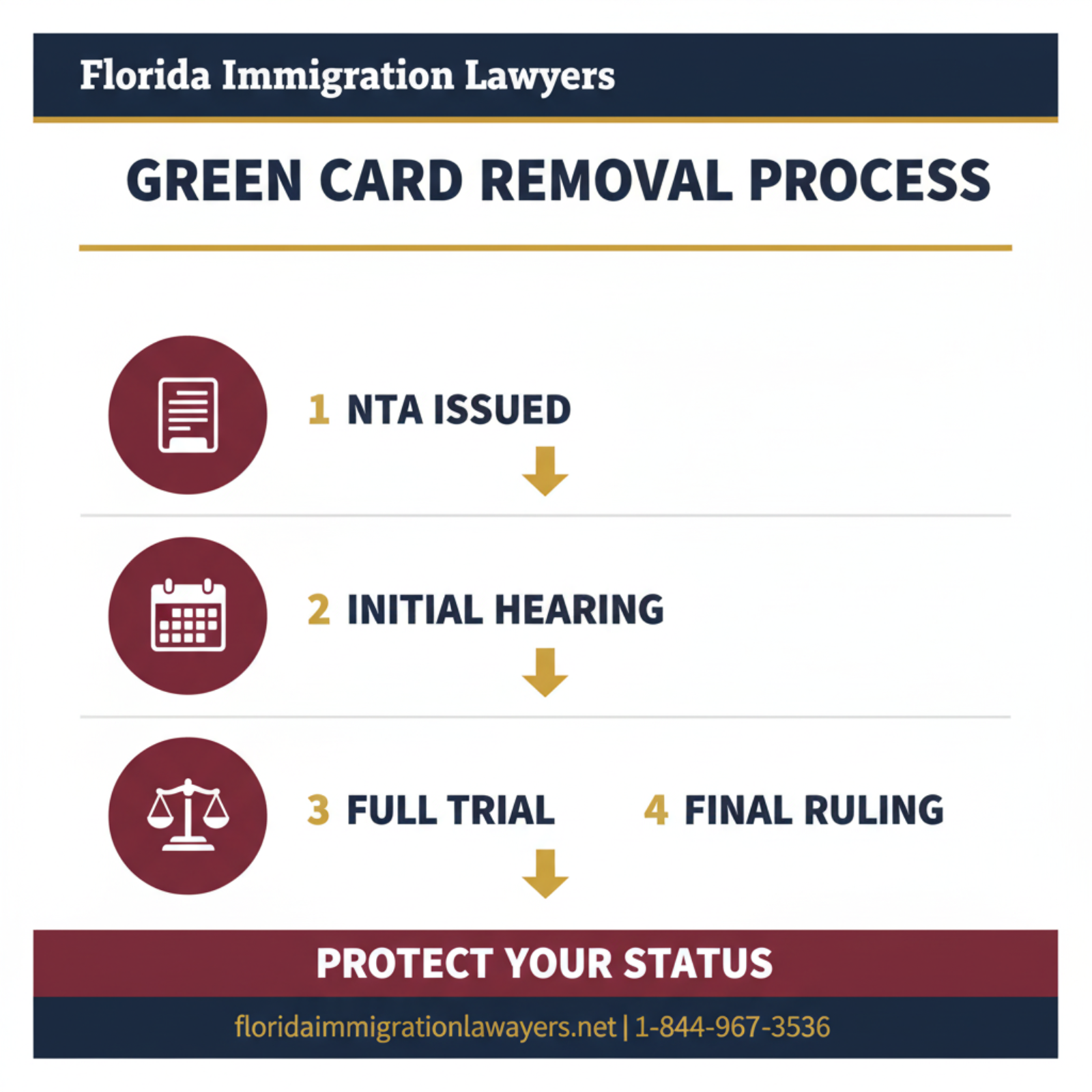
Once an NTA is issued, the case is transferred to the Executive Office for Immigration Review (EOIR) immigration courts, such as those in Orlando or Miami, Florida. This initiates a formal legal process where an immigration judge will determine if you are deportable and if you have any forms of relief available.
Navigating the I-751 Process: A Step-by-Step Guide for Florida Residents
Successfully removing the conditions on your green card is a critical step towards securing your permanent residency. For residents across Florida, including those in Gainesville, following these steps carefully is essential. Remember, each case is unique, and legal guidance can make a significant difference.
-
Determine Your Eligibility and Filing Method: First, assess whether you will file jointly with your spouse or if you qualify for a waiver. Joint filing requires both spouses to sign and submit the petition. Waiver categories include divorce or annulment, death of the petitioning spouse, abuse, or extreme hardship if you were to be removed from the U.S. Understanding your specific situation is the first crucial step.
-
Gather Comprehensive Evidence: This is arguably the most critical part of the I-751 process. You must submit extensive documentation to prove that your marriage was entered into in good faith or that your investment meets the requirements. Evidence should cover the entire two-year conditional period and demonstrate the shared life you built with your spouse or the sustained nature of your investment.
-
Complete Form I-751 Accurately: Fill out every section of Form I-751 completely and truthfully. Any omissions or inaccuracies can lead to delays, Requests for Evidence (RFEs), or even denial. If you are filing a waiver, clearly indicate the basis for your waiver request and provide all supporting documentation.
-
Pay the Required Filing Fees: USCIS requires specific fees for filing Form I-751 and for biometric services. These fees are subject to change, so always check the official USCIS website for the most current amounts before filing. Do not send cash; typically, a money order or personal check is required. Failure to pay the correct fee will result in your petition being rejected.
-
Submit Your Petition to the Correct USCIS Lockbox: The filing address for Form I-751 depends on where you live and whether you are filing jointly or with a waiver. Consult the USCIS website or the form instructions for the precise mailing address. Sending your petition to the wrong address can cause significant delays. It is advisable to send your petition via certified mail with a return receipt requested.
-
Receive Your Receipt Notice (Form I-797C): After USCIS receives your I-751 petition, they will mail you a Form I-797C, Notice of Action. This receipt notice is extremely important as it extends your conditional permanent resident status for a specified period, typically 24 or 48 months, allowing you to continue working and traveling while your petition is pending. Keep this notice with your expired green card as proof of your continued status.
-
Attend Your Biometrics Appointment: Within a few weeks or months of filing, you will receive an appointment notice for biometrics. This appointment, usually at a local USCIS Application Support Center (ASC) in Florida (e.g., Orlando, Tampa, Miami), involves taking your fingerprints, photograph, and signature. It is mandatory to attend this appointment.
-
Respond to Requests for Evidence (RFEs) if Any: USCIS may send you an RFE if they require additional documentation or clarification to make a decision on your I-751. It is crucial to respond thoroughly and within the given deadline. A failure to respond or an insufficient response can lead to a denial of your petition.
-
Attend an Interview (if Required): While many I-751 petitions are approved without an interview, USCIS may schedule one, particularly if there are questions about the bona fides of your marriage, if you filed a waiver, or if the evidence is not entirely clear. Both spouses must attend joint interviews. Prepare thoroughly with your attorney if an interview is scheduled.
-
Receive a Decision from USCIS: After all steps are completed, USCIS will issue a decision. If approved, you will receive a new 10-year green card, removing the conditional status. If denied, USCIS will typically issue an NTA, referring your case to an immigration judge for removal proceedings. This is when expert deportation defense becomes critical.
Essential Document Checklist for Your I-751 Petition
A strong I-751 petition relies heavily on compelling evidence. The more proof you can provide of a bona fide marriage or investment, the stronger your case will be. Below is a comprehensive, but not exhaustive, list of documents commonly submitted:
- Copy of your conditional Green Card (front and back).
- Copy of your marriage certificate (if applicable).
- Birth certificates of any children born during the marriage.
- Joint bank account statements (checking, savings, credit cards).
- Joint federal and state income tax returns.
- Joint utility bills (electricity, water, internet, gas).
- Joint leases or mortgages for your shared residence.
- Joint insurance policies (health, life, auto, home).
- Vehicle titles and registrations showing joint ownership.
- Photos of you and your spouse together (wedding, family, vacations, holidays).
- Affidavits from friends, family, or employers attesting to the bona fides of your marriage.
- Evidence of shared responsibilities, gifts, and correspondence.
- If filing a waiver based on divorce: Certified copy of the final divorce decree.
- If filing a waiver based on abuse: Police reports, medical records, court documents, letters from shelters or counselors.
- If filing a waiver based on extreme hardship: Evidence of the severe difficulties you would face if removed from the U.S.
- For EB-5 investors: Evidence of sustained investment, job creation, and capital at risk.
Understanding Timelines and Processing Expectations for I-751 and Removal Proceedings
Immigration processes are known for their varying timelines, and the I-751 petition and subsequent removal proceedings are no exception. Understanding these expectations can help you plan and manage your stress, but always be prepared for potential delays.
I-751 Processing Times
USCIS processing times for Form I-751 can vary significantly based on the service center handling your petition, the complexity of your case (e.g., joint filing vs. waiver), and current caseloads. You can check the average processing times on the USCIS website, but be aware that these are estimates and not guarantees. Many I-751 cases can take anywhere from 12 to 48 months to be adjudicated.
Conditional Green Card Extension
Upon filing your I-751, USCIS will send you a Form I-797C receipt notice. This notice automatically extends your conditional permanent resident status. Initially, this extension was for 18 months, but USCIS has periodically increased it, currently extending status for 24 or even 48 months from the expiration date printed on your Green Card, depending on the most recent policy updates. This extension allows you to continue working and traveling internationally.
What Happens After I-751 Denial?
If your I-751 petition is denied, USCIS will typically issue a Notice to Appear (NTA). This NTA will refer your case to an immigration judge for removal proceedings. At this point, your case moves from an administrative process with USCIS to a judicial process within the Executive Office for Immigration Review (EOIR). This is a critical juncture where having an experienced immigration attorney is paramount.
Immigration Court Proceedings in Florida
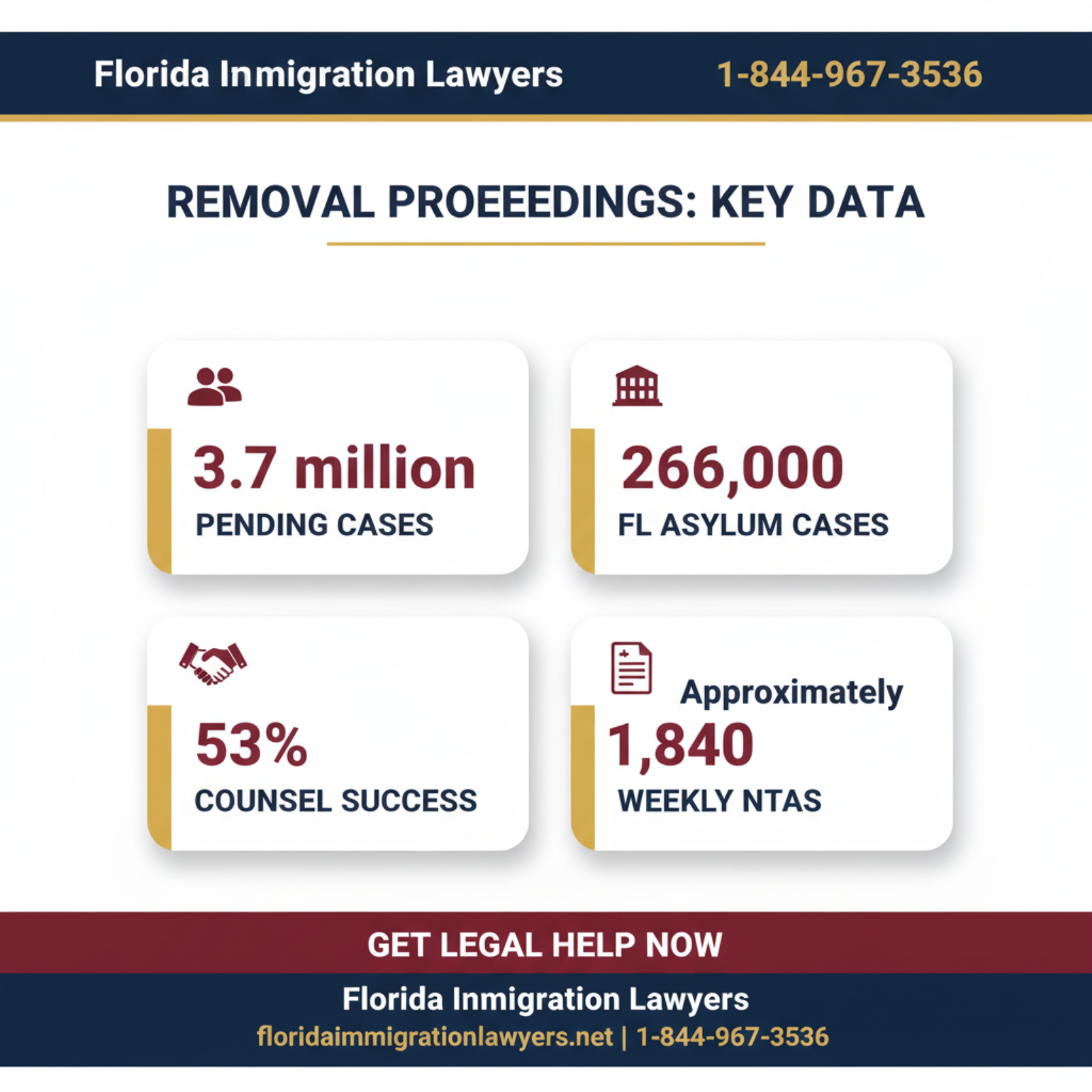
For individuals in Gainesville and other parts of Florida, removal proceedings will typically be heard at immigration courts in Orlando, Miami, or Pompano Beach. The process involves multiple hearings, including a Master Calendar Hearing and potentially Individual Hearings. These courts operate under the Department of Justice, not USCIS. The average wait times for initial court dates can be lengthy, sometimes extending for several years due to backlogs. During these proceedings, an immigration judge will review your case, and you will have the opportunity to present evidence and argue for relief from removal, which may include re-filing your I-751 with the judge.
Do not navigate this complex and stressful process alone. Contact Florida Immigration Lawyers today. Our experienced team is ready to provide the guidance and support you need, whether you are preparing your I-751, responding to an RFE, or defending against USCIS green card removal proceedings in Florida.
Cost Factors and Fee Breakdown for Green Card Removal of Conditions
Understanding the financial aspects of removing your green card conditions is an important part of the planning process. While specific amounts can change, we can outline the general cost factors involved.
USCIS Filing Fees
When you file Form I-751, there are two primary fees you will typically encounter: the filing fee for Form I-751 itself and a biometrics services fee. These fees are set by USCIS and are subject to change. It is crucial to check the most current fee schedule on the official USCIS website before submitting your petition. Forgetting to include the correct fees, or submitting an incorrect amount, will result in your petition being rejected.
Attorney Fees
Hiring an experienced immigration attorney, especially one familiar with USCIS green card removal proceedings in Florida, represents a significant investment but can provide invaluable peace of mind and significantly increase your chances of success. Attorney fees vary based on the complexity of your case, whether you are filing jointly or with a waiver, and if your case progresses to removal proceedings. A lawyer can help you gather evidence, prepare your petition, respond to RFEs, and represent you in court if necessary. Florida Immigration Lawyers offers free consultations to discuss your specific needs and potential legal costs.
Ancillary Costs
Beyond USCIS and attorney fees, you may encounter other costs. These can include expenses for obtaining necessary documents (e.g., certified copies of marriage certificates, police reports), translation services for foreign-language documents, postage for mailing your petition, and travel expenses if you need to attend interviews or court hearings at USCIS field offices or immigration courts in cities like Miami or Orlando.
Common Grounds for USCIS Green Card Removal Proceedings (Beyond I-751 Denial)
While I-751 issues are a common trigger for conditional residents, it is important to remember that any permanent resident, conditional or otherwise, can face USCIS green card removal proceedings for a variety of reasons. Understanding these grounds can help you avoid potential pitfalls.
-
Criminal Convictions: Certain criminal offenses, particularly those involving moral turpitude, aggravated felonies, or drug-related crimes, can render a non-citizen deportable under INA 237(a)(2). Even minor offenses can sometimes have serious immigration consequences, making it vital to consult an immigration attorney if you have any criminal history.
-
Fraud or Misrepresentation: If USCIS or an immigration judge determines that you obtained your green card through fraud or willful misrepresentation of a material fact, you can be placed in removal proceedings. This includes issues with the initial visa application or any subsequent immigration filings (INA 237(a)(1)(A)).
-
Security Grounds: Involvement in terrorist activities, espionage, or other activities deemed a threat to national security can lead to immediate removal proceedings. These are serious allegations with severe consequences.
-
Public Charge: Although less common now due to recent policy changes, historically, becoming a public charge (meaning primarily dependent on the government for subsistence) could be a ground for removal. While current policy is more restrictive, it is still a statutory ground for inadmissibility and potentially removal.
-
Marriage Fraud: If at any point USCIS determines that your marriage was entered into solely to obtain immigration benefits, rather than in good faith, your green card can be revoked, and you can be placed in removal proceedings. This is a primary reason for the conditional green card system.
Common Mistakes to Avoid in Conditional Green Card Cases
Navigating the conditional green card process and avoiding USCIS green card removal proceedings requires diligence. Many common mistakes can jeopardize your status. Be proactive and informed to protect your future.
-
Late Filing of Form I-751: Failing to file your I-751 within the 90-day window before your green card expires automatically terminates your conditional status. This often leads directly to removal proceedings. Always mark your calendar and file well in advance.
-
Submitting Insufficient Evidence: A weak evidence package for your I-751 petition is a common reason for RFEs or denials. Do not just send a few documents; provide a comprehensive collection proving the bona fides of your marriage or investment throughout the two-year period. This is especially true for those in Gainesville hoping to maintain their status.
-
Ignoring Requests for Evidence (RFEs): If USCIS sends an RFE, it means they need more information. Failing to respond fully and on time will almost certainly lead to a denial of your I-751 petition and potential removal proceedings. Always take RFEs seriously.
-
Assuming an Interview Will Be Waived: While many I-751 joint petitions are approved without an interview, there is no guarantee. Always be prepared for an interview, especially if you filed a waiver or if your evidence package was not exceptionally strong. Do not be caught off guard.
-
Failing to Update Your Address with USCIS: If you move, you must update your address with USCIS within 10 days. Missing crucial notices, such as an RFE, interview notice, or even a Notice to Appear (NTA) for removal proceedings, because USCIS sent it to an old address can be devastating to your case.
-
Traveling Internationally Without Valid Proof of Status: After filing I-751, your conditional green card expires. You must carry your I-797C receipt notice with your expired green card as proof of your extended status for re-entry into the U.S. Without it, you could face significant issues at the port of entry.
-
Misrepresenting Information on Your Petition: Providing false information or attempting to conceal facts on your I-751 or any immigration document can lead to accusations of fraud. This can result in a denial, removal proceedings, and even permanent bars from future immigration benefits. Always be truthful and accurate.
-
Not Disclosing All Relevant Information to Your Attorney: If you hire an attorney, it is vital to be completely honest about your situation, including any past arrests, previous marriages, or other potentially negative information. Your attorney can best advise you if they have all the facts.
-
Attempting to Handle Complex I-751 Waivers Alone: Waivers based on divorce, abuse, or extreme hardship are intricate and require specific evidence and legal arguments. Trying to navigate these without an attorney significantly reduces your chances of success and increases the risk of denial and removal proceedings.
-
Delaying Legal Counsel: Waiting until you receive an RFE, an interview notice, or worse, a Notice to Appear for removal proceedings, can severely limit your options. Early intervention from an experienced immigration lawyer can often prevent problems from escalating.
When to Call a Lawyer for USCIS Green Card Removal Proceedings
The immigration system is notoriously complex, and even seemingly straightforward cases can encounter unexpected hurdles. When facing USCIS green card removal proceedings or issues with your conditional green card, the stakes are incredibly high. Consulting an experienced immigration attorney is not just advisable; it is often essential.
You should immediately call Florida Immigration Lawyers if:
- You have received a Notice to Appear (NTA) in immigration court. This signifies the start of formal removal proceedings, and legal representation is critical.
- Your Form I-751 petition was denied by USCIS. A denial almost always leads to removal proceedings, and an attorney can help you understand your options, including appealing the decision or seeking relief in court.
- You need to file an I-751 waiver due to divorce, abuse, or extreme hardship. These waivers are legally complex and require strong, specific evidence and compelling arguments.
- You have a criminal record, no matter how minor, and are concerned about its impact on your immigration status. Certain convictions can make you deportable, and an attorney can assess your risk and potential defenses.
- You are unsure about the type or amount of evidence required for your I-751 petition. An attorney can help you compile a robust package to increase your chances of approval.
- You have received a Request for Evidence (RFE) from USCIS. An attorney can help you formulate a comprehensive and timely response.
- You are scheduled for an I-751 interview with USCIS. Proper preparation can be key to a successful outcome.
- You have any doubts or questions about your conditional green card status or the path to permanent residency.
Warning signs that you need legal help include receiving an NTA, a denial letter, an RFE, or an interview notice after a long processing time. Any communication from ICE (Immigration and Customs Enforcement) should also prompt an immediate call to an attorney. Florida Immigration Lawyers specializes in I-751 petitions, deportation defense, and asylum claims, serving clients in Gainesville and across the entire state of Florida. Our team is dedicated to protecting your rights and helping you secure your future.
About Florida Immigration Lawyers
Florida Immigration Lawyers is a leading immigration law firm dedicated to serving individuals and families across the entire state of Florida. With a deep understanding of U.S. immigration laws and a compassionate approach, our firm provides comprehensive legal solutions for a wide range of immigration matters.
Our services include expert guidance on family-based immigration, business immigration, naturalization and citizenship, asylum, and robust deportation defense. We are particularly adept at handling complex cases involving conditional green cards, I-751 petitions, and USCIS green card removal proceedings. Our mission is to provide clear, effective legal strategies tailored to your unique circumstances.
Why choose Florida Immigration Lawyers? Our commitment to our clients is unwavering. We offer personalized attention, aggressive advocacy, and a track record of success in navigating the intricate immigration system. We understand the emotional and practical challenges our clients face, and we strive to be a steadfast partner throughout their immigration journey. We are available 24/7 to address your urgent concerns and offer free consultations to help you understand your legal options without financial commitment.
Contact us today to speak with an experienced attorney. Your future in Florida is our priority. Visit our website at https://www.floridaimmigrationlawyers.net or call us directly at 1-844-967-3536.
Sources and References
- U.S. Citizenship and Immigration Services (USCIS) - Form I-751
- Executive Office for Immigration Review (EOIR)
- U.S. Department of State - Family-Based Immigrant Visas
- 8 U.S.C. § 1186a - Conditional permanent resident status for certain alien spouses and sons and daughters (INA 216)
- 8 U.S.C. § 1227 - Deportable aliens (INA 237)
- 8 CFR Part 216 - Conditional permanent resident status
- USCIS Policy Manual, Volume 6 - Immigrants, Part H - Conditional Permanent Residence
This article provides general legal information and is not intended as legal advice. Every case is unique, and outcomes depend on specific facts and circumstances. Immigration laws are subject to frequent change. Contact an attorney for advice about your particular situation and to ensure you receive the most current information.
Protect your future in Florida. If you are facing USCIS green card removal proceedings or have questions about your conditional green card, do not delay. Contact Florida Immigration Lawyers today for a confidential, free consultation. Our dedicated team is here to help you navigate these challenging times. Call us at 1-844-967-3536.
Se Habla Español - Estamos aquí para ayudarle.
Do Not Navigate This Process Alone
Our experienced immigration attorneys are ready to fight for you. Get a free, confidential consultation today.
Se Habla Español
Frequently Asked Questions
Florida Immigration Lawyers
Immigration Attorney | Founder, Vasquez Law Firm
U.S. Air Force veteran and immigration attorney with thousands of cases resolved. J.D., NCCU School of Law. AILA member. Admitted to the 4th, 5th, and 11th Circuit Courts.
Available 24/7 - Free Evaluations
Related Legal Services
Our Florida immigration attorneys can help you with immigration practice areas, free immigration consultation and experienced immigration attorneys. Call today at 1-844-967-3536 for a free consultation.
Related Links
Related Topics
Free Legal Consultation
Discuss your case with our experienced attorneys. We're available 24/7.
Se Habla Español - Estamos aquí para ayudarle.
Related Articles
Immigration Attorney in Gainesville, North Florida
Navigating immigration law in Gainesville and North Florida can be challenging, especially with recent legal changes. Discover how Florida Immigration Lawyers can assist you. Call 1-844-967-3536 for a free consultation.
Refugee Status Florida Resettlement: Your 2026 Guide
Navigating refugee status and resettlement in Florida requires a thorough understanding of U.S. immigration law and available support systems. This 2026 guide covers eligibility, the step-by-step resettlement process, essential documents, timelines, and financial considerations for refugees seeking to build a new life in Florida, particularly in areas like Homestead. It highlights the critical role of organizations like UNHCR and USCIS, and the importance of avoiding common mistakes. Florida Immigration Lawyers offers expert legal assistance, ensuring a smoother transition and helping refugees adjust status to lawful permanent residents. Learn how to secure your future and access vital resources in the Sunshine State.
Dual Citizenship in Florida: What You Need to Know
Explore the benefits and legal steps of obtaining dual citizenship in Florida. Understand the process, avoid common mistakes, and learn when to seek legal help. Contact Florida Immigration Lawyers at 1-844-967-3536 for guidance.
Understanding Immigration Bond Hearings in Florida
Immigration bond hearings in Florida are critical for those detained by ICE. Understand the process, avoid common mistakes, and learn when to contact a lawyer for assistance. Call Florida Immigration Lawyers for a free consultation.
