USCIS Green Card Removal Proceedings Florida: Expert Legal Help
Navigating USCIS green card removal proceedings in Florida is a critical step for conditional permanent residents. This blog post details the Form I-751 process, including eligibility, required documentation, and what to expect regarding timelines. Learn about joint filing and waiver options if your marriage has ended or you faced abuse. We provide an essential document checklist and highlight common mistakes to avoid that could lead to denial or deportation. Understand the costs involved and when it is crucial to seek legal counsel from an experienced immigration lawyer. Florida Immigration Lawyers offers free consultations to help you protect your status in Hollywood and across Florida.
USCIS green card removal proceedings, specifically the I-751 Petition to Remove Conditions on Residence, are crucial for conditional green card holders in Florida. This process allows you to convert your two-year conditional green card into a permanent ten-year one. Navigating the requirements, deadlines, and potential complexities, especially if your marriage ends, demands careful attention. Expert legal guidance can help prevent denial and potential deportation proceedings.
- Conditional green cards require a separate petition to become permanent.
- The Form I-751 must be filed within 90 days before your conditional green card expires.
- Waivers are available if your marriage ends or if you experienced abuse.
- Denial of your I-751 can lead to immigration court proceedings.
- Consulting a Florida immigration lawyer is vital for a successful outcome.
Obtaining a green card is a monumental step towards building a new life in the United States. However, for many, especially those who received their green card through marriage to a U.S. citizen or lawful permanent resident, the journey includes a critical second phase: USCIS green card removal proceedings. This process involves demonstrating to U.S. Citizenship and Immigration Services (USCIS) that your marriage was entered into in good faith, not solely for immigration benefits.
If you are a conditional permanent resident in Florida, including areas like Hollywood, and your two-year green card is approaching its expiration, understanding these proceedings is paramount. Failing to file the correct petition or provide sufficient evidence can place your immigration status at risk. Our firm, Florida Immigration Lawyers, is dedicated to guiding individuals through these complex requirements, ensuring your path to permanent residency is smooth and secure.
Do not face this intricate process alone. For immediate assistance and peace of mind, call Florida Immigration Lawyers at 1-844-967-3536 for a free consultation. We are here to help you protect your future in Florida.
Understanding USCIS Green Card Removal Proceedings in Florida
The term "removal proceedings" can sound alarming, often associated with deportation. In the context of green cards, USCIS green card removal proceedings primarily refers to the process of "removing conditions" on your two-year conditional permanent residence. This is a vital step for individuals who received their green card based on a marriage that was less than two years old at the time their green card was approved.
What is Conditional Permanent Residence?
Conditional permanent residence is granted to foreign nationals married to U.S. citizens or lawful permanent residents for less than two years when their green card is approved. USCIS implements this two-year conditional period to ensure the marriage is legitimate and not fraudulent. You receive a green card valid for two years, and before its expiration, you must file a petition to remove these conditions.
This conditional status affects thousands of individuals across Florida, from Miami to Orlando and right here in Hollywood. It means your permanent residency is not yet fully secured. You must actively demonstrate the ongoing bona fides of your marriage to USCIS.
Different Scenarios for I-751 Filings
Most conditional residents file Form I-751, Petition to Remove Conditions on Residence, jointly with their U.S. citizen or lawful permanent resident spouse. However, life circumstances can change, making a joint filing impossible or inappropriate. USCIS recognizes several waivers for the joint filing requirement:
- Death of the U.S. Citizen/LPR Spouse: If your spouse passed away, you can file a waiver.
- Divorce or Annulment: If your marriage ended in divorce or annulment, you can file a waiver. You must demonstrate the marriage was entered into in good faith.
- Abuse or Extreme Cruelty: If you or your child were subjected to battery or extreme cruelty by your U.S. citizen or LPR spouse, you can file a waiver.
- Extreme Hardship: If the termination of your status would result in extreme hardship, you may also qualify for a waiver.
Understanding which scenario applies to your case is critical. Each waiver requires specific evidence and a compelling narrative. Our immigration lawyer in Hollywood Florida can help you determine the best path forward.
For more detailed information on specific immigration processes, you can visit our Immigration Practice Area page.
The Step-by-Step Process for Removing Conditions on Your Green Card
Navigating the I-751 removal of conditions process requires careful adherence to USCIS guidelines. Here is a general step-by-step guide:
-
Determine Your Filing Eligibility and Timeline: You must file Form I-751 within the 90-day period immediately preceding the expiration date on your two-year conditional green card. Filing too early or too late can lead to significant issues, including denial and potential placement in deportation defense proceedings. If you are filing with a waiver, the 90-day rule may not apply, but it is still crucial to file as soon as you are eligible.
-
Gather Comprehensive Supporting Documentation: This is arguably the most critical step. You need to provide robust evidence to prove that your marriage was real and ongoing. This typically includes joint financial documents, shared residence proof, birth certificates of children born during the marriage, and affidavits from friends and family. A detailed I-751 documents checklist is essential.
-
Complete and File Form I-751: Accurately fill out Form I-751, Petition to Remove Conditions on Residence. Ensure all sections are completed, and sign it correctly. Attach all supporting evidence and any required fees. Mail the complete package to the appropriate USCIS Lockbox facility, as specified in the form instructions. Keep copies of everything you send.
-
Receive USCIS Receipt Notice and Extension: After filing, USCIS will send you a Form I-797C, Notice of Action, acknowledging receipt of your petition. This notice generally extends your conditional permanent resident status for a specified period, typically 24 months, allowing you to continue working and traveling while your petition is pending. This notice, along with your expired conditional green card, serves as proof of your continued lawful status.
-
Attend Biometrics Appointment: USCIS will send you an appointment notice for a biometrics screening at an Application Support Center (ASC). You must attend this appointment to provide fingerprints, photographs, and a signature. These are used for background checks and identity verification.
-
Respond to Requests for Evidence (RFEs) or Notices of Intent to Deny (NOIDs): USCIS may send an RFE if they need more evidence to support your claim. A NOID is issued if USCIS intends to deny your petition and gives you a chance to respond. Responding thoroughly and promptly to these notices is crucial. Failing to do so can result in denial.
-
Attend an Interview (If Required): While many I-751 petitions are approved without an interview, USCIS may schedule one if they have concerns about the bona fides of your marriage or if your petition involves a waiver. Both spouses typically attend joint interviews. For waiver cases, only the conditional resident attends. Be prepared to answer questions about your marriage and provide additional documentation.
-
Receive a Decision: If your petition is approved, USCIS will send you an approval notice and a new ten-year permanent resident card. If denied, USCIS will typically issue a Notice to Appear (NTA), placing you in deportation defense proceedings before an immigration judge. This underscores the importance of proper preparation and legal counsel.
USCIS Interview Process in Florida
If USCIS determines an interview is necessary for your I-751 petition, it will typically be scheduled at a local USCIS field office in Florida, such as the offices in Miami, Orlando, or Tampa. During the interview, an immigration officer will ask questions about your marriage to ascertain its validity. They may inquire about your daily life, shared experiences, and financial commingling.
For joint filers, both spouses attend. For waiver cases, only the conditional resident attends and must be prepared to explain the circumstances necessitating the waiver. Our attorneys often accompany clients to these interviews, providing support and ensuring your rights are protected. Remember, honesty and consistency are key.
You can find official USCIS forms and instructions on their website at uscis.gov.
Essential Document Checklist for I-751 Petitioners in Florida
A well-organized and comprehensive submission package is vital for a successful I-751 removal of conditions petition. Here is a general I-751 documents checklist:
- Form I-751, Petition to Remove Conditions on Residence: The properly completed and signed form.
- Filing Fee: Check the current fee schedule on the USCIS website. Do not send cash.
- Copy of Your Conditional Green Card: Front and back.
- Evidence of Bona Fide Marriage: This is the most crucial part and should include a variety of documents over the two-year conditional period:
- Proof of Joint Ownership of Property: Deeds, mortgage statements, lease agreements, property tax bills.
- Proof of Joint Financial Accounts: Bank statements, credit card statements, joint utility bills (electricity, water, gas, internet), insurance policies (health, life, auto) naming each other as beneficiaries.
- Birth Certificates of Children: If you have children born during the marriage.
- Affidavits from Third Parties: Statements from friends, family, or employers attesting to the bona fides of your marriage. These should be notarized.
- Photographs: Pictures together from various events, with family and friends, over time.
- Travel Records: Joint travel itineraries, airline tickets, hotel bookings.
- Correspondence: Letters, emails, text messages exchanged between spouses (discreetly selected).
- Joint Tax Returns: Copies of your jointly filed federal and state tax returns.
- Other Relevant Documents: Any other evidence demonstrating your shared life.
- For Waiver Filings (if applicable):
- Death Certificate: If your spouse passed away.
- Divorce Decree or Annulment Order: If your marriage ended.
- Evidence of Abuse or Extreme Cruelty: Police reports, medical records, court orders, affidavits from counselors or shelters.
- Evidence of Extreme Hardship: Documentation showing the hardship if you were removed from the U.S.
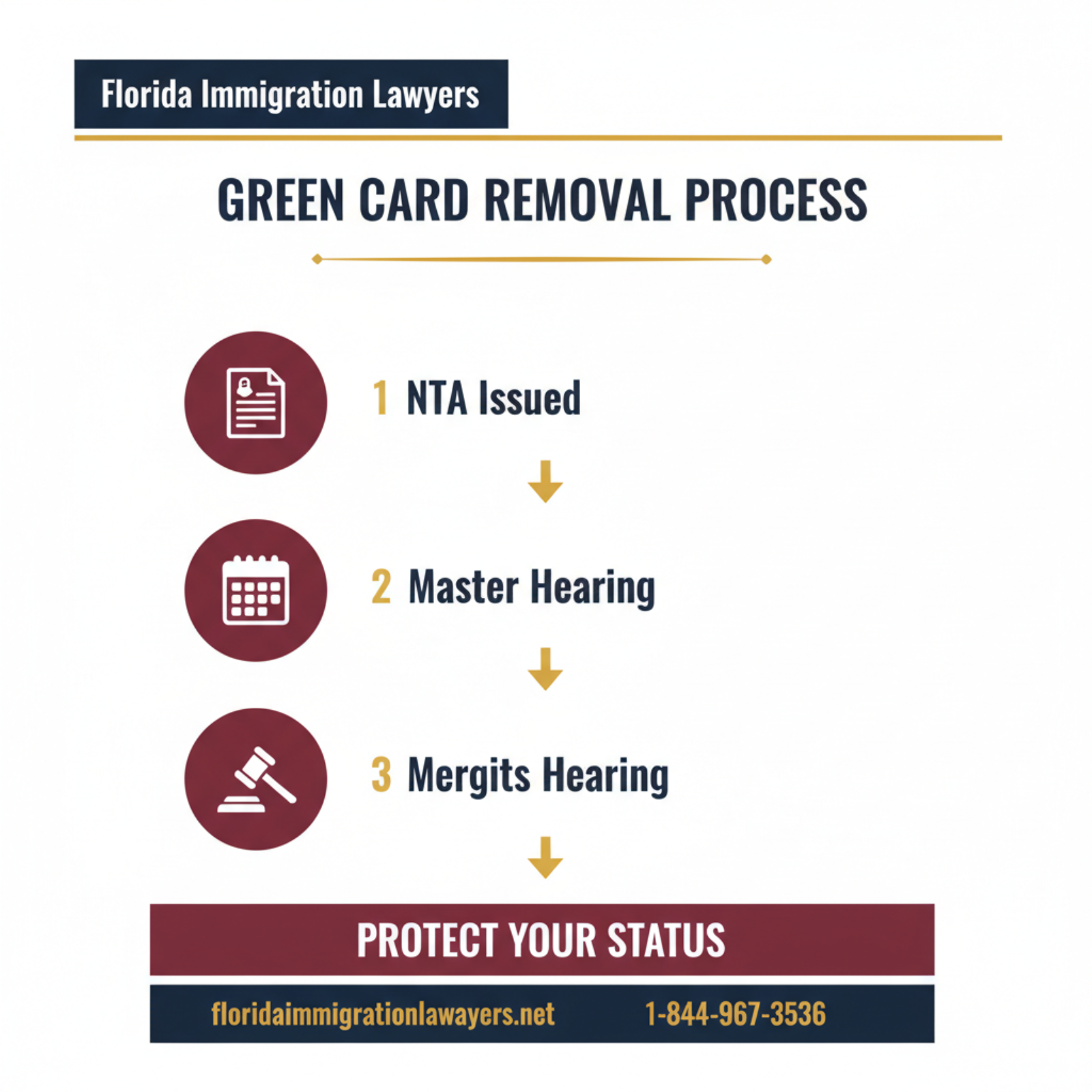
Step-by-Step Process Guide - Translations: Any documents not in English must be accompanied by a certified English translation.
Organizing these documents thoroughly is key to a strong petition. Our firm assists clients in Hollywood and across Florida in compiling robust evidence portfolios. For assistance with family-based immigration matters, please visit our Family Immigration page.
Navigating the I-751 Timeline and Processing Expectations
The I-751 processing time can vary significantly based on several factors, including the USCIS service center handling your case, the complexity of your petition, and current caseloads. It is important to manage your expectations and understand the general green card timeline Florida residents might experience.
Typically, after filing your I-751 petition, you can expect the following general timeline in 2026:
- Within 2-4 Weeks: Receipt notice (Form I-797C) from USCIS, extending your conditional status.
- Within 1-3 Months: Biometrics appointment notice and subsequent attendance.
- Within 12-24 Months (or longer): Adjudication of your petition. Some cases may be resolved sooner, while others, especially those requiring an interview or an RFE, can take much longer.
USCIS provides online tools to check current processing times for Form I-751 by service center. These times are estimates and can fluctuate. It is crucial to monitor your case status online using the receipt number provided on your I-797C notice.
What Happens After I-751 Denial?
If your I-751 petition is denied, USCIS will typically issue a Notice to Appear (NTA), which initiates removal proceedings in immigration court. This means you will have to appear before an immigration judge to argue your case. The judge will independently review your I-751 petition and the evidence. This is a critical stage where legal representation is absolutely essential.
In Florida, immigration courts are located in cities like Miami and Orlando. Being placed in removal proceedings is a serious situation, but it does not mean your case is hopeless. An experienced immigration lawyer in Hollywood Florida can prepare a strong defense, present additional evidence, and explore all available relief from removal. For assistance with these serious matters, consult our Deportation Defense page.
Cost Factors and Fee Breakdown for Green Card Removal of Conditions
Understanding the costs associated with USCIS green card removal proceedings is an important part of your planning. The primary costs include USCIS filing fees and potential legal fees if you choose to hire an attorney. Please note that USCIS fees are subject to change, so always verify the most current fees on the official USCIS website.
As of late 2026, the general fees typically include:
- Form I-751 Filing Fee: This is a mandatory fee for submitting the petition.
- Biometrics Services Fee: This fee covers the cost of your fingerprinting and background checks.
These fees are usually paid by check or money order to "U.S. Department of Homeland Security." Do not send cash. If you are filing jointly, only one set of fees is required for the couple. If you are filing with a waiver, the same fees generally apply.
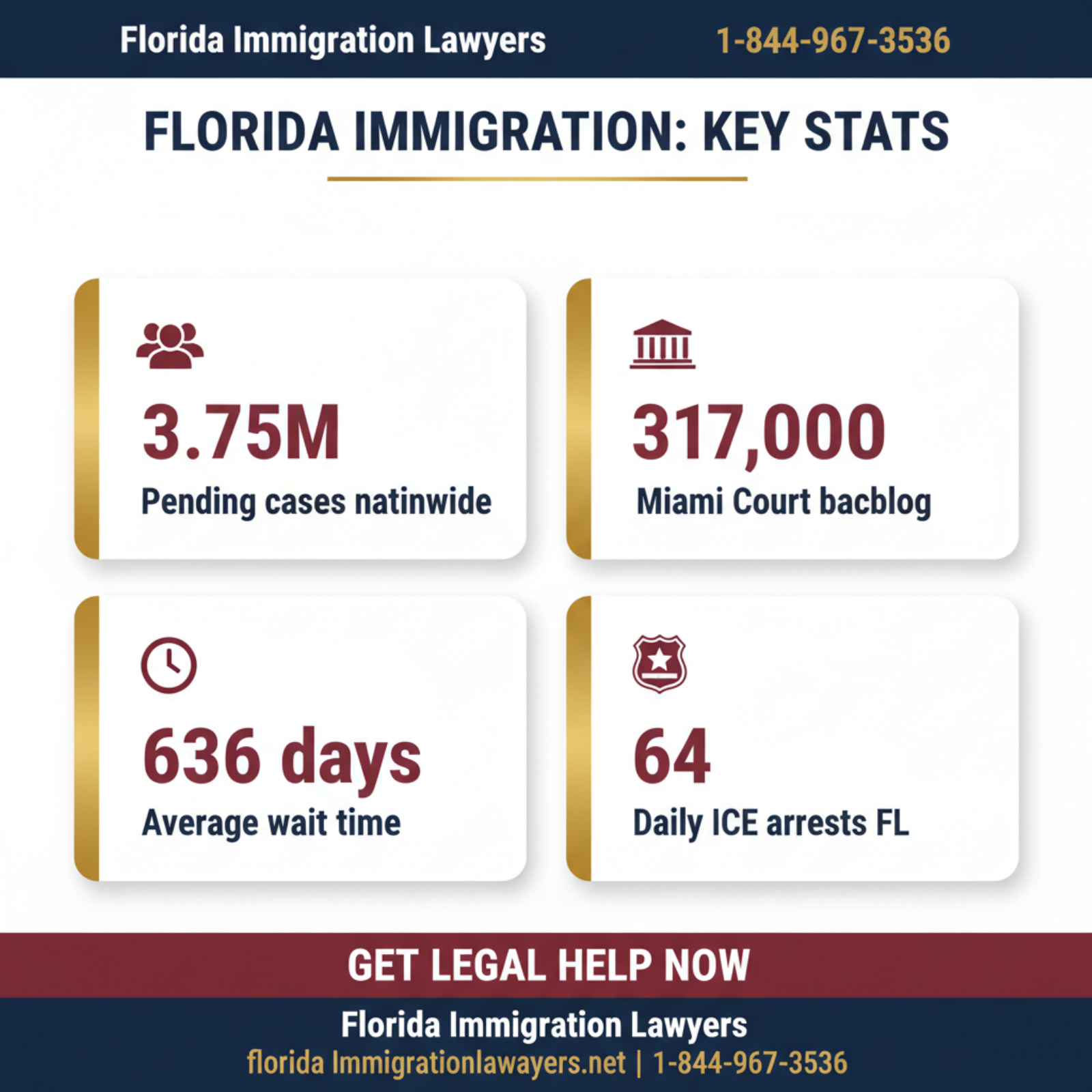
Beyond government fees, consider the cost of legal representation. While hiring an attorney is an additional expense, the expertise and guidance provided by a qualified immigration lawyer in Hollywood Florida can be invaluable. Our firm offers competitive fees and transparent pricing, discussing all costs upfront during your free consultation. Investing in legal counsel can significantly increase your chances of a successful outcome and help you avoid costly mistakes or delays.
For current fee information, always refer to the official USCIS website: USCIS Fee Schedule.
The complexities of USCIS green card removal proceedings can be overwhelming, but you do not have to face them alone. Navigating USCIS forms, deadlines, and evidence requirements demands precision and experience. Contact Florida Immigration Lawyers today to secure expert guidance and protect your future in the United States.
Common Mistakes to Avoid in Green Card Removal Proceedings
Making mistakes during your I-751 removal of conditions process can lead to significant delays, Requests for Evidence (RFEs), or even denial of your petition. Being aware of these common pitfalls can help you avoid them:
-
Filing Outside the 90-Day Window: Filing your Form I-751 too early or too late (for joint petitions) is a critical error. Filing late without a valid excuse can result in denial and initiation of removal proceedings. Always mark your calendar and aim to file within the specified 90-day period before your conditional green card expires.
-
Insufficient Evidence of a Bona Fide Marriage: This is the most common reason for RFEs and denials. Simply stating you are married is not enough. You must provide a wide array of compelling evidence demonstrating that your marriage is real and ongoing. Failure to do so suggests the marriage may have been entered into solely for immigration purposes.
-
Incomplete or Inaccurate Form I-751: Any missing information, incorrect dates, or unanswered questions on the form can cause delays. USCIS may return your petition or send an RFE. Double-check every field for accuracy and completeness before submission.
-
Failing to Attend Biometrics or Interviews: Missing a scheduled biometrics appointment or interview without proper rescheduling can lead to the abandonment and denial of your petition. Always respond to USCIS notices promptly and attend all required appointments.
-
Not Responding to RFEs or NOIDs in Time: If USCIS requests additional evidence or issues a Notice of Intent to Deny, you must respond within the specified timeframe. Failing to do so will almost certainly result in a denial of your I-751 petition.
-
Not Disclosing All Marital History: Hiding previous marriages or other relevant personal history can be considered misrepresentation, leading to severe immigration consequences. Always be truthful and provide all requested information.
-
Sending Original Documents (Unless Requested): Generally, you should send copies of supporting documents, not originals. USCIS rarely returns original documents, and losing them can be problematic. Only send originals if specifically instructed.
-
Lack of Organization: Submitting a disorganized pile of documents can confuse USCIS officers, delay processing, and potentially lead to an RFE. Organize your evidence logically, using cover letters, tabs, and clear labels.
-
Ignoring Legal Advice or Trying to "Go It Alone" in Complex Cases: While some straightforward cases may be handled independently, situations involving divorce, abuse, or criminal history absolutely require legal expertise. Attempting to navigate these complexities without an attorney significantly increases the risk of denial.
-
Assuming USCIS Knows Your Situation: USCIS officers review thousands of petitions. It is your responsibility to clearly and thoroughly present your case with ample evidence. Do not assume they will infer facts or understand nuances without explicit documentation.
When to Call a Florida Immigration Lawyer
While the I-751 process may seem straightforward for some, many situations warrant the expertise of a seasoned immigration lawyer in Hollywood Florida. Our team at Florida Immigration Lawyers is here to provide dedicated support when you need it most. You should consider calling us if any of the following scenarios apply to you:
- Your Marriage Has Ended: If you are divorced, separated, or have annulled your marriage, filing for a waiver is complex. We can help you gather the necessary evidence to prove your marriage was bona fide despite its termination.
- You Experienced Abuse or Extreme Cruelty: If you or your child suffered battery or extreme cruelty, we can assist you in filing a confidential waiver petition, protecting your safety and your immigration status.
- You Have a Criminal Record: Any arrests, charges, or convictions, even minor ones, can complicate your I-751 petition and potentially lead to inadmissibility or deportability.
- You Filed Late: If you missed the 90-day filing window, you need to provide a compelling explanation and strong evidence. We can help you prepare this justification.
- You Received an RFE or NOID: These notices indicate USCIS has concerns. Our attorneys can help you craft a robust response with additional evidence.
- USCIS Scheduled an Interview: An interview suggests USCIS has questions about your marriage. We can prepare you thoroughly and often accompany you to the interview.
- Your Petition Was Denied: If you receive a denial, you will likely be placed in removal proceedings. Immediate legal action is crucial to defend your status.
- You Have Complex Travel History: Extensive travel outside the U.S. or issues at ports of entry can raise red flags.
- You Simply Want Peace of Mind: Even in seemingly straightforward cases, the assurance of having an experienced legal team manage your petition can be invaluable.
At Florida Immigration Lawyers, we handle a wide range of immigration cases, including asylum applications and citizenship applications. We are dedicated to providing personalized and effective legal strategies for clients throughout Florida. Visit our attorneys page to learn more about our team.
About Florida Immigration Lawyers
Florida Immigration Lawyers is a leading immigration law firm dedicated to serving individuals and families across the entire state of Florida, including the vibrant community of Hollywood. Our mission is to provide compassionate, effective, and results-driven legal representation for all immigration matters. We understand the profound impact immigration decisions have on your life and your family's future.
Our experienced team of immigration lawyers specializes in various practice areas, including family immigration, business immigration, deportation defense, asylum, and citizenship. We pride ourselves on our deep understanding of U.S. immigration law and our commitment to our clients. We offer personalized attention, ensuring every case receives the strategic focus it deserves.
Why choose Florida Immigration Lawyers? We are available 24/7 to address your urgent concerns. We offer free, no-obligation consultations to discuss your case and outline your options. Our firm is known for its diligent advocacy, ethical practice, and unwavering support for the immigrant community in Florida. Let us be your trusted legal partner on your immigration journey.
To learn more or to schedule your free consultation, please visit our website at https://www.floridaimmigrationlawyers.net or call us directly at 1-844-967-3536.
Sources and References
- U.S. Citizenship and Immigration Services (USCIS) - Form I-751, Petition to Remove Conditions on Residence
- U.S. Citizenship and Immigration Services (USCIS) - Our Fees
- Executive Office for Immigration Review (EOIR)
- 8 U.S.C. § 1186a - Conditional permanent resident status for certain alien spouses and sons and daughters
- 8 C.F.R. § 216 - Conditional basis of lawful permanent residence status
- Immigration and Nationality Act (INA) Section 216 - Conditional Permanent Resident Status
This article provides general legal information and is not intended as legal advice. Every case is unique, and outcomes depend on specific facts and circumstances. Contact an attorney for advice about your particular situation.
Securing your permanent resident status is a critical milestone. Do not leave your future to chance when facing USCIS green card removal proceedings. The experienced team at Florida Immigration Lawyers is ready to provide the dedicated legal support you need to navigate these complex requirements successfully. Protect your green card and your life in Florida.
Call us today for a free consultation at 1-844-967-3536. Se Habla Español - Estamos aquí para ayudarle.
Florida Immigration Lawyers
Legal Team
Our experienced attorneys at Florida Immigration Lawyers have been serving clients across Florida for over 20 years. We specialize in immigration, personal injury, criminal defense, workers compensation, and family law.