Green Card Holder ICE Detention in Florida: Your Rights
For green card holders in Florida, the possibility of ICE detention can be a significant concern. While a green card offers substantial protections, it does not provide absolute immunity from immigration enforcement actions. This comprehensive guide from Florida Immigration Lawyers explains why lawful permanent residents might face detention, outlines crucial steps to take if detained, and details essential documents needed for your defense. We cover typical timelines, cost factors, and common mistakes to avoid. If you or a loved one is a green card holder facing ICE detention in Gainesville or anywhere in Florida, understanding your rights and securing expert legal representation is paramount. Contact our experienced attorneys for a free consultation.
Green card holders, also known as lawful permanent residents, can be detained by ICE in Florida for certain criminal offenses, violations of immigration law, or if deemed a flight risk or danger to the community. While having a green card offers significant protections, it does not grant absolute immunity from detention or deportation. Understanding your rights and having legal representation is crucial to navigate this complex process.
- Green card holders are not immune to ICE detention.
- Detention often relates to criminal history or immigration violations.
- You have rights, including the right to legal counsel.
- Prompt legal action can significantly impact your case outcome.
- Consulting an immigration attorney is highly recommended.
Navigating the complex landscape of U.S. immigration law can be daunting, especially when facing the possibility of detention by U.S. Immigration and Customs Enforcement (ICE). For green card holders, also known as lawful permanent residents (LPRs), the situation can be particularly confusing and frightening. Many believe that having a green card provides absolute protection from detention or deportation, but this is not always the case.
In Florida, like anywhere else in the nation, green card holders can find themselves in ICE custody under specific circumstances. Understanding these circumstances, knowing your rights, and preparing for potential challenges are vital steps for any LPR. This comprehensive guide from Florida Immigration Lawyers aims to demystify the process of green card holder ICE detention, offering clarity and actionable advice for individuals and their families in Gainesville and throughout Florida.
If you or a loved one is a green card holder facing ICE detention in Florida, immediate legal action is critical. Do not delay in seeking expert guidance. Call Florida Immigration Lawyers at 1-844-967-3536 for a free consultation to discuss your specific situation and explore your options.
Understanding Green Card Holder ICE Detention in Florida
While a green card grants you the right to live and work permanently in the United States, it does not provide complete immunity from immigration enforcement actions, including detention and deportation. ICE has the authority to detain lawful permanent residents who are deemed deportable under the Immigration and Nationality Act (INA).
Why Green Card Holders May Face ICE Detention
Several factors can lead to a green card holder's detention by ICE. The most common reasons involve criminal convictions or violations of immigration law. These situations can trigger mandatory detention provisions, making release on bond difficult or impossible in certain cases.
For instance, convictions for aggravated felonies, certain crimes involving moral turpitude, or drug offenses can render an LPR deportable and subject to detention. Even minor offenses, depending on their nature and frequency, can sometimes lead to serious immigration consequences. It is crucial to remember that immigration law defines crimes differently than state or federal criminal law, and a conviction that seems minor in a criminal court can have severe immigration repercussions.
The Role of ICE in Florida
ICE operates throughout Florida, with field offices and detention facilities across the state, including in areas relevant to Gainesville residents. ICE's primary mission is to enforce federal immigration laws. This includes identifying, apprehending, and detaining individuals who are deportable, regardless of their immigration status, if they meet certain criteria. The decision to detain often hinges on whether the individual is considered a flight risk or a danger to the community. For more information on ICE's operations, you can visit their official website at ice.gov.
Step-by-Step Guide: What to Do If a Green Card Holder is Detained by ICE
Being detained by ICE can be a terrifying experience. Knowing the steps to take can make a significant difference in the outcome of your case. This guide outlines immediate actions and ongoing strategies for green card holders and their families.
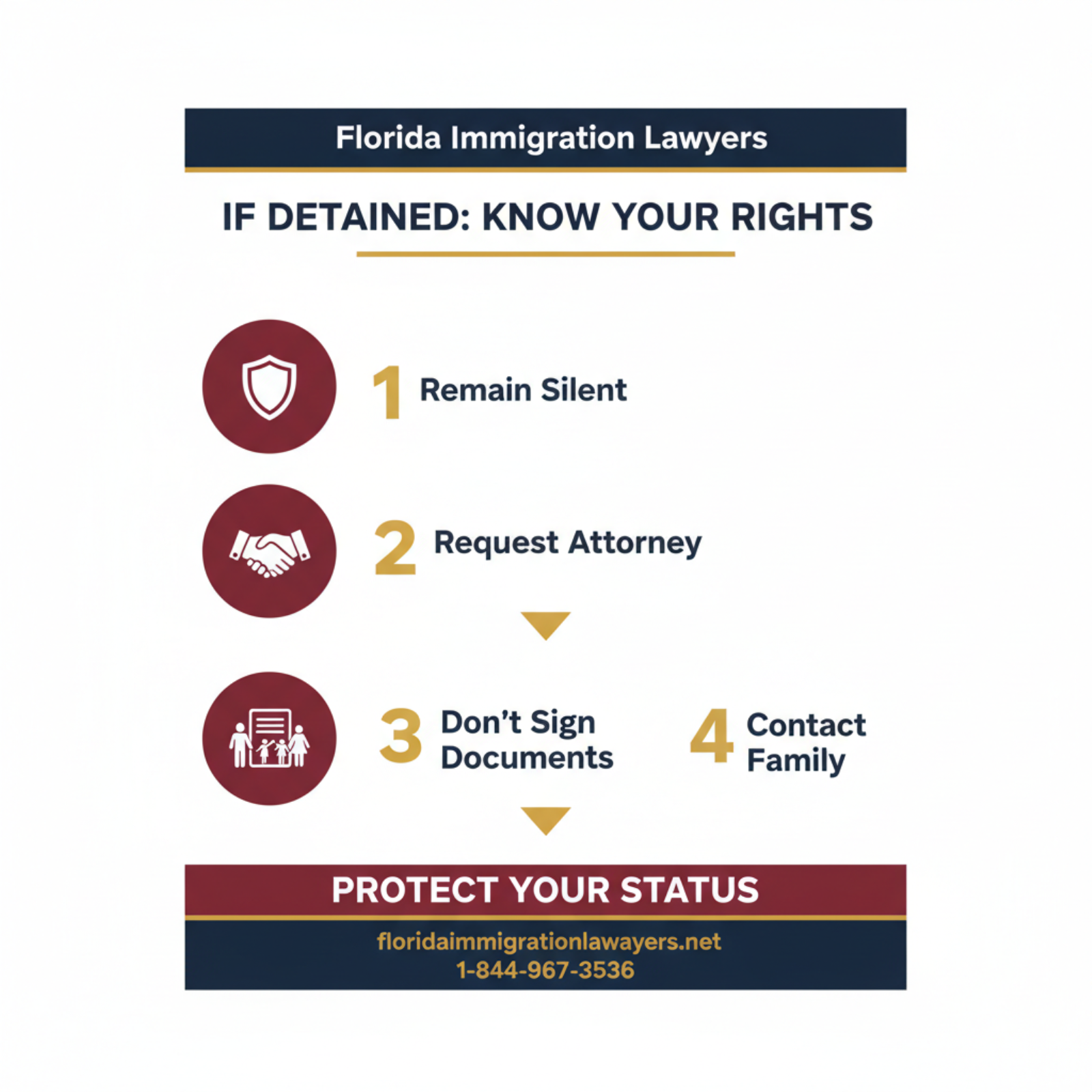
- Remain Calm and Do Not Resist: If approached by ICE agents, remain calm. Do not physically resist or obstruct their actions. Resisting can lead to additional criminal charges.
- Do Not Answer Questions Without Legal Counsel: You have the right to remain silent. Do not answer any questions about your immigration status, birthplace, or how you entered the U.S. without an attorney present. State clearly, "I wish to speak with an attorney."
- Do Not Sign Anything: Never sign any documents without first reviewing them with an attorney. You could unknowingly sign away your rights, including the right to a hearing before an immigration judge.
- Identify the Agents and Request Warrants: Ask for the agents' names and badge numbers. Ask if they have a warrant. If they claim to have one, ask to see it. A warrant for arrest (Form I-200) or a warrant for search (issued by a judge) are different. They generally cannot enter your home without a judicial search warrant, unless they have consent or exigent circumstances.
- Inform Family/Friends of Your Detention: As soon as possible, inform a trusted family member or friend about your detention, including where you are being held. Provide them with the contact information for Florida Immigration Lawyers.
- Contact an Experienced Immigration Attorney Immediately: This is the most crucial step. An attorney can ascertain the reason for detention, review your immigration history, and determine if you are eligible for bond or other forms of relief. Our team at Florida Immigration Lawyers is available to assist you.
- Gather Information About Your Detention: Note the date, time, and location of your arrest, the agency involved, and any specific forms or documents you were given. This information is vital for your attorney.
- Prepare for a Bond Hearing: If you are eligible for bond, your attorney will help prepare for a bond hearing before an immigration judge. This involves gathering evidence of community ties, good moral character, and financial ability to pay the bond.
- Understand Your Rights in Detention: While in detention, you have rights, including the right to communicate with your attorney, receive medical care, and practice your religion. Report any mistreatment to your attorney.
- Cooperate with Your Attorney: Provide your attorney with all relevant information, documents, and be honest about your situation. This allows them to build the strongest possible defense for your case.
Essential Document Checklist for ICE Detention Cases
When a green card holder is detained, having access to specific documents can greatly expedite the legal process and aid your defense. It is wise to keep copies of these documents in a secure, accessible location that family members can reach.
- Green Card (Form I-551): Proof of your lawful permanent resident status.
- Passport: Your national passport, if available.
- Birth Certificate: Official document proving your birth.
- Marriage Certificate/Divorce Decrees: If applicable, especially for family-based immigration cases.
- Children's Birth Certificates: If you have U.S. citizen or LPR children.
- Employment Records: Pay stubs, W-2s, letters from employers proving stable employment.
- Tax Returns: Proof of consistent tax filing and financial responsibility.
- Property Deeds/Lease Agreements: Evidence of ties to the community in Florida.
- Bank Statements: Proof of financial stability.
- Medical Records: Especially if you have serious health conditions requiring ongoing care.
- Police Records/Court Dispositions: For any arrests or convictions, providing certified copies of dispositions is crucial. This helps your attorney understand the exact nature of any past offenses.
- Proof of Community Involvement: Letters of support from community leaders, religious organizations, or volunteer groups.
- Any Immigration Documents: Copies of applications, petitions, notices from USCIS, or previous immigration court orders.
Timeline and Processing Expectations for Detained LPRs
The timeline for green card holder ICE detention cases can vary significantly based on individual circumstances, the complexity of the case, and the specific immigration court's caseload in Florida. However, understanding the general process can help manage expectations.
Initial Detention and Processing
After detention, an LPR is typically processed at an ICE facility. This involves fingerprinting, interviews, and the issuance of a Notice to Appear (NTA), which formally charges the individual with deportability and initiates removal proceedings before an immigration judge. This initial phase can take a few days to a few weeks.
Bond Hearings and Release
If eligible for bond, a bond hearing may be scheduled relatively quickly, sometimes within a few weeks of detention. An immigration judge will determine if the LPR is a flight risk or a danger to the community and set a bond amount. Not all green card holders are eligible for bond, particularly those with certain criminal convictions, which fall under mandatory detention provisions of the INA, such as INA Section 236(c) (8 U.S.C. § 1226(c)).
Immigration Court Proceedings
If bond is not granted or paid, the LPR will remain in detention throughout their immigration court proceedings. These proceedings can be lengthy, often taking months or even years, especially if appeals are involved. The Executive Office for Immigration Review (EOIR) oversees immigration courts, and their website (justice.gov/eoir) provides information on court locations and caseloads, including those in Florida.
Potential Outcomes
Possible outcomes include cancellation of removal (Form EOIR-42B, requiring specific eligibility criteria like long-term residence, good moral character, and exceptional hardship to qualifying relatives), adjustment of status, voluntary departure, or an order of removal (deportation). Each case is unique, and the strategy will depend heavily on the specific facts and legal arguments presented by your attorney.
Cost Factors and Fee Breakdown in ICE Detention Cases
Dealing with ICE detention involves various financial considerations, from legal fees to potential bond payments. It is important to understand these costs to plan effectively.
Legal Fees
Hiring an experienced immigration attorney is an investment in your freedom and future. Legal fees for green card holder ICE detention cases can vary widely depending on the complexity of the case, the amount of time required, and the specific services rendered (e.g., bond hearing, full removal proceedings, appeals). Florida Immigration Lawyers offers transparent fee structures, and we encourage you to discuss these during your free consultation.
Immigration Bond
If an immigration judge grants bond, you or your family will need to pay the specified amount to ICE. Bond amounts can range significantly, from a few thousand dollars to tens of thousands, depending on the individual's flight risk and danger assessment. This money is typically returned once the immigration case concludes, provided the individual adheres to all court orders.

Ancillary Costs
Other potential costs may include fees for obtaining official documents (e.g., court records, birth certificates), travel expenses for family members attending hearings, and potential fees for expert witnesses if needed in complex cases. These costs should be factored into your overall financial planning.
Do not navigate this process alone. Contact Florida Immigration Lawyers today to ensure your rights are protected and to build a strong defense. Our dedicated team is ready to assist you.
Common Mistakes Green Card Holders Make That Lead to ICE Detention or Deportation
Understanding potential pitfalls is crucial for green card holders in Florida. Avoiding these common mistakes can significantly reduce your risk of ICE detention or deportation. Remember, immigration law is distinct from criminal law, and seemingly minor issues can have major consequences.
- Failing to Understand the Immigration Consequences of Criminal Convictions: Many LPRs assume that once they serve their time for a criminal offense, the matter is closed. However, certain convictions, even misdemeanors, can trigger grounds of deportability under INA Section 237 (8 U.S.C. § 1227). Always consult an immigration attorney before pleading guilty to any crime.
- Traveling Internationally Without Legal Advice After a Criminal Conviction: Leaving the U.S. after a criminal conviction, even a minor one, can lead to detention upon re-entry. Customs and Border Protection (CBP) officers at ports of entry, including Florida airports and seaports, can flag LPRs with criminal records for secondary inspection and potential detention.
- Providing False Information on Immigration Applications: Any misrepresentation or fraud on immigration forms, whether intentional or not, can lead to loss of green card status and deportation. This includes omitting criminal history or providing false details about family or employment.
- Failing to Update USCIS with a Change of Address: Green card holders are required to inform USCIS of any change of address within 10 days by filing Form AR-11. Failure to do so can result in serious penalties, including fines or even deportation, as it can be interpreted as an attempt to evade immigration authorities.
- Overstaying a Temporary Visit Abroad: While green card holders can travel internationally, prolonged absences (typically over 6 months, and certainly over a year) can be seen as abandoning permanent residency. This can lead to issues upon re-entry and potential detention.
- Not Carrying Your Green Card: Green card holders are required by law to carry their Form I-551 (Green Card) at all times. Failure to do so can lead to questioning and temporary detention by immigration officers.
- Ignoring Notices from USCIS or Immigration Courts: Failing to respond to Requests for Evidence (RFEs) from USCIS or missing court dates can result in automatic denials or orders of removal (deportation) in absentia. Always open and respond to official mail promptly.
- Assuming a Pardon or Expungement Erases Immigration Consequences: While a state-level pardon or expungement may clear a criminal record for some purposes, it often does not eliminate the immigration consequences of a conviction. Immigration law has its own definitions and rules regarding criminal offenses.
- Engaging in Activities Inconsistent with LPR Status: This can include voting in federal elections as a non-citizen, claiming U.S. citizenship falsely, or engaging in activities deemed detrimental to national security. These actions can lead to immediate deportation.
- Not Seeking Legal Counsel Early Enough: Waiting until detention occurs or a deportation order is issued significantly limits legal options. Proactive consultation with an immigration attorney can help identify risks and develop strategies to prevent detention or deportation.
When to Call a Lawyer: Specific Scenarios Requiring Legal Help
While this article provides general information, every immigration case is unique. There are specific scenarios where contacting an experienced immigration attorney from Florida Immigration Lawyers becomes not just advisable, but absolutely critical. Our firm specializes in protecting the rights of immigrants across Florida, including Gainesville and surrounding communities.
Warning Signs and Red Flags
- You have a criminal record: Even minor offenses can have severe immigration consequences. If you have any arrests or convictions, consult an attorney immediately to assess your risk of green card holder ICE detention or deportation.
- You receive any official notice from ICE or USCIS: Do not ignore these documents. They often contain critical deadlines or information that requires a prompt legal response.
- You are planning international travel after a criminal conviction: Consulting an attorney before you leave the U.S. can prevent detention upon re-entry.
- You are considering applying for U.S. citizenship: Naturalization applications require a thorough review of your immigration and criminal history. An attorney can help identify any issues that could lead to detention or denial.
- A family member is detained by ICE: Time is of the essence in detention cases. An attorney can quickly work to locate your loved one, ascertain the reason for detention, and begin building a defense.
- You believe your rights are being violated: If you experience mistreatment or believe agents are exceeding their authority, document everything and contact an attorney immediately.
Florida Immigration Lawyers has extensive experience in deportation defense and general immigration law. We understand the nuances of the law and can provide tailored advice for your situation. We also assist with citizenship applications and family immigration matters, helping you proactively avoid potential issues.
About Florida Immigration Lawyers
Florida Immigration Lawyers is a leading immigration law firm dedicated to serving individuals and families across the entire state of Florida. With a deep understanding of U.S. immigration laws and a compassionate approach, we strive to provide exceptional legal representation and support to our clients.
Our experienced team handles a wide range of immigration matters, including defense against green card holder ICE detention, deportation defense, asylum claims, family-based petitions, business immigration, and naturalization. We are committed to protecting your rights, advocating fiercely on your behalf, and guiding you through every step of the immigration process.
We believe that everyone deserves access to high-quality legal counsel. That's why we offer free consultations and are available 24/7 to address your urgent concerns. When your future and freedom are at stake, choose the trusted advocates at Florida Immigration Lawyers. Contact us today at 1-844-967-3536 or visit our website: https://www.floridaimmigrationlawyers.net.
Sources and References
- U.S. Citizenship and Immigration Services (USCIS)
- U.S. Immigration and Customs Enforcement (ICE)
- Executive Office for Immigration Review (EOIR)
- 8 U.S.C. Chapter 12 - Immigration and Nationality Act (INA)
- INA Section 236(c) - Detention of criminal aliens (8 U.S.C. § 1226(c))
- INA Section 237 - Deportable aliens (8 U.S.C. § 1227)
- 8 CFR Part 236 - Apprehension and Detention of Aliens
This article provides general legal information and is not intended as legal advice. Every case is unique, and outcomes depend on specific facts and circumstances. Immigration laws are complex and subject to change. Contact an attorney for advice about your particular situation and to assess your eligibility for specific forms of relief.
If you are a green card holder facing ICE detention in Florida, or if you have concerns about your immigration status, do not wait for the situation to escalate. Proactive legal representation is your best defense. Call Florida Immigration Lawyers today at 1-844-967-3536 for a free consultation. Se Habla Español - Estamos aquí para ayudarle.
Florida Immigration Lawyers
Legal Team
Our experienced attorneys at Florida Immigration Lawyers have been serving clients across Florida for over 20 years. We specialize in immigration, personal injury, criminal defense, workers compensation, and family law.