Green Card Holder ICE Detention in Florida: Understand Your Rights
Green card holders in Florida are not immune to ICE detention and deportation, especially due to criminal convictions or immigration violations. This comprehensive guide from Florida Immigration Lawyers explains your rights, including the right to an attorney and bond hearings, and provides a step-by-step process for navigating detention. We cover essential documents, timelines, and common mistakes to avoid. With active ICE enforcement across Florida, from Naples to Miami, understanding the nuances of green card holder ICE detention is critical. If you or a loved one faces this daunting challenge, immediate legal assistance is paramount to protect your status and fight for your freedom. Contact our firm for a free consultation.
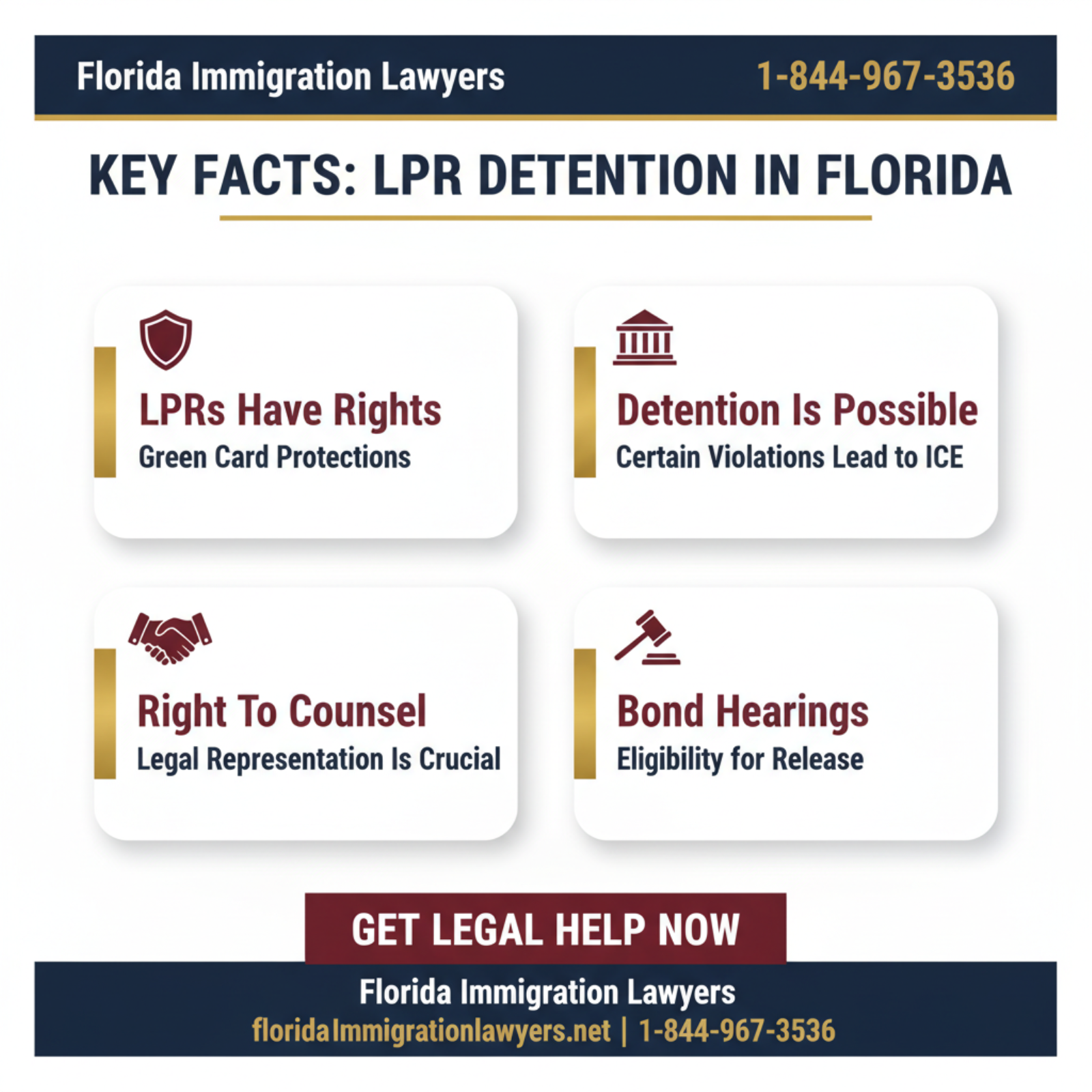
Green card holders, or Lawful Permanent Residents (LPRs), can face detention by ICE in Florida due to certain criminal convictions, violations of immigration law, or grounds of inadmissibility/deportability. While LPRs have more rights than undocumented individuals, they are not immune to removal proceedings. Understanding your rights, seeking immediate legal counsel, and preparing for immigration court are critical steps to challenge detention and avoid deportation.
- LPRs can be detained by ICE for specific legal violations.
- You have the right to an attorney and to remain silent regarding non-identity questions.
- Many detained green card holders are eligible for bond hearings.
- Prompt legal representation is crucial to fight detention and potential deportation.
- Collecting vital documents and understanding court processes is essential.
Green Card Holder ICE Detention in Florida: Understand Your Rights
Imagine building a life in Florida, contributing to your community in Naples or elsewhere, and then suddenly facing the terrifying reality of ICE detention. For green card holders, also known as Lawful Permanent Residents (LPRs), this scenario is a harsh possibility, even with established legal status. While having a green card offers significant protections, it does not grant absolute immunity from immigration enforcement actions, including detention and potential deportation.
Navigating the complex landscape of immigration law, especially when facing detention, can be overwhelming and frightening. This comprehensive guide from Florida Immigration Lawyers aims to illuminate the reasons why green card holders may be detained by ICE in Florida, outline your fundamental rights, and provide a clear roadmap for what to do if you or a loved one is taken into custody. We understand the fear and uncertainty this situation brings to families across Florida.
It is vital to act quickly and decisively. Do not face this challenging situation alone. Call Florida Immigration Lawyers at 1-844-967-3536 for a free consultation. Our experienced team is ready to provide the urgent legal support you need, serving clients throughout all of Florida, including Naples and surrounding areas.
Understanding Green Card Holder ICE Detention in Florida
A green card signifies your status as a Lawful Permanent Resident (LPR), granting you the right to live and work permanently in the United States. However, this status can be jeopardized under specific circumstances outlined in immigration law. When ICE (U.S. Immigration and Customs Enforcement) detains a green card holder in Florida, it's typically because the agency believes there are grounds for inadmissibility or deportability.
These grounds often stem from criminal convictions, but can also include other violations of immigration law. For instance, certain crimes, even those considered minor in state court, can have severe immigration consequences, potentially leading to an ICE detainer and subsequent detention. Florida's busy ports of entry and diverse population mean that ICE enforcement is active across the state, from Miami to Tampa to Naples.
ICE operates several field offices and detention facilities in Florida, including the Krome Service Processing Center and the Glades County Detention Center. An ICE detainer is a request from ICE to a local law enforcement agency to hold an individual for an additional 48 hours after they would otherwise be released, allowing ICE time to take them into federal custody. Understanding this process is the first step in preparing for or responding to green card holder ICE detention.
Your Rights as a Green Card Holder in ICE Detention
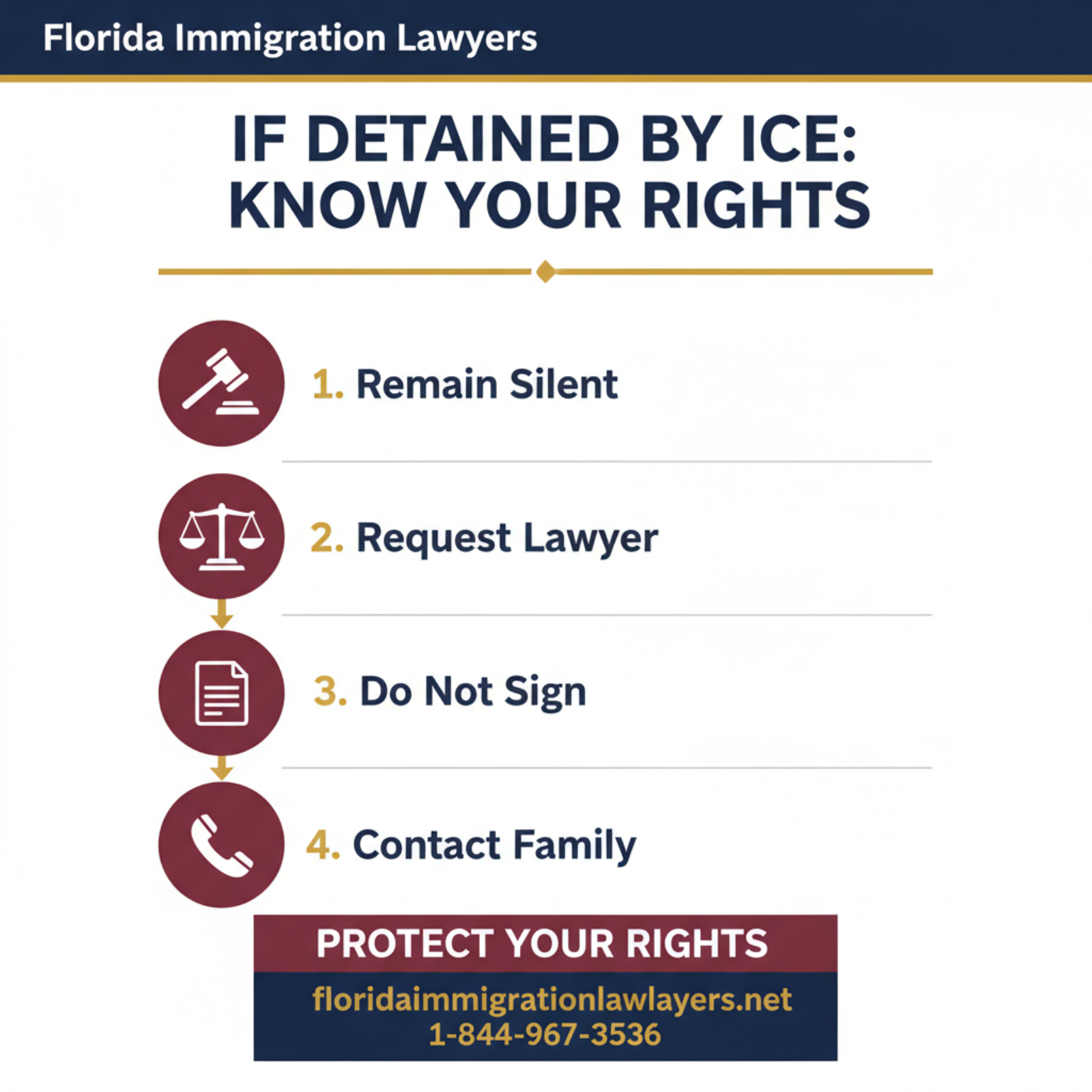
Even if you are a green card holder detained by ICE, you retain important legal rights. Knowing these rights can significantly impact the outcome of your case. It is crucial to assert these rights respectfully but firmly from the moment of encounter with any law enforcement or immigration official.
- Right to Remain Silent: You have the right to remain silent and do not have to answer questions about your immigration status, birthplace, or how you entered the U.S., beyond providing your green card as identification. You can state, "I wish to remain silent."
- Right to an Attorney: You have the right to speak with an attorney. While the government will not provide one, you can request to contact your lawyer or a family member to arrange legal representation. This is a critical right in any green card holder ICE detention scenario.
- Right to Contact Family: You are generally allowed to make a phone call to inform your family of your detention. Your family can then begin the process of seeking legal assistance on your behalf.
- Right to a Bond Hearing: In many situations, detained green card holders are eligible for a bond hearing before an immigration judge. This hearing determines if you can be released from detention upon payment of a bond.
- Right to Review Documents: You have the right to review any documents ICE asks you to sign and to refuse to sign anything you do not understand or agree with, especially voluntary departure forms.
These rights are enshrined in U.S. law and are vital protections during green card holder ICE detention. Exercising them properly requires guidance from an experienced immigration attorney. For more information on your rights, refer to resources from U.S. Citizenship and Immigration Services (USCIS).
Navigating ICE Detention: A Step-by-Step Guide for Green Card Holders
If you or a loved one who is a green card holder faces ICE detention in Florida, understanding the typical process can help reduce anxiety and guide your actions. While every case is unique, the general steps involved are often similar.
-
Initial Encounter and Arrest
ICE agents may encounter individuals in various settings: at your home, workplace, during a traffic stop, or upon release from local jails due to an ICE detainer. If arrested, you will be taken to an ICE processing center or a contract detention facility in Florida, such as the Glades County Detention Center or Broward Transitional Center. During this initial phase, it is crucial to assert your right to remain silent and your right to an attorney immediately. Do not provide any information beyond confirming your identity and legal status as a green card holder, showing your Form I-551.
ICE will typically issue a Notice to Appear (NTA), which is the charging document that initiates removal proceedings before an immigration judge. This document will outline the specific allegations against you and the legal grounds for your potential deportation. A thorough review of the NTA by an attorney is essential to prepare your defense against green card holder ICE detention.
-
Bond Hearings and Release
Many green card holders in ICE detention are eligible for a bond hearing. An immigration judge will determine if you can be released from detention on bond, considering factors such as your ties to the community in Florida, your criminal history (if any), your flight risk, and whether you pose a danger to the community. Presenting a strong case for bond requires compelling evidence and often the advocacy of an experienced immigration lawyer.
If bond is granted, a bond amount will be set, which must be paid to ICE for your release. Once released, you must attend all scheduled immigration court hearings. Failure to do so can lead to re-detention and a final order of removal. Securing release through bond is a primary goal in many green card holder ICE detention cases, allowing you to prepare your defense from outside custody.
Step-by-Step Process Guide -
Immigration Court Proceedings
After being issued an NTA, your case will proceed to immigration court, typically held at locations like the Miami Immigration Court or Orlando Immigration Court. These proceedings involve several hearings, including Master Calendar Hearings (preliminary appearances) and Individual Hearings (where evidence is presented and arguments are made).
During these hearings, your attorney will challenge the government's allegations, present evidence supporting your right to remain in the U.S., and explore any forms of relief from removal for which you may be eligible. This could include cancellation of removal for LPRs, waivers of inadmissibility, or asylum claims if applicable. The process is complex and demands skilled legal representation to navigate effectively, especially when fighting against a green card holder ICE detention.
Essential Document Checklist for Detained Green Card Holders
Having immediate access to critical documents can significantly expedite your defense and potentially aid in securing release from green card holder ICE detention. If you or a family member is detained, gather these documents as quickly as possible.
- Green Card (Form I-551): Proof of your Lawful Permanent Resident status.
- Passport and Travel Documents: Any valid passports or travel documents you possess.
- Birth Certificates: For yourself, your spouse, and any U.S. citizen or LPR children.
- Marriage Certificate: If applicable, especially if your green card was obtained through marriage.
- Proof of Florida Residence: Utility bills, lease agreements, property deeds, or mail showing your address in Naples, Florida, or other parts of the state.
- Tax Returns: Several years of U.S. tax returns to demonstrate continuous residency and good moral character.
- Employment Records: Pay stubs, employment verification letters, or other proof of employment history.
- Criminal Records: Certified court dispositions for any past arrests or convictions. It is crucial to provide complete and accurate information to your attorney.
- Medical Records: If you have any significant health conditions that require ongoing treatment.
- Letters of Support/Affidavits: From family, friends, employers, or community leaders attesting to your good character and ties to the U.S.
Timeline and Processing Expectations in Florida
The timeline for green card holder ICE detention cases in Florida can vary widely, influenced by several factors. The immigration court system, like other legal systems, experiences backlogs, which can affect how quickly a case proceeds. The specific detention facility, the complexity of your case, and the availability of court dates all play a role.
Generally, an initial bond hearing might occur within a few weeks of detention, but this is not guaranteed. If bond is denied or not pursued, the individual remains in detention while their removal proceedings continue. Immigration court cases in Florida can take months, or even years, to resolve, especially if appeals are involved. For example, some courts in Florida may have longer dockets than others, impacting scheduling.
It is important to manage expectations and understand that there are no "quick fixes" in immigration law. Your attorney can provide a more personalized estimate based on the specifics of your case and current court conditions. Keeping track of all court notices and deadlines is paramount. Data from the Executive Office for Immigration Review (EOIR) often shows significant processing times for immigration court cases nationwide, including those in Florida.
Cost Factors and Legal Fee Breakdown
Navigating green card holder ICE detention involves various costs, and understanding these can help you and your family prepare financially. Legal fees are often the most significant expense, but other costs can also add up.
- Attorney Fees: These can vary depending on the complexity of the case, the attorney's experience, and the services required. Many firms, including Florida Immigration Lawyers, offer flat fees for specific stages of a detention case, while others may charge hourly.
- Immigration Bond: If a bond is granted, the amount can range from a few thousand dollars to tens of thousands, depending on the judge's assessment of flight risk and danger. This money is returned if the individual attends all court hearings.
- Filing Fees: While less common in detention cases than other immigration processes, certain applications for relief from removal may require filing fees with USCIS or EOIR.
- Ancillary Costs: These can include costs for obtaining certified court records, translation services for documents, expert witness fees (if needed), and travel expenses for family members to visit detention centers or attend court.
During your free consultation with Florida Immigration Lawyers, we can discuss potential costs associated with your specific green card holder ICE detention case and provide transparent information regarding our fee structure. We believe in clear communication about all financial aspects from the outset.
Do not navigate this complex and stressful process alone. The stakes are incredibly high, and the legal nuances require specialized expertise. Contact Florida Immigration Lawyers today for dedicated legal representation. We are committed to protecting your rights and fighting for your freedom.
Common Mistakes to Avoid During ICE Detention
Making certain mistakes during green card holder ICE detention can have severe and lasting consequences, potentially jeopardizing your chances of remaining in the United States. Be aware of these common pitfalls:
- Lying to Immigration Officials: Providing false information to ICE or other immigration authorities can lead to charges of misrepresentation, which are serious grounds for inadmissibility or deportability under INA § 212(a)(6)(C)(i). Always be truthful, or assert your right to remain silent.
- Signing Documents Without Understanding Them: Never sign any document presented by an immigration officer without fully understanding its contents and implications. This is especially true for "Voluntary Departure" forms, which waive your right to a hearing before an immigration judge and result in immediate self-deportation.
- Failing to Assert Your Right to Silence: While you must identify yourself as a green card holder and present your Form I-551, you are not required to answer further questions about your history, family, or how you obtained your green card. Politely state, "I want to speak with my lawyer."
- Not Disclosing Past Criminal History: Attempting to conceal past arrests or convictions from your attorney can severely undermine your defense. Your lawyer needs all relevant information to accurately assess your situation and prepare the strongest possible case.
- Not Seeking Legal Counsel Promptly: Delaying contact with an immigration attorney can mean missed opportunities to challenge detention, prepare for bond hearings, or gather crucial evidence. The sooner you have legal representation, the better your chances against green card holder ICE detention.
- Missing Court Dates or Deadlines: Failure to appear at scheduled immigration court hearings or to meet deadlines for filing documents can result in an "in absentia" order of removal, meaning you are deported without a hearing.
- Providing Conflicting Information: Inconsistent statements to different officials or at different stages of your case can damage your credibility and weaken your defense. Consistency is key when fighting green card holder ICE detention.
- Carrying Undocumented Items: While not a direct cause for detention, carrying items that could be misinterpreted or lead to further questioning (e.g., false identification for others) should be avoided.
- Ignoring an ICE Detainer: If you are in local custody and an ICE detainer is lodged against you, ignoring it will not make it disappear. It signals ICE's intent to take you into custody, and you should immediately consult an attorney.
- Not Having Copies of Important Documents: Family members should keep copies of all important immigration and personal documents in a safe, accessible place, as originals may be confiscated during detention.
- Believing False Promises: Be wary of anyone promising guaranteed outcomes or quick fixes. Immigration law is complex, and no attorney can guarantee a specific result.
When to Call a Lawyer for ICE Detention in Florida
The moment you or a loved one who is a green card holder faces questioning or detention by ICE in Florida, it is imperative to contact an experienced immigration attorney immediately. Time is of the essence in these situations, and early legal intervention can make a significant difference in the outcome of your case. Florida Immigration Lawyers are here to help.
You should call a lawyer if:
- You or a family member is arrested or detained by ICE.
- An ICE detainer has been lodged against you at a local jail.
- You have received a Notice to Appear (NTA) in immigration court.
- You have a criminal history, no matter how minor, that could impact your immigration status.
- You are denied bond or believe your bond amount is unreasonably high.
- You are unsure of your rights or what to do during an encounter with immigration officials.
- You are considering signing any document presented by ICE.
- You are facing removal proceedings and need to explore options for relief, such as cancellation of removal for LPRs under INA § 240A(a).
Warning signs like an ICE presence in your community, increased enforcement activity, or a knock on your door from agents should prompt you to prepare and know who to call. Our firm specializes in deportation defense and green card holder ICE detention cases, serving clients in Naples and across Florida. We understand the local court systems and detention facilities.
People Also Ask: Key Questions Answered
How can ICE detain green card holders?
ICE can detain green card holders if there are grounds for inadmissibility or deportability under the Immigration and Nationality Act (INA). Common reasons include convictions for certain crimes (especially aggravated felonies or crimes involving moral turpitude), national security concerns, or violations of immigration law. Even long-term LPRs can face detention and deportation if these grounds are met, as per INA § 237.
What is the new law for green card holders in 2026?
Immigration laws are dynamic and subject to frequent changes, interpretations, and policy shifts. There isn't a single "new law" for green card holders in 2026 that broadly alters their status without specific legislative action. It is crucial to consult with an immigration attorney for the most current information regarding any changes in regulations, court decisions, or policies that might affect green card holders. Always refer to official sources like USCIS for updates.
Can you get deported with a green card for a DUI?
Yes, a DUI conviction can potentially lead to deportation for a green card holder, depending on the specific circumstances and state law. While a single, simple DUI might not always be a deportable offense on its own, factors such as multiple DUIs, DUIs involving injury, or DUIs combined with other criminal history can be classified as crimes involving moral turpitude (CIMT) or aggravated felonies under immigration law (INA § 212(a)(2) and INA § 237(a)(2)), making an LPR deportable. An attorney can assess the specific nature of your DUI and its immigration consequences.
Do I have to show ICE my green card?
Yes, if you are a green card holder (Lawful Permanent Resident) and are 18 years or older, you are required by law (8 U.S.C. § 1304(e)) to carry proof of your registration, which is your Form I-551 (green card). You must present it upon demand by an immigration officer. However, beyond presenting your green card and confirming your identity, you have the right to remain silent and do not have to answer other questions without an attorney present.
About Florida Immigration Lawyers
Florida Immigration Lawyers is a leading immigration law firm dedicated to serving individuals and families across the entire state of Florida, including Naples, Miami, Orlando, and Tampa. We understand the profound impact that immigration matters, especially those involving green card holder ICE detention, have on people's lives. Our mission is to provide compassionate, effective, and results-driven legal representation.
Our experienced attorneys specialize in a wide range of immigration services, including deportation defense, asylum, family-based immigration, citizenship applications, and complex detention cases. We pride ourselves on our deep knowledge of immigration law, our strategic approach to every case, and our unwavering commitment to our clients' success. When you choose Florida Immigration Lawyers, you are choosing a team that will fight tirelessly for your rights and your future.
We offer free consultations to discuss your specific situation and provide clear, honest advice. Our firm is available 24/7 because we know that immigration emergencies don't adhere to business hours. For immediate assistance or to schedule your confidential consultation, please call us at 1-844-967-3536 or visit our website at https://www.floridaimmigrationlawyers.net. Let us be your trusted advocates in your fight against green card holder ICE detention.
Sources and References
- U.S. Citizenship and Immigration Services (USCIS)
- Executive Office for Immigration Review (EOIR)
- U.S. Immigration and Customs Enforcement (ICE)
- 8 U.S.C. Chapter 12 - Immigration and Nationality Act (INA)
- 8 U.S.C. § 1304(e) - Certificate of alien registration or alien registration receipt card; personal possession; penalties
- INA § 212(a)(2) - Inadmissible Aliens: Criminal and Related Grounds
- INA § 212(a)(6)(C)(i) - Inadmissible Aliens: Misrepresentation
- INA § 236 - Detention and Release of Aliens
- INA § 237(a)(2) - Deportable Aliens: Criminal Offenses
- INA § 240A(a) - Cancellation of Removal for Certain Permanent Residents
- 8 CFR (Code of Federal Regulations)
- USCIS Policy Manual
This article provides general legal information and is not intended as legal advice. Every case is unique, and outcomes depend on specific facts and circumstances. Contact an attorney for advice about your particular situation. Immigration laws are complex and subject to change; always consult with a qualified legal professional for the most current and accurate guidance.
If you or a loved one is facing green card holder ICE detention in Florida, don't delay. The time to act is now. Our dedicated team at Florida Immigration Lawyers is ready to provide the aggressive and compassionate representation you deserve. We are available 24/7 to answer your call and offer a free, confidential consultation.
Call us today at 1-844-967-3536. Se Habla Español - Estamos aquí para ayudarle.
Florida Immigration Lawyers
Legal Team
Our experienced attorneys at Florida Immigration Lawyers have been serving clients across Florida for over 20 years. We specialize in immigration, personal injury, criminal defense, workers compensation, and family law.