Abrego Garcia Deportation Florida: Understanding Your Rights in 2026
The Kilmar Abrego Garcia deportation case stands as a powerful reminder of immigration complexities and the critical need for legal defense. This comprehensive guide from Florida Immigration Lawyers explores deportation proceedings, offering a step-by-step process, essential document checklists, and insights into timelines and costs. We highlight common mistakes to avoid and explain when to seek expert legal counsel. Understanding your rights and navigating the intricate legal landscape in Florida is paramount to preventing wrongful removal. Contact us for robust deportation defense and a free consultation.
- The Abrego Garcia case emphasizes legal rights and due process.
- Deportation defense is complex and challenging in Florida.
- Legal representation is crucial for immigrants facing removal.
- Understanding the process helps prevent wrongful or mistaken removal.
- Proactive legal action can protect your future in the U.S.
Imagine facing the terrifying prospect of being removed from the country you call home, a situation where a single mistake could drastically alter your life. The case of Kilmar Abrego Garcia, a Salvadoran national whose mistaken deportation years ago shook the immigration community, serves as a powerful cautionary tale for individuals and families across Florida. While his specific circumstances are historical, the principles of due process and the critical need for expert legal representation remain as relevant as ever for anyone facing a potential abrego garcia deportation scenario or any removal proceedings in 2026. Understanding your rights and the intricate legal pathways is not just advisable, it is essential.
This comprehensive guide from Florida Immigration Lawyers will explore the nuances of deportation defense in Florida. We draw lessons from past cases and outline critical steps to protect your future. We are here to help you navigate these challenging times. Call Florida Immigration Lawyers at 1-844-967-3536 for a free consultation to discuss your unique situation and learn how we can defend your rights.
Understanding Deportation Proceedings in Florida
The term "deportation," officially known as "removal" proceedings, refers to the government's legal process to remove a non-citizen from the United States. These proceedings can be initiated for various reasons, including visa overstays, criminal convictions, or violations of immigration law. The abrego garcia deportation case brought national attention to the potential for administrative errors and the profound impact they have on individuals and their families.
In Florida, a state with a significant immigrant population, understanding the nuances of these proceedings is paramount. Immigration courts, part of the Executive Office for Immigration Review (EOIR) under the Department of Justice, are located in key areas such as Miami and Orlando. These courts handle thousands of cases annually, determining whether individuals can remain in the U.S. or will be removed. Our firm, Florida Immigration Lawyers, provides dedicated deportation defense Florida services, helping clients in Gainesville and throughout the state.
The government's authority to deport is outlined primarily in the Immigration and Nationality Act (INA). Specifically, INA Sections 212 and 237 define grounds of inadmissibility and deportability. These sections categorize who can be prevented from entering the U.S. and who can be removed after entry. Navigating these complex statutes requires an in-depth understanding of current immigration law and policy.
Grounds for Deportation
There are several common grounds upon which a non-citizen may be deemed deportable. These include, but are not limited to, committing certain crimes, violating the terms of a visa, or engaging in marriage fraud. Even minor infractions can sometimes trigger removal proceedings, leading to severe immigration consequences.
Overstaying a visa is another frequent reason for deportation. While many individuals may believe they can simply adjust their status, an overstay can lead to accrual of unlawful presence. This then triggers bars to re-entry, making future immigration difficult. It is crucial to address any potential grounds for deportation proactively with a knowledgeable Florida immigration lawyer.
The Role of ICE in Florida Immigration Enforcement
U.S. Immigration and Customs Enforcement (ICE) is the principal investigative arm of the Department of Homeland Security (DHS). ICE is responsible for enforcing immigration laws within the U.S. interior, including identifying, apprehending, and detaining non-citizens who are subject to removal. In Florida, ICE has a significant presence, with field offices in Miami and Tampa.
ICE agents conduct arrests and issue Notices to Appear (NTAs), initiating the formal removal process. Their operations can impact communities across Florida, including Gainesville and its surrounding areas. Understanding ICE's role and your rights during encounters with them is a critical component of effective deportation defense Florida.
Key Florida Immigration Courts
Florida hosts two primary immigration courts under the Executive Office for Immigration Review (EOIR): one in Miami and another in Orlando. These courts serve the entire state, handling a vast caseload of removal proceedings. Judges in these courts preside over hearings, consider evidence, and issue decisions regarding an individual's immigration future.
The specific court where your case is heard can sometimes influence procedural aspects and scheduling. Our attorneys are intimately familiar with the local rules and practices of both the Miami and Orlando immigration courts. This local expertise is invaluable for clients seeking Gainesville immigration help or assistance from other parts of Florida.
The Deportation Process: A Step-by-Step Guide for Florida Residents
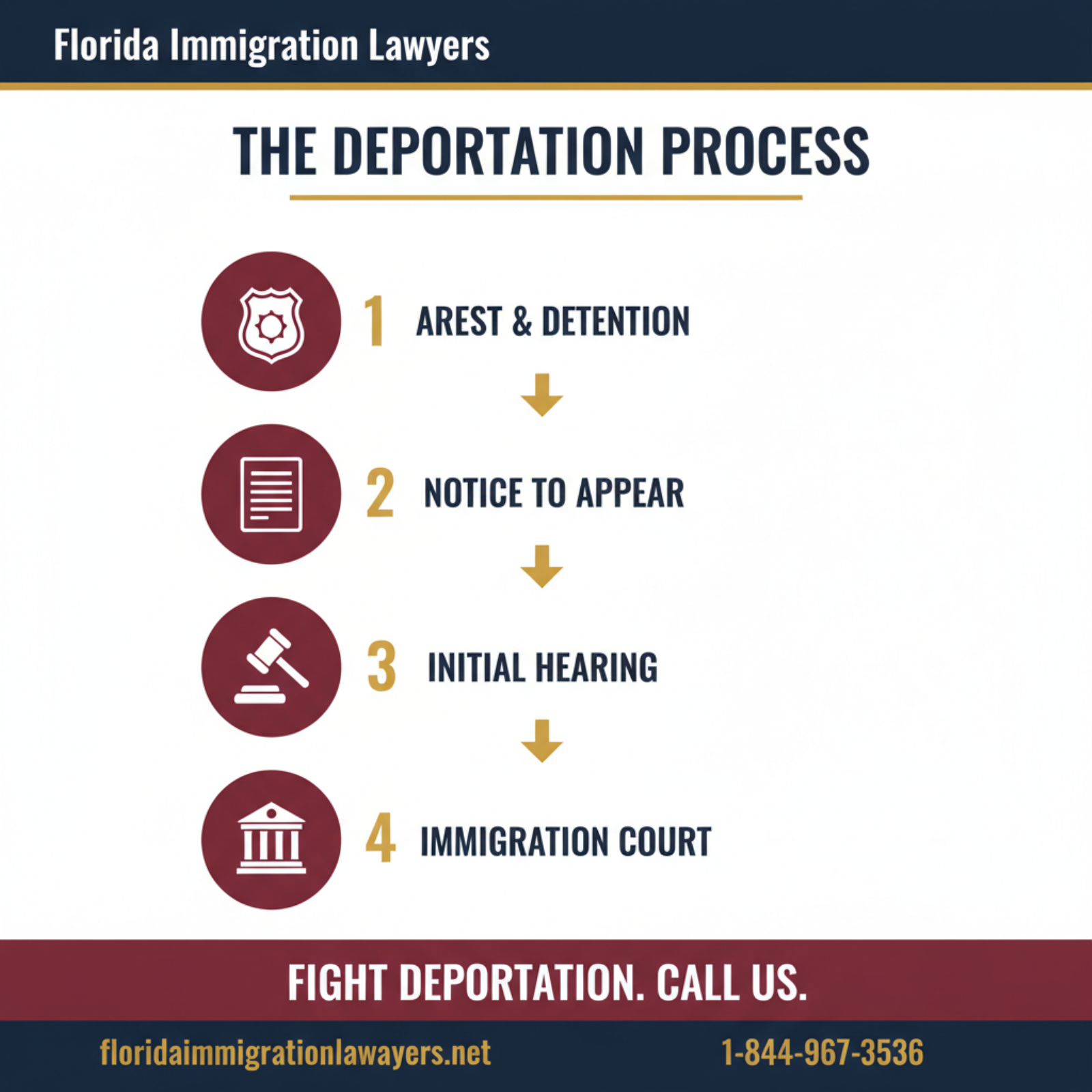
Facing deportation can be an overwhelming experience, but understanding the process can empower you to take necessary action. The journey through immigration court is structured, with specific stages that individuals must navigate. Here is a general step-by-step guide to the deportation process in Florida:
- Notice to Appear (NTA): The process typically begins when U.S. Immigration and Customs Enforcement (ICE) issues a Notice to Appear. This document formally charges a non-citizen with being removable from the United States and instructs them to appear before an immigration judge. The NTA will specify the alleged violations of immigration law and the time and place of the initial hearing. Receiving an NTA is a critical moment; contact a Florida immigration lawyer immediately upon receipt.
- Master Calendar Hearing: This is the first appearance before an immigration judge. During this hearing, the judge will confirm your identity, ensure you understand the charges, and ask you to state whether you admit or deny the allegations. You will also be asked to designate a country for deportation if you are found deportable. This is the stage where you should formally request relief from removal, such as asylum, cancellation of removal, or adjustment of status. An attorney can enter their appearance using Form EOIR-28.
- Bond Hearings and Detention: If you are detained by ICE, your attorney can request a bond hearing. During this hearing, the immigration judge will determine if you can be released from detention upon payment of a bond. The judge considers factors like flight risk, danger to the community, and your ties to the U.S. A favorable bond decision allows you to fight your case from outside detention.
- Individual Hearing (Merits Hearing): If you deny the charges or seek relief from deportation, the judge will schedule an individual hearing. This is a full trial where both you and the government present evidence, call witnesses, and make legal arguments. Your attorney will help you prepare your case, gather supporting documentation, and represent you vigorously before the immigration judge. This is where your deportation defense strategy is fully presented.
- Decision by Immigration Judge: After the individual hearing, the immigration judge will issue a decision. The judge may order you removed, grant you relief from removal, or terminate your proceedings. A favorable decision means you can remain in the U.S., while an order of removal means you must leave. The judge's decision is based on the evidence presented and applicable law.
- Appeals Process: If either you or the government disagrees with the judge's decision, you generally have 30 days to file an appeal with the Board of Immigration Appeals (BIA). The BIA reviews the judge's decision for legal errors. If the BIA's decision is unfavorable, further appeals may be possible to a U.S. Circuit Court of Appeals. This lengthy process highlights the need for consistent legal counsel and can be crucial in cases like the abrego garcia deportation, where procedural issues were central.
- Order of Removal and Enforcement: If all appeals are exhausted and an order of removal stands, ICE is responsible for enforcing the order. This can involve detention and physical removal from the United States. The abrego garcia deportation case famously involved a mistaken removal, emphasizing the severe consequences of even an erroneous order. Our attorneys work tirelessly to prevent this outcome.
Throughout each of these stages, having an experienced deportation defense Florida attorney from Florida Immigration Lawyers can make a profound difference. We understand the local courts in Miami and Orlando and the specific procedures that apply to cases originating in Gainesville and across Florida.
Essential Document Checklist for Deportation Defense
Preparing a robust defense against deportation requires meticulous organization and the timely submission of various documents. The specific documents needed will vary depending on the grounds for deportation and the type of relief you are seeking. However, a general checklist can help you begin organizing your case. Each document plays a vital role in establishing your eligibility for relief or challenging the government's claims.
- Passport and Travel Documents: Essential for proving your identity and nationality.
- Birth Certificate and Marriage Certificate (if applicable): Establishes familial relationships crucial for many forms of relief, including family-based immigration.
- Proof of Entry into the United States: Documents like your I-94 arrival/departure record, visa stamps, or previous entry records are critical to show how and when you entered the U.S.
- Employment History and Proof of Income: Pay stubs, tax returns (Forms W-2, 1099, 1040), and employment letters demonstrate your economic contributions and ties to the community.
- Educational Records: Diplomas, transcripts, and enrollment verification can show your integration into U.S. society and future potential.
- Proof of Residence in the U.S.: Utility bills, lease agreements, property deeds, and mail addressed to you at your Florida address (e.g., Gainesville) demonstrate continuous presence.
- Medical Records: Especially important if seeking humanitarian relief or if health conditions prevent travel.
- Police Clearance Certificates: From all places of residence, both in the U.S. and abroad, if required, to demonstrate good moral character.
- Character References and Letters of Support: From family, friends, employers, and community leaders. These attest to your good character and positive contributions.
- Evidence of Family Ties in the U.S.: Birth certificates of U.S. citizen children, marriage certificates to U.S. citizens or lawful permanent residents. This is often central to family immigration cases.
- Any Prior Immigration Applications or Petitions: All forms filed with USCIS, such as I-130, I-485, I-765, etc., are vital for a complete immigration history.
- Court Documents Related to Criminal Convictions or Arrests: Complete and certified copies of all court dispositions, even for minor offenses.
- Affidavits from Witnesses: Statements from individuals with direct knowledge of your case, attesting to facts or hardship.
- Evidence of Hardship: Documentation proving extreme and unusual hardship to U.S. citizen or lawful permanent resident family members if you were to be deported.
- Receipts for Fee Payments: Proof of payment for any government filing fees to USCIS or EOIR.
Gathering these documents can be daunting. Your Florida immigration lawyer will guide you through this process, ensuring all necessary evidence is compiled and presented effectively. This meticulous preparation is vital for a strong deportation defense Florida.
Timeline and Processing Expectations for Immigration Cases in Florida
The timeline for deportation cases can vary significantly, ranging from several months to several years. Factors influencing the duration include the complexity of your case, the volume of cases at the specific immigration court, and the type of relief sought. For instance, an asylum case often involves more extensive hearings and evidence than a simple adjustment of status.
Florida's immigration courts, like those in Miami and Orlando, often have heavy dockets, which can lead to longer wait times for individual hearings. While the government aims for efficiency, the sheer number of cases often dictates the pace. It is important to set realistic expectations and understand that patience is a crucial part of the process. Your attorney will keep you informed of any developments and estimated timelines.
Changes in immigration policy and enforcement priorities by the federal government can also impact processing times. New directives can lead to shifts in case prioritization, potentially accelerating or delaying certain types of cases. Staying abreast of these changes is part of our commitment at Florida Immigration Lawyers.
Appeals to the Board of Immigration Appeals (BIA) and further appeals to federal circuit courts can add significant time to the overall process. Each stage has its own procedural requirements and deadlines, which must be strictly adhered to. This is where the expertise of a seasoned Florida immigration lawyer becomes invaluable. They can help you prepare for delays and respond effectively to any procedural challenges, ensuring your case remains on track.
Cost Factors and Fee Breakdown in Deportation Cases
The financial aspect of navigating a deportation case is a significant concern for many individuals and families. Legal fees for deportation defense Florida can vary widely based on the complexity of the case, the experience of the attorney, and the amount of time required. It is important to understand that these costs are an investment in your future and your ability to remain in the United States. While it represents an upfront expense, effective legal representation can prevent far greater financial and emotional costs associated with deportation.
Typically, legal fees are structured in several ways:
- Hourly Rates: Some attorneys charge an hourly rate for their services, billing for every hour spent on your case, including research, court appearances, and communication. This structure is common for cases with unpredictable time demands.
- Flat Fees: For certain types of cases or specific stages of the deportation process, an attorney may offer a flat fee. This provides predictability regarding the total legal cost, allowing you to budget accordingly.
- Retainer Agreements: Many immigration lawyers require an initial retainer fee, which is a lump sum paid upfront. This amount is then drawn down as the attorney performs work on your case, with regular statements provided.
In addition to legal fees, you may incur other costs, such as:
- Government Filing Fees: While there are no filing fees for removal proceedings themselves, you may need to pay fees to USCIS for applications for relief from deportation, such as an application for adjustment of status (Form I-485) or a waiver (e.g., Form I-601, Application for Waiver of Grounds of Inadmissibility). These fees are subject to change and should be verified directly with USCIS or your attorney.
- Expert Witness Fees: If your case requires expert testimony, such as from a psychologist for an extreme hardship waiver or a country conditions expert for asylum, there will be additional costs associated with their services.
- Translation and Document Preparation Costs: You may need to pay for professional translation services for documents not in English. Certified translations are often required for submission to immigration court or USCIS.
- Travel Expenses: If your attorney needs to travel to different courts or to meet with you, these expenses may be passed on.
During your initial consultation with Florida Immigration Lawyers, we will provide a clear and transparent breakdown of potential costs. We believe in open communication about fees so you can make informed decisions about your deportation defense Florida. We serve clients from Gainesville to the furthest reaches of the state, ensuring access to quality legal advice.
The complexities of immigration law, especially in the context of a potential abrego garcia deportation scenario or any removal proceedings, demand expert attention. Do not navigate this process alone. Contact Florida Immigration Lawyers today for dedicated and compassionate legal representation. We are ready to stand by your side.
Common Mistakes to Avoid in Deportation Proceedings
Navigating the immigration system is fraught with potential pitfalls, and even minor errors can have severe consequences. Avoiding common mistakes is crucial for a successful deportation defense Florida. The Kilmar Abrego Garcia case underscored how procedural errors can lead to wrongful outcomes, highlighting the importance of diligent legal action.
- Failing to Appear for Court Hearings: Missing an immigration court hearing, even inadvertently, can result in an "in absentia" order of removal. This means the judge can order you deported without you being present, severely limiting your future options and making it exceedingly difficult to reopen your case. Always confirm your court dates and arrive on time.
- Providing False Information or Documents: Lying or submitting fraudulent documents to immigration authorities or the court can lead to severe penalties. These include permanent bars to immigration benefits, criminal charges, and a finding of lack of good moral character. Honesty is always the best policy, even when the truth is difficult.
- Not Understanding the Charges: Many individuals face deportation without fully comprehending the specific grounds alleged against them in the Notice to Appear. This lack of understanding can prevent them from mounting an effective defense or identifying available forms of relief. Your attorney will explain the charges in detail and their implications.
- Missing Deadlines: Immigration law is strict about deadlines for filing applications, appeals, and submitting evidence. Missing a deadline can result in the denial of your case, the loss of your right to appeal, or even an automatic order of removal. A Florida immigration lawyer will help you track and meet all critical dates.
- Attempting to Represent Yourself: While you have the right to represent yourself, immigration law is incredibly complex and constantly evolving. Without legal training, you may miss crucial legal arguments, fail to present evidence correctly, or inadvertently harm your case. The stakes are too high to go it alone, especially in removal proceedings.
- Voluntarily Departing Without Legal Advice: Accepting voluntary departure might seem like an easy way out, allowing you to leave the U.S. without a formal deportation order. However, it can have long-term consequences, including bars to re-entry for several years. Always consult an attorney before agreeing to any form of departure from the U.S.
- Not Disclosing Criminal History: Attempting to conceal past arrests or convictions, even minor ones, can be detrimental to your case. Immigration authorities often have access to criminal records, and non-disclosure can lead to accusations of misrepresentation and exacerbate your immigration situation. Full disclosure to your attorney is vital.
- Not Gathering Sufficient Evidence: A strong defense relies on compelling evidence to support your claims for relief. Failing to provide adequate documentation, witness statements, or expert reports can weaken your case significantly. Your lawyer will guide you on what evidence is needed and how to present it effectively.
- Ignoring Changes in Law or Policy: Immigration law is constantly evolving, with new court decisions and policy memos issued regularly. What was true last year may not be true today. Staying informed, or better yet, having an attorney who stays informed, is crucial for your defense strategy.
- Not Seeking All Available Forms of Relief: There are various forms of relief from deportation, such as asylum, cancellation of removal, waivers, or adjustment of status. Without legal counsel, you might overlook eligible avenues that could allow you to remain in the U.S. An experienced attorney can identify all potential options for your specific situation.
- Communicating Directly with ICE or USCIS Without Counsel: Any statements you make to immigration officials can be used against you. It is generally advisable to have your attorney communicate on your behalf or be present during any interviews or interrogations. This protects your rights and prevents self-incrimination.
By being aware of these common pitfalls and seeking proactive legal assistance, you significantly improve your chances of a positive outcome. The lessons from cases like the abrego garcia deportation emphasize the necessity of diligent and informed legal action.
When to Call a Florida Immigration Lawyer
The moment you receive any communication from immigration authorities, such as a Notice to Appear or a detainer, is the moment to contact a qualified Florida immigration lawyer. Delaying legal counsel can severely jeopardize your case, as critical deadlines can be missed and opportunities for defense can be lost. Our firm specializes in deportation defense Florida and is prepared to assist you immediately.
Specific scenarios where legal intervention is absolutely critical include:
- You have received a Notice to Appear (NTA) in immigration court.
- You or a family member has been detained by ICE in Gainesville, Orlando, Miami, or anywhere in Florida. Our immigration team can assist with bond hearings.
- You have a past criminal conviction that could impact your immigration status or make you deportable.
- You are considering applying for asylum, withholding of removal, or protection under the Convention Against Torture.
- You believe you were mistakenly identified for deportation, similar to the circumstances surrounding the abrego garcia deportation case.
- You have been ordered removed and wish to appeal the decision to the BIA or a federal court.
- You are a lawful permanent resident facing potential deportation due to a past issue or new allegations.
- You have complex family-based immigration issues that could lead to removal proceedings.
- You are a business owner or employee with business immigration status at risk.
- You are facing issues related to citizenship or naturalization that could lead to questions about your status.
Our experienced attorneys at Florida Immigration Lawyers understand the urgency and sensitivity of these situations. We offer a free initial consultation to assess your case, explain your options, and develop a strategic defense plan. Do not face the overwhelming power of the government alone; let us be your advocates. We serve clients across all of Florida, including Gainesville and its surrounding communities. Visit our contact page to schedule your consultation.
About Florida Immigration Lawyers
Florida Immigration Lawyers is a leading immigration law firm dedicated to serving individuals and families throughout the entire state of Florida. With a deep commitment to justice and a profound understanding of U.S. immigration law, our experienced attorneys provide compassionate and effective legal representation for a wide range of immigration matters. We understand the unique challenges faced by immigrants in Florida, from Gainesville to Miami, and are passionate about protecting their rights and futures.
Our comprehensive services include:
- Deportation Defense and Removal Proceedings
- Asylum and Refugee Law
- Family-Based Immigration
- Employment and Business Immigration
- Citizenship and Naturalization
- Visa Applications and Consular Processing
- Appeals and Waivers
Why choose Florida Immigration Lawyers? Our firm is built on a foundation of client-focused service, legal excellence, and unwavering dedication. We offer free consultations to assess your case without financial obligation, ensuring you understand your options from the start. Our team is available 24/7 because we know immigration crises do not adhere to business hours. We pride ourselves on clear communication, strategic advocacy, and achieving the best possible outcomes for our diverse clientele. Let us put our expertise to work for you.
Phone: 1-844-967-3536
Website: https://www.floridaimmigrationlawyers.net
Sources and References
Sources and References
- U.S. Citizenship and Immigration Services (USCIS)
- Executive Office for Immigration Review (EOIR) - U.S. Department of Justice
- U.S. Immigration and Customs Enforcement (ICE)
- 8 U.S.C. Chapter 12 - Immigration and Nationality Act (INA)
- INA Section 212 - General Classes of Aliens Ineligible for Visas and Admission; Waivers of Inadmissibility
- INA Section 237 - Deportable Aliens
- 8 CFR Part 240 - Proceedings to Determine Deportability of Aliens
- 8 CFR Part 1003 - Executive Office for Immigration Review
This article provides general legal information and is not intended as legal advice. Every case is unique, and outcomes depend on specific facts and circumstances. Contact an attorney for advice about your particular situation.
If you or a loved one is facing deportation or has questions about your immigration status in Florida, do not hesitate. The time to act is now. Call Florida Immigration Lawyers at 1-844-967-3536 for a free, confidential consultation. We are here to provide the expert legal guidance and robust defense you deserve. Se Habla Español - Estamos aquí para ayudarle.
Florida Immigration Lawyers
Legal Team
Our experienced attorneys at Florida Immigration Lawyers have been serving clients across Florida for over 20 years. We specialize in immigration, personal injury, criminal defense, workers compensation, and family law.