Visa Bulletin October 2025: Your Florida Immigration Guide
The Visa Bulletin October 2025 is a critical document for immigrants in Florida, signaling the start of a new fiscal year for visa availability. This comprehensive guide from Florida Immigration Lawyers explains how to interpret the bulletin's Final Action Dates and Dates for Filing, crucial for those pursuing family-sponsored or employment-based green cards. We provide a step-by-step guide to the application process, a detailed document checklist, and insights into processing timelines and associated costs. Avoid common mistakes and understand when legal expertise is essential. Our firm offers dedicated support across Florida, ensuring your immigration journey is handled with precision. Contact us for a free consultation.
The Visa Bulletin for October 2025 marks the start of the new fiscal year, impacting immigrant visa availability for family-sponsored and employment-based categories. It determines when individuals in Florida and across the U.S. can file adjustment of status applications or proceed with consular processing. Understanding your preference category and priority date is crucial for timely action.
- October 2025 begins a new fiscal year for immigrant visas.
- The bulletin dictates when you can move forward with your green card application.
- Both family-sponsored and employment-based categories are affected.
- Consulting an experienced Florida immigration lawyer is highly recommended.
- Priority dates and final action dates are essential to monitor.
Are you an aspiring immigrant in Florida, eagerly awaiting your chance to build a new life in the Sunshine State? The journey through U.S. immigration can often feel like navigating a complex maze, especially when it comes to understanding crucial updates like the Visa Bulletin October 2025. This official document, released monthly by the U.S. Department of State, is a lifeline for many, determining when you can finally take the next step toward your green card. For those living in Kissimmee, Orlando, or anywhere across Florida, staying informed about these dates is paramount.
This comprehensive guide from Florida Immigration Lawyers will demystify the Visa Bulletin October 2025, explaining what it means for family-sponsored and employment-based immigrants. We will walk you through its intricacies, help you understand its impact on your application, and provide essential steps to ensure you are prepared. Don't let confusion delay your American dream; call Florida Immigration Lawyers at 1-844-967-3536 for a free consultation to discuss your specific situation and learn how we can assist you.
Understanding the Visa Bulletin October 2025: A Florida Perspective
The Visa Bulletin October 2025 is more than just a list of dates; it's a critical tool for anyone seeking a green card through family or employment sponsorship. Each month, it outlines the availability of immigrant visas, which are subject to annual numerical limitations set by Congress. For immigrants in Florida, understanding this bulletin is the key to knowing when they can file their applications or attend their visa interviews.
October is particularly significant as it marks the beginning of a new fiscal year for immigration. This often brings advancements in certain preference categories, making it a highly anticipated release. The bulletin helps manage the demand for immigrant visas, ensuring that the number of visas issued does not exceed the legal limits.
What Are Final Action Dates and Dates for Filing?
The Visa Bulletin presents two main charts for most preference categories: "Final Action Dates" and "Dates for Filing Applications." It is crucial to understand the distinction between these two. The Final Action Dates indicate when a visa is actually available for issuance. This means your green card can be approved or your immigrant visa can be issued.
The Dates for Filing Applications, on the other hand, allow certain applicants to file their adjustment of status applications with USCIS earlier. This can be a significant advantage, as it enables individuals to apply for work authorization and travel permits sooner. USCIS determines monthly whether applicants must use the "Final Action Dates" or "Dates for Filing Applications" chart for adjustment of status filings. Always check the USCIS website for their specific instructions each month.
Why October 2025 is Crucial for Florida Immigrants
The release of the Visa Bulletin October 2025 is especially important for Florida's diverse immigrant communities. With a large number of individuals from various countries seeking to immigrate, any movement in the priority dates can significantly impact thousands of families and workers. Whether you are in Kissimmee, Miami, Orlando, or Tampa, these dates directly affect your path to permanent residency.
The new fiscal year, which begins on October 1st, typically replenishes the annual visa quotas. This often leads to some forward movement in the dates, offering hope to those who have been waiting for their priority dates to become current. This makes the Visa Bulletin October 2025 a pivotal moment for many aspiring permanent residents.
Navigating Your Immigrant Visa Process: A Step-by-Step Guide
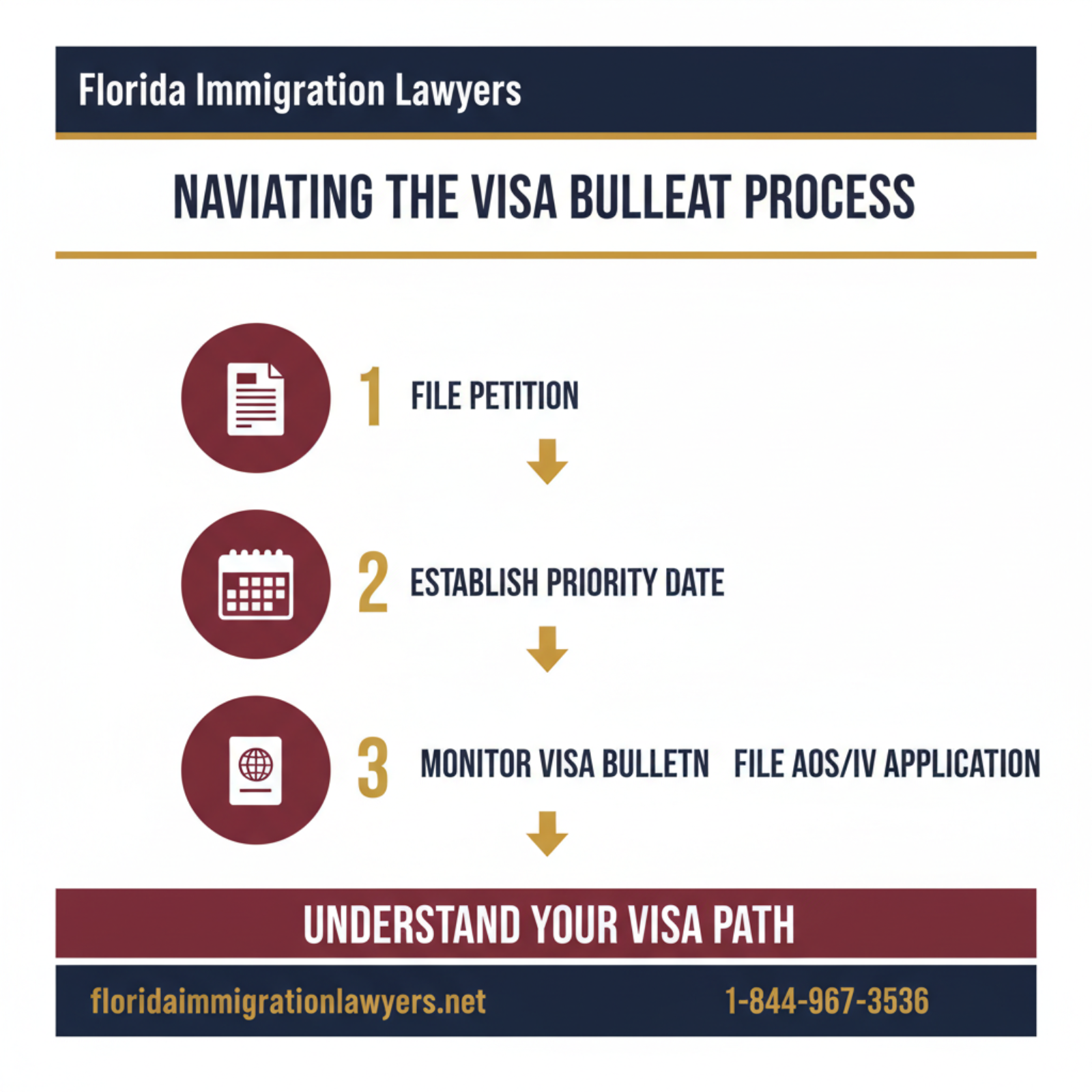
Understanding the Visa Bulletin October 2025 is the first step; taking action based on it is the next. The process can differ slightly depending on whether you are applying for Adjustment of Status within the U.S. or through Consular Processing abroad. Here's a general guide to help you.
-
Determine Your Preference Category: Your immigrant visa category is based on your relationship to the petitioner (family-sponsored) or the nature of your employment (employment-based). Examples include F1 (unmarried adult sons/daughters of U.S. citizens) or EB-3 (skilled workers, professionals, other workers). Knowing your category is essential for checking the correct chart.
-
Find Your Priority Date: This is the date your petition (Form I-130 for family, Form I-140 for employment) was properly filed with USCIS. It establishes your place in the visa queue. You can find this date on your I-797 approval notice.
-
Consult the Visa Bulletin October 2025: Locate your preference category and country of chargeability (usually your country of birth) on both the "Final Action Dates" and "Dates for Filing Applications" charts. Compare your priority date to the dates listed.
-
Check USCIS for Adjustment of Status Filing Eligibility: If you are in the U.S. and plan to file Form I-485, Application to Register Permanent Residence or Adjust Status, visit the USCIS website for the "Visa Bulletin for October 2025" section. USCIS will indicate which chart (Final Action Dates or Dates for Filing Applications) you must use that month for filing your I-485. This is critical for adjustment of status.
-
Prepare Your Application: If your priority date is current according to the applicable chart, begin gathering all necessary documents immediately. This includes forms, identification, civil documents, and medical exam results.
-
File Your Application or Prepare for Interview:
- For Adjustment of Status (in U.S.): File Form I-485 along with supporting documents and any concurrent applications like Form I-765 (Employment Authorization) and Form I-131 (Advance Parole).
- For Consular Processing (abroad): The National Visa Center (NVC) will notify you when it's time to submit civil documents and attend your visa interview at a U.S. Embassy or Consulate in your home country.
-
Attend Biometrics and Interviews: Depending on your process, you will attend a biometrics appointment (fingerprints, photos) and potentially an interview with a USCIS officer or consular officer.
Navigating these steps requires precision and a thorough understanding of immigration law. Our Florida immigration lawyers are here to guide you through every phase.
Essential Document Checklist for Your Immigrant Visa Application
A complete and accurate application package is paramount for a successful outcome. Missing documents or errors can lead to significant delays or even denials. As you prepare your case based on the Visa Bulletin October 2025, ensure you have the following general documents ready. Please note this is not an exhaustive list, and specific requirements vary by case.
- Form I-485, Application to Register Permanent Residence or Adjust Status (if filing in the U.S.)
- Form I-130, Petition for Alien Relative (or I-140 for employment-based) approval notice
- Two passport-style photographs
- Copy of your birth certificate
- Copy of your passport biographical page
- Copy of your visa (if applicable)
- Copy of your Form I-94, Arrival-Departure Record
- Proof of continuous lawful presence in the U.S. (if adjusting status)
- Medical examination report (Form I-693) sealed by a civil surgeon
- Affidavit of Support (Form I-864) from your petitioner and/or joint sponsor
- Proof of petitioner's U.S. citizenship or lawful permanent residency
- Marriage certificate (if applicable)
- Divorce decrees or death certificates for any previous marriages (for both applicant and petitioner)
- Police clearances from countries where you lived for six months or more since age 16
- Court and prison records (if applicable)
- Military records (if applicable)
- Financial documents (tax returns, employment letters, bank statements)
- Form I-765, Application for Employment Authorization (optional, concurrent filing)
- Form I-131, Application for Travel Document (optional, concurrent filing for advance parole)
Organizing these documents can be overwhelming. Our firm, Florida Immigration Lawyers, can help you compile a robust application.
Timeline and Processing Expectations for Florida Immigrants
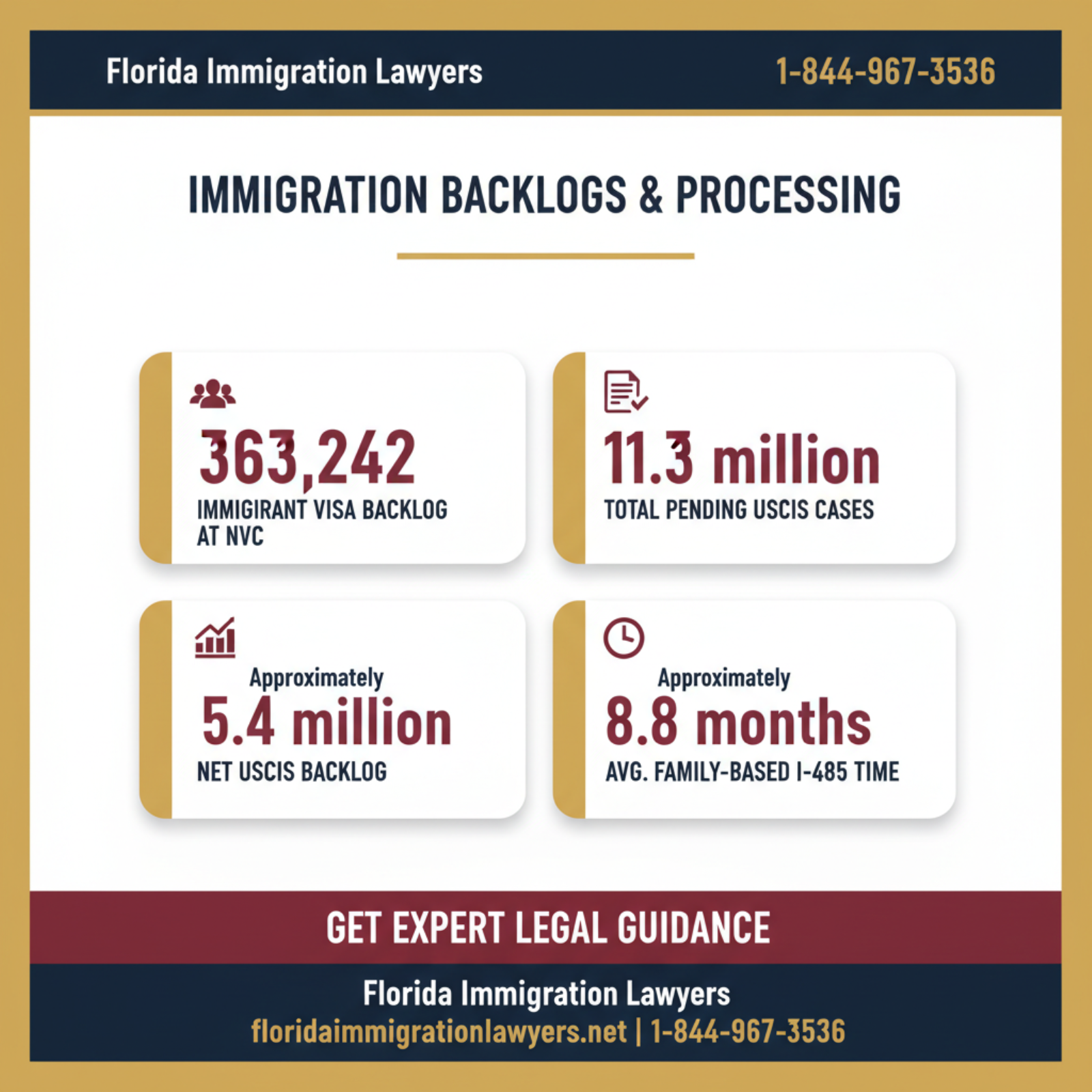
The processing timeline for immigrant visas can vary significantly, even with a favorable Visa Bulletin October 2025. Several factors influence how quickly your case moves forward, including the specific visa category, your country of chargeability, the volume of applications at USCIS service centers, and the efficiency of the NVC or consular posts.
Factors Affecting Processing Times
- Visa Category Quotas: Annual numerical limits mean that some categories, especially from high-demand countries, experience longer backlogs. The Visa Bulletin October 2025 reflects these backlogs.
- USCIS Service Center Load: Each USCIS service center (e.g., California, Nebraska, Texas, Vermont) has different processing times for various forms. For Florida residents, your case might be processed at any of these centers.
- National Visa Center (NVC) Processing: After I-130 or I-140 approval, the NVC collects documents for consular processing. Their processing times can fluctuate.
- Consular Post Efficiency: U.S. Embassies and Consulates abroad have varying workloads and staffing, which impact interview scheduling and visa issuance.
- Request for Evidence (RFE): If USCIS or the NVC issues an RFE, it will prolong your case as you gather and submit additional information.
Typical Stages and Durations
While it's impossible to give exact times, here's a general idea:
- Petition Approval (I-130/I-140): Can take several months to several years, depending on the category and USCIS workload.
- Priority Date Becoming Current: This is where the Visa Bulletin October 2025 comes in. Once your date is current, you can proceed.
- Adjustment of Status (I-485): After filing, it can take 1-3 years or more for USCIS to process the application, schedule interviews (if needed), and make a decision. Local USCIS field offices in Florida, such as those in Orlando, Miami, and Tampa, handle interviews for residents in their jurisdiction.
- Consular Processing: After NVC document submission, it can take several months for an interview to be scheduled and a visa issued.
It's important to remember that these are estimates. Legal safety rules prevent us from guaranteeing specific outcomes or timelines. We recommend checking the official USCIS processing times website for the most current data.
Cost Factors and Fee Breakdown for Immigrant Visas
Pursuing an immigrant visa or adjustment of status involves various fees. These costs are subject to change by government agencies, so it's always best to check the most current fee schedules directly on the official USCIS or Department of State websites. We cannot provide specific fee amounts, but we can outline the types of costs you should anticipate.
Government Filing Fees
- Petition Fees: Fees for forms like I-130 (Petition for Alien Relative) or I-140 (Immigrant Petition for Alien Worker) are paid by the petitioner.
- Adjustment of Status Fees: The Form I-485 application fee covers the main application. This often includes fees for biometrics, and sometimes for Form I-765 (Employment Authorization) and Form I-131 (Advance Parole) if filed concurrently.
- Immigrant Visa Application Processing Fee: For consular processing, this fee is paid to the Department of State.
- USCIS Immigrant Fee: A separate fee paid to USCIS after an immigrant visa is issued abroad, before the green card is produced.
Other Associated Costs
- Medical Examination: You must undergo a medical exam by a USCIS-approved civil surgeon (in the U.S.) or panel physician (abroad). These fees are paid directly to the doctor and vary.
- Translation Services: If any of your supporting documents are not in English, certified translations will be required, incurring additional costs.
- Document Acquisition: Fees for obtaining birth certificates, marriage licenses, police records, etc., from relevant government agencies.
- Travel Expenses: For interviews, biometrics appointments, or medical exams, especially if you need to travel to a USCIS field office in Florida or a consulate abroad.
Legal Fees
Engaging an experienced immigration attorney, like those at Florida Immigration Lawyers, is an investment in your future. Our fees cover:
- Comprehensive Case Assessment: Evaluating your eligibility and strategizing the best path forward.
- Document Preparation and Review: Ensuring all forms are accurately completed and supporting documents are correctly compiled.
- Correspondence with Government Agencies: Handling communications with USCIS, NVC, and the Department of State.
- Interview Preparation: Guiding you through what to expect during your interview.
- Representation: Advocating for you throughout the complex legal process.
Do not navigate the complexities of the Visa Bulletin October 2025 and the entire immigration process alone. Contact Florida Immigration Lawyers today for expert guidance and support.
Do not navigate this process alone. Contact Florida Immigration Lawyers today to ensure your application is handled with precision and care.
Common Mistakes to Avoid When Using the Visa Bulletin
The path to permanent residency is fraught with potential pitfalls. Even with the Visa Bulletin October 2025 providing clarity, mistakes can lead to significant setbacks. Here are common errors to avoid:
-
Misinterpreting the Visa Bulletin: Not understanding the difference between "Final Action Dates" and "Dates for Filing Applications" can lead to filing too early or too late. Always check the USCIS website for their monthly guidance on which chart to use for adjustment of status. Consequences: Application rejection, loss of filing fees, or significant delays.
-
Ignoring Your Country of Chargeability: The dates vary significantly by country. Applying based on the general "All Chargeability Areas Except Those Listed" when your country has a specific, more backlogged date is a critical error. Consequences: Incorrect filing, prolonged waiting.
-
Failing to Track Priority Date Movement: The Visa Bulletin changes monthly. Assuming your date will remain current or won't advance can cause you to miss a crucial filing window. Consequences: Missing the chance to file, potential need to refile if dates retrogress.
-
Incomplete or Inaccurate Documentation: Submitting an application with missing forms, incorrect information, or insufficient supporting evidence. This is a common reason for Requests for Evidence (RFEs) or outright denials. Consequences: Delays, RFEs, or denial of your application.
-
Not Disclosing All Relevant Information: Hiding or forgetting to include past immigration violations, criminal history, or other potentially negative information. Full disclosure, even of challenging facts, is always the best approach. Consequences: Accusations of misrepresentation, permanent bars to immigration.
-
Filing Without Legal Review: Attempting to navigate the complex immigration system without the guidance of an experienced attorney. Laws are intricate and frequently change. Consequences: Errors that could have been avoided, missed opportunities, increased stress.
-
Missing Deadlines or Appointment Notices: Failing to respond to USCIS or NVC requests for information, attend biometrics appointments, or appear for interviews. Consequences: Automatic denial of your application.
-
Traveling Internationally Without Advance Parole: If you are applying for adjustment of status and leave the U.S. without an approved advance parole document, your I-485 application may be considered abandoned. Consequences: Application denial, inability to re-enter the U.S.
-
Not Updating Address Changes: Failing to inform USCIS and the NVC of a change of address can result in missed notices and important communications. Consequences: Missed appointments or RFEs, leading to delays or denials.
-
Assuming Automatic Approval: Even if your priority date is current, approval is not guaranteed. Each case is adjudicated individually based on eligibility criteria. Consequences: Unrealistic expectations, potential for disappointment.
When to Call a Florida Immigration Lawyer
While this guide provides general information on the Visa Bulletin October 2025 and the immigration process, individual circumstances are rarely simple. There are many situations where the expertise of a dedicated immigration attorney becomes invaluable. Our team at Florida Immigration Lawyers is ready to assist you.
Consider contacting us immediately if any of the following apply to your situation:
- Complex Priority Date Issues: You are unsure how to interpret the Visa Bulletin October 2025 for your specific category or country.
- Past Immigration Violations: You have overstayed a visa, entered without inspection, or have previous deportation orders.
- Criminal History: Even minor arrests or convictions can have significant immigration consequences.
- Previous Application Denials: If a prior visa petition or adjustment of status application was denied.
- Marriage-Based Petitions with Complications: Issues like short marriage duration, significant age differences, or previous divorces.
- Unusual Employment-Based Situations: Questions about job changes, employer sponsorship, or specific professional requirements.
- Requests for Evidence (RFEs) or Notices of Intent to Deny (NOIDs): These indicate USCIS has concerns with your application, and a legal response is critical.
- You Are in Removal (Deportation) Proceedings: This is a serious situation requiring immediate legal defense. We offer robust deportation defense services.
- Seeking Asylum: If you fear persecution in your home country, our asylum attorneys can help.
- Family-Based Immigration Challenges: Assisting with complex family immigration cases.
- Business Immigration Needs: Guiding businesses and professionals through business immigration processes.
- Citizenship and Naturalization: When you are ready to pursue U.S. citizenship.
Our experienced attorneys understand Florida-specific immigration courts and USCIS procedures. We provide personalized advice and representation, ensuring your rights are protected and your case is presented effectively. Let us be your trusted partner in your immigration journey. Visit our attorneys page to learn more about our team.
Frequently Asked Questions About the Visa Bulletin and Immigration
Navigating the immigration landscape often brings many questions, especially concerning the Visa Bulletin October 2025 and processing times. Here are answers to some common inquiries:
Is USCIS processing faster in 2025?
Processing times for USCIS applications are dynamic and can fluctuate based on application volume, staffing, and policy changes. While USCIS continuously works to improve efficiency, there is no blanket guarantee that all processing will be faster in 2025. Some categories or forms may see improvements, while others may experience continued delays. Always check the official USCIS website for the most current processing times for your specific form and service center.
How long is NVC taking in 2025?
The National Visa Center (NVC) plays a crucial role in consular processing, collecting documents and scheduling interviews. NVC processing times can vary widely depending on their current workload, the completeness of your submitted documents, and the availability of interview slots at the U.S. Embassy or Consulate. In 2025, NVC times continue to be influenced by global events and demand. It is best to monitor the Department of State's website for general NVC processing updates and to respond promptly to all NVC requests.
Is the Visa Bulletin changed in November 2025?
Yes, the Visa Bulletin is a monthly publication. After the Visa Bulletin October 2025 is released, the U.S. Department of State will publish a new Visa Bulletin for November 2025, and subsequent months. Each new bulletin reflects updated availability of immigrant visas based on demand and annual quotas. It is crucial to check the bulletin every month to track the movement of your priority date and determine your eligibility to proceed.
What is the new visa fee for October 2025?
Government filing fees for immigration applications and visas are determined by USCIS and the Department of State, and they are subject to change. While fee adjustments can occur at any time, including around the start of a new fiscal year like October, there isn't a guaranteed "new visa fee for October 2025" without an official announcement. We cannot provide specific fee amounts due to their variability. Always verify the most current fees directly on the official USCIS and Department of State websites before filing any application.
About Florida Immigration Lawyers
Florida Immigration Lawyers is a leading law firm dedicated to providing exceptional legal representation to immigrants across the Sunshine State. With years of experience and a deep understanding of U.S. immigration law, our compassionate and skilled attorneys are committed to helping individuals and families achieve their American dreams. We serve clients in Kissimmee, Orlando, Miami, Tampa, Jacksonville, and all other communities throughout Florida.
Our Services Include:
- Family-based immigration
- Employment-based immigration
- Adjustment of Status and Consular Processing
- Deportation defense
- Asylum and refugee claims
- U.S. Citizenship and Naturalization
- Visa applications (non-immigrant and immigrant)
- Waivers of inadmissibility
Why Choose Florida Immigration Lawyers?
- Experienced Advocates: Our team brings extensive knowledge and a proven track record of success.
- Client-Centered Approach: We prioritize your needs, offering personalized attention and clear communication.
- Bilingual Services: Se Habla Español – our team is fluent in both English and Spanish to serve you better.
- Comprehensive Support: From initial consultation to case resolution, we guide you every step of the way.
- Accessibility: We are available 24/7 to answer your urgent questions and offer free consultations.
We understand the challenges and anxieties that come with immigration processes. Let us provide the clear, effective legal solutions you need. Visit our website at https://www.floridaimmigrationlawyers.net or call us today.
Sources and References
- U.S. Citizenship and Immigration Services (USCIS) - Visa Bulletin Information
- U.S. Department of State - Visa Bulletin
- 8 U.S.C. § 1153 - Allocation of immigrant visas
- 8 U.S.C. § 1255 - Adjustment of status of nonimmigrant to that of person admitted for permanent residence
- 8 CFR § 245.1 - Eligibility requirements
- Immigration and Nationality Act (INA) Section 203 - Preference categories
- Executive Office for Immigration Review (EOIR)
This article provides general legal information and is not intended as legal advice. Every case is unique, and outcomes depend on specific facts and circumstances. Contact an attorney for advice about your particular situation.
Don't leave your immigration future to chance. The complexities of the Visa Bulletin October 2025 and U.S. immigration law demand expert attention. Let Florida Immigration Lawyers be your guide. Call us today at 1-844-967-3536 for a free consultation. Se Habla Español - Estamos aquí para ayudarle. Contact us now.
Florida Immigration Lawyers
Legal Team
Our experienced attorneys at Florida Immigration Lawyers have been serving clients across Florida for over 20 years. We specialize in immigration, personal injury, criminal defense, workers compensation, and family law.