Immigration Interview Preparation Florida: Your 2026 Guide
Preparing for an immigration interview in Florida is a critical step towards achieving your American dream. This comprehensive 2026 guide by Florida Immigration Lawyers provides essential tips for success, covering everything from reviewing your application and gathering documents to understanding interview types like Green Card and naturalization. Learn about timelines, cost factors, and crucial mistakes to avoid. We emphasize the importance of honesty, consistency, and professional presentation. Discover when it's vital to seek legal assistance, especially for complex cases or if you're concerned about potential red flags. Our firm serves all of Florida, offering free consultations to help you navigate this pivotal process with confidence. Ensure you are fully prepared for your USCIS interview.
Preparing for your immigration interview in Florida involves thorough document review, understanding your application, and practicing responses. It is a critical step in your immigration journey, whether for a Green Card, naturalization, or other benefits. Success often depends on diligent preparation and clear, consistent answers to USCIS officers. Seeking legal guidance can significantly enhance your confidence and readiness.
- Review all application forms and supporting documents thoroughly.
- Practice answering potential questions about your application.
- Gather all original documents and their copies for the interview.
- Understand the specific purpose and type of your immigration interview.
- Consider bringing an experienced immigration attorney for support.
Facing an immigration interview can be one of the most nerve-wracking yet crucial moments in your journey to live and work in the United States. For many, especially those in dynamic communities like Jacksonville, Florida, the stakes are incredibly high. You've likely invested significant time and resources into your application, and the interview is often the final hurdle.
At Florida Immigration Lawyers, we understand the anxieties and complexities involved. Our goal with this comprehensive guide is to demystify the immigration interview preparation Florida process for 2026, offering clear, actionable steps to help you succeed. We serve clients across Florida, from Jacksonville to Miami, ensuring you feel prepared and confident.
Navigating the intricacies of USCIS procedures requires not just diligence but also a deep understanding of what to expect. This article will cover everything from essential documentation to common pitfalls and crucial USCIS interview tips. Call Florida Immigration Lawyers at 1-844-967-3536 for a free consultation and let us help you prepare for this pivotal moment.
Understanding Your Immigration Interview in Florida
An immigration interview is a formal meeting with a U.S. Citizenship and Immigration Services (USCIS) officer. Its purpose is to verify the information provided in your application and determine your eligibility for the requested immigration benefit. These interviews are a standard part of many immigration processes, including those for a Green Card interview, naturalization, or family-based visas.
In Florida, USCIS Field Offices, such as the one in Jacksonville, regularly conduct these interviews. The specific questions and required documents will vary depending on the type of application you filed. It is crucial to understand the context of your interview to prepare effectively.
For instance, a marriage-based Green Card interview will focus heavily on the bona fides of your relationship. A naturalization interview, on the other hand, will assess your knowledge of U.S. history and government, alongside your moral character. Regardless of the type, honesty and consistency are paramount.
Key Interview Types You Might Face
There are several common types of immigration interviews that Florida residents may encounter. Each has distinct focuses and preparation requirements. Understanding which type applies to you is the first step in effective preparation.
- Adjustment of Status Interview (Green Card Interview): Often for family-based or employment-based Green Cards. The officer will verify your eligibility for permanent residency.
- Naturalization Interview: For those seeking U.S. citizenship. This interview includes a civics test and an English proficiency test.
- Asylum Interview: For individuals seeking protection in the U.S. due to persecution. This is a crucial step in the asylum process.
- Family-Based Visa Interview (Consular Processing): If you are applying for an immigrant visa from outside the U.S., your interview will be at a U.S. Embassy or Consulate abroad.
Step-by-Step Guide to Immigration Interview Preparation
Thorough preparation is the cornerstone of a successful immigration interview. Follow these detailed steps to ensure you are ready for your meeting with USCIS in Florida.
-
Review Your Entire Application Package
Before anything else, re-read every form and all supporting documents you submitted to USCIS. This includes your initial petition (e.g., Form I-130, I-140), your adjustment of status application (Form I-485), and any other forms like Form I-765 or I-131. Familiarize yourself with every detail, date, and answer you provided. The officer will be using these documents as a reference, and your answers must be consistent.
-
Gather All Original Documents and Copies
Create a well-organized folder with all original documents you submitted, plus their copies. This includes birth certificates, marriage certificates, passports, divorce decrees, police clearances, medical exam results, and any other evidence. Even if you submitted copies previously, USCIS typically requires you to bring originals for verification at the interview. Failure to produce requested documents can lead to delays or even denial.
-
Anticipate and Practice Interview Questions
Based on your application type, research common interview questions. For a Green Card interview based on marriage, expect questions about how you met, your daily life, and shared experiences. For naturalization, study U.S. history and government. Practice answering these questions out loud, clearly and concisely. Avoid memorizing answers; instead, focus on understanding the underlying facts and being truthful.
-
Prepare for the Civics and English Tests (for Naturalization)
If your interview is for naturalization, be ready for the civics test and English proficiency test. The civics test consists of 10 questions from a list of 100, and you must answer 6 correctly. The English test assesses your ability to read, write, and speak basic English. USCIS provides study materials on its website, which are invaluable resources.
-
Understand the Interview Day Logistics
Know the exact location of your USCIS Field Office in Florida (e.g., Jacksonville, Orlando, Miami), how to get there, and where to park. Plan to arrive at least 30 minutes early. Dress professionally and bring your interview notice, a government-issued photo ID, and your organized document folder. Ensure you follow all instructions on your interview notice.
-
Consider Legal Representation
Having an experienced immigration attorney from Florida Immigration Lawyers accompany you to your interview can be profoundly beneficial. Your attorney can provide a final review of your documents, prepare you for specific questions, and represent your interests during the interview. While not mandatory for all interviews, legal representation can offer peace of mind and expert guidance, especially for complex cases.
Essential Document Checklist for Your Immigration Interview
Bringing a complete and organized set of documents to your immigration interview is non-negotiable. Missing documents can lead to delays, requests for evidence (RFEs), or even a denial of your application. Use this checklist as a general guide, but always refer to your specific interview notice and application type for precise requirements.
General Documents (Applicable to most interviews):
- Your interview notice (Form I-797C, Notice of Action).
- Government-issued photo identification (e.g., passport, driver's license).
- Original birth certificate and a copy.
- Original marriage certificate (if applicable) and a copy.
- Original divorce decrees or death certificates for any prior marriages (if applicable) and copies.
- Original passports and copies of all pages with visas, stamps, or entries.
- Evidence of your lawful entry into the U.S. (e.g., I-94 Arrival/Departure Record).
- Medical examination results (Form I-693) in a sealed envelope, if not already submitted.
- Two passport-style photos meeting USCIS specifications.
- Any previous USCIS correspondence or receipts.
Application-Specific Documents (Examples):
- For Family-Based Green Cards (e.g., Form I-130, I-485):
- Proof of bona fide marriage (e.g., joint bank accounts, leases, utility bills, photos, affidavits from friends/family).
- Evidence of financial support (Form I-864 Affidavit of Support, tax returns, employment letters, pay stubs).
- Birth certificates of any children you share.
- For Naturalization (Form N-400):
- Proof of continuous residency and physical presence (e.g., tax returns, utility bills, rent receipts).
- Selective Service registration proof (if applicable).
- Court dispositions for any arrests or citations (even minor ones).
Step-by-Step Process Guide - For Asylum (Form I-589):
- Any new evidence of persecution or changed country conditions.
- Affidavits from witnesses.
Always bring original documents, even if you submitted copies. The officer needs to verify authenticity. If any document is not in English, it must be accompanied by a certified English translation.
Timeline and Processing Expectations for Immigration Interviews
The timeline for receiving an interview notice and the subsequent processing can vary significantly. Factors include the type of application, the USCIS Field Office workload (like those in Florida), and the complexity of your case. It is important to manage your expectations and stay informed.
Typical Wait Times in Florida
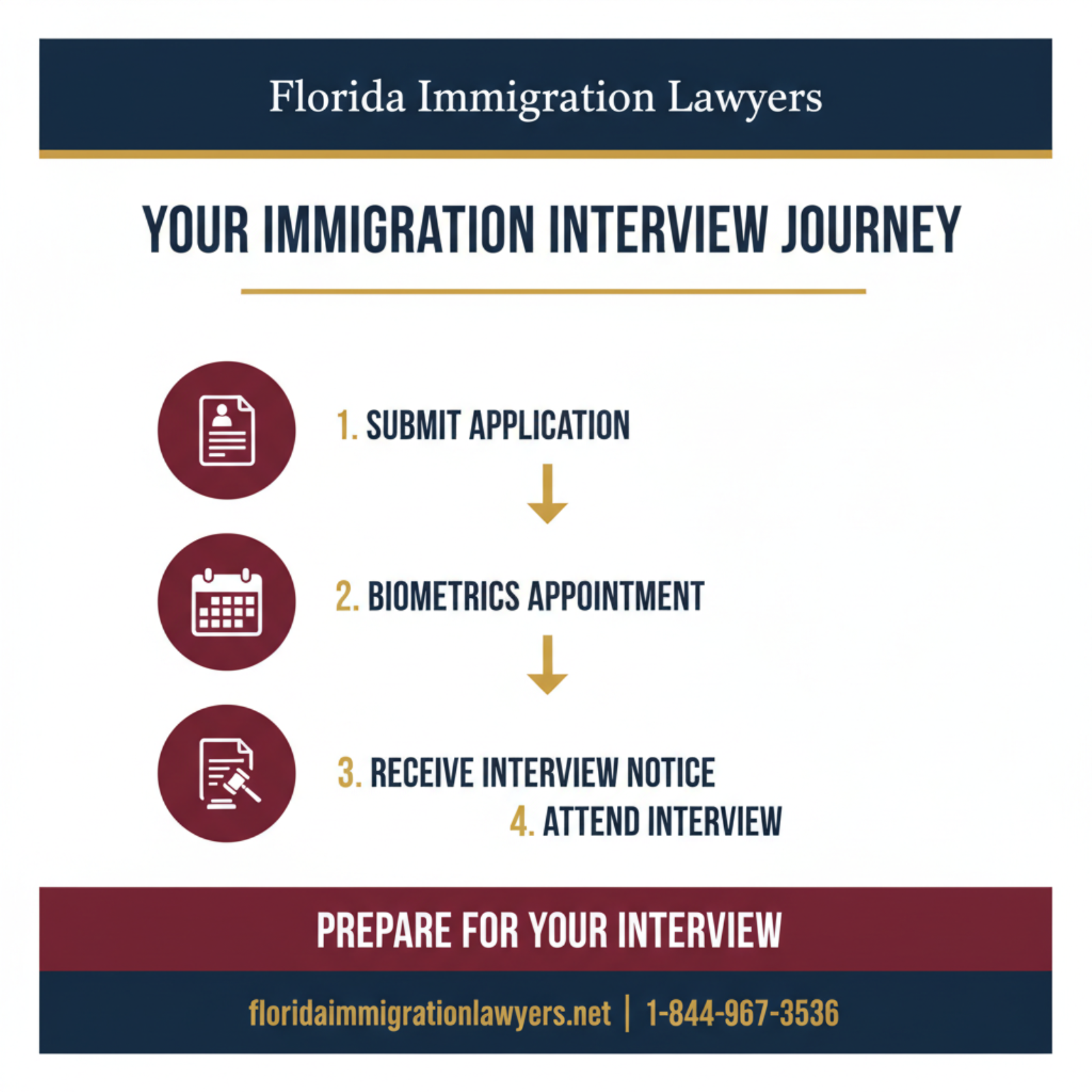
After filing your application, you will typically receive a receipt notice, followed by a biometric appointment notice. The interview notice usually comes several months after your application has been accepted. For family immigration Florida cases, especially marriage-based Green Cards, the wait for an interview can range from 6 months to over 2 years, depending on the specific USCIS office and national backlogs.
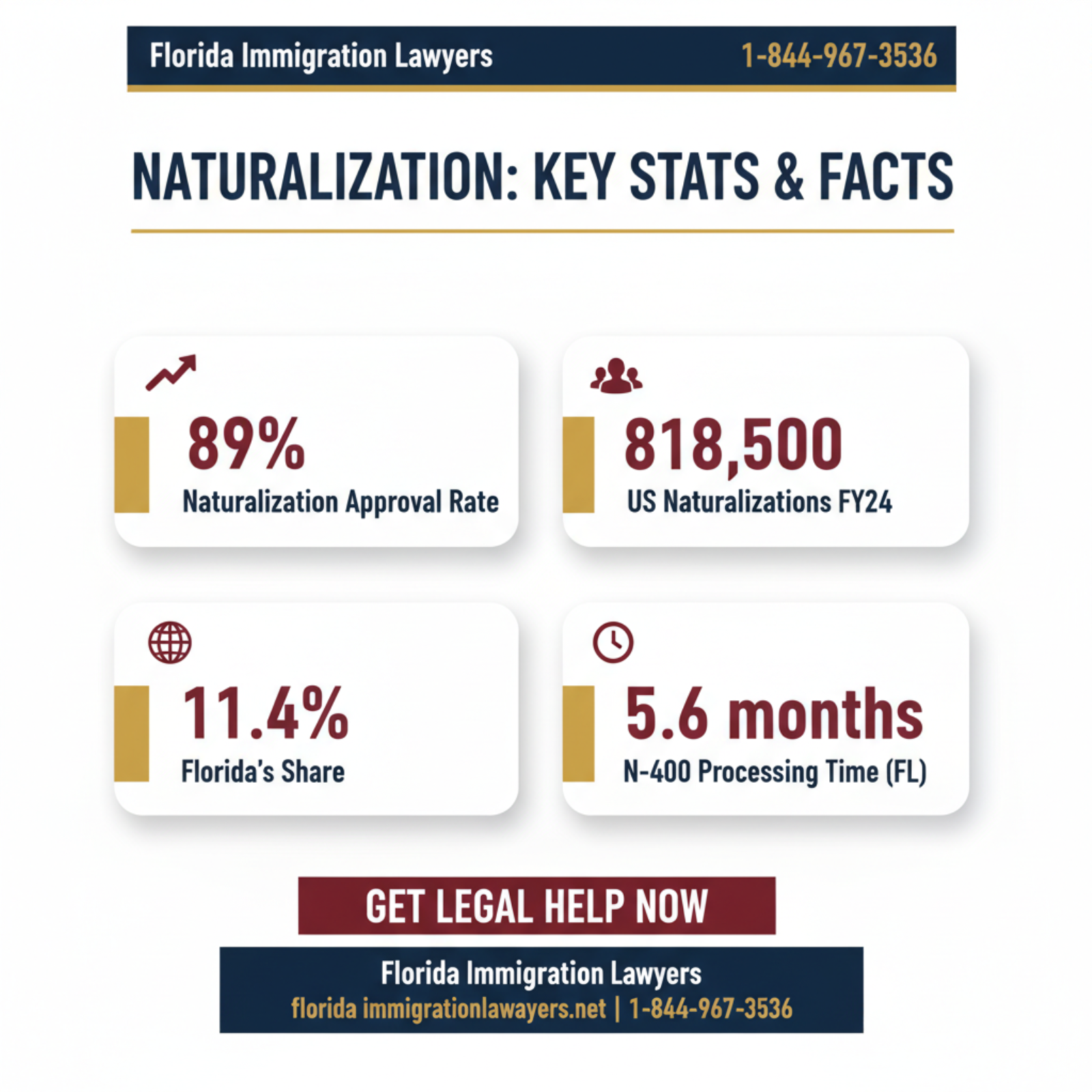
Naturalization interviews generally have shorter wait times, often within 6-12 months of filing. Asylum interviews can have highly variable wait times, sometimes taking several years due to specific processing priorities. USCIS provides estimated processing times on its website, which you should check regularly for your specific form and field office.
What Happens After Your Interview?
Once your immigration interview is complete, the USCIS officer may make a decision on the spot, or they may tell you that a decision will be mailed to you. Sometimes, the officer may issue a Request for Evidence (RFE) if they need additional documents or clarification. This is a common occurrence and does not necessarily mean your case will be denied.
If your case is approved, you will typically receive an approval notice, followed by your Green Card or naturalization certificate. If your case is denied, you will receive a denial letter explaining the reasons. In such situations, it is critical to consult with an immigration attorney immediately to discuss your options, which may include filing an appeal or a motion to reopen.
Cost Factors and Fee Breakdown for Immigration Processes
Preparing for an immigration interview also involves understanding the associated costs, which can include government filing fees, medical examination fees, and legal fees. While specific filing fees are subject to change by USCIS, it's essential to budget for these expenses.
Government Filing Fees
USCIS charges fees for various forms and petitions. For example, adjusting status to a permanent resident (Green Card) involves a filing fee for Form I-485, an associated biometrics fee, and sometimes a fee for Form I-130 (Petition for Alien Relative). Naturalization (Form N-400) also has a filing fee and biometrics fee. These fees are non-refundable, regardless of the outcome of your application. Always check the official USCIS website (uscis.gov) for the most current fee schedule.
Medical Examination Fees
Most applicants for adjustment of status or certain immigrant visas are required to undergo a medical examination by a USCIS-approved civil surgeon. The cost of this examination is separate from USCIS fees and can vary widely among providers in Florida. This fee typically covers the examination itself, required vaccinations, and any necessary lab tests. It is essential to ensure your medical exam is conducted by an authorized physician.
Legal Fees for Attorney Assistance
Hiring an experienced immigration attorney, like those at Florida Immigration Lawyers, is an investment in your future. Legal fees cover services such as preparing your application, gathering supporting documents, preparing you for your interview, and potentially accompanying you to the interview. While not mandatory, legal representation can significantly increase your chances of success and provide invaluable peace of mind, especially for complex cases or those involving prior issues. Our firm offers transparent fee structures and free initial consultations to discuss your needs.
Do not navigate this process alone. Contact Florida Immigration Lawyers today to discuss your specific immigration interview preparation needs.
Common Mistakes to Avoid During Your Immigration Interview
Making mistakes during your immigration interview can have serious consequences, potentially leading to delays, Requests for Evidence (RFEs), or even denial of your application. Be mindful of these common pitfalls and strive to avoid them.
-
Providing Inconsistent Information
Consequence: This is a major red flag for USCIS officers. Any discrepancy between your interview answers and the information in your application forms or previous statements can raise suspicion about your credibility and honesty. Always review your application thoroughly before the interview to ensure consistency.
-
Failing to Bring All Required Documents
Consequence: If you do not bring all original documents and their copies as requested in your interview notice, the officer may not be able to make a decision. This often results in an RFE or a rescheduled interview, significantly delaying your case. Always double-check your document checklist.
-
Being Dishonest or Omitting Information
Consequence: Lying or intentionally withholding material information during an immigration interview is considered fraud and can lead to immediate denial, a finding of inadmissibility, and even deportation defense Florida proceedings. Always be truthful, even if the information is unfavorable. It is better to address a difficult truth with legal guidance than to be caught in a lie.
-
Appearing Unprepared for Questions
Consequence: If you are unable to answer basic questions about your application, personal history, or the purpose of your interview, it suggests a lack of seriousness or a misunderstanding of your own case. This can lead to increased scrutiny. Practice your answers and understand the facts of your petition.
-
Arriving Late or Missing the Interview Entirely
Consequence: Punctuality is critical. Arriving late can cause your interview to be canceled or rescheduled, leading to significant delays. Missing an interview without proper notification to USCIS can result in the abandonment and denial of your application. Always plan to arrive early.
-
Not Seeking Clarification When Needed
Consequence: If you do not understand a question, do not guess or provide an irrelevant answer. Politely ask the officer to rephrase the question or explain what they mean. Misunderstanding a question can lead to incorrect or misleading answers that harm your case. It's better to ask for clarification than to provide a wrong answer.
-
Engaging in Arguments or Being Disrespectful
Consequence: Maintain a respectful and calm demeanor throughout the interview, even if you feel stressed or misunderstood. Arguing with the USCIS officer or showing disrespect can negatively impact their perception of you and potentially lead to an adverse decision. Answer questions directly and professionally.
When to Call an Immigration Lawyer in Florida
While some individuals may feel confident navigating the immigration interview preparation Florida process alone, many situations warrant the expertise of a seasoned immigration attorney. Florida Immigration Lawyers is here to provide the guidance and representation you need to protect your future.
Specific Scenarios Requiring Legal Help:
- Complex Case History: If you have previous arrests, convictions, immigration violations, or a history of visa overstays, your case is likely complex. An attorney can help you understand potential inadmissibility issues and prepare waivers if necessary.
- Previous Denials or RFEs: If you have received a previous denial for an immigration benefit or multiple Requests for Evidence, it is a strong indication that professional legal help is needed to identify and address underlying issues.
- Language Barrier: While USCIS may provide an interpreter, having your own attorney who can ensure accurate communication and advocate on your behalf is invaluable, especially if English is not your first language.
- Fear of the Interview Process: If the thought of the interview causes significant anxiety, having an attorney by your side can provide immense reassurance and ensure you present your case clearly and confidently.
- Marriage-Based Green Card Issues: If there are concerns about the bona fides of your marriage, a lawyer can help gather compelling evidence and prepare you for intense questioning. This is crucial for avoiding red flags for Green Card interview applicants.
- Asylum Interviews: Asylum cases are highly sensitive and complex. Legal representation is almost always recommended to articulate your claim effectively and protect your rights. Our firm offers dedicated asylum services.
- Deportation Concerns: If you are concerned about potential deportation defense issues or inadmissibility, an attorney can assess your situation and strategize to protect your ability to remain in the U.S.
At Florida Immigration Lawyers, we specialize in a wide range of immigration matters, including general immigration, family immigration, business immigration, and citizenship applications. Our experienced attorneys can review your case, prepare you thoroughly for your interview, and even attend with you. We are dedicated to advocating for immigrants across Florida, including those in Jacksonville, Orlando, and Miami. Visit our attorneys page to learn more about our legal team or contact us directly.
About Florida Immigration Lawyers
Florida Immigration Lawyers is a leading law firm dedicated to providing exceptional legal representation to individuals and families throughout Florida. With years of combined experience, our team of compassionate and skilled attorneys understands the unique challenges faced by immigrants in the Sunshine State. We are committed to upholding your rights and guiding you through every step of the complex U.S. immigration system.
Our comprehensive services cover a broad spectrum of immigration law, including family-based petitions, employment visas, deportation defense, asylum claims, naturalization, and adjustment of status. We pride ourselves on offering personalized attention, strategic advice, and aggressive advocacy to achieve the best possible outcomes for our clients. Our deep understanding of Florida-specific immigration trends and USCIS procedures ensures tailored and effective legal strategies.
Why choose Florida Immigration Lawyers? We offer a client-centered approach, transparent communication, and a proven track record of success. Our firm is available 24/7 to address your urgent needs, and we proudly offer free consultations to help you understand your options without financial commitment. We serve all of Florida, ensuring that expert legal help is always within reach. Call us today at 1-844-967-3536 to begin your journey with confidence.
Sources and References
- U.S. Citizenship and Immigration Services (USCIS)
- U.S. Department of State - Bureau of Consular Affairs
- Executive Office for Immigration Review (EOIR)
- 8 U.S.C. Chapter 12 - Immigration and Nationality Act (INA)
- 8 CFR Part 204 - Immigrant Petitions
- 8 CFR Part 245 - Adjustment of Status
- INA § 204 - Procedure for granting immigrant status
- INA § 245 - Adjustment of status of nonimmigrant to that of person admitted for permanent residence
This article provides general legal information and is not intended as legal advice. Every case is unique, and outcomes depend on specific facts and circumstances. Contact an attorney for advice about your particular situation.
Ready to secure your future in Florida? Don't leave your immigration interview to chance. Call Florida Immigration Lawyers at 1-844-967-3536 for a free consultation. We are here to provide the expert guidance you deserve. Se Habla Español - Estamos aquí para ayudarle.
Florida Immigration Lawyers
Legal Team
Our experienced attorneys at Florida Immigration Lawyers have been serving clients across Florida for over 20 years. We specialize in immigration, personal injury, criminal defense, workers compensation, and family law.