USCIS Annual Asylum Fee Florida 2026: Your Essential Guide
For asylum seekers in Florida, understanding the USCIS Annual Asylum Fee (AAF) for 2026 is crucial. This guide covers who needs to pay, how to submit payment, and critical deadlines to avoid jeopardizing your case. Learn about the payment process, essential documents, and common mistakes to prevent. The AAF is a mandatory fee for certain pending asylum applications, distinct from other immigration costs. Missing this fee or its deadline can lead to severe consequences, including dismissal of your application. Florida Immigration Lawyers offers expert guidance to ensure compliance and protect your asylum claim. Contact us for a free consultation.

The USCIS Annual Asylum Fee (AAF) in Florida for 2026 is a mandatory fee for certain asylum applicants whose Form I-589, Application for Asylum and for Withholding of Removal, has been pending for a specified duration. This fee helps USCIS cover processing costs. It is crucial to understand eligibility, payment methods, and deadlines to avoid negative impacts on your asylum case.
- The AAF applies to specific pending asylum applications.
- Payment is typically required annually for eligible individuals.
- Deadlines are strict; late payments can have serious consequences.
- Always verify the current fee amount directly with USCIS.
- Consulting an attorney can help ensure compliance and prevent errors.
Navigating the U.S. immigration system can feel like an overwhelming journey, especially when your safety and future are at stake. If you are an asylum seeker in Florida, particularly in areas like Coral Springs, you understand the critical importance of every detail in your case. One such detail that has gained significant attention is the USCIS Annual Asylum Fee, a requirement that impacts many individuals with pending asylum applications.
This comprehensive guide will break down everything you need to know about the USCIS annual asylum fee in Florida for 2026. We will cover who needs to pay it, how to make your payment, critical deadlines, and common pitfalls to avoid. Our goal is to empower you with accurate, up-to-date information to help you navigate this requirement successfully.
Understanding these fees is vital for maintaining the integrity of your asylum claim. Do not let confusion or missed deadlines jeopardize your path to protection. For personalized guidance and to ensure your compliance, we urge you to call Florida Immigration Lawyers at 1-844-967-3536 for a free consultation today.
Understanding the USCIS Annual Asylum Fee in Florida for 2026
The Annual Asylum Fee (AAF) is a relatively new requirement designed to support the processing of asylum applications and related benefits. It applies to certain individuals who have filed Form I-589, Application for Asylum and for Withholding of Removal, and whose application has been pending for a specific period, typically a full fiscal year.
This fee is separate from any initial filing fees for Form I-589 itself, or fees associated with other immigration benefits like employment authorization documents (EADs). The purpose of the AAF is to help USCIS manage the high volume of asylum cases and ensure resources are available for timely adjudication. It is part of broader efforts to streamline and fund the asylum process.
For individuals in Florida, including those in Coral Springs, Miami, Orlando, or Tampa, understanding this fee is crucial. The U.S. Citizenship and Immigration Services (USCIS) is the federal agency responsible for processing these applications and collecting the AAF. The specific fiscal year for which the fee is assessed, and the exact amount, are subject to change and are announced by USCIS.
Eligibility for the AAF generally depends on whether your asylum application has been pending for the entire preceding fiscal year (October 1st through September 30th). You will typically receive a notice from USCIS if you are required to pay this fee. Failure to pay can lead to serious consequences, including the dismissal of your asylum application or other adverse actions. For details on asylum law, refer to the U.S. Citizenship and Immigration Services (USCIS) website or relevant sections of the Immigration and Nationality Act (INA), specifically 8 U.S.C. § 1158.
It is important to remember that this fee is not a penalty, but rather a mandatory administrative charge. Keeping track of your application status and any notices from USCIS is paramount. If you are unsure about your eligibility or have not received a notice, it is always best to proactively check with USCIS or seek legal counsel. Our team at Florida Immigration Lawyers is well-versed in these regulations and can provide clarity.
The AAF is an evolving aspect of asylum policy. Staying informed about the latest USCIS announcements is key. In Florida, where a significant number of asylum seekers reside, accurate information can make all the difference. For comprehensive assistance with your asylum application and related fees, visit our Asylum practice area page.
Step-by-Step Guide: Paying Your Annual Asylum Fee in Florida
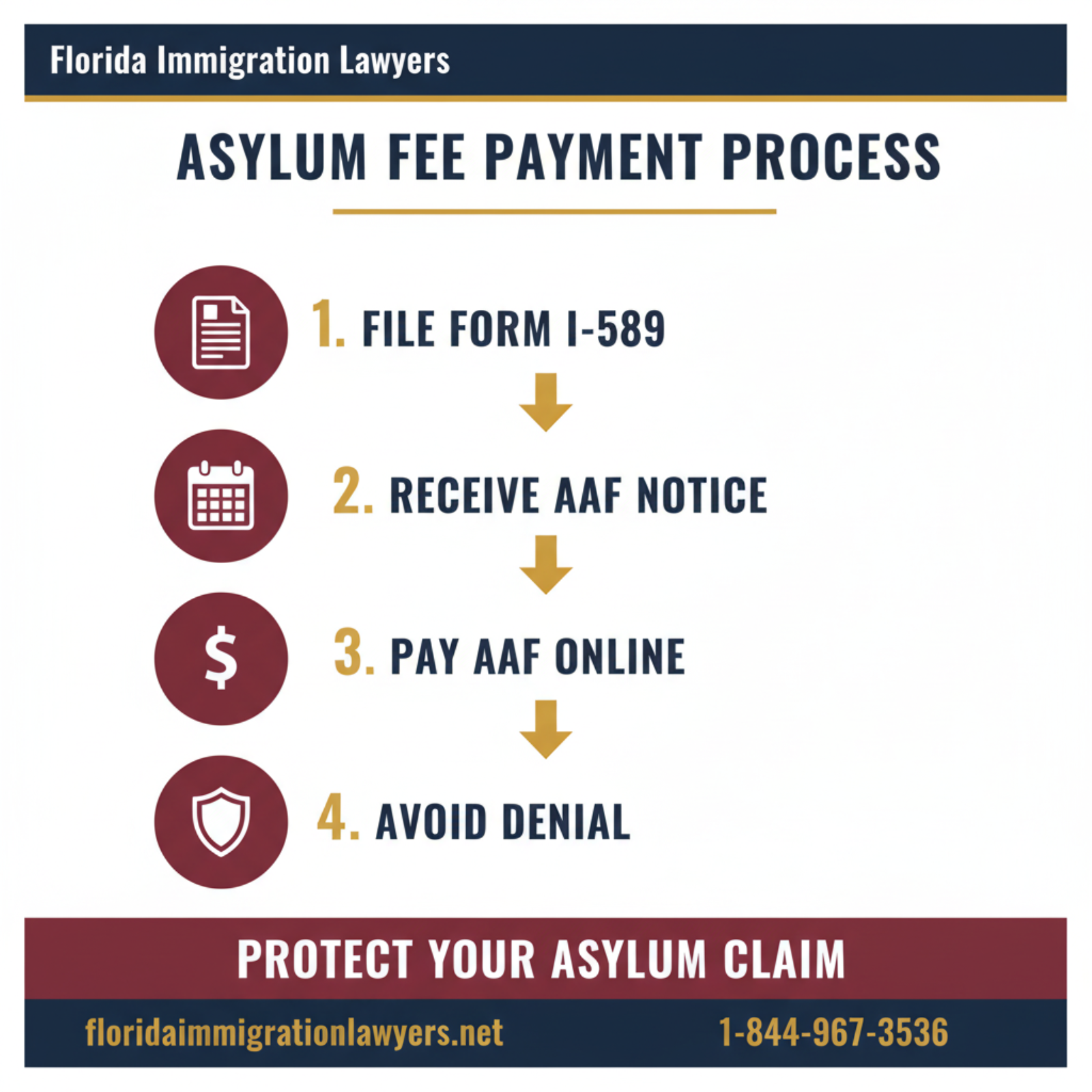
Paying the USCIS Annual Asylum Fee correctly and on time is essential. Here is a step-by-step guide to help you navigate the process:
-
Determine Your Eligibility and Fee Amount: USCIS will typically send you a notice, often Form I-901, Fee Payment Notice, if you are required to pay the AAF. This notice will specify the exact fee amount, which is subject to change annually. Always verify the current fee schedule on the official USCIS website, particularly the USCIS Fee Schedule. Do not rely on outdated information.
-
Locate Your Notice and Case Information: The fee payment notice will contain important information, including your Alien Registration Number (A-Number) and case receipt number. These details are crucial for ensuring your payment is correctly applied to your asylum case. Keep all correspondence from USCIS organized and accessible.
-
Choose a Payment Method: USCIS typically accepts payments via check, money order, or credit card. For most fees, you can pay online through the USCIS website or by mail. Ensure your chosen method is accepted for the AAF and follow the specific instructions provided on your payment notice or the USCIS website. If paying by check or money order, make it payable to the U.S. Department of Homeland Security.
-
Complete the Payment Form (if applicable): If you are paying by mail, you may need to complete a specific form, such as Form G-1450, Authorization for Credit Card Transactions, or simply include your payment with the fee payment notice. Double-check all information for accuracy before submission. Errors can cause delays or misapplication of your payment.
-
Submit Your Payment: Follow the instructions on your notice for where to send your payment. This will typically be a specific USCIS Lockbox facility. If paying online, ensure you receive a confirmation number or receipt. For mail payments, consider using certified mail with a return receipt to have proof of mailing and delivery.
-
Retain Proof of Payment: Always keep a copy of your payment notice, the payment method used (e.g., a copy of the check, money order receipt, or credit card transaction confirmation), and proof of mailing. This documentation is vital in case any discrepancies arise later. You may need to demonstrate that you paid the fee on time.
This process, while seemingly straightforward, requires meticulous attention to detail. Any misstep can lead to complications with your asylum case. For assistance with any immigration-related fees or applications, our Immigration practice area page offers further resources.
Essential Document Checklist for Annual Asylum Fee Payment
To ensure a smooth and accurate payment of your USCIS Annual Asylum Fee, gather the following essential documents and information:
- USCIS Annual Asylum Fee Payment Notice (e.g., Form I-901): This is the official notification from USCIS stating your requirement to pay the fee. It contains your A-Number, case receipt number, and the specific amount due.
- Personal Identification: While not always submitted with the payment, having your identification documents (e.g., passport, driver's license) readily available can help verify your information if needed.
- Payment Instrument Details:
- For Checks/Money Orders: Ensure you have a valid checkbook or can obtain a money order for the exact amount. Remember to make it payable to "U.S. Department of Homeland Security."
- For Credit/Debit Cards: Have your card number, expiration date, security code, and billing address available if paying online or using Form G-1450.
- Proof of Previous Filings: Keep copies of your initial Form I-589 application and any previous correspondence from USCIS. This helps maintain a complete record of your immigration journey.
- Return Address and Contact Information: Ensure your current mailing address and phone number are accurate and up-to-date with USCIS. This prevents critical notices from being lost.
- Copy of Payment for Your Records: Before sending, make a copy of your check or money order, or print your online payment confirmation. This is your personal proof of payment.
Having these items prepared in advance will streamline the payment process and reduce the likelihood of errors. Organization is key when dealing with immigration matters.
Timeline and Processing Expectations for the Annual Asylum Fee
Understanding the timeline for the USCIS Annual Asylum Fee is critical for compliance. Missing deadlines can have severe repercussions for your asylum case. Here is what you should expect regarding timelines and processing:
Deadlines: When USCIS sends you an AAF payment notice, it will include a specific due date. These deadlines are typically strict and non-negotiable. It is crucial to mark this date on your calendar and submit your payment well in advance to account for mail delivery times or potential online payment issues. Delays can lead to your application being considered abandoned or even dismissed.
Processing Expectations: Once you submit your payment, USCIS will process it and update your case record. You may receive a payment receipt or confirmation notice. While the payment itself is usually processed relatively quickly, it is important to distinguish this from the processing time for your overall asylum application (Form I-589), which can take many years. The AAF simply confirms your compliance with this specific fee requirement.
Consequences of Late or Missed Payments: If you fail to pay the AAF by the specified deadline, or if your payment is incorrect or rejected, USCIS may take adverse action on your asylum application. This could include issuing a Request for Evidence (RFE), a Notice of Intent to Deny (NOID), or even dismissing your application altogether. Such actions can significantly complicate your path to asylum and may require extensive legal intervention to rectify. For more information on immigration court proceedings, visit the Executive Office for Immigration Review (EOIR) website.
The best practice is to respond promptly to any AAF notice from USCIS. If you encounter any issues or have concerns about meeting a deadline, immediately seek legal advice. An experienced immigration lawyer can help you understand your options and potentially mitigate negative consequences. The regulations governing these fees are often outlined in 8 CFR Part 103.
Cost Factors and Fee Breakdown: Beyond the Annual Asylum Fee
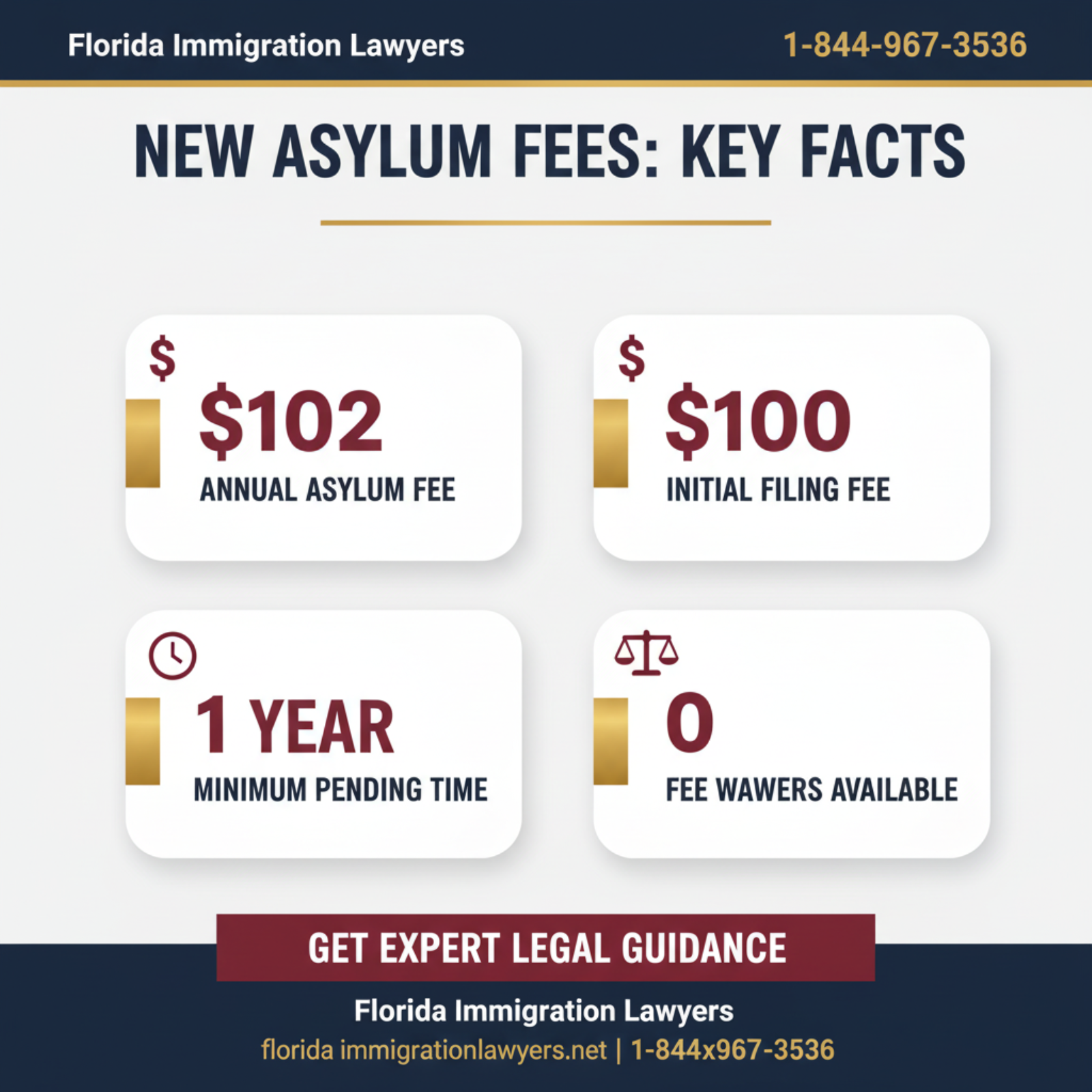
While the USCIS Annual Asylum Fee is a specific charge, it is important for asylum seekers in Florida to understand that other costs may also be involved in their immigration journey. The AAF itself is typically a set amount, but this amount can be adjusted by USCIS at any time. It is vital to check the latest fee schedule on the USCIS website for the most current information, as fees are not static.
Beyond the AAF, you may encounter other significant fees:
- Employment Authorization Document (EAD) Fees: Many asylum seekers apply for an EAD (Form I-765) to legally work in the U.S. This application has its own separate filing fee, which is distinct from the AAF. While some applicants may qualify for a fee waiver for the EAD, this is not always the case for the AAF.
- Biometrics Services Fee: USCIS often requires applicants to attend a biometrics appointment for fingerprinting and photographs. There may be a separate fee associated with these services, though sometimes it is included in the primary application fee.
- Initial Form I-589 Filing Fee: Historically, there was no fee to file Form I-589 itself. However, immigration fee structures are subject to change based on policy and legislation. Always verify if an initial filing fee for the I-589 has been introduced or reinstated.
- Legal Fees: Engaging an experienced immigration attorney, such as those at Florida Immigration Lawyers, involves legal fees for their services. While this is an additional cost, the value of expert guidance in navigating complex immigration laws, preparing applications, and representing you in court often outweighs the expense, helping you avoid costly mistakes and improve your chances of success.
It is crucial to budget for all potential costs associated with your asylum process. USCIS does offer fee waivers for certain applications based on financial need, but eligibility varies by form and fee type. Always investigate if you qualify for a fee waiver for any associated applications. The USCIS Policy Manual provides detailed guidance on fee waivers.
Understanding the full financial landscape is part of a well-prepared asylum strategy. For assistance in understanding all potential fees related to your immigration case, do not hesitate to reach out to us.
Do not navigate this complex process alone. The stakes are too high. Contact Florida Immigration Lawyers today for dedicated support and peace of mind.
Common Mistakes to Avoid When Paying Your Annual Asylum Fee
-
Missing the Deadline: The most critical mistake is failing to submit your payment by the due date specified on your USCIS notice. Consequences can range from a Request for Evidence (RFE) to the dismissal of your asylum application, potentially forcing you into removal proceedings.
-
Paying the Incorrect Amount: Submitting a payment that is less than or more than the required AAF amount will result in your payment being rejected. This can cause significant delays and may lead to missing the deadline, triggering the same negative consequences as a late payment.
-
Using an Unaccepted Payment Method: USCIS has specific guidelines for accepted payment methods. Attempting to pay with a method not approved for the AAF will lead to rejection. Always verify the current accepted methods on the USCIS website or your payment notice.
-
Failing to Keep Proof of Payment: If a dispute arises regarding whether you paid the fee, you will need concrete evidence. Not retaining copies of your check, money order receipt, or online payment confirmation can leave you without recourse and jeopardize your case.
-
Not Updating Your Address with USCIS: If your address changes and USCIS cannot send you the AAF notice, you might never know you owe the fee until it is too late. Always update your address promptly using Form AR-11, Alien's Change of Address Card, or online.
-
Assuming Exemption Without Confirmation: Some individuals might believe they are exempt from the AAF due to age or other factors. Never assume an exemption without official confirmation from USCIS or a qualified legal professional. Incorrect assumptions can lead to non-payment and severe consequences.
-
Ignoring the Payment Notice: It is easy to overlook or misunderstand official mail. Ignoring the AAF payment notice, thinking it is irrelevant or a scam, is a grave error. Every piece of correspondence from USCIS is critical and requires your attention.
When to Call a Florida Immigration Lawyer for Asylum Fee Matters
While paying the USCIS Annual Asylum Fee might seem like a simple administrative task, various complexities can arise, making legal counsel invaluable. You should consider contacting Florida Immigration Lawyers in the following scenarios:
- Uncertainty About Eligibility: If you are unsure whether the AAF applies to you, or if you believe you might be exempt, an attorney can review your case status and provide definitive guidance.
- Missing or Incorrect Payment Notice: If you believe you should have received an AAF notice but have not, or if the notice contains errors, a lawyer can help you communicate with USCIS to clarify the situation and ensure you meet requirements.
- Payment Rejection or Issues: If your payment was rejected, lost, or incorrectly applied, an attorney can assist in resolving the issue, resubmitting payment, and addressing any associated RFEs or NOIDs.
- Facing a Deadline You Cannot Meet: If you are approaching the AAF deadline and foresee difficulties in making the payment, a lawyer can advise on potential strategies or immediate actions to take to protect your case.
- Concerns About Asylum Application Status: The AAF is tied to your asylum application. If you have broader concerns about your Form I-589, including delays, interviews, or potential denials, an attorney can provide comprehensive support.
- Received an RFE or NOID Related to the Fee: If USCIS has sent you a Request for Evidence or a Notice of Intent to Deny due to AAF non-compliance, legal intervention is crucial to formulate a timely and effective response.
- Fear of Removal or Deportation: If non-payment of the AAF has escalated your case and put you at risk of removal, immediate legal assistance is paramount. Our firm specializes in Deportation Defense.
Do not wait for a problem to escalate. Proactive legal consultation can save you significant stress, time, and potentially your asylum case. Florida Immigration Lawyers offers extensive experience in asylum law and can provide the skilled representation you need. Visit our Attorneys page to learn more about our dedicated team.
About Florida Immigration Lawyers
Florida Immigration Lawyers is a leading immigration law firm dedicated to serving individuals and families across the entire state of Florida. With a deep understanding of U.S. immigration law and a commitment to our clients, we provide compassionate yet aggressive representation for a wide range of immigration matters.
Our comprehensive services include asylum applications, deportation defense, family-based immigration, business immigration, citizenship, and more. We pride ourselves on offering personalized legal strategies tailored to your unique circumstances, ensuring you receive the highest quality of legal support.
Why choose Florida Immigration Lawyers? We offer free consultations, are available 24/7 to address your urgent needs, and our team is fully bilingual (English and Spanish) to serve Florida's diverse communities. We understand the profound impact immigration issues have on your life and are here to fight for your rights and your future.
Your journey through the immigration system does not have to be faced alone. Let our experienced Florida immigration lawyers guide you every step of the way. Call us today at 1-844-967-3536 or visit our website at https://www.floridaimmigrationlawyers.net to schedule your free consultation. We serve clients in Coral Springs, Miami, Orlando, Tampa, and throughout Florida.
Sources and References
- U.S. Citizenship and Immigration Services (USCIS)
- USCIS Fee Schedule
- Executive Office for Immigration Review (EOIR)
- 8 U.S.C. Chapter 12 - Immigration and Nationality Act (INA)
- 8 U.S.C. § 1158 - Asylum
- 8 CFR Part 103 - Powers and Duties of Service Officers; Availability of Service Records
- USCIS Policy Manual - Volume 1, Part B - Fees
This article provides general legal information and is not intended as legal advice. Every case is unique, and outcomes depend on specific facts and circumstances. Contact an attorney for advice about your particular situation.
The USCIS Annual Asylum Fee is a critical component of your asylum journey. Ensure you are fully prepared and compliant. For expert legal assistance and a free, no-obligation consultation, call Florida Immigration Lawyers now at 1-844-967-3536. Se Habla Español - Estamos aquí para ayudarle.
Do Not Navigate This Process Alone
Our experienced immigration attorneys are ready to fight for you. Get a free, confidential consultation today.
Se Habla Español
Frequently Asked Questions
Florida Immigration Lawyers
Immigration Attorney | Founder, Vasquez Law Firm
U.S. Air Force veteran and immigration attorney with thousands of cases resolved. J.D., NCCU School of Law. AILA member. Admitted to the 4th, 5th, and 11th Circuit Courts.
Available 24/7 - Free Evaluations
Related Legal Services
Our Florida immigration attorneys can help you with asylum protection, deportation defense and citizenship and naturalization. Call today at 1-844-967-3536 for a free consultation.
Related Links
Related Topics
Free Legal Consultation
Discuss your case with our experienced attorneys. We're available 24/7.
Se Habla Español - Estamos aquí para ayudarle.
Related Articles
EB-5 Investor Green Card in Florida: Key Insights | VLF Florida
Explore how the EB-5 investor green card program can help you start a new life in Florida. Learn about the benefits, processes, and common pitfalls of this investment immigration path. Call 1-844-967-3536 for expert guidance.
E-2 Visa for Florida Business Investors | VLF Florida
Learn how the E-2 investor visa can help you start a business in Naples, Florida. We cover eligibility, application steps, common mistakes, and when to seek legal help. Contact Florida Immigration Lawyers for a free consultation.
VAWA Immigration Relief: Support in Florida | VLF Florida
Explore VAWA immigration relief options for abuse victims in Hollywood, Florida. Learn about eligibility, application steps, and common mistakes to avoid. Contact Florida Immigration Lawyers for a free consultation.
EB-5 Investor Green Card in Florida: A Comprehensive Guide
Learn how the EB-5 investor green card program can help you gain U.S. residency through investment in Florida. Discover key steps, common mistakes, and when to seek legal advice. Call Florida Immigration Lawyers at 1-844-967-3536 for a free consultation.
