UK Immigration Reform Denmark Model: Florida's Immigration Outlook
The UK's interest in the Denmark immigration model signals a global shift towards stricter asylum and immigration policies. While these international reforms are significant, U.S. immigration law, governed by the Immigration and Nationality Act (INA), operates independently. For Florida residents, understanding the U.S. system and its distinct processes, managed by agencies like USCIS, is paramount. This post explains the Danish model, contrasts it with U.S. law, and provides a step-by-step guide for navigating immigration in Florida. Learn about essential documents, processing timelines, and cost factors, and discover how Florida Immigration Lawyers can offer expert guidance to avoid common pitfalls and ensure a successful immigration journey.
The UK's interest in the Denmark immigration model reflects a global trend towards stricter asylum and immigration policies. While the Danish model emphasizes temporary protection, external processing, and integration requirements, it is crucial for Florida residents to understand that U.S. immigration law operates under its own distinct framework. These international discussions highlight the ever-evolving nature of immigration policy worldwide, impacting how individuals seeking to live and work in places like Florida might perceive current and future regulations.
- The Danish model focuses on temporary asylum and strict integration.
- UK reform seeks inspiration from Denmark's stringent policies.
- U.S. immigration law, governed by the INA, is separate and distinct.
- Global policy discussions can influence broader immigration dialogues.
- Florida immigrants must adhere to current U.S. federal regulations.
As global politics and societal needs evolve, so do immigration policies around the world. Recently, discussions surrounding the UK immigration reform Denmark model have captured significant attention. For many in Florida, especially those navigating their own immigration journeys, understanding these international trends can provide valuable context, even if they don't directly apply to U.S. law.
You might be wondering what the UK's pursuit of a Danish-inspired system means, and how such reforms could indirectly shape broader conversations about immigration in the United States, and specifically here in Florida. This comprehensive guide will explore the Danish model, its implications, and how current U.S. immigration laws and processes, particularly in Florida, remain distinct yet subject to their own ongoing developments.
Navigating complex immigration laws requires expert guidance. If you have questions about your immigration status or future in Florida, do not hesitate to seek professional legal advice. Call Florida Immigration Lawyers at 1-844-967-3536 for a free consultation today. Our dedicated team is here to help you understand your options and protect your rights.
Understanding the UK Immigration Reform and Danish Model
The United Kingdom has expressed a keen interest in adopting elements of Denmark's immigration framework, particularly regarding asylum and refugee policies. This move is part of a broader effort by the UK government to reform its immigration system, aiming for stricter controls and more efficient processing.
The Danish immigration model explained is characterized by a firm approach to asylum. It emphasizes temporary protection rather than permanent settlement for refugees, often with conditions tied to return once conflict in their home countries subsides. This contrasts with traditional models that often provide a clearer path to permanent residency.
Denmark's system also includes strict requirements for integration, often mandating language courses and employment. Furthermore, it has explored controversial measures like processing asylum applications in third countries, aiming to deter irregular migration. These policies reflect a significant shift in national approaches to immigration, prioritizing national sovereignty and perceived societal cohesion.
While often cited as a country with stringent immigration laws, Denmark's approach is multifaceted. It has seen its Social Democratic government implement policies that are traditionally associated with the political right, showcasing a complex political landscape where immigration policy transcends conventional left-right divides.
Comparing Global Immigration Policies: What It Means for Florida Residents
It is crucial to understand that the immigration policies discussed in the context of the UK immigration reform Denmark model are distinct from those governing immigration in the United States. The U.S. immigration system, codified primarily in the Immigration and Nationality Act (INA), operates under a different set of principles and legal frameworks.
For residents of Florida, whether you are seeking a visa, applying for asylum, or pursuing citizenship, your journey is dictated by U.S. federal law. Agencies like USCIS processing Florida applications play a central role. USCIS is responsible for adjudicating petitions for various immigration benefits, including green cards, naturalization, and asylum claims.
Global discussions about immigration reform, such as those involving the Danish model, can influence the broader dialogue in the U.S. However, they do not automatically translate into changes in U.S. law. Any significant immigration policy changes Florida residents might encounter would stem from federal legislation passed by Congress or regulations issued by relevant U.S. government agencies.
Florida is a state with a rich history of immigration and a diverse population. Our state's unique demographics and economic needs often shape local perspectives on national immigration policies. Understanding the U.S. system, rather than international models, is paramount for anyone living or planning to live in Naples or other Florida communities.
Navigating U.S. Immigration: A Step-by-Step Guide for Florida Applicants
For those looking to immigrate to or adjust their status within Florida, the process is governed by U.S. federal law. While complex, it generally follows a structured path. This guide provides an overview of common steps involved in many U.S. immigration processes.
-
Determine Your Eligibility and Immigration Category: The first step is to identify which immigration category you qualify for. This could be through family reunification, employment, asylum, or other avenues. Understanding your eligibility is foundational to the entire process.
Common categories include family-based visas, employment-based visas, and humanitarian relief like asylum. Each category has specific requirements you must meet.
-
Gather Required Documents: Once your category is determined, you must compile all necessary supporting documents. This typically includes identification, birth certificates, marriage certificates, financial records, and police clearances. Accuracy and completeness are critical.
Any missing or incorrect documents can significantly delay your application. Ensure all foreign documents are accompanied by certified English translations.
-
File Petitions and Applications with USCIS: Most immigration processes begin with filing a petition or application with U.S. Citizenship and Immigration Services (USCIS). For example, a U.S. citizen or green card holder might file Form I-130, Petition for Alien Relative, for a family member.
Employment-based cases often involve an employer filing Form I-140, Immigrant Petition for Alien Worker. Asylum seekers typically file Form I-589, Application for Asylum and for Withholding of Removal.
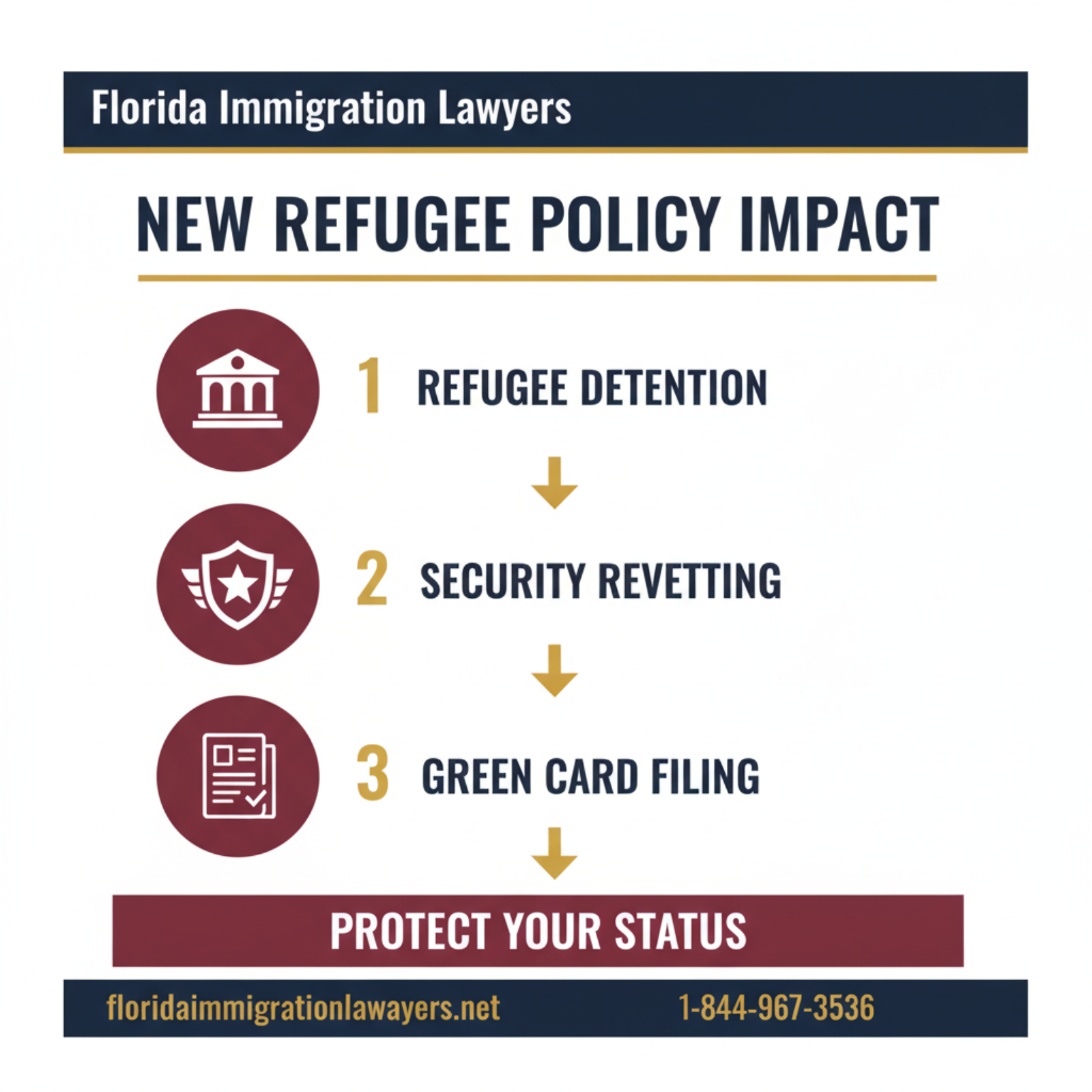
Step-by-Step Process Guide -
Attend Biometrics Appointments and Interviews: Depending on your application, you will likely need to attend a biometrics appointment to provide fingerprints, photos, and a signature. Many applicants also undergo an interview at a USCIS field office in Florida, such as those in Miami, Orlando, or Tampa, or at a U.S. embassy or consulate abroad.
The interview is an opportunity for an immigration officer to verify information and ask questions about your application. It is important to be truthful and prepared.
-
Await a Decision: After all steps are completed, USCIS or the relevant agency will make a decision on your case. This can take time, and processing times vary significantly. If approved, you will receive the requested immigration benefit, such as a green card or visa.
If your application is denied, you may have options to appeal or refile, depending on the reasons for denial. Consulting with an experienced Florida immigration lawyer is highly recommended at this stage.
Essential Documents for Immigration Applications in Florida
Preparing a thorough and accurate document checklist is vital for any U.S. immigration application. Missing or incorrect paperwork can lead to significant delays or even denial. While specific requirements vary by case type, here is a general list of documents you might need:
- Valid Passport: Your current passport and any previous passports.
- Birth Certificates: Original birth certificates for all applicants and relevant family members.
- Marriage Certificates: If applicable, original marriage certificates and divorce decrees from previous marriages.
- Financial Documents: Proof of financial support, such as tax returns, bank statements, and affidavits of support (Form I-864).
- Police Clearances/Criminal Records: Certificates of good conduct from countries where you have lived.
- Medical Examination Results: Required medical exam conducted by a USCIS-approved civil surgeon.
- Photographs: Passport-style photographs meeting USCIS specifications.
- Educational and Employment Records: Diplomas, transcripts, letters of employment, and resumes for employment-based petitions.
- Proof of Relationship: For family-based petitions, evidence like photos, joint bank accounts, and utility bills.
- Previous Immigration Documents: Any prior visa stamps, I-94 records, or notices from USCIS.
Always review the specific instructions for your application form on the USCIS website (www.uscis.gov) to ensure you provide every required document. It is better to over-prepare than to miss a crucial piece of evidence.
Timeline and Processing Expectations for Florida Immigration Cases
One of the most common questions immigrants have concerns how long their case will take. The truth is, processing times for U.S. immigration applications can vary significantly. They depend on numerous factors, including the type of petition, the USCIS service center handling the case, and current agency backlogs.
For instance, a family-based petition for an immediate relative might take months, while certain preference categories could take several years due to visa bulletin backlogs. Employment-based visas also have varying timelines based on priority dates and country of chargeability.
USCIS provides an online tool to check average processing times for different forms and service centers. While these provide an estimate, individual cases can fall outside these ranges. Factors that can affect your timeline include:
- Completeness and accuracy of your application.
- Responses to Requests for Evidence (RFEs).
- Interview scheduling availability at USCIS field offices in Florida.
- Changes in immigration policy or administrative priorities.
It is important to be patient but also proactive. Keep copies of everything you submit and maintain accurate records. An experienced Florida immigration lawyer can help you monitor your case and provide realistic expectations based on current trends.
Cost Factors and Fee Breakdown for U.S. Immigration Filings
Understanding the financial aspects of your immigration journey is essential. U.S. immigration applications involve various fees, which can add up. These costs typically include government filing fees, biometric fees, and sometimes medical examination fees.
Government fees are set by USCIS and can change periodically. It is critical to check the most current fee schedule on the official USCIS website before submitting any application. These fees are generally non-refundable, even if your application is denied.
In addition to government fees, you should also account for other potential costs:
- Medical Examination Fees: Required for many green card applications, these fees are paid directly to the USCIS-approved civil surgeon.
- Translation Fees: If any of your documents are not in English, you will need certified translations, which incur separate costs.
- Postage and Courier Fees: For mailing applications and supporting documents.
- Legal Fees: Retaining an experienced Florida immigration lawyer for assistance with your application, representation, and advice. While an additional cost, legal expertise can save you time, stress, and potential pitfalls, often proving to be a wise investment in the long run.
Proper financial planning is a crucial part of your immigration strategy. For a personalized assessment of potential costs for your specific case, contact Florida Immigration Lawyers. We can help you understand the full scope of expenses.
Do not navigate this process alone. The complexities of U.S. immigration law, particularly with the ongoing global discussions around models like the UK immigration reform Denmark model, underscore the need for expert advice. Contact Florida Immigration Lawyers today to ensure your application is handled correctly and efficiently.
Common Mistakes to Avoid
The U.S. immigration system is unforgiving of errors. Avoiding common mistakes can significantly improve your chances of a successful outcome and prevent delays. Here are 7-12 frequent pitfalls to steer clear of:
-
Submitting Incomplete Applications: Failing to include all required forms, supporting documents, or signatures is a primary cause of delays and rejections. USCIS will issue a Request for Evidence (RFE) or outright deny the application, costing you time and money.
-
Missing Deadlines: Immigration processes are strict about deadlines for responses to RFEs, appeals, or court appearances. Missing a deadline can lead to automatic denial, deportation orders, or loss of critical opportunities.
-
Providing False or Misleading Information: Any form of misrepresentation, whether intentional or accidental, can lead to severe consequences, including findings of inadmissibility, deportation, and permanent bars from receiving future immigration benefits. Always be truthful.
-
Not Disclosing All Criminal History: Even minor arrests or convictions, regardless of outcome, must be disclosed. Failure to do so can be considered misrepresentation and lead to serious penalties, potentially making you inadmissible.
-
Failing to Update Your Address: If you move, you are legally required to notify USCIS of your new address within 10 days using Form AR-11. Failure to do so can result in missed notices, interview appointments, or even a finding that you abandoned your application.
-
Traveling Without Advance Parole: If you have a pending adjustment of status application, leaving the U.S. without obtaining advance parole can be considered an abandonment of your application. Always consult an attorney before international travel.
-
Applying for the Wrong Visa Category: Attempting to apply for an immigration benefit for which you are not eligible, or under the wrong visa category, will result in denial. Thoroughly understand your eligibility before filing.
-
Ignoring Requests for Evidence (RFEs): If USCIS sends an RFE, it means they need more information. Failing to respond adequately or on time will almost certainly lead to a denial of your application.
-
Not Keeping Copies of All Submitted Documents: Always retain a complete copy of every form, document, and piece of evidence you send to USCIS or other agencies. This is crucial for your records and for responding to any inquiries.
-
Not Seeking Legal Advice: Many individuals try to navigate the complex immigration system alone to save money. This often leads to critical errors that are far more costly to fix later. A qualified Florida immigration lawyer can prevent these mistakes.
When to Call a Lawyer
While some immigration processes appear straightforward, many are incredibly complex and fraught with potential pitfalls. Knowing when to seek legal counsel can be the difference between success and failure in your immigration journey. You should consider calling an attorney from Florida Immigration Lawyers if any of the following scenarios apply to you:
- Complex Case History: If you have a prior denial, a history of overstays, or previous immigration violations.
- Criminal Record: Any arrests, charges, or convictions, even minor ones, can have significant immigration consequences and require expert legal analysis.
- Deportation or Removal Proceedings: If you or a family member is facing deportation defense, immediate legal representation is critical.
- Asylum or Refugee Claims: These cases are highly sensitive and require detailed legal arguments and strong evidence. An asylum lawyer can be invaluable.
- Business or Investment Immigration: These categories often involve intricate legal and financial requirements that benefit from specialized legal guidance.
- Receiving a Request for Evidence (RFE) or Notice of Intent to Deny (NOID): These notices indicate that USCIS has concerns about your application, and a strong, timely response is essential.
- Uncertainty About Eligibility: If you are unsure which visa or immigration path is best for you, a consultation can clarify your options.
- Language Barriers: If you are not fully comfortable with English, a bilingual attorney can ensure clear communication and accurate representation.
The attorneys at Florida Immigration Lawyers are deeply familiar with U.S. immigration law and the specific nuances of navigating the system in Florida. We offer personalized advice and robust representation, ensuring your rights are protected every step of the way. Visit our attorneys page to learn more about our team.
About Florida Immigration Lawyers
Florida Immigration Lawyers is a leading law firm dedicated to providing exceptional legal services to immigrants across the entire state of Florida. With years of experience and a deep understanding of U.S. immigration law, our firm is committed to helping individuals and families achieve their immigration goals.
We offer a comprehensive range of immigration services, including family-based visas, business immigration, asylum, deportation defense, and citizenship applications. Our team prides itself on offering compassionate, client-focused representation, understanding that every case is unique and deeply personal.
Why choose Florida Immigration Lawyers? We are available 24/7 to address your urgent needs and offer free consultations to discuss your case. Our bilingual staff ensures that language is never a barrier to receiving quality legal assistance. We serve clients in Naples, Miami, Orlando, Tampa, and all other communities throughout Florida, providing strategic and effective legal solutions.
Let us be your trusted partner in navigating the complex world of immigration. Contact us today. Phone: 1-844-967-3536. Website: https://www.floridaimmigrationlawyers.net.
Sources and References
- U.S. Citizenship and Immigration Services (USCIS)
- U.S. Department of State - Bureau of Consular Affairs (travel.state.gov)
- U.S. Department of Justice - Executive Office for Immigration Review (EOIR)
- 8 U.S.C. Chapter 12 - Immigration and Nationality Act (INA)
- 8 CFR - Code of Federal Regulations, Title 8 (Aliens and Nationality)
- INA § 208 (8 U.S.C. § 1158) - Asylum
This article provides general legal information and is not intended as legal advice. Every case is unique, and outcomes depend on specific facts and circumstances. Contact an attorney for advice about your particular situation.
Your immigration journey is too important to leave to chance. Whether you're concerned about global policy shifts or need direct assistance with your U.S. application, Florida Immigration Lawyers is here to provide the clarity and support you deserve. We offer free, confidential consultations to help you understand your options and plan your next steps.
Call us now at 1-844-967-3536. Se Habla Español - Estamos aquí para ayudarle.
Need help with Immigration?
Our Florida immigration attorneys offer free consultations. Call today or schedule online.
Frequently Asked Questions
Florida Immigration Lawyers
Legal Team
Our experienced attorneys at Florida Immigration Lawyers have been serving clients across Florida for over 20 years. We specialize in immigration, personal injury, criminal defense, workers compensation, and family law.