Naturalization Ceremony ICE Concerns in Florida: A Comprehensive Guide
For many in Florida, the naturalization ceremony is a joyous event, but anxieties about ICE presence can arise. This comprehensive guide addresses naturalization ceremony ICE concerns for 2026, explaining your rights and the naturalization process. Learn about eligibility, required documents, timelines, and cost factors. Discover common mistakes to avoid and when to seek legal counsel from Florida Immigration Lawyers. We provide crucial insights to protect your path to U.S. citizenship, offering peace of mind and expert support for Florida residents.
While U.S. Immigration and Customs Enforcement (ICE) generally does not target individuals at naturalization ceremonies, concerns persist, especially in Florida. Individuals attending these events, particularly those accompanying applicants who are not yet citizens, should understand their rights. It is crucial to carry proper identification and consult with an experienced immigration lawyer if you have any doubts or a complex case.
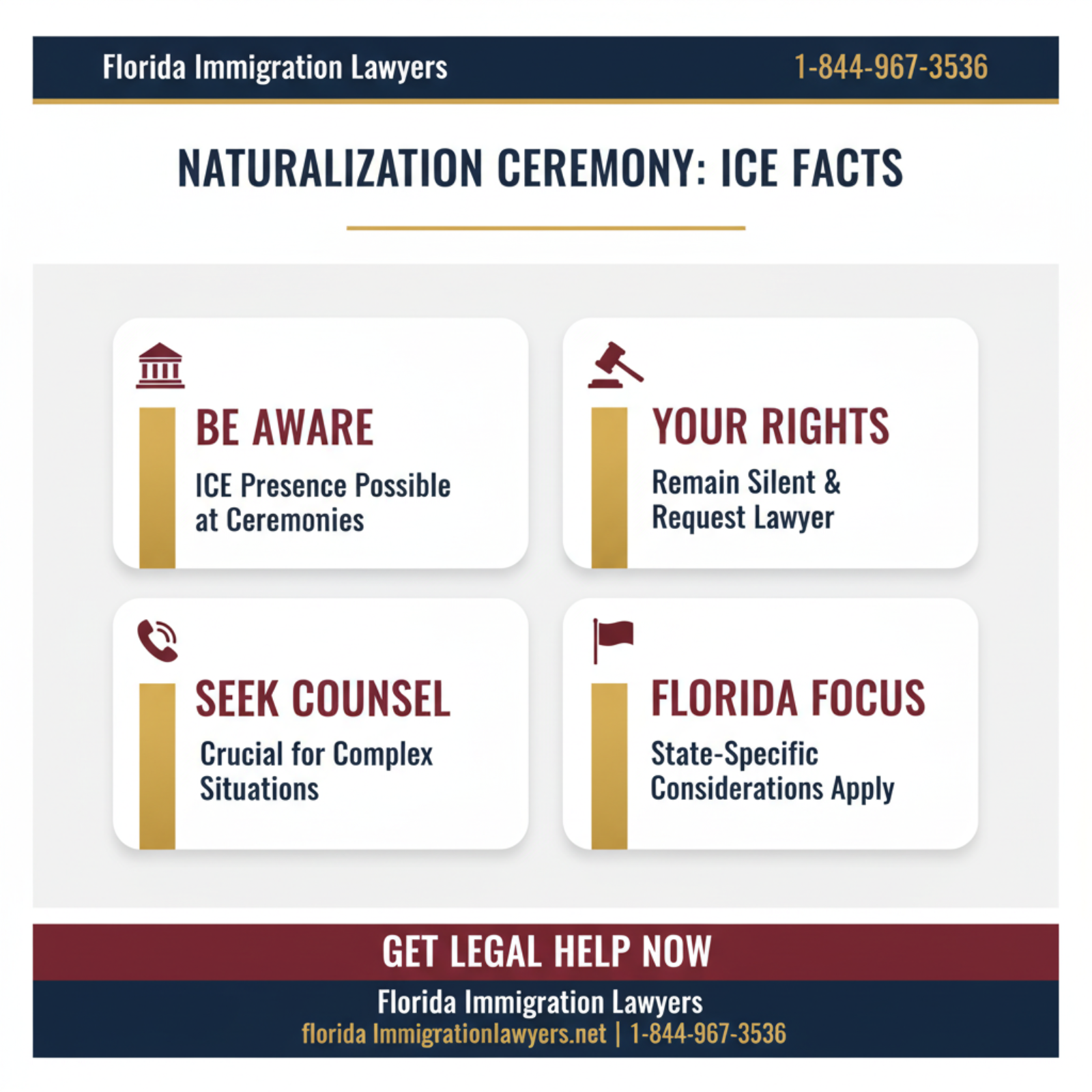
- ICE's primary focus is typically not at naturalization ceremonies themselves.
- Know your rights, including the right to remain silent and to speak with an attorney.
- Always carry valid identification, such as your Green Card or driver's license.
- If you have a criminal history or prior immigration issues, seek legal counsel beforehand.
- Consult a Florida immigration lawyer for personalized advice and peace of mind.
The journey to U.S. citizenship through naturalization is a momentous occasion, marking the culmination of years of effort and dedication. For many in Florida, especially in communities like Naples, this milestone is celebrated with immense pride. However, for some, the joy of a pending naturalization ceremony can be overshadowed by anxieties, particularly concerning the presence or actions of U.S. Immigration and Customs Enforcement (ICE).
In a state with a significant immigrant population, such as Florida, understanding the interplay between USCIS procedures and ICE enforcement is vital. This article aims to demystify the process, address your concerns about naturalization ceremony ICE concerns, and empower you with knowledge. We will guide you through the naturalization journey, highlight potential pitfalls, and explain how to protect your rights, ensuring your path to citizenship is as smooth as possible.
Don't let uncertainty cloud your important day. If you have questions or need guidance, call Florida Immigration Lawyers at 1-844-967-3536 for a free consultation. Our experienced team is here to help you navigate every step.
Understanding Naturalization and ICE's Role in Florida
Naturalization is the process by which a lawful permanent resident (Green Card holder) becomes a U.S. citizen. It's a legal pathway established by Congress, governed by the Immigration and Nationality Act (INA). This process involves meeting specific eligibility requirements, submitting an application, undergoing interviews, and taking an Oath of Allegiance.
U.S. Citizenship and Immigration Services (USCIS) is the agency responsible for processing naturalization applications and administering the Oath of Allegiance. Their role is to ensure applicants meet all legal criteria for citizenship. USCIS aims to facilitate lawful immigration and provide accurate information to applicants.
U.S. Immigration and Customs Enforcement (ICE), on the other hand, is the principal investigative arm of the U.S. Department of Homeland Security (DHS). ICE's mission is to protect the United States from cross-border crime and illegal immigration. Their enforcement activities include identifying, arresting, and removing non-citizens who violate U.S. immigration laws. This includes individuals who may have criminal records or have overstayed their visas.
The existence of naturalization ceremony ICE concerns stems from ICE's broad authority and its presence in communities across Florida. While naturalization ceremonies are typically celebratory events, some individuals fear that ICE agents might be present to apprehend non-citizens, particularly those accompanying the applicant who may have their own immigration vulnerabilities. This concern is amplified in Florida, a state with a large and diverse immigrant population, where immigration enforcement can be a high-profile issue.
It is important to differentiate between the roles of USCIS and ICE. USCIS is focused on benefits adjudication, while ICE focuses on enforcement. While both are under DHS, their immediate functions at a naturalization ceremony are distinct. Understanding these roles can help alleviate some anxieties, but remaining informed and prepared is always the best approach for anyone involved in the immigration process in Florida. Many Floridians, especially in areas like Naples, rely on clear guidance to navigate these complexities.
Navigating the Naturalization Process: A Step-by-Step Guide for Florida Residents
Becoming a U.S. citizen is a multi-step process that requires careful attention to detail and adherence to specific legal requirements. For Florida residents, the journey typically unfolds as follows, culminating in the Oath of Allegiance ceremony.
Eligibility Requirements
Before applying, you must meet several key criteria. Generally, you must be 18 years old, a lawful permanent resident for at least five years (or three years if married to a U.S. citizen), and have maintained continuous residence and physical presence in the U.S. You must also demonstrate good moral character, an attachment to the principles of the U.S. Constitution, and a basic ability to read, write, and speak English, along with knowledge of U.S. history and government. These requirements are outlined in sections of the Immigration and Nationality Act (INA), specifically 8 U.S.C. § 1427.
Application Filing (Form N-400)
The first formal step is to file Form N-400, Application for Naturalization, with USCIS. This comprehensive form requires detailed personal information, a complete immigration history, and answers about your good moral character. It is crucial to be entirely truthful and accurate on this form, as any misrepresentation can lead to severe consequences. Filing fees must also be paid, though waivers may be available for eligible low-income applicants.
Biometrics and Interview
After filing, you will receive an appointment notice for a biometrics appointment at a local Application Support Center (ASC). Here, your fingerprints, photograph, and signature will be collected for background checks. Following this, you will be scheduled for a naturalization interview with a USCIS officer. During this interview, the officer will review your N-400, test your English and civics knowledge, and ask questions to confirm your eligibility and good moral character. Be prepared to discuss all aspects of your application.
The Oath of Allegiance Ceremony
If your application is approved after the interview, you will receive a notice for your Oath of Allegiance Ceremony. This is the final step where you officially become a U.S. citizen. Ceremonies are held at various locations, including federal courthouses or USCIS field offices across Florida, such as in Miami, Orlando, or Tampa. You will surrender your Green Card at this ceremony and receive your Certificate of Naturalization. It is at this critical juncture that some individuals express naturalization ceremony ICE concerns, wondering about potential enforcement actions.
Throughout this entire process, maintaining accurate records and seeking legal advice for any complex issues is paramount. A Florida immigration lawyer can provide invaluable assistance, especially concerning your eligibility and any potential red flags.
Documents to Protect Yourself at a Naturalization Ceremony
Attending your naturalization ceremony is a momentous occasion, and being prepared with the correct documentation is essential for a smooth experience. This is especially true if you are concerned about any potential interactions, including those involving ICE. Knowing what to bring, and what to leave behind, can provide peace of mind.
Here is a list of documents you should always have with you:
- Your Permanent Resident Card (Green Card), which you will surrender.
- Your Oath of Allegiance ceremony notice (Form N-445 or N-445, Notice of Naturalization Oath Ceremony).
- Any immigration documents issued to you by USCIS, such as an Employment Authorization Document (EAD) or advance parole document, if applicable.
- A valid government-issued photo identification, such as a driver's license or state ID.
- If you have changed your name, bring the original or certified copy of the court order or marriage certificate.
- Any items USCIS specifically requests in your N-445 notice, such as photographs.
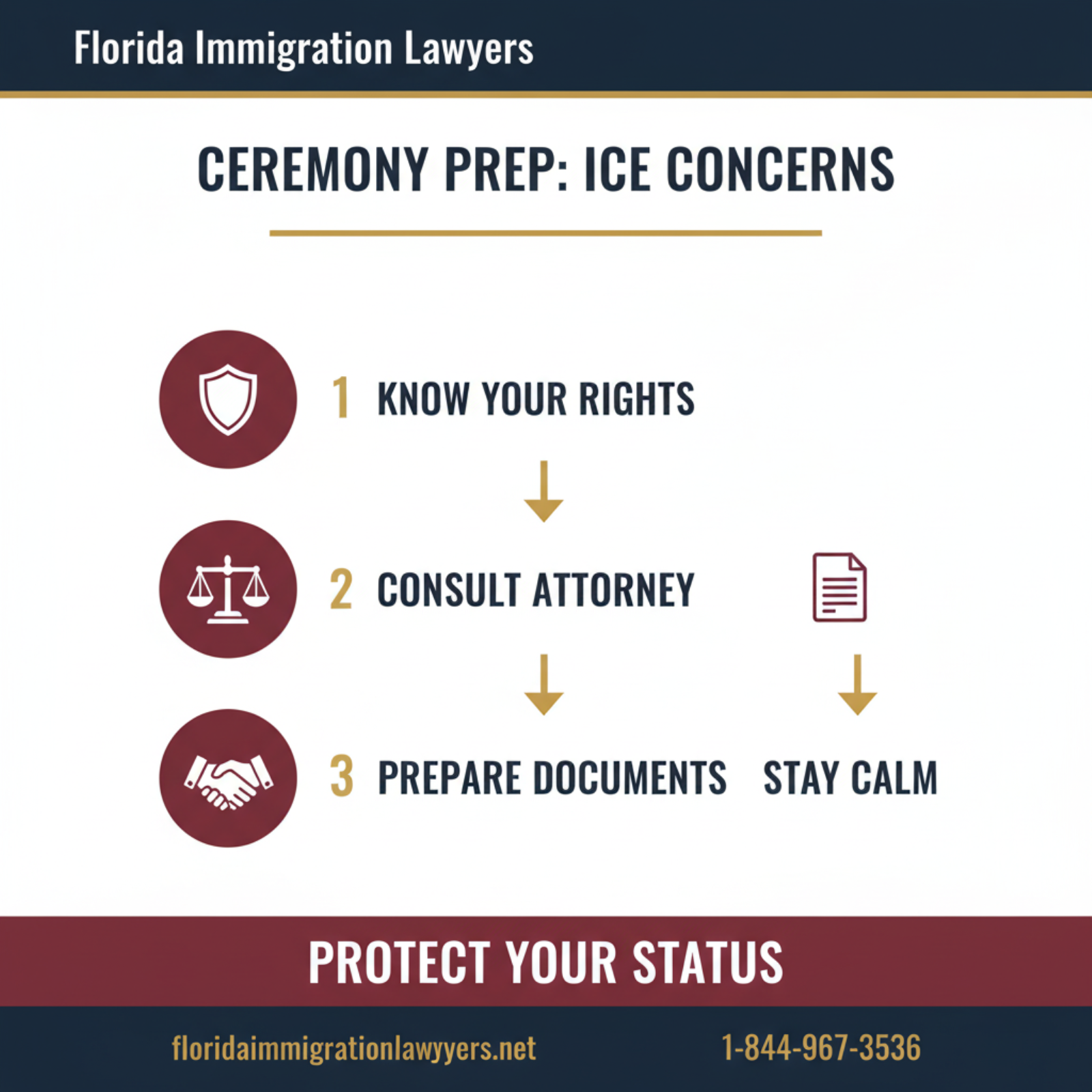
It is generally advisable to bring only necessary documents. Avoid carrying large amounts of cash, valuable items, or any documents that are not directly related to your immigration status. If you are a Florida green card applicant attending the ceremony with a friend or family member who is naturalizing, ensure you carry your valid Green Card. This is your primary proof of lawful status. While ICE does not typically target ceremonies, being prepared is always prudent. If you are accompanying someone and are not yet a citizen yourself, understanding your own status and having your documents ready is key. If you have any past immigration issues or concerns, consulting with a Florida immigration lawyer before the ceremony is highly recommended to understand your rights and potential risks.
Timeline and Processing Expectations for Naturalization in 2026 Florida
The naturalization process timeline can vary significantly based on several factors, including the USCIS field office jurisdiction, the complexity of your case, and current agency backlogs. For Florida residents in 2026, processing times may range from several months to over a year, or even longer in some instances.
Typically, after filing Form N-400, you can expect to wait anywhere from 1 to 3 months for your biometrics appointment notice. The interview scheduling usually follows within 3 to 6 months after biometrics. The period between the interview and the Oath Ceremony can vary widely. Some applicants receive their ceremony notice within weeks, while others might wait several months, especially if there are security checks or administrative processing delays.
Factors that can influence your processing time include:
- USCIS Field Office Workload: Offices in high-volume areas like Miami, Orlando, and Tampa often have longer processing times compared to smaller offices. You can check current processing times on the USCIS website for your specific field office.
- Background Checks: All applicants undergo rigorous background checks by various government agencies. Any discrepancies or flags can significantly extend the processing timeline.
- Application Errors or Missing Information: If your N-400 application is incomplete or contains errors, it will likely be delayed as USCIS requests additional information.
- Complexity of Your Case: Cases involving criminal history, previous immigration violations, or extensive travel history often require more detailed review, leading to longer waits.
It's important to monitor your case status online through the USCIS website using your receipt number. While waiting can be frustrating, patience and proactive communication (when appropriate) are key. Should your case experience unusual delays, or if you receive a Request for Evidence (RFE), consulting with a knowledgeable Florida immigration lawyer can help you understand the reason for the delay and how to respond effectively. They can also help address any naturalization ceremony ICE concerns that might arise during prolonged waiting periods, providing guidance on your status while your application is pending.
Cost Factors and Fee Breakdown for Naturalization Applications
Pursuing U.S. citizenship involves various costs, and understanding these expenses upfront is crucial for planning. The primary cost is the filing fee for Form N-400, Application for Naturalization, which is subject to change by USCIS. This fee typically includes the application processing and the biometrics services fee.
It is important to note that USCIS fees are periodically updated, so always check the official USCIS website for the most current fee schedule before filing. You can pay these fees via money order, personal check, cashier's check, or by credit card using Form G-1450, Authorization for Credit Card Transactions.
For individuals who meet specific income guidelines, USCIS offers fee waivers. If your household income is at or below 150% of the Federal Poverty Guidelines, or if you are receiving certain public benefits, you may be eligible to apply for a fee waiver using Form I-912, Request for Fee Waiver. This can significantly reduce the financial burden of naturalization.
Beyond the direct USCIS fees, other potential costs include:
- Medical Examination Fees: While not typically required for naturalization unless specifically requested by USCIS, some immigration processes do require a medical exam.
- Document Translation Fees: If any of your supporting documents are not in English, you will need to pay for certified translations.
- Attorney Fees: Hiring a Florida immigration lawyer can be a significant investment, but it often provides immense value. Legal counsel can help prepare your application accurately, represent you at interviews, and address complex issues such as criminal history or prior immigration violations. This can be especially important if you have naturalization ceremony ICE concerns or other anxieties about the process.
While the costs can accumulate, the long-term benefits of U.S. citizenship often outweigh these initial expenses. These benefits include the right to vote, increased job opportunities, protection from deportation, and the ability to petition for more family members. Always consult the official USCIS website for the most up-to-date fee information and eligibility for fee waivers.
Do not navigate this process alone. Contact Florida Immigration Lawyers today for expert guidance and support through your naturalization journey. We are here to help.
Common Mistakes to Avoid During Your Naturalization Journey
The path to U.S. citizenship is filled with specific requirements and procedures. Even minor errors can lead to delays, denials, or more serious consequences. Being aware of common mistakes can help Florida residents avoid unnecessary setbacks.
- Failing to Disclose All Information: Not disclosing every arrest, citation, or immigration interaction, no matter how minor or old, can be considered misrepresentation. USCIS conducts thorough background checks, and omissions can lead to a finding of lack of good moral character and denial.
- Lying on the N-400 Application: Providing false information on your Form N-400, Application for Naturalization, is a serious offense. This constitutes immigration fraud and can result in severe penalties, including denial of citizenship and potential deportation.
- Not Maintaining Continuous Residence: Leaving the U.S. for extended periods (typically six months or more) can break your continuous residence requirement. This can reset your eligibility clock for naturalization, delaying your application.
- Missing Appointments or Deadlines: Failing to appear for biometrics appointments, interviews, or responding to Requests for Evidence (RFEs) by the deadline can lead to your application being denied or abandoned.
- Not Understanding Your Rights if Approached by ICE: While rare at ceremonies, knowing your rights is crucial anywhere. You have the right to remain silent, the right to an attorney, and the right not to open your door to ICE without a warrant signed by a judge. This is key to addressing ICE due process concerns.
- Traveling Internationally After Approval But Before Ceremony: While generally allowed, international travel after your interview but before your Oath Ceremony can sometimes cause issues. It's best to consult with an attorney before making such plans.
- Failing to Update Your Address with USCIS: If you move, you must inform USCIS of your new address promptly. Failure to do so can result in missing important notices and delays in your case.
- Inadequate English or Civics Knowledge: A common reason for denial is failing the English or civics test during the naturalization interview. Prepare thoroughly using official USCIS study materials.
- Assuming Green Card Protection is Absolute: While a Green Card provides lawful permanent resident status, it does not offer absolute protection from deportation, especially if you commit certain crimes. This is why addressing ICE detain Florida green card applicant scenarios is important.
- Not Consulting an Attorney for Complex Cases: If you have a criminal record, previous deportation orders, long absences from the U.S., or any other complicated issues, attempting to naturalize without legal counsel is a significant risk.
- Bringing Unauthorized Items to the Ceremony: Follow all instructions on your ceremony notice regarding prohibited items. Security at federal buildings is strict.
- Panicking if ICE is Present: While concerning, seeing ICE agents in the vicinity of a federal building does not automatically mean they are there for you. Remain calm, know your rights, and if approached, state you wish to speak with an attorney.
When to Call a Florida Immigration Lawyer: Addressing ICE Concerns and Complexities
While the naturalization process can be straightforward for some, many applicants encounter complexities that necessitate expert legal guidance. Florida Immigration Lawyers are uniquely positioned to assist individuals throughout the state, from Naples to Jacksonville, especially when confronting sensitive issues like naturalization ceremony ICE concerns or other challenging immigration scenarios.
You should consider contacting an immigration attorney if any of the following situations apply to you:
- Criminal History: Even minor arrests or convictions, regardless of how long ago they occurred, can impact your good moral character requirement. An attorney can assess your record and advise on eligibility.
- Previous Immigration Violations: If you have prior deportation orders, overstays, or other immigration infractions, these can complicate your naturalization application significantly.
- Long Absences from the U.S.: Extended periods outside the United States can jeopardize your continuous residence and physical presence requirements. A lawyer can help determine if your absences affect your eligibility.
- Denial of Your N-400 Application: If your naturalization application has been denied, an attorney can help you understand the reasons for the denial and explore options for appeal or reapplication.
- Concerns About ICE Interaction: If you have specific fears about ICE, whether at a ceremony or elsewhere, an attorney can explain your rights and provide strategies for safe interaction. This addresses the question: How does ICE work immigration enforcement, and what are my protections?
- Unlawful Detention by ICE: If you or a loved one are detained by ICE and believe it is unlawful, especially if there are concerns about ICE holds U.S. citizen, immediate legal intervention is critical. An attorney can work to secure release and challenge the detention. This also touches on the PAA question: Can I sue ICE for detaining me as a citizen? Yes, unlawful detention by ICE can be challenged in court, but it requires skilled legal representation.
Let's address some common questions directly:
- Can ICE deport me if I am a naturalized citizen? Generally, no. Once you are a naturalized U.S. citizen, you cannot be deported, except in extremely rare cases where citizenship was obtained through fraud or misrepresentation. Denaturalization is a complex legal process that is very difficult for the government to prove.
- Do naturalized citizens have to worry about ICE? Typically, naturalized citizens do not need to worry about ICE targeting them for deportation. However, it's always wise for anyone, citizen or not, to know their rights if approached by law enforcement.
- Do US citizens have to show ICE proof of citizenship? While U.S. citizens are not required to carry proof of citizenship, if questioned by ICE or other law enforcement about their immigration status, providing proof of citizenship (like a U.S. passport or Certificate of Naturalization) can quickly resolve inquiries and avoid potential misunderstandings.
Florida Immigration Lawyers understands the unique challenges faced by immigrants in Florida. Our team can offer comprehensive support, from preparing your N-400 to representing you at your interview, and providing peace of mind regarding ICE concerns. We are dedicated to protecting your rights and ensuring a successful journey to citizenship. Contact us today to learn more about our deportation defense services and our commitment to helping Florida's immigrant communities.
About Florida Immigration Lawyers
Florida Immigration Lawyers is a leading immigration law firm dedicated to serving individuals and families across the entire state of Florida. Our mission is to provide compassionate, effective, and results-driven legal representation for all your immigration needs. With a deep understanding of U.S. immigration laws and specific Florida contexts, we are committed to guiding our clients through complex legal processes with clarity and confidence.
We offer a comprehensive range of immigration services, including family-based immigration, business immigration, asylum claims, deportation defense, naturalization, and asylum cases. Our attorneys are highly experienced in navigating the intricacies of USCIS and immigration court procedures. We pride ourselves on offering personalized attention to each case, ensuring that your unique circumstances are fully understood and addressed.
Choosing Florida Immigration Lawyers means partnering with a team that genuinely cares about your future. We are available 24/7 to answer your urgent questions and offer free consultations to help you understand your options without financial commitment. Our firm is proud to offer bilingual services, with a dedicated team ready to assist clients in both English and Spanish. We serve all of Florida, including Naples, Miami, Orlando, Tampa, and beyond, providing accessible and high-quality legal support. Visit our attorneys page to learn more about our team.
Let us be your trusted advocate in your immigration journey. Call us today at 1-844-967-3536 or visit our website at https://www.floridaimmigrationlawyers.net to schedule your free consultation.
Sources and References
- U.S. Citizenship and Immigration Services (USCIS)
- Executive Office for Immigration Review (EOIR)
- U.S. Department of State - Bureau of Consular Affairs
- 8 U.S.C. Chapter 12 - Immigration and Nationality Act (INA), specifically 8 U.S.C. § 1427 for Naturalization requirements.
- Code of Federal Regulations (CFR) - Title 8, Aliens and Nationality.
- USCIS Policy Manual.
This article provides general legal information and is not intended as legal advice. Every case is unique, and outcomes depend on specific facts and circumstances. Contact an attorney for advice about your particular situation.
Your journey to U.S. citizenship is a significant milestone, and navigating it with confidence is key. Don't let unanswered questions or anxieties about naturalization ceremony ICE concerns deter you from achieving your dreams. Florida Immigration Lawyers is here to provide the clarity and robust legal support you need.
Take the next step towards your future. Call Florida Immigration Lawyers today at 1-844-967-3536 for your free, confidential consultation. Se Habla Español - Estamos aquí para ayudarle.
Need help with Immigration?
Our Florida immigration attorneys offer free consultations. Call today or schedule online.
Frequently Asked Questions
Florida Immigration Lawyers
Legal Team
Our experienced attorneys at Florida Immigration Lawyers have been serving clients across Florida for over 20 years. We specialize in immigration, personal injury, criminal defense, workers compensation, and family law.