Green Card Holder ICE Detention in Florida: Your Rights & Legal Help
Green card holders in Florida face potential ICE detention, especially due to criminal convictions or immigration violations. Understanding your rights, the detention process, and knowing when to seek legal help is paramount. This guide provides essential information on navigating ICE detention, including a step-by-step process, crucial documents, and common mistakes to avoid. Florida Immigration Lawyers offers expert legal assistance, available 24/7, with free consultations to protect your status and fight against deportation. Learn how to secure your future in Florida.
Green card holders, also known as Lawful Permanent Residents (LPRs), can indeed be detained by U.S. Immigration and Customs Enforcement (ICE) in Florida, particularly if they have a criminal history or have committed certain immigration violations. Detention often leads to removal proceedings in immigration court. Understanding your rights and seeking immediate legal counsel is crucial to navigating this complex process effectively.
- Green card holders are not immune to ICE detention.
- Criminal convictions or immigration fraud are common triggers for detention.
- You have rights, including the right to an attorney and to remain silent.
- Seeking legal representation is vital for challenging detention and avoiding deportation.
Imagine living in Pembroke Pines, Florida, for years as a lawful permanent resident, building a life, a family, and a career. Then, unexpectedly, you or a loved one is detained by Immigration and Customs Enforcement (ICE). This scenario, while frightening, is a reality for many green card holders across Florida. The misconception that a green card offers absolute protection from detention and deportation can lead to devastating consequences.
At Florida Immigration Lawyers, we understand the fear and uncertainty that comes with ICE detention. Our mission is to provide clear, compassionate, and effective legal guidance to individuals and families facing these challenging circumstances. This comprehensive guide will help you understand why green card holders may face ICE detention in Florida, what to expect during the process, and most importantly, how to protect your rights.
Do not face this daunting situation alone. If you or someone you know is a green card holder facing ICE detention in Florida, immediate legal action is critical. Call Florida Immigration Lawyers at 1-844-967-3536 for a free consultation today. Our experienced team is ready to assist you.
Understanding Green Card Holder ICE Detention in Florida
A green card holder, or Lawful Permanent Resident (LPR), has been granted the privilege to live and work permanently in the United States. While this status provides significant protections, it does not make an individual immune to immigration enforcement actions, including detention by ICE. In Florida, a state with a large and diverse immigrant population, understanding the nuances of green card holder ICE detention is especially important.
ICE has the authority to detain green card holders for various reasons, primarily related to criminal offenses or violations of immigration law. For example, specific criminal convictions, such as aggravated felonies or crimes involving moral turpitude, can render a green card holder deportable under the Immigration and Nationality Act (INA) Section 237. Even seemingly minor offenses can trigger removal proceedings, particularly if they are classified as certain types of misdemeanors or if there's a pattern of unlawful behavior.
The state of Florida, with its multiple ports of entry and significant population centers like Miami, Orlando, and Pembroke Pines, sees a considerable number of immigration enforcement actions. ICE operates field offices and detention facilities throughout the state. This means that an LPR in Florida could be detained following a routine traffic stop, after serving a sentence for a criminal conviction, or even during a targeted enforcement action.
Many ask, "Can ICE legally detain a green card holder?" The answer is yes, under specific circumstances. If ICE has probable cause to believe that an LPR is removable (deportable) from the United States, they can initiate detention. This often occurs when a green card holder has a criminal record that makes them amenable to deportation. The legal basis for detention and removal is complex and often depends on the specifics of the individual's criminal history and immigration record.
Another common question is, "Am I still an immigrant if I have a green card?" Yes, absolutely. A green card holder is a Lawful Permanent Resident (LPR), which is a form of immigrant status. You are an immigrant authorized by the U.S. government to live permanently in the country. This status comes with rights and responsibilities, but it does not equate to U.S. citizenship.
The ICE Detention Process for Green Card Holders: A Step-by-Step Guide
Understanding the sequence of events following an ICE detention can help prepare you and your family. The process can be intimidating, but knowing what to expect is the first step in mounting an effective defense.
-
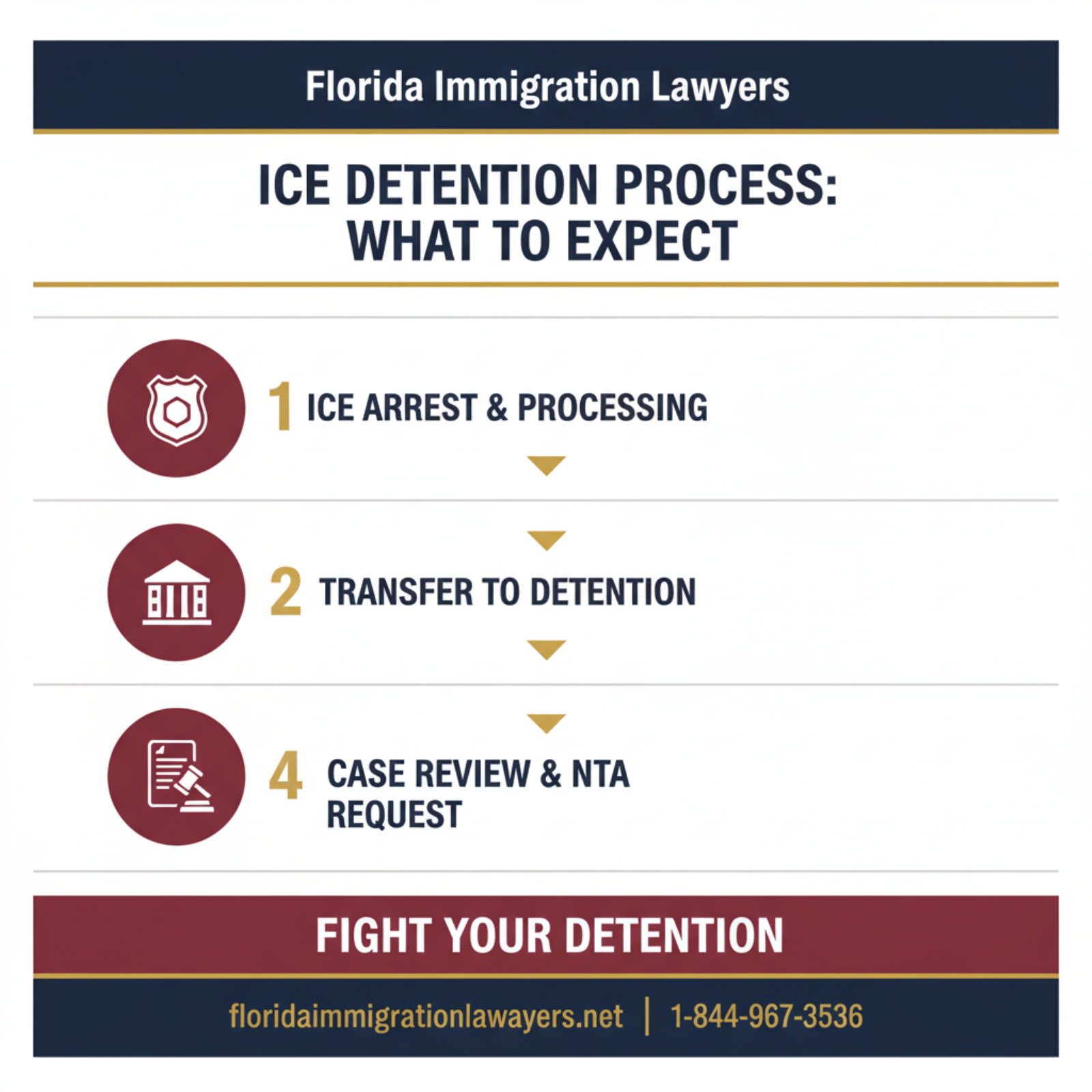
Arrest and Initial Custody: A green card holder might be arrested by ICE directly, or by local law enforcement who then notify ICE through a detainer request. This often happens after a criminal arrest or conviction, even if the person has already served their time. The detention could occur anywhere in Florida, including at home, work, or during a traffic stop in areas like Pembroke Pines or Miami.
-
Booking and Processing: Once detained, the individual will be transported to an ICE processing center or a detention facility. Here, they will be fingerprinted, photographed, and their immigration and criminal history will be thoroughly checked. This stage is crucial for ICE to establish a basis for removal proceedings.
-
Issuance of a Notice to Appear (NTA): If ICE determines there is a basis for removal, they will issue a Form I-862, Notice to Appear (NTA). This document formally charges the green card holder with being removable from the U.S. and initiates proceedings in immigration court. The NTA will list the specific allegations and the legal grounds for deportation.
-
Custody Determination and Bond Eligibility: Following the NTA, a green card holder may be eligible for an immigration bond. This allows for release from detention while their case proceeds through immigration court. An Immigration Judge or an ICE officer may set a bond amount. Factors like criminal history, ties to the community in Florida, and flight risk are considered during this determination. Not all green card holders are eligible for bond.
-
Immigration Court Proceedings: The detained green card holder will have hearings before an Immigration Judge. These proceedings typically include a Master Calendar Hearing (where charges are acknowledged and a plea is entered) and an Individual Hearing (a full trial where evidence is presented and arguments are made). These hearings usually take place in Florida immigration courts, such as those in Miami, Orlando, or Pompano Beach.
-
Decision and Appeals: After the Individual Hearing, the Immigration Judge will issue a decision. If the judge orders removal, the green card holder generally has the right to appeal this decision to the Board of Immigration Appeals (BIA). Further appeals may be possible in federal courts. This process can be lengthy and requires skilled legal representation.
Essential Documents for Your ICE Detention Defense
Having the right documentation readily available can significantly strengthen your defense and expedite the legal process. If you or a loved one is detained, gathering these documents immediately is paramount.
- Green Card (Form I-551): Proof of your Lawful Permanent Resident status.
- Passport and Other Identification: Any valid government-issued identification.
- Birth Certificate: For yourself and any U.S. citizen children.
- Marriage and Divorce Certificates: If applicable, to prove family relationships.
- Prior Immigration Filings: Copies of all past applications and petitions, such as Form I-485 (Application to Register Permanent Residence), Form I-130 (Petition for Alien Relative), or any waivers.
- Criminal Records: Certified dispositions, sentencing orders, and proof of completion of probation for any past arrests or convictions. It is crucial to have accurate records, even for old cases.
- Proof of Residence in Florida: Utility bills, lease agreements, property deeds, or mail addressed to you in Pembroke Pines or other Florida cities.
- Proof of Employment: Pay stubs, employment verification letters, or tax returns (Form W-2, 1099).
- Tax Records: Several years of federal and state tax returns demonstrating your financial contributions.
- Character References: Letters from family, friends, employers, or community leaders attesting to your good moral character and ties to the community.
- Medical Records: If you have any serious health conditions that require ongoing treatment.
- Military Service Records: If you or a family member served in the U.S. armed forces.
Navigating Timelines and Processing Expectations in Florida
The timeline for green card holder ICE detention cases in Florida can vary significantly, depending on the specifics of the case, the immigration court's caseload, and the availability of evidence. It is important to manage expectations and understand that these processes are rarely quick.
After an initial detention, the issuance of a Notice to Appear (NTA) can take anywhere from a few days to several weeks. Following the NTA, a bond hearing may be requested. The scheduling of this hearing depends on the court's calendar and can sometimes take weeks. Obtaining an immigration bond is a critical step for release from detention, allowing you to prepare your defense from outside custody.
Immigration courts in Florida, such as those in Miami and Orlando, often face substantial backlogs. This means that Master Calendar Hearings and especially Individual Hearings can be scheduled months, or even over a year, into the future. The total duration of removal proceedings for a green card holder can range from several months to multiple years, particularly if appeals are filed.
Factors that can influence the timeline include the complexity of your criminal history, the availability of witnesses, the need for expert testimony, and the type of relief from removal you are seeking. For instance, applying for a waiver of inadmissibility (INA 212(h)) or cancellation of removal (INA 240A) can add considerable time to the proceedings due to extensive documentation and additional hearings.
Costs Associated with ICE Detention and Legal Defense
Facing ICE detention for a green card holder in Florida also involves various financial considerations. These costs can be substantial, making it essential to understand the potential expenses involved.
One primary cost is the immigration bond, if granted. Bond amounts vary widely based on the individual's criminal history, flight risk, and ties to the community. While there is no fixed amount, bonds can range from several thousand dollars to tens of thousands of dollars. Securing a bond is often necessary for release from detention, allowing you to fight your case from outside custody.
Legal fees constitute another significant expense. The cost of legal representation for a green card holder ICE detention case depends on the complexity of the charges, the amount of court appearances required, and the experience of the immigration attorney. Given the high stakes of potential deportation, investing in skilled legal counsel is often the most critical financial decision you will make.
Additional costs may include filing fees for various motions or applications with USCIS or the Executive Office for Immigration Review (EOIR). While we do not provide specific fee amounts as they are subject to change, these fees are a standard part of the immigration process. Other potential expenses include expert witness fees, translation services for documents, and travel costs for witnesses or family members attending hearings.
Do not navigate this complex and stressful process alone. Contact Florida Immigration Lawyers today. Our team is dedicated to providing robust legal defense for green card holders facing ICE detention throughout Florida, including Pembroke Pines and surrounding areas. We offer comprehensive services to help you understand your options and fight for your right to remain in the U.S.
Common Mistakes to Avoid During ICE Detention
When facing green card holder ICE detention, even minor errors can have severe consequences, potentially jeopardizing your ability to remain in the United States. Being aware of these common pitfalls can significantly improve your chances of a favorable outcome.
-
Not Asserting Your Right to Remain Silent: Anything you say to ICE or other law enforcement officials can be used against you in immigration court. You have the right to remain silent. Politely state that you wish to speak with an attorney before answering any questions.
-
Signing Documents Without Understanding Them: Never sign any document presented by ICE without fully understanding its contents and implications. Some documents might waive your rights or stipulate to deportability. Always insist on reviewing documents with your attorney.
-
Lying to Immigration Officials: Providing false information or misrepresenting facts to ICE or in immigration documents can lead to charges of immigration fraud, which can have severe and permanent consequences, including permanent bars to immigration benefits.
-
Failing to Disclose Past Criminal History: Attempting to conceal past arrests or convictions, even minor ones, is a serious mistake. ICE has access to extensive databases. Full disclosure to your attorney allows for a proper defense strategy.
-
Not Seeking Legal Counsel Immediately: Delaying contact with an experienced immigration lawyer is one of the most critical errors. The sooner an attorney is involved, the more effective they can be in protecting your rights, exploring bond options, and preparing your defense.
-
Missing Court Dates or Deadlines: Failure to appear for scheduled immigration court hearings or to meet filing deadlines can result in an order of removal in absentia (in your absence), making it extremely difficult to reopen your case or challenge deportation.
-
Failing to Gather Necessary Documents: As outlined earlier, having all relevant personal, immigration, and criminal records is vital. Delays in providing these to your attorney can slow down your case and weaken your defense.
-
Assuming Your Green Card Protects You from All Deportation: While a green card grants permanent residency, it is not absolute protection. Certain criminal offenses or immigration violations can lead to removal proceedings, highlighting the need for vigilance and legal advice.
-
Discussing Your Case with Others in Detention: Information shared with fellow detainees, even seemingly innocent remarks, could inadvertently be used against you. Maintain confidentiality and discuss your case only with your attorney.
-
Not Understanding Bond Options: If a bond is set, it's crucial to understand the terms and conditions. Failing to pay bond or misunderstanding reporting requirements can lead to re-detention. Your attorney can explain the process and help facilitate bond payment.
When to Call a Lawyer for ICE Detention in Florida
The moment you or a loved one, who is a green card holder, comes into contact with ICE or other law enforcement regarding immigration matters, it is imperative to seek legal assistance. Early intervention by an experienced immigration lawyer can make a profound difference in the outcome of your case. Florida Immigration Lawyers are here to help.
You should call an attorney immediately if:
- You or a family member who is a green card holder is arrested or detained by ICE anywhere in Florida, including at an airport, border crossing, or within cities like Pembroke Pines or Miami.
- You receive a Notice to Appear (NTA) from ICE, initiating removal proceedings against you.
- You are a green card holder with any past criminal charges, even if they seem minor or occurred many years ago, as these can trigger ICE interest.
- You have concerns about your immigration status or believe there might be an issue with your green card eligibility.
- You are asked to sign any immigration-related documents by an officer.
- You are considering applying for an immigration bond or need assistance with a bond hearing.
- You are a U.S. citizen and were wrongfully detained by ICE. This is a serious matter, and you may have legal recourse. For example, you might explore options for a writ of habeas corpus or a civil rights lawsuit.
Our firm specializes in deportation defense, asylum, and other complex immigration cases for green card holders. We understand the specific challenges faced by immigrants in Florida and are committed to protecting your rights. We can help you navigate bond hearings, challenge allegations in immigration court, and explore all available forms of relief from removal.
Who is at risk of being deported? Green card holders with certain criminal convictions, particularly those classified as aggravated felonies, crimes involving moral turpitude, or drug offenses, are at high risk. Additionally, individuals who committed immigration fraud, violated the terms of their admission, or overstayed a previous visa (before adjusting to LPR status) may also face removal proceedings.
About Florida Immigration Lawyers
Florida Immigration Lawyers is a leading immigration law firm dedicated to serving individuals and families across the entire state of Florida. With offices strategically located to assist clients from Pembroke Pines to Jacksonville, and everywhere in between, we are committed to providing exceptional legal representation and compassionate support.
Our team of highly skilled and experienced immigration attorneys specializes in a wide range of immigration matters, including general immigration law, deportation defense, family-based immigration, business immigration, citizenship, and asylum cases. We pride ourselves on our deep understanding of U.S. immigration laws and our unwavering commitment to our clients' success.
Why choose Florida Immigration Lawyers? We offer personalized legal strategies tailored to your unique situation, ensuring that your case receives the attention and expertise it deserves. Our attorneys are known for their zealous advocacy in court and their ability to navigate complex legal challenges. We believe in clear communication, keeping you informed at every step of your journey.
We understand that immigration issues can arise at any time. That's why Florida Immigration Lawyers is available 24/7 to provide assistance. We offer free consultations to help you understand your options without financial obligation. Our bilingual team is ready to serve you. Visit our website at https://www.floridaimmigrationlawyers.net or call us directly at 1-844-967-3536 to schedule your free consultation.
Sources and References
- U.S. Citizenship and Immigration Services (USCIS)
- U.S. Immigration and Customs Enforcement (ICE)
- Executive Office for Immigration Review (EOIR)
- 8 U.S.C. Chapter 12 - Immigration and Nationality Act (INA Sections 212, 237, 240, 240A)
- 8 CFR Part 236 - Apprehension and Detention of Aliens
This article provides general legal information and is not intended as legal advice. Every case is unique, and outcomes depend on specific facts and circumstances. Contact an attorney for advice about your particular situation. Immigration laws are subject to change.
Facing ICE detention as a green card holder in Florida is a serious matter with potentially life-altering consequences. Your ability to remain in the U.S. depends heavily on understanding your rights and acting quickly with expert legal representation. Do not delay.
Contact Florida Immigration Lawyers immediately for a free, confidential consultation. Call us at 1-844-967-3536. Se Habla Español - Estamos aquí para ayudarle.
Need help with Immigration?
Our Florida immigration attorneys offer free consultations. Call today or schedule online.
Frequently Asked Questions
Florida Immigration Lawyers
Legal Team
Our experienced attorneys at Florida Immigration Lawyers have been serving clients across Florida for over 20 years. We specialize in immigration, personal injury, criminal defense, workers compensation, and family law.