TPS Honduras 2026 Florida: Essential Guide for Immigrants
For Honduran nationals in Florida, understanding the status of Temporary Protected Status (TPS) in 2026 is crucial. With ongoing legal challenges and policy shifts, TPS for Honduras has faced termination announcements, yet court injunctions have often provided extensions for eligible individuals. This guide details eligibility, the re-registration process, required documents, and what to expect regarding timelines and costs. Florida Immigration Lawyers emphasize the importance of monitoring official USCIS updates and seeking expert legal advice to navigate these complexities. Avoid common mistakes and secure your protected status by understanding the latest information and getting professional assistance for your **TPS Honduras 2026** case. Contact us for a free consultation.
The status of Temporary Protected Status (TPS) for Honduras in 2026 is critical for many Florida residents. While prior administrations announced termination, court injunctions have generally extended protection for eligible individuals who maintained their status. It is crucial to monitor official USCIS announcements for the latest updates and potential re-registration periods. Seeking legal guidance from an experienced immigration lawyer is highly recommended to ensure compliance and protect your status.
- TPS for Honduras has faced termination announcements, but court orders have often provided extensions.
- Eligible individuals must continue to re-register as required by USCIS to maintain their status.
- Monitoring official government sources like uscis.gov is essential for current information on **TPS Honduras 2026**.
- An immigration lawyer can provide crucial assistance with your TPS case in Florida.
- Understanding your eligibility and documentation is vital for maintaining your protected status.
Are you a Honduran national residing in Florida, concerned about the future of your Temporary Protected Status (TPS) in 2026? The landscape of immigration law, particularly concerning TPS, can be complex and subject to frequent changes. Many families across Florida rely on TPS for stability, work authorization, and protection from deportation.
Understanding the current status and preparing for potential re-registration or changes is paramount for your peace of mind and legal standing. This comprehensive guide from Florida Immigration Lawyers will walk you through the specifics of TPS Honduras 2026 in Florida, helping you navigate these challenging waters. We will cover eligibility, the application process, required documents, timelines, and common pitfalls to avoid.
For immediate assistance and personalized advice, call Florida Immigration Lawyers at 1-844-967-3536 for a free consultation. Our team is ready to help you protect your future in Florida.
Understanding Temporary Protected Status (TPS) for Honduras in Florida
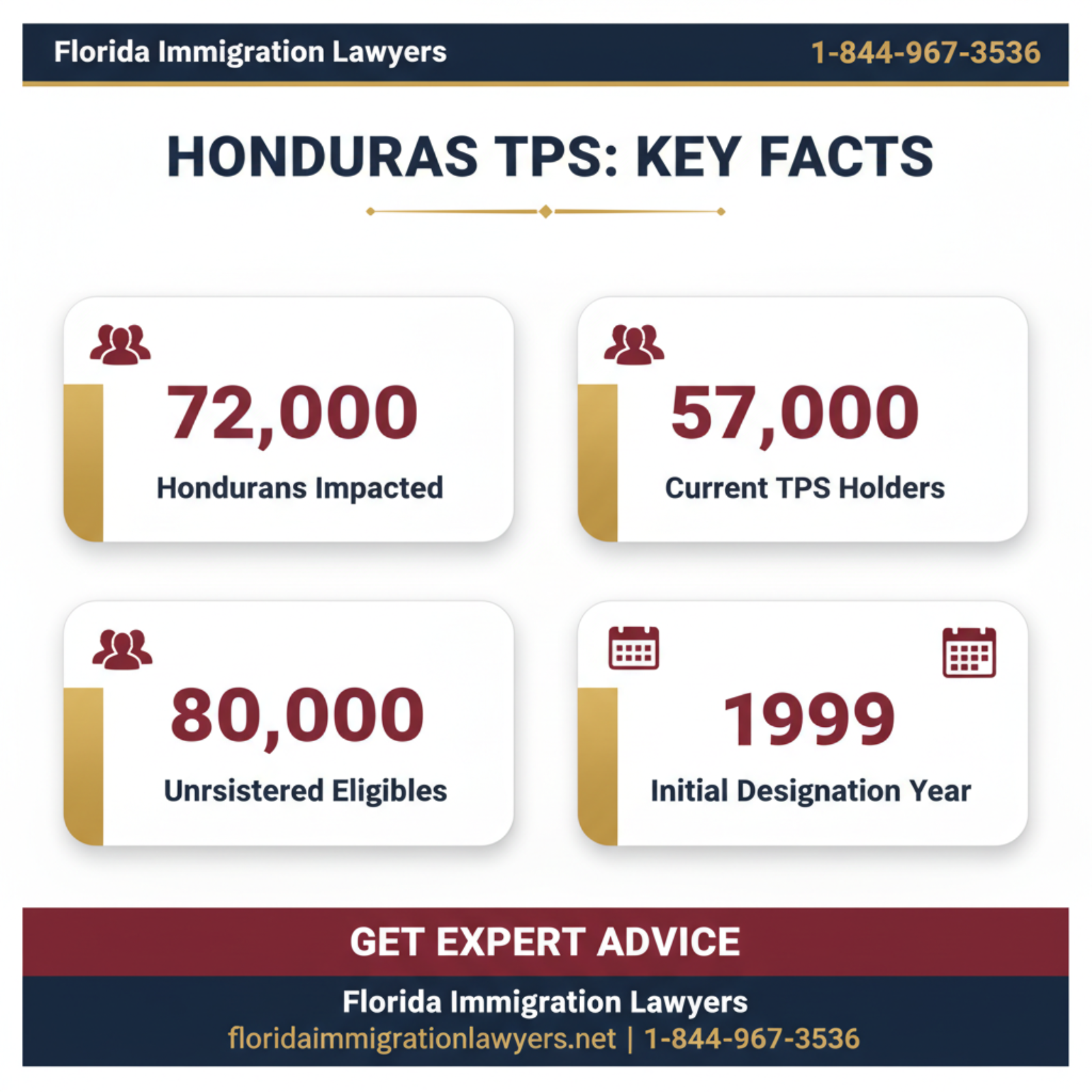
Temporary Protected Status (TPS) offers a lifeline to individuals from designated countries facing temporary, extraordinary conditions. These conditions can include armed conflict, environmental disasters, or other exceptional circumstances. For Honduran nationals, TPS has been a critical program since 1999, providing a legal pathway to live and work in the United States.
The program is authorized under Section 244 of the Immigration and Nationality Act (INA), codified at 8 U.S.C. § 1254a. This statute allows the Secretary of Homeland Security to designate a country for TPS, offering temporary relief from deportation and employment authorization to its eligible nationals already present in the U.S. The designation for Honduras followed the devastation caused by Hurricane Mitch.
Background of TPS for Honduras
Honduras was initially designated for TPS on January 5, 1999, due to the widespread destruction from Hurricane Mitch. Since then, the designation has been extended multiple times, reflecting ongoing challenges in the country. However, the program has faced significant legal and political battles, particularly in recent years.
In 2018, the Trump administration announced the termination of TPS for Honduras, setting an effective date for early 2020. This decision sparked widespread concern among beneficiaries and led to several lawsuits, including Ramos v. Mayorkas and Bhattarai v. Mayorkas. These legal challenges have played a crucial role in extending protections for many TPS holders beyond the initial termination dates.
As of 2026, the status of **TPS Honduras 2026** is still heavily influenced by these court injunctions. While the underlying termination decisions remain, the effective dates have been repeatedly postponed for many beneficiaries. This creates a complex and often uncertain environment for Honduran nationals in Florida.
Florida is home to a significant Honduran population, with many families relying on TPS for their stability. The impact of these ongoing legal battles is felt deeply in communities across the state, from Miami to Tallahassee. Florida Immigration Lawyers understand these concerns and are committed to helping our clients navigate these challenging circumstances.
Who is Eligible for TPS?
To be eligible for TPS, individuals must meet several statutory requirements. These generally include being a national of a country designated for TPS, having been continuously physically present (CPP) in the U.S. since a specific date, and having continuously resided (CR) in the U.S. since an earlier, specified date. For Honduras, these dates are tied to its initial designation and subsequent extensions.
Applicants must also demonstrate that they are otherwise admissible to the United States. Certain criminal convictions, such as a felony or two or more misdemeanors, can render an individual ineligible for TPS. Additionally, individuals who are found to be a danger to the security of the United States or have participated in the persecution of others are typically barred from receiving TPS.
It is important to note that even minor infractions or past immigration violations can impact eligibility. Consulting with an experienced immigration lawyer Florida is crucial to assess your specific situation and determine if you meet all eligibility criteria for **TPS Honduras 2026**.
Eligibility and Application Process for TPS Honduras 2026
For most Honduran nationals who already have TPS, the process in 2026 will likely involve re-registration rather than an initial application. Re-registration is a critical step to maintain your protected status and associated benefits, such as work authorization. Missing the re-registration window can have severe consequences, including loss of status and potential for deportation.
USCIS typically announces re-registration periods through Federal Register notices and updates on their website. These announcements provide specific dates, forms, and instructions. Staying informed about these official updates is paramount for all TPS beneficiaries in Florida.
The Re-registration Process
The re-registration process requires you to submit specific forms to U.S. Citizenship and Immigration Services (USCIS). The primary form is Form I-821, Application for Temporary Protected Status. If you wish to obtain or renew your employment authorization document (EAD), you will also need to file Form I-765, Application for Employment Authorization.
In certain situations, if you have any grounds of inadmissibility, such as minor criminal offenses or specific immigration violations, you may also need to file Form I-601, Application for Waiver of Grounds of Inadmissibility. It is essential to be completely honest about your history and to seek legal advice if you believe a waiver might be necessary for your **USCIS TPS Honduras** application.
The filing fees for these forms must also be included, unless you qualify for a fee waiver. USCIS fees can change, so always check the most current fee schedule on the USCIS website. Timely filing within the designated re-registration window is non-negotiable for maintaining your TPS status.
Step-by-Step Guide: How to Re-Register for TPS Honduras in Florida
- Determine Your Eligibility: Review the latest USCIS notices regarding **TPS Honduras 2026** and ensure you meet all continuous physical presence and continuous residence requirements. Confirm you are not subject to any bars to TPS. This initial assessment is crucial to avoid unnecessary filing.
- Gather Necessary Documents: Collect all required identification, proof of nationality, proof of continuous residence in the U.S. since the designated date, and proof of continuous physical presence. These documents are vital to support your claim. (Refer to the Document Checklist below for specifics).
- Complete Required Forms Accurately: Fill out Form I-821, Application for Temporary Protected Status. If you need work authorization, also complete Form I-765, Application for Employment Authorization. If applicable, complete Form I-601 for any waivers. Ensure all questions are answered truthfully and completely.
- Prepare Filing Fees: Ensure you include the correct filing fees for Form I-821, Form I-765 (if requested), and biometric services. Check the current USCIS fee schedule on uscis.gov/forms/fees. Incorrect fees can lead to rejection.
- Assemble Your Application Package: Organize your forms, supporting documents, and fee payments in the correct order as specified by USCIS instructions. Make a complete copy of everything for your records before mailing. This copy is your safeguard.
- Mail Your Application to the Correct USCIS Lockbox: Verify the specific mailing address for TPS applications from Florida on the USCIS website. Incorrect addresses, such as sending to a general service center instead of the designated lockbox, can lead to significant delays or rejection.
- Attend Biometrics Appointment: After filing, you will receive an appointment notice for a biometrics (fingerprinting) appointment at an Application Support Center (ASC). It is mandatory to attend this appointment, which typically takes place at a local USCIS office in Florida, such as those serving Miami, Orlando, or Tampa.
- Monitor Your Case Status: Use the receipt number provided by USCIS to track your application status online via the USCIS website. Respond promptly to any Requests for Evidence (RFEs) or notices of intent to deny (NOIDs) within the given timeframe.
- Consult with an Immigration Lawyer: Consider engaging Florida Immigration Lawyers throughout this process. Our expertise can help prevent errors, navigate complex issues related to **TPS Honduras 2026**, and advocate on your behalf with USCIS.
Key Documents for Your TPS Honduras Application in Florida
A successful TPS application hinges on providing comprehensive and accurate supporting documentation. Gathering all necessary documents before beginning the application process can save time and prevent delays. USCIS requires specific types of evidence to prove identity, nationality, and continuous presence in the United States.
It is important to understand that all documents not in English must be accompanied by a certified English translation. The translator must certify that they are competent to translate and that the translation is accurate. Florida Immigration Lawyers can assist you in identifying reliable translation services.
Document Checklist for TPS Honduras Re-registration:
- Proof of identity and nationality: This typically includes a copy of your birth certificate, a valid Honduran passport, or a national identity document from Honduras. These documents establish who you are and your country of origin.
- Proof of entry into the United States: Documents such as your Form I-94 Arrival/Departure Record, a copy of your airline ticket, or other travel records can demonstrate your initial entry into the U.S.
- Proof of continuous residence in the U.S. since the specified date: This is a critical component of your application. Provide a variety of documents over the required period. Examples include utility bills (electricity, water, gas), rent receipts or mortgage statements, school records for you or your children, employment records (pay stubs, W-2s), medical records, bank statements, tax returns, and even a Florida driver's license or state ID card.
- Proof of continuous physical presence in the U.S. since the specified date: Similar to continuous residence, this requires evidence that you have not left the U.S. for extended periods. The same types of documents proving residence can often be used here.
- Two passport-style photographs: These must meet USCIS specifications regarding size, background, and clarity.
- Any previous TPS approval notices or EADs: If you have previously been granted TPS, include copies of your approval notices (Form I-797) and your Employment Authorization Documents.
- Documentation related to any criminal history or immigration violations: Even minor arrests or citations, regardless of the outcome, must be disclosed. Provide certified court dispositions for any criminal charges. Failure to disclose can lead to severe penalties.
- Proof of any waivers filed: If you are filing Form I-601 for a waiver of inadmissibility, include all supporting documentation for that waiver.
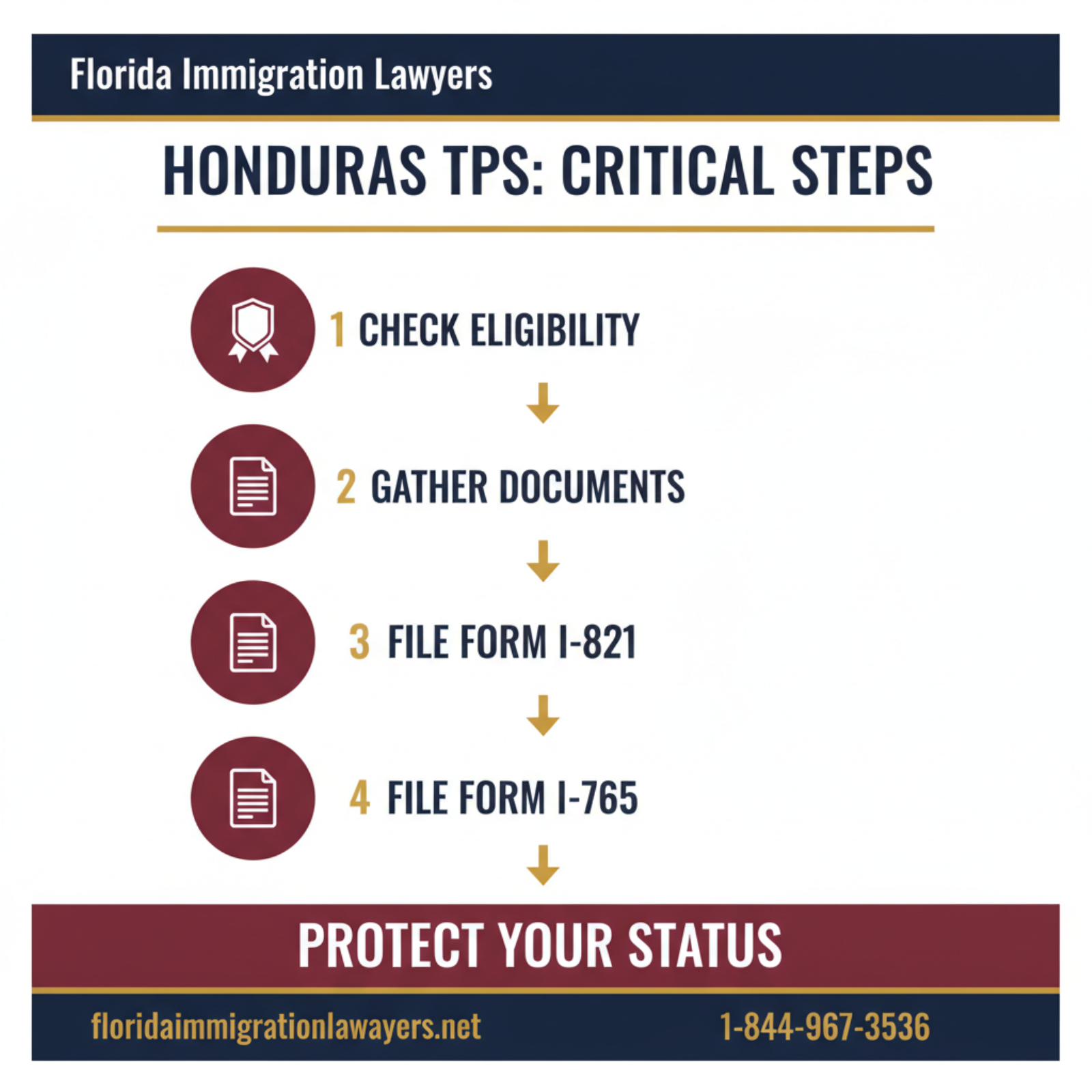
Missing or incorrect documents are a primary cause of delays or denial in **USCIS TPS Honduras** applications. Our attorneys can help you meticulously prepare your document package.
Navigating TPS Honduras 2026 Timelines and Expectations
Understanding the processing timelines for TPS applications is essential for planning your future, especially regarding employment authorization. USCIS processing times can fluctuate significantly due to varying caseloads, policy changes, and national security checks. While we cannot guarantee specific timelines for **TPS Honduras 2026**, we can offer general expectations and advice on managing the process.
Potential Delays and Solutions
Currently, you can check estimated processing times for Form I-821 and Form I-765 on the USCIS website. These times are averages and your individual case may take more or less time. Factors that can cause delays include incomplete applications, requests for additional evidence, or complex background checks.
A significant aspect of managing TPS timelines for Honduran nationals in Florida involves the automatic extension of Employment Authorization Documents (EADs). In many instances, when a TPS designation is extended, USCIS will issue a Federal Register notice automatically extending the validity of existing EADs for a certain period. This is crucial for beneficiaries whose EADs expire before their new ones are issued.
It is vital to monitor these Federal Register notices closely, as they provide official guidance on EAD auto-extensions. Your employer in Florida should accept an automatically extended EAD as valid work authorization. If your case experiences unusual delays, or if you receive a Request for Evidence, Florida Immigration Lawyers can help you understand your options, including contacting USCIS directly or submitting inquiries.
The ongoing litigation, such as the Honduras TPS lawsuit, can also impact timelines and extension dates. These court cases often result in temporary injunctions that require USCIS to extend protections for certain groups of TPS beneficiaries. Staying informed about the outcomes of these legal challenges is part of navigating your **TPS extension 2026**.
Understanding the Costs Associated with TPS Filings
Applying for or re-registering for TPS involves several fees charged by USCIS. These fees contribute to the processing of your application, including biometric services. Understanding these costs is an important part of preparing your application package. It is crucial to remember that USCIS fees can change, sometimes without extensive prior notice.
USCIS Fees and Other Costs
The primary fees associated with a TPS application or re-registration typically include:
- Form I-821, Application for Temporary Protected Status: This fee is generally required for all applicants, though in some re-registration periods, it may be waived for certain individuals.
- Form I-765, Application for Employment Authorization: If you are requesting an EAD, this fee is required.
- Biometrics Services Fee: This fee covers the cost of fingerprinting and background checks, which are mandatory for all TPS applicants and re-registrants.
You can find the most current and accurate fee schedule on the USCIS website. It is essential to include the correct fees with your application, as incorrect payments can lead to your application being rejected and returned, causing significant delays.
For individuals who cannot afford the filing fees, USCIS offers a fee waiver process through Form I-912, Request for Fee Waiver. Eligibility for a fee waiver is typically based on income falling below federal poverty guidelines, receipt of certain public benefits, or demonstrated financial hardship. Our team can help assess if you qualify for a fee waiver for your **USCIS TPS Honduras** application.
Beyond USCIS fees, other potential costs include legal fees for professional assistance from Florida Immigration Lawyers, translation fees for non-English documents, and mailing costs. While these additional costs exist, investing in expert legal counsel can prevent costly mistakes and provide peace of mind throughout the complex process.
The complexities of TPS Honduras 2026 can be overwhelming, especially with ongoing legal challenges and policy shifts. Do not navigate this process alone. Contact Florida Immigration Lawyers today to ensure your application is accurate, complete, and filed correctly. Our dedicated team is here to protect your rights and guide you every step of the way.
Common Mistakes to Avoid with Your TPS Application
Navigating the TPS application or re-registration process can be challenging, and even minor errors can lead to significant delays or denials. Being aware of common pitfalls can help you avoid them and ensure a smoother process. Florida Immigration Lawyers frequently encounter these issues and can help you prevent them.
- Failing to Re-register on Time: Missing the re-registration deadline is one of the most common and critical errors. This can lead to loss of TPS benefits, including work authorization and protection from removal. Always track official USCIS announcements and Federal Register notices for the precise re-registration window for **TPS Honduras 2026**.
- Incomplete or Inaccurate Forms: Any missing information, unanswered questions, or errors on Forms I-821 or I-765 can cause delays, Requests for Evidence (RFEs), or outright denial. Double-check all sections and ensure they are filled out truthfully and completely.
- Insufficient Supporting Documentation: Failing to provide adequate proof of continuous residence, continuous physical presence, or identity can jeopardize your case. Gather all required documents meticulously, making sure they span the entire required period.
- Not Disclosing Criminal History or Prior Immigration Issues: Attempting to conceal past arrests, convictions, or immigration violations can result in severe consequences, including charges of fraud and permanent bars to immigration benefits. Always be honest and provide certified court dispositions.
- Sending Incorrect Fees or No Fees: USCIS applications require specific fee amounts. Sending an incorrect payment, an expired check, or failing to include a properly completed fee waiver request can lead to the rejection of your entire application. Verify the current fees on the USCIS website.
- Mailing to the Wrong Address: USCIS has specific lockbox facilities for different form types and states. Sending your application to the wrong address can cause significant delays or lead to its return. Always confirm the correct mailing address for **USCIS TPS Honduras** applications.
- Failing to Attend Biometrics Appointment: A notice for a biometrics appointment is mandatory. Missing it without proper rescheduling can lead to the denial of your application for failure to prosecute. Attend your appointment at your designated Application Support Center (ASC) in Florida.
- Not Responding to Requests for Evidence (RFEs): If USCIS requests additional information or documents, you must respond within the specified timeframe. Failing to do so will likely result in a denial. Respond thoroughly and on time, ideally with legal assistance.
- Assuming Automatic Extension of Benefits Without Verification: While EADs are sometimes automatically extended through Federal Register notices, relying solely on this without verifying current official publications can be risky. Always confirm the validity of your status and work authorization.
- Ignoring Changes in Law or Policy: Immigration laws and policies, especially regarding **TPS extension 2026** and the ongoing Honduras TPS lawsuit, can change rapidly due to litigation or new directives. Staying informed through reliable sources or legal counsel is vital.
- Not Seeking Legal Counsel: Attempting to navigate the complex TPS process without an experienced immigration lawyer can lead to avoidable errors, missed opportunities, and significant stress. Professional guidance can make a substantial difference.
When to Seek Expert Legal Guidance for TPS Honduras
While some TPS re-registrations may seem straightforward, many situations warrant the expertise of an immigration attorney. The complexities surrounding **TPS Honduras 2026**, particularly with ongoing litigation and policy shifts, make legal counsel invaluable. Florida Immigration Lawyers are well-versed in these nuances and can provide the strategic advice you need.
Benefits of Legal Representation
You should consider contacting an attorney if you encounter any of the following scenarios:
- Complex Eligibility Issues: If you have any criminal history, prior immigration violations, or have traveled outside the U.S. since your initial TPS grant, your eligibility may be complicated. An attorney can assess your situation and advise on potential waivers or alternative strategies.
- Receipt of RFE or NOID: If you receive a Request for Evidence (RFE) or a Notice of Intent to Deny (NOID) from USCIS, it indicates a significant issue with your application. Responding correctly and comprehensively is critical, and a lawyer can help craft a strong response.
- Concerns about Extensions or Terminations: The future of **TPS Honduras 2026** is often subject to court decisions and government announcements. An attorney can provide the most current information and advise on how these changes might impact your status.
- Exploring Other Immigration Pathways: While TPS provides temporary protection, you may be eligible for other, more permanent immigration benefits, such as family-based petitions, asylum, or adjustment of status. An attorney can help you explore these options while maintaining your TPS.
- Fear of Deportation: If you are concerned about potential deportation defense or removal proceedings, an attorney can help protect your rights and explore all available defenses.
- Difficulty Understanding USCIS Notices: Immigration documents can be complex and confusing. An attorney can explain notices from USCIS and help you understand what actions are required.
Florida Immigration Lawyers offer comprehensive services tailored to your individual needs. We serve clients across Florida, including those in Tallahassee, Miami, and Orlando, providing expert guidance on TPS and a wide range of immigration matters. Our goal is to ensure your rights are protected and your immigration goals are met. Do not hesitate to contact us for a confidential consultation.
Frequently Asked Questions (FAQs) about TPS Honduras 2026
The evolving nature of TPS for Honduras often leads to many questions. Here are answers to some commonly asked questions regarding the status of TPS in 2026.
Will TPS be extended in 2026?
While specific extensions for **TPS Honduras 2026** are subject to ongoing litigation and government decisions, court injunctions have historically provided relief, pushing back termination dates. It is crucial to monitor official USCIS announcements and Federal Register notices for the latest updates. The situation remains fluid, and beneficiaries should prepare for potential re-registration periods as they are announced.
Has TPS for Honduras been extended?
As of early 2026, the status of TPS for Honduras has been influenced by various federal court orders, notably in cases like Ramos v. Mayorkas. These orders have effectively extended protections for many beneficiaries, preventing the immediate termination of their status. However, these extensions are often tied to specific lawsuits and may have termination dates that require further action or extensions. Always check the most recent USCIS guidance for the definitive answer regarding your specific situation and the latest **TPS extension 2026**.
Did Trump cancel TPS for Honduras?
The Trump administration did announce the termination of TPS for Honduras, along with several other countries, in 2018. However, these terminations were largely halted or significantly delayed by federal court injunctions stemming from lawsuits filed on behalf of TPS beneficiaries. Therefore, while termination was announced, its effective implementation was postponed due to legal challenges and the ongoing Honduras TPS lawsuit.
Which countries will lose TPS?
The list of countries with TPS designations and their potential termination dates is subject to review by the Secretary of Homeland Security based on conditions in those countries. Historically, countries like El Salvador, Haiti, Nicaragua, and Sudan have also faced termination announcements alongside Honduras, with some beneficiaries covered by similar legal injunctions. For the most current list of designated countries and their status, always consult the official USCIS website.
About Florida Immigration Lawyers
Florida Immigration Lawyers is a leading law firm dedicated to providing exceptional immigration legal services across the entire state of Florida. Our experienced attorneys understand the profound impact immigration issues have on individuals and families, and we are committed to offering compassionate, effective, and personalized legal representation. From our offices, we serve clients in Tallahassee, Miami, Orlando, Tampa, and throughout Florida, ensuring that expert legal help is always within reach.
We specialize in a wide range of immigration matters, including Temporary Protected Status (TPS), deportation defense, family-based immigration, business immigration, citizenship, and asylum. Our deep understanding of U.S. immigration law, coupled with our commitment to our clients, sets us apart. We pride ourselves on clear communication, strategic advocacy, and a steadfast dedication to achieving the best possible outcomes for those we represent.
Choosing Florida Immigration Lawyers means partnering with a team that genuinely cares about your future. We offer free consultations, are available 24/7, and are ready to answer your questions and address your concerns. Let us be your trusted legal resource in navigating the complexities of U.S. immigration law. Call us today at 1-844-967-3536 or visit our website at https://www.floridaimmigrationlawyers.net to schedule your confidential consultation.
Sources and References
- U.S. Citizenship and Immigration Services (USCIS)
- Executive Office for Immigration Review (EOIR)
- U.S. Department of State
- Immigration and Nationality Act (INA) Section 244 (8 U.S.C. § 1254a) - Temporary Protected Status
- 8 Code of Federal Regulations (CFR) Part 244 - Temporary Protected Status
- Federal Register Notices concerning TPS for Honduras (various dates)
- Ramos v. Mayorkas, 9 F.4th 1121 (9th Cir. 2021)
- Bhattarai v. Mayorkas, 484 F. Supp. 3d 924 (N.D. Cal. 2020)
This article provides general legal information and is not intended as legal advice. Every case is unique, and outcomes depend on specific facts and circumstances. Contact an attorney for advice about your particular situation.
Do not face the uncertainties of TPS Honduras 2026 alone. The experienced immigration attorneys at Florida Immigration Lawyers are here to provide the dedicated legal support you need. We offer free, confidential consultations and are available 24/7 to discuss your case. Protect your future and your family's stability in Florida. Call us today at 1-844-967-3536. Se Habla Español - Estamos aquí para ayudarle.
Florida Immigration Lawyers
Legal Team
Our experienced attorneys at Florida Immigration Lawyers have been serving clients across Florida for over 20 years. We specialize in immigration, personal injury, criminal defense, workers compensation, and family law.