Green Card Holder ICE Detention in Florida: Your Rights
Even lawful permanent residents (green card holders) can face ICE detention and deportation in Florida. This comprehensive guide explains your rights, the complex detention process, essential documents, and common mistakes to avoid. Learn about mandatory versus discretionary detention, bond hearings, and how an experienced immigration lawyer can provide critical deportation defense. Florida Immigration Lawyers offers immediate assistance and free consultations for those in St. Petersburg and across the state, ensuring you have the support needed to protect your green card status.
Yes, a green card holder ICE detention is possible under specific circumstances, typically involving certain criminal convictions or immigration violations. While lawful permanent residents have more rights than undocumented individuals, they are not immune to arrest, detention, or even deportation. Understanding your legal standing and acting quickly is crucial to protect your status.
- Green card holders can be detained and deported for specific offenses.
- Mandatory detention applies to certain serious criminal convictions.
- You have rights during ICE encounters and detention, including the right to an attorney.
- Prompt legal action significantly improves outcomes in detention cases.
- Florida Immigration Lawyers can help navigate complex ICE detention proceedings.
Green Card Holder ICE Detention in Florida: Your Rights and Defense
Imagine you've built a life in Florida, secured your green card, and feel safe in your community. Suddenly, you or a loved one faces arrest and detention by Immigration and Customs Enforcement (ICE). This can be a terrifying and confusing experience, especially for those who believe their green card offers absolute protection.
The reality is that even lawful permanent residents (LPRs) can be subject to green card holder ICE detention and deportation proceedings. Knowing your rights and understanding the legal process is paramount. In Florida, with its diverse population, such situations are unfortunately not uncommon.
This comprehensive guide from Florida Immigration Lawyers will walk you through the complexities of ICE detention for green card holders. We will cover your rights, the detention process, common mistakes to avoid, and how experienced legal representation can make a critical difference. Do not face this challenge alone. Call Florida Immigration Lawyers at 1-844-967-3536 for a free consultation and immediate guidance.
Overview of Green Card Holder ICE Detention in Florida
While holding a green card grants you many privileges, it does not provide absolute immunity from immigration enforcement. U.S. immigration law, specifically the Immigration and Nationality Act (INA), outlines grounds for inadmissibility and deportability that can affect even long-term permanent residents.
An encounter with ICE can stem from various situations. This might include an arrest by local law enforcement that triggers an ICE detainer, an encounter at an airport or port of entry, or even a targeted operation. For green card holders, the key is understanding the specific circumstances that can lead to detention.
Rights of Green Card Holders During ICE Encounters
As a green card holder, you possess important constitutional rights, even when interacting with ICE. You have the right to remain silent and should not answer questions about your immigration status or country of origin. You also have the right to speak with an attorney before answering any substantive questions.
It is crucial to request to speak with a lawyer immediately if you are detained. Do not sign any documents without understanding them fully and without legal counsel. Remember, anything you say or sign can be used against you in immigration proceedings. Always carry proof of your green card, but do not produce it unless specifically required by a warrant or court order.
Mandatory vs. Discretionary Detention for Green Card Holders
One of the most critical distinctions in green card holder ICE detention cases is between mandatory and discretionary detention. Under INA Section 236(c) (8 U.S.C. § 1226(c)), certain criminal convictions trigger mandatory detention, meaning ICE generally cannot release you on bond.
These offenses often include aggravated felonies, certain drug offenses, and crimes involving moral turpitude. If your case falls under mandatory detention, your best chance for release and to fight deportation is through aggressive legal advocacy. For other less serious offenses, ICE may have the discretion to grant bond, allowing you to fight your case from outside detention. An experienced immigration lawyer in Florida can help determine if your case qualifies for bond.
The ICE Detention Process in Florida: A Step-by-Step Guide
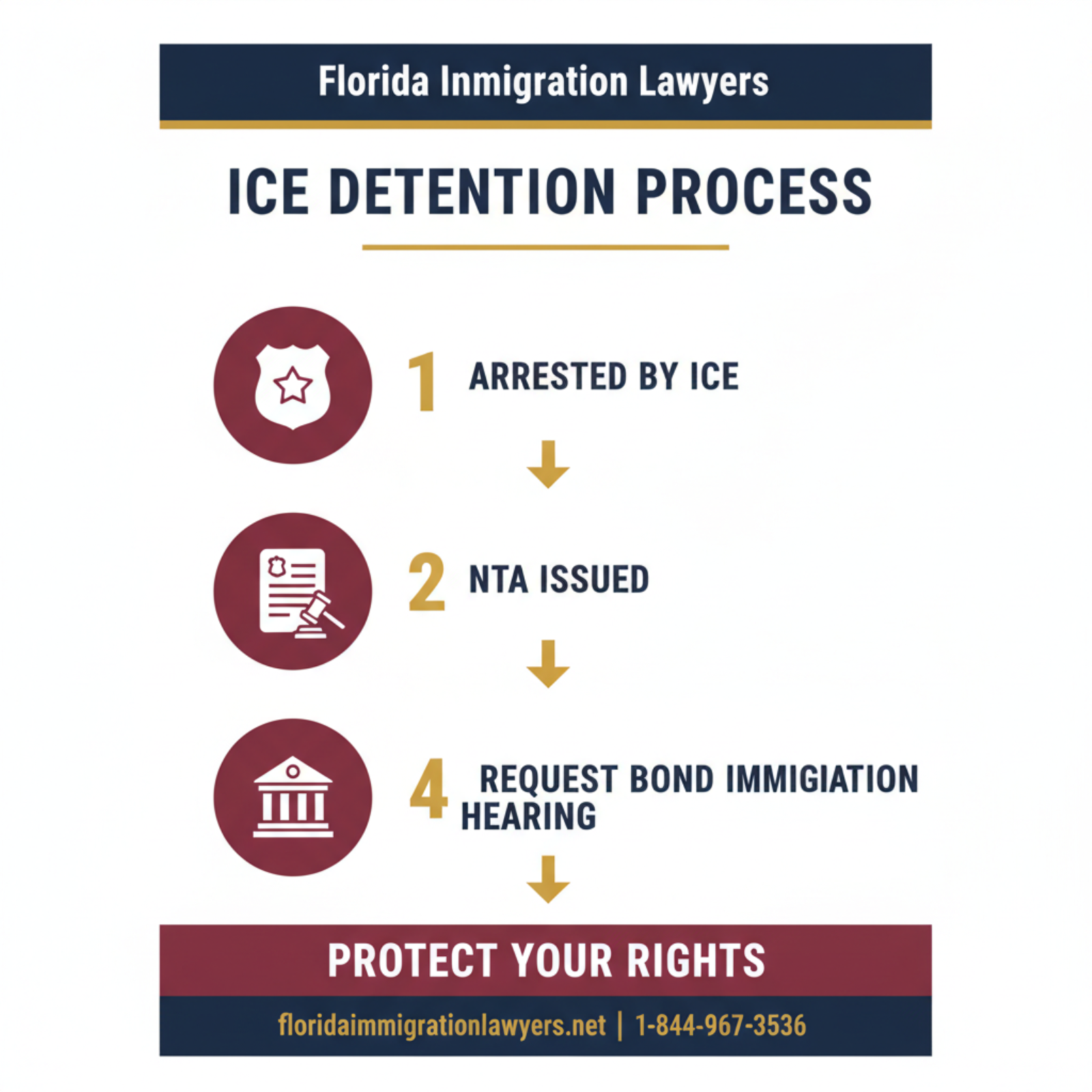
Navigating the ICE detention process can be daunting. Understanding each stage is vital for a successful defense. Here is a typical sequence of events if you or a loved one is facing green card holder ICE detention in Florida:
- Arrest and Initial Processing: ICE may arrest a green card holder based on an immigration detainer or during an enforcement action. You will be taken to an ICE detention facility, often in areas like Krome Service Processing Center in Miami, Glades County Detention Center, or Broward Transitional Center. During this initial phase, ICE agents will gather personal information and conduct an interview. Remember your right to remain silent and to request an attorney.
- Issuance of a Notice to Appear (NTA): If ICE decides to pursue deportation, they will issue a Form I-862, Notice to Appear (NTA). This document formally charges you with being removable from the U.S. and initiates removal proceedings before an immigration judge. The NTA will specify the alleged grounds of deportability and the immigration court where your hearing will take place, such as the Miami Immigration Court or Orlando Immigration Court.
- Custody Review and Bond Hearing: For cases not subject to mandatory detention, ICE may decide whether to set a bond. If ICE denies bond or sets an unreasonably high amount, you have the right to request a bond hearing before an immigration judge. This hearing is a critical opportunity for your attorney to argue for your release, presenting evidence of your ties to the community, good moral character, and lack of flight risk or danger to the community.
- Master Calendar Hearing: This is the first formal hearing before an immigration judge. During this hearing, the judge will confirm your identity, ensure you received the NTA, and ask you to admit or deny the allegations and concede or contest the charges of deportability. This is where your attorney will formally enter an appearance and indicate your intent to seek relief from removal, if applicable.
- Individual Hearing (Merits Hearing): If you contest deportability or seek relief, the judge will schedule an Individual Hearing. This is a full trial where both sides present evidence, call witnesses, and cross-examine. Your attorney will argue your eligibility for various forms of relief, such as cancellation of removal for LPRs (INA 240A(a)), adjustment of status, or asylum, depending on your specific circumstances.
- Decision and Appeals: After the Individual Hearing, the immigration judge will issue a decision. If the decision is unfavorable, your attorney can file an appeal with the Board of Immigration Appeals (BIA). Further appeals can be pursued in federal circuit courts. If the decision is favorable, you may be released and your green card status maintained or restored.
Essential Documents for Your ICE Detention Case
Gathering the right documents swiftly is critical when a green card holder is in ICE detention. These documents help establish identity, demonstrate eligibility for relief, and support arguments for bond. Providing these to your immigration lawyer in Florida can significantly expedite your case.
- Your Green Card (Form I-551, Permanent Resident Card)
- Passport and other identity documents
- Notice to Appear (NTA, Form I-862) if issued
- Any immigration documents you possess (e.g., I-130, I-485, old visas, approval notices)
- Marriage certificate, birth certificates of U.S. citizen children, or other family relationship proof
- Proof of residence in Florida (utility bills, lease agreements, property deeds)
- Employment history and letters from employers
- Tax returns for the past several years
- Evidence of community ties (letters of support, volunteer work, church involvement)
- Medical records, especially if there are health concerns requiring specific care
- Any criminal court documents, including arrest records, charging documents, plea agreements, and disposition orders (very important for determining deportability)
- Police reports related to any arrests
Understanding Timelines and Costs in ICE Detention Cases
The timeline for a green card holder ICE detention case can vary widely depending on the complexity of the legal issues, the specific immigration court, and the caseload of the judges. Some cases are resolved in a few months, while others can take years, especially if appeals are involved. Immigration courts in Florida, such as the ones serving the St. Petersburg area, often face heavy dockets.
For individuals held in detention, expedited processing is often sought, but it is not always guaranteed. Bond hearings, if applicable, typically occur within a few weeks of detention. Master Calendar Hearings may be scheduled within a few weeks to months, with Individual Hearings set further out.
Cost Factors and Fee Breakdown
The costs associated with fighting an ICE detention case primarily involve legal fees. These fees can vary significantly based on the attorney's experience, the complexity of your case, and the services required. Florida Immigration Lawyers offers transparent fee structures, and we can discuss payment options during your free consultation.
Additional costs may include filing fees for certain applications for relief (though many forms of relief sought in detention do not have separate filing fees), expert witness fees if needed, and travel expenses for family members attending hearings. It is important to remember that investing in experienced legal counsel can prevent the much higher long-term costs and emotional toll of deportation.
Do not navigate this process alone. The stakes are incredibly high, and the legal landscape is unforgiving. Contact Florida Immigration Lawyers today to secure experienced deportation defense in St. Petersburg and throughout Florida.
Common Mistakes to Avoid During Green Card Holder ICE Detention
Making mistakes during an ICE detention can severely jeopardize your case and even lead to deportation. Being aware of these pitfalls is the first step toward protecting your rights and status.
- Failing to Remain Silent: You have the right to remain silent. Any statements you make to ICE agents without an attorney present can be used against you. Do not answer questions about your immigration status, birthplace, or how you entered the U.S. until you have spoken with your legal counsel.
- Signing Documents Without Legal Review: Never sign any document presented by ICE or other law enforcement officials without first reviewing it with your attorney. You could inadvertently waive important rights, agree to voluntary departure, or admit to deportability grounds.
- Not Carrying Proof of Green Card: While you should not volunteer information, you are generally required to carry proof of your immigration status. Not having your green card (I-551) with you can lead to unnecessary delays or confusion during an encounter, even if you are a lawful permanent resident.
- Lying to Immigration Officials: Providing false information to ICE or an immigration judge can lead to severe penalties, including a finding of inadmissibility or deportability, and even criminal charges. Always be truthful with your attorney, who can then advise you on the best legal strategy.
- Not Informing Family of Detention: If detained, try to inform a trusted family member or friend as soon as possible. They can then contact an attorney on your behalf and begin gathering necessary documents. Silence can lead to missed opportunities for timely legal intervention.
- Failing to Disclose Criminal History to Your Lawyer: Be completely honest with your immigration lawyer about any past arrests, charges, or convictions, no matter how minor. Even old or expunged offenses can have serious immigration consequences. Your attorney needs this information to build a strong defense.
- Missing Court Dates: Failure to appear at any scheduled immigration court hearing can result in an in absentia removal order, meaning you are ordered deported without your presence. This makes it much harder to reopen your case and fight for your green card.
- Not Seeking Legal Counsel Promptly: The immigration system is complex and moves quickly. Delaying in seeking legal help can mean missed deadlines, lost opportunities for bond, or difficulty in gathering crucial evidence. Early intervention by an immigration lawyer in Florida is key.
- Assuming Your Green Card Protects You Completely: Many green card holders mistakenly believe they cannot be deported. This false sense of security can lead to complacency or actions that put their status at risk. Always understand the limitations and conditions of your permanent residency.
- Not Understanding Grounds of Deportability: If you are a green card holder, you can be deported for specific reasons outlined in INA 237 (8 U.S.C. § 1227), such as certain criminal offenses, marriage fraud, or failing to register change of address. Ignorance of these grounds is not a defense.
When to Call a Florida Immigration Lawyer for ICE Detention
The moment you or a loved one faces green card holder ICE detention, contacting an experienced immigration lawyer is not just advisable-it's essential. The complexities of immigration law, especially concerning detention and deportation, demand professional expertise.
Here are specific scenarios where immediate legal assistance from Florida Immigration Lawyers is critical:
- Upon Arrest or Detention: If ICE detains you or a family member, call us immediately. We can advise on your rights, attempt to locate the detained individual, and begin strategizing for release and defense.
- Receipt of a Notice to Appear (NTA): An NTA signals the start of deportation proceedings. Our attorneys can review the charges, identify potential defenses, and prepare for your initial court appearance.
- Denied Bond or High Bond Amount: If ICE refuses to set a bond or sets an amount you cannot afford, we can file a motion for a bond hearing and argue for your release before an immigration judge.
- Criminal Convictions: Even minor criminal issues can have major immigration consequences for green card holders. If you have any past or pending criminal charges, consult with us to understand the immigration implications and how to mitigate them.
- Mandatory Detention Cases: If your case falls under mandatory detention, the fight is even more urgent. We can explore all possible avenues to challenge the mandatory detention finding or seek relief from removal.
- Fear of Persecution (Asylum Claims): If you fear returning to your home country, you may be eligible to apply for asylum, even as a green card holder facing deportation. We can help assess your eligibility and prepare a strong asylum case.
- Any Questions About Your Green Card Status: If you are unsure about your rights, responsibilities, or potential risks as a green card holder, a consultation can provide clarity and peace of mind.
Florida Immigration Lawyers has extensive experience providing aggressive deportation defense in St. Petersburg, Miami, Orlando, and across the state. Our team is dedicated to protecting your rights and helping you fight to keep your green card. We understand the local courts and the specific challenges faced by immigrants in Florida.
About Florida Immigration Lawyers
Florida Immigration Lawyers is a leading law firm dedicated to providing comprehensive immigration legal services throughout Florida. We understand the profound impact immigration issues have on individuals and families, and we are committed to offering compassionate yet aggressive representation.
Our team of skilled attorneys specializes in a wide range of immigration matters, including green card applications, family-based immigration, business immigration, citizenship, asylum, and robust deportation defense. We proudly serve clients in St. Petersburg, Miami, Orlando, Tampa, Jacksonville, and all other communities across the Sunshine State.
When you choose Florida Immigration Lawyers, you choose a partner who will stand by you every step of the way. We offer free consultations, are available 24/7, and provide bilingual services (Se Habla Español) to ensure everyone has access to quality legal advice. Let us put our expertise to work for you.
Visit our website at https://www.floridaimmigrationlawyers.net or call us anytime at 1-844-967-3536 to schedule your free consultation.
Sources and References
- U.S. Citizenship and Immigration Services (USCIS)
- Executive Office for Immigration Review (EOIR) - Immigration Courts
- U.S. Immigration and Customs Enforcement (ICE)
- 8 U.S.C. Chapter 12 - Immigration and Nationality Act (INA)
- INA Section 236 (8 U.S.C. § 1226) - Detention and Release of Aliens
- INA Section 237 (8 U.S.C. § 1227) - Deportable Aliens
- INA Section 212 (8 U.S.C. § 1182) - Inadmissible Aliens
- 8 CFR Part 236 - Apprehension and Detention of Inadmissible and Deportable Aliens
This article provides general legal information and is not intended as legal advice. Every case is unique, and outcomes depend on specific facts and circumstances. Contact an attorney for advice about your particular situation. Immigration laws are subject to change, and this content reflects information as of the publication date.
If you are a green card holder facing ICE detention in Florida, time is of the essence. Your future, and potentially your freedom, depend on swift and effective legal action. Do not delay in seeking the professional guidance you need.
Contact Florida Immigration Lawyers today for a free, confidential consultation. Call us at 1-844-967-3536. Se Habla Español - Estamos aquí para ayudarle.
Florida Immigration Lawyers
Legal Team
Our experienced attorneys at Florida Immigration Lawyers have been serving clients across Florida for over 20 years. We specialize in immigration, personal injury, criminal defense, workers compensation, and family law.