DACA News 2026 Florida: Updates for Dreamers & Renewal Guidance
Are you a DACA recipient in Florida seeking the latest updates for 2026? This comprehensive guide from Florida Immigration Lawyers covers critical DACA news 2026 Florida, focusing on renewal processes, eligibility considerations, and the evolving legal landscape. We delve into federal court decisions impacting new applications versus renewals and discuss the implications for Dreamers across the state, including in Kissimmee. Learn about essential documents, processing timelines, and common mistakes to avoid. Our firm provides crucial insights to help you navigate these complex immigration challenges safely and effectively, ensuring you understand your rights and options amidst ongoing legal uncertainties. Contact us for expert legal support.
DACA news 2026 Florida primarily focuses on the ongoing renewal process for existing recipients, as new applications remain paused due to federal court injunctions. While the program's long-term future is uncertain, current DACA beneficiaries in Florida must diligently renew their status to maintain protection from deportation and work authorization. Staying informed about legal developments and consulting an experienced immigration lawyer is crucial for navigating these complex updates.
- New DACA applications are generally not accepted; focus is on renewals.
- Ongoing legal challenges continue to impact DACA's future.
- Florida DACA recipients must renew promptly to maintain benefits.
- Consult an immigration lawyer for personalized guidance and support.
- Local enforcement policies in Florida emphasize the need for legal awareness.
DACA News 2026 Florida: Updates for Dreamers & Renewal Guidance
Are you a DACA recipient in Kissimmee, Orlando, or anywhere across Florida, anxiously watching for the latest DACA news 2026 Florida? The landscape for Deferred Action for Childhood Arrivals (DACA) recipients continues to evolve, marked by ongoing legal challenges and policy shifts. Understanding these changes is critical for maintaining your status and planning your future.
This comprehensive guide from Florida Immigration Lawyers provides crucial updates on DACA in 2026, including renewal processes, eligibility considerations, and the program's evolving legal landscape. We understand the unique challenges you face and are here to help you navigate this complex terrain.
Do not face these uncertainties alone. Call Florida Immigration Lawyers at 1-844-967-3536 for a free consultation to discuss your specific situation and ensure your rights are protected.
Understanding DACA's Current Landscape in Florida
The DACA program, established in 2012, has provided temporary relief from deportation and work authorization to hundreds of thousands of young people brought to the United States as children. However, its legal standing has been consistently challenged, leading to significant uncertainty for recipients, especially those in Florida.
For DACA news 2026 Florida, the key takeaway remains that while renewals are generally processed, new applications for DACA are not being accepted. This situation stems from federal court injunctions, particularly decisions from the U.S. Court of Appeals for the Fifth Circuit, which have blocked the Biden administration's DACA Final Rule from taking full effect. This means that individuals who have never held DACA status typically cannot apply at this time.
The Legal Status of DACA in 2026
As of 2026, the DACA program continues to operate under a cloud of legal uncertainty. While the Department of Homeland Security (DHS) can continue to process DACA renewals for existing recipients, federal courts have maintained an injunction against the processing of initial DACA applications. This legal limbo means that while current Dreamers can generally renew their status, the path for new applicants remains closed. The future of DACA ultimately rests on further court rulings or legislative action from Congress.
This complex legal environment underscores the importance of staying informed and seeking professional advice. The provisions regarding deferred action and employment authorization are tied to specific regulations, such as those found in 8 CFR Part 274a, which governs the control of employment of aliens.
Impact on Florida Dreamers and Enforcement
Florida's stance on immigration, coupled with increased state and federal enforcement activities, adds another layer of complexity for DACA recipients in areas like Kissimmee and across the state. Recent initiatives, such as Florida's 287(g) partnerships with ICE and operations like "Operation Tidal Wave," highlight a stricter enforcement environment. These actions emphasize that DACA provides deferred action, not permanent legal status, and recipients must remain vigilant about maintaining their status and understanding their rights.
It is crucial to understand that even with DACA, recipients are not immune to all immigration enforcement actions, especially if their DACA status lapses or they encounter criminal legal issues. The question "Can ICE deport DACA recipients?" is met with a cautious "yes," under certain circumstances. This makes maintaining DACA status and adhering to all legal requirements paramount for Florida DACA recipients.
Navigating the DACA Renewal Process in 2026
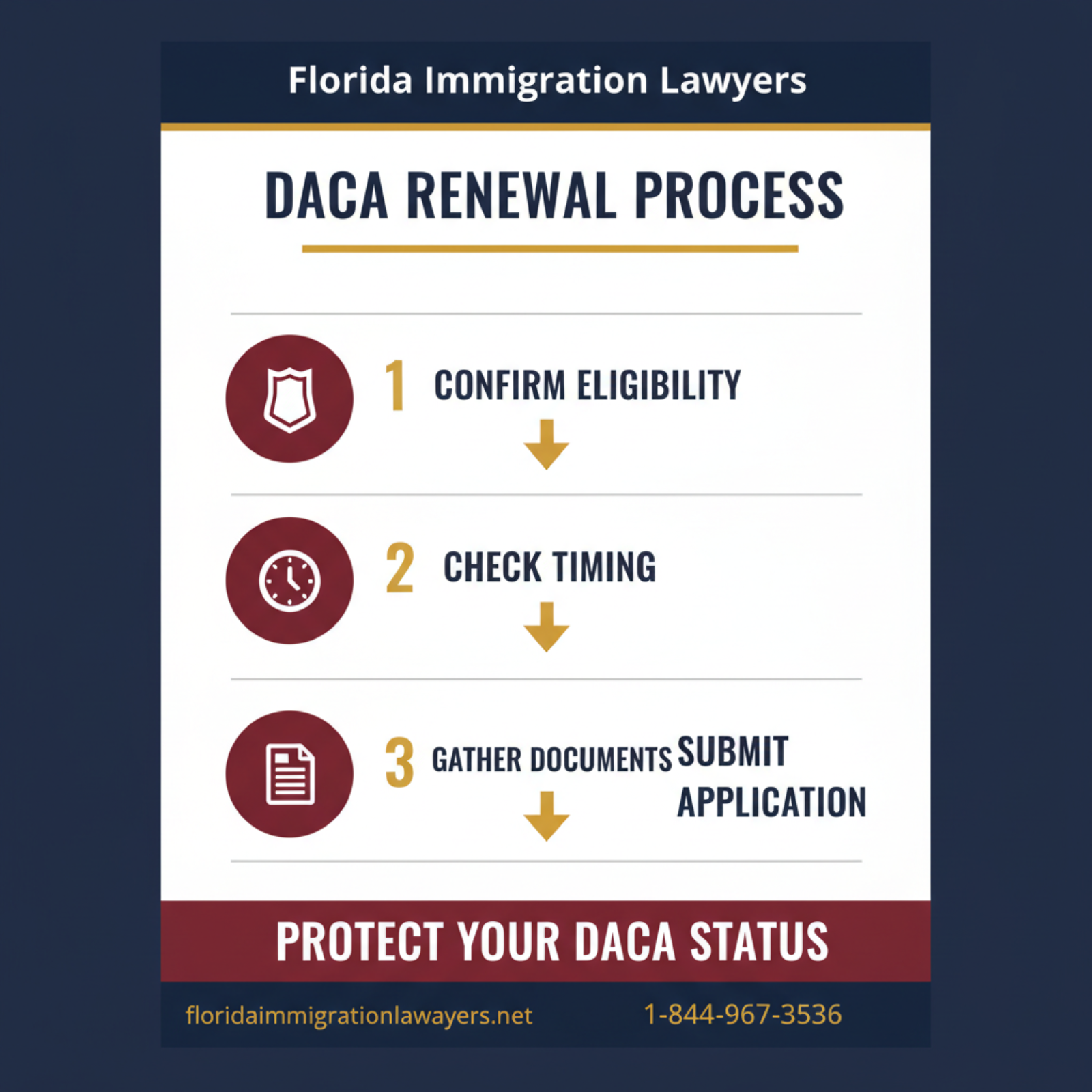
For existing DACA recipients, the focus for DACA news 2026 Florida is primarily on timely and accurate renewals. USCIS generally recommends filing your renewal application 120 to 150 days before your current DACA and Employment Authorization Document (EAD) expire. This allows ample time for processing and helps prevent a lapse in your work authorization and deferred action.
A lapse in DACA status can lead to serious consequences, including losing your work authorization and potentially being placed in removal proceedings. Therefore, understanding and meticulously following the renewal process is vital. We provide comprehensive immigration assistance to help you navigate this.
-
Step 1: Check Your Eligibility for Renewal
To renew DACA, you must generally meet the initial DACA guidelines, including having been under 31 years of age as of June 15, 2012; having come to the U.S. before your 16th birthday; and having continuously resided in the U.S. since June 15, 2007. Crucially, you must not have been convicted of a felony, a significant misdemeanor, or three or more other misdemeanors, and must not pose a threat to national security or public safety. Even minor infractions can impact your eligibility, making a legal review essential.
-
Step 2: Gather Required Documents
Collecting all necessary documents is a critical part of the renewal process. This includes identity documents, proof of continuous residence, and any previous DACA approval notices. Even if you have submitted these before, having them ready can streamline the process. A detailed list is provided in the next section.
-
Step 3: Complete Forms I-821D, I-765, and I-765 Worksheet
You will need to accurately complete Form I-821D, Consideration of Deferred Action for Childhood Arrivals; Form I-765, Application for Employment Authorization; and the Form I-765 Worksheet. These forms require precise information about your personal history, residence, and any interactions with law enforcement. Any discrepancies or errors can lead to delays or a Request for Evidence (RFE).
-
Step 4: Pay Filing Fees
The DACA renewal application requires payment of a filing fee, which typically includes the fee for Form I-765 (Application for Employment Authorization) and the biometrics services fee. USCIS fees are subject to change, so it is important to check the current fee schedule on the official USCIS website before submitting your application. Do not send cash. Payment must be made by money order, personal check, cashier's check, or credit card using Form G-1450, Authorization for Credit Card Transactions.
-
Step 5: Submit Your Application
Once all forms are completed and documents gathered, you must mail your application package to the correct USCIS lockbox facility. The specific address depends on your state of residence. For Florida residents, it is important to verify the correct mailing address on the USCIS website to avoid misdirection or delays. Ensure your package is complete to prevent rejection.
-
Step 6: Attend Biometrics Appointment
After USCIS accepts your application, you will typically receive a notice for a biometrics appointment at an Application Support Center (ASC). This appointment is mandatory and involves collecting your fingerprints, photograph, and signature. Missing this appointment without rescheduling can lead to a denial of your application. Be sure to bring the appointment notice and a valid photo ID.
Essential Documents for DACA Applications and Renewals
Having all your documents organized and ready is crucial for a smooth DACA renewal process. Missing or incorrect documentation is a common reason for delays or Requests for Evidence (RFEs). Always keep copies of everything you submit to USCIS.
- Form I-821D, Consideration of Deferred Action for Childhood Arrivals: Completed and signed.
- Form I-765, Application for Employment Authorization: Completed and signed.
- Form I-765 Worksheet: Completed to support your I-765 application.
- Two Passport-Style Photos: Taken within 30 days of filing.
- Copy of Your Previous DACA Approval Notice (Form I-797): If you have one.
- Copy of Your Current Employment Authorization Document (EAD): Both front and back.
- Copy of Your Birth Certificate: With a certified English translation if not in English.
- Copy of Your Passport or National Identity Document: From your country of origin.
- Proof of Continuous Residence: Examples include school records, medical records, employment records, tax returns, utility bills, or bank statements from 2007 to the present. These documents demonstrate your physical presence in the U.S.
- Proof of Entry to the U.S. Before Age 16: Such as passport entry stamps, I-94 records, or school records.
- Proof of Presence in the U.S. on June 15, 2012: Any document showing you were in the U.S. on this specific date.
- Proof of Education or Military Service: Such as diplomas, GED certificates, or military discharge records.
- Any Arrest Records or Court Dispositions: Even if charges were dismissed, you must provide certified copies. Failure to disclose can have severe consequences.
DACA Processing Times and Expectations for Florida Applicants
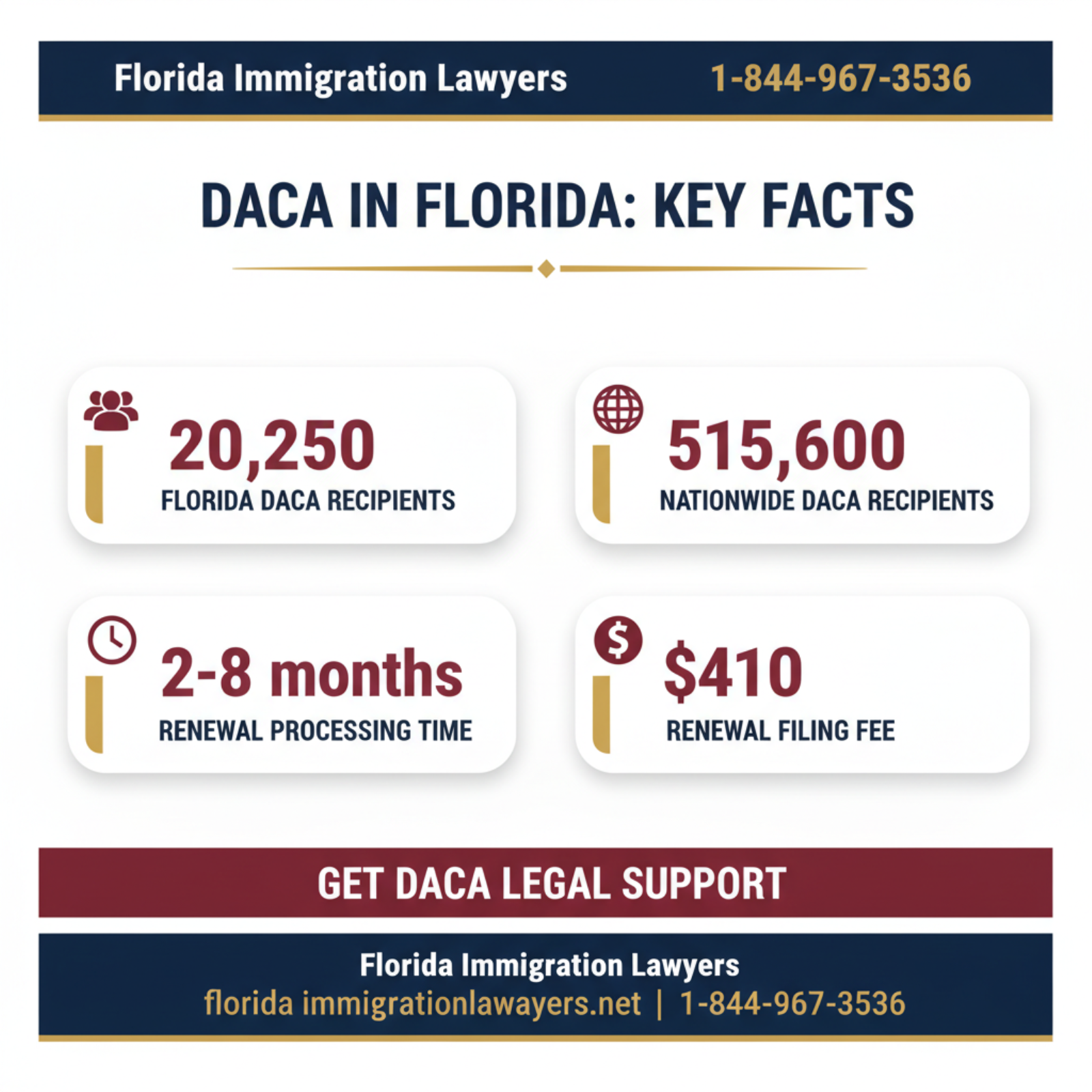
Understanding USCIS DACA policy and processing times is essential for managing expectations and avoiding a lapse in your status. While processing times can vary significantly, they typically range from several weeks to several months. Factors such as the volume of applications, the specific USCIS service center, and the completeness of your application can all influence how quickly your case is adjudicated.
USCIS provides estimated processing times on its website, which can be a helpful guide. However, these are estimates and not guarantees. It is highly recommended to file your renewal application well in advance of your expiration date, ideally 120 to 150 days prior, to minimize the risk of a gap in your deferred action and work authorization. You can check your case status online using the receipt number provided by USCIS after they accept your application.
If your DACA expires before your renewal is approved, you will temporarily lose your protections from deportation and your eligibility to work. This can have serious implications, especially in states like Florida with heightened immigration enforcement. If you find yourself in this situation, contact an immigration lawyer immediately.
DACA Application Fees and Financial Considerations
Renewing your DACA status involves certain filing fees that are set by USCIS. These fees are subject to change, so it is always important to verify the current amounts on the official USCIS website before submitting your application. The primary fees typically include the filing fee for Form I-765, Application for Employment Authorization, and the biometrics services fee. Note that there is currently no separate fee for Form I-821D, Consideration of Deferred Action for Childhood Arrivals.
While fee waivers for DACA applications are generally not available, it is always worth reviewing the USCIS guidelines for any updates or specific circumstances that might apply. The total cost can be a significant financial burden for many families, highlighting the importance of planning ahead. In addition to government fees, you may also incur costs for obtaining necessary documents, certified translations, and legal assistance from an immigration lawyer Florida, which can be an invaluable investment for ensuring a successful outcome.
Do not navigate this process alone. The complexities of DACA news 2026 Florida and its legal framework demand expert attention. Contact Florida Immigration Lawyers today for reliable assistance and peace of mind.
Common Mistakes DACA Applicants Must Avoid
Navigating the DACA renewal process can be challenging, and even small errors can lead to significant delays or even denials. Being aware of common pitfalls can help you avoid unnecessary complications.
-
1. Filing Your Renewal Application Too Late
Consequence: A lapse in your DACA status means you lose your work authorization and protection from deportation. You might also lose your job and face increased risk of removal. USCIS recommends filing 120-150 days before expiration.
-
2. Submitting an Incomplete Application
Consequence: USCIS may reject your application, issue a Request for Evidence (RFE), or even deny it. This leads to significant delays and additional stress. Double-check that all forms are filled out entirely and all required documents are included.
-
3. Providing Inaccurate or Inconsistent Information
Consequence: Any false statements or inconsistencies with previous applications can lead to accusations of fraud, which can result in denial, loss of future immigration benefits, and even criminal charges. Always be truthful and consistent with all information provided.
-
4. Failing to Disclose All Criminal History
Consequence: Even minor arrests or charges, regardless of the outcome, must be disclosed. Failure to do so can be considered a material misrepresentation and lead to denial of DACA and potential deportation proceedings. Always provide certified court dispositions for every incident.
-
5. Not Seeking Legal Advice for Complex Cases
Consequence: If you have a criminal record, previous DACA denial, or significant travel history, attempting to renew DACA without legal counsel can be extremely risky. An attorney can assess your eligibility and identify potential issues that you might overlook, preventing severe consequences.
-
6. Traveling Outside the U.S. Without Advance Parole
Consequence: DACA does not grant legal status. Leaving the U.S. without a valid Advance Parole document means you may not be allowed to re-enter the country, potentially leading to a permanent bar. Advance Parole for DACA recipients is extremely limited and granted only under specific, humanitarian, educational, or employment reasons.
-
7. Ignoring USCIS Notices or Requests for Evidence (RFEs)
Consequence: USCIS communications often have strict deadlines. Failing to respond promptly or adequately to an RFE or other notice can result in the denial of your application. Always open and respond to all mail from USCIS immediately.
When to Seek Expert Legal Guidance for Your DACA Case
While some DACA renewals may seem straightforward, the program's unstable legal status and Florida's specific enforcement climate mean that expert legal guidance is often indispensable. Florida Immigration Lawyers are here to help you navigate these challenges effectively.
Consider contacting an experienced immigration attorney if any of the following apply to your situation:
- You Have a Criminal Record: Even minor arrests, traffic violations, or expunged records can impact your DACA eligibility. An attorney can analyze your record and advise on the best course of action to prevent a denial.
- You Have Had a Previous DACA Denial or Request for Evidence (RFE): If your past application was denied or you received an RFE, understanding the reasons and addressing them correctly is crucial for a successful renewal.
- You Are Unsure About Your Eligibility: If there are any doubts about your continuous residence, age of entry, or criminal history, a lawyer can provide a thorough assessment.
- You Are Facing Deportation Proceedings: If you are already in removal proceedings, maintaining DACA or exploring other forms of relief, such as asylum or deportation defense, becomes even more urgent.
- You Are Considering Other Immigration Pathways: While DACA does not offer a direct path to a green card, an attorney can evaluate your eligibility for other options, such as family-based petitions or employment-based visas, or even citizenship in the long term.
- You Have Questions About DACA News 2026 Florida: The legal landscape is constantly changing. A lawyer can provide the most up-to-date information and explain how new developments may affect your case.
Florida Immigration Lawyers can assist with DACA renewals, assess eligibility for alternative relief, and provide robust deportation defense. We understand the specific concerns of Dreamers in Florida and are committed to protecting your future.
About Florida Immigration Lawyers
Florida Immigration Lawyers is a leading immigration law firm dedicated to serving individuals and families across the entire state of Florida. Our team of experienced attorneys is passionate about helping immigrants achieve their American dream, providing compassionate and effective legal representation.
We specialize in a wide range of immigration services, including DACA renewals, family-based immigration, employment visas, deportation defense, asylum, and naturalization. Our firm is committed to staying abreast of the latest immigration laws and policies to provide our clients with the most current and accurate advice.
Why choose Florida Immigration Lawyers? We offer free consultations, are available 24/7 to address your urgent needs, and provide bilingual services (English and Spanish) to ensure clear communication. Our unwavering dedication and personalized approach make us the trusted choice for your immigration journey. Visit our website at https://www.floridaimmigrationlawyers.net or call us at 1-844-967-3536.
Sources and References
- U.S. Citizenship and Immigration Services (USCIS) - DACA
- Executive Office for Immigration Review (EOIR)
- USCIS - Travel Documents (Advance Parole)
- 8 U.S.C. Chapter 12 - Immigration and Nationality Act (INA)
- 8 CFR Part 274a - Control of Employment of Aliens
- U.S. Immigration and Customs Enforcement (ICE) - 287(g) Program
This article provides general legal information and is not intended as legal advice. Every case is unique, and outcomes depend on specific facts and circumstances. Laws are subject to change. Contact an attorney for advice about your particular situation.
For personalized guidance on DACA news 2026 Florida, or any other immigration matter, reach out to Florida Immigration Lawyers. We offer free consultations and are available 24/7 to serve clients across Florida. Call us now at 1-844-967-3536. Se Habla Español - Estamos aquí para ayudarle.
Florida Immigration Lawyers
Legal Team
Our experienced attorneys at Florida Immigration Lawyers have been serving clients across Florida for over 20 years. We specialize in immigration, personal injury, criminal defense, workers compensation, and family law.