Supreme Court TPS Venezuela: Florida Immigrants' Rights &
<p>The Supreme Court's decision on Temporary Protected Status (TPS) for Venezuela marks a pivotal moment for thousands of immigrants across Florida. This ruling, affecting eligibility and re-registration, demands immediate attention and informed action. For Venezuelan nationals in Pembroke Pines and throughout the state, understanding the intricacies of this legal development is crucial for maintaining legal status and planning for the future.</p> <p>Our comprehensive guide by Florida Immigration Lawyers breaks down the implications of the Supreme Court TPS Venezuela ruling, offers a step-by-step process for navigating TPS, and highlights essential documents. We also address common pitfalls and outline when expert legal assistance is vital. Protect your status and future; learn how our dedicated team can provide personalized guidance.</p>

The Supreme Court's decision on TPS for Venezuela has significant implications for thousands of immigrants across Florida. This ruling, expected to clarify the program's future, directly affects eligibility, re-registration processes, and the long-term stability of Venezuelan nationals in the U.S. Understanding the specifics is crucial for maintaining your protected status and planning your future.
- The Supreme Court’s ruling sets a precedent for Temporary Protected Status.
- Venezuelan nationals in Florida must understand new eligibility criteria.
- Re-registration deadlines will be critical for current TPS holders.
- Legal counsel is essential to navigate complex changes and protect your rights.
- Future immigration pathways for Venezuelans may be impacted by this decision.
Are you a Venezuelan national living in Florida, deeply concerned about your immigration status following recent legal developments? The landscape of Temporary Protected Status (TPS) for Venezuela is constantly evolving, with the Supreme Court's involvement bringing both clarity and new challenges. Many families in Pembroke Pines and across the state are grappling with uncertainty, wondering how these changes will impact their lives and futures in the United States.
At Florida Immigration Lawyers, we understand the profound anxiety these situations can create. This comprehensive guide will break down the Supreme Court TPS Venezuela decision, explain its practical implications for you and your family, and outline the steps you need to take to protect your status. We aim to provide clear, actionable information to help you navigate these complex legal waters.
Do not face these critical changes alone. For immediate assistance and personalized guidance, call Florida Immigration Lawyers at 1-844-967-3536 for a free consultation. Our experienced team is ready to help you understand your options and secure your future.
Understanding the Supreme Court TPS Venezuela Decision and Its Impact on Florida
The Supreme Court's recent review of Temporary Protected Status (TPS) for Venezuela has brought significant attention to this vital humanitarian program. TPS, established under Section 244 of the Immigration and Nationality Act (INA), provides temporary legal status to foreign nationals from countries experiencing armed conflict or other extraordinary conditions. For Venezuelans, TPS offers crucial protection from deportation and work authorization.
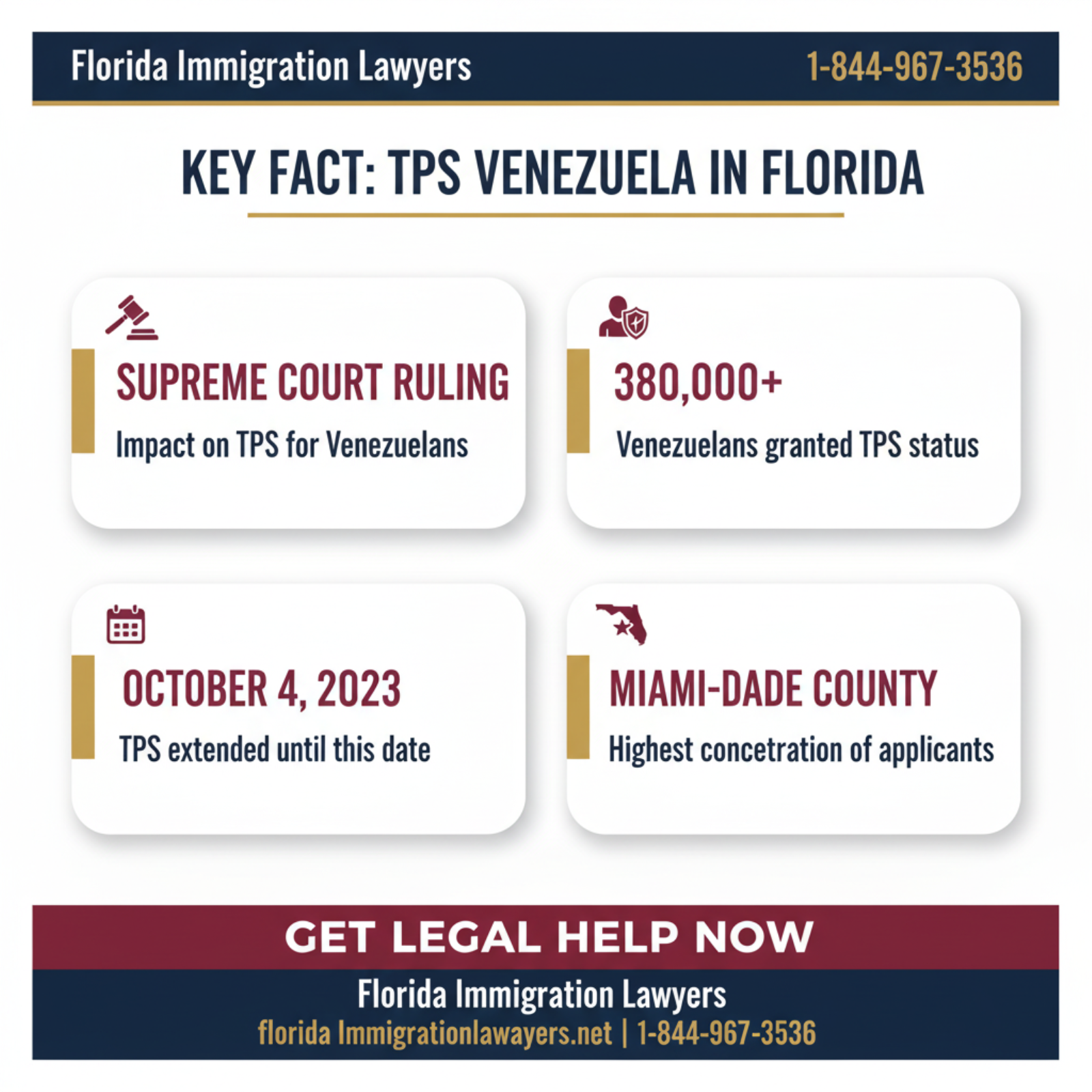
This Supreme Court TPS Venezuela decision, particularly relevant in 2026, directly affects thousands of Venezuelan immigrants in Florida, a state with one of the largest Venezuelan diasporas. Understanding this legal development is paramount for your continued residency. The ruling may set a major legal precedent, redefining aspects of immigration law, specifically 8 U.S.C. § 1254a.
How the Ruling Affects Current TPS Holders in Florida
For current TPS holders, the Supreme Court's decision could introduce new re-registration procedures or clarify extension conditions. Many families in areas like Pembroke Pines, Miami, and Orlando rely on TPS for stability. Florida Immigration Lawyers closely monitors all USCIS updates to provide current advice. Even slight changes can have massive implications for your ability to live and work legally in the U.S.
The ruling may also impact future eligibility for other immigration benefits, such as adjustment of status. Depending on the specifics of the Supreme Court TPS Venezuela judgment, pathways to permanent residency might become more complex or clearer. We recommend consulting with an immigration lawyer in Pembroke Pines or elsewhere in Florida to assess your individual situation.
Potential Implications for New Applicants
If the Supreme Court's decision impacts eligibility or designation, it could significantly affect new applicants. The window for initial registration might close, or requirements could become more stringent. Timely action and expert legal advice are always essential. Florida's vibrant Venezuelan community needs reliable legal support now more than ever.
Eligibility and Navegating TPS for Venezuelans in 2026: A Step-by-Step Guide
Navigating the Temporary Protected Status application requires meticulous attention. The Supreme Court TPS Venezuela decision may introduce new complexities, making each step critical. Here is a general step-by-step guide, noting that specific USCIS instructions always govern.
- Determine Eligibility: Confirm you meet USCIS requirements, including continuous physical presence and residence since the designation date, and no inadmissibility grounds.
- Gather Documentation: Collect proof of identity, nationality, residence, and entry. Thoroughness here prevents delays.
- Complete Form I-821: Accurately fill out Form I-821, Application for Temporary Protected Status. Errors can lead to RFEs or denial.
- File Form I-765 (Optional): If you need work authorization, file Form I-765, Application for Employment Authorization, concurrently.
- Pay Fees or Request Waiver: Pay filing fees for I-821, I-765, and biometrics. If eligible, apply for a fee waiver using Form I-912.
- Attend Biometrics: Mandatory appointment for fingerprints, photograph, and signature.
- Respond to USCIS Notices: Promptly and comprehensively respond to Requests for Evidence (RFE) or Notices of Intent to Deny (NOID).
- Receive Decision: USCIS will send a written decision. If approved, you receive an EAD (if applied for) and TPS status notice.
This process is intricate. Seeking guidance from an experienced immigration attorney at Florida Immigration Lawyers is highly advisable to ensure your application is strong and complete.
Essential Document Checklist for TPS Venezuela Applications
A complete and accurate submission of documents is fundamental for a successful TPS application or re-registration, especially with new guidance following the Supreme Court TPS Venezuela ruling. Missing or incorrect documents are a common reason for delays or denials. Always provide copies, not originals, unless USCIS specifically requests them.
Here is a general checklist of documents you will typically need:
- Proof of Identity and Nationality: Copy of your Venezuelan passport, birth certificate with photo, or national identity card.
- Proof of Entry into the United States: Copy of your I-94 Arrival/Departure Record, U.S. entry stamps in passport, or airline tickets.
- Proof of Continuous Residence in the U.S.: Demonstrate continuous residency since the specified designation date. Documents include rental agreements, utility bills, employment records, school records, medical records, bank statements, affidavits, or tax returns.
- Proof of Continuous Physical Presence in the U.S.: Similar to continuous residence, showing you have not left the U.S. for extended periods. Same documents often apply.
- Two Passport-Style Photos: Must meet USCIS specifications (2x2 inches, white background, taken recently).
- Any Previous Immigration Documents: Copies of prior visas, I-20s, EADs, or other filed immigration forms.
- Marriage Certificates or Birth Certificates: Needed if applying for family members or demonstrating relationships for other immigration benefits. Consider consulting our team about family immigration pathways.
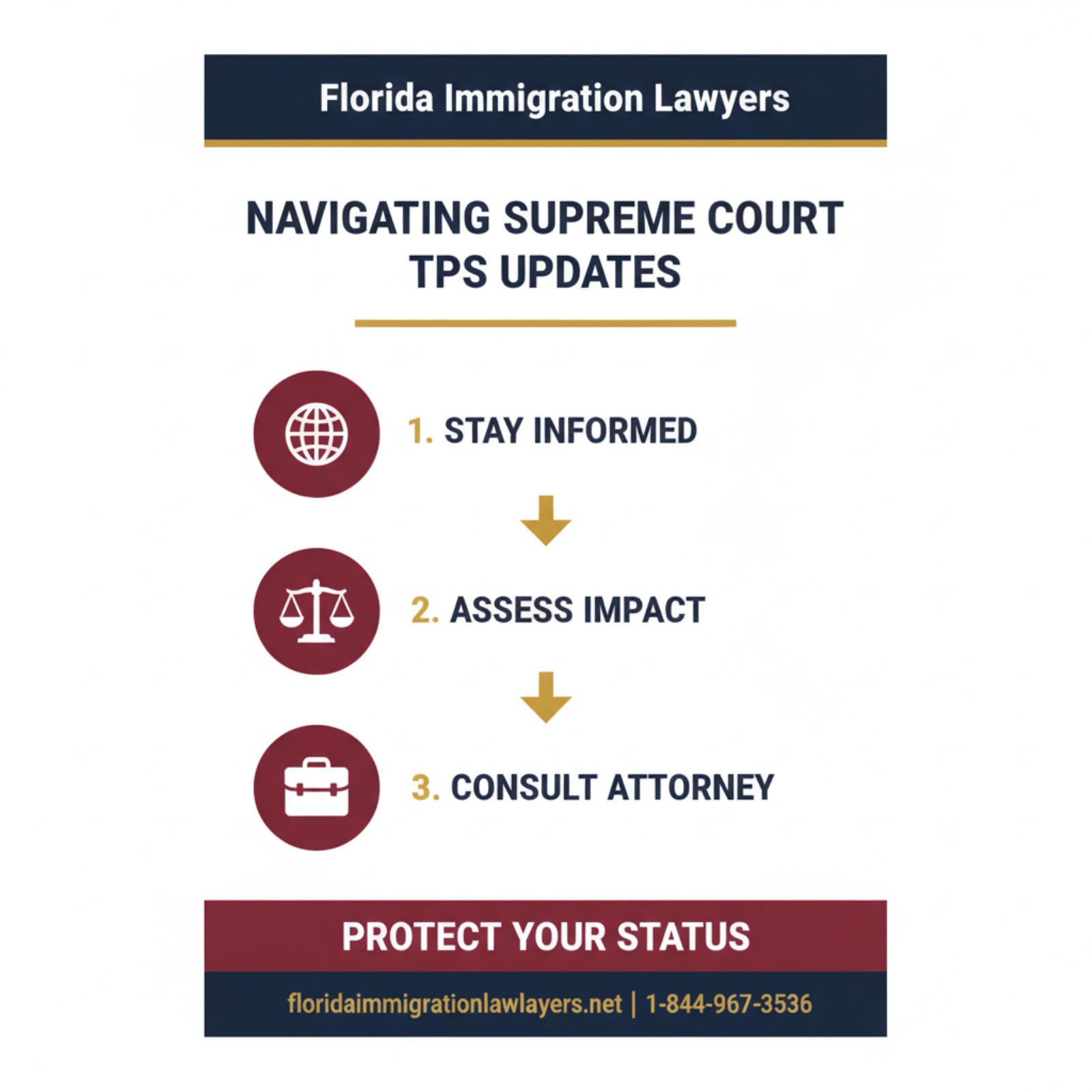
Organizing these documents can be overwhelming. Florida Immigration Lawyers can help you meticulously compile your application package, ensuring no crucial evidence is overlooked. This attention to detail is vital.
TPS Processing Timelines and Expectations for Florida Applicants
Understanding the processing timeline for Temporary Protected Status is essential. While USCIS strives for efficiency, times vary based on application volume, case complexity, and new procedures from a Supreme Court TPS Venezuela ruling. Florida applicants may also see influence from regional processing centers and local USCIS field offices.
After submitting Form I-821 and I-765, expect this general sequence:
- Receipt Notice: Within weeks, receive Form I-797C.
- Biometrics Appointment Notice: Weeks to months later, for an ASC appointment.
- Biometrics Appointment: Mandatory for background checks.
- Requests for Evidence (RFE): If more information is needed.
- Decision: Can take six months to over a year, with written approval or denial.
- Employment Authorization Document (EAD): Mailed if approved for TPS and I-765 filed.
Factors Influencing Processing Times in Florida
Factors impacting your TPS application time in Florida include USCIS workload, application completeness, background check duration, policy changes (especially from a Supreme Court TPS Venezuela ruling), and local office backlogs in Miami, Orlando, or Tampa.
Monitoring Your TPS Case Status
It is crucial to stay informed about your case status through the USCIS website using your receipt number. This online tool provides real-time updates on your application's progress. However, interpreting these updates or addressing delays often requires legal expertise.
We advise against leaving the U.S. without proper travel authorization (Form I-131, Application for Travel Document) if your TPS application is pending, as it could jeopardize your case. If you have concerns about deportation defense during processing, contact us immediately. Florida Immigration Lawyers can help you monitor your case and intervene if necessary.
Cost Factors and Fee Breakdown for TPS Applications
Applying for Temporary Protected Status involves several fees set by USCIS, subject to change, especially after a significant legal development like a Supreme Court TPS Venezuela decision. Always check the official USCIS website for the most current fee schedule before filing.
Here’s a general breakdown of potential costs:
- Form I-821 Filing Fee: Standard fee for the TPS application.
- Form I-765 Filing Fee: Separate fee if requesting an Employment Authorization Document (EAD).
- Biometrics Services Fee: Mandatory for fingerprinting and background checks.
- Form I-912, Request for Fee Waiver: If eligible, you can apply to waive fees by meeting poverty guidelines or receiving public benefits.
- Legal Fees: Hiring an immigration attorney is an investment that increases success chances and reduces stress, covering advice, form prep, and representation.
- Translation Costs: For any non-English supporting documents.
- Postage and Photocopying: Minor administrative expenses.
USCIS fees are non-refundable. Ensure your application is complete and accurate. Never send cash; use a money order, personal check, or cashier’s check payable to "U.S. Department of Homeland Security." Florida Immigration Lawyers can help you understand fees, waiver eligibility, and our transparent legal service costs.
Do not navigate this complex process alone. The stakes are too high, especially with the evolving legal landscape surrounding the Supreme Court TPS Venezuela decision. Contact Florida Immigration Lawyers today to schedule your free consultation and gain peace of mind.
Common Mistakes to Avoid in Your TPS Application
Navigating TPS can be challenging; minor errors cause delays or denial. With potential new regulations following a Supreme Court TPS Venezuela ruling, vigilance is key. Avoid these common mistakes:
- Missing Deadlines: Failing to file initial application or re-registration within USCIS windows. Late submissions are often rejected.
- Incomplete Forms: Submitting forms with blank fields or missing signatures. This leads to rejection and delays.
- Incorrect Information: Providing false or inaccurate data, which can lead to fraud accusations and severe immigration consequences.
- Insufficient Documentation: Not providing enough proof for continuous residence, physical presence, or identity results in RFEs or denials.
- Failure to Pay Correct Fees: Sending the wrong amount or forgetting payment. Always verify current USCIS fees.
- Not Requesting Fee Waiver: If eligible, failing to submit Form I-912 with adequate evidence.
- Criminal Record Issues: Not disclosing a criminal record. Certain convictions render you ineligible for TPS.
- Leaving U.S. Without Authorization: Departing without an approved travel document while TPS is pending or held can terminate status.
- Ignoring USCIS Communications: Not responding promptly to RFEs or NOIDs, which have strict deadlines.
- Not Seeking Legal Counsel: Navigating complex TPS regulations and a Supreme Court TPS Venezuela decision without an experienced attorney.
Avoiding these mistakes is crucial. Florida Immigration Lawyers helps you prepare thorough, accurate applications, minimizing risk.
When to Call Florida Immigration Lawyers for TPS Assistance
Immigration law complexities, especially concerning a Supreme Court TPS Venezuela decision, mean personalized legal advice is indispensable. Knowing when to seek professional help is vital. Florida Immigration Lawyers are here for expert guidance.
Contact our firm immediately if any of these apply:
- Complex Eligibility: Unsure about eligibility due to entry method, past immigration history, or specific dates.
- Criminal History: Any arrests, charges, or convictions can affect TPS eligibility. Always consult an attorney.
- Previous Denials/Deportation: If you've been denied benefits, have a removal order, or were in deportation defense.
- RFEs or NOIDs: Responding to these USCIS notices requires precise legal arguments and documentation.
- Supreme Court Ruling Concerns: Unclear how the Supreme Court TPS Venezuela decision impacts your situation or future plans.
- Exploring Other Pathways: Wishing to explore asylum, citizenship, or family-based visas.
- Language Barriers: Our bilingual team ensures clear communication.
Our team serves the Venezuelan community in Pembroke Pines and throughout Florida, offering comprehensive services from eligibility to filing and responding to USCIS. We are your advocates.
About Florida Immigration Lawyers
Florida Immigration Lawyers is a leading firm providing comprehensive, compassionate immigration legal services across Florida. With specialized experience, our attorneys help individuals and families navigate U.S. immigration law complexities, understanding challenges from evolving policies like the Supreme Court TPS Venezuela decision.
We offer a wide range of services: TPS applications/re-registrations, family-based petitions, business immigration, asylum, deportation defense, and naturalization. We prioritize personalized attention and strategic advice tailored to each client.
Why Choose Florida Immigration Lawyers?
- Expertise: Deep knowledge of immigration law, current on all developments.
- Client-Centered: Empathetic support, clear communication.
- Bilingual Services: Effective communication with Spanish-speaking clients.
- Accessibility: Available 24/7 for urgent concerns.
- Free Consultations: No-obligation discussions to outline your legal path.
From Pembroke Pines to Miami, our firm serves all Florida. Let us be your trusted partner.
- Phone: 1-844-967-3536
- Website: www.floridaimmigrationlawyers.net
Sources and References
- U.S. Citizenship and Immigration Services (USCIS) - Temporary Protected Status
- Executive Office for Immigration Review (EOIR)
- U.S. Department of State - Venezuela Country Information
- 8 U.S.C. § 1254a - Temporary Protected Status
- Immigration and Nationality Act (INA) Section 244 - Temporary Protected Status
- 8 CFR Part 244 - Temporary Protected Status
This article provides general legal information and is not intended as legal advice. Every case is unique, and outcomes depend on specific facts and circumstances. Contact an attorney for advice about your particular situation. Immigration laws are subject to change, and this content reflects information as of the publication date in 2026.
The Supreme Court TPS Venezuela decision has reshaped the path forward for many. Do not let uncertainty jeopardize your future in Florida. Take the proactive step to protect your rights and explore your options with trusted legal professionals.
Contact Florida Immigration Lawyers today for a free, confidential consultation. Call us at 1-844-967-3536. Se Habla Español - Estamos aquí para ayudarle.
Do Not Navigate This Process Alone
Our experienced immigration attorneys are ready to fight for you. Get a free, confidential consultation today.
Se Habla Español
Frequently Asked Questions
Florida Immigration Lawyers
Immigration Attorney | Founder, Vasquez Law Firm
U.S. Air Force veteran and immigration attorney with thousands of cases resolved. J.D., NCCU School of Law. AILA member. Admitted to the 4th, 5th, and 11th Circuit Courts.
Available 24/7 - Free Evaluations
Related Legal Services
Our Florida immigration attorneys can help you with family immigration services, immigration practice areas and free immigration consultation. Call today at 1-844-967-3536 for a free consultation.
Related Links
Related Topics
Free Legal Consultation
Discuss your case with our experienced attorneys. We're available 24/7.
Se Habla Español - Estamos aquí para ayudarle.
Related Articles
SIJS Florida: Special Immigrant Juvenile Status Guide
Special Immigrant Juvenile Status (SIJS) in Florida provides a vital pathway to lawful permanent residency for children who have experienced abuse, neglect, or abandonment. This complex process involves obtaining a specific order from a Florida state juvenile court and then petitioning USCIS for immigration relief. Understanding the detailed eligibility criteria, navigating state court proceedings, and meticulously preparing federal immigration forms are crucial steps. Florida Immigration Lawyers specializes in guiding vulnerable minors and their guardians through every phase of the SIJS application, from securing the initial state court order to obtaining a Green Card. We offer expert legal counsel, ensuring all requirements are met and protecting children's rights across Florida. Contact us for a free consultation.
Immigration Bond Hearing Florida: Secure Release from Detention
Facing an immigration bond hearing in Florida can be one of the most stressful experiences for individuals and their families. When a loved one is detained by ICE, understanding the path to their release is paramount. This detailed guide from Florida Immigration Lawyers explains the entire process, from initial detention and bond eligibility to preparing for your hearing and securing release. We cover essential documents, timelines, cost factors, and common mistakes to avoid. With offices serving all of Florida, including Hialeah, our expert attorneys are ready to provide the compassionate and effective legal representation you need to navigate these complex challenges. Learn how strong legal advocacy can make a difference in securing freedom from detention.
Immigration Rights in Florida: Know Your Legal Protections
Navigating immigration law in Florida can be complex, especially when facing potential encounters with Immigration and Customs Enforcement (ICE). This comprehensive guide empowers you with essential immigration rights, detailing your legal protections and what to do if you or a loved one are stopped or detained. Learn how to protect yourself, avoid critical mistakes, and understand the crucial role of legal counsel in safeguarding your future in Florida. From Homestead to Miami, knowing your rights is your first line of defense against deportation and legal challenges. Contact Florida Immigration Lawyers for a free consultation.
Unlawful Presence Waiver in Florida: A Guide | VLF Florida
Discover how the unlawful presence waiver can help immigrants in Florida. Learn about eligibility, application steps, and common mistakes to avoid. Contact Florida Immigration Lawyers for a free consultation.