Supreme Court TPS Venezuela: Florida Immigrants' Future...
The Supreme Court's decisions regarding Temporary Protected Status (TPS) for Venezuelans have created significant uncertainty for thousands of individuals and families across Florida. As we approach 2026, understanding the current legal landscape and its potential implications is crucial for those relying on TPS to live and work in the United States. This article delves into the complexities of the rulings, the current status of TPS for Venezuelans, and the steps you can take to protect your future. We will explore eligibility, application processes, common pitfalls, and when professional legal guidance from Florida Immigration Lawyers becomes indispensable.

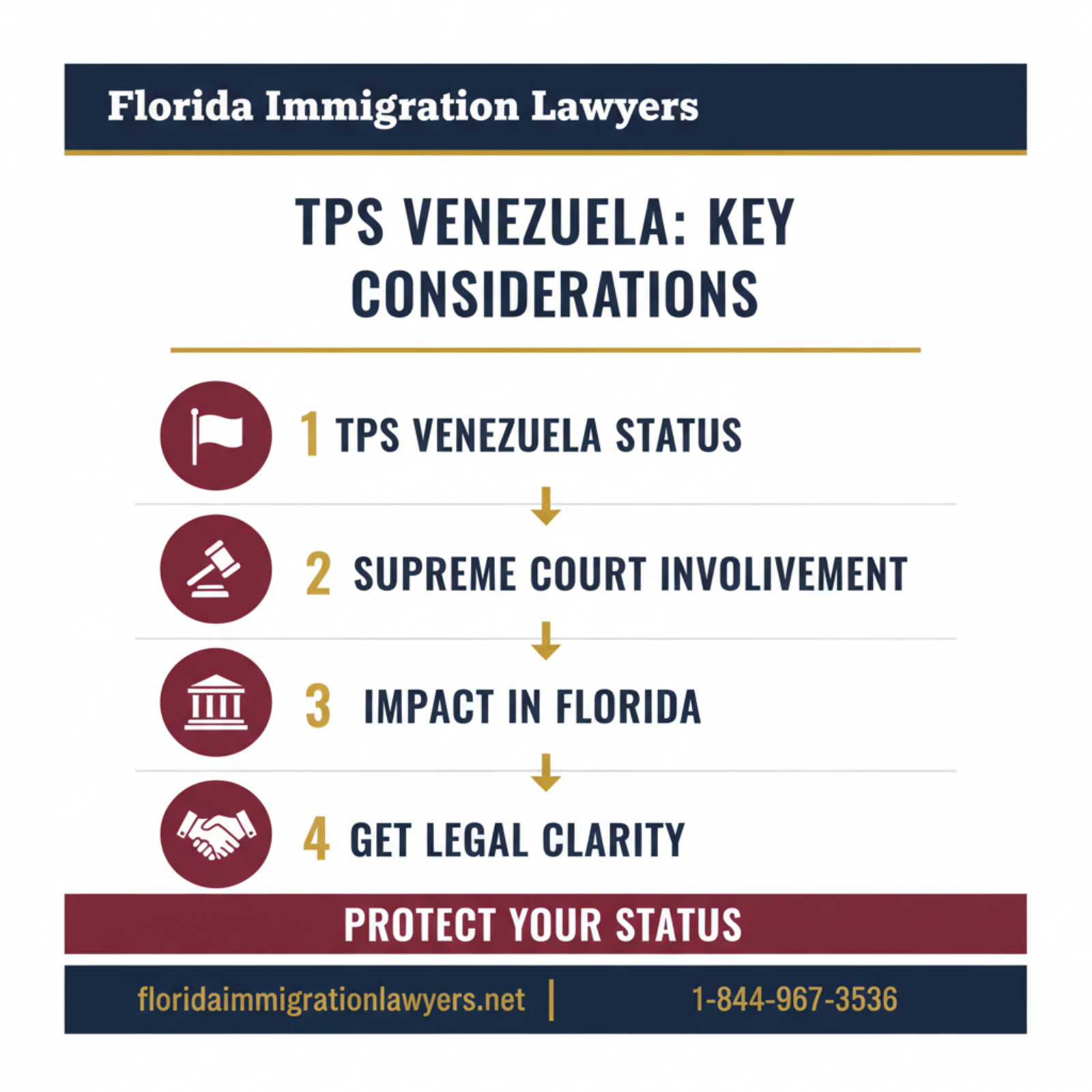
The Supreme Court's involvement in Temporary Protected Status (TPS) for Venezuelans has led to ongoing legal complexities. While specific outcomes depend on evolving litigation, the status of TPS can significantly affect thousands of individuals in Florida. Staying informed and seeking legal counsel is vital to understand your eligibility and options for continued protection or alternative immigration pathways.
- Venezuelan TPS status is subject to ongoing legal review and potential changes.
- Individuals in Florida must monitor official announcements from USCIS and the courts.
- Eligibility for TPS requires meeting specific criteria and continuous physical presence.
- Consulting an experienced immigration lawyer is crucial for personalized advice.
- Alternative immigration options may be available even if TPS status changes.
For many Venezuelan immigrants living in Florida, the news surrounding Temporary Protected Status (TPS) can feel like a constant rollercoaster of hope and anxiety. The legal battles, particularly those reaching the Supreme Court, have created a climate of uncertainty for thousands of families who have built new lives in communities like Hialeah, Miami, and Orlando.
You may be wondering what the latest developments mean for your status, your family, and your ability to remain in the United States. This comprehensive guide aims to demystify the complex legal landscape surrounding Supreme Court TPS Venezuela decisions and their direct impact on Florida residents as we navigate 2026.
We will cover everything from the historical context of TPS for Venezuelans to practical steps you can take. If you are concerned about your immigration status or need immediate guidance, do not hesitate. Call Florida Immigration Lawyers at 1-844-967-3536 for a free consultation to discuss your specific situation.
Understanding Temporary Protected Status (TPS) and Recent Supreme Court Developments
Temporary Protected Status (TPS) offers a lifeline to foreign nationals from countries experiencing armed conflict, environmental disaster, or other extraordinary and temporary conditions. The Secretary of Homeland Security designates countries for TPS, allowing eligible individuals to live and work legally in the U.S. for a temporary period. For Venezuelans, TPS was initially designated in March 2021, and has seen subsequent extensions and redesignations due to the severe humanitarian crisis in Venezuela, as outlined in INA § 244 (8 U.S.C. § 1254a).
The journey of TPS Venezuela through the U.S. legal system has been particularly turbulent. Legal challenges have sought to either terminate or preserve TPS designations. The Supreme Court's involvement typically arises when lower court decisions conflict or when issues of significant national importance are at stake, impacting potentially hundreds of thousands of individuals. This addresses the question, "What was the Supreme Court decision on TPS?" by clarifying its role in judicial review.
The Supreme Court's Role in TPS Litigation
The Supreme Court does not directly grant or terminate TPS. Instead, its role in immigration cases, including those involving TPS, is to interpret laws and review decisions made by lower courts or the executive branch. The Court may allow a lower court ruling to stand, or it may agree to hear a case to provide a definitive interpretation of immigration law or administrative procedure. This is why the phrase "Supreme Court TPS Venezuela" often refers to the Court's decisions on procedural challenges or injunctions that temporarily halt or permit changes to TPS designations.
For Venezuelan TPS holders, especially in Florida, the Court's actions have often created periods of intense uncertainty. For example, in late 2025, the Supreme Court allowed certain lower court injunctions to expire, which had previously prevented the termination of TPS for some nationalities. While this specific action did not directly terminate TPS for Venezuelans, it highlighted the precarious nature of these protections and the ongoing legal vulnerabilities. This also addresses "Did the Supreme Court order Trump not to deport Venezuelans?" and "Is the Supreme Court canceling TPS for Venezuelans?" by explaining the Court's indirect role.
Impact on Venezuelan Immigrants in Florida
Florida is home to one of the largest Venezuelan diasporas in the United States, with significant populations in areas like Hialeah, Doral, and Orlando. The legal status of TPS Venezuela is therefore a deeply personal and community-wide concern here. News of court decisions, even procedural ones, can trigger widespread anxiety and confusion among individuals who are trying to plan their lives, careers, and futures in the Sunshine State.
Many Venezuelan families have established roots, started businesses, and integrated into the fabric of Florida society. The potential loss or uncertainty of TPS status could force difficult decisions about their livelihoods and safety. It underscores the critical need for accurate, up-to-date information and expert legal guidance from a trusted immigration lawyer Florida.
The situation for TPS Venezuela USCIS applications remains dynamic. USCIS processes applications, but its actions are always constrained by the current legal framework and any judicial orders in effect. Understanding these nuances is crucial for any applicant.
Navigating the TPS Application and Re-registration Process: A Step-by-Step Guide
Whether you are applying for TPS for the first time or re-registering, the process requires meticulous attention to detail. The following steps outline the general procedure for eligible Venezuelans in Florida, keeping in mind that specific deadlines and requirements can change based on USCIS announcements and the evolving legal landscape, including any updates related to the Supreme Court TPS Venezuela cases. Always refer to 8 CFR Part 244 for specific regulations.
- Determine Your Eligibility for TPS Venezuela: You must be a national of Venezuela (or a person without nationality who last habitually resided in Venezuela). You must have been continuously physically present in the U.S. since the last designated date and continuously resided in the U.S. since a specified date. You must also meet other admissibility requirements, including security and criminal background checks.
- Gather All Required Documentation: Collect proof of identity and nationality (e.g., passport), proof of entry into the U.S., and proof of continuous physical presence and continuous residence in Florida. This may include utility bills, leases, school records, employment records, and medical records.
- Complete Form I-821, Application for Temporary Protected Status: This is the primary application form. Fill it out accurately and completely. Errors or omissions can lead to delays or denials.
- Complete Form I-765, Application for Employment Authorization (Optional but Recommended): If you wish to work legally in the U.S., you must file this form along with your I-821. An Employment Authorization Document (EAD) is crucial for many individuals and families in Florida.
- Complete Form I-601, Application for Waiver of Grounds of Inadmissibility (If Applicable): If you have certain criminal convictions or immigration violations, you may need to apply for a waiver. This is a complex area where legal advice is highly recommended.
- Pay the Required Fees: There are fees for Form I-821, Form I-765, and biometric services, unless you qualify for a fee waiver. Fees can change, so always check the latest USCIS fee schedule. Do not send cash.
- Submit Your Application Package to USCIS: Mail your complete application package to the correct USCIS lockbox facility. Ensure you use certified mail with a return receipt to track delivery. For Florida residents, the correct address depends on the service center processing TPS applications, which USCIS specifies.
- Attend Biometrics Appointment: After filing, USCIS will send you an appointment notice for biometrics (fingerprints, photograph, signature) at an Application Support Center (ASC) in Florida, such as those in Hialeah or Orlando. This is a mandatory step.
- Respond to Requests for Evidence (RFEs) or Notices of Intent to Deny (NOIDs): If USCIS needs more information or intends to deny your application, they will send you an RFE or NOID. You must respond promptly and thoroughly.
- Receive Decision: USCIS will mail you a decision notice. If approved, you will receive an approval notice and, if requested, your Employment Authorization Document (EAD).
Re-registration for TPS follows a similar process but typically involves a shorter re-registration window. It is crucial to re-register within the specified period to maintain your status. Missing this window can lead to the loss of your TPS benefits and potential deportation proceedings.
Essential Documents and Evidence for Your TPS Application in Florida
A successful TPS application, especially in the context of the evolving Supreme Court TPS Venezuela situation, hinges on providing clear and compelling evidence. Gathering all necessary documents before you begin can streamline the process significantly. Here is a comprehensive checklist of documents you will typically need:
- Proof of Identity and Nationality:
- Venezuelan passport (current or expired).
- Venezuelan birth certificate accompanied by photo identification.
- National identity document from Venezuela with photo and/or fingerprint.
- Any other national identity document from Venezuela.
- Proof of Entry into the United States:
- Form I-94, Arrival/Departure Record.
- Copy of your passport page with admission stamp.
- Other official documents showing your date of entry.
- Proof of Continuous Physical Presence (CPP) in the U.S. since the specified date:
- Employment records (pay stubs, W-2s, employment verification letters).
- Rent receipts, utility bills, or mortgage statements from Florida.
- School records from Florida institutions (transcripts, report cards).
- Hospital or medical records from Florida healthcare providers.
- Affidavits from credible witnesses who can attest to your presence.
- Proof of Continuous Residence (CR) in the U.S. since the specified date:
- Similar documents to CPP, demonstrating your establishment of residence in Florida.
- Leases or deeds for property in Florida.
- Tax returns filed from a Florida address.
- Vehicle registration or driver's license from Florida.
Step-by-Step Process Guide - Photographs:
- Two identical passport-style color photographs taken recently.
- Marriage Certificates / Birth Certificates:
- If applying for derivative status for a spouse or child, or if your name has changed.
Remember, all documents not in English must be accompanied by a certified English translation. For residents of Hialeah and other Florida communities, ensuring that your documentation clearly demonstrates your presence and residence within the state is particularly important. A skilled immigration lawyer can help you organize and present your evidence effectively to USCIS.
Understanding TPS Timelines, Processing Expectations, and Cost Factors for Venezuelans
The processing of TPS applications for Venezuelans, including re-registration, can vary significantly. Factors such as the volume of applications, the specific USCIS service center handling your case, and any ongoing litigation related to TPS Supreme Court decision 2025 or other legal challenges can all influence timelines. It is important to set realistic expectations and plan accordingly.
Typical Processing Timelines
While USCIS does not provide exact processing times for individual TPS cases, you can generally expect a waiting period. Initial applications may take several months to over a year to process. Re-registration applications are often processed more quickly if all information is consistent and no issues arise. You can check the USCIS website for estimated processing times by form type and service center, but these are only estimates and can change.
After filing, you will typically receive a receipt notice within a few weeks, followed by a biometrics appointment notice within a few months. The Employment Authorization Document (EAD) can take several months to be issued after your biometrics appointment. Delays are common, especially with complex cases or during periods of high application volume, so patience is key.
Cost Factors and Fee Breakdown
Applying for TPS involves several fees that applicants must consider. While specific amounts are subject to change by USCIS, the general categories of fees remain consistent. Always refer to the official USCIS website for the most current fee schedule before submitting your application. As of our understanding in early 2026, the fees typically include:
- Form I-821, Application for Temporary Protected Status: A filing fee may or may not be required, depending on the specific designation or re-registration period and the applicant's age.
- Form I-765, Application for Employment Authorization: A filing fee is generally required for this form.
- Biometrics Services Fee: This fee is mandatory for all applicants regardless of age, covering the cost of fingerprinting and background checks.
It is possible to apply for a fee waiver (Form I-912, Request for Fee Waiver) if you meet specific poverty guidelines or receive certain public benefits. However, fee waivers are not guaranteed and require strong documentation. If a fee waiver is denied, you will be given an opportunity to pay the fees before your application is rejected.
Beyond government fees, you should also budget for potential costs such as:
- Legal Consultation Fees: An initial consultation with a Florida Immigration Lawyers firm may be free, but ongoing legal representation will involve fees. This investment can be invaluable for navigating complex legal issues, especially with the ongoing uncertainty surrounding Immigration TPS News today.
- Document Translation Fees: If any of your supporting documents are not in English, you will need to pay for certified translations.
- Postage and Copying Costs: Sending applications via certified mail is highly recommended, incurring additional costs.
Planning for these expenses is an important part of your immigration journey. Do not let financial concerns prevent you from seeking legal advice; many firms, including Florida Immigration Lawyers, offer flexible payment options or initial free consultations.
The intricacies of immigration law, particularly regarding TPS and its evolving legal status, can be overwhelming. Do not navigate this process alone. Contact Florida Immigration Lawyers today for expert guidance and peace of mind.
Common Mistakes Venezuelan TPS Holders Must Avoid in Florida
The path to maintaining or obtaining TPS can be fraught with potential pitfalls, especially with the constant updates surrounding TPS Venezuela extension 2025 and the broader legal challenges. Avoiding these common mistakes can significantly improve your chances of a successful application or re-registration. Pay close attention to these warnings, particularly if you reside in Florida.
- Missing Re-registration Deadlines: This is perhaps the most critical mistake. USCIS sets specific re-registration periods, which are often short. Missing this window almost certainly leads to the loss of your TPS status and employment authorization. Always mark your calendar and submit early.
- Providing Inaccurate or Inconsistent Information: Any discrepancies in your application forms or supporting documents can raise red flags for USCIS. Ensure all information is truthful, consistent, and matches your identification documents. Inconsistencies can lead to denials or accusations of fraud.
- Failing to Provide Sufficient Evidence of CPP/CR: Many applications are denied because applicants do not provide enough robust evidence to prove their continuous physical presence and residence in the U.S. since the required dates. Keep comprehensive records, as insufficient evidence will halt your application.
- Not Disclosing Criminal History or Prior Immigration Violations: Attempting to conceal past issues can lead to severe consequences, including denial and accusations of fraud. It is always best to disclose everything and discuss potential waivers with an attorney to avoid misrepresentation.
- Failing to Respond to RFEs or NOIDs on Time: USCIS will send requests for additional evidence or notices of intent to deny if your application is incomplete or problematic. Ignoring these notices or responding late will likely result in a denial, closing your opportunity to provide necessary information.
- Leaving Sections Blank on Forms: If a section does not apply to you, write "N/A" (Not Applicable) rather than leaving it blank. Blank spaces can be interpreted as incomplete information, leading to delays or rejection.
- Submitting an Incomplete Application Package: Ensure you include all required forms, supporting documents, photographs, and fees. A checklist can be invaluable. Incomplete packages are often rejected or significantly delayed, wasting precious time.
- Failing to Inform USCIS of Address Changes: If you move, you must notify USCIS within 10 days using Form AR-11, Alien's Change of Address Card. Failing to do so can result in missed notices and critical deadlines, potentially leading to a lost application or status.
- Traveling Outside the U.S. Without Authorization: Leaving the U.S. without first obtaining advance parole (Form I-131) can lead to your TPS application being considered abandoned and may prevent your re-entry. Always consult an attorney before planning international travel to avoid severe immigration consequences.
- Assuming TPS Guarantees Permanent Residency: TPS is a temporary status and does not automatically lead to a green card. While it provides protection from deportation and work authorization, you must pursue other immigration avenues for permanent residency, as TPS itself does not offer a direct path.
Each of these mistakes can have serious repercussions, from application delays to outright denial and potential deportation proceedings. Given the complexities surrounding the Supreme Court TPS Venezuela situation, vigilance is paramount. If you are uncertain about any aspect of your application or re-registration, seeking professional legal assistance is always the safest course of action.
When to Call a Florida Immigration Lawyer for TPS Venezuela Concerns
While this guide provides general information, immigration law is incredibly nuanced, and every individual's situation is unique. The ongoing legal challenges, including those related to the TPS Supreme Court decision 2025 and the general uncertainty around TPS Venezuela Trump administration policies and subsequent changes, make expert legal counsel more important than ever. Here are specific scenarios where contacting Florida Immigration Lawyers is not just recommended, but often essential:
- If You Have a Criminal Record: Even minor offenses can impact your TPS eligibility. An attorney can assess your record, advise on potential waivers (Form I-601), and represent you if necessary.
- If You Have Previous Deportation Orders or Immigration Violations: These complex issues require expert navigation. An attorney can determine if you are eligible for TPS despite these complications and explore other forms of relief, such as deportation defense.
- If You Are Unsure About Your Eligibility: The criteria for continuous physical presence and continuous residence can be difficult to prove. A lawyer can help you gather and present compelling evidence to meet USCIS requirements.
- If You Received an RFE or NOID: These notices indicate a problem with your application. A lawyer can help you craft a comprehensive and timely response to avoid denial and keep your application on track.
- If You Missed a Re-registration Deadline: While challenging, an attorney can explore if any extraordinary circumstances allow for a late filing or if alternative immigration pathways are available, which could be your only recourse.
- If You Have Been Denied TPS: A denial is not necessarily the end of the road. An attorney can review the denial reasons and advise on potential appeals or other options, providing a strategic path forward.
- If You Plan to Travel Internationally: Obtaining advance parole is critical for TPS holders who wish to travel outside the U.S. An attorney can guide you through this process to avoid issues upon re-entry, protecting your status.
- If You Are Considering Other Immigration Options: TPS is temporary. A lawyer can help you explore pathways to permanent residency, such as family-based immigration, business immigration, or asylum, which may be more suitable for your long-term goals.
- If You Reside in Florida and Need Local Expertise: Florida Immigration Lawyers understands the specific concerns and demographics of communities like Hialeah, Miami, and Orlando, providing tailored advice for our clients based on local context.
Our experienced attorneys at Florida Immigration Lawyers are dedicated to protecting your rights and securing your future. We offer comprehensive services for all aspects of immigration law, including TPS, citizenship, and defense against deportation. We are here to provide clarity and strategic guidance in these uncertain times.
About Florida Immigration Lawyers
Florida Immigration Lawyers is a leading law firm dedicated to providing comprehensive and compassionate immigration legal services across the entire state of Florida. With years of experience and a deep understanding of U.S. immigration law, our firm is committed to helping individuals and families navigate the complexities of the immigration system.
We pride ourselves on our client-centered approach, offering personalized strategies tailored to your unique circumstances. Our services range from family-based visas and employment immigration to deportation defense, asylum, and naturalization. We understand the challenges and anxieties that come with immigration processes, and we are here to provide unwavering support and expert representation.
Why Choose Florida Immigration Lawyers?
- Expertise: Our team of dedicated attorneys possesses in-depth knowledge of current immigration laws and policies, including the latest developments concerning TPS Venezuela news.
- Compassion: We treat every client with empathy and respect, recognizing the profound impact immigration matters have on their lives.
- Accessibility: We are available 24/7 to address your urgent questions and concerns.
- Free Consultations: We offer free initial consultations to discuss your case and outline your options without any financial commitment.
- Bilingual Services: Our team is fluent in English and Spanish, ensuring clear and effective communication.
- Statewide Coverage: Serving all of Florida, from Hialeah to Jacksonville, Tampa to Orlando.
Your future in the United States is our priority. Let us be your trusted advocates. Visit our website at https://www.floridaimmigrationlawyers.net or call us directly at 1-844-967-3536 to schedule your free consultation today.
Sources and References
- U.S. Citizenship and Immigration Services (USCIS) - Temporary Protected Status
- USCIS - Form I-821, Application for Temporary Protected Status
- Executive Office for Immigration Review (EOIR)
- 8 U.S.C. § 1254a - Immigration and Nationality Act (INA) Section 244 (Temporary Protected Status)
- 8 CFR Part 244 - Regulations for Temporary Protected Status
This article provides general legal information and is not intended as legal advice. Every case is unique, and outcomes depend on specific facts and circumstances. Contact an attorney for advice about your particular situation. Immigration laws are subject to change by Congress, federal agencies, and court decisions, including those from the Supreme Court.
Navigating the complex and often changing landscape of immigration law, especially concerning supreme court tps venezuela decisions, requires experienced legal guidance. Do not face this journey alone. Florida Immigration Lawyers is here to provide the support and expertise you need. Protect your future and your family's stability.
Call us today for a free, confidential consultation at 1-844-967-3536. Se Habla Español - Estamos aquí para ayudarle.
Do Not Navigate This Process Alone
Our experienced immigration attorneys are ready to fight for you. Get a free, confidential consultation today.
Se Habla Español
Frequently Asked Questions
Florida Immigration Lawyers
Immigration Attorney | Founder, Vasquez Law Firm
U.S. Air Force veteran and immigration attorney with thousands of cases resolved. J.D., NCCU School of Law. AILA member. Admitted to the 4th, 5th, and 11th Circuit Courts.
Available 24/7 - Free Evaluations
Related Legal Services
Our Florida immigration attorneys can help you with family immigration services, immigration practice areas and free immigration consultation. Call today at 1-844-967-3536 for a free consultation.
Related Links
Related Topics
Free Legal Consultation
Discuss your case with our experienced attorneys. We're available 24/7.
Se Habla Español - Estamos aquí para ayudarle.
Related Articles
Solutions for Immigration Backlog in Florida | VLF Florida
Facing immigration backlog in Florida can be daunting. Discover strategies to manage USCIS delays and learn when to seek legal assistance. Call Florida Immigration Lawyers for expert guidance.
Expungement's Impact on Immigration in Florida | VLF Florida
Explore the impact of expungement on immigration status in Florida. Learn about eligibility, process steps, and legal considerations. Contact Florida Immigration Lawyers for a free consultation.
K-3 Spouse Visa Timeline in Florida | FL Immigration Lawyers
Learn about the K-3 spouse visa process in Florida to bring your loved ones closer. Find detailed steps, timelines, and expert advice. Contact us for a free consultation!
Advance Parole Travel Document in Florida | VLF Florida
Discover how Advance Parole helps Florida residents with pending adjustments travel safely. Learn about eligibility, application steps, and common pitfalls. Contact Florida Immigration Lawyers for guidance.