Re-Entry Permit for Green Card Holders in Florida 2026
Understand how to secure a re-entry permit as a green card holder in Florida. Learn the application process, avoid common mistakes, and maintain your LPR status while traveling abroad.

Re-entry permits are crucial for lawful permanent residents (LPRs) planning extended travel outside the U.S. They prevent green card abandonment by demonstrating intent to maintain U.S. residency. Hialeah residents must file Form I-131 to apply.
- Essential for travel over 12 months
- Filed using Form I-131
- Helps maintain LPR status
- Valid for up to two years
Introduction
As an LPR living in Hialeah, Florida, you may find the need to travel abroad for extended periods. However, lengthy travel can risk abandonment of your green card. To safeguard your status, obtaining a re-entry permit can be crucial. This article explains the re-entry permit process, potential pitfalls, and provides guidance from Florida Immigration Lawyers. Call us at 1-844-967-3536 for a free consultation.
Navigating the complexities of U.S. immigration law can be daunting, especially when your permanent residency status is on the line. An extended absence from the United States without proper documentation can lead to significant challenges upon your return, potentially resulting in questioning at the port of entry or even the initiation of removal proceedings. For Hialeah residents, understanding these risks and proactively securing a re-entry permit is a vital step in protecting your future in the U.S.
This comprehensive guide aims to demystify the re-entry permit application process, offering practical advice and highlighting critical considerations for LPRs. By understanding the requirements, timelines, and potential pitfalls, you can ensure your travel plans do not jeopardize your hard-earned green card status. Our team at Florida Immigration Lawyers is committed to assisting you every step of the way, providing clarity and expert legal support tailored to your unique circumstances.
What is a Re-Entry Permit and Why Do You Need One?
A re-entry permit is a document that allows LPRs to travel outside the U.S. for more than one year without risking green card abandonment. As of 2026, this permit is essential for those planning extended stays abroad. It serves as evidence of your intent to return to the U.S. and maintain permanent residency.
Without a re-entry permit, absences exceeding one year could result in the loss of your LPR status. The permit is valid for up to two years, providing peace of mind during long-term travel.
The core concept behind the re-entry permit is to formally declare your intention to maintain your U.S. residency, even while physically absent. Immigration officers at the port of entry are trained to assess whether an LPR has abandoned their residency, often based on the length and purpose of their absence. A re-entry permit acts as a powerful counter-argument, signaling to immigration authorities that your extended stay abroad is temporary and that you fully intend to resume your life as a permanent resident in the United States.
Consider a scenario: Maria, an LPR from Hialeah, needs to care for an ailing parent in her home country for 18 months. Without a re-entry permit, upon her return, she could face intense scrutiny, potentially leading to a lengthy and stressful deferred inspection process or even denial of re-entry. However, with a valid re-entry permit, Maria has a clear document demonstrating her pre-declared intent to return, significantly simplifying her re-entry process and protecting her green card status. This permit essentially pre-approves your extended absence, reducing uncertainty and anxiety.
How to Apply for a Re-Entry Permit in Florida?
To apply for a re-entry permit, you must submit Form I-131, Application for Travel Document, to the USCIS. As of 2026, ensure you file this form while physically present in the U.S. The application involves providing personal information, travel history, and reasons for extended travel.
- Complete Form I-131 accurately.
- Gather necessary documents: green card copy, passport, and travel itinerary.
- Submit the application to the appropriate USCIS office in Florida.
- Attend a biometrics appointment if required.
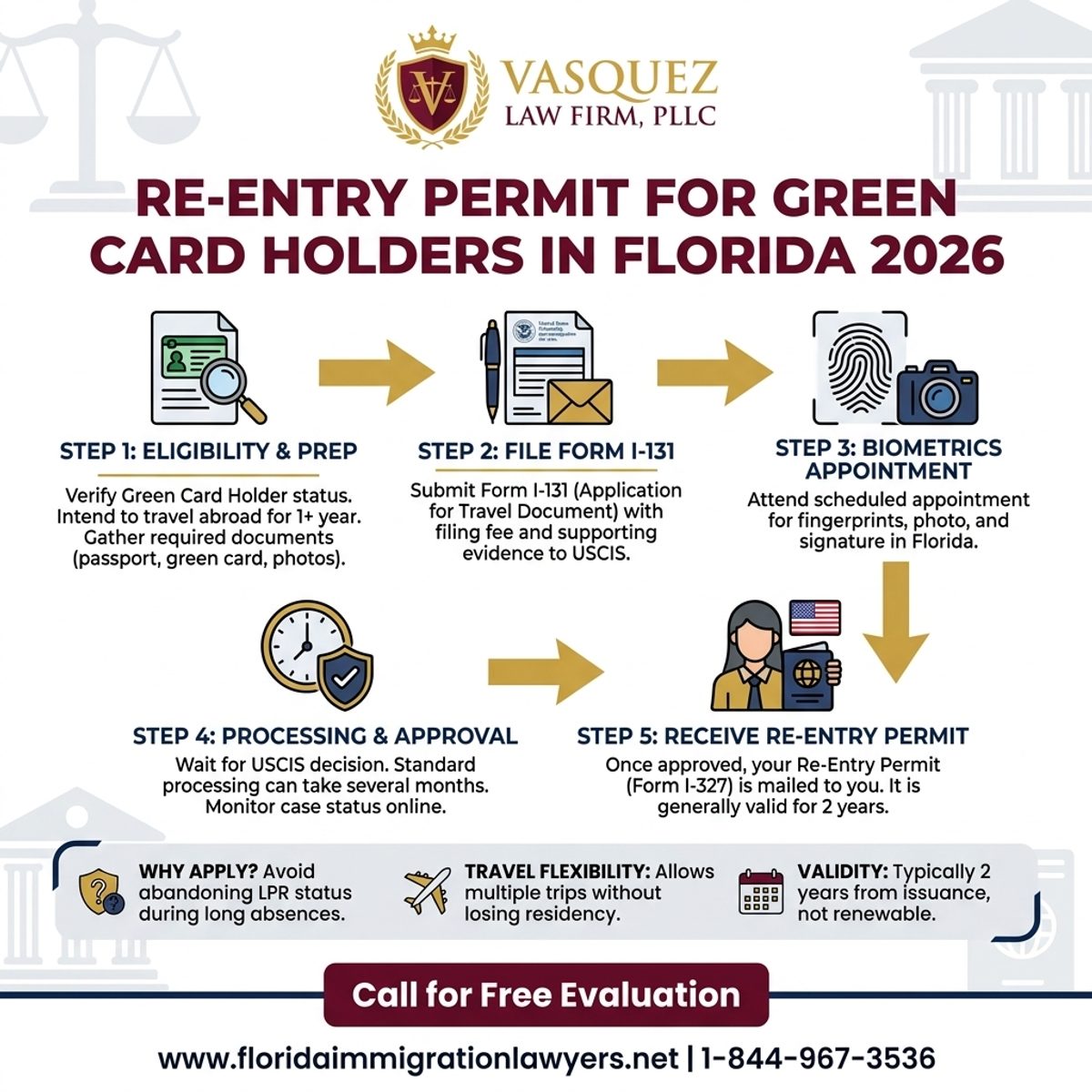
Step-by-Step Process — Re-Entry Permit for Green Card Holders in Florida 2026
A critical requirement for the I-131 application is that you must be physically present in the U.S. when you file the form. While you may depart after filing, you must typically return to the U.S. for your biometrics appointment. This appointment, usually held at an Application Support Center (ASC), involves fingerprinting and photographing, which are essential for background checks. Missing this appointment without rescheduling can lead to significant delays or even denial of your application.
After filing, USCIS will send you a receipt notice, followed by an appointment notice for biometrics. It's crucial to keep your address updated with USCIS, especially if you plan to move while your application is pending. Once the biometrics are completed, you are generally free to travel abroad, but it's advisable to wait until you have the biometrics appointment scheduled and attended. For complex cases or if you're unsure about any step, consulting with Florida Immigration Lawyers can provide invaluable assistance, ensuring your application is robust and compliant with all current regulations.
Required Documents for I-131 Application
- A copy of your green card
- A valid passport
- Travel itinerary
- Two passport-sized photos
- Any additional supporting documents explaining your travel purpose
Each document plays a vital role in demonstrating your eligibility and intent. Your green card copy proves your LPR status, while a valid passport confirms your identity and nationality. The travel itinerary, though not always rigidly fixed, should outline your general plans and the anticipated duration of your absence, helping USCIS understand the necessity of your extended travel. Remember, USCIS is looking for a legitimate reason for your prolonged stay outside the U.S.
Beyond these core items, "additional supporting documents" can be crucial, especially if your reasons for travel are complex. This might include a letter from an employer for an overseas assignment, medical records for a family emergency, or university enrollment for studies abroad. Organizing these documents meticulously, perhaps in a binder with clear labels, can prevent delays and demonstrate your diligence. Always make sure all copies are clear and legible. If you have any questions about what constitutes sufficient supporting evidence, our team at Florida Immigration Lawyers is ready to assist you in preparing a comprehensive application.
Timeline and Processing Expectations
Understanding the timeline for re-entry permit processing is crucial. Here's what to expect as of 2026:
| Stage | Typical Timeframe | Notes |
|---|---|---|
| Filing I-131 | 2-3 weeks | Ensure all documents are complete |
| Biometrics Appointment | 4-8 weeks | Required for most applicants |
| Approval and Permit Issuance | 4-6 months | May vary based on USCIS workload |
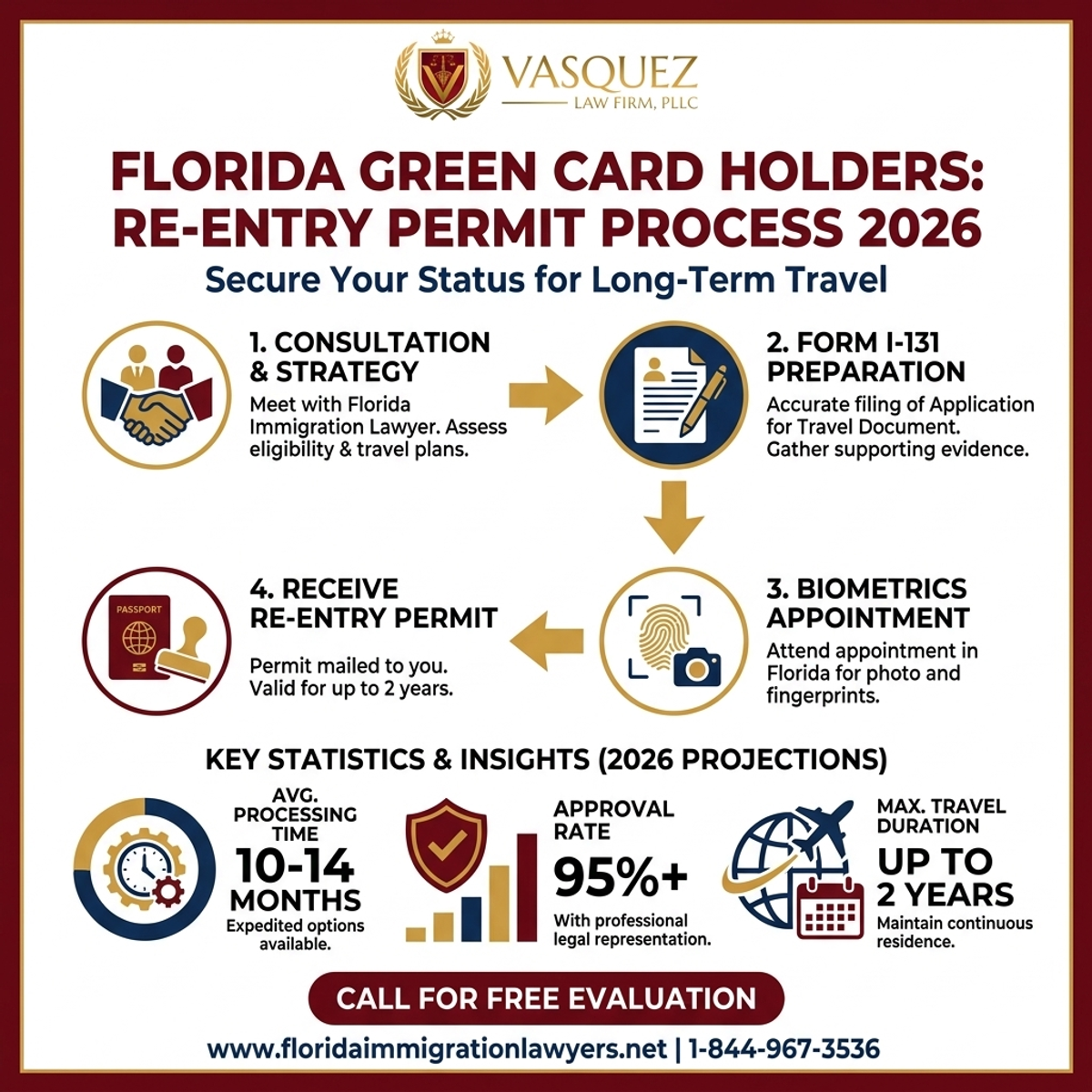
Key Statistics — Re-Entry Permit for Green Card Holders in Florida 2026
Processing times for Form I-131 can fluctuate significantly based on USCIS workload, policy changes, and the completeness of your application. While the table above provides general estimates, it's not uncommon for some applications to take longer, especially if additional evidence is requested (RFE) or if there are complications with background checks. It is always wise to apply well in advance of your planned departure, ideally several months prior, to avoid any last-minute stress or changes to your travel plans.
You can track the status of your application online using the receipt number provided by USCIS. Regularly checking this status is a good practice. If your travel plans are urgent and the processing time is a concern, there are limited circumstances for expedited processing, though these are typically reserved for humanitarian emergencies. Discussing your specific situation with an experienced attorney from Florida Immigration Lawyers can help you understand realistic timelines and explore any available options for your Hialeah-based application.
Cost Factors and Fee Breakdown
The cost of obtaining a re-entry permit involves several components:
| Item | Typical Fee | Notes |
|---|---|---|
| Form I-131 Filing Fee | Varies | Check current USCIS fee schedule |
| Biometrics Fee | Varies | Applicable if required |
Do not navigate this process alone. Contact Florida Immigration Lawyers today.
USCIS fees are subject to change, so it is absolutely critical to check the most current fee schedule on the official USCIS website before submitting your application. Submitting an incorrect fee can lead to your application being rejected and returned, causing significant delays. In some cases, LPRs with very low incomes may be eligible for a fee waiver. Eligibility for fee waivers is strict, and specific documentation is required to prove financial hardship.
Beyond the direct USCIS fees, applicants should also budget for other potential costs. These might include professional passport photos, mailing costs for sending your application package, and potentially legal fees if you choose to retain an immigration attorney. While legal fees are an additional expense, the peace of mind and assurance that your application is correctly prepared and submitted can be invaluable, especially given the importance of maintaining your LPR status. Florida Immigration Lawyers can provide a clear breakdown of all anticipated costs during your free consultation at 1-844-967-3536.
Common Mistakes to Avoid
Applying for a re-entry permit can be straightforward if done correctly, but even minor errors can lead to significant setbacks. Being aware of the most common pitfalls can help you navigate the process more smoothly and protect your LPR status.
- Submitting Form I-131 while outside the U.S., resulting in rejection.
- Failing to provide a valid reason for extended travel, leading to denial.
- Not attending the biometrics appointment, causing application delays.
- Overlooking updates in USCIS fees, leading to incorrect payment.
- Providing incomplete documentation, resulting in processing delays.
- Misunderstanding the validity period of the permit, risking abandonment.
- Ignoring the expiration of the re-entry permit during travel.
- Not checking eligibility requirements, leading to ineligibility issues.
- Overestimating processing time and planning travel prematurely.
- Assuming re-entry guarantees without checking current immigration policies.
- Using outdated forms or guidelines, leading to application rejection.
One of the most critical errors is submitting Form I-131 while outside the U.S. USCIS explicitly requires applicants to be physically present in the United States at the time of filing. Attempting to file from abroad will lead to immediate rejection, costing you time and money. Another frequent mistake is failing to provide a valid and well-documented reason for extended travel. Vague explanations or a lack of supporting evidence can raise red flags with immigration officers, suggesting a lack of genuine intent to return. Always clearly articulate your reasons and back them up with appropriate documents.
Furthermore, not attending your biometrics appointment is a common oversight that can derail your application. USCIS will send an appointment notice, and it's your responsibility to attend or properly reschedule. Missing it without valid cause can lead to application abandonment. To avoid these and other costly errors, meticulous preparation and attention to detail are paramount. When in doubt, seeking professional legal assistance from Florida Immigration Lawyers can provide the clarity and expertise needed to ensure a successful application, safeguarding your future in Hialeah and beyond.
When to Call a Lawyer
Understanding when to seek legal assistance is crucial. If you face complications during the re-entry permit process, consult a lawyer. Indicators include application denials, complicated travel histories, or changes in immigration status. Florida Immigration Lawyers can provide expert guidance and representation.
While the application for a re-entry permit may seem straightforward for some, certain situations warrant immediate legal consultation. For instance, if you have a history of lengthy absences from the U.S., previous denials of immigration benefits, or any criminal record, your application could face heightened scrutiny. Similarly, if your LPR status was obtained through a complex process, or if you have any doubts about your eligibility, a lawyer's expertise becomes invaluable.
A seasoned immigration attorney can help you prepare a robust application, anticipate potential issues, and craft compelling arguments for your need for extended travel. They can also represent you in communications with USCIS, respond to Requests for Evidence (RFEs), and guide you through any appeals process if your application is denied. Don't risk your green card status by navigating complex legal waters alone. Contact Florida Immigration Lawyers at 1-844-967-3536 for personalized advice tailored to your unique circumstances.
About Florida Immigration Lawyers
Florida Immigration Lawyers is a dedicated firm serving all of Florida, including Hialeah. We specialize in immigration matters, offering services in family immigration, deportation defense, and more. Our team provides personalized attention, ensuring the best outcomes for your case. Contact us at 1-844-967-3536 or visit our website for a free consultation.
Our commitment extends beyond just filing paperwork; we strive to be your trusted legal partner, offering compassionate and effective representation. With deep knowledge of both federal immigration laws and local nuances affecting residents of Hialeah and across Florida, we are uniquely positioned to assist you. Whether you are seeking a re-entry permit, navigating family-based petitions, or facing complex deportation issues, our goal is to provide clarity, support, and a pathway to achieving your immigration objectives.
Frequently Asked Questions About Re-Entry Permits
Q1: Can I apply for a re-entry permit if my green card is expired?
A1: You must be a lawful permanent resident to apply for a re-entry permit. While an expired green card doesn't automatically mean you've lost your LPR status, it's a critical document for the application. It's highly advisable to renew your green card (Form I-90) before or concurrently with your I-131 application. An expired green card can complicate your application and potentially raise questions about your intent to maintain residency. Consult Florida Immigration Lawyers at 1-844-967-3536 for guidance on renewing your green card and applying for a re-entry permit simultaneously.
Q2: What happens if my re-entry permit expires while I am still abroad?
A2: If your re-entry permit expires while you are outside the U.S., you risk being deemed to have abandoned your LPR status. You would then need to apply for a Returning Resident (SB-1) visa at a U.S. embassy or consulate, a process that is often challenging and requires proving your absence was due to unforeseen circumstances beyond your control. It's crucial to return to the U.S. before your permit expires or to apply for a new one while present in the U.S. if your extended stay is unavoidable. Proactive planning is key.
Q3: Can I apply for a second re-entry permit immediately after the first one expires?
A3: Yes, LPRs can apply for subsequent re-entry permits. However, if you have been outside the U.S. for four out of the last five years with a re-entry permit, subsequent permits may be limited to one year instead of two. USCIS scrutinizes repeated long absences, as they can suggest a lack of intent to reside permanently in the U.S. It's essential to demonstrate strong ties to the U.S. with each application. Consulting an attorney from Florida Immigration Lawyers can help you prepare a compelling case for subsequent permits.
Q4: Does a re-entry permit guarantee my re-entry into the U.S.?
A4: While a re-entry permit is strong evidence of your intent to maintain LPR status and significantly facilitates re-entry, it does not offer an absolute guarantee. Customs and Border Protection (CBP) officers at the port of entry still retain the authority to question you. If they find evidence of criminal activity, misrepresentation, or actual abandonment of residency (e.g., establishing a permanent life abroad), your re-entry could still be challenged. Always be truthful and prepared to explain your circumstances. A permit minimizes, but doesn't eliminate, scrutiny.
Q5: Can I travel to any country with a re-entry permit?
A5: A re-entry permit allows you to return to the U.S. as an LPR; it does not grant you the right to enter other countries. For travel to foreign nations, you will still need a valid passport from your country of citizenship and any necessary visas required by the destination country. The re-entry permit serves solely as a U.S. travel document for LPRs to facilitate their return to the United States after an extended absence. Always check the visa requirements for your destination countries well in advance of
Sources and References
- U.S. Citizenship and Immigration Services (USCIS)
- Executive Office for Immigration Review (EOIR)
- U.S. Department of State - Bureau of Consular Affairs
- Immigration and Nationality Act (INA), 8 U.S.C. Chapter 12
Do Not Navigate This Process Alone
Our experienced immigration attorneys are ready to fight for you. Get a free, confidential consultation today.
Se Habla Español
Frequently Asked Questions

William J. Vásquez
Founding Attorney · Vasquez Law Firm
U.S. Air Force veteran and immigration attorney with thousands of cases resolved. J.D., NCCU School of Law. AILA member. Admitted to the 4th, 5th, and 11th Circuit Courts.
Available 24/7 - Free Evaluations
Reviewed for legal accuracy by William J. Vásquez
Licensed in North Carolina; U.S. immigration is federal practice.
Related Legal Services
Our Florida immigration attorneys can help you with immigration practice areas, free immigration consultation and experienced immigration attorneys. Call today at 1-844-967-3536 for a free consultation.
Related Links
Related Topics
Free Legal Consultation
Discuss your case with our experienced attorneys. We're available 24/7.
Se Habla Español - Estamos aquí para ayudarle.
Related Articles
Dual Citizenship Lawyer: A Florida Naturalization Interview
Becoming a U.S. citizen is a transformative step, often linked to dual citizenship aspirations. This 2026 guide offers essential naturalization interview tips for Floridians, including those in Gainesville. Learn what to expect during your USCIS interview, critical documents to prepare, and how to master the English and Civics tests. We also cover common mistakes to avoid and when a dual citizenship lawyer from Florida Immigration Lawyers can provide invaluable assistance. Prepare confidently for your journey to U.S. citizenship with expert guidance.
Immigration Lawyer Orlando Free Consultation 2026 Guide
For those in Orlando and across Florida facing complex immigration challenges, finding a reliable immigration attorney is crucial. This comprehensive guide, from Florida Immigration Lawyers, details how an experienced lawyer can assist with visas, green cards, citizenship, and deportation defense. We cover step-by-step processes for obtaining a green card, typical timelines and costs, recent policy changes impacting Florida residents, and common mistakes to avoid. Learn about the importance of professional legal guidance, especially when seeking an immigration lawyer Orlando free consultation. Our firm provides dedicated support for all your immigration needs, ensuring you receive personalized advice and strong advocacy.
H-2B Visa for Hospitality Jobs Miami Requirements
Discover the requirements and application process for the H-2B visa in the Miami hospitality industry. Understand timelines, documentation, and common mistakes to avoid with expert guidance from Florida Immigration Lawyers.
OPT Immigration Lawyer Plantation FL: STEM Extension Guide
Explore the OPT STEM extension process in Florida with a focus on F-1 visa holders in Hialeah. Understand eligibility, application steps, and avoid common pitfalls. Get expert advice from Florida Immigration Lawyers.