Dual Citizenship Lawyer: A Florida Naturalization Interview
Becoming a U.S. citizen is a transformative step, often linked to dual citizenship aspirations. This 2026 guide offers essential naturalization interview tips for Floridians, including those in Gainesville. Learn what to expect during your USCIS interview, critical documents to prepare, and how to master the English and Civics tests. We also cover common mistakes to avoid and when a dual citizenship lawyer from Florida Immigration Lawyers can provide invaluable assistance. Prepare confidently for your journey to U.S. citizenship with expert guidance.

Navigating the naturalization interview is a crucial step towards U.S. citizenship, often a prerequisite for considering or maintaining dual citizenship. While a dual citizenship lawyer primarily advises on the complexities of holding two nationalities, they are also invaluable during the naturalization process, ensuring you meet all requirements and are prepared for your interview. This article provides essential tips for your 2026 citizenship interview in Florida, covering preparation, required documents, and what to expect, helping you secure your path to U.S. citizenship.
- Thoroughly review your N-400 application and supporting documents.
- Practice for the English and Civics tests, using official USCIS materials.
- Be honest, respectful, and clear in all your responses.
- Understand the implications of U.S. citizenship on any existing dual nationality.
- Consider legal counsel from a dual citizenship lawyer for personalized guidance.
Becoming a U.S. citizen is a monumental achievement, opening doors to new opportunities and responsibilities. For many, it's also a pivotal moment in their journey toward or management of dual citizenship, where the ability to hold two nationalities becomes a reality. The naturalization interview is arguably the most critical step in this process, a moment that can determine the outcome of years of effort. If you are an aspiring citizen in Gainesville or anywhere across Florida, preparing effectively for this interview is paramount.
This comprehensive guide, updated for 2026, aims to equip you with the knowledge and citizenship interview tips you need to confidently approach your naturalization interview. We will cover everything from understanding the process and required documents to common pitfalls and when to seek the invaluable assistance of a dual citizenship lawyer. At Florida Immigration Lawyers, we understand the stakes involved and are dedicated to providing clear, empathetic, and effective legal guidance to individuals and families throughout Florida. Don't navigate this complex process alone; call Florida Immigration Lawyers at 1-844-967-3536 for a free consultation today.
Understanding the Path to U.S. Citizenship in Florida: Why a Dual Citizenship Lawyer is Key
The journey to U.S. citizenship, known as naturalization, is governed by the Immigration and Nationality Act (INA), specifically INA § 316 (8 U.S.C. § 1427), which outlines the general requirements for eligibility. These typically include continuous residency, physical presence, good moral character, an understanding of English, and knowledge of U.S. history and government. For many individuals, becoming a U.S. citizen is a gateway to pursuing or formalizing dual citizenship, allowing them to maintain ties and rights in both their country of origin and the United States. In Florida, a state with a vibrant and diverse immigrant population, the path to citizenship is a common aspiration, and understanding each step is vital.
While the naturalization interview focuses on your eligibility for U.S. citizenship, a dual citizenship lawyer plays a crucial role by providing advice that extends beyond this immediate goal. They can counsel you on how U.S. naturalization might impact your existing or future foreign citizenship, addressing potential renunciations or automatic loss of nationality in your home country. This holistic legal perspective ensures that your journey to U.S. citizenship aligns with your broader international legal status and personal goals. Having a lawyer review your N-400 application before submission and prepare you for the interview can prevent delays or issues that might arise from misunderstandings of complex immigration laws or international agreements. Gainesville residents, like others across Florida, benefit immensely from this specialized legal insight.
The U.S. does not generally prohibit dual nationality, but individual countries have their own laws. Therefore, consulting a knowledgeable attorney is not just about passing the interview; it's about making informed decisions about your entire legal identity. A dual citizenship lawyer helps you understand the nuances of both U.S. law and relevant foreign laws, ensuring compliance and peace of mind. This proactive approach is particularly important in 2026, as immigration policies and international relations continue to evolve, making expert legal guidance more valuable than ever for those seeking to become U.S. citizens while navigating dual nationality considerations.
What Happens During the Naturalization Interview in 2026?
The naturalization interview is a formal meeting with a USCIS officer to verify the information on your N-400 application, assess your English proficiency, and test your knowledge of U.S. civics. As of 2026, the process remains largely consistent, designed to ensure you meet all statutory requirements for U.S. citizenship. This is a critical step that every applicant must successfully complete.
Your naturalization interview will typically take place at a USCIS Field Office, such as the one in Orlando, which serves the Gainesville area. You will be sworn in, and the officer will review your N-400 application, asking questions to confirm your identity, residency, good moral character, and other eligibility criteria. They will also administer the English test (reading, writing, and speaking) and the Civics test (U.S. history and government). Being well-prepared for each component is crucial for success. The officer will also compare your responses to information in your application and any documents you provided, so consistency is key. At the end of the interview, the officer will inform you of the decision or indicate if further review is needed.
Step-by-Step Guide to Your Naturalization Interview
Preparing for your interview can significantly reduce stress and improve your chances of success. Follow these steps for effective preparation:
- Review Your N-400 Application: Go through every question and answer on your Form N-400, Application for Naturalization. Ensure you remember all the details, especially dates, addresses, employment history, and travel records. Any discrepancies between your answers and the application can raise concerns.
- Gather All Required Documents: Compile all original documents and copies requested in your interview notice, plus any documents you submitted with your N-400. This includes your green card, passports, birth certificates, marriage certificates, divorce decrees, tax returns, and any court or police records. Organize them neatly for easy access.
- Practice the English Test: The English test has three parts: speaking, reading, and writing. Your ability to understand and respond to the officer's questions demonstrates your speaking proficiency. For reading and writing, practice reading simple English sentences and writing sentences dictated by a USCIS officer.
- Study for the Civics Test: USCIS provides 100 civics questions and answers. You will be asked up to 10 questions, and you must answer 6 correctly to pass. Utilize official USCIS study materials, flashcards, and online resources. Focus on understanding the concepts, not just memorizing answers.
- Understand Good Moral Character: Be prepared to answer questions about your good moral character, including any arrests, citations, or criminal history, even if charges were dropped or expunged. Honesty and transparency are vital.
- Dress Professionally and Arrive Early: Present yourself respectfully. Arrive at least 30 minutes before your scheduled interview time to account for parking, security, and potential delays. Being late can lead to rescheduling or even denial.
- Maintain Composure and Be Honest: Listen carefully to each question. If you don't understand, politely ask the officer to repeat or rephrase. Answer truthfully and directly. Providing false information can lead to severe penalties, including denial and deportation.
Essential Documents for Your USCIS Citizenship Interview
Bringing the correct and complete set of documents to your naturalization interview is non-negotiable. Missing documents can cause significant delays or even lead to a denial, requiring you to refile your application. The USCIS interview notice will specify the exact documents you must bring, but generally, you should prepare the following for your appointment at the Orlando Field Office or any other USCIS location:
- Your interview appointment notice.
- Your Permanent Resident Card (Green Card).
- State-issued identification (driver's license or state ID).
- All valid and expired passports, including re-entry permits or refugee travel documents.
- Original or certified copies of any documents submitted with your N-400 application (e.g., birth certificates, marriage certificates, divorce decrees, adoption decrees).
- Evidence of your marital status (marriage certificate, divorce decree, spouse's death certificate).
- Proof of termination of prior marriages for you or your spouse.
- Evidence of your continuous residence and physical presence in the U.S. (e.g., tax transcripts, utility bills, rental agreements, pay stubs, bank statements).
- Proof of payment of child support or alimony, if applicable.
- Certified copies of court dispositions for any arrests, citations, or criminal charges, even if expunged or dismissed.
- If you registered with the Selective Service, proof of registration.
- For those claiming U.S. citizen parentage, birth certificates and parents' marriage certificates.
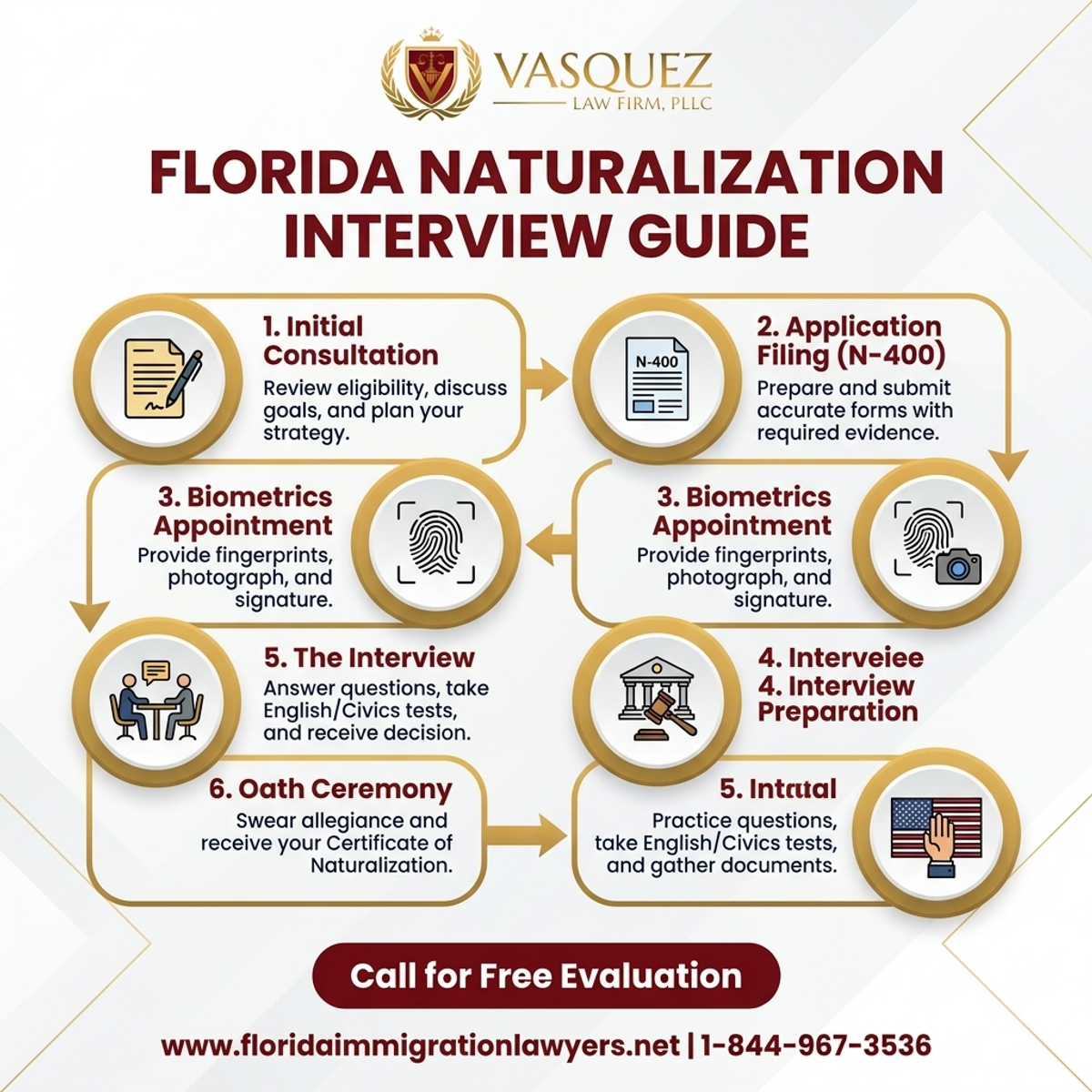
Step-by-Step Process — Dual Citizenship Lawyer: A Florida Naturalization Interview Guide
It's always advisable to bring originals of all documents and a complete set of photocopies. The USCIS officer may review your entire file, so being over-prepared is better than being under-prepared. A dual citizenship lawyer can help you organize these documents and ensure no critical piece of evidence is overlooked, safeguarding your application.
How Long Does the Naturalization Process Take in Florida as of 2026?
The processing time for naturalization applications (Form N-400) can vary significantly based on the USCIS Field Office, the complexity of the individual case, and current caseloads. As of 2026, applicants in Florida, including those from Gainesville, typically experience a range of 8 to 18 months from the date of filing to the Oath of Allegiance ceremony. However, these are general estimates, and individual cases may fall outside this timeframe. You can always check the USCIS website for current processing times by selecting your form type and field office.
Factors that can influence processing times include the completeness and accuracy of your initial application, the need for additional evidence (RFE), background checks, and the scheduling availability for interviews and oath ceremonies. For example, if your case requires extensive background checks due to travel history or past legal issues, it could take longer. Conversely, a straightforward application with all documents in order may be processed more quickly. Maintaining a clean record and responding promptly to all USCIS requests can help expedite your process. A dual citizenship lawyer can also help monitor your case status and address any potential delays.
Typical Naturalization Timeline in Florida (as of 2026)
| Stage | Typical Timeframe | Notes |
|---|---|---|
| Form N-400 Filing to Receipt Notice | 1-3 weeks | USCIS sends confirmation of application receipt. |
| Biometrics Appointment | 1-2 months after filing | Fingerprints, photo, and signature taken for background checks. |
| Interview Scheduling | 6-12 months after filing | Notice for the naturalization interview is sent. |
| Naturalization Interview | 7-14 months after filing | Meeting with a USCIS officer to review application, conduct tests. |
| Decision and Oath Ceremony | 1-4 months after interview | If approved, a notice for the Oath of Allegiance ceremony is scheduled. |
| Total Process | 8-18 months (average) | Varies by field office and individual case complexity. |
What Are the Costs Associated with Becoming a U.S. Citizen?
The costs associated with becoming a U.S. citizen primarily involve government filing fees, which are subject to change by USCIS. As of 2026, the main fee is for filing Form N-400, Application for Naturalization, which typically includes the biometric services fee. It is crucial to check the USCIS website for the most current fee schedule, as these fees are periodically updated. There may also be additional costs such as obtaining necessary documents, translation services, and legal fees if you choose to hire an attorney.
While the government fees are standard for all applicants, other expenses can vary. For example, if you need to obtain certified copies of birth certificates, marriage licenses, or court records from foreign countries, there may be associated administrative or translation fees. Similarly, if any of your supporting documents are not in English, they must be translated by a certified translator, incurring additional costs. These are important considerations for applicants in Florida, particularly those from diverse backgrounds who may have documents from multiple countries. Investing in accurate translations and certified copies upfront can prevent delays later in the process. Remember, a dual citizenship lawyer can help you understand all potential costs and manage your budget effectively.
Typical Costs for Naturalization (as of 2026)
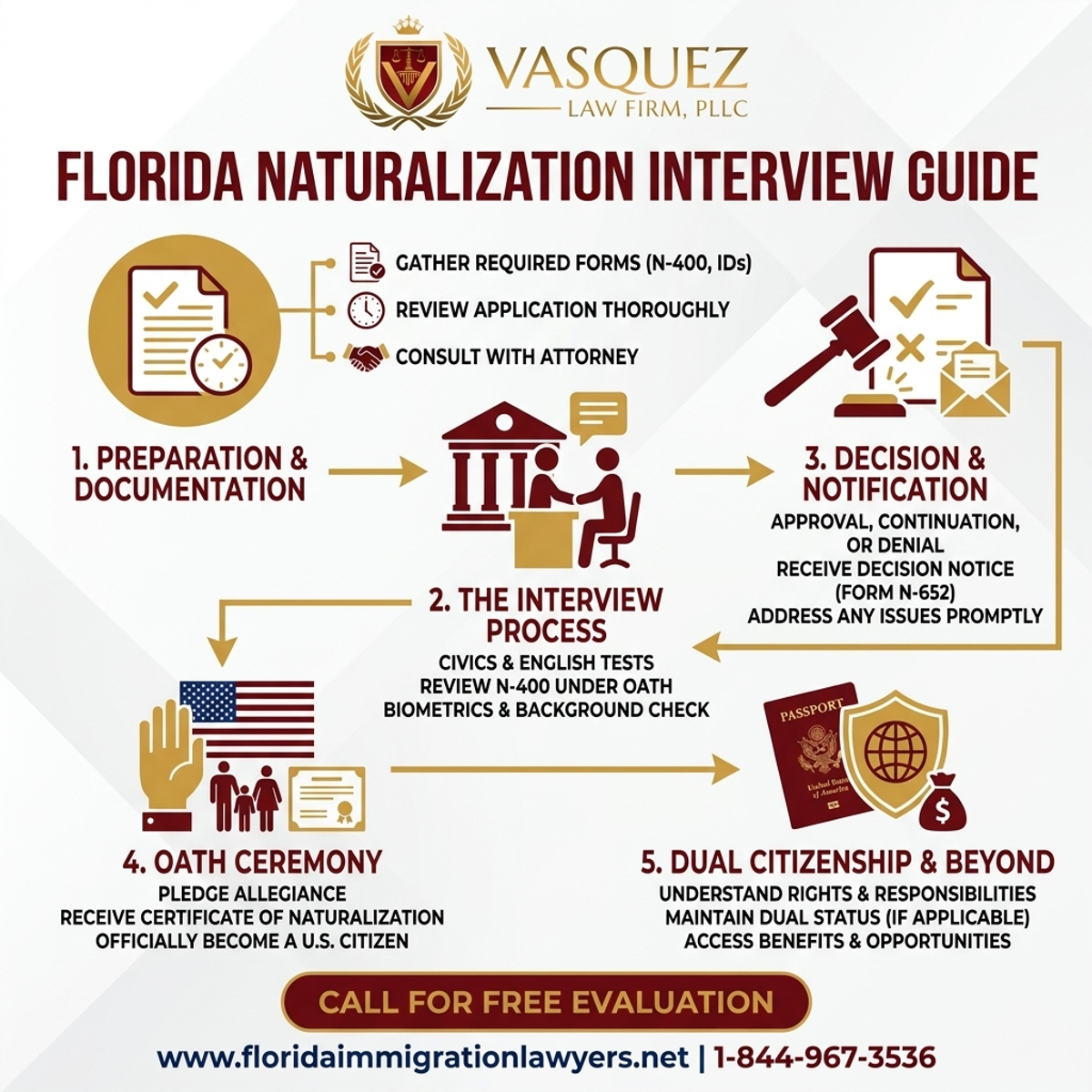
Key Statistics — Dual Citizenship Lawyer: A Florida Naturalization Interview Guide
| Item | Typical Fee | Notes |
|---|---|---|
| Form N-400 Filing Fee | Varies (check USCIS) | This fee covers the processing of your application. |
| Biometrics Services Fee | Included in N-400 fee | Covers fingerprinting and background checks. |
| Document Translation Services | $20-$100 per page | Required for any non-English documents. |
| Obtaining Certified Records | Varies by agency | Costs for birth certificates, court records, etc. |
| Legal Fees (if applicable) | Varies by attorney/case | Highly recommended for complex cases or peace of mind. |
Mastering Your Citizenship Interview: Key Tips for Success
A successful naturalization interview hinges on thorough preparation and a confident, respectful demeanor. Beyond reviewing your N-400 and studying for the tests, there are several practical tips that can significantly boost your performance. These apply to applicants across Florida, from Gainesville to Miami, ensuring you present yourself as a well-prepared and deserving future U.S. citizen. Remember, the officer is looking for honesty, good moral character, and a genuine commitment to the U.S.
Firstly, practice your English speaking and listening skills. Engage in conversations, watch English-language news, and listen to podcasts. The better you can understand and respond naturally, the smoother your interview will be. Secondly, be meticulously organized with your documents. Use folders or binders to keep everything in order, making it easy to retrieve any requested item quickly. This demonstrates your attention to detail and respect for the process. Thirdly, dress in business casual attire. While there's no strict dress code, presenting a professional appearance conveys seriousness and respect. Finally, be polite and courteous to everyone at the USCIS office, from the security guard to the interviewing officer. A positive attitude can make a difference in the overall experience. A dual citizenship lawyer can conduct mock interviews, providing invaluable feedback and helping you refine your responses and presentation.
Do not navigate this process alone. Contact Florida Immigration Lawyers today at 1-844-967-3536 for a free consultation.
Common Mistakes to Avoid During Your Citizenship Interview
The naturalization interview is a high-stakes event, and even minor errors can lead to delays or denial. Being aware of common mistakes can help you avoid them and ensure a smoother process. Here are 7-12 crucial mistakes to steer clear of:
- Failing to Review Your N-400 Thoroughly: Many applicants forget details from their own application. If your verbal answers contradict your written application, it can raise red flags, leading to suspicion or a request for more evidence.
- Providing Dishonest or Inconsistent Answers: Lying or providing inconsistent information, even about minor details, can be grounds for denial and even lead to accusations of misrepresentation, which has severe immigration consequences.
- Not Bringing All Required Documents: Forgetting a crucial document listed in your interview notice or on your N-400 can cause significant delays, requiring a second interview or a Request for Evidence (RFE).
- Inadequate Preparation for English and Civics Tests: Underestimating the difficulty of these tests is common. Failing either test means you will likely be scheduled for a second interview, prolonging your journey to citizenship.
- Arriving Late to Your Interview: Punctuality is critical. Arriving late, or missing your interview entirely without proper notification, can result in your application being closed or denied, forcing you to refile.
- Having an Undisclosed Criminal Record: Failing to disclose any arrests, citations, or criminal history, no matter how minor or old, is a serious mistake. USCIS will find this information during background checks, and non-disclosure can be seen as a lack of good moral character.
- Displaying Disrespectful or Aggressive Behavior: Treat the USCIS officer and all staff with respect. Any disrespectful or aggressive behavior can negatively impact the officer's impression of your character and suitability for citizenship.
- Not Understanding the Oath of Allegiance: While not part of the interview, understanding the oath is essential. Applicants who show they don't grasp the significance of the oath of allegiance may face further scrutiny regarding their commitment to the U.S.
- Lack of Proof of Good Moral Character: Failing to provide evidence of good moral character, especially if there are any issues in your background, can lead to denial. This often involves demonstrating tax compliance, adherence to laws, and community involvement.
- Ignoring Changes to Your Application: If any information on your N-400 has changed since filing (e.g., new address, travel, job, marital status), you must inform the officer. Failing to update can lead to discrepancies and questions about your honesty.
When to Call a Dual Citizenship Lawyer
While many naturalization applicants successfully navigate the process independently, certain situations strongly warrant the expertise of a dual citizenship lawyer. If you reside in Gainesville, Orlando, or any other part of Florida and encounter any of these scenarios, seeking legal counsel from Florida Immigration Lawyers is highly advisable to protect your application and ensure a smooth path to citizenship:
- Criminal History: Even minor arrests, citations, or expunged records can impact your good moral character determination. A lawyer can assess the severity and help prepare explanations or waivers.
- Complex Travel History: Extensive or unusual travel outside the U.S., especially long absences, can raise questions about continuous residency. An attorney can help clarify your eligibility.
- Previous Immigration Issues: If you have ever been placed in deportation or removal proceedings, had a visa denied, or faced other immigration challenges, legal guidance is essential.
- Marital Issues or Divorce: If your naturalization is based on marriage to a U.S. citizen and you are separated or divorced, or if you have multiple marriages, a lawyer can help you provide adequate proof of a bona fide marriage.
- Disabilities Requiring Waivers: If you need a medical waiver for the English or Civics tests due to a physical or developmental disability, an attorney can assist with Form N-648 and ensure proper documentation.
- Concerns about Dual Nationality: If you are unsure how U.S. naturalization will affect your existing or desired foreign citizenship, a dual citizenship lawyer can provide tailored advice on international law implications.
- Difficulty Understanding English or Legal Concepts: If you struggle with the English language or the complexities of immigration law, an attorney can ensure your application is accurate and you are fully prepared for the interview.
At Florida Immigration Lawyers, we offer comprehensive support throughout the naturalization process, from initial application review to interview preparation and representation. Our experienced attorneys can anticipate potential issues, prepare strong arguments, and ensure your rights are protected every step of the way.
About Florida Immigration Lawyers
Florida Immigration Lawyers is a leading immigration law firm dedicated to serving individuals and families across the entire state of Florida. With a deep understanding of complex U.S. immigration laws and policies, our experienced attorneys provide compassionate, strategic, and effective legal representation. We specialize in a wide range of immigration matters, including naturalization, family immigration, employment visas, asylum, and deportation defense. We pride ourselves on offering personalized attention, clear communication, and unwavering advocacy for our clients.
Choosing Florida Immigration Lawyers means partnering with a team that genuinely cares about your future. We are available 24/7 to address your concerns and offer free consultations to help you understand your options. Our commitment to excellence and client success has made us a trusted resource for the immigrant community in Florida, from Gainesville and Orlando to Miami and Jacksonville. Let us put our expertise to work for you, guiding you through every step of your immigration journey.
Contact us today: 1-844-967-3536 | Website: https://www.floridaimmigrationlawyers.net
Sources and References
- U.S. Citizenship and Immigration Services (USCIS)
- U.S. Department of State - Bureau of Consular Affairs
- Executive Office for Immigration Review (EOIR)
- 8 U.S.C. Chapter 12 - Immigration and Nationality Act (INA)
- INA § 316 (8 U.S.C. § 1427) - General Requirements for Naturalization
- 8 CFR Part 316 - General Requirements for Naturalization
- USCIS Policy Manual - Citizenship and Naturalization
Related services: citizenship test preparation, dual citizenship guidance, citizenship test resources.
This article provides general legal information and is not intended as legal advice. Every case is unique, and outcomes depend on specific facts and circumstances. Contact an attorney for advice about your particular situation.
Ready to take the next step towards U.S. citizenship or need guidance on dual nationality? Don't leave your future to chance. Contact Florida Immigration Lawyers today for a free, confidential consultation. Our experienced dual citizenship lawyer team is here to help you navigate the complexities of immigration law. Call us at 1-844-967-3536. Se Habla Espanol - Estamos aqui para ayudarle.
Do Not Navigate This Process Alone
Our experienced immigration attorneys are ready to fight for you. Get a free, confidential case review today.
Se Habla Español
Or leave your details and we’ll call you:
Free Evaluation in 24 Hours
Or talk to us right now
AI voice assistant — available 24/7
FreeFrequently Asked Questions

William J. Vásquez
Founding Attorney · Vasquez Law Firm
U.S. Air Force veteran and immigration attorney with years of hands-on U.S. immigration experience. J.D., NCCU School of Law. AILA member. Admitted to the 4th, 5th, and 11th Circuit Courts.
Available 24/7 - Free Evaluations
Reviewed for legal accuracy by William J. Vásquez
Licensed in North Carolina; U.S. immigration is federal practice.
Related Legal Services
Our Florida immigration attorneys can help you with deportation defense, family immigration services and immigration lawyer cost in Florida. Call today at 1-844-967-3536 for a free case review.
Related Links
Related Topics
Free Legal Case Review
Discuss your case with our experienced attorneys. We're available 24/7.
Se Habla Español - Estamos aquí para ayudarle.
Related Articles
Immigration Lawyer Orlando Free Consultation in Florida
For individuals and families in Orlando, Florida, navigating the complexities of U.S. immigration law requires expert guidance. An immigration lawyer in Orlando offers crucial support for everything from visa applications and green card processes to naturalization and deportation defense. This comprehensive guide details what a free consultation covers, providing a step-by-step overview of immigration pathways, essential document checklists, and expected timelines in 2026. We also highlight common mistakes to avoid, discuss the critical role of legal counsel in deportation and asylum cases, and explain why choosing a local Orlando immigration attorney is beneficial. Florida Immigration Lawyers is dedicated to serving the diverse community of Orlando with compassionate, effective legal solutions, ensuring you receive personalized advice and robust representation for a successful immigration journey.
Immigration Lawyer Cost in Florida 2026: What to Expect
Navigating the U.S. immigration system can be daunting, and understanding the associated legal fees is often a primary concern. This comprehensive guide from Florida Immigration Lawyers delves into the costs of hiring an immigration attorney in Florida for 2026. We break down the factors influencing attorney fees, such as case complexity, attorney experience, and geographic location within Florida, including Orlando. You'll learn about common fee structures like flat fees and hourly rates, and find a detailed table outlining typical costs for various immigration services, from family petitions to deportation defense. We also provide a step-by-step guide to hiring an attorney, a document checklist, and an estimated timeline for different immigration processes. Crucially, the article highlights the invaluable benefits of legal representation, emphasizing how expert guidance can prevent costly mistakes, streamline your application, and significantly improve your chances of success. We discuss common pitfalls to avoid and specific scenarios where legal counsel is essential, ensuring you make informed decisions about your immigration future in Florida. Florida Immigration Lawyers offers free case reviews and bilingual services to assist you.
U Visa for Crime Victims in Florida: Your 2026 Guide
For crime victims in Florida, the U visa offers a critical pathway to legal status and protection. This humanitarian immigration relief is available to individuals who have suffered substantial physical or mental abuse as a result of certain serious crimes and are willing to assist law enforcement in their investigation or prosecution. From domestic violence to human trafficking, understanding your eligibility and the complex application process is vital. This guide provides a comprehensive overview of the U visa, including specific qualifying crimes, the step-by-step application process, required documentation, and current processing timelines and fees for 2026. We also highlight common mistakes to avoid and explain when seeking legal counsel from experienced immigration attorneys at Florida Immigration Lawyers is essential. Our firm, based in Orlando, serves all of Florida, offering compassionate guidance and strategic advocacy to help crime victims achieve safety and legal residency.
Application for Re-Entry Permit: A Florida LPR Guide 2026
For Lawful Permanent Residents (LPRs) in Florida, extended international travel can pose a risk to their green card status. An application for re-entry permit (Form I-131) is a vital document designed to prevent the presumption of green card abandonment, which can occur after prolonged absences from the U.S. This permit demonstrates your intent to maintain permanent residency and facilitates your re-entry without issues at U.S. ports of entry. This comprehensive guide covers everything Florida LPRs need to know about the I-131 re-entry permit in 2026, including eligibility, the step-by-step application process, required documents, typical processing timelines, and associated costs. We also highlight common mistakes to avoid and crucial factors that can lead to green card abandonment. Understanding these nuances is essential for safeguarding your LPR status and ensuring a smooth return to your home in Florida. Florida Immigration Lawyers is ready to assist you in navigating this critical process.