"Narrative of Fear" Asylum I-589 Preparation in Florida
Facing an asylum interview in Florida requires careful preparation, especially your "narrative of fear" for the I-589 form. Learn crucial steps to effectively prepare, including document checklists and common mistakes to avoid. Contact Florida Immigration Lawyers for expert guidance.

- Understand the importance of your personal story.
- Prepare documentation supporting your claims.
- Practice your interview responses.
Introduction
Facing an asylum interview can be daunting, especially when your future depends on it. The "narrative of fear" element of the I-589 form is essential and requires thorough preparation. In this article, we will guide you through the steps to effectively prepare for your asylum interview in Florida, focusing on Gainesville and surrounding areas. Call Florida Immigration Lawyers at 1-844-967-3536 for a free consultation.
The journey to seek asylum is often fraught with emotional and logistical challenges. Understanding the process, particularly the critical role of your personal story, can significantly alleviate stress and improve your chances of success. This guide aims to demystify the asylum application and interview process, providing practical advice for applicants in Florida, from the initial filing of Form I-589 to the final interview.
Your asylum claim is more than just paperwork; it's a deeply personal plea for safety and protection. The U.S. government provides a pathway for individuals who fear persecution in their home countries, but navigating this legal landscape requires precision, honesty, and often, expert legal guidance. Florida Immigration Lawyers are here to ensure your narrative is heard and understood, offering comprehensive support every step of the way.
What is the "Narrative of Fear" in Asylum I-589?
Your "narrative of fear" is the personal account of why you are seeking asylum. It must detail specific threats and experiences that justify your fear of persecution. As of 2026, effectively communicating this narrative is critical for your I-589 application to be considered by USCIS.
The narrative should be compelling and supported by evidence. It should include dates, locations, and descriptions of incidents that demonstrate the risk you face in your home country.
Beyond simply recounting events, your narrative must clearly articulate how the persecution you fear or have experienced is connected to one of the five protected grounds: race, religion, nationality, political opinion, or membership in a particular social group. For example, if you faced threats due to your political activism, your narrative must explicitly link these threats to your political opinion, providing specific examples of how authorities or groups targeted you because of it.
Crafting a credible and consistent narrative is paramount. Asylum officers are trained to identify inconsistencies, so it's vital that your written statement, oral testimony, and supporting evidence all align. This means revisiting your story, ensuring all details are accurate, and being prepared to elaborate on any aspect during your interview. A strong narrative, supported by facts and free of exaggeration, forms the bedrock of a successful asylum claim, demonstrating a well-founded fear of persecution.
How to Prepare for an Asylum Interview in Florida?
Preparation is key for a successful asylum interview. Here are some steps to follow:
- Gather all relevant documentation, including identity documents, police reports, and medical records.
- Practice your narrative of fear multiple times to ensure clarity and confidence during the interview.
- Familiarize yourself with the interview process and potential questions you may be asked.
- Seek legal assistance if needed to ensure your application is thoroughly prepared.
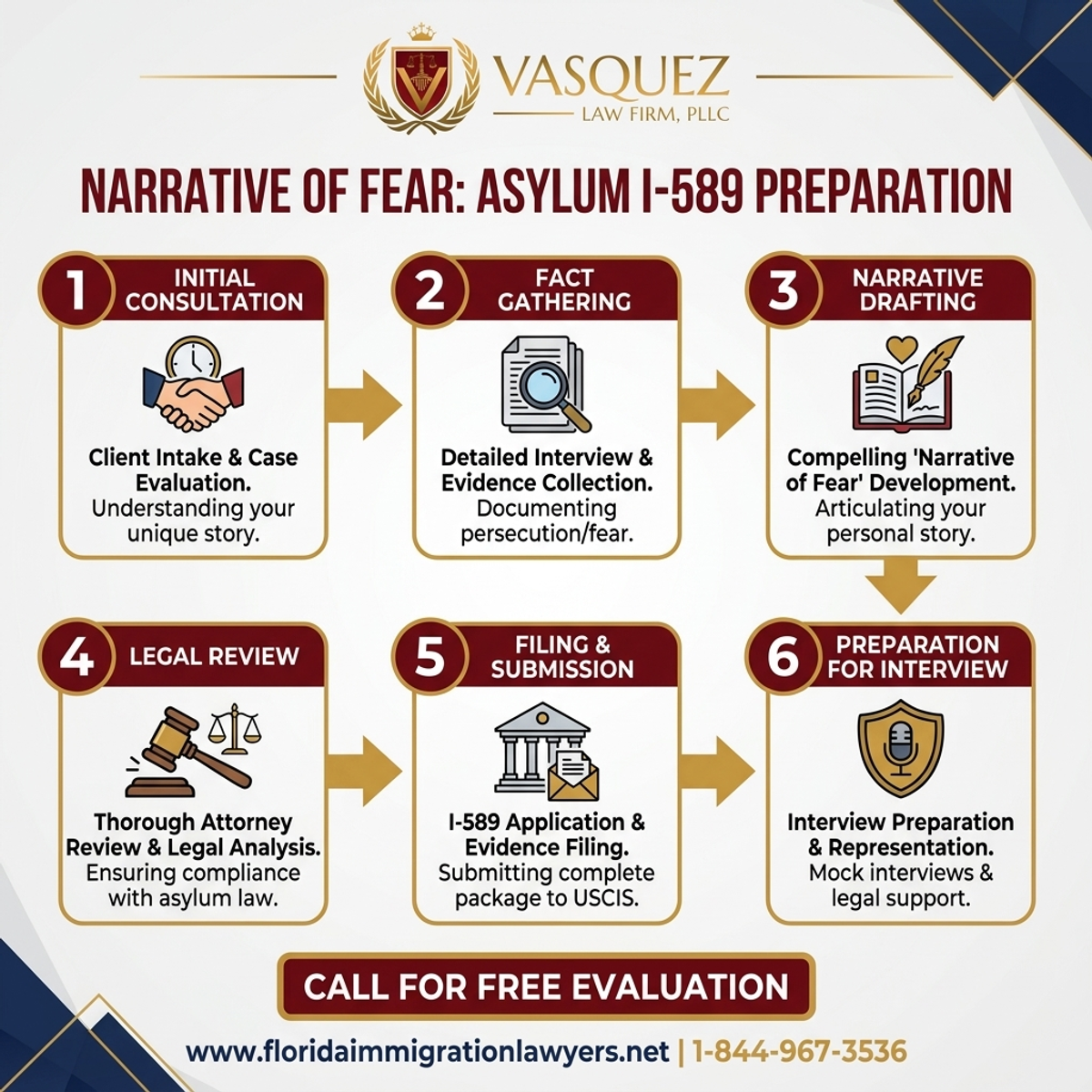
Step-by-Step Process — "Narrative of Fear" Asylum I-589 Preparation in Florida
Florida's USCIS offices, including those in Gainesville, are where you will present your case. Understanding the local legal landscape can provide additional insights and support.
Beyond gathering documents, practicing your narrative involves more than just memorization. It means understanding the emotional weight of your story and being able to articulate it clearly, even under pressure. Consider conducting mock interviews with a trusted friend, family member, or, ideally, your attorney from Florida Immigration Lawyers. This practice can help you anticipate questions, manage your emotions, and ensure your responses are consistent with your written statement.
It is also crucial to understand the role of the asylum officer. They are trained to be neutral fact-finders, but they will ask probing questions to verify the credibility of your claim. Be prepared to answer questions about specific dates, locations, and individuals involved in your persecution. If an interpreter is needed, ensure you are comfortable with their services and understand how to communicate effectively through them. Remember, the goal is to present a clear, truthful, and compelling case for why you cannot return to your home country.
Document Checklist for Your Asylum Interview
- Completed I-589 form.
- Personal identification documents (passport, birth certificate).
- Supporting evidence for your narrative of fear.
- Affidavits from witnesses or experts.
- Photographs, media reports, or articles relevant to your case.
Each document on this checklist plays a vital role in corroborating your personal story. For instance, your personal identification documents establish your identity, while supporting evidence for your narrative, such as police reports, medical records detailing injuries, or human rights reports from reputable organizations, can independently verify the conditions and events you describe. The more objective evidence you can provide, the stronger your case will be.
Affidavits from witnesses who can attest to your persecution, or expert opinions on country conditions, can add significant weight to your claim. Similarly, photographs, videos, or media reports (e.g., news articles, social media posts) that document incidents of persecution or general country conditions can serve as powerful corroborating evidence. Remember that all documents not in English must be accompanied by a certified translation, meaning a translator's statement attesting to the accuracy and completeness of the translation and to their competence to translate from the foreign language into English. Florida Immigration Lawyers can assist you in identifying and organizing the most impactful evidence for your case.
Timeline and Processing Expectations
Asylum cases can vary widely in processing times, but here is a general expectation:
| Stage | Typical Timeframe | Notes |
|---|---|---|
| Submission of I-589 | 1-3 months | Initial processing and biometrics |
| Interview scheduling | 6-12 months | Depending on caseload |
| Interview outcome | 2-4 weeks | Decision notice |
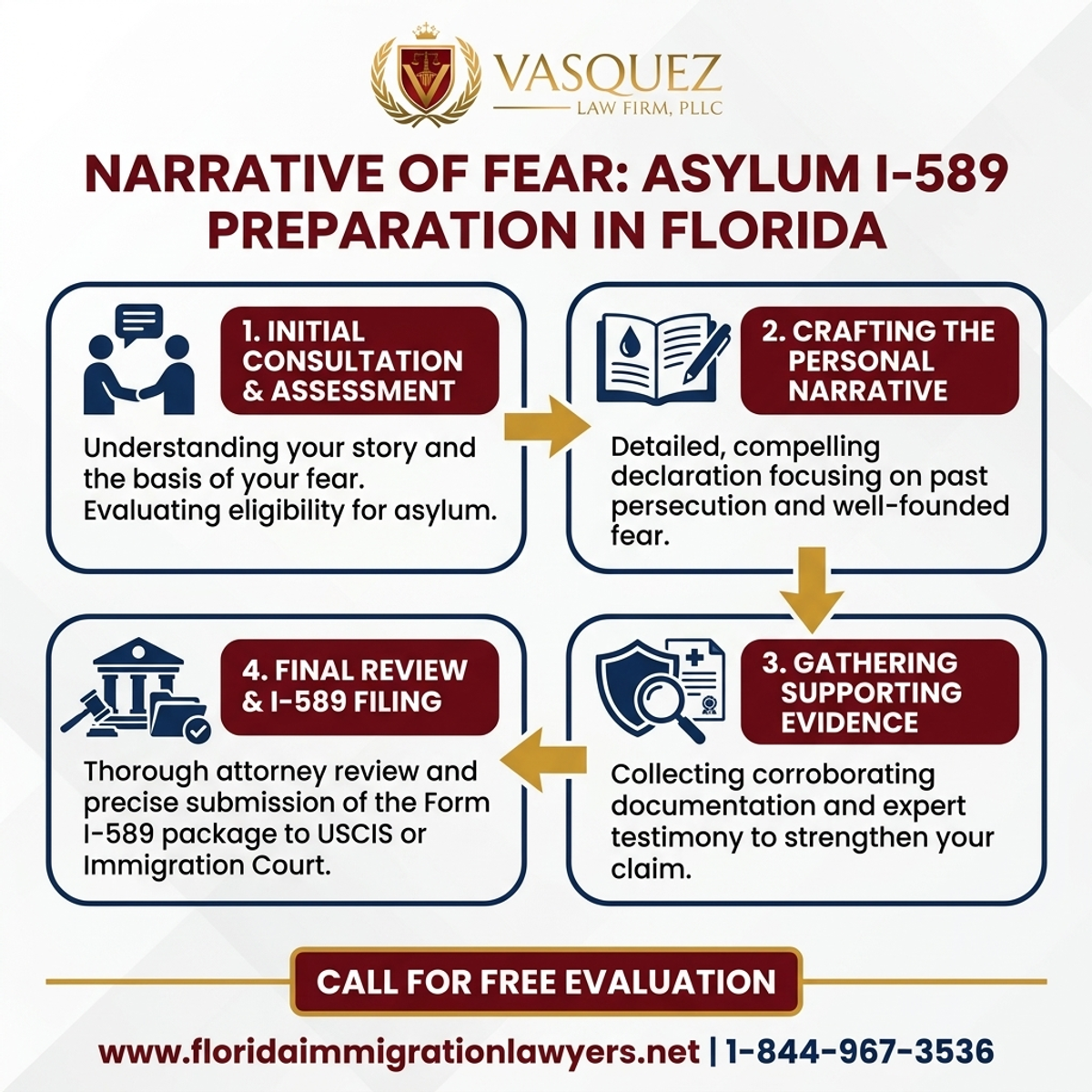
Key Statistics — "Narrative of Fear" Asylum I-589 Preparation in Florida
The Gainesville USCIS office may have specific timelines, so check with your local office for the most current information.
It's important to understand that the processing times provided are general estimates and can fluctuate significantly due to factors such as USCIS caseloads, changes in immigration policy, and the complexity of individual cases. While some cases may be resolved quickly, others can take several years. During this waiting period, many asylum seekers are eligible to apply for an Employment Authorization Document (EAD) after 150 days of their asylum application being filed, allowing them to work legally in the U.S. and provide for themselves and their families.
Should your asylum application be denied by a USCIS asylum officer, your case will typically be referred to an immigration judge for further proceedings. This is not a final denial but an opportunity to present your case again in an adversarial setting. An experienced attorney from Florida Immigration Lawyers can guide you through this complex judicial process, helping you prepare for court hearings and explore all available legal avenues, including appeals if necessary. We are committed to supporting you throughout every stage of your asylum journey.
Cost Factors and Fee Breakdown
While applying for asylum does not have a filing fee, there are other potential costs:
| Item | Typical Fee | Notes |
|---|---|---|
| Legal representation | Varies | Depends on the attorney |
| Document translation | $25-$50 per page | Professional translation required |
| Medical evaluations | $100-$300 | If applicable to your case |
Do not navigate this process alone. Contact Florida Immigration Lawyers today.
While the absence of a filing fee for the I-589 form is a relief for many, it's crucial to budget for the associated costs that can significantly impact the strength and success of your application. Legal representation, though an investment, often proves invaluable. Attorneys can help you prepare a meticulous application, gather robust evidence, practice your testimony, and represent you during the interview or in court, dramatically increasing your chances of a favorable outcome. Many firms, including Florida Immigration Lawyers, offer flexible payment plans or free initial consultations to make legal assistance more accessible.
Beyond legal fees, other costs include obtaining certified copies of personal records from your home country, courier services for sending documents, and potentially fees for expert witnesses or psychological evaluations if trauma is a central part of your narrative. These evaluations, conducted by licensed professionals, can provide crucial medical evidence supporting the credibility of your fear and the impact of persecution. Proactively understanding and planning for these expenses can help you manage the financial aspects of your asylum application more effectively.
Common Mistakes to Avoid
Navigating the asylum process is complex, and even minor errors can have significant repercussions. Being aware of and actively avoiding these common pitfalls is as crucial as proactive preparation for your asylum interview.
- Failing to provide a detailed "narrative of fear" can lead to application denial.
- Not bringing all necessary documents to the interview.
- Overlooking the importance of psychological evaluations when applicable.
- Ignoring discrepancies in your story during the interview.
- Missing deadlines for document submissions.
- Not seeking legal assistance when needed.
- Providing inconsistent information in your narrative or during the interview.
- Failing to update USCIS with address changes.
- Underestimating the importance of practice and preparation.
- Neglecting to provide certified translations for non-English documents.
- Assuming the interview will be informal or conversational.
Avoiding these mistakes requires meticulous attention to detail and a thorough understanding of the asylum process. Engaging with experienced legal counsel, such as Florida Immigration Lawyers, can provide the guidance needed to circumvent these common errors and build a robust and credible asylum claim.
When to Call a Lawyer
Complex asylum cases require expert guidance. Call a lawyer if:
- You have a complicated case with limited evidence.
- Previous applications have been denied.
- You need help understanding the legal process.
- You want to ensure all documentation is correct and complete.
Florida Immigration Lawyers provide comprehensive services to help you navigate the complexities of the asylum process. Call us at 1-844-967-3536.
It's always advisable to consult with an immigration attorney, even if you believe your case is straightforward. However, certain situations make legal representation absolutely critical. For instance, if you have any past criminal history, even minor offenses, it could impact your eligibility for asylum. Similarly, if you entered the U.S. without inspection or have a prior deportation order, navigating the asylum process without legal counsel could lead to severe complications.
Furthermore, if you are struggling with the emotional trauma of your experiences and find it difficult to articulate your story clearly, an attorney can help you structure your narrative in a coherent and compelling manner without causing further distress. The legal team at Florida Immigration Lawyers is adept at handling sensitive cases with compassion and expertise, ensuring your story is told effectively and your rights are protected throughout the entire asylum process.
Frequently Asked Questions (FAQs)
Here are some common questions asylum seekers have, along with practical advice:
- What happens if my asylum application is denied?
If your asylum application is denied by USCIS, your case is typically referred to an immigration judge in immigration court. This is not the end of your journey; it's an opportunity for a de novo hearing where you can present your case again. An experienced attorney from Florida Immigration Lawyers can represent you in court, help you prepare for this new phase, and explore all possible avenues for relief, including appeals to the Board of Immigration Appeals (BIA) if necessary. - Can I work while my asylum application is pending?
Yes, generally, you can apply for an Employment Authorization Document (EAD), also known as a work permit, 150 days after filing your I-589 asylum application, provided your application is still pending and has not been denied by an asylum officer or referred to an immigration judge. Once you receive your EAD, you are legally authorized to work in the U.S. This can provide crucial financial stability during the often lengthy asylum process. Florida Immigration Lawyers can assist you with the EAD application. - What is the difference between asylum and refugee status?
Both asylum and refugee status offer protection to individuals fleeing persecution. The key difference lies in where you apply. Refugee status is sought by individuals outside the United States who apply for protection from abroad. Asylum, on the other hand, is for individuals who are already in the United States or at a port of entry and then apply for protection. Both require demonstrating a well-founded fear of persecution based on one of the five protected grounds. - How long do I have to apply for asylum after arriving in the U.S.?
Generally, you must apply for asylum within one year of your last arrival in the United States. This is known as the "one-year filing deadline." However, there are exceptions to this rule if you can demonstrate changed circumstances that materially affect your eligibility for asylum or extraordinary circumstances relating to the delay in filing. It is crucial to consult with an immigration attorney like Florida Immigration Lawyers immediately if you are past this deadline to determine if an exception applies to your situation. - Can my family be included in my asylum application?
Yes, if you are granted asylum, your spouse and unmarried children under 21 years of age may be included in your asylum application, even if they are not physically present in the United States at the time of your application. They can apply to join you in the U.S. through a process called "derivative asylum." It's important to list all eligible family members on your I-589 form and provide documentation proving your relationship. Florida Immigration Lawyers can guide you through the process of bringing your family to safety.
About Florida Immigration Lawyers
Florida Immigration Lawyers is dedicated to providing expert legal assistance to immigrants across Florida. Our team is experienced in handling diverse immigration cases, including asylum, deportation defense, and family immigration. Why choose us? We offer personalized legal guidance, 24/7 availability, and free consultations. Visit us at our website.
Our commitment extends beyond just legal representation; we strive to be a reliable partner for our clients, understanding the profound impact immigration matters have on their lives and futures. With a deep understanding of both federal immigration law and the specific procedures within Florida's USCIS offices and immigration courts, we provide strategic and compassionate advocacy. We pride ourselves on clear communication, ensuring you are informed and confident at every stage of your case.
At Florida Immigration Lawyers, we believe everyone deserves the chance to build a safe and prosperous life. Whether you are fleeing persecution, seeking to reunite with family, or facing deportation, our dedicated team is here to fight for your rights. We offer comprehensive support, from preparing complex applications and gathering crucial evidence to representing you in interviews and court hearings. Contact us today at 1-844-967-3536 to experience the difference of having a dedicated legal advocate by your side.
Sources and References
- U.S. Citizenship and Immigration Services (USCIS)
- Executive Office for Immigration Review (EOIR)
- 8 U.S.C. Chapter 12 - Immigration and Nationality Act
Related services: refugee status and resettlement, withholding of removal.
This article provides general legal information and is not intended as legal advice. Every case is unique, and outcomes depend on specific facts and circumstances. Contact an attorney for advice about your particular situation.
Call Florida Immigration Lawyers at 1-844-967-3536 for a free consultation. Se Habla Espanol - Estamos aqui para ayudarle.
If you need legal assistance, learn more about asylum lawyers in Florida, or call us at 1-844-967-3536 for a free consultation.
Do Not Navigate This Process Alone
Our experienced immigration attorneys are ready to fight for you. Get a free, confidential consultation today.
Se Habla Español
Frequently Asked Questions

William J. Vásquez
Founding Attorney · Vasquez Law Firm
U.S. Air Force veteran and immigration attorney with thousands of cases resolved. J.D., NCCU School of Law. AILA member. Admitted to the 4th, 5th, and 11th Circuit Courts.
Available 24/7 - Free Evaluations
Reviewed for legal accuracy by William J. Vásquez
Licensed in North Carolina; U.S. immigration is federal practice.
Related Legal Services
Our Florida immigration attorneys can help you with family immigration services, immigration practice areas and free immigration consultation. Call today at 1-844-967-3536 for a free consultation.
Related Links
Related Topics
Free Legal Consultation
Discuss your case with our experienced attorneys. We're available 24/7.
Se Habla Español - Estamos aquí para ayudarle.
Related Articles
Refugee Lawyer: Resettlement in Florida 2026
Discover how a refugee lawyer can assist with resettlement in Florida, focusing on legal support in Kissimmee. Learn about the process, necessary documents, and common pitfalls.
Dual Citizenship Lawyer in Florida: Your 2026 Legal Guide
Understanding dual citizenship in Florida requires navigating complex U.S. and international laws. This comprehensive guide, authored by Florida Immigration Lawyers, explores what dual nationality means, how it works in the U.S., and the critical role a skilled attorney plays in the process. Learn about naturalization requirements, the steps involved in becoming a U.S. citizen while potentially retaining foreign citizenship, and the associated timelines and costs. We delve into the benefits and challenges of dual nationality, common mistakes to avoid, and when it's essential to seek legal counsel. Our firm, serving all of Florida including Naples, Miami, and Orlando, is dedicated to providing expert guidance and support for your dual citizenship journey.
RFE Response in Florida: How to Proceed in 2026
Receiving a Request for Evidence from USCIS can be challenging, especially when your current firm is unresponsive. Learn the steps to respond effectively and when it might be time to seek new legal assistance in Miami, Florida.
Immigration Lawyer Orlando Free Consultation 2026
Discover how a free consultation with an immigration lawyer in Sarasota or Bradenton can help you navigate complex immigration laws. Learn what services are available and common issues faced in Manatee County.