2026 Winter Olympics Ice Hockey Immigration: Florida Legal
For international athletes, coaches, and support staff involved in the 2026 Winter Olympics Ice Hockey, understanding U.S. immigration laws is critical, especially if their journey includes Florida. This guide details the P-1 visa process, essential documents, timelines, and common pitfalls to avoid. Florida Immigration Lawyers offers expert legal assistance to ensure a smooth path for those preparing for the Olympics. Learn how to navigate USCIS requirements, secure the right visa, and avoid delays with professional guidance. Whether you are an athlete training in Hialeah or a sponsor in Miami, our team is here to support your Olympic aspirations with tailored immigration solutions. Contact us for a free consultation.

For international athletes, coaches, and support staff involved in the 2026 Winter Olympics Ice Hockey events, obtaining the correct U.S. visa is crucial. The P-1 visa for internationally recognized athletes is typically the primary pathway. Florida-based individuals and organizations sponsoring these talents must navigate complex USCIS requirements. Expert legal guidance is essential to ensure a smooth immigration process.
- P-1 visas are generally required for Olympic athletes and support personnel.
- Sponsors in Florida must file Form I-129 with USCIS.
- Demonstrating international acclaim and eligibility is key for approval.
- Legal counsel from Florida Immigration Lawyers can prevent costly delays.
- The 2026 Winter Olympics ice hockey events will be held in Italy, but U.S. training or transit may require visas.
2026 Winter Olympics Ice Hockey Immigration: Your Florida Legal Guide
The spirit of the Olympic Games brings together the world's finest athletes, showcasing unparalleled talent and dedication. As the 2026 Winter Olympics in Milano Cortina, Italy, draw closer, the excitement builds, especially for fans of ice hockey. For many international athletes, coaches, and essential support staff, participating in such a global event means navigating a complex web of immigration laws, particularly if their journey involves the United States or Florida.
Whether you are an athlete seeking to train in Florida, a coach joining a U.S.-based team for the Olympics, or an organization in Hialeah or elsewhere in Florida sponsoring international talent, understanding the specific visa requirements is paramount. The U.S. immigration system can be challenging, but with the right legal support, you can achieve your Olympic dreams.
This comprehensive guide from Florida Immigration Lawyers will walk you through the immigration pathways relevant to the 2026 Winter Olympics Ice Hockey, focusing on what you need to know if you are in or coming to Florida. We will cover visa options, application processes, potential challenges, and how our experienced team can assist you. Do not leave your Olympic journey to chance; ensure your immigration status is secure.
If you are an athlete, coach, or support staff member preparing for the 2026 Winter Olympics and need immigration assistance, do not hesitate. Call Florida Immigration Lawyers at 1-844-967-3536 for a free consultation and let us help you navigate the complexities of U.S. immigration law.
Understanding Immigration for 2026 Winter Olympics Ice Hockey Participants
The 2026 Winter Olympics Ice Hockey tournament, a pinnacle event for professional and amateur hockey players alike, will attract talent from across the globe. While the games themselves will take place in Italy, many athletes, coaches, and support personnel may travel to, train in, or transit through the United States, including our vibrant state of Florida.
Florida, with its world-class training facilities and a strong presence in professional hockey through teams like the Florida Panthers and Tampa Bay Lightning, serves as a crucial hub for ice hockey talent. This makes understanding U.S. immigration law particularly important for those involved in the 2026 Winter Olympics Ice Hockey preparations or related activities within the state.
What Visas Are Available for Olympic Athletes and Personnel?
For international athletes, coaches, and support staff participating in or preparing for events like the 2026 Winter Olympics Ice Hockey, the most common visa category is the P nonimmigrant visa. This category is specifically designed for athletes, artists, and entertainers who are coming to the U.S. to perform at a specific event or series of events.
- P-1A Visa: This visa is for individual athletes or members of an internationally recognized athletic team coming to the U.S. to participate in a specific athletic competition. Olympic athletes typically fall under this category.
- P-1S Visa: Essential support personnel who are an integral part of the performance of a P-1A athlete or team, and who perform services that cannot be readily performed by a U.S. worker, may also be eligible. This includes coaches, trainers, and other vital staff.
- P-2 Visa: For artists or entertainers coming to the U.S. under a reciprocal exchange program between an organization in the U.S. and an organization in a foreign country. While less common for direct Olympic participation, it could apply in certain cultural exchange scenarios.
- P-3 Visa: For artists or entertainers coming to the U.S. to perform, teach, or coach under a program that is culturally unique. This might apply to certain coaches or instructors with unique training methods.
- O-1 Visa: For individuals with extraordinary ability in the sciences, arts, education, business, or athletics. This is a higher standard than the P-1 visa and is typically reserved for those at the very top of their field with sustained national or international acclaim.
Choosing the correct visa type is critical and depends on the specific role, duration of stay, and recognition level. Our firm, Florida Immigration Lawyers, regularly assists clients in Hialeah and across Florida with these complex determinations.
Where is the Winter Olympics 2026 ice hockey?
The 2026 Winter Olympics ice hockey tournaments for both men and women will be held in Italy, specifically in Milano Cortina. The main venues for ice hockey are expected to be in Milan. Therefore, while athletes may train or transit through the U.S. or Florida, the actual competition will not be held here.
Are the Florida Panthers playing in the Olympics 2026?
No, the Florida Panthers as a team will not be playing in the 2026 Winter Olympics. The Olympic ice hockey tournament features national teams, not professional club teams like those in the NHL. However, it is highly anticipated that several players from the Florida Panthers, as well as the Tampa Bay Lightning, will represent their respective countries (e.g., USA, Canada, Sweden, Finland) in the Olympic games. These individual players will need to secure the appropriate visas for their travel to Italy and any U.S. training camps.
What teams will play in 2026 Olympic hockey?
The 2026 Olympic hockey tournament will feature national teams that have qualified through a combination of their International Ice Hockey Federation (IIHF) world rankings and specific qualification tournaments. Top-ranked nations automatically qualify, and others compete for remaining spots. The exact lineup will be finalized closer to the games, but typically includes powerhouses like Canada, USA, Russia (if eligible), Sweden, Finland, Czechia, and Switzerland, among others.
Are there any ice hockey teams in Florida?
Yes, Florida is home to two prominent National Hockey League (NHL) teams: the Florida Panthers, based in Sunrise (South Florida, accessible from Hialeah), and the Tampa Bay Lightning, based in Tampa. Both teams have passionate fan bases and have achieved significant success in the league. Beyond the NHL, Florida also has various minor league, collegiate, and youth ice hockey programs, demonstrating a strong and growing hockey culture in the state.
Step-by-Step Guide to the P-1 Visa Application Process for 2026 Winter Olympics Ice Hockey Personnel
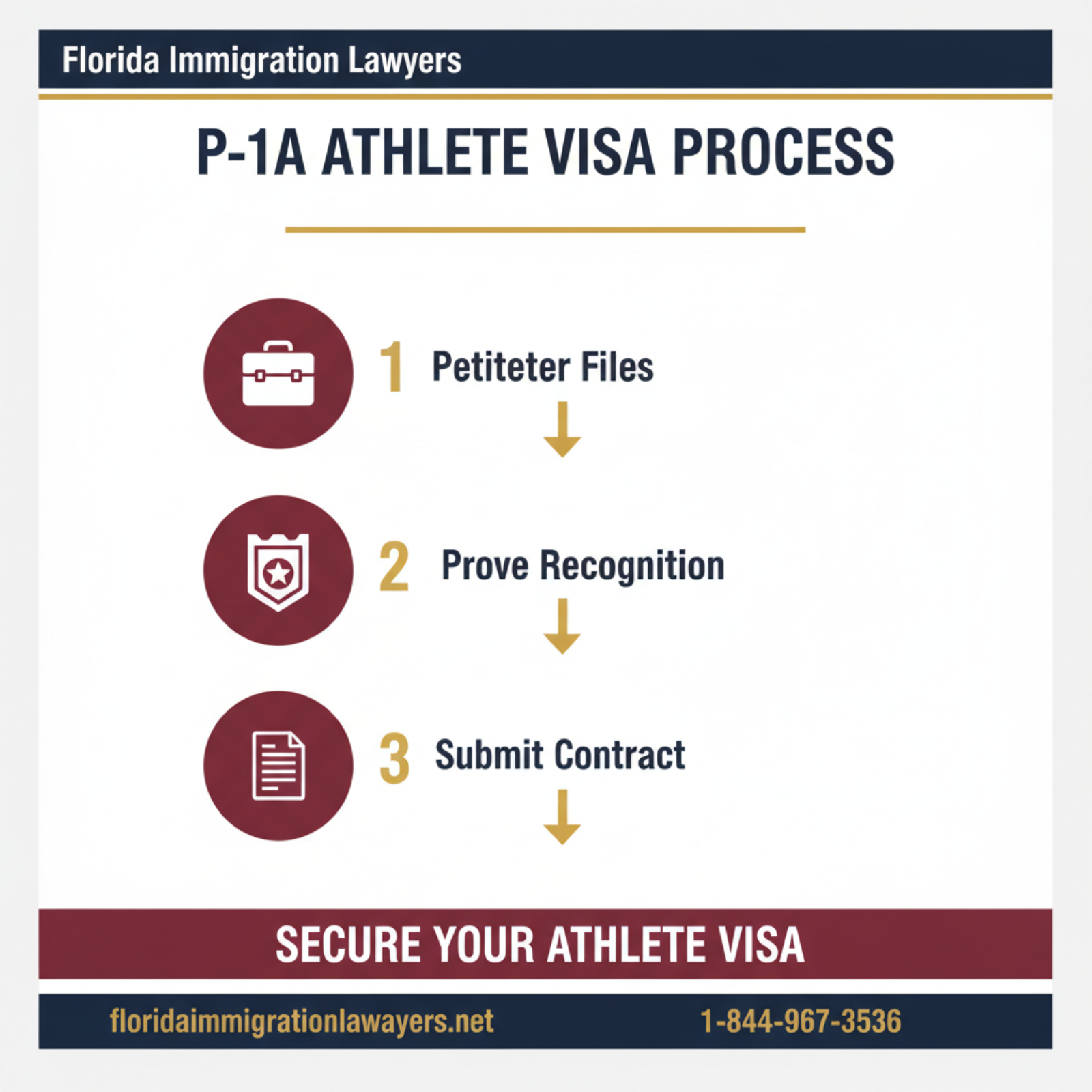
The P-1 visa is typically the most appropriate classification for internationally recognized athletes and their essential support personnel involved in the 2026 Winter Olympics Ice Hockey. The process requires careful planning and adherence to USCIS regulations. Here is a general step-by-step guide:
-
Step 1: Consult an Experienced Immigration Attorney. Before initiating any application, it is highly recommended to consult with a qualified immigration lawyer, especially one familiar with athlete visas and based in Florida. An attorney can assess your eligibility, determine the most suitable visa category, and help strategize your application. This initial step is crucial for avoiding common pitfalls and ensuring a strong petition.
-
Step 2: Gather Comprehensive Documentation. The success of a P-1 visa petition hinges on robust evidence demonstrating the athlete's or team's international recognition and the essential nature of support personnel. This includes contracts, competition schedules (like for the 2026 Winter Olympics Ice Hockey), awards, media articles, letters from sports organizations, and expert opinions. For support personnel, evidence of their critical role is vital.
-
Step 3: U.S. Employer or Sponsor Files Form I-129, Petition for a Nonimmigrant Worker. Unlike some other visas, the P-1 visa petition must be filed by a U.S. employer, U.S. sponsoring organization, or a U.S. agent. This entity will submit Form I-129 to U.S. Citizenship and Immigration Services (USCIS) on behalf of the athlete or team. The petition must include all supporting documentation and the appropriate filing fees.
-
Step 4: USCIS Processes the Petition. Once filed, USCIS reviews the Form I-129 and supporting evidence. Processing times can vary significantly. Premium Processing is available for an additional fee, which guarantees a response from USCIS within 15 calendar days. This option is often advisable for time-sensitive events like the 2026 Winter Olympics Ice Hockey, especially if training schedules are tight.
-
Step 5: Visa Interview at a U.S. Embassy or Consulate (for applicants outside the U.S.). If the I-129 petition is approved, and the applicant is outside the United States, they must attend a visa interview at a U.S. Embassy or Consulate in their home country. This involves submitting Form DS-160, paying the visa fee, and providing biometric data. During the interview, consular officers will verify the information provided and assess the applicant's intent to return home after their temporary stay.
-
Step 6: Entry to the U.S. Upon successful interview and visa stamping in their passport, the individual can travel to the U.S. At the port of entry, a U.S. Customs and Border Protection (CBP) officer will review their documents and grant admission. It is important to carry all relevant immigration documents, including the approved I-797 approval notice, when entering the U.S.
Essential Document Checklist for P-1 Visa Applicants
Preparing a thorough and accurate set of documents is paramount for a successful P-1 visa application, particularly for those involved in the 2026 Winter Olympics Ice Hockey. Incomplete or incorrect submissions can lead to delays or denials. Here is a general checklist:
- Form I-129, Petition for a Nonimmigrant Worker, filed by the U.S. employer or agent.
- A copy of the employment contract or itinerary for the services to be performed (e.g., participation in 2026 Winter Olympics related training or competitions in Florida).
- Evidence that the athlete or team is internationally recognized with a high level of achievement in their sport. This includes:
- Documentation of participation in major league sports (if applicable).
- Proof of significant international sports awards or honors.
- Written statements from sports experts or organizations confirming international recognition.
- Evidence of media recognition (e.g., articles, interviews) from major newspapers, sports journals, or other publications.
- Official reports from national or international sports organizations regarding rankings or achievements.
- Letters from U.S. or foreign sports organizations about the athlete's or team's international reputation.
- For essential support personnel (P-1S visa):
- A statement from the employer or agent describing the essential nature of the services.
- Evidence of the personnel's prior experience with the P-1 athlete or team.
- Statements from sports experts attesting to the personnel's critical skills.
- Copies of passports and previous U.S. visas (if any) for all beneficiaries.
- Form DS-160 confirmation page (for consular processing).
- Proof of payment for all USCIS and consular fees.
Timeline and Processing Expectations for Olympic Athlete Visas
Understanding the timeline for a P-1 visa application is crucial, especially with the fixed schedule of the 2026 Winter Olympics Ice Hockey. Immigration processes can be unpredictable, making early application and strategic planning essential.
Typically, USCIS processing times for Form I-129 can range from a few months to over a year, depending on the service center workload and current policies. For those needing quicker adjudication, Premium Processing is available for an additional fee, which guarantees a decision within 15 calendar days. This is often a wise investment for Olympic-bound individuals.
After USCIS approves the I-129 petition, applicants outside the U.S. must schedule a visa interview at a U.S. Embassy or Consulate. Wait times for these interviews can vary significantly by country and seasonal demand. It is important to check the specific embassy's website for current availability. Once the interview is complete and approved, the passport with the visa stamp is usually returned within a week or two.
Overall, from initial legal consultation to visa stamping, the entire process can take anywhere from a few weeks (with premium processing and quick interview availability) to several months. Florida Immigration Lawyers strongly advises starting the process as early as possible to accommodate any unforeseen delays, ensuring your participation in the 2026 Winter Olympics Ice Hockey preparations or related events in Florida is not jeopardized.
Cost Factors and Fee Breakdown for P-1 Visas
The cost associated with obtaining a P-1 visa for 2026 Winter Olympics Ice Hockey participants involves several components. These fees are subject to change, and it is important to consult the official USCIS website for the most current amounts. Our firm does not provide specific fee amounts as they fluctuate, but we can outline the general categories of expenses.
- USCIS Filing Fees: This is the primary fee for filing Form I-129, Petition for a Nonimmigrant Worker.
- Premium Processing Fee: An optional but often recommended fee for expedited processing of the I-129 petition.
- Visa Application Fee (DS-160): Paid to the U.S. Department of State for consular processing, if applicable.
- Biometrics Fee: May be required for certain applications.
- Attorney Fees: Legal fees for professional guidance and representation from an experienced immigration lawyer. These fees vary based on the complexity of the case and the services provided.
- Translation Costs: If any supporting documents are not in English, certified translations will be required, incurring additional costs.
- Travel Expenses: Costs associated with traveling to a U.S. Embassy or Consulate for the visa interview.
It is crucial to budget for these expenses comprehensively. While the fees can accumulate, investing in professional legal assistance from Florida Immigration Lawyers can save significant time and money by preventing errors that lead to rejections or requests for evidence (RFEs).
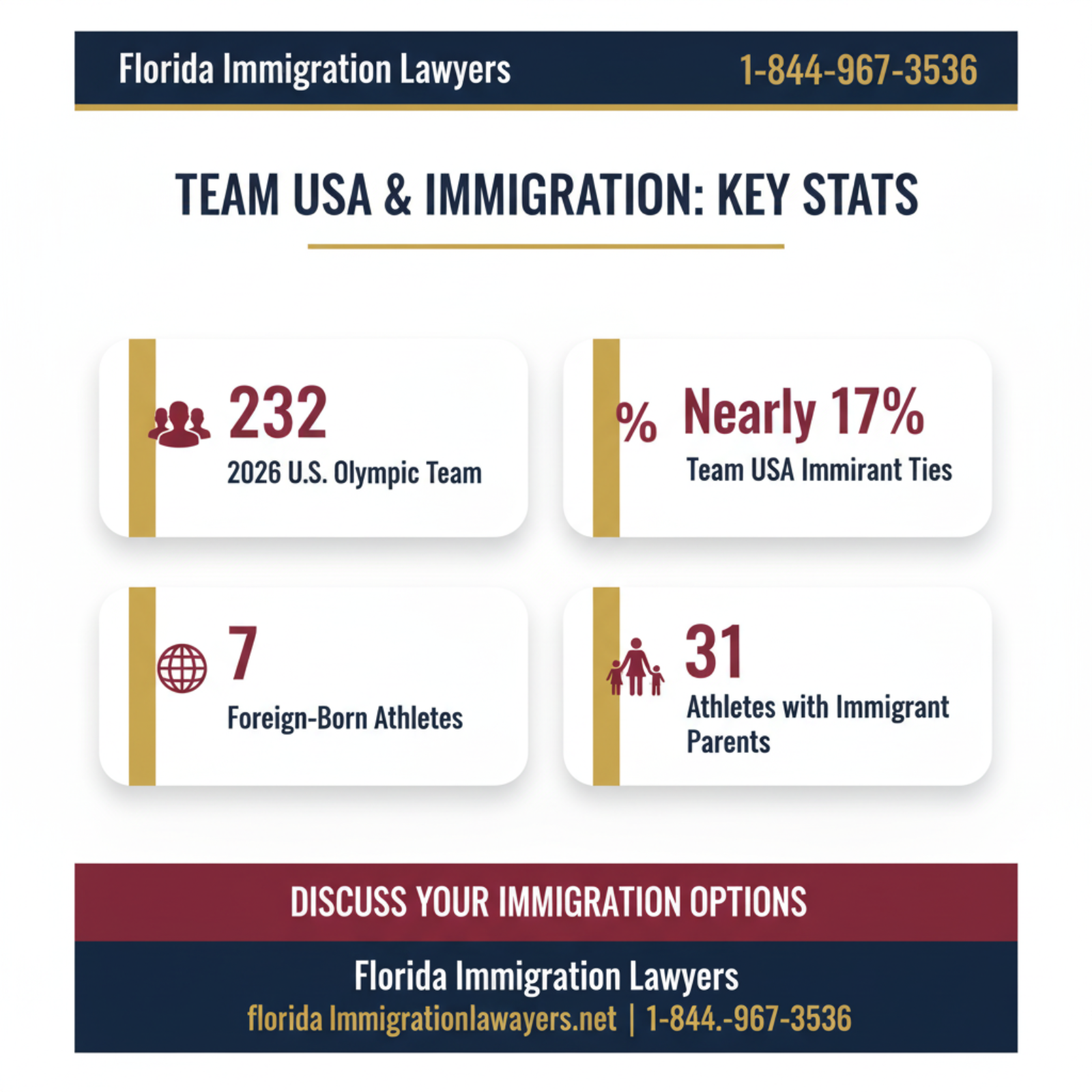
Do not navigate this complex immigration process alone, especially when your participation in the 2026 Winter Olympics Ice Hockey is at stake. The intricacies of U.S. immigration law demand expert attention. Contact Florida Immigration Lawyers today to discuss your specific situation and get the dedicated support you need.
Common Mistakes to Avoid in Olympic Athlete Visa Applications
Applying for a P-1 visa for the 2026 Winter Olympics Ice Hockey can be a challenging process. Even minor errors can lead to significant delays or outright denials, jeopardizing an athlete's ability to participate. Here are some common mistakes to avoid:
-
Failing to Prove International Recognition: The most frequent reason for P-1 visa denials is insufficient evidence of the athlete's or team's international acclaim. Simply stating accomplishments is not enough; robust, verifiable documentation from reputable sources is required. Without this, USCIS may not approve the petition, potentially impacting participation in the 2026 Winter Olympics Ice Hockey.
-
Incomplete or Inaccurate Documentation: Submitting a petition with missing forms, unsigned documents, or incorrect information will almost certainly result in a Request for Evidence (RFE) or denial. This adds significant delays to an already time-sensitive process, which could be critical for an event like the 2026 Winter Olympics.
-
Late Filing: Given the often lengthy USCIS processing times and consular interview waitlists, filing too close to the intended travel date is a major risk. Athletes and sponsors must plan well in advance to avoid missing critical training opportunities or the 2026 Winter Olympics Ice Hockey itself.
-
Misclassifying the Visa Type: Applying for the wrong visa category (e.g., trying for a B-1/B-2 visitor visa for professional activities) can lead to immediate denial and potentially complicate future applications. The P-1 visa is specifically designed for athletes.
-
Not Addressing Dual Intent (if applicable): While P visas are generally for temporary stays, applicants must clearly demonstrate their intent to return to their home country after their authorized period. Failure to convince consular officers of non-immigrant intent during the interview can lead to visa refusal.
-
Lack of a U.S. Sponsor or Agent: The P-1 visa requires a U.S. employer, sponsoring organization, or an agent to file the petition. International athletes cannot self-petition. Ensuring a legitimate and qualified U.S. sponsor is in place is fundamental.
-
Ignoring Essential Support Personnel Requirements: For coaches, trainers, or other critical staff, it is not enough to simply state they are essential. Concrete evidence demonstrating their integral role, unique skills, and long-standing relationship with the athlete or team is necessary for P-1S classification.
-
Failing to Respond to RFEs Adequately: If USCIS issues a Request for Evidence, a comprehensive and timely response is critical. A weak or incomplete response will likely lead to a denial. This is where expert legal counsel is invaluable.
-
Previous Immigration Violations: Any prior overstays, unlawful entries, or other immigration violations can significantly complicate a new visa application. These issues must be disclosed and properly addressed with legal guidance.
-
Not Seeking Professional Legal Advice: Attempting to navigate the complex U.S. immigration system without the help of an experienced attorney is a common and costly mistake. An immigration lawyer can identify potential issues, strengthen your petition, and represent your best interests.
When to Call a Florida Immigration Lawyer for Olympic Visa Assistance
The journey to the 2026 Winter Olympics Ice Hockey is a monumental undertaking, and your immigration status should not be an additional source of stress. While some individuals may attempt to navigate the P-1 visa process independently, certain scenarios strongly warrant the expertise of a dedicated immigration attorney, especially one based in Florida.
You should consider contacting Florida Immigration Lawyers if you encounter any of the following situations:
- Complex Eligibility Questions: If your situation doesn't perfectly fit the P-1 visa criteria, or if you are unsure which visa type is most appropriate for your role in the 2026 Winter Olympics Ice Hockey.
- Tight Deadlines: With the Olympics on the horizon, time is of the essence. An attorney can help expedite the process where possible, including advising on premium processing and ensuring a flawless submission.
- Previous Visa Denials or Immigration Issues: If you have a history of U.S. visa denials, overstays, or other immigration violations, legal counsel is crucial to address these complexities and strengthen your current application. Our firm also handles deportation defense, offering comprehensive support.
- Requests for Evidence (RFEs): If USCIS issues an RFE, it means they require more information or clarification. Responding effectively to an RFE is critical and often requires legal expertise to avoid denial.
- Multiple Beneficiaries or Support Staff: If you are a team or organization sponsoring multiple athletes and essential support personnel for the 2026 Winter Olympics Ice Hockey, managing numerous applications can be overwhelming.
- Uncertainty Regarding Documentation: If you are unsure what constitutes sufficient evidence of international recognition or how to properly compile your supporting documents.
- Need for Strategic Planning: Beyond the P-1 visa, you might have long-term immigration goals, such as business immigration or even citizenship. An attorney can help plan for future needs.
Florida Immigration Lawyers has extensive experience assisting athletes, entertainers, and professionals with their U.S. immigration needs. We understand the unique demands of high-profile events like the 2026 Winter Olympics Ice Hockey. Our attorneys are dedicated to providing clear, effective, and empathetic legal representation to clients throughout Florida, including Hialeah, Miami, Orlando, and Tampa.
About Florida Immigration Lawyers
Florida Immigration Lawyers is a leading immigration law firm dedicated to serving individuals, families, and businesses across the entire state of Florida. With a deep understanding of U.S. immigration law and a commitment to our clients, we provide comprehensive and personalized legal solutions.
Our experienced attorneys specialize in a wide array of immigration services, including family immigration, business immigration, asylum, deportation defense, and naturalization. We are passionate about helping our clients achieve their American dreams, whether they are athletes aiming for the 2026 Winter Olympics Ice Hockey, families reuniting, or individuals seeking protection.
Why choose Florida Immigration Lawyers? We offer compassionate advocacy, strategic legal counsel, and unwavering support throughout every step of the immigration process. Our team is available 24/7 to answer your questions and provide peace of mind. We offer free consultations, so you can discuss your situation without any initial financial commitment.
Do not face the complexities of immigration law alone. Let our dedicated team be your trusted guide. Call us today at 1-844-967-3536 or visit our website at https://www.floridaimmigrationlawyers.net to learn more about how we can assist you.
Sources and References
- U.S. Citizenship and Immigration Services (USCIS) - P Nonimmigrant Classification
- U.S. Department of State - Visas for Athletes, Artists, and Entertainers
- 8 U.S.C. § 1101(a)(15)(P) - Immigration and Nationality Act (INA) Section 101(a)(15)(P)
- 8 CFR § 214.2(p) - P Nonimmigrants
- Executive Office for Immigration Review (EOIR) - Immigration Courts
This article provides general legal information and is not intended as legal advice. Every case is unique, and outcomes depend on specific facts and circumstances. Contact an attorney for advice about your particular situation. Immigration laws are subject to change, and this content should not be relied upon as a substitute for professional legal counsel.
Your Olympic dreams deserve dedicated legal support. If you are an athlete, coach, or support staff member looking to navigate the immigration process for the 2026 Winter Olympics Ice Hockey, or any other immigration matter in Florida, do not wait. Our team at Florida Immigration Lawyers is ready to help you achieve your goals.
Call Florida Immigration Lawyers today at 1-844-967-3536 for a free, confidential consultation. Se Habla Español - Estamos aquí para ayudarle.
Do Not Navigate This Process Alone
Our experienced immigration attorneys are ready to fight for you. Get a free, confidential consultation today.
Se Habla Español
Or leave your details and we’ll call you:
Free Evaluation in 24 Hours
Or talk to us right now
AI voice assistant — available 24/7
FreeFrequently Asked Questions

William J. Vásquez
Founding Attorney · Vasquez Law Firm
U.S. Air Force veteran and immigration attorney with years of hands-on U.S. immigration experience. J.D., NCCU School of Law. AILA member. Admitted to the 4th, 5th, and 11th Circuit Courts.
Available 24/7 - Free Evaluations
Reviewed for legal accuracy by William J. Vásquez
Licensed in North Carolina; U.S. immigration is federal practice.
Related Legal Services
Our Florida immigration attorneys can help you with free immigration consultation, experienced immigration attorneys and business immigration. Call today at 1-844-967-3536 for a free consultation.
Related Links
Related Topics
Free Legal Consultation
Discuss your case with our experienced attorneys. We're available 24/7.
Se Habla Español - Estamos aquí para ayudarle.
Related Articles
Immediate Relative Petition Tampa: A Florida Guide for 2026
Navigating an immediate relative petition in Tampa, Florida, offers U.S. citizens a direct path to sponsor spouses, unmarried children under 21, and parents for a Green Card. This comprehensive guide, updated for 2026, details the Form I-130 process, eligibility requirements, necessary documentation, and typical timelines. Unlike other family-based categories, immediate relatives are exempt from annual visa quotas, potentially speeding up their journey to permanent residency. However, the process is intricate, demanding precise form completion, thorough evidence of a bona fide relationship, and adherence to strict legal guidelines. We cover common pitfalls to avoid, such as incomplete forms or insufficient financial sponsorship, which can lead to significant delays or denials. Understanding when to seek expert legal assistance is crucial, especially for cases involving complex relationship dynamics, prior immigration violations, or criminal histories. Florida Immigration Lawyers provides dedicated support to families in Gainesville, Tampa, and across Florida, ensuring a smooth and successful application process. We offer free consultations to help you understand your options and navigate the complexities of U.S. immigration law.
Withholding of Removal: Your 2026 Florida Defense Guide
For those in Florida facing the threat of deportation, understanding withholding of removal and Convention Against Torture (CAT) protections is crucial. This comprehensive guide from Florida Immigration Lawyers explains eligibility, the complex process in immigration court, required documentation, and what to expect as of 2026. Learn about the high burden of proof, statutory bars, and the critical differences between these forms of relief. We cover the typical timeline for cases in Florida courts, associated costs, and common mistakes to avoid. With skilled legal representation, you can build a strong defense against removal and fight for your right to safety. Discover how our attorneys can assist you in navigating the intricacies of immigration law in Florida, from initial filings to appeals, ensuring your case is handled with expertise and compassion.
Parole in Place for Military Families Miami: A 2026 Guide
Explore how parole in place helps military families stay together in Miami. Understand the eligibility, process, and common mistakes to avoid. Contact Florida Immigration Lawyers for expert guidance.
eb2 niw lawyer florida: Navigating the NIW Process in 2026
For highly skilled professionals in Florida, the EB-2 National Interest Waiver (NIW) offers a direct path to a green card without employer sponsorship. This comprehensive guide for 2026 details the eligibility criteria, the step-by-step application process, expected processing times, and associated costs. Learn how to demonstrate substantial merit and national importance under the Matter of Dhanasar test, avoid common pitfalls, and understand when to seek expert legal counsel. Florida Immigration Lawyers specializes in assisting innovators, researchers, and entrepreneurs across Florida, including Pembroke Pines, to successfully navigate the complex NIW petition process and achieve permanent residency.