Nicki Minaj Deportation & Florida Immigration Defense
Discussions about figures like Nicki Minaj and potential deportation highlight critical aspects of U.S. immigration law. This comprehensive guide from Florida Immigration Lawyers demystifies the deportation process in Florida, outlines common defenses, and explains why legal representation is indispensable. Learn about grounds for removal, step-by-step procedures, essential documents, and typical timelines. Avoid common mistakes and understand when to seek legal help. If you're concerned about your immigration status or facing deportation in Fort Lauderdale or anywhere in Florida, contact our experienced team for a free consultation. We offer compassionate, effective legal support.
Discussions surrounding figures like Nicki Minaj and potential deportation highlight critical aspects of U.S. immigration law. While specific cases are private, understanding the legal framework for deportation defense in Florida is vital for anyone facing immigration challenges. Knowing your rights and the available legal avenues is the first step toward protecting your status.
- Deportation proceedings are serious and require immediate legal attention.
- Various legal defenses exist, depending on individual circumstances.
- Timelines and costs can vary significantly, necessitating guidance.
- Consulting an experienced Florida immigration lawyer is crucial for navigating complex cases.
The recent public discourse around a potential Nicki Minaj deportation has brought immigration law into the spotlight, sparking conversations about legal status and removal proceedings. While celebrity cases often capture headlines, the underlying legal principles apply to countless individuals and families across Florida facing similar, deeply personal immigration challenges. Understanding your rights and the complexities of U.S. immigration law is paramount.
At Florida Immigration Lawyers, we recognize the anxieties and uncertainties that come with immigration concerns, especially when facing potential deportation. This comprehensive guide will demystify the deportation process in Florida, outline common defenses, and explain why legal representation is indispensable. Our goal is to provide clear, actionable information for you and your family.
If you or a loved one are concerned about your immigration status or facing deportation proceedings in Fort Lauderdale or anywhere in Florida, do not wait. Call Florida Immigration Lawyers at 1-844-YO-PELEO for a free consultation. Our dedicated team is ready to help you understand your options.
Understanding Deportation in Florida: What You Need to Know
Deportation, also known as removal, is the formal process by which the U.S. government orders a non-citizen to leave the country. This can happen for various reasons, from visa overstays to criminal convictions. The rules governing who can be deported are complex and primarily outlined in the Immigration and Nationality Act (INA).
For individuals in Florida, understanding these laws is especially important. Our state has a significant immigrant population, and immigration courts in cities like Miami and Orlando, along with ICE enforcement activities in areas such as Fort Lauderdale, mean that many residents could potentially face removal proceedings. Knowing your legal standing is the first step in building a strong defense.
Grounds for Removal Under U.S. Law
U.S. immigration law specifies numerous grounds for which a non-citizen may be deemed deportable. These are broadly categorized but often involve intricate details that require legal interpretation. Common reasons include:
- Inadmissibility at time of entry or adjustment of status: If you were found inadmissible when you entered the U.S. or adjusted your status, you may be deportable. This can include certain health-related grounds or prior immigration violations.
- Criminal offenses: Convictions for certain crimes, particularly aggravated felonies, crimes involving moral turpitude, or drug offenses, are frequent grounds for deportation. The severity and nature of the crime are critical factors. (See 8 U.S.C. § 1227 - Deportable aliens).
- Violation of immigration status: This includes overstaying a visa, working without authorization, or failing to maintain a valid nonimmigrant status. Even minor infractions can lead to serious consequences.
- Fraud or misrepresentation: Providing false information or misrepresenting facts to gain immigration benefits can lead to deportation. This includes marriage fraud or misstatements on visa applications.
- Security and related grounds: Involvement in terrorist activities or activities deemed a threat to national security are severe grounds for removal. These cases are often highly complex.
Navigating these complex grounds requires a deep understanding of the law and how it applies to your unique situation. A skilled Florida immigration lawyer can assess your case and identify potential defenses. Our firm focuses on deportation defense for clients across the state.
Florida's Immigration Landscape and Local Impact
Florida is a diverse state with a vibrant immigrant community, making immigration law a particularly active field here. The presence of multiple immigration courts, including those serving the Fort Lauderdale area, means that many deportation cases are heard locally. Enforcement by agencies like ICE is also a reality for many residents.
The specific policies and practices within Florida's immigration courts can sometimes differ from those in other states. This local context underscores the importance of working with attorneys who are not only experts in federal immigration law but also intimately familiar with the local court systems and legal community. Our firm serves clients throughout Florida, providing localized insights and strong defense strategies.
Navigating the Deportation Process: A Step-by-Step Guide
Facing deportation can be an overwhelming experience, but understanding the procedural steps can help you prepare. The U.S. immigration court system follows a distinct process, designed to determine whether a non-citizen should be removed from the country. Each stage presents opportunities for defense and legal intervention.
Here is a general overview of the deportation process, often initiated by agencies like ICE or USCIS:
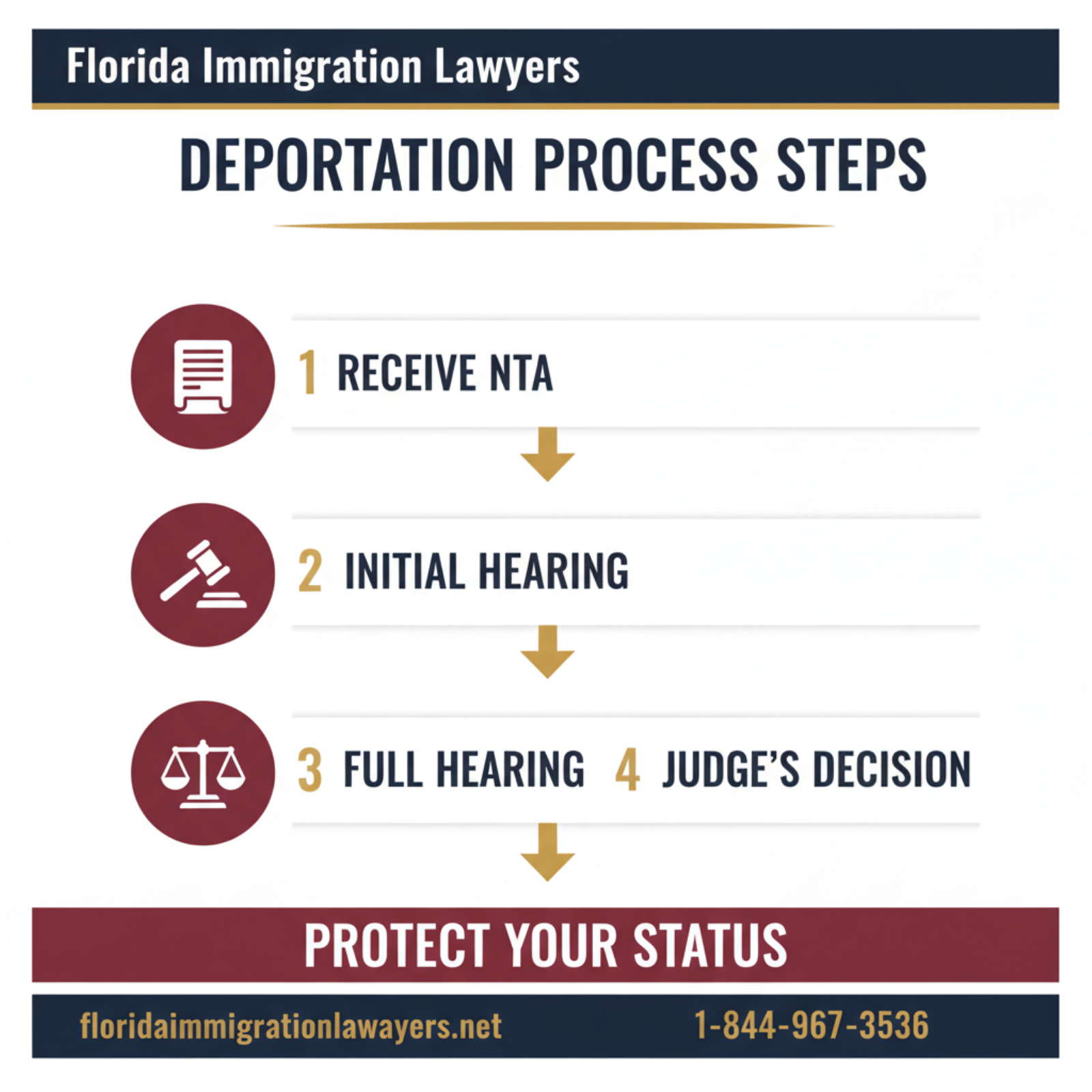
- Issuance of a Notice to Appear (NTA): The process typically begins when the Department of Homeland Security (DHS) issues an NTA. This document formally charges a non-citizen with being removable and orders them to appear before an immigration judge. It outlines the specific grounds for deportation.
- Master Calendar Hearing: This is the initial court appearance. During this hearing, the immigration judge will confirm your identity, ensure you understand the charges, and ask you to admit or deny the allegations. This is also where you or your attorney will inform the court of your intent to seek any forms of relief from deportation, such as asylum, cancellation of removal, or adjustment of status.
- Individual Hearing (Merits Hearing): If you deny the charges or seek relief, the judge will schedule an individual hearing. This is similar to a trial, where both sides present evidence, call witnesses, and make legal arguments. This is a critical stage where your attorney will present your case for remaining in the U.S.
- Decision by the Immigration Judge: After the individual hearing, the immigration judge will issue a decision. If the judge finds you deportable and denies any relief, an order of removal will be issued. If relief is granted, you may be allowed to remain in the U.S. under certain conditions.
- Appeals Process: If either party is dissatisfied with the judge's decision, they may have the right to appeal to the Board of Immigration Appeals (BIA). Further appeals may be possible to a U.S. Circuit Court of Appeals. This process can extend the timeline significantly but offers another chance to present your case.
Throughout this complex process, having a skilled deportation defense lawyer from Florida Immigration Lawyers by your side is essential. We help you understand each step, prepare your defense, and advocate vigorously on your behalf.
Essential Documents for Your Immigration Defense Case
Preparing for a deportation defense case requires meticulous organization and a comprehensive collection of documents. The specific documents needed will vary depending on your individual circumstances and the type of relief you are seeking. However, certain categories of documents are almost always critical.
Gathering these materials early can significantly strengthen your case and help your legal team build a robust defense. Here is a general checklist of documents you should consider compiling:
- Personal Identification: Passport, birth certificate, driver's license, state ID.
- Immigration Documents: Visa, I-94 arrival/departure record, green card (Form I-551), Notice to Appear (NTA), any previous immigration applications or petitions.
- Proof of Residence in the U.S.: Lease agreements, utility bills, mail with your address, property deeds, school records for children.
- Financial Records: Tax returns (W-2s, 1099s), bank statements, employment letters, pay stubs, evidence of assets.
- Family Information: Marriage certificates, birth certificates of U.S. citizen or legal permanent resident children/spouses, photos, affidavits from family members.
- Criminal History Records: Certified court dispositions for any arrests or convictions, even if expunged or minor. Full disclosure is crucial for your attorney.
- Evidence of Hardship: Medical records, psychological evaluations, letters from community leaders, school records demonstrating the impact of your removal on U.S. citizen family members.
- Affidavits: Sworn statements from individuals who can attest to your good moral character, community ties, or other relevant facts.
- Proof of Taxes Paid: Evidence of consistent tax payments can demonstrate good moral character and integration into U.S. society.
Each document tells a part of your story and can be crucial in proving your eligibility for relief. Your Florida Immigration Lawyers attorney will help you identify exactly which documents are most relevant to your specific defense strategy.
Typical Timelines and Processing Expectations in Florida
The timeline for a deportation defense case in Florida can vary significantly, often stretching from several months to several years. This variability depends on numerous factors, including the complexity of your case, the specific immigration court, the judge assigned, and the current caseload of the Executive Office for Immigration Review (EOIR).
While it is challenging to provide exact dates, understanding the general expectations can help manage the process. For current processing times, it's always best to consult official government resources, though these are estimates and can change frequently.
- Issuance of NTA to Master Calendar Hearing: This initial phase can take anywhere from a few weeks to several months, depending on the court's schedule and the speed of DHS in filing the NTA with the court.
- Master Calendar Hearings to Individual Hearing: The time between these hearings can be substantial, often ranging from six months to over a year, or even longer in busy courts like those in Miami or Orlando. Multiple master calendar hearings may be scheduled before an individual hearing date is set.
- Individual Hearing to Decision: The judge typically issues a decision at the conclusion of the individual hearing, or shortly thereafter.
- Appeals Process: If an appeal is filed with the Board of Immigration Appeals (BIA), this can add another year or more to the overall timeline. Further appeals to a U.S. Circuit Court of Appeals can extend the process even longer.
Factors that can influence these timelines include:
- Court Backlogs: Immigration courts nationwide, including those in Florida, often experience significant backlogs.
- Case Complexity: Cases involving criminal history, multiple forms of relief, or extensive evidence can take longer.
- Availability of Witnesses and Evidence: Delays can occur if crucial witnesses are unavailable or if additional evidence needs to be gathered.
- Attorney Preparedness: A well-prepared attorney can help streamline the process by filing all necessary documents promptly and efficiently.
While the process may seem lengthy, each stage is an opportunity to strengthen your case. Our team at Florida Immigration Lawyers is adept at navigating these timelines, working diligently to move your case forward while ensuring all legal avenues are thoroughly explored. For the most current information on processing times, you can visit the USCIS website and the Executive Office for Immigration Review (EOIR) website.
Cost Factors and Legal Fee Breakdown for Deportation Defense
Understanding the financial aspects of a deportation defense case is a critical part of planning your strategy. The total cost can vary significantly based on the complexity of your case, the type of relief sought, and the amount of legal work required. It's an investment in your future and your ability to remain in the United States.
At Florida Immigration Lawyers, we believe in transparency regarding legal fees. We will discuss all potential costs with you upfront during your initial consultation so you can make informed decisions about your representation. Here are the primary cost factors:
- Attorney Fees: This is typically the largest component of the cost. Attorney fees can be structured in several ways:
- Flat Fees: For specific stages of the process or for the entire case, a predetermined fee is charged. This provides predictability.
- Hourly Rates: For highly complex cases or those with unpredictable demands, attorneys may charge an hourly rate.
- Retainer Agreements: An initial sum is paid, from which hourly fees are deducted.
- Government Filing Fees: USCIS and EOIR charge fees for various applications and petitions, such as applications for adjustment of status, waivers, or appeals. These fees are set by the government and are subject to change. Your attorney will inform you of the current required fees for any forms filed on your behalf.
- Ancillary Costs: These can include expenses for:
- Expert Witness Fees: If psychological evaluations, medical opinions, or other expert testimonies are needed.
- Translation Services: For documents not in English.
- Travel Expenses: If your attorney needs to travel for court appearances outside of their immediate area.
- Court Reporter Fees: For transcripts of hearings.
- Copying and Postage: For submitting extensive documentation.
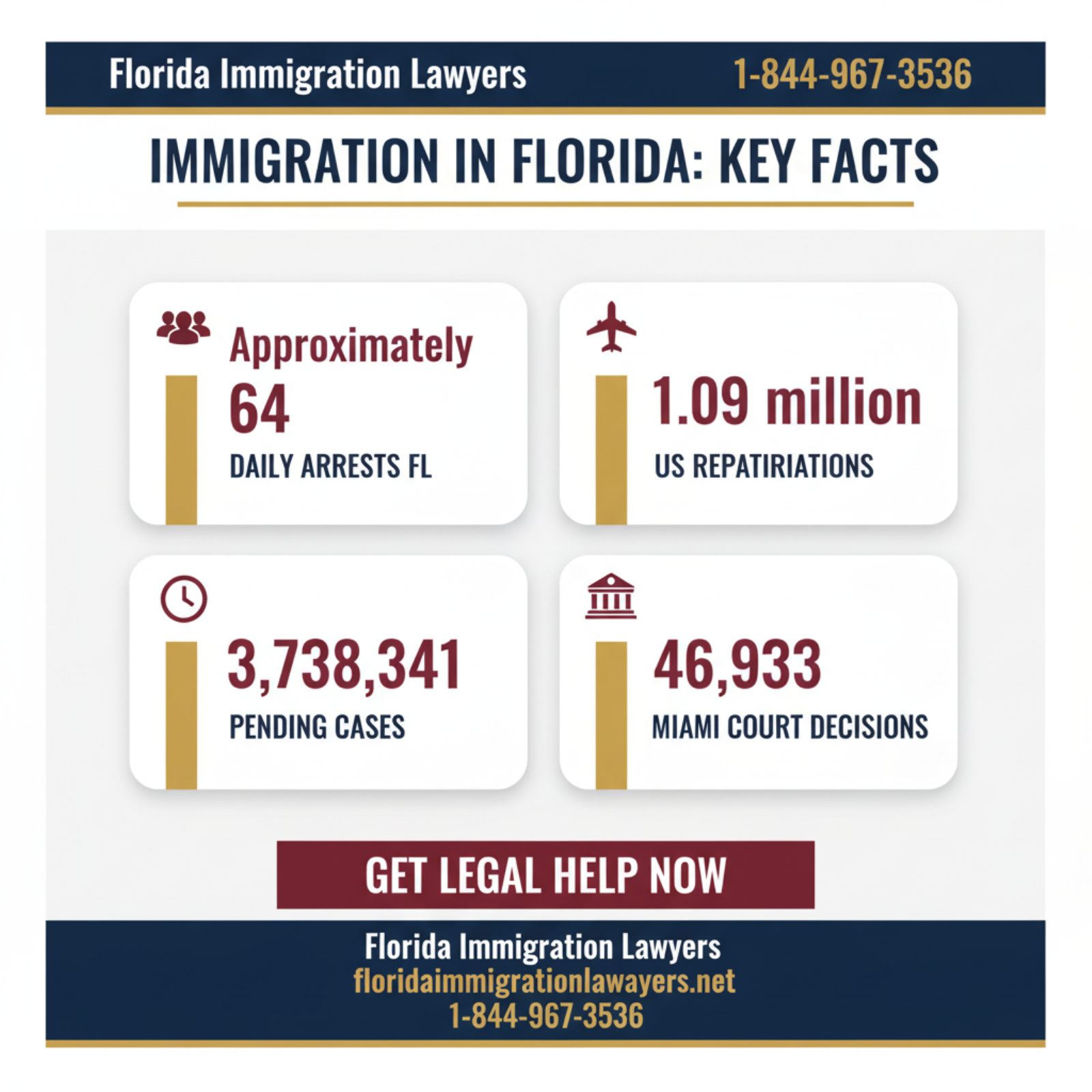
Key Statistics & Data
While the costs associated with deportation defense can seem daunting, consider the long-term benefits of protecting your right to remain in the U.S. Many individuals find that investing in experienced legal counsel is invaluable. We offer free consultations to discuss your situation and provide a clear understanding of potential costs. We are committed to providing high-quality legal services that are both effective and accessible.
Do not navigate this incredibly complex process alone. The stakes are too high. Contact Florida Immigration Lawyers today to discuss your deportation defense strategy and secure experienced legal representation.
Common Mistakes to Avoid During Deportation Proceedings
Facing deportation is a serious matter, and making mistakes can severely jeopardize your case. Being aware of common pitfalls can help you avoid actions that could lead to unfavorable outcomes. Our experienced Florida immigration lawyers are here to guide you away from these errors.
- Ignoring a Notice to Appear (NTA): Failure to appear for your scheduled court hearing can result in an "in absentia" removal order, meaning you are ordered deported without a hearing. This is one of the most critical mistakes.
- Missing Deadlines: Immigration proceedings are governed by strict deadlines for filing documents and appeals. Missing these can lead to automatic denials or loss of your right to appeal.
- Providing False Information: Lying or misrepresenting facts to immigration officials or the court can lead to charges of fraud, which are serious grounds for inadmissibility and deportation. Always be truthful.
- Leaving the U.S. Without Legal Advice: If you are in removal proceedings, leaving the country can be considered a self-deportation and may prevent you from returning legally for many years. Always consult your attorney first.
- Not Disclosing Criminal History: Attempting to hide past arrests or convictions, even minor ones, will almost certainly be discovered and can severely damage your credibility and case. Provide all details to your attorney.
- Attempting to Represent Yourself: Immigration law is incredibly complex. While you have the right to represent yourself, doing so without legal training can lead to missed opportunities for relief and critical procedural errors.
- Failing to Gather Sufficient Evidence: A strong defense relies on compelling evidence. Not providing enough documentation, testimonials, or other proof can weaken your case significantly.
- Discussing Your Case with Others (Except Your Attorney): Be cautious about what you share with friends, family, or even non-attorney immigration consultants. Only your attorney-client relationship offers confidentiality.
- Not Understanding the Charges: If you don't fully comprehend the grounds for deportation listed in your NTA, you cannot effectively defend yourself. Your attorney will explain these charges clearly.
- Failing to Update Contact Information: If you move, you must notify the immigration court and USCIS of your new address. Failure to do so could mean missing vital notices and hearings.
Avoiding these common mistakes is crucial for a successful outcome. Our legal team at Florida Immigration Lawyers provides comprehensive guidance to help you navigate your case safely and effectively.
Common Questions About Immigration Status and Deportation Defense in Florida
The public conversation surrounding immigration, often fueled by discussions around high-profile individuals, raises many fundamental questions about legal status and deportation. Here, we address some common inquiries pertinent to individuals navigating the immigration system in Florida.
What is considered legal immigration status in the U.S.?
Legal immigration status in the U.S. refers to being authorized to live and/or work in the country under specific laws and regulations. This can include U.S. citizenship, lawful permanent residency (holding a green card), or various nonimmigrant visas (such as H-1B, F-1 student visa, or B-2 visitor visa). Each status comes with its own set of rights, responsibilities, and conditions. Maintaining your legal status is paramount to avoiding removal proceedings.
Can a green card holder be deported from Florida?
Yes, lawful permanent residents (green card holders) can absolutely be deported from Florida, despite popular misconceptions. A green card is not "bulletproof." Grounds for deportation of green card holders often include certain criminal convictions, engaging in fraud to obtain the green card, or abandoning U.S. residency. While green card holders have more rights than undocumented immigrants, they are still subject to removal if they violate U.S. immigration laws. Seeking advice from a Fort Lauderdale immigration attorney is vital if your green card status is at risk.
How does USCIS handle deportation proceedings?
While U.S. Citizenship and Immigration Services (USCIS) is primarily responsible for adjudicating immigration benefits (like green cards, naturalization, and visas), it can also initiate deportation proceedings. If USCIS denies a benefit application due to inadmissibility or finds that an individual has violated their status, it may issue a Notice to Appear (NTA), referring the case to an immigration court under the Executive Office for Immigration Review (EOIR). USCIS works in conjunction with ICE, which is the primary enforcement agency for deportation.
What are my rights if I receive a Notice to Appear (NTA) in Florida?
If you receive an NTA in Florida, you have several crucial rights. You have the right to legal representation (though not at government expense), the right to present evidence, call witnesses, and cross-examine government witnesses. You also have the right to apply for various forms of relief from removal, if eligible. It is critical to consult an attorney immediately upon receiving an NTA to understand these rights and develop a defense strategy. Do not miss your court date.
When to Call Florida Immigration Lawyers for Help
Immigration law is incredibly complex and constantly evolving. While this article provides general information, your specific situation requires personalized legal advice. Knowing when to seek professional help can make all the difference in the outcome of your case. Florida Immigration Lawyers are here to provide the dedicated support you need.
You should contact our firm immediately if any of the following scenarios apply to you or a loved one:
- You have received a Notice to Appear (NTA) in immigration court. This is a formal initiation of deportation proceedings, and immediate legal action is required.
- You have been arrested by ICE or other law enforcement. Any interaction with immigration authorities can have severe consequences, and you need an attorney to protect your rights.
- You are a lawful permanent resident (green card holder) facing criminal charges. Certain criminal convictions can lead to deportation defense, even for long-term residents.
- You fear persecution in your home country and are considering seeking asylum in the U.S. Asylum cases are highly nuanced and require legal guidance.
- Your visa or immigration status is about to expire, or you have overstayed your authorized period. Proactive legal advice can help you explore options before removal proceedings begin.
- You have a previous deportation order and are seeking to re-enter the U.S. This is a complex area requiring specialized legal knowledge.
- You are applying for citizenship or family-based immigration and have concerns about past issues. Any potential red flags should be addressed by an attorney to avoid denials.
- You need assistance with any aspect of general immigration law, including visas or green cards. Our firm handles a wide range of immigration matters.
Do not wait for a crisis to unfold. Early intervention by an experienced immigration attorney can often prevent more severe problems down the road. Our team at Florida Immigration Lawyers is here to offer compassionate, knowledgeable legal support throughout your journey. You can learn more about our experienced attorneys and their commitment to client success.
About Florida Immigration Lawyers
Florida Immigration Lawyers is an immigration law firm dedicated to serving individuals and families across the entire state of Florida. We understand the profound impact that immigration matters have on people's lives, and we are committed to providing compassionate, effective, and zealous legal representation.
Our experienced attorneys offer a comprehensive range of immigration services, including deportation defense, asylum applications, family-based petitions, business immigration solutions, naturalization, and visa assistance. Whether you are seeking to prevent removal, unite with family, pursue citizenship, or navigate complex business immigration challenges, our firm is equipped to guide you.
We pride ourselves on our client-focused approach, ensuring that each client receives personalized attention and a strategy tailored to their unique circumstances. Our deep understanding of both federal immigration law and the specific nuances of Florida's legal landscape makes us a trusted ally in your immigration journey.
Why Choose Florida Immigration Lawyers?
- Experience: Our attorneys possess extensive knowledge and experience in all areas of immigration law.
- Dedication: We are committed to fighting tirelessly for our clients' rights and achieving the strongest possible outcomes.
- Accessibility: We offer free consultations and are available 24/7 to address your urgent legal needs.
- Bilingual Services: Se habla español – our team is proficient in both English and Spanish to serve Florida's diverse community.
- Statewide Reach: Serving clients in Fort Lauderdale, Miami, Orlando, Tampa, and throughout all of Florida.
For a confidential discussion about your immigration case, contact Florida Immigration Lawyers today. Your future in the U.S. is our priority.
Phone: 1-844-YO-PELEO
Website: https://www.floridaimmigrationlawyers.net
Sources and References
- U.S. Citizenship and Immigration Services (USCIS)
- Executive Office for Immigration Review (EOIR)
- Executive Office for Immigration Review (EOIR) - Office of the Chief Immigration Judge
- USCIS Processing Times
- 8 U.S.C. Chapter 12 - Immigration and Nationality Act (INA)
- 8 U.S.C. § 1227 - Deportable aliens
- 8 CFR Part 240 - Removal of Aliens
This article provides general legal information and is not intended as legal advice. Every case is unique, and outcomes depend on specific facts and circumstances. Immigration laws are subject to frequent change. Contact an attorney for advice about your particular situation and the most current legal guidance.
Do not leave your immigration future to chance. If you are facing deportation or have questions about your immigration status, contact the experienced team at Florida Immigration Lawyers today for a confidential and free consultation. We are here to provide the legal guidance and representation you deserve. Call us now at 1-844-YO-PELEO. Se Habla Español - Estamos aquí para ayudarle.
Do Not Navigate This Process Alone
Our experienced immigration attorneys are ready to fight for you. Get a free, confidential case review today.
Se Habla Español
Or leave your details and we’ll call you:
Free Evaluation in 24 Hours
Or talk to us right now

AI voice assistant — available 24/7
Free
William J. Vásquez
Founding Attorney · Vasquez Law Firm
U.S. Air Force veteran and immigration attorney with years of hands-on U.S. immigration experience. J.D., NCCU School of Law. AILA member. Admitted to the 4th, 5th, and 11th Circuit Courts.
Available 24/7 - Free Evaluations
Reviewed for legal accuracy by William J. Vásquez
Licensed in North Carolina; U.S. immigration is federal practice.
Related Legal Services
Our Florida immigration attorneys can help you with free immigration consultation, business immigration and deportation defense. Call today at 1-844-YO-PELEO for a free case review.
Related Links
Related Topics
Free Legal Case Review
Discuss your case with our experienced attorneys. We're available 24/7.
Se Habla Español - Estamos aquí para ayudarle.
Related Articles
DUI Immigration Consequences in Florida 2026
A DUI conviction in Florida can have severe immigration consequences, potentially leading to inadmissibility, deportation, or denial of immigration benefits. For non-citizens, a DUI is not just a traffic offense but a serious criminal matter that federal immigration law scrutinizes closely. Factors like multiple offenses, injury, or property damage can escalate a simple DUI to a Crime Involving Moral Turpitude (CIMT) or even an aggravated felony, triggering mandatory detention and removal proceedings. Understanding the specific nature of your Florida conviction and its interpretation under the Immigration and Nationality Act (INA) is crucial. This article outlines how DUIs impact immigration status, the grounds for inadmissibility and deportation, a step-by-step guide to navigating the process, essential documentation, and expected timelines for 2026. We also highlight common mistakes to avoid and when to seek legal counsel from an experienced immigration attorney. Florida Immigration Lawyers offers comprehensive support for individuals facing these challenging situations, providing expert guidance through complex legal landscapes.
Dual Citizenship Lawyer in Florida: What You Need to Know
For Florida residents, the concept of dual citizenship, or holding two passports, offers a compelling blend of opportunities and challenges. While the U.S. generally permits dual nationality, the path to achieving this status requires a meticulous understanding of both U.S. immigration laws and the citizenship policies of your country of origin. This guide explores the definition of dual citizenship, the detailed step-by-step process for U.S. naturalization, and the significant benefits and potential pitfalls involved. We cover essential documentation, typical timelines, and cost considerations for 2026, providing crucial insights for anyone in Orlando, Miami, or across Florida considering this important legal step. Learn about common mistakes to avoid and understand when to seek professional legal counsel to navigate this complex process successfully. Florida Immigration Lawyers is here to provide expert, bilingual support for your dual citizenship journey.
Immigration Lawyer Orlando Free Consultation in Florida
For individuals and families in Orlando, Florida, navigating the complexities of U.S. immigration law requires expert guidance. An immigration lawyer in Orlando offers crucial support for everything from visa applications and green card processes to naturalization and deportation defense. This comprehensive guide details what a free consultation covers, providing a step-by-step overview of immigration pathways, essential document checklists, and expected timelines in 2026. We also highlight common mistakes to avoid, discuss the critical role of legal counsel in deportation and asylum cases, and explain why choosing a local Orlando immigration attorney is beneficial. Florida Immigration Lawyers is dedicated to serving the diverse community of Orlando with compassionate, effective legal solutions, ensuring you receive personalized advice and robust representation for a successful immigration journey.
EAD Advance Parole Combo Card in Florida: What You Need
An EAD advance parole combo card allows individuals with pending adjustment applications to both work and travel abroad without jeopardizing their green card application. Learn how to apply in Florida, what documents you need, and common mistakes to avoid.