Naturalization Ceremony ICE Concerns in Florida: Your 2026
Navigating the naturalization process in Florida can bring questions, especially regarding naturalization ceremony ICE concerns. For many aspiring citizens in Pembroke Pines and across Florida, the thought of U.S. Immigration and Customs Enforcement (ICE) presence at their oath ceremony can cause anxiety. This comprehensive guide for 2026 addresses these fears by clarifying the roles of USCIS and ICE, detailing the step-by-step process of the naturalization ceremony, and providing an essential document checklist. We also cover processing timelines, cost factors, and crucial mistakes to avoid. Understanding your rights and preparing thoroughly are paramount. Florida Immigration Lawyers offers expert guidance and free consultations to ensure your journey to citizenship is smooth and worry-free. Learn how to protect your path to becoming a U.S. citizen.

While U.S. Immigration and Customs Enforcement (ICE) presence at naturalization ceremonies is generally rare and often restricted, concerns persist among applicants in Florida. It is critical to understand your rights, prepare thoroughly with all required documents, and seek legal counsel if you have any apprehensions. Naturalized citizens are protected from deportation, but issues arising before the oath could lead to delays or denials.
- ICE presence at ceremonies is uncommon but possible under specific circumstances.
- Know your rights: You are protected once you become a U.S. citizen.
- Thorough preparation and document review are essential for a smooth process.
- Consult an immigration lawyer for any pre-existing issues or anxieties.
- Naturalization confers robust protections, but pre-oath issues can be problematic.
Naturalization Ceremony ICE Concerns in Florida: Your 2026 Guide
The journey to U.S. citizenship culminates in a profoundly significant event: the naturalization oath ceremony. For many, this day is filled with immense joy and pride. However, for some aspiring citizens in Florida, a layer of apprehension can accompany this excitement, specifically regarding potential U.S. Immigration and Customs Enforcement (ICE) presence.
You may wonder if ICE agents will be present, or if your long-awaited path to citizenship could face unexpected hurdles. This concern about naturalization ceremony ICE concerns is understandable, given the dynamic nature of immigration enforcement. Our goal is to provide clarity and empower you with the knowledge to approach your ceremony confidently in 2026.
This comprehensive guide will address your anxieties, outline what to expect, and offer practical advice to ensure your naturalization ceremony in Florida proceeds smoothly. We will cover everything from preparation to understanding your rights, focusing on the specific context of Florida immigration. If you have immediate concerns or specific questions about your case, do not hesitate. Call Florida Immigration Lawyers at 1-844-967-3536 for a free consultation with our experienced team. We are here to help you navigate this important step.
Understanding Naturalization Ceremony ICE Concerns in Florida
The idea of ICE agents being present at a naturalization ceremony can be unsettling. While such occurrences are not common for the vast majority of applicants, isolated incidents in the past have understandably fueled anxiety. It is crucial to distinguish between the roles of different agencies and understand the legal framework surrounding naturalization.
U.S. Citizenship and Immigration Services (USCIS) is the agency primarily responsible for administering naturalization applications. Their role is to process petitions, conduct interviews, and ultimately facilitate the oath ceremony. ICE, on the other hand, is primarily responsible for enforcing immigration laws within the United States.
The Role of USCIS vs. ICE
USCIS and ICE operate under different mandates. USCIS aims to provide lawful immigration benefits, while ICE focuses on immigration enforcement, including arrests, detentions, and deportations. Typically, naturalization ceremonies are solemn events overseen by USCIS or federal judges, not routine locations for ICE enforcement actions.
However, ICE does have the authority to make arrests in various locations, including federal buildings, if there is a warrant or probable cause. The critical point is that once you become a naturalized U.S. citizen, you are generally protected from deportation. The concerns primarily arise from potential issues that might surface before the oath is administered, or if an applicant has undisclosed problems.
Historical Context of ICE Presence
In rare circumstances, ICE has been known to be present at or near federal courthouses where naturalization ceremonies take place. These instances are usually triggered by specific intelligence or warrants related to individuals who may have committed serious crimes or immigration fraud, not typically for general enforcement against all applicants. Such situations are highly unusual for the average applicant completing the naturalization process.
For individuals residing in Florida, including areas like Pembroke Pines, Miami, Tampa, and Orlando, understanding these distinctions is vital. Our state has a large and diverse immigrant population, and while local sentiment can vary, the legal process for naturalization remains consistent nationwide. Your protection as a future citizen is a cornerstone of U.S. law, as codified in the Immigration and Nationality Act (INA).
Your Step-by-Step Guide to a Smooth Naturalization Oath Ceremony
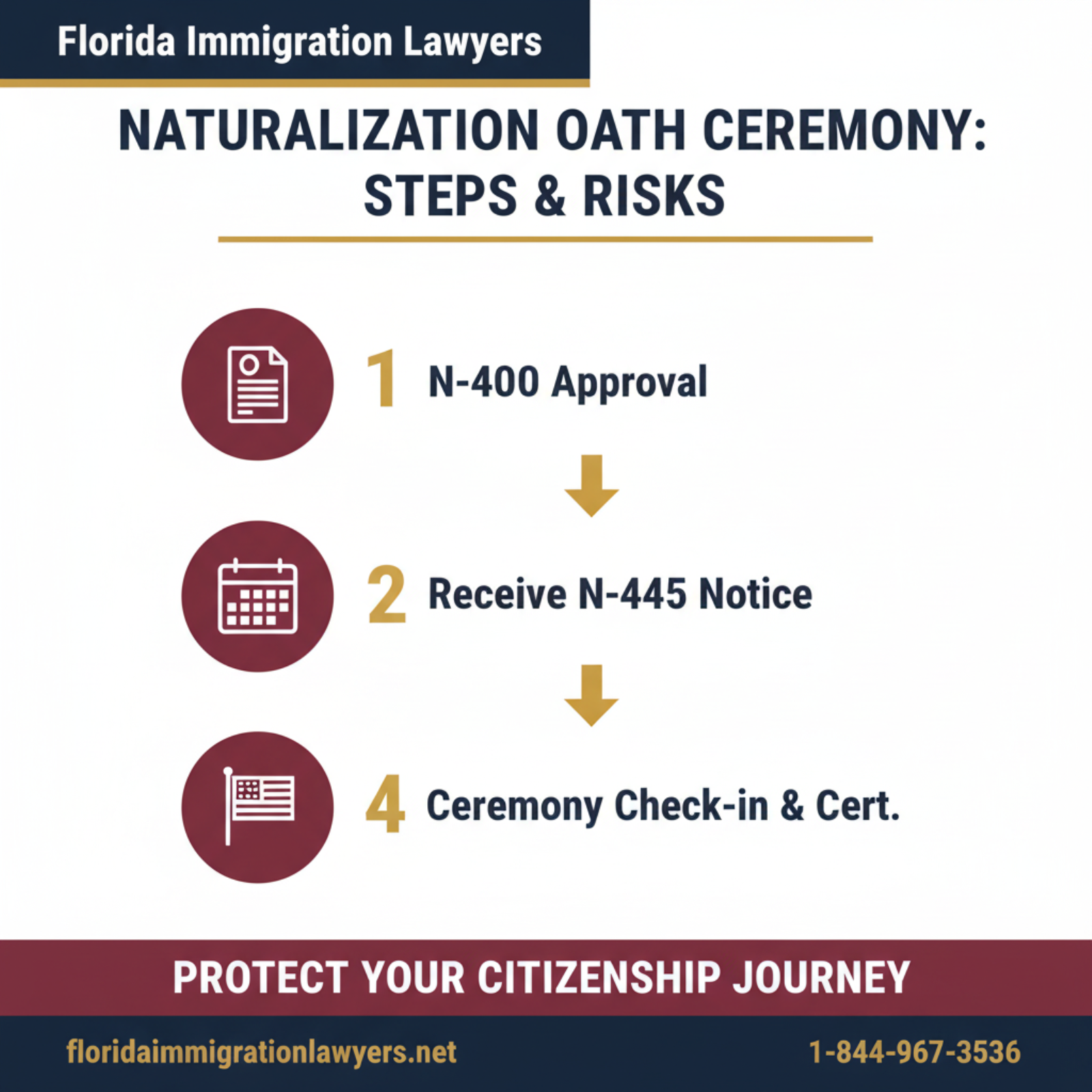
Preparing for your naturalization ceremony is key to minimizing any potential anxieties, including those related to naturalization ceremony ICE concerns. Following these steps can help ensure a smooth and joyful experience as you become a U.S. citizen.
- Receive Your N-445, Notice of Naturalization Oath Ceremony: This is the official invitation to your ceremony. It will specify the date, time, and location. Read it carefully for any specific instructions.
- Review and Complete the Back of Form N-445: The back of this form asks several questions about your activities since your naturalization interview. You must answer these truthfully and bring the completed form to your ceremony. Any changes in your marital status, criminal history, or extended trips outside the U.S. must be disclosed.
- Gather Required Documents: You will need to bring specific documents, as outlined in your N-445. This typically includes your Green Card (Permanent Resident Card), any Re-entry Permits or Refugee Travel Documents you possess, and the completed N-445. Failing to bring these can cause significant delays.
- Dress Appropriately: The naturalization ceremony is a formal and dignified event. Dress in respectful attire, similar to what you might wear for a job interview or a formal occasion.
- Arrive Early: Plan to arrive at the ceremony location well in advance of the scheduled time. This allows for security checks, finding parking, and settling in without rushing. Locations in Florida, such as federal courthouses in Miami or Orlando, can have strict security protocols.
- Attend the Ceremony and Take the Oath: During the ceremony, you will take the Oath of Allegiance to the United States. This is a solemn promise, and you will renounce allegiance to any foreign state. The ceremony may include speeches from officials or judges.
- Receive Your Certificate of Naturalization: After taking the oath, you will receive your Certificate of Naturalization. This is your official proof of U.S. citizenship. Review it immediately for any errors. This document is crucial for obtaining a U.S. passport and other benefits of citizenship.
- Understand Your New Rights and Responsibilities: As a U.S. citizen, you gain the right to vote, run for federal office, and have greater protections against deportation. You also have responsibilities, such as serving on a jury if called upon.
It is important to remember that the naturalization process is governed by federal regulations, specifically 8 CFR Part 337, which outlines the oath of allegiance. Thorough preparation is your best defense against unexpected issues.
Essential Document Checklist for Your Naturalization Ceremony
Bringing the correct documents to your naturalization ceremony is absolutely critical. Missing even one item can lead to delays or require you to reschedule. Use this checklist to ensure you have everything prepared.
- Form N-445, Notice of Naturalization Oath Ceremony: The official notice you received, with the back completed and signed.
- Your Permanent Resident Card (Green Card): You must surrender this card at the ceremony.
- Re-entry Permit or Refugee Travel Document: If you have one, you must also surrender it.
- Any other USCIS-issued documents: Bring any other immigration documents USCIS may have issued you, as instructed.
- Florida State Identification: Your current driver's license or state ID card.
- Social Security Card: While not always required, it's good to have for identification purposes.
- Marriage Certificate (if applicable): If your marital status changed since your interview.
- Divorce Decree (if applicable): If your marital status changed since your interview.
- Court Disposition Records (if applicable): For any arrests or citations since your interview.
- Interpreter (if authorized): If USCIS approved you to bring an interpreter.
Always review your specific N-445 for any additional or unique document requirements. Being over-prepared is always better than being under-prepared for this momentous occasion. Our team at Florida Immigration Lawyers can help review your documents to ensure you are fully ready for your citizenship oath ceremony.
Naturalization Timeline and Processing Expectations in 2026
Understanding the typical timeline for naturalization can help manage expectations and reduce anxiety. While individual cases vary, there's a general process flow for N-400 applications.
After filing Form N-400, Application for Naturalization, you generally go through several stages: receipt of application, biometrics appointment, naturalization interview, and finally, the oath ceremony. The time between each stage can fluctuate significantly.
In 2026, processing times for naturalization applications in Florida, including those handled by the USCIS field offices in Miami, Tampa, and Orlando, may still vary. You can check current processing times on the USCIS website using your receipt number. Generally, the entire process from filing to oath can take anywhere from 8 months to over 2 years, depending on the caseload and specific circumstances of your application.
Once your N-400 is approved after your interview, the wait for the oath ceremony notice (Form N-445) can range from a few weeks to several months. Delays can occur due to background check updates, scheduling backlogs, or if USCIS requires additional information from you. Patience is often a virtue in the immigration process, but persistent delays without explanation warrant legal inquiry.
Cost Factors and Fee Breakdown for Naturalization
The financial aspect of naturalization is an important consideration for many applicants. Understanding the potential costs involved allows for proper budgeting and planning.
The primary cost associated with naturalization is the filing fee for Form N-400. This fee is subject to change by USCIS, so it is crucial to check the most current fee on the official USCIS website before filing. Do not rely on outdated information, as incorrect fees can lead to your application being rejected.
In addition to the N-400 filing fee, there may be a biometrics fee, although this is sometimes included in the main filing fee. USCIS also offers fee waivers for eligible applicants who demonstrate an inability to pay. If you believe you qualify for a fee waiver (Form I-912), you must submit the waiver request along with your N-400 application and supporting documentation.
Another potential cost is legal representation. While not mandatory, hiring an experienced immigration lawyer from Florida Immigration Lawyers can be invaluable, especially if your case is complex or if you have concerns about naturalization ceremony ICE concerns. Legal fees vary depending on the complexity of your case and the services required. We offer transparent fee structures and discuss all costs upfront during your free consultation.
Do not let the complexities of the naturalization process, or any anxieties about naturalization ceremony ICE concerns, deter you from pursuing your citizenship. Contact Florida Immigration Lawyers today. Our dedicated team is ready to provide the guidance and support you need every step of the way, ensuring your path to U.S. citizenship is as smooth as possible.
Common Mistakes to Avoid During the Naturalization Process
Avoiding common pitfalls can significantly improve your chances of a successful naturalization outcome and mitigate anxieties about naturalization ceremony ICE concerns. Be vigilant about these potential errors:
- Failing to Disclose All Information: Any omission or misrepresentation on your N-400 application, especially regarding criminal history or past immigration issues, can lead to denial or even accusations of fraud. USCIS conducts thorough background checks, and honesty is paramount.
- Extended Absences from the U.S.: Spending too much time outside the United States can disrupt your continuous residency requirement for naturalization. Generally, absences of six months or more can break continuity, and absences of one year or more automatically break it, potentially restarting your eligibility period.
- Committing Crimes After Filing: Any arrest or criminal conviction, even a minor one, after you file your N-400 can jeopardize your application. You must disclose all such incidents to USCIS, even if they occurred after your interview but before your oath ceremony.
- Not Updating Your Address with USCIS: If you move, you must notify USCIS of your new address within 10 days. Failure to do so can result in missed notices, interview cancellations, or even the denial of your application because you didn't receive crucial communications.
- Missing Your Interview or Oath Ceremony: Unexcused absences from scheduled appointments can lead to the denial of your application. Always notify USCIS in advance if you cannot attend due to an emergency, and provide documentation.
- Inadequate Document Preparation: Arriving at your interview or ceremony without all required original documents and copies can cause significant delays or even cancellation. Always double-check the lists provided by USCIS.
- Incorrectly Answering N-445 Questions: The questions on the back of Form N-445 must be answered accurately and truthfully on the day of your ceremony. Any changes in your life since your interview must be reflected.
- Voting Before Naturalization: Only U.S. citizens can vote in federal elections. Registering to vote or voting before you are officially naturalized is a serious offense that can lead to deportation.
- Not Understanding the Oath of Allegiance: You must be able to understand and swear to the Oath of Allegiance. If you have any doubts about its meaning, seek clarification from your attorney.
- Assuming Your Case is Identical to Others: Every immigration case is unique. What happened to a friend or family member may not apply to your specific situation, especially concerning complex issues or naturalization ceremony ICE concerns.
When to Call a Florida Immigration Lawyer
While many naturalization cases proceed smoothly, certain circumstances warrant the expertise of an immigration attorney. If you have any concerns about naturalization ceremony ICE concerns, or if your case involves complexities, our team at Florida Immigration Lawyers is here to provide dedicated support.
You should consider contacting us if you have a criminal record, even for minor offenses, as this can affect your good moral character requirement. Past arrests, charges, or convictions, regardless of the outcome, need careful legal review. Our deportation defense experience can be crucial here.
Other red flags include lengthy absences from the U.S., previous denials of immigration benefits, or any history of immigration violations. If you have filed an asylum application in the past or have complex family situations requiring family immigration expertise, an attorney can help ensure these do not negatively impact your naturalization.
Furthermore, if you receive a Request for Evidence (RFE) or a Notice of Intent to Deny (NOID) from USCIS, it's a strong indication that professional legal help is needed. These notices often require a detailed and legally sound response. Even if your case seems straightforward but you simply feel overwhelmed or anxious about the process, especially concerning naturalization ceremony ICE concerns, our attorneys can offer peace of mind and expert guidance.
Our firm, Florida Immigration Lawyers, also assists businesses with business immigration matters. We understand the broad spectrum of immigration law and are equipped to handle diverse cases. We serve individuals and families throughout Florida, including Pembroke Pines and surrounding communities, ensuring you receive personalized and effective legal strategies.
About Florida Immigration Lawyers
Florida Immigration Lawyers is a leading immigration law firm dedicated to serving individuals and families across the entire state of Florida. With years of experience and a deep understanding of U.S. immigration law, we are committed to providing compassionate, effective, and results-driven legal representation.
Our practice areas include naturalization, family immigration, business immigration, asylum, deportation defense, and more. We pride ourselves on offering personalized attention, ensuring that each client's unique circumstances are understood and addressed with tailored legal strategies. Our mission is to guide you through the complex immigration system with clarity and confidence.
Why choose Florida Immigration Lawyers? We offer free consultations, are available 24/7 to address your urgent needs, and provide bilingual services (Se Habla Español) to ensure clear communication. Our dedicated team is passionate about protecting your rights and helping you achieve your immigration goals. From our base, we serve clients in Pembroke Pines, Miami, Tampa, Orlando, Jacksonville, and all other Florida communities.
For expert legal advice and unwavering support, contact us today. Your future in the United States is our priority. Visit our website at www.floridaimmigrationlawyers.net or call us directly at 1-844-967-3536.
Sources and References
- U.S. Citizenship and Immigration Services (USCIS)
- Executive Office for Immigration Review (EOIR)
- U.S. Department of State (travel.state.gov)
- 8 U.S.C. Chapter 12 - Immigration and Nationality Act (INA)
- 8 U.S.C. § 1427 - Requirements for naturalization
- 8 CFR Part 316 - General requirements for naturalization
- 8 CFR Part 337 - Oath of Allegiance
- USCIS Policy Manual
This article provides general legal information and is not intended as legal advice. Every case is unique, and outcomes depend on specific facts and circumstances. Contact an attorney for advice about your particular situation.
Frequently Asked Questions About Naturalization Ceremony ICE Concerns
Can ICE deport you if you're a naturalized citizen?
No, generally, once you become a naturalized U.S. citizen and take the Oath of Allegiance, you are protected from deportation. Naturalized citizens hold the same rights and protections as native-born citizens. However, citizenship can potentially be revoked in extremely rare cases of proven fraud or misrepresentation during the naturalization process, which would then open an individual to deportation proceedings.
Do naturalized citizens have to worry about ICE?
Once you are a naturalized citizen, you typically do not have to worry about ICE enforcement actions that lead to deportation. Your citizenship provides robust protection. Concerns about ICE primarily pertain to individuals who have not yet taken the oath or who may have undisclosed issues in their background that could affect their eligibility before citizenship is granted.
Did ICE show up at a citizenship ceremony?
While rare, there have been isolated incidents reported in the past where ICE agents were present at or near naturalization ceremonies, usually in federal courthouses. These situations are generally not routine enforcement actions against all applicants but are typically based on specific intelligence or warrants related to particular individuals with serious criminal histories or suspected immigration fraud. For the vast majority of applicants, the ceremony proceeds without incident.
Were immigrants pulled out of line for citizenship?
Reports of individuals being pulled out of line at naturalization ceremonies are extremely uncommon and usually involve very specific, serious circumstances, such as undisclosed criminal warrants or significant national security concerns that come to light just before the oath. These are not typical occurrences for applicants who have successfully completed all prior steps of the naturalization process. Consulting with an immigration attorney can help address any specific concerns about your background.
Your journey to U.S. citizenship is a momentous achievement. Do not let unwarranted fears overshadow this significant event. With proper preparation and expert legal guidance, you can approach your naturalization ceremony with confidence.
For personalized advice and to ensure all your naturalization ceremony ICE concerns are addressed, reach out to Florida Immigration Lawyers. We are here to support you every step of the way. Call us today for a free consultation at 1-844-967-3536. Se Habla Español - Estamos aquí para ayudarle.
Do Not Navigate This Process Alone
Our experienced immigration attorneys are ready to fight for you. Get a free, confidential consultation today.
Se Habla Español
Frequently Asked Questions
Florida Immigration Lawyers
Immigration Attorney | Founder, Vasquez Law Firm
U.S. Air Force veteran and immigration attorney with thousands of cases resolved. J.D., NCCU School of Law. AILA member. Admitted to the 4th, 5th, and 11th Circuit Courts.
Available 24/7 - Free Evaluations
Related Legal Services
Our Florida immigration attorneys can help you with free immigration consultation, experienced immigration attorneys and business immigration. Call today at 1-844-967-3536 for a free consultation.
Related Links
Related Topics
Free Legal Consultation
Discuss your case with our experienced attorneys. We're available 24/7.
Se Habla Español - Estamos aquí para ayudarle.
Related Articles
Withholding of Removal Defense in Florida | VLF Florida
Learn how withholding of removal can protect you from deportation in Florida. Explore the process, common mistakes, and seek legal advice. Call us for a free consultation.
F-1 Reinstatement Process for Florida Students | VLF Florida
Learn about the F-1 reinstatement process for students in Coral Springs, Florida, including steps, timelines, and common mistakes to avoid. Contact Florida Immigration Lawyers for professional assistance.
VAWA Self-Petition Florida: Abused Spouses Immigration Guide
For abused spouses in Florida, the VAWA self-petition offers a critical pathway to legal immigration status without the abuser's cooperation. This comprehensive guide details the eligibility requirements, the step-by-step process of filing Form I-360, essential documentation, and expected timelines. Learn how to gather evidence, draft a compelling personal statement, and understand the costs and potential fee waivers. We also highlight common mistakes to avoid and explain when seeking legal counsel from Florida Immigration Lawyers is invaluable. This process is designed to empower survivors to achieve safety, independence, and a secure future, free from the fear of deportation.
Immigration Bond Hearing Florida: Get Released from ICE Detention
Facing an immigration bond hearing in Florida can be daunting, especially for families in Kissimmee, Orlando, and Miami. This comprehensive guide demystifies the process, explaining what an immigration bond hearing entails, who is eligible, and the crucial steps to take. We detail the essential documents required, outline timelines and cost factors, and highlight common mistakes to avoid. Discover why experienced legal representation from Florida Immigration Lawyers is vital to navigate this complex system and secure release from ICE detention. Understand your rights and learn how to present a strong case for bond.