Justice Department Immigration Lawyer: Your Florida Guide
Discover the critical role of a justice department immigration lawyer in Florida. This comprehensive guide from Florida Immigration Lawyers explains how these specialized attorneys navigate federal immigration courts, handle deportation defense, asylum claims, and appeals. Learn about the step-by-step court process, essential documents, timelines, and cost factors. Avoid common mistakes and understand when expert legal representation is vital for your case in Tallahassee, Orlando, Miami, and across Florida. Contact us for a free consultation today.

A justice department immigration lawyer in Florida specializes in cases involving federal immigration courts, the Board of Immigration Appeals, and other Department of Justice entities. They represent individuals in deportation defense, asylum claims, and appeals, ensuring due process. Their expertise is crucial for navigating the complexities of U.S. immigration law, particularly for those facing removal proceedings in Florida's immigration courts.
- Justice Department immigration lawyers handle federal immigration court cases.
- They provide crucial deportation defense and asylum representation.
- Expertise is vital for navigating complex U.S. immigration laws.
- Such attorneys operate under the Executive Office for Immigration Review (EOIR).
- Consulting one is key for individuals in removal proceedings across Florida.
Navigating the intricate world of U.S. immigration law can feel overwhelming, especially when your future and freedom are at stake. Perhaps you or a loved one in Tallahassee or elsewhere in Florida has received a Notice to Appear (NTA) or is facing a complex immigration challenge. The Department of Justice plays a significant role in immigration matters, particularly through its Executive Office for Immigration Review (EOIR), which oversees immigration courts and the Board of Immigration Appeals.
Understanding who a justice department immigration lawyer is and how they can assist you is the first step toward securing your legal standing. These specialized attorneys are your advocates in a system that often seems daunting. They work diligently to protect your rights and guide you through every phase of your case, whether it involves defending against deportation or pursuing asylum.
This comprehensive guide from Florida Immigration Lawyers will demystify the role of a justice department immigration lawyer in Florida, outlining the processes they handle, the challenges you might face, and how our firm can provide the dedicated support you need. We understand the unique pressures faced by immigrants in Florida, from Miami to Orlando and right here in Tallahassee. For immediate assistance with your immigration case, do not hesitate to call Florida Immigration Lawyers at 1-844-967-3536 for a free consultation.
Understanding the Role of a Justice Department Immigration Lawyer in Florida
When we talk about a justice department immigration lawyer, we are primarily referring to attorneys who practice before the Executive Office for Immigration Review (EOIR). This branch of the U.S. Department of Justice (DOJ) is responsible for adjudicating immigration cases, including removal proceedings, asylum applications, and appeals. Unlike attorneys who primarily handle petitions with USCIS, these lawyers focus on litigation in a courtroom setting.
In Florida, individuals often find themselves in immigration court in locations such as Orlando or Miami. The proceedings in these courts are formal and adversarial, meaning there is a government attorney (ICE counsel) seeking to deport the individual, and your justice department immigration lawyer is there to defend you. This is a critical distinction, as the stakes are incredibly high, often involving an individual's right to remain in the United States.
Our firm, Florida Immigration Lawyers, has extensive experience representing clients before these courts. We understand the nuances of the local judicial system, including the specific procedures and preferences of judges in Florida's immigration courts. Our commitment is to provide robust legal defense and strategic guidance to every client we serve, ensuring their voice is heard.
Key Responsibilities and Areas of Practice
A justice department immigration lawyer handles a wide array of complex cases. Their responsibilities extend beyond simple paperwork, focusing on courtroom advocacy and legal strategy. They are adept at navigating the specific procedural rules set forth by the EOIR.
- Deportation Defense: This is a primary area of focus. Lawyers represent individuals facing removal from the U.S., fighting to keep families together. This often involves seeking forms of relief like cancellation of removal or adjustment of status.
- Asylum and Withholding of Removal: For those fleeing persecution, these attorneys present compelling cases for asylum. They gather evidence, prepare clients for testimony, and argue on humanitarian grounds.
- Bond Hearings: When individuals are detained by ICE, a lawyer can argue for their release on bond. This allows them to pursue their immigration case from outside detention.
- Appeals to the Board of Immigration Appeals (BIA): If an immigration judge issues an unfavorable decision, the lawyer can file an appeal with the BIA, seeking to overturn the ruling.
- Motions to Reopen or Reconsider: In certain circumstances, a lawyer can file motions to revisit a past decision based on new evidence or a change in law.
Navigating the Immigration Court Process: A Step-by-Step Guide
Facing immigration court can be a daunting experience. Understanding the process can alleviate some anxiety and help you prepare effectively with your justice department immigration lawyer. This guide outlines the typical steps involved in removal proceedings within the Department of Justice's immigration court system.
-
Receiving a Notice to Appear (NTA): The process typically begins when U.S. Immigration and Customs Enforcement (ICE) issues an NTA. This document charges you with being removable from the U.S. and instructs you to appear before an immigration judge. It is crucial to contact a lawyer immediately upon receiving an NTA, as delays can be detrimental.
-
Master Calendar Hearing: Your first appearance before an immigration judge is usually a Master Calendar Hearing. This is a preliminary hearing where the judge confirms your identity, ensures you understand the charges, and asks if you admit or deny the allegations. Your justice department immigration lawyer will be present to represent you, enter pleas, and request relief from removal.
-
Filing Applications for Relief: If you are eligible for relief from removal (e.g., asylum, cancellation of removal, adjustment of status), your lawyer will help you identify the appropriate application(s). These forms, along with supporting documentation, must be filed with the court by specific deadlines. This is where the strategic work of a skilled lawyer becomes invaluable.
-
Individual Hearing (Merits Hearing): This is the main trial where evidence is presented, and witnesses may testify. You will likely testify about your case. The government attorney (ICE counsel) will also present their case and cross-examine you. Your justice department immigration lawyer will prepare you thoroughly, present your evidence, make legal arguments, and cross-examine government witnesses.
-
Judge's Decision: After the Individual Hearing, the immigration judge will issue a decision. This can be either an order of removal, a grant of relief (allowing you to remain in the U.S.), or a continuance for further proceedings. The judge's decision is based on the evidence presented and applicable immigration law, such as the Immigration and Nationality Act (INA).
-
Appeals Process: If either you or the government disagrees with the judge's decision, an appeal can be filed with the Board of Immigration Appeals (BIA). This must be done within a strict timeframe. Your justice department immigration lawyer can represent you through this appellate process, submitting briefs and arguing your case before the BIA.
Essential Documents for Your Immigration Court Case
Preparing for an immigration court case requires meticulous organization and a comprehensive understanding of the necessary documentation. Your justice department immigration lawyer will guide you through this process, but having a preliminary understanding of what is needed can save valuable time. Gathering these documents promptly is crucial for building a strong defense or application for relief.
Here is a general checklist of documents that may be required for your immigration court proceedings in Florida:
- Personal Identification: Birth certificates, passports, national IDs, and marriage certificates.
- Immigration Records: Any previous immigration applications, visas, entry/exit stamps, I-94 records, or correspondence from USCIS or ICE.
- Criminal Records: If applicable, certified copies of all arrest records, court dispositions, and sentencing documents. Even minor infractions can impact your case.
- Proof of Residence: Utility bills, lease agreements, property deeds, or mail showing your address history in Florida.
- Financial Documents: Tax returns, pay stubs, bank statements, and proof of employment.
- Family Information: Birth certificates of U.S. citizen or LPR relatives, marriage certificates, and evidence of family ties.
- Affidavits/Letters of Support: Statements from family, friends, employers, or community leaders attesting to your good moral character, hardship, or other relevant facts.
- Medical Records: If your case involves health-related issues or persecution, relevant medical documentation.
- Evidence of Hardship: For cancellation of removal, documents demonstrating extreme and unusual hardship to qualifying relatives.
- Asylum-Specific Evidence: Country conditions reports, personal statements, human rights reports, and evidence of persecution.
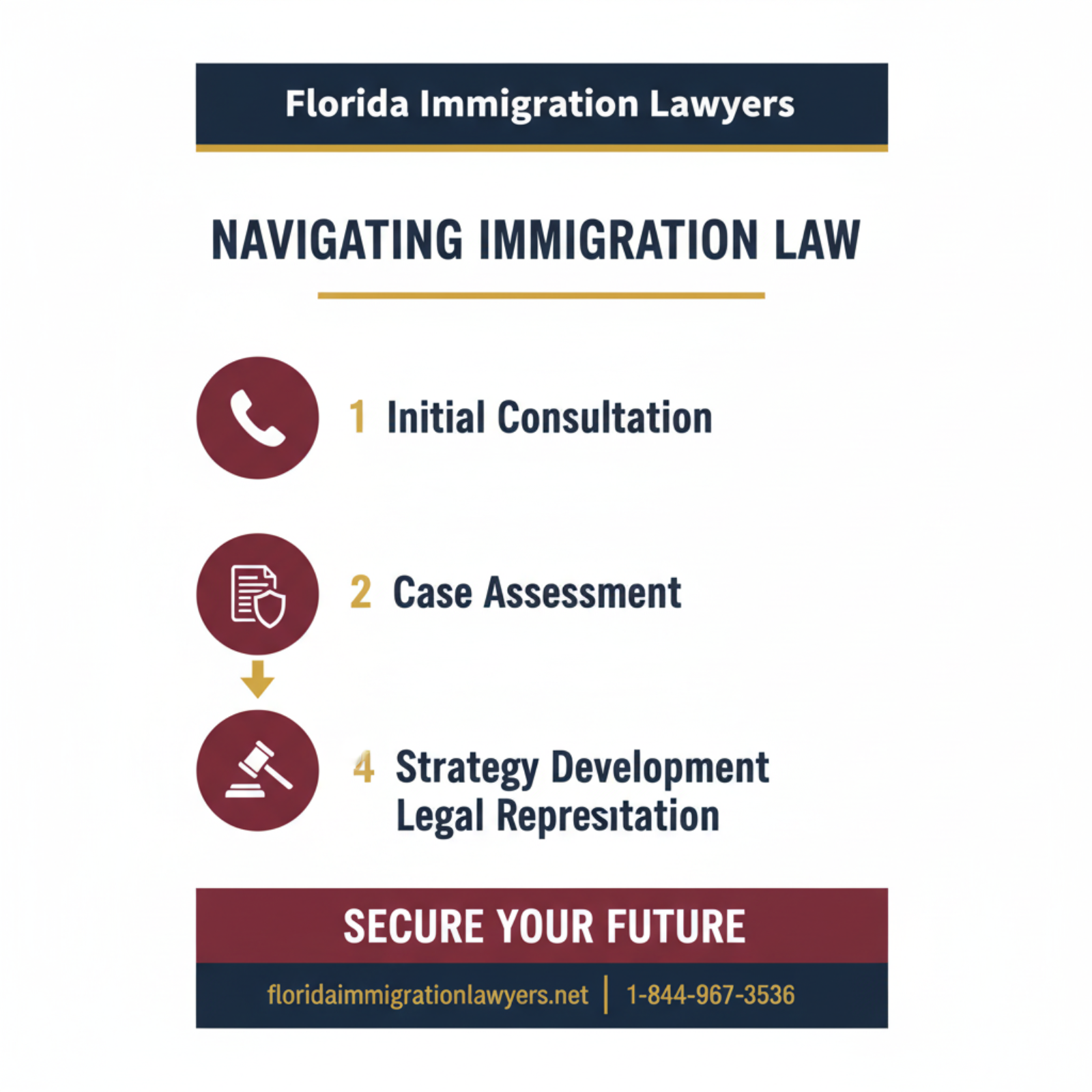
Do not navigate this process alone. The complexities of gathering and presenting evidence can be overwhelming. Contact Florida Immigration Lawyers today to ensure your case is handled with the expertise it deserves. Our team is ready to assist you.
Timeline and Processing Expectations for Immigration Court Cases
The timeline for immigration court cases can vary significantly, often extending over several months or even years. Factors such as the complexity of your case, the volume of cases at the specific immigration court (e.g., Orlando Immigration Court or Miami Immigration Court), and the availability of judges all play a role. Your justice department immigration lawyer will provide you with a more personalized estimate based on your specific circumstances.
Factors Influencing Case Duration
- Court Backlogs: Immigration courts, especially in high-volume states like Florida, often face significant backlogs. This can lead to long wait times between hearings.
- Case Complexity: Cases involving multiple forms of relief, extensive evidence, or complicated legal issues naturally take longer to resolve.
- Judge's Schedule: The individual schedule of the immigration judge assigned to your case can impact hearing dates.
- Government Appeals: If the Department of Homeland Security (DHS) appeals a decision, the case can be prolonged significantly while it is reviewed by the Board of Immigration Appeals (BIA).
- Changes in Law or Policy: Shifting immigration policies or new legal precedents can sometimes cause delays or require additional filings.
While specific timelines are difficult to predict, a typical removal proceeding can take anywhere from one to five years from the initial NTA to a final decision by an immigration judge. Appeals to the BIA can add another one to three years. Your justice department immigration lawyer will keep you informed of any developments and manage expectations throughout this extended process.
Cost Factors and Fee Breakdown for Immigration Legal Services
Understanding the costs associated with hiring a justice department immigration lawyer is an important part of planning your defense. Legal fees for immigration court cases are typically structured differently than those for USCIS filings. While there are no specific government filing fees for appearing in immigration court, you will incur attorney fees for representation.
Typical Fee Structures
- Flat Fees: Many immigration attorneys, including Florida Immigration Lawyers, offer flat fees for specific stages of a case (e.g., representation at a Master Calendar Hearing, an Individual Hearing, or an appeal). This provides predictability for clients.
- Hourly Rates: For very complex or unpredictable cases, some attorneys may charge an hourly rate. This means you pay for the actual time spent on your case.
- Consultation Fees: While Florida Immigration Lawyers offers a free consultation, some firms charge an initial fee for a detailed case evaluation.
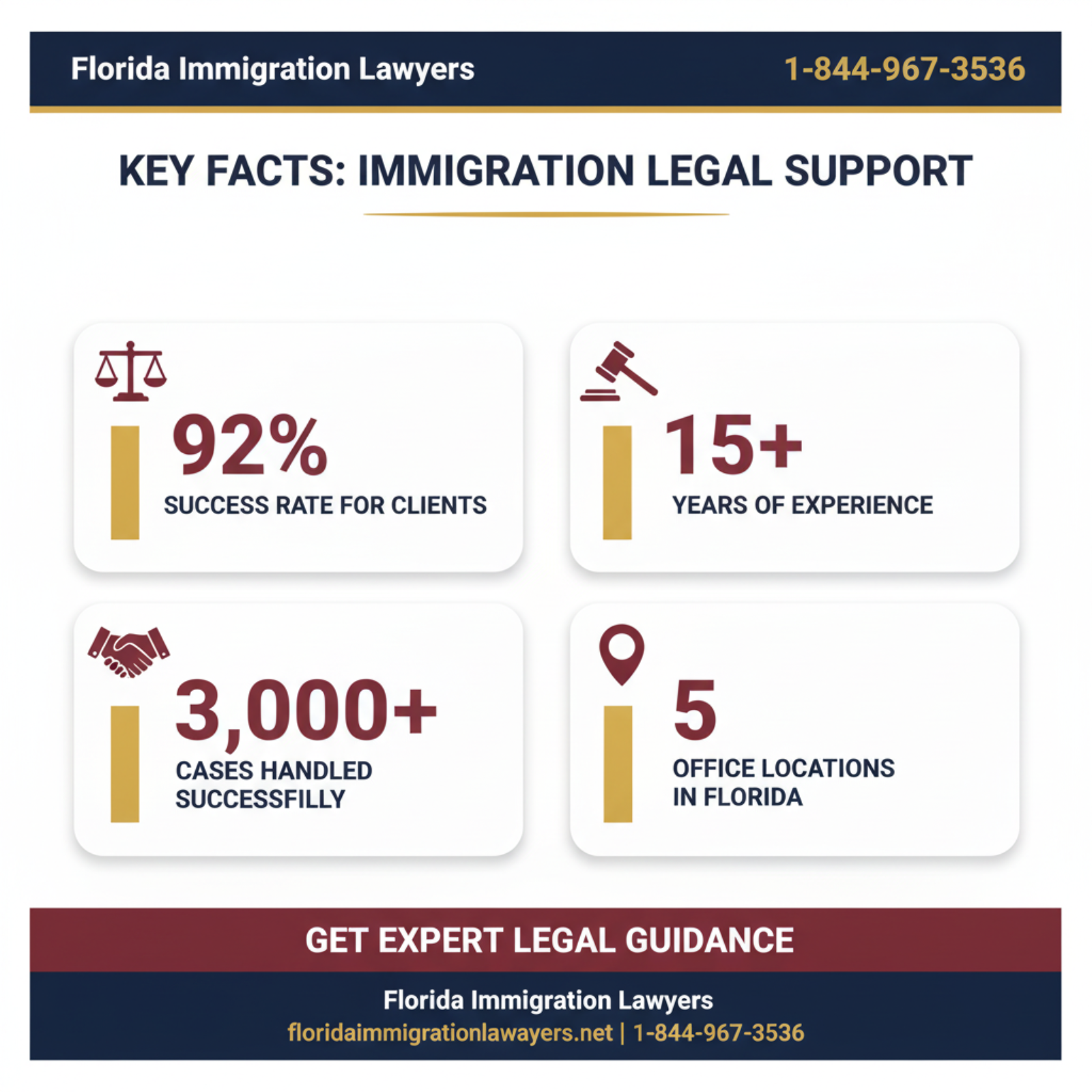
It is important to discuss all fee structures and payment plans with your prospective attorney during your initial consultation. Be sure to ask about what is included in the fee and any potential additional costs, such as expert witness fees or translation services. Our firm is transparent about our fees and works to make quality legal representation accessible. We understand that some individuals may be seeking Pro Bono immigration lawyers Florida or USCIS free immigration lawyers. While such services exist, they are often limited and may have extensive waiting lists. Investing in experienced legal counsel is often the most reliable path.
Common Mistakes to Avoid in Immigration Court
Navigating immigration court proceedings without proper legal guidance can lead to significant errors that jeopardize your case. A knowledgeable justice department immigration lawyer can help you avoid these pitfalls. Here are some common mistakes we often see and their potential consequences:
-
Missing Deadlines: Failing to file applications, documents, or appeals by strict court deadlines can result in automatic denial of relief or even an order of removal. Immigration courts are unforgiving with missed deadlines.
-
Failing to Appear for Hearings: Missing any scheduled court hearing, even a Master Calendar Hearing, can lead to an immediate Order of Removal in absentia. Reopening such an order is extremely difficult.
-
Providing Inconsistent Information: Any discrepancies between your testimony, written statements, or previous applications can severely damage your credibility with the immigration judge. Consistency is key.
-
Not Disclosing All Relevant Information: Hiding past arrests, prior immigration issues, or other relevant facts from your attorney or the court can lead to severe penalties, including accusations of fraud.
-
Poor Preparation for Testimony: Testifying in immigration court is challenging. Without proper preparation, you might struggle to articulate your case clearly or handle cross-examination effectively, weakening your position.
-
Submitting Incomplete or Incorrect Documentation: Applications and supporting evidence must be complete and accurate. Incomplete submissions can lead to denials or requests for evidence that delay your case.
-
Attempting to Represent Yourself: While you have the right to self-representation, the complexities of immigration law, court procedures, and legal arguments make it incredibly difficult to succeed without a lawyer. This is one of the biggest risks.
-
Failing to Understand the Charges: Not fully comprehending the specific charges of removability against you means you cannot effectively defend yourself or seek appropriate relief. Your lawyer clarifies these charges.
-
Ignoring Changes in Law: Immigration law is constantly evolving. What was permissible last year might not be today. An experienced attorney stays updated on all legal changes that could impact your case.
-
Not Seeking All Available Forms of Relief: You might be eligible for multiple forms of relief from removal, but without an attorney, you might only pursue one or none at all, missing crucial opportunities.
When to Call a Justice Department Immigration Lawyer in Florida
Knowing when to seek legal counsel is paramount in immigration matters, especially when dealing with the Department of Justice's immigration courts. The moment you receive a Notice to Appear (NTA) or learn that you are under investigation by ICE, it is imperative to contact a justice department immigration lawyer immediately. Early intervention by an attorney can significantly impact the outcome of your case.
Consider reaching out to Florida Immigration Lawyers if any of the following scenarios apply to you or a loved one:
- You have received a Notice to Appear (NTA) in immigration court in Orlando, Miami, or any other Florida location.
- You are currently detained by ICE and need assistance with a bond hearing or release from custody.
- You are seeking asylum or withholding of removal due to fear of persecution in your home country.
- You have an existing order of removal and wish to explore options for reopening your case or filing an appeal.
- You have a criminal history, even minor offenses, that could impact your immigration status or eligibility for relief.
- You believe you are eligible for deportation defense, such as cancellation of removal or adjustment of status in court.
- Your previous immigration application with USCIS was denied, and you are now facing removal proceedings.
- You need assistance with complex family-based immigration matters that have resulted in court involvement.
Our experienced attorneys at Florida Immigration Lawyers are dedicated to providing compassionate and effective legal representation. We serve clients across all of Florida, including Tallahassee, Jacksonville, Tampa, and Fort Lauderdale. Do not face the complexities of the immigration court system alone. We are here to fight for your rights and future.
About Florida Immigration Lawyers
Florida Immigration Lawyers is a premier immigration law firm dedicated to serving individuals and families across the entire state of Florida. Our mission is to provide expert, compassionate, and results-driven legal representation for a wide range of immigration matters. We understand the profound impact immigration issues have on your life and are committed to guiding you through every step of the process.
Our Commitment to You
- Experienced Advocacy: Our team of highly skilled attorneys possesses in-depth knowledge of U.S. immigration law, including the intricacies of the Department of Justice's immigration court system.
- Comprehensive Services: We offer a full spectrum of immigration law services, from family-based petitions and business visas to deportation defense, asylum, and citizenship applications.
- Client-Centered Approach: We prioritize your needs and concerns, providing personalized attention and clear communication throughout your case. We treat every client with the dignity and respect they deserve.
- Florida-Wide Reach: With our services available 24/7 and free consultations, we proudly serve all communities in Florida, including Tallahassee, Miami, Orlando, Tampa, and beyond.
When your future in the United States hangs in the balance, you need a legal team you can trust. Contact Florida Immigration Lawyers today at 1-844-967-3536 or visit https://www.floridaimmigrationlawyers.net to schedule your free consultation. We are here to help.
Sources and References
- U.S. Citizenship and Immigration Services (USCIS)
- Executive Office for Immigration Review (EOIR)
- U.S. Department of State
- 8 U.S.C. Chapter 12 - Immigration and Nationality Act (INA)
- 8 CFR (Code of Federal Regulations, Title 8 - Aliens and Nationality)
This article provides general legal information and is not intended as legal advice. Every case is unique, and outcomes depend on specific facts and circumstances. Contact an attorney for advice about your particular situation.
Securing your future in Florida requires expert legal guidance, especially when facing the Department of Justice's immigration courts. Don't leave your fate to chance. Our dedicated justice department immigration lawyer team at Florida Immigration Lawyers is ready to provide the robust defense and strategic counsel you need. Call us today at 1-844-967-3536 for your free, confidential consultation. Se Habla Español - Estamos aquí para ayudarle.
Do Not Navigate This Process Alone
Our experienced immigration attorneys are ready to fight for you. Get a free, confidential consultation today.
Se Habla Español
Frequently Asked Questions
Florida Immigration Lawyers
Immigration Attorney | Founder, Vasquez Law Firm
U.S. Air Force veteran and immigration attorney with thousands of cases resolved. J.D., NCCU School of Law. AILA member. Admitted to the 4th, 5th, and 11th Circuit Courts.
Available 24/7 - Free Evaluations
Related Legal Services
Our Florida immigration attorneys can help you with citizenship and naturalization, family immigration services and immigration practice areas. Call today at 1-844-967-3536 for a free consultation.
Related Links
Related Topics
Free Legal Consultation
Discuss your case with our experienced attorneys. We're available 24/7.
Se Habla Español - Estamos aquí para ayudarle.
Related Articles
Find Florida Doctors for Immigration Medical Exam | VLF Florida
Discover how to navigate the immigration medical exam process in Florida. Learn the steps, avoid common mistakes, and find out when to seek legal advice. Contact Florida Immigration Lawyers at 1-844-967-3536 for assistance.
Naturalization Process Florida Timeline: A Guide | VLF Florida
Becoming a U.S. citizen in Florida is a significant milestone. This guide covers the naturalization process, timeline, and key steps for residents in Jacksonville and surrounding areas. For expert guidance, contact Florida Immigration Lawyers at 1-844-967-3536.
Immigration Attorney in Gainesville, North Florida
Navigating immigration law in Gainesville and North Florida can be challenging, especially with recent legal changes. Discover how Florida Immigration Lawyers can assist you. Call 1-844-967-3536 for a free consultation.
Refugee Status Florida Resettlement: Your 2026 Guide
Navigating refugee status and resettlement in Florida requires a thorough understanding of U.S. immigration law and available support systems. This 2026 guide covers eligibility, the step-by-step resettlement process, essential documents, timelines, and financial considerations for refugees seeking to build a new life in Florida, particularly in areas like Homestead. It highlights the critical role of organizations like UNHCR and USCIS, and the importance of avoiding common mistakes. Florida Immigration Lawyers offers expert legal assistance, ensuring a smoother transition and helping refugees adjust status to lawful permanent residents. Learn how to secure your future and access vital resources in the Sunshine State.