Japan Immigration News 2026: What Florida Residents Need to Know
Stay updated on Japan immigration news for 2026, especially if you're a Florida resident planning to move, work, or study in Japan. This guide covers visa categories, application steps, required documents, and processing timelines. Learn about the importance of the Certificate of Eligibility and common pitfalls to avoid. Florida Immigration Lawyers provides expert guidance for complex cases, ensuring you navigate the process smoothly. We address frequently asked questions, including Japan's approach to immigration and welcoming foreign nationals. Discover how our firm, serving all of Florida, can offer personalized support and free consultations to help you achieve your international immigration goals.
Navigating Japan immigration news in 2026 from Florida involves understanding evolving visa policies, application procedures, and eligibility criteria. While Japan continues to refine its immigration framework, particularly for skilled workers and long-term residents, Florida residents seeking to move or work there must prepare diligently. Staying updated and securing professional legal guidance can significantly streamline your application process.
- Japan's immigration policies are dynamic, with ongoing adjustments to attract specific talent.
- Florida residents generally apply for Japanese visas through the Consulate General of Japan in Miami.
- The Certificate of Eligibility is a crucial document for many long-term visa categories.
- Professional legal assistance can help you avoid common application mistakes and delays.
- Consulting an attorney is vital for complex cases or if you face challenges during the process.
Are you a Florida resident considering a move to Japan for work, study, or family reunification? Keeping up with the latest Japan immigration news is crucial. Immigration policies are always evolving, and understanding these changes can significantly impact your application process and chances of success.
For those in Hollywood, Miami, or anywhere across Florida, the dream of living in Japan might seem complex. However, with the right information and legal support, it is an achievable goal. This comprehensive guide from Florida Immigration Lawyers will walk you through the essential updates, procedures, and considerations for 2026.
Do not navigate these intricate processes alone. For personalized guidance on your specific situation, call Florida Immigration Lawyers at 1-844-967-3536 for a free consultation. We are here to help you understand your options and pursue your immigration goals effectively.
Understanding Japan Immigration News in 2026 for Florida Residents
Japan has been actively reforming its immigration policies to address demographic shifts and economic needs, particularly concerning skilled labor and international talent. For Florida residents, these changes mean both new opportunities and specific requirements to consider when planning a move.
In 2026, Japan continues to prioritize attracting professionals in fields like IT, engineering, and healthcare. They are also refining pathways for entrepreneurs and students. Understanding these broader trends is the first step in aligning your aspirations with Japan's current immigration landscape.
Recent Developments and Their Impact on Florida
While Japan's national immigration policies are set by its government, their implementation affects Florida residents primarily through the Consulate General of Japan in Miami. This consulate serves Florida, issuing visas and processing applications for those living in the state.
Recent developments might include streamlined application processes for certain visa categories or updated documentation requirements. For instance, there could be new digital submission options or revised criteria for obtaining a Certificate of Eligibility (CoE). Staying informed about these specific updates is paramount for a smooth application.
Why Japan's Immigration Policies Matter to Florida
Florida has strong economic and cultural ties with Japan. Many Japanese companies have a presence in Florida, and a vibrant Japanese-American community thrives across the state. This connection means that changes in Japan's immigration policies directly affect Florida businesses, families, and individuals.
Whether you are a professional seeking new career opportunities, a student planning to enroll in a Japanese university, or an individual looking to join family, understanding these policies is critical. Florida Immigration Lawyers frequently assists clients from Hollywood, Orlando, and Tampa with international immigration considerations, including those related to Japan.
Navigating Japan's Visa and Immigration Process: A Step-by-Step Guide
The process of obtaining a Japanese visa from Florida typically begins long before you submit any documents. It involves careful planning, understanding your visa category, and meticulous preparation. Here is a general step-by-step guide to help you get started.
-
Determine Your Visa Category: Japan offers various visa types, including work visas (e.g., Highly Skilled Professional, Engineer/Specialist in Humanities/International Services), student visas, dependent visas, and cultural activities visas. Your specific purpose for going to Japan will dictate which visa you need. Research the requirements for each category thoroughly on the Ministry of Foreign Affairs of Japan website or through the Consulate General of Japan in Miami.
-
Obtain a Certificate of Eligibility (CoE): For most long-term visas (work, student, dependent), you will need a Certificate of Eligibility. This document is issued by the Ministry of Justice in Japan through a local immigration services agency. Typically, your prospective employer, school, or family sponsor in Japan will apply for the CoE on your behalf. The CoE confirms that you meet the basic requirements for residing in Japan under a specific visa status.
-
Gather Required Documents: Once your CoE is issued, or if you are applying for a short-term visa that does not require one, you must assemble all necessary supporting documents. This list can be extensive and includes your passport, visa application form, photographs, CoE (if applicable), academic transcripts, employment contracts, and proof of financial means. Ensure all documents are current, accurate, and meet the consulate's specifications.
-
Complete the Visa Application Form: Fill out the Japanese visa application form accurately and completely. Any discrepancies or missing information can lead to delays or rejection. Be sure to sign and date the form as required.
-
Submit Your Application to the Consulate: As a Florida resident, you will submit your application to the Consulate General of Japan in Miami. This typically involves making an appointment, though mail-in options may exist for certain categories or circumstances. Bring all original documents and copies as specified by the consulate.
-
Attend an Interview (If Required): While not always mandatory, some visa applications may require an interview at the consulate. Be prepared to discuss your purpose of travel, your ties to Florida, and your plans in Japan. Answer truthfully and concisely.
-
Await Visa Decision: After submission, the consulate will process your application. Processing times vary widely depending on the visa type, completeness of your application, and current caseload. Once approved, your visa will be affixed to your passport. If rejected, you may receive a reason for denial, and consulting an attorney at this stage is highly recommended.
Essential Documents for Your Japan Visa Application
A successful visa application hinges on providing a complete and accurate set of documents. While specific requirements vary by visa type, here is a general checklist of commonly requested items for those applying from Florida.
- Valid passport (original and copy, with sufficient blank pages and validity)
- Completed visa application form (downloadable from the consulate's website)
- One passport-sized photograph (taken within the last six months, specific dimensions)
- Certificate of Eligibility (CoE) – original and copy (for most long-term visas)
- Proof of financial means (bank statements, scholarship letters, employment contract)
- Letter of invitation from Japan (if applicable, e.g., from an employer, school, or relative)
- Official academic transcripts and diplomas (for student or highly skilled professional visas)
- Employment contract or offer letter (for work visas)
- Marriage certificate or birth certificate (for dependent or family-related visas)
- Detailed itinerary (for short-term stays, explaining purpose and duration)
- Proof of accommodation in Japan
- Return flight reservation or ticket
- Copy of your Florida driver's license or state ID (proof of residency in the consulate's jurisdiction)
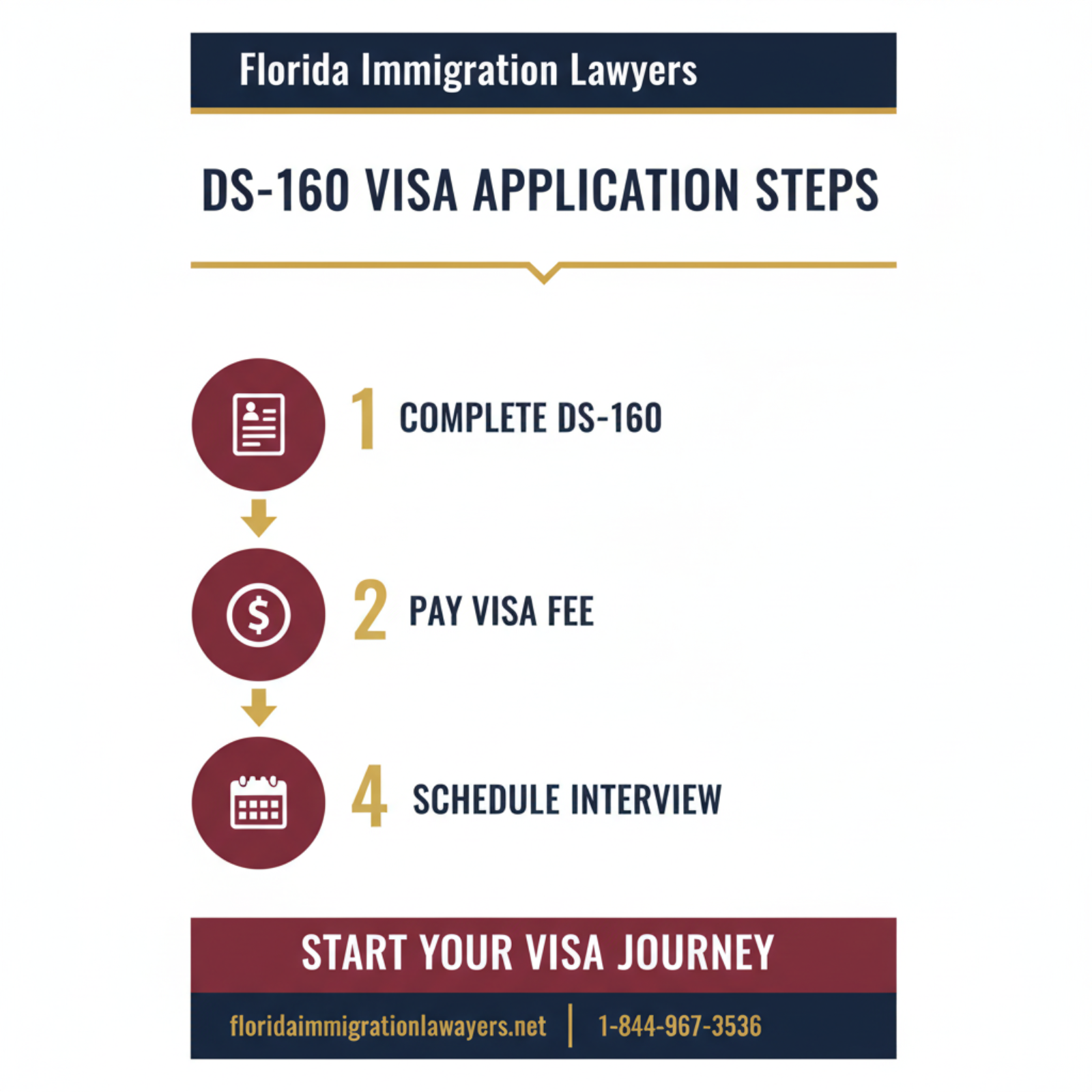
It is crucial to check the most current requirements on the Consulate General of Japan in Miami's official website before submitting your application. Missing or incorrect documents are a primary cause of delays.
Timelines and Processing Expectations for Japanese Visas
Understanding the potential timeline for your Japanese visa application is essential for planning your move from Florida. Processing times are not fixed and can vary significantly based on several factors, including the type of visa, the completeness of your application, and the current volume of applications at the Consulate General of Japan in Miami.
Generally, short-term visas (like tourist or business visitor visas, if required for your nationality) may be processed relatively quickly, sometimes within a few business days to a week. However, for long-term visas, particularly those requiring a Certificate of Eligibility, the process is considerably longer.
The CoE itself can take anywhere from one to three months, or even longer, to be issued by the Immigration Services Agency of Japan. Once you receive your CoE, the subsequent visa application at the consulate in Miami typically takes about five business days to two weeks. During peak travel seasons or due to unforeseen circumstances, these times can be extended.
Always apply well in advance of your intended travel date. We recommend starting the CoE application process at least four to six months before your desired departure. Consulting with a Florida immigration lawyer can help you set realistic expectations and manage the timeline effectively.
Cost Factors and Fee Breakdown for Japan Immigration
The financial aspect of immigrating to Japan from Florida involves several types of costs. While visa application fees for Japan are generally modest, other expenses can accumulate. It is important to budget for these factors comprehensively.
Visa application fees are set by the Japanese government and are subject to change. These fees are typically paid at the time of application submission to the consulate. Some nationalities may be exempt from visa fees based on bilateral agreements.
Beyond the direct visa fee, consider costs such as document preparation and translation services. If documents are not in English or Japanese, certified translations will be required. Travel expenses to and from the Consulate General of Japan in Miami for submission or interviews also add to the overall cost.
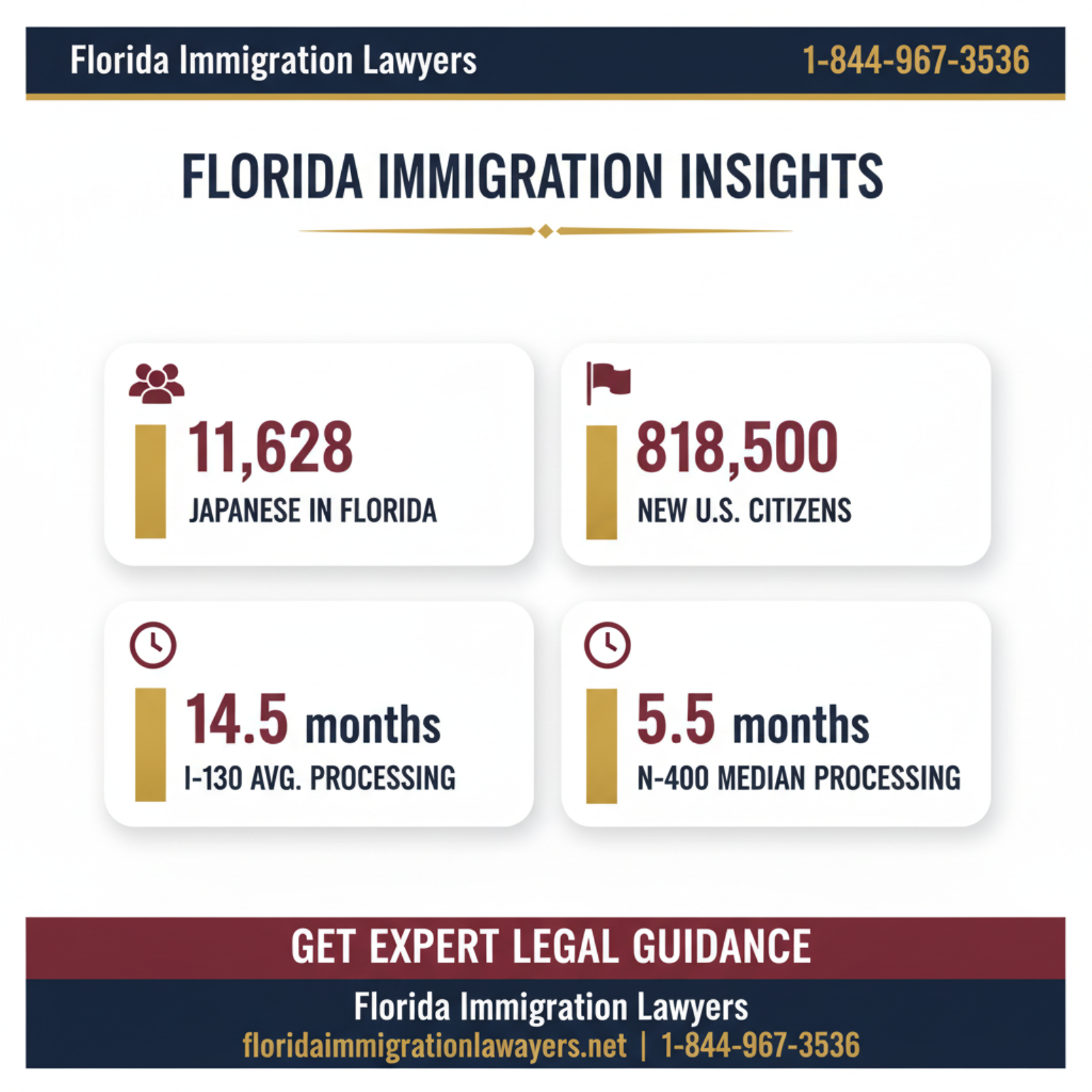
Legal fees for engaging a Florida immigration lawyer are another important consideration. While an additional expense, legal counsel can save you time, stress, and potential costs associated with application rejections or delays due to errors. An attorney can help ensure your application is accurate and complete, increasing your chances of success.
Do not let the complexities of international immigration deter you. With the right legal support, you can confidently pursue your goals. Contact Florida Immigration Lawyers today to schedule your free consultation. Our experienced team is ready to provide the guidance you need.
Common Mistakes to Avoid When Applying for a Japan Visa from Florida
Applying for a visa can be a detailed process. Even minor errors can lead to significant delays or even rejection. Here are common mistakes Florida residents should avoid when seeking a Japanese visa:
-
Incomplete or Inaccurate Application Form: Failing to fill out every section, providing inconsistent information, or making typos can raise red flags. Consequences: Application returned, delayed processing, or outright denial.
-
Missing Required Documents: Not including all documents specified by the consulate, or submitting outdated copies. Consequences: Immediate rejection or request for further documents, significantly extending the timeline.
-
Incorrect Photo Specifications: Submitting photos that do not meet the exact size, background, or recency requirements. Consequences: Application returned, requiring resubmission with correct photos.
-
Applying to the Wrong Jurisdiction: Florida residents must apply through the Consulate General of Japan in Miami. Applying to another consulate or embassy if you reside in Florida will result in rejection. Consequences: Wasted time and resources, forced to reapply correctly.
-
Not Obtaining a Certificate of Eligibility (CoE) When Required: Attempting to apply for a long-term visa without first securing a CoE from Japan. Consequences: Automatic denial of the visa application.
-
Insufficient Proof of Financial Means: Not demonstrating adequate funds to support yourself during your stay in Japan. Consequences: Visa denial, as it suggests you might become a public charge.
-
Lack of Clear Purpose for Visit: Failing to articulate a clear and legitimate reason for your visit, especially for short-term visas. Consequences: Suspicion of intent to overstay or work illegally, leading to denial.
-
Overlooking Document Translation Requirements: Not providing certified translations for documents not in English or Japanese. Consequences: Documents not accepted, delaying or derailing the application.
-
Ignoring Visa Validity and Stay Limits: Misunderstanding how long your visa allows you to stay or when it expires. Consequences: Overstaying your visa can lead to deportation, future entry bans, and legal penalties.
-
Assuming Automatic Approval: Believing that meeting minimum requirements guarantees a visa. Consequences: Disappointment and lack of contingency planning if the visa is denied for discretionary reasons.
-
Providing False Information: Any misrepresentation or fraudulent documents will lead to an immediate and permanent ban from entering Japan. Consequences: Severe legal repercussions and permanent ineligibility.
When to Seek Legal Counsel from a Florida Immigration Lawyer
While some straightforward visa applications can be managed independently, many situations warrant the expertise of an experienced Florida immigration lawyer. Complexities often arise, and professional guidance can be invaluable.
You should consider contacting Florida Immigration Lawyers if your case involves unique circumstances, such as a prior visa denial from Japan or another country. If you have a criminal record, even a minor one, it is critical to seek legal advice before applying. These factors can significantly complicate your application and may require a waiver or special explanation.
Additionally, if your sponsor in Japan is having difficulty securing your Certificate of Eligibility, or if you are unsure about the correct visa category for your specific situation, a lawyer can provide clarity. We can help you understand the nuances of the Japanese immigration system and how it interacts with U.S. immigration laws, particularly if you are also dealing with USCIS processes for your status in the U.S.
Florida Immigration Lawyers can assist with preparing thorough applications, reviewing documents, and advising on potential challenges. We can also represent you in communications with the consulate or provide guidance if you face an appeal. Do not wait for a problem to arise; proactive legal counsel can prevent issues before they occur.
Frequently Asked Questions About Japan Immigration
Here are answers to some common questions Florida residents have about Japan immigration, addressing concerns often seen in Japan immigration news discussions.
Is Japan paying people to move there and have kids?
While Japan faces demographic challenges and encourages population growth, there is no national program specifically paying individuals to move there and have children. However, some local municipalities in Japan offer incentives for families to move to rural areas, which may include financial aid or subsidies for housing and childcare. These are typically localized initiatives, not broad immigration policies. It is important to research specific municipal programs rather than general national incentives.
Is Japan letting US citizens in?
Yes, Japan generally allows U.S. citizens to enter. For short-term visits (typically up to 90 days for tourism or business), U.S. citizens do not require a visa. However, for long-term stays, work, study, or other specific purposes, U.S. citizens must obtain the appropriate visa. The requirements for these visas are the same as for other nationalities, often involving a Certificate of Eligibility. Always check the latest entry requirements on the Ministry of Foreign Affairs of Japan website or travel.state.gov before planning your travel.
Why is Japan bringing in immigrants?
Japan is increasingly bringing in immigrants primarily to address its severe labor shortages, particularly in sectors like healthcare, construction, and manufacturing, and to counteract its rapidly aging population and declining birthrate. The government has introduced new visa categories, such as the 'Specified Skilled Worker' visa, to attract foreign talent. These policies aim to sustain economic growth and maintain public services in the face of demographic challenges. The focus is often on highly skilled professionals or those filling critical labor gaps.
Is Japan welcoming to American immigrants?
Japan is generally welcoming to American immigrants, especially those who meet the criteria for skilled worker or professional visas. The Japanese government actively seeks international talent to bolster its economy. While cultural differences exist, many Americans successfully integrate into Japanese society. Being respectful of local customs, learning the language, and having a clear purpose for your stay are key to a positive experience. Opportunities for work and study are abundant, making it an attractive destination for many Florida residents.
About Florida Immigration Lawyers
Florida Immigration Lawyers is a leading immigration law firm dedicated to serving individuals and families across all of Florida. With years of experience and a deep understanding of complex immigration laws, our firm provides compassionate and effective legal representation.
We offer a comprehensive range of immigration services, including family immigration, business immigration, asylum claims, deportation defense, and naturalization. Our team is committed to helping you navigate the often-challenging U.S. immigration system, and we also provide guidance on international immigration matters that impact our Florida clients.
Choosing Florida Immigration Lawyers means choosing a partner who is available 24/7 to address your concerns. We pride ourselves on offering free consultations, ensuring that you can explore your legal options without financial pressure. Our dedicated attorneys are fluent in English and Spanish, providing accessible and culturally sensitive support.
When your future in the U.S. or abroad is at stake, trust the experienced professionals at Florida Immigration Lawyers. We are here to advocate for your rights and help you achieve your immigration goals. Visit our website at https://www.floridaimmigrationlawyers.net or call us directly at 1-844-967-3536.
Sources and References
- U.S. Citizenship and Immigration Services (USCIS) - For general U.S. immigration context and services.
- U.S. Department of State - Bureau of Consular Affairs - For country-specific travel information and visa requirements for U.S. citizens.
- Executive Office for Immigration Review (EOIR) - For U.S. immigration court system information.
- Ministry of Foreign Affairs of Japan - Official source for Japanese visa information.
- Consulate General of Japan in Miami - Specific visa application information for Florida residents.
- 8 U.S.C. Chapter 12 - Immigration and Nationality Act (INA) - General legal framework for U.S. immigration law.
- 8 CFR (Code of Federal Regulations) - Specific regulations implementing the INA.
This article provides general legal information and is not intended as legal advice. Every case is unique, and outcomes depend on specific facts and circumstances. Contact an attorney for advice about your particular situation.
Navigating Japan immigration news and application processes from Florida can be complex, but you do not have to face it alone. Whether you are seeking a work visa, a student visa, or family reunification, Florida Immigration Lawyers is here to provide expert guidance and support.
We understand the intricacies of international immigration and are committed to helping you achieve your goals with confidence. For a free, confidential consultation, call Florida Immigration Lawyers today at 1-844-967-3536. Se Habla Español - Estamos aquí para ayudarle.
Need help with Immigration?
Our Florida immigration attorneys offer free consultations. Call today or schedule online.
Frequently Asked Questions
Florida Immigration Lawyers
Legal Team
Our experienced attorneys at Florida Immigration Lawyers have been serving clients across Florida for over 20 years. We specialize in immigration, personal injury, criminal defense, workers compensation, and family law.