Japan Immigration News 2026: What Floridians Need to Know
Stay current with Japan immigration news impacting Florida residents in 2026. This guide from Florida Immigration Lawyers covers U.S. visa options for Japanese nationals, essential application steps, required documents, and critical timelines. We address common questions about U.S. entry and highlight the importance of avoiding typical mistakes. Whether you are seeking a temporary work visa, family-based green card, or need assistance with complex immigration challenges in Homestead or across Florida, our expert team provides the clarity and support you need. Learn when to seek legal counsel and how our firm can help you navigate the evolving immigration landscape effectively. Contact us for a free consultation.
Navigating U.S. immigration as a Japanese national in Florida, or for Floridians with ties to Japan, involves understanding complex visa categories, application procedures, and evolving legal landscapes. Recent updates and policy shifts, alongside the resources available through the Consulate General of Japan in Miami, are critical for successful outcomes. Expert legal guidance is often essential.
- U.S. immigration for Japanese citizens requires specific visa types.
- Florida residents with Japanese ties must follow U.S. immigration laws.
- The Consulate General of Japan in Miami is a key resource for Japanese nationals.
- Staying updated on policy changes in 2026 is crucial for all applicants.
- Legal assistance significantly improves application success rates.
The world of immigration is constantly changing. For individuals in Florida with connections to Japan, whether you are a Japanese national living here or a Floridian with family or business ties to Japan, staying informed about the latest Japan immigration news is vital. Understanding the nuances of U.S. immigration law, especially as it applies to Japanese citizens, can be incredibly complex.
In 2026, various factors continue to shape immigration policies and procedures. This comprehensive guide from Florida Immigration Lawyers aims to provide clarity on key U.S. immigration topics relevant to Japanese nationals and Floridians. We will cover visa options, application processes, common challenges, and how our experienced team can help you navigate this journey successfully.
Do not face the complexities of immigration alone. Call Florida Immigration Lawyers at 1-844-967-3536 for a free consultation today. Our dedicated team is ready to assist you.
Overview of U.S. Immigration for Japanese Nationals in Florida in 2026
Florida is a vibrant state, home to a diverse population, including many individuals of Japanese heritage and Japanese citizens. The dynamic nature of global relations and domestic policies means that Japan immigration news can have direct implications for those residing in Homestead, Miami, Orlando, and across Florida.
While some news might focus on Japan's internal immigration policies, our firm specializes in U.S. immigration law. We focus on how these developments affect Japanese nationals seeking to live, work, or study in the United States, particularly within Florida. Understanding the appropriate U.S. visa or green card pathway is your first critical step.
The U.S. immigration system offers numerous avenues for Japanese citizens. These pathways range from temporary non-immigrant visas for work or study to permanent immigrant visas leading to lawful permanent residency. Each category has specific requirements and implications, making informed decision-making essential.
Florida's immigration landscape is also influenced by state-level discussions and federal enforcement priorities. Staying abreast of these changes ensures that your immigration strategy is robust and compliant. Our firm, Florida Immigration Lawyers, is committed to providing up-to-date advice for our clients throughout the state.
Addressing Common Questions About Japan's Immigration Policies and U.S. Entry
Many individuals have questions about Japan's internal immigration policies and how they relate to U.S. entry or residency. Here, we clarify some common inquiries:
- Is Japan paying people to move there and have kids? Reports indicate that Japan faces demographic challenges and has implemented various incentives to encourage population growth and attract skilled workers. These are Japan's internal policies, distinct from U.S. immigration law. Our firm focuses on helping individuals navigate the U.S. immigration system.
- Is Japan letting U.S. citizens in? Entry requirements for U.S. citizens traveling to Japan are set by the Japanese government and can change. For the most current information, U.S. citizens should consult the U.S. Department of State or the Consulate General of Japan in Miami.
- Why is Japan bringing in immigrants? Japan is addressing labor shortages and demographic shifts by selectively opening its doors to foreign workers and skilled professionals. These policies are designed to support its economy and society. Again, this is Japan's national policy, not directly related to U.S. immigration rules.
- Is Japan welcoming to American immigrants? Japan has specific visa categories for those wishing to live and work there, focusing on skills and economic contributions. Americans interested in relocating to Japan should research Japanese visa requirements through official Japanese government sources.
While these questions are about Japan's policies, they highlight a broader interest in international mobility. Our expertise at Florida Immigration Lawyers lies in assisting Japanese nationals and others with their U.S. immigration goals.
Navigating U.S. Visas for Japanese Nationals and Floridians with Japanese Ties
For Japanese citizens seeking to come to or remain in the United States, understanding the available visa categories is crucial. Whether your goal is temporary employment, family reunification, or permanent residency, a specific U.S. visa or green card pathway will apply. Our firm regularly assists clients across Florida, including those in Homestead, with these complex matters.
Common Non-Immigrant (Temporary) U.S. Visas for Japanese Citizens
Many Japanese nationals come to the U.S. for specific, temporary purposes. These non-immigrant visas require applicants to demonstrate intent to return to their home country after their authorized stay. Key options include:
- E-1 Treaty Trader & E-2 Treaty Investor Visas: These visas are popular for Japanese nationals engaging in substantial trade or making significant investments in the U.S. due to a bilateral treaty between the U.S. and Japan. Applicants must meet specific criteria related to the nature and volume of trade or investment.
- H-1B Specialty Occupation Visa: For Japanese professionals in specialty occupations requiring a bachelor's degree or higher. This visa typically requires a U.S. employer to sponsor the applicant and is subject to an annual cap.
- L-1 Intracompany Transferee Visa: Allows Japanese employees of international companies to transfer to a parent, subsidiary, affiliate, or branch office in the U.S. This is ideal for executives, managers, and specialized knowledge employees.
- F-1 Student Visa: For Japanese students wishing to pursue academic or language training programs in the U.S. This visa requires acceptance into a U.S. educational institution approved by the Student and Exchange Visitor Program (SEVP).
- O-1 Visa for Individuals with Extraordinary Ability: For Japanese nationals who possess extraordinary ability in the sciences, arts, education, business, or athletics, or who have a demonstrated record of extraordinary achievement in the motion picture or television industry.
Each non-immigrant visa has distinct eligibility requirements, application processes, and validity periods. Our team can help determine the best visa category for your specific situation and guide you through the application.
Immigrant (Permanent) U.S. Visas and Green Cards for Japanese Citizens
For Japanese citizens seeking to make the United States their permanent home, immigrant visas (green cards) offer the path to lawful permanent residency. These typically fall into family-based or employment-based categories.
- Family-Based Green Cards: U.S. citizens or lawful permanent residents can sponsor eligible Japanese family members. This includes spouses, children, parents, and siblings, though specific categories and waiting times vary. For more information, visit our family immigration page.
- Employment-Based Green Cards: For Japanese professionals with specific skills, advanced degrees, or investments that benefit the U.S. economy. Categories include EB-1 (extraordinary ability, outstanding professors/researchers, multinational executives), EB-2 (professionals with advanced degrees, exceptional ability), EB-3 (skilled workers, professionals, other workers), and EB-5 (investors). Learn more on our business immigration page.
The process for obtaining an immigrant visa can be lengthy and complex, often involving petitions to USCIS and interviews at U.S. Embassies or Consulates abroad, or adjustment of status within the U.S. Our immigration lawyers are well-versed in these procedures.
Step-by-Step Guide to U.S. Immigration for Japanese Citizens
Navigating the U.S. immigration system can feel daunting, but breaking it down into manageable steps can help. This guide outlines the typical process for Japanese nationals seeking to immigrate to the United States. While specific forms and requirements vary by visa type, the general framework remains consistent.
-
Determine Your Eligibility and Visa Category: The first crucial step is to identify which U.S. visa or green card category aligns with your goals and qualifications. This involves assessing your background, family ties, education, work experience, and the purpose of your stay. For example, a Japanese entrepreneur might consider an E-2 investor visa, while a skilled professional might look at an H-1B or employment-based green card. Our attorneys can help you identify the most suitable pathway.
-
Gather Required Documentation: Once your visa category is identified, you must meticulously collect all necessary supporting documents. This often includes passports, birth certificates, marriage certificates, educational diplomas, employment letters, financial statements, and police clearance certificates. Accuracy and completeness are paramount to avoid delays.
-
File the Initial Petition with USCIS: For most immigrant visas and some non-immigrant visas, a U.S. citizen, lawful permanent resident, or employer must file a petition on your behalf with U.S. Citizenship and Immigration Services (USCIS). Common forms include Form I-130 (Petition for Alien Relative) for family-based immigration or Form I-140 (Immigrant Petition for Alien Worker) for employment-based immigration. USCIS processes these petitions and issues an approval notice if all requirements are met.
-
Undergo Background Checks and Security Clearances: All applicants for U.S. immigration must pass rigorous background and security checks. This involves fingerprinting (biometrics), criminal record checks, and various government database screenings. These checks are a standard part of the process to ensure national security and public safety.
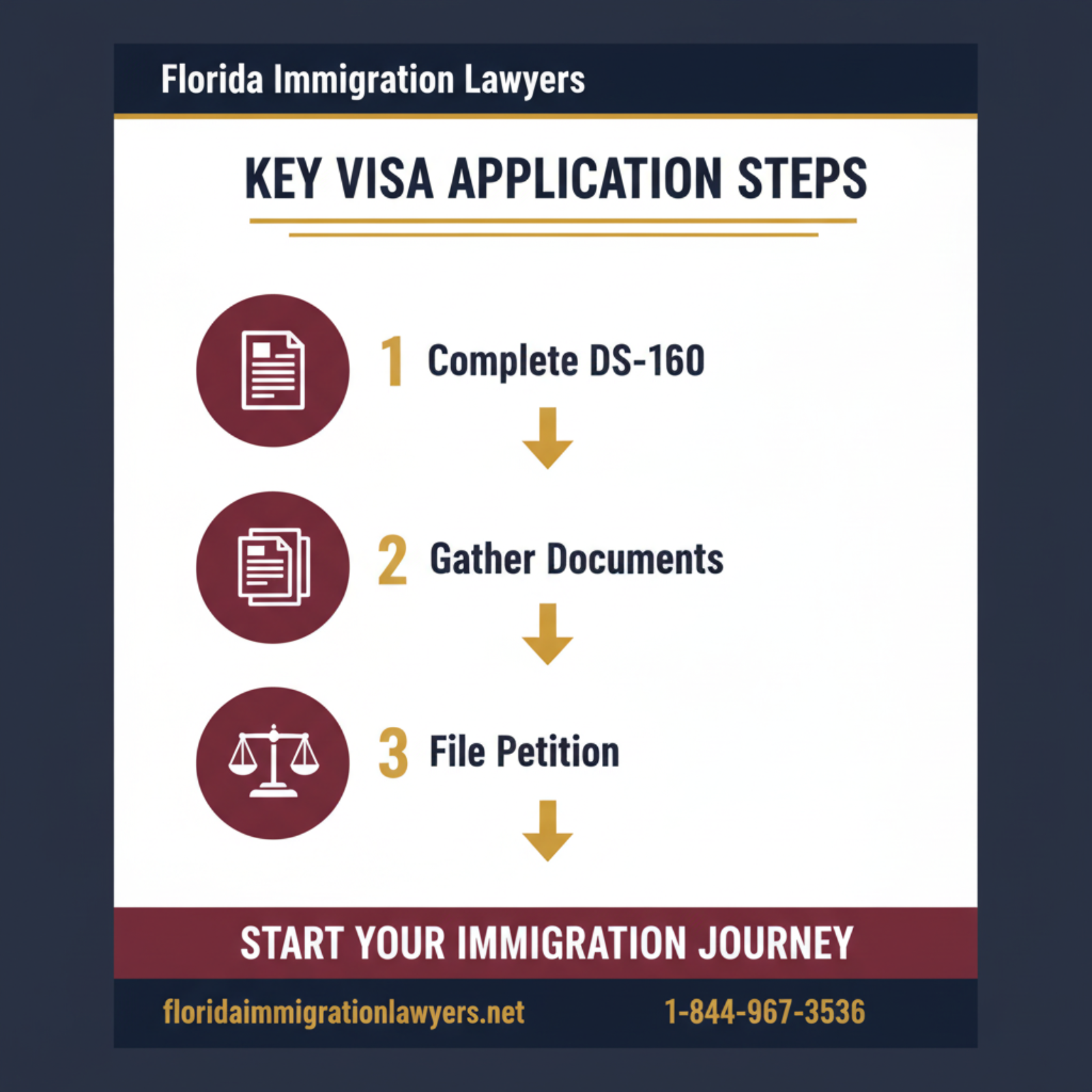
Step-by-Step Process Guide -
Attend the Visa Interview (Consular Processing or Adjustment of Status): Depending on whether you are applying from outside the U.S. (consular processing) or inside the U.S. (adjustment of status), your next step will be an interview. For consular processing, Japanese applicants typically attend an interview at a U.S. Embassy or Consulate in Japan. For adjustment of status in Florida, interviews are usually conducted at a local USCIS field office, such as the one in Orlando or Miami.
-
Receive Your Visa or Green Card: If your interview is successful and all requirements are met, your visa will be issued, or your adjustment of status will be approved. For consular processing, the visa stamp will be placed in your passport, allowing you to enter the U.S. For adjustment of status, your green card will be mailed to you. You then become a lawful permanent resident, or your temporary visa status is confirmed.
This process can be complex and requires careful attention to detail. Having a knowledgeable attorney from Florida Immigration Lawyers by your side can make a significant difference in the success and efficiency of your application.
Essential Documents for Your U.S. Immigration Application
Regardless of the specific U.S. visa or green card you are pursuing, a comprehensive collection of documents is always required. Organizing these materials meticulously is critical for a smooth application process. Missing or incorrect documents can lead to significant delays or even denials.
Here is a general checklist of documents commonly needed by Japanese nationals for U.S. immigration applications. Please note that your specific case may require additional or different items.
- Valid Japanese Passport: Must be valid for at least six months beyond your intended period of stay in the U.S.
- Birth Certificate: Official, certified copy.
- Marriage Certificate (if applicable): For spouses and family-based petitions.
- Divorce Decrees or Death Certificates (if applicable): For previous marriages.
- Police Certificates/Criminal Record Checks: From all countries where you have lived for a certain period since age 16.
- Medical Examination Report: Completed by a USCIS-approved civil surgeon in the U.S. or a panel physician abroad.
- Financial Support Documents: Such as tax returns, bank statements, affidavits of support (Form I-864), or employer's letters to prove you will not become a public charge.
- Educational Transcripts and Diplomas: For employment-based visas or student visas.
- Employment History/Letters of Experience: Detailing your work history and qualifications.
- Photographs: Passport-style photographs meeting U.S. Department of State specifications.
- Completed Application Forms: All relevant USCIS forms (e.g., I-485, DS-260, I-130, I-140, I-765, I-131) accurately filled out and signed.
- Visa Fees Receipts: Proof of payment for all required government filing fees.
- Any Previous U.S. Visa or Immigration Documents: Such as previous I-20s (for students), I-797 approval notices, or old green cards.
Ensure all foreign language documents are accompanied by certified English translations. Working with an experienced immigration lawyer ensures that your document packet is complete and correctly prepared.
Timeline and Processing Expectations for Japanese Applicants
Understanding the potential timeline for your U.S. immigration application is essential for planning. Processing times can vary significantly based on the visa category, the specific USCIS service center or field office (like those serving Homestead), and current caseloads. Japan immigration news often includes discussions about processing backlogs, which can impact all applicants.
Here's a general overview of what to expect:
- Non-Immigrant Visas: Many non-immigrant visas, such as F-1 student visas or B-2 tourist visas, can be processed relatively quickly, sometimes within weeks or a few months, especially if applying at the U.S. Embassy in Tokyo or Consulate in Osaka. E-1/E-2 and H-1B petitions processed by USCIS can take several months, though premium processing options are available for an additional fee to expedite some cases.
- Family-Based Green Cards: These often involve the longest waiting times, particularly for preference categories (e.g., adult children or siblings of U.S. citizens). Processing can range from one to several years, depending on the visa bulletin and demand. Immediate relatives (spouses, unmarried children under 21, and parents of U.S. citizens) generally have shorter waiting periods.
- Employment-Based Green Cards: These typically take several months to a few years. The EB-1 category often has shorter wait times, while EB-2 and EB-3 can have longer backlogs, depending on the country of chargeability and priority dates.
- Adjustment of Status in Florida: If you are applying for adjustment of status from within Florida, your application will be processed by USCIS. The specific field office (e.g., Miami, Orlando, Tampa) handling your case can influence processing times. You can check current processing times on the USCIS website.
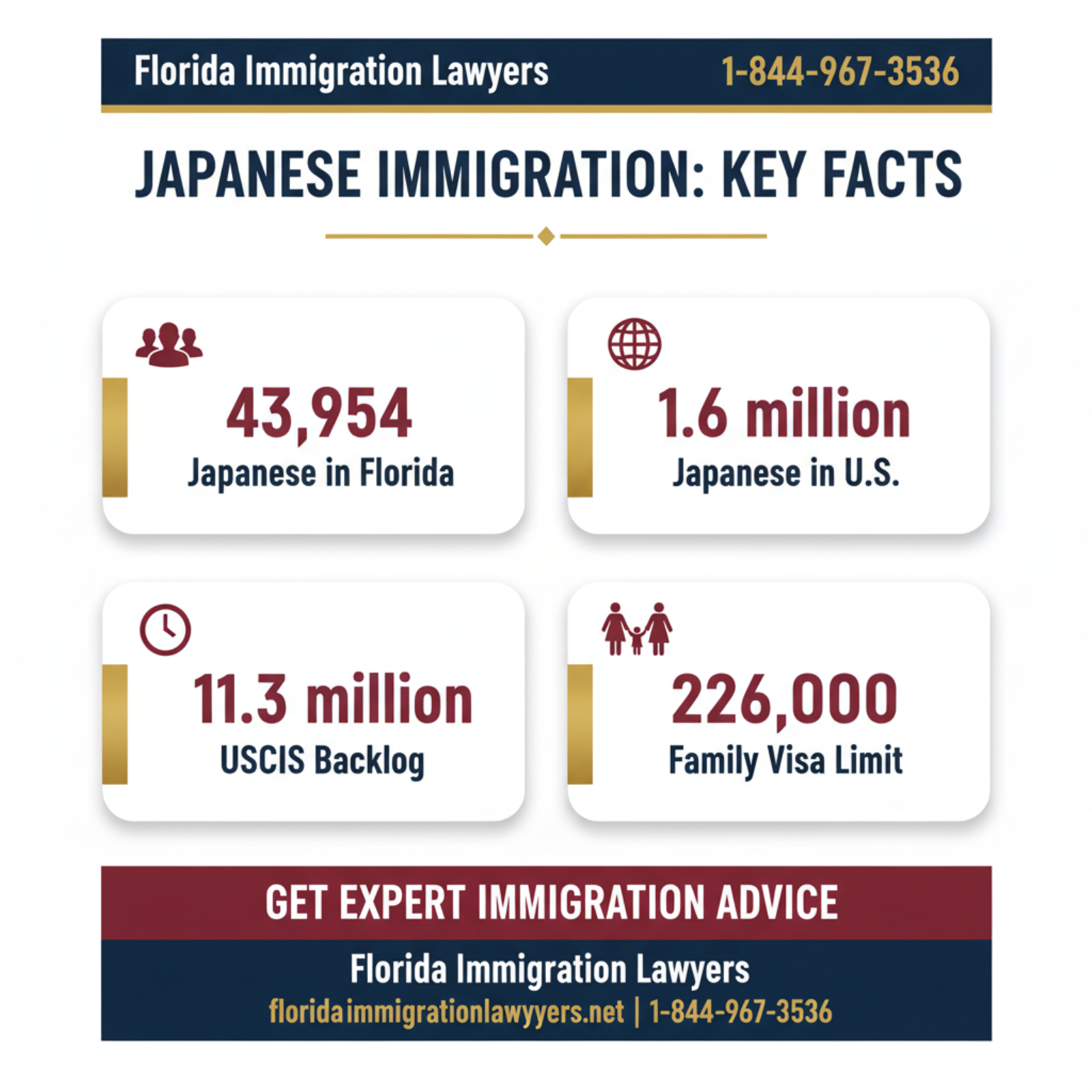
It is important to remember that these are general estimates, and individual cases may vary. Factors such as RFE (Request for Evidence) notices, interview backlogs, or complex legal issues can extend the processing timeline. Consulting with an immigration lawyer can provide a more accurate assessment for your specific situation.
Cost Factors and Fee Breakdown for U.S. Immigration
The financial aspect of U.S. immigration is a significant consideration for many Japanese nationals and their families in Florida. Costs can accumulate from various sources, including government filing fees, legal fees, and other related expenses. It is crucial to budget accordingly and be aware that government fees are subject to change by USCIS.
- Government Filing Fees: USCIS charges fees for nearly every form and petition submitted. These fees vary widely depending on the type of application (e.g., I-130, I-485, I-140, I-765, I-131). For example, filing an I-130 petition for a relative will have a different cost than filing for adjustment of status. Always refer to the official USCIS website for the most current fee schedule, as it can be updated periodically.
- Biometrics Fee: Most applications require a separate fee for biometrics services (fingerprints, photos, signature), which is typically a smaller, fixed amount.
- Medical Examination Fees: All immigrant visa applicants and adjustment of status applicants must undergo a medical examination by an approved civil surgeon or panel physician. The cost of this exam is paid directly to the doctor and can vary.
- Attorney Fees: Legal fees for immigration services vary based on the complexity of the case, the specific services required, and the experience of the firm. While legal fees are an investment, they provide invaluable expertise, reduce the risk of errors, and often streamline the process. Florida Immigration Lawyers offers transparent fee structures and free initial consultations to discuss your needs.
- Translation and Document Preparation Costs: If your documents are not in English, you will need certified translations, which incur additional costs. There may also be fees for obtaining official copies of birth certificates, marriage certificates, or police records.
- Travel Expenses: For consular processing, applicants must factor in travel costs to and from the U.S. Embassy or Consulate in Japan for their interview.
It is important to remember that these costs are separate and distinct. Our firm will provide a clear breakdown of legal fees, and we will guide you on the government fees applicable to your specific case, ensuring you are fully informed throughout the process.
Do not navigate this process alone. Contact Florida Immigration Lawyers today. Our experienced team is ready to provide the guidance and support you need for your U.S. immigration journey.
Common Mistakes to Avoid in Your U.S. Immigration Application
Even a small error in your U.S. immigration application can lead to significant delays, requests for additional evidence (RFEs), or even denial. For Japanese nationals and Floridians managing immigration processes, being aware of common pitfalls is crucial. Avoiding these mistakes can save you time, money, and stress.
-
Submitting Incomplete or Incorrect Forms: Many applications are delayed or rejected because forms are not fully completed, signed, or contain errors. Consequences: USCIS will return the application, issue an RFE, or deny it, causing significant delays and requiring re-filing.
-
Failing to Provide All Required Supporting Documents: Applicants often overlook specific documents or submit uncertified copies. Consequences: RFEs are common for missing documents, prolonging the process. A denial is possible if critical evidence is not provided.
-
Missing Deadlines or Filing Too Late: Immigration processes have strict deadlines for responses to RFEs, appeals, or certain applications. Consequences: Missing a deadline can result in the automatic denial of your case or the loss of eligibility for certain benefits, potentially leading to deportation defense issues.
-
Misrepresenting Information or Omitting Facts: Providing false information, even unintentionally, can have severe consequences, including findings of fraud or misrepresentation. Consequences: This can lead to permanent bars from the U.S. or criminal charges, seriously jeopardizing future immigration prospects.
-
Entering the U.S. on the Wrong Visa: For example, entering on a tourist visa with the intent to adjust status immediately without proper planning. Consequences: This can be interpreted as visa fraud, leading to denial of adjustment of status and future inadmissibility.
-
Not Updating Your Address with USCIS: If you move within Florida or to another state, you must inform USCIS of your new address within 10 days. Consequences: Missing important notices, RFEs, or interview appointments, which can lead to denial of your application without your knowledge.
-
Failing to Understand Public Charge Rules: Recent changes and ongoing interpretations of the public charge rule (INA § 212(a)(4)) can impact eligibility for green cards. Consequences: Applicants may be deemed inadmissible if they are likely to become a public charge, requiring careful preparation of financial documentation.
-
Ignoring Legal Advice or Attempting to Self-Represent in Complex Cases: While some simple cases might be manageable, complex situations like prior denials, criminal history, or unique family circumstances require expert guidance. Consequences: Increased risk of errors, missed opportunities, and ultimately, denial of the application, which may require costly appeals or new filings.
-
Not Preparing Adequately for Interviews: Appearing unprepared or providing inconsistent answers during a USCIS or consular interview. Consequences: Can lead to doubts about credibility, additional scrutiny, or denial of the application.
-
Falling Victim to Immigration Scams: Relying on unauthorized individuals (notaries, visa consultants) who promise quick results or charge exorbitant fees without proper legal credentials. Consequences: Financial loss, incorrect applications, and potentially severe legal repercussions.
By being proactive and seeking professional legal assistance from Florida Immigration Lawyers, you can significantly reduce the risk of these common mistakes and ensure your application has the best chance of success.
When to Call a Florida Immigration Lawyer
The U.S. immigration system is notoriously complex, and while some cases may seem straightforward, even minor missteps can have profound, long-lasting consequences. For Japanese nationals and Floridians navigating this system, knowing when to seek professional legal counsel is crucial. Florida Immigration Lawyers are here to help you understand your options and protect your rights.
You should consider contacting an immigration lawyer from Florida Immigration Lawyers if you encounter any of the following scenarios:
- Complex Case Background: If you have a criminal record, previous immigration violations, prior visa denials, or issues with unlawful presence, your case is inherently complex. These factors can trigger inadmissibility grounds under the Immigration and Nationality Act (INA), such as INA § 212(a), requiring waivers or specialized legal arguments.
- Deportation or Removal Proceedings: If you or a family member has received a Notice to Appear (NTA) in immigration court, immediate legal representation is vital. Our deportation defense attorneys can provide critical assistance.
- Visa Denials or RFEs: Receiving a Request for Evidence (RFE) or a denial notice from USCIS indicates a problem with your application. An attorney can help you understand why your application was challenged and develop a strong response or appeal.
- Navigating Specific Visa Categories: Applying for complex visas like E-1/E-2, H-1B, L-1, or employment-based green cards (EB-1, EB-2, EB-3) often requires detailed business plans, extensive documentation, and a thorough understanding of regulatory compliance (e.g., 8 CFR).
- Family Immigration Challenges: If you are sponsoring a family member and encounter issues with proving your relationship, financial support, or dealing with long backlogs, an attorney can help streamline the process and address complications.
- Seeking U.S. Citizenship/Naturalization: While seemingly straightforward, naturalization applications can be complicated by issues like continuous residence, good moral character, or past infractions. An attorney ensures you meet all eligibility criteria.
- Asylum Claims: If you are a Japanese national seeking asylum in the U.S. due to fear of persecution, this is a highly sensitive and complex area of law. Our asylum lawyers provide compassionate and expert representation.
- Any Doubts or Uncertainty: If you are unsure about which visa to apply for, what documents you need, or how to respond to a government inquiry, it is always best to consult with an expert. Proactive legal advice can prevent costly mistakes.
At Florida Immigration Lawyers, we are dedicated to providing personalized and effective legal strategies for our clients. We serve individuals and families throughout Florida, including Homestead, Miami, Orlando, and Tampa, offering comprehensive support for all U.S. immigration matters.
For more detailed information or to discuss your specific immigration needs, visit our main immigration practice area page or our contact page.
About Florida Immigration Lawyers
Florida Immigration Lawyers is a leading immigration law firm dedicated to serving individuals, families, and businesses across the entire state of Florida. With years of experience and a deep understanding of U.S. immigration law, our firm provides compassionate, effective, and results-driven legal representation.
Our comprehensive range of services includes family-based immigration, employment visas, deportation defense, asylum, naturalization, and complex litigation. We pride ourselves on offering personalized attention to each client, recognizing that every immigration journey is unique.
Why Choose Florida Immigration Lawyers?
- Expertise: Our attorneys possess extensive knowledge of the ever-changing immigration landscape.
- Client-Centered Approach: We prioritize your needs, communicate clearly, and fight tirelessly for your rights.
- Proven Track Record: We have a history of successfully helping clients achieve their immigration goals.
- Bilingual Services: Se Habla Español – our team is fluent in Spanish to serve Florida's diverse community.
- Accessibility: We are available 24/7 to address urgent concerns.
We offer free consultations to discuss your case and provide an honest assessment of your options. Let Florida Immigration Lawyers be your trusted partner in navigating the complexities of U.S. immigration law.
Contact us today at 1-844-967-3536 or visit our website at https://www.floridaimmigrationlawyers.net to schedule your free consultation. We are here to help you achieve your American dream.
Sources and References
- U.S. Citizenship and Immigration Services (USCIS)
- U.S. Department of State - Bureau of Consular Affairs
- Executive Office for Immigration Review (EOIR) - U.S. Department of Justice
- Consulate General of Japan in Miami
- 8 U.S.C. Chapter 12 - Immigration and Nationality Act (INA)
- INA § 212(a) - General Classes of Aliens Ineligible for Visas and Admission
- INA § 245 - Adjustment of Status of Nonimmigrant to That of Person Admitted for Permanent Residence
- 8 CFR (Code of Federal Regulations) - Aliens and Nationality
This article provides general legal information and is not intended as legal advice. Every case is unique, and outcomes depend on specific facts and circumstances. Contact an attorney for advice about your particular situation.
Are you ready to take the next step in your immigration journey? Don't leave your future to chance. Call Florida Immigration Lawyers now for a free, confidential consultation. Our experienced attorneys are available 24/7 to discuss your case and outline a clear path forward.
Call us today at 1-844-967-3536. Se Habla Español - Estamos aquí para ayudarle.
Need help with Immigration?
Our Florida immigration attorneys offer free consultations. Call today or schedule online.
Frequently Asked Questions
Florida Immigration Lawyers
Legal Team
Our experienced attorneys at Florida Immigration Lawyers have been serving clients across Florida for over 20 years. We specialize in immigration, personal injury, criminal defense, workers compensation, and family law.