Immigration Policy News Florida: What You Need to Know...
Stay current with the latest immigration policy news Florida for 2026. This comprehensive guide from Florida Immigration Lawyers breaks down key changes affecting immigrants in Orlando and throughout the state. Understand new state laws, federal enforcement interactions, and critical updates from USCIS. We cover essential documents, processing timelines, and cost factors, offering a clear roadmap through complex regulations. Learn about common mistakes to avoid and when to seek professional legal counsel to protect your rights and future. Our expert team is here to provide dedicated support and free consultations for all your immigration needs.

Florida's immigration policies are dynamic, often impacted by state legislation and federal enforcement. Recent immigration policy news Florida indicates a continued focus on enforcement and specific state-level measures. Understanding these changes is crucial for residents and newcomers. Navigating this complex landscape requires careful attention to detail and up-to-date information.
- State laws, like SB 1718, continue to influence daily life for immigrants.
- Federal enforcement actions by agencies like ICE and CBP are ongoing.
- USCIS updates can significantly affect application processes and timelines.
- Changes impact family reunification, employment, and access to services.
- Seeking experienced legal counsel is vital to protect your rights and future.
Immigration Policy News Florida: Essential Updates for 2026
Are you living in Florida, working in Orlando, or considering moving to the Sunshine State? If so, you understand that immigration policy news Florida can directly impact your life, your family, and your future. The legal landscape for immigrants in Florida is constantly evolving, with state-level legislative efforts often intersecting with federal immigration laws. Staying informed is not just helpful; it is absolutely essential.
At Florida Immigration Lawyers, we understand the anxieties and uncertainties that come with these changes. Our goal with this comprehensive guide is to demystify the latest immigration policy news Florida for 2026. We will provide you with clear, actionable insights into current laws, upcoming developments, and how these might affect you and your loved ones across Florida.
Navigating complex immigration laws requires expert guidance. Do not face these challenges alone. Call Florida Immigration Lawyers at 1-844-967-3536 for a free consultation today. Our dedicated team is ready to help you understand your options and protect your rights in this ever-changing environment.
Navigating Florida Immigration Policy News in 2026
Florida has long been a state with a significant and diverse immigrant population. From the bustling streets of Miami to the vibrant communities of Orlando, immigrants contribute immensely to our economy and culture. However, the state has also taken a proactive stance on immigration legislation, often leading to unique challenges for those living and working here.
In 2026, the discussion around immigration policy news Florida continues to center on balancing state interests with federal mandates. This often results in a complex web of regulations that can be difficult for individuals to navigate without legal assistance. Understanding the interplay between state laws, such as past legislative actions like Senate Bill 1718 (SB 1718) from 2023, and federal immigration frameworks is critical.
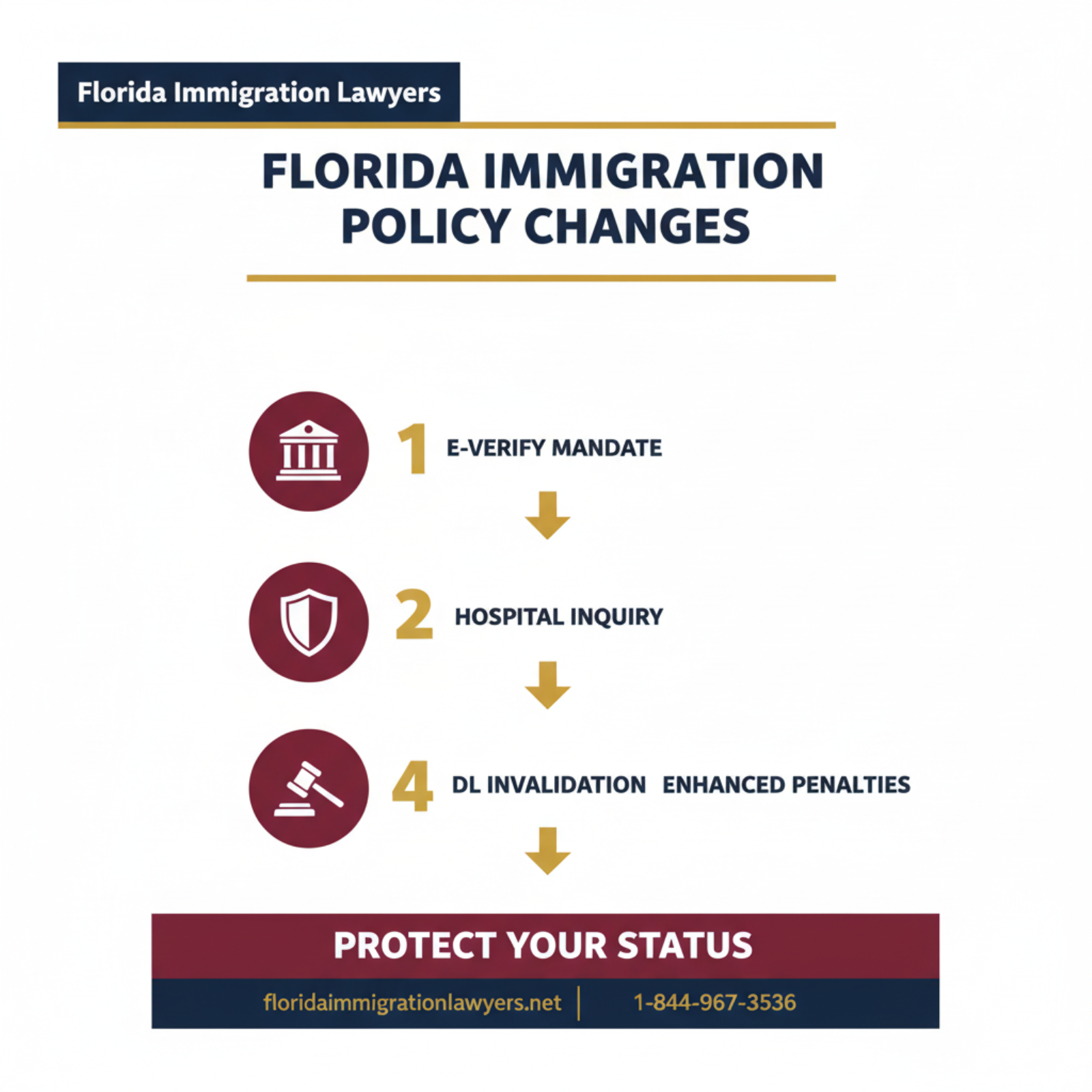
The Governor and state legislature frequently propose and enact measures that affect various aspects of immigrant life. These can range from employment verification requirements to transportation restrictions and social services eligibility. For families and businesses in Florida, particularly in areas like Orlando, Tampa, and Jacksonville, staying abreast of these developments is paramount to ensuring compliance and avoiding potential legal issues.
Our firm, Florida Immigration Lawyers, closely monitors these legislative and enforcement trends. We are committed to providing our clients with timely and accurate information to help them make informed decisions. We understand that every policy change can have profound personal implications, and we are here to offer the support you need.
Key Changes and Updates in Florida Immigration Laws
Understanding the specific legislative and administrative updates is crucial for anyone following immigration policy news Florida. The state's approach to immigration has seen significant shifts, impacting various facets of life for non-citizens. Here, we outline the key areas of change and provide a step-by-step guide to understanding them.
-
Monitoring Legislative Activity at the State Level: Florida's legislative session typically runs from January to March. During this period, numerous bills related to immigration may be introduced. These bills can cover topics like E-Verify expansion, restrictions on driver's licenses, or limitations on local government cooperation with federal immigration enforcement. We recommend closely following official state government websites for legislative updates. For instance, understanding the legislative process for bills related to 8 U.S.C. Chapter 12, the Immigration and Nationality Act (INA), is vital for recognizing how state policies might attempt to influence federal law.
-
Understanding Federal-State Interactions and Enforcement: While immigration law is primarily federal, state policies can significantly influence enforcement and daily life. Florida has historically engaged in various forms of cooperation with federal agencies, sometimes through agreements like 287(g) programs, which allow state and local law enforcement to perform certain immigration functions. These agreements, detailed on ice.gov, can increase immigration arrests and detentions within the state. It is important to remember that federal preemption generally dictates that federal law overrides state law in immigration matters, but state policies can create additional hurdles or enforcement priorities.
-
Impact on Employment and E-Verify Requirements: Florida has implemented robust E-Verify requirements for employers. These measures aim to ensure that businesses only hire individuals authorized to work in the United States. Employers found in violation can face significant penalties, including fines and license suspension. For employees, this means ensuring your work authorization documents are current and valid. Businesses in Orlando and across Florida must be vigilant in adhering to these regulations to avoid legal repercussions, often referencing 8 CFR § 274a.10 regarding employer sanctions.
-
Healthcare and Social Services Eligibility: State-level changes can affect eligibility for various social services and healthcare programs. Undocumented immigrants or those with certain immigration statuses may face restrictions on accessing state-funded benefits. These policies are often debated and can change, making it essential to consult with legal professionals or relevant state agencies about your specific eligibility. Such policies are typically outlined in state statutes and administrative codes.
-
Driver's Licenses and State Identification Restrictions: Florida has enacted laws restricting the types of identification that can be used for various purposes, including obtaining a driver's license. Certain immigration statuses may preclude individuals from obtaining standard state driver's licenses. These restrictions can significantly impact mobility and daily life for many immigrants in Florida. It's crucial to understand what forms of identification are accepted and what documentation is required by the Florida Department of Highway Safety and Motor Vehicles.
Staying informed about these changes is key, but interpreting them correctly and understanding their personal implications can be challenging. Our firm is dedicated to helping you navigate this complex legal terrain.
Essential Documents for Immigrants in Florida
In light of evolving immigration policy news Florida, possessing and correctly presenting your immigration documents is more critical than ever. Whether you are interacting with local authorities, seeking employment, or applying for federal benefits, having your papers in order can prevent unnecessary complications. Here is a checklist of essential documents every immigrant in Florida should consider having readily accessible.
- Proof of Lawful Presence: This includes your U.S. visa, Green Card (Form I-551), Employment Authorization Document (EAD or Form I-766), or Form I-94 Arrival/Departure Record. These documents verify your legal status to live and work in the United States.
- Valid Identification: A current passport from your country of origin, a state-issued ID card, or a U.S. driver's license (if eligible). Always carry a valid form of identification.
- Employment Authorization Documents (EAD): If you are authorized to work, your EAD card is proof of this. Employers in Florida are required to verify work authorization, often through the E-Verify system.
- Proof of Residence in Florida: Utility bills, lease agreements, or mail with your current Florida address can serve as proof of residency. This can be important for state-specific services or legal processes.
- Records for Family-Based Petitions: If you are sponsoring or being sponsored by a family member, keep copies of all submitted forms (e.g., I-130, I-485), birth certificates, marriage certificates, and financial affidavits (I-864).
- Documents for Asylum Claims: Asylum seekers should maintain all documents related to their asylum application (Form I-589), evidence supporting their claim, and any notices from USCIS or the Executive Office for Immigration Review (EOIR).
- Naturalization Records: If you are on the path to U.S. citizenship, keep copies of your Form N-400 application, test results, and any correspondence from USCIS regarding your naturalization process.
- Travel Documents: If you plan to travel internationally, ensure your passport is valid and you have any necessary re-entry permits (e.g., Form I-131 Advance Parole) or valid visas for your destination country. Consult travel.state.gov for international travel requirements.
It is always advisable to keep original documents in a safe place and carry copies. In any interaction with law enforcement or immigration officials, you have rights. Knowing your documents and your rights is your best defense against potential issues.
Understanding Timelines and Processing Expectations in Florida
The processing times for immigration applications can be a source of significant stress and uncertainty for many. While federal agencies like USCIS set national processing standards, local factors and state policies can sometimes indirectly influence these timelines. For individuals in Florida, understanding these expectations is a key part of navigating their immigration journey.
USCIS processing times for various forms (e.g., I-130, I-485, N-400) are regularly updated on their website, uscis.gov. These times can vary greatly depending on the form, the service center, and the specific field office handling the case. For example, the Orlando USCIS Field Office, like those in Miami and Tampa, handles interviews and local adjustments of status, and its workload can affect local processing. While state laws do not directly dictate federal processing times, increased state enforcement or policy changes could potentially lead to a higher volume of certain types of cases (e.g., asylum claims or deportation defense cases), which might strain federal resources in the region.
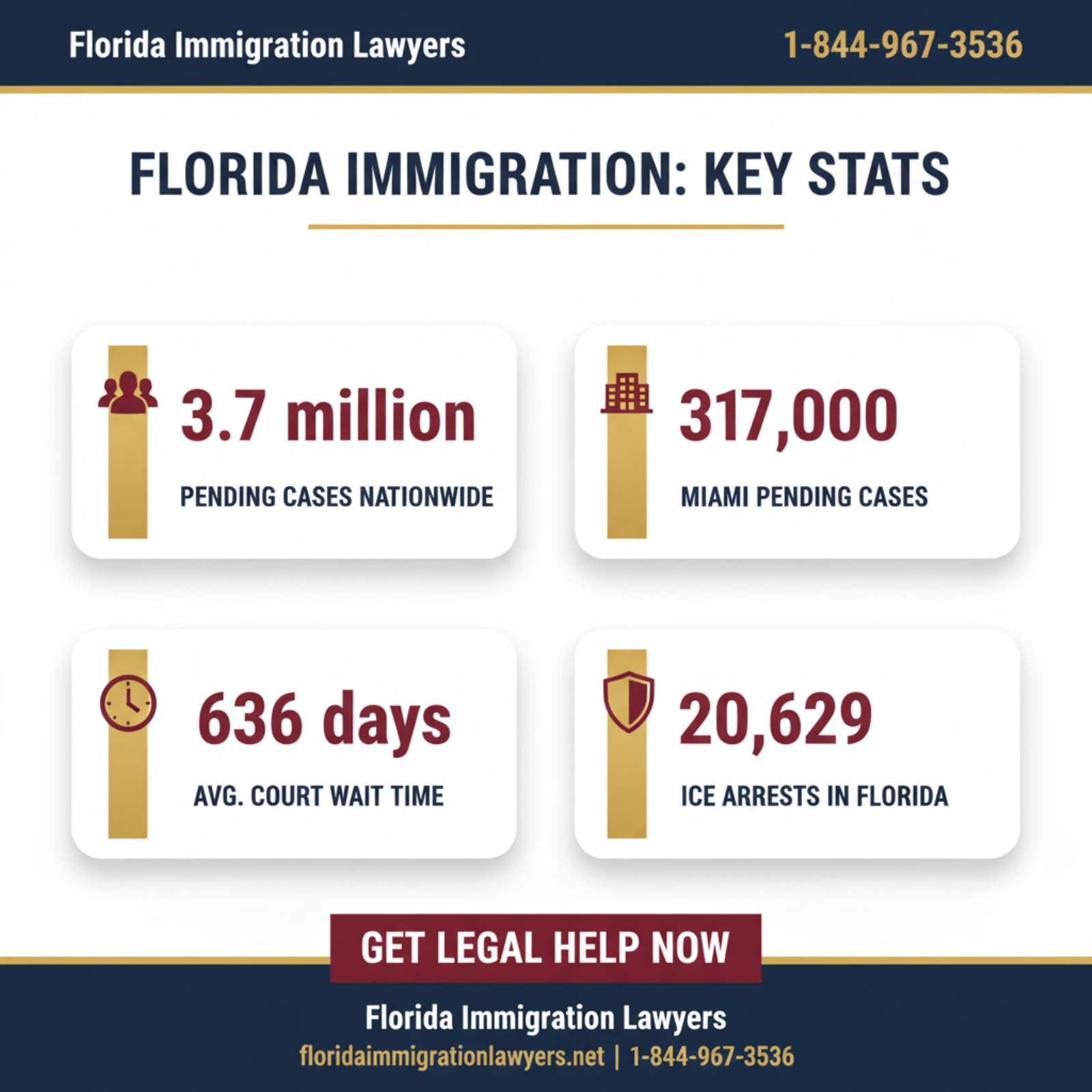
It is important to remember that reported processing times are averages and individual cases can take longer or shorter. Factors such as the completeness of your application, responses to Requests for Evidence (RFEs), and the complexity of your case all play a role. For cases before the Executive Office for Immigration Review (EOIR), such as deportation defense, the caseloads at Florida's Immigration Courts (e.g., Orlando, Miami) can also lead to lengthy waiting periods. These courts operate under rules detailed in 8 CFR Part 1003.
To mitigate delays, ensure all documentation is meticulously prepared and submitted accurately. Responding promptly and thoroughly to any requests from USCIS or EOIR is also critical. If your case falls outside the normal processing times, or if you receive a Notice of Intent to Deny (NOID), it is imperative to consult with an experienced immigration lawyer. They can help you inquire about your case status and address any potential issues.
Cost Factors and Legal Fees for Immigration Matters in Florida
The financial aspect of immigration processes is a significant consideration for many individuals and families in Florida. Understanding the various cost factors involved, including government filing fees and legal representation fees, is essential for proper planning. While we cannot provide specific filing fee amounts (as they are subject to change by USCIS), we can outline the general breakdown of expenses.
Government filing fees are mandatory for nearly all immigration applications and petitions submitted to USCIS. These fees vary widely depending on the type of form (e.g., I-130, I-485, N-400, I-765 for EADs) and can be substantial. In addition to filing fees, there may be costs for biometrics appointments, medical examinations required for adjustment of status, and translation services for foreign documents. These are all separate from legal fees and must be paid directly to the respective providers or agencies.
Legal fees for immigration services from an **Orlando immigration lawyer** or any lawyer in Florida typically cover the attorney's time, expertise, and resources in preparing and submitting your case. These fees can vary based on the complexity of your case, the type of immigration benefit sought, and the attorney's experience. For instance, a simple visa renewal may have a different fee structure than a complex deportation defense case or a business immigration petition.
At Florida Immigration Lawyers, we believe in transparent fee structures. During your initial consultation, we will discuss the estimated costs for your specific case, including our legal fees and anticipated government fees. While legal representation is an investment, it can significantly increase your chances of success, help you avoid costly mistakes, and provide peace of mind. Our attorneys are skilled in navigating the intricacies of immigration policy news Florida and federal law, offering invaluable guidance throughout your journey.
Do not navigate this process alone. Contact Florida Immigration Lawyers today to schedule a consultation and discuss your immigration needs. We are here to provide the expert legal support you deserve.
Common Mistakes to Avoid in Florida Immigration Cases
Navigating the complex landscape of immigration law in Florida requires careful attention to detail. Making even small errors can lead to significant delays, denials, or even severe legal consequences. Here are some common mistakes to avoid, especially with ongoing immigration policy news Florida.
-
Ignoring New State Laws: Florida's legislative actions, such as provisions similar to SB 1718, can have direct impacts on daily life, employment, and transportation. Failing to understand and comply with these state-level mandates can lead to fines, penalties, or even criminal charges, despite federal immigration status.
-
Providing Inaccurate or Inconsistent Information: Any false statements or inconsistencies on immigration forms or during interviews can lead to accusations of misrepresentation, potentially resulting in denial of benefits, bars to future relief, or even deportation proceedings under INA 212(a)(6)(C)(i).
-
Missing Deadlines: Immigration processes are notoriously time-sensitive. Missing a deadline for filing a form, responding to an RFE, or appearing in court can result in the automatic denial of your application or an order of removal without a hearing.
-
Traveling Without Proper Documents: International travel without a valid passport, visa, or necessary re-entry permits (like Advance Parole) can prevent you from returning to the U.S. or jeopardize your pending immigration application.
-
Failing to Update Address with USCIS/ICE: If you move, you are legally required to notify USCIS (Form AR-11) and, if applicable, ICE or the immigration court within 10 days. Failure to do so can result in missed notices, court dates, and potentially severe consequences, including removal orders.
-
Not Seeking Legal Advice Early: Many individuals try to navigate immigration processes alone, only seeking legal help when a problem arises. Early consultation with an immigration lawyer can help identify potential issues, prepare a strong case, and avoid mistakes from the outset.
-
Assuming Federal Law Always Supersedes State Law: While federal law governs immigration, state laws in Florida can create parallel enforcement mechanisms or impose state-level penalties. Do not assume your federal immigration status automatically protects you from state-specific regulations or enforcement actions.
-
Engaging in Unauthorized Employment: Working without proper authorization can lead to severe penalties, including bars to adjusting status in the future and potential deportation. Always ensure you have a valid EAD before beginning any employment.
-
Overlooking Criminal History Consequences: Any past arrests, charges, or convictions, even minor ones, can have significant immigration consequences, potentially rendering you inadmissible or deportable. Full disclosure to your attorney is crucial for proper assessment.
-
Not Preparing for Interviews Thoroughly: Whether it's a USCIS interview for a Green Card or an asylum interview, inadequate preparation can lead to misunderstandings, inconsistencies, or a failure to present your case effectively, potentially resulting in a denial.
When to Call a Florida Immigration Lawyer
The complexities of immigration policy news Florida, combined with the intricacies of federal immigration law, mean that legal challenges can arise at any stage of your immigration journey. Knowing when to seek professional legal assistance can be the difference between success and significant setbacks. Florida Immigration Lawyers are here to provide the expert guidance you need.
You should strongly consider contacting an attorney if you are facing any of the following scenarios or warning signs:
- Deportation or Removal Proceedings: Receiving a Notice to Appear (NTA) from ICE is a serious matter that requires immediate legal intervention. Our deportation defense attorneys can represent you in immigration court.
- Complex Visa or Green Card Applications: If your case involves a criminal history, previous immigration violations, or complex family situations, an attorney can help navigate potential hurdles and prepare a robust application. This includes family-based immigration petitions.
- Asylum Claims: Asylum law is highly specialized and requires strong evidentiary support. Our asylum lawyers can help you build and present a compelling case to USCIS or an immigration judge.
- Business Immigration Challenges: For employers and foreign nationals seeking work visas or permanent residency through employment, the process can be intricate. Our business immigration attorneys can assist with H-1B visas, investor visas, and other employment-based petitions.
- Citizenship and Naturalization Issues: If you encounter issues during your naturalization application, such as questions about good moral character or continuous residence, legal counsel is invaluable.
- Denied Applications or RFEs/NOIDs: If USCIS sends a Request for Evidence (RFE), a Notice of Intent to Deny (NOID), or denies your application, an attorney can help you respond effectively or appeal the decision.
- Any Interaction with Immigration Enforcement: If you or a loved one is detained by ICE or questioned by immigration officials, contact an attorney immediately. Knowing your rights is crucial.
At Florida Immigration Lawyers, we offer comprehensive services across all areas of immigration law. Our experienced attorneys are well-versed in both federal and state regulations, including the latest immigration policy news Florida. We serve clients throughout Florida, including Orlando, Miami, Tampa, and Jacksonville. Do not hesitate to contact us for personalized legal advice tailored to your unique situation.
About Florida Immigration Lawyers
Florida Immigration Lawyers is a leading immigration law firm dedicated to serving individuals, families, and businesses across the entire state of Florida. With a deep understanding of both federal immigration statutes and the unique landscape of immigration policy news Florida, our firm is committed to providing exceptional legal representation and compassionate guidance.
Our team of experienced immigration attorneys offers a wide range of services, including family-based immigration, employment visas, deportation defense, asylum, naturalization, and complex litigation. We pride ourselves on our client-focused approach, ensuring that each client receives personalized attention and strategic advice tailored to their specific needs and goals.
Choosing Florida Immigration Lawyers means partnering with a team that is not only knowledgeable but also empathetic to your journey. We understand the stakes involved in immigration matters and work tirelessly to achieve the best possible outcomes for our clients. Our firm is available 24/7, offering free consultations to help you understand your options without financial burden.
For trusted legal support in any immigration matter, from routine applications to challenging court cases, rely on Florida Immigration Lawyers. Visit our website at https://www.floridaimmigrationlawyers.net or call us directly at 1-844-967-3536. We are here to help you navigate your path to a secure future in Florida.
Sources and References
- U.S. Citizenship and Immigration Services (USCIS)
- Executive Office for Immigration Review (EOIR)
- U.S. Department of State - Bureau of Consular Affairs
- 8 U.S.C. Chapter 12 - Immigration and Nationality Act (INA)
- 8 U.S.C. § 1229a - Removal proceedings
- 8 CFR Part 1003 - Executive Office for Immigration Review
- 8 CFR § 274a.10 - Penalties for unlawful employment
- INA Section 212(a)(6)(C)(i) - Misrepresentation
- Florida Senate Bill 1718 (2023 legislative session) - Referenced for context on state-level actions.
This article provides general legal information and is not intended as legal advice. Every case is unique, and outcomes depend on specific facts and circumstances. Contact an attorney for advice about your particular situation.
The landscape of immigration policy news Florida is constantly shifting, and its impact on your life can be profound. Do not face these changes without expert legal counsel. Florida Immigration Lawyers is dedicated to providing the clarity and representation you need to protect your rights and achieve your immigration goals.
Call us today for a free, confidential consultation at 1-844-967-3536. Se Habla Español - Estamos aquí para ayudarle.
Do Not Navigate This Process Alone
Our experienced immigration attorneys are ready to fight for you. Get a free, confidential consultation today.
Se Habla Español
Frequently Asked Questions
Florida Immigration Lawyers
Immigration Attorney | Founder, Vasquez Law Firm
U.S. Air Force veteran and immigration attorney with thousands of cases resolved. J.D., NCCU School of Law. AILA member. Admitted to the 4th, 5th, and 11th Circuit Courts.
Available 24/7 - Free Evaluations
Related Legal Services
Our Florida immigration attorneys can help you with asylum protection, deportation defense and citizenship and naturalization. Call today at 1-844-967-3536 for a free consultation.
Related Links
Related Topics
Free Legal Consultation
Discuss your case with our experienced attorneys. We're available 24/7.
Se Habla Español - Estamos aquí para ayudarle.
Related Articles
Solutions for Immigration Backlog in Florida | VLF Florida
Facing immigration backlog in Florida can be daunting. Discover strategies to manage USCIS delays and learn when to seek legal assistance. Call Florida Immigration Lawyers for expert guidance.
Expungement's Impact on Immigration in Florida | VLF Florida
Explore the impact of expungement on immigration status in Florida. Learn about eligibility, process steps, and legal considerations. Contact Florida Immigration Lawyers for a free consultation.
K-3 Spouse Visa Timeline in Florida | FL Immigration Lawyers
Learn about the K-3 spouse visa process in Florida to bring your loved ones closer. Find detailed steps, timelines, and expert advice. Contact us for a free consultation!
Advance Parole Travel Document in Florida | VLF Florida
Discover how Advance Parole helps Florida residents with pending adjustments travel safely. Learn about eligibility, application steps, and common pitfalls. Contact Florida Immigration Lawyers for guidance.