Immigration Policy News Florida 2026: What You Need to Know
Navigating the complex world of immigration can be challenging, especially with evolving policies. This article provides crucial insights into the latest immigration policy news affecting Florida in 2026, offering guidance for residents in Pembroke Pines and across the state. We cover key legislative updates, processing expectations, and common pitfalls, helping you understand your rights and options. Discover how these changes might impact you and learn why expert legal assistance from Florida Immigration Lawyers is invaluable for your case.
Staying informed about immigration policy news Florida is critical for residents and aspiring immigrants. In 2026, Florida continues to see dynamic shifts in immigration laws and enforcement, impacting various pathways to legal status and protection. Understanding these updates is essential for anyone living in or considering moving to areas like Pembroke Pines, as state-level policies often interact with federal guidelines, creating a complex legal environment.
- Florida's immigration landscape is constantly evolving, requiring vigilance.
- State policies can significantly influence federal immigration processes.
- Timely legal advice is crucial to navigate new regulations effectively.
- Resources like USCIS and expert legal counsel are vital for compliance, especially with the specific requirements of USCIS Florida offices.
Immigration Policy News Florida 2026: What You Need to Know
Are you concerned about the latest immigration policy news Florida in 2026? The ever-changing landscape of immigration law can be daunting, leaving many individuals and families in Pembroke Pines and across Florida feeling uncertain about their future. Keeping up with legislative updates and enforcement priorities is not just important; it is essential for protecting your rights and pursuing your immigration goals.
This comprehensive guide from Florida Immigration Lawyers aims to demystify the recent developments in Florida's immigration policies for 2026. We will explore key legislative changes, their potential impact on various immigration pathways, and provide actionable advice to help you navigate this complex environment. Our goal is to empower you with accurate, up-to-date information, ensuring you understand how these policies might affect your life or the lives of your loved ones.
Understanding these shifts is particularly vital in a state as diverse as Florida, which is home to a significant immigrant population. From family-based petitions to business immigration and asylum claims, every aspect can be touched by new regulations. For personalized guidance and to discuss your specific situation, please do not hesitate to Call Florida Immigration Lawyers at 1-844-967-3536 for a free consultation. Our experienced team is here to help you every step of the way.
Overview of Florida's Evolving Immigration Landscape
Florida has always been a focal point for immigration discussions, and 2026 is no exception. The state's unique position and demographic makeup often lead to specific legislative actions that complement or sometimes clash with federal immigration statutes. Recent immigration policy news Florida has highlighted a continued focus on state-level enforcement and specific measures aimed at managing unauthorized immigration.
These state-level policies can create additional layers of complexity for immigrants, even those pursuing legal pathways. For instance, new laws might affect employment verification, public services, or even local law enforcement interactions. It is crucial for residents of Pembroke Pines and other Florida communities to be aware of these local nuances in addition to federal requirements.
Recent Legislative Updates Affecting Florida Residents
In 2026, several legislative discussions and potential enactments continue to shape Florida's immigration framework. These may include enhanced penalties for certain immigration-related offenses, changes in how local agencies cooperate with federal immigration authorities, and adjustments to state-funded programs for immigrants. Such measures underscore the state's proactive stance on immigration matters.
For individuals and families, staying informed about these changes is paramount. What might seem like a minor amendment could have significant implications for your eligibility for certain benefits or your overall legal standing. The interplay between state laws and federal statutes, such as the Immigration and Nationality Act (INA), found in 8 U.S.C. Chapter 12, often requires expert interpretation.
Impact on Different Immigration Pathways
The impact of Florida's evolving policies extends across various immigration pathways. For those pursuing family-based immigration, new state requirements could potentially add to the complexity of the process, even though federal law primarily governs these applications. Similarly, individuals seeking business immigration visas might find new state-level compliance hurdles.
Even for those seeking protection through asylum or facing deportation defense, Florida's enforcement environment can influence case strategies and outcomes. Understanding these intricate connections is where the expertise of a dedicated Pembroke Pines immigration attorney becomes invaluable. We can help you navigate these specific challenges, including those related to deportation defense Florida.
Navigating Recent Immigration Policy Changes in Florida (Step-by-Step)
Understanding how to respond to the latest immigration policy news Florida requires a structured approach. While every case is unique, a general framework can help you prepare for potential changes and ensure compliance. This step-by-step guide offers a practical overview for those in Florida.
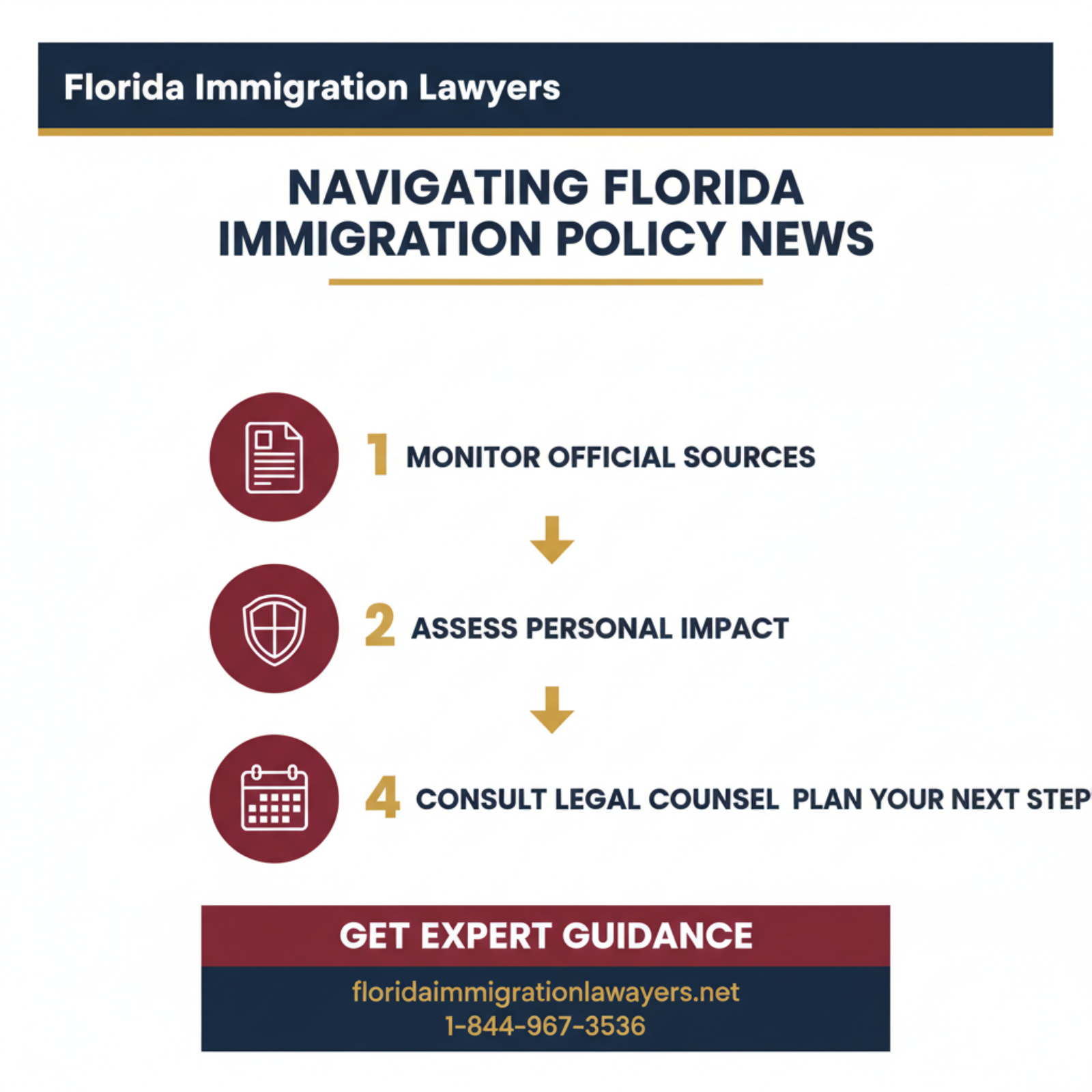
- Stay Informed Through Reliable Sources: Regularly check official government websites like U.S. Citizenship and Immigration Services (USCIS) and the Executive Office for Immigration Review (EOIR). Also, consult reputable legal news outlets and your immigration attorney for updates specific to Florida. State legislative websites can also provide insights into new bills.
- Assess Your Current Immigration Status: Understand your specific legal status in the U.S. and any pending applications. This includes knowing your visa type, expiration dates, and any conditions attached to your stay. This foundational knowledge is crucial before evaluating the impact of new policies.
- Identify Relevant Policy Changes: Determine which specific Florida immigration policies or federal changes are most pertinent to your situation. For example, if you are an employer, new E-Verify mandates might directly affect your hiring practices. If you are an individual, changes in state identification laws could be relevant.
- Gather and Organize Your Documents: Proactively collect all essential immigration and personal identification documents. This includes passports, visas, I-94 records, birth certificates, marriage certificates, and any USCIS notices. Having these readily available will save time and stress later.
- Consult with an Experienced Immigration Attorney: This is perhaps the most critical step. An attorney specializing in Florida immigration laws can provide a personalized assessment of how new policies affect you. They can explain your options, potential risks, and help you formulate a strategy.
- Update Your Applications or Compliance Strategies: Based on legal advice, you may need to adjust pending applications, gather additional documentation, or modify your daily practices to comply with new regulations. For instance, if you are a lawful permanent resident applying for citizenship, ensure you meet all current residency requirements.
- Prepare for Potential Enforcement Changes: Understand that new policies may lead to increased enforcement activities. Knowing your rights, such as the right to remain silent or to speak with an attorney, is vital during any interaction with law enforcement or immigration officials like ICE (Immigration and Customs Enforcement) in Florida.
Essential Documents for Immigration Processes in Florida
Regardless of the latest immigration policy news Florida, having your documents in order is always paramount. A well-organized set of records can significantly streamline any immigration process, from visa applications to general immigration adjustments. Here is a general checklist of documents typically required:
- Valid Passport and Visa (if applicable)
- Birth Certificates (for yourself and family members, if applicable)
- Marriage Certificate (if applicable)
- Divorce Decrees or Death Certificates (if applicable)
- Form I-94, Arrival/Departure Record
- Proof of Legal Entry into the U.S.
- USCIS Receipt Notices and Approval Notices
- Employment Authorization Documents (EAD)
- Social Security Card
- Driver's License or State ID (Florida)
- Financial Records (bank statements, tax returns, pay stubs)
- Medical Examination Records and Vaccinations
- Police Clearance Certificates from all countries resided in
- Affidavits of Support (Form I-864) and supporting documents
- Education Records (diplomas, transcripts)
- Proof of Relationship (photos, correspondence, joint documents)
Ensuring Document Authenticity and Translation
It is not enough to simply collect documents; their authenticity and proper translation are equally important. All foreign-language documents must be accompanied by a certified English translation. This translation must be signed by the translator, attesting to its accuracy and their competency to translate. USCIS, which has a field office in Oakland Park near Pembroke Pines, is very strict about these requirements. Navigating these requirements effectively is where a USCIS Florida expert can be crucial.
Any discrepancies or missing documents can lead to delays, requests for evidence (RFEs), or even denials. Working with a knowledgeable Florida immigration lawyer ensures that your documentation is complete, correct, and presented in the format required by federal and state authorities.
Understanding Immigration Timelines and Costs in Florida
The processing times for immigration applications can vary significantly, influenced by federal backlogs, policy changes, and the specific type of application. Similarly, costs involve government filing fees and potential legal fees. Keeping track of immigration policy news Florida often includes updates on these factors.
Processing Expectations for USCIS Florida Applications in Florida
USCIS processing times are regularly updated on their website, but they are estimates and can fluctuate. For residents in Pembroke Pines, applications are typically processed through the USCIS Florida field office in Oakland Park or the National Benefits Center. Factors influencing timelines include:
- Application Type: Family petitions generally have different timelines than employment-based petitions or asylum claims.
- Service Center Workload: Different USCIS service centers handle various application types, each with its own backlog.
- Completeness of Application: Incomplete applications or those requiring additional evidence will face significant delays.
- Policy Shifts: New policies, such as increased vetting procedures, can extend processing times across the board.
While specific times cannot be guaranteed, a general understanding helps manage expectations. For example, some green card applications can take 1-3 years, while naturalization might take 6-18 months after filing. Monitoring the USCIS processing times page is essential. See USCIS Processing Times for current estimates.
Cost Factors and Fee Breakdown
Immigration processes involve various costs, which generally fall into two categories: government filing fees and legal fees. Government fees are set by USCIS and other agencies and are subject to change. It is crucial to check the most current fee schedule on the USCIS website. These fees can range from hundreds to thousands of dollars, depending on the forms filed.
Legal fees for an experienced Pembroke Pines immigration attorney vary based on the complexity of the case, the services required, and the attorney's experience. While legal fees are an investment, they often prevent costly mistakes, delays, or even denials that can arise from navigating complex laws alone. Florida Immigration Lawyers offers transparent fee structures and free consultations to discuss your specific needs.
Do not navigate this process alone. Contact Florida Immigration Lawyers today to get expert guidance on your immigration journey. Our team is ready to assist you.
Common Mistakes to Avoid in Florida Immigration Cases
Navigating Florida immigration laws can be tricky, and even small errors can have significant consequences. Avoiding these common mistakes can save you time, money, and potentially your immigration status:
- Failing to Disclose Complete Information: Withholding or providing inaccurate information on immigration forms, even unintentionally, can lead to accusations of misrepresentation or fraud. This can result in denials, bars to future immigration benefits, and even deportation proceedings in Florida.
- Missing Deadlines: Immigration processes are strict about deadlines. Missing a filing deadline for an application, a response to a Request for Evidence (RFE), or an appearance in immigration court can lead to automatic denials or removal orders.
- Ignoring Small Traffic Violations or Minor Offenses: While seemingly minor, certain traffic violations or misdemeanor offenses can have unexpected immigration consequences, especially if they involve moral turpitude or multiple convictions. Always consult an attorney about any interaction with law enforcement.
- Traveling Without Proper Authorization: Leaving the U.S. while an application like an Adjustment of Status is pending, or without advance parole, can be considered an abandonment of your application and may prevent you from re-entering the country.
- Not Keeping Copies of All Submitted Documents: Always retain copies of every form, document, and piece of correspondence you send to USCIS or any other immigration agency. This serves as vital proof if issues arise later.
- Relying on Unofficial Advice: Seeking advice from friends, family, or "notarios" who are not licensed attorneys can be detrimental. Immigration law is highly specialized, and incorrect advice can lead to severe legal problems.
- Incorrectly Filling Out Forms: Immigration forms are complex and require precise information. Simple errors, such as incorrect dates, names, or unchecked boxes, can lead to RFEs and significant delays.
- Failing to Update Your Address with USCIS: If you move, you are legally required to notify USCIS of your new address within 10 days using Form AR-11. Failure to do so can result in missed notices, denied applications, or even removal proceedings.
- Assuming "Old" Policies Still Apply: Immigration policy news Florida changes frequently. What was true last year may not be true today. Always verify current laws and regulations, especially those related to state-level enforcement.
- Not Preparing Adequately for Interviews: USCIS interviews are a critical part of many immigration processes. Failing to review your application, understand potential questions, or bring all required documents can jeopardize your case.
- Overlooking Eligibility for Waivers: Many grounds of inadmissibility can be overcome with a waiver. However, individuals often do not realize they are eligible or fail to apply for one, missing a crucial opportunity to legalize their status.
- Ignoring Notices from Immigration Authorities: Never ignore letters or calls from USCIS, ICE, or immigration courts. These communications are time-sensitive and often require immediate action. Ignoring them can lead to serious adverse consequences.
Frequently Asked Questions About Florida Immigration Policy
In light of ongoing immigration policy news Florida, many common questions arise. Here we address some of the most pressing concerns for individuals in Pembroke Pines and across the state.
What is Florida's new immigration law?
Florida's immigration laws are subject to frequent updates. While specific details can change annually, recent legislative efforts in Florida have generally focused on enhanced state enforcement, E-Verify requirements for employers, and increased penalties for certain immigration-related offenses. For the most current and specific information, it is essential to consult official state legislative resources or an attorney, as laws like SB 1718 (2023) continue to evolve or face legal challenges. These laws often interact with federal statutes outlined in 8 CFR (Code of Federal Regulations).
What's happening with immigration in Florida?
In 2026, Florida continues to be a state with significant immigration activity and policy discussions. The state has been active in implementing its own immigration-related legislation, often emphasizing border security and enforcement. This includes debates over local law enforcement's role in federal immigration matters and the provision of services to undocumented individuals. These state-level actions frequently make headlines and can create a challenging environment for immigrants, underscoring the need for expert deportation defense Florida advice.
What is ICE legally allowed to do?
U.S. Immigration and Customs Enforcement (ICE) is a federal agency responsible for enforcing immigration laws within the U.S. They are legally allowed to arrest individuals believed to be in violation of immigration laws, conduct investigations, and initiate deportation proceedings. However, ICE's authority is not limitless. Individuals have constitutional rights, including the right to remain silent, the right to an attorney, and protections against unreasonable searches and seizures. Understanding these rights is crucial during any encounter with ICE. You can learn more about ICE's mission and operations on ICE.gov.
Is the new immigration bill passed?
The status of "new immigration bills" in Florida and at the federal level is constantly in flux. Legislative processes involve bills being introduced, debated, amended, and voted upon, often over extended periods. What might be a "new bill" one day could be stalled or significantly altered the next. For precise information on whether a specific bill has passed into law, it is imperative to check official government legislative websites (both state and federal) or consult with a qualified immigration attorney who tracks these developments closely. Relying on outdated information can have serious consequences.
When to Seek Legal Counsel for Florida Immigration Matters
The complexities of Florida immigration laws and the frequent changes in immigration policy news Florida make professional legal counsel indispensable. While some minor applications might seem straightforward, the risks of proceeding without an attorney are often too high. Prompt legal advice can prevent costly errors and ensure your rights are protected.
Specific Scenarios Requiring Legal Help
- Facing Deportation or Removal Proceedings: If you receive a Notice to Appear (NTA) in immigration court, immediate legal representation is critical. A deportation defense attorney in Florida can build a strong case and explore all available relief.
- Complex Visa or Green Card Applications: Cases involving criminal history, previous immigration violations, or complex family situations require the expertise of an immigration lawyer.
- Asylum or Refugee Claims: These cases are highly sensitive and require meticulous preparation and presentation of evidence. An asylum attorney can guide you through the process, which is often overseen by the Executive Office for Immigration Review (EOIR).
- Denied Applications or Appeals: If your application has been denied, or you need to file an appeal, an attorney can assess the reasons for denial and strategize the best course of action.
- Employer Compliance Issues: Businesses in Florida facing I-9 audits or E-Verify compliance challenges benefit greatly from legal advice to avoid penalties.
- Applying for Waivers: Many grounds of inadmissibility can be waived, but the process is intricate and requires a strong legal argument.
Warning Signs and Red Flags
Be wary if you encounter any of these situations, as they are strong indicators that you need legal assistance:
- You do not understand the questions on an immigration form or the requirements for an application.
- You have been arrested or charged with any crime, regardless of how minor it seems.
- You receive any official notice from USCIS, ICE, or an immigration court that you do not fully comprehend.
- Your case involves any previous denials, deportations, or periods of unlawful presence.
- Someone offers to help you with immigration forms for a fee but is not a licensed attorney (a "notario" scam).
Florida Immigration Lawyers stands ready to assist you. Our team of dedicated attorneys specializes in all aspects of immigration law, serving Pembroke Pines and the entire state of Florida. Finding the right Pembroke Pines immigration attorney is crucial for local residents. We understand the intricacies of federal and state policies and are committed to providing compassionate, effective legal representation.
About Florida Immigration Lawyers
Florida Immigration Lawyers is a leading law firm dedicated to providing exceptional immigration legal services across the entire state of Florida. With years of experience and a deep understanding of complex U.S. immigration laws, our firm is committed to helping individuals, families, and businesses achieve their immigration goals.
We offer a broad range of services, including family-based immigration, employment visas, deportation defense, asylum, citizenship, and more. Our approach is client-centered, ensuring that each case receives personalized attention and strategic guidance tailored to its unique circumstances. We pride ourselves on our professionalism, integrity, and unwavering dedication to our clients' success.
Why choose Florida Immigration Lawyers? We combine extensive legal knowledge with a compassionate approach. Our attorneys are not just legal experts; they are advocates who understand the profound impact immigration matters have on people's lives. We are available 24/7 to address your urgent concerns and offer free consultations to help you understand your options without financial obligation. Our firm serves all of Florida, including communities like Pembroke Pines, Miami, Orlando, and Tampa, ensuring that expert legal help is always within reach.
For trusted legal representation in any immigration matter, contact us today. Call Florida Immigration Lawyers at 1-844-967-3536 or visit our website at https://www.floridaimmigrationlawyers.net.
Sources and References
- U.S. Citizenship and Immigration Services (USCIS)
- Executive Office for Immigration Review (EOIR)
- U.S. Immigration and Customs Enforcement (ICE)
- USCIS Processing Times
- 8 U.S.C. Chapter 12 - Immigration and Nationality Act (INA)
- 8 CFR - Code of Federal Regulations, Title 8 (Aliens and Nationality)
- USCIS Policy Manual
This article provides general legal information and is not intended as legal advice. Every case is unique, and outcomes depend on specific facts and circumstances. Contact an attorney for advice about your particular situation.
Navigating the complexities of immigration policy news Florida requires diligence and expert guidance. Do not let uncertainty dictate your future. Take the proactive step towards securing your immigration goals.
Contact Florida Immigration Lawyers today for a free, confidential consultation. Call us at 1-844-967-3536. Se Habla Español - Estamos aquí para ayudarle.
Need help with Immigration?
Our Florida immigration attorneys offer free consultations. Call today or schedule online.
Frequently Asked Questions
Florida Immigration Lawyers
Legal Team
Our experienced attorneys at Florida Immigration Lawyers have been serving clients across Florida for over 20 years. We specialize in immigration, personal injury, criminal defense, workers compensation, and family law.