Green Card Holder ICE Detention in Florida: Your Rights & Defense
If you are a green card holder facing ICE detention in Florida, understanding your rights and the legal process is paramount. This guide covers why detention occurs, the step-by-step process, essential documents, and critical mistakes to avoid. Even lawful permanent residents can face deportation for certain criminal convictions or immigration violations. Immediate legal representation is crucial to navigate bond hearings, removal proceedings, and to fight for your right to remain in the U.S. Learn how Florida Immigration Lawyers can provide the expert defense you need. Contact us today for a free consultation to protect your status and secure your future.
If you are a green card holder facing ICE detention in Florida, it means immigration authorities have detained you, potentially for removal proceedings. While lawful permanent residents have significant rights, certain criminal convictions or immigration violations can lead to detention and possible deportation. It is crucial to understand your legal protections and seek immediate legal counsel to navigate this complex process effectively.
- Green card holders can be detained by ICE for certain offenses.
- You have rights, including the right to an attorney and a bond hearing.
- Immediate legal representation is vital for your defense.
- Detention can lead to removal proceedings, even for long-term residents.
- Many cases allow for release on bond or through other legal avenues.
Finding yourself or a loved one in ICE detention in Florida can be a terrifying and disorienting experience, especially when you are a lawful permanent resident. The feeling of uncertainty about your future, your family, and your status in the United States can be overwhelming. Many green card holders mistakenly believe their status provides absolute immunity from immigration enforcement actions.
However, the reality is more complex. Certain actions, particularly criminal convictions or violations of immigration law, can place even long-term residents at risk. Understanding your rights and the legal pathways available is not just important-it is absolutely essential.
This comprehensive guide from Florida Immigration Lawyers will walk you through the intricacies of green card holder ICE detention in Florida. We will cover why detention occurs, what to expect, how to prepare a defense, and crucially, when to seek expert legal assistance. Do not face this challenge alone. Call Florida Immigration Lawyers at 1-844-967-3536 for a free consultation today.
Understanding Green Card Holder ICE Detention in Florida
Green card holder ICE detention in Florida refers to the apprehension and holding of lawful permanent residents by U.S. Immigration and Customs Enforcement (ICE). This can happen for various reasons, often stemming from interactions with local law enforcement or upon re-entry into the U.S. from international travel.
Florida, with its large immigrant population and extensive coastline, sees a significant number of these detentions. From major cities like Jacksonville, Miami, and Orlando to smaller communities, ICE operations are a reality across the state. Understanding the underlying causes of detention is the first step toward building a robust defense.
Why Green Card Holders Face ICE Detention
While a green card grants you the right to live and work permanently in the U.S., it does not provide absolute protection from deportation. Several factors can lead to a green card holder ICE detention:
- Criminal Convictions: This is the most common reason. Certain crimes, particularly those classified as aggravated felonies or crimes involving moral turpitude (CIMT) under the Immigration and Nationality Act (INA), can render a green card holder deportable. Even minor offenses can sometimes trigger ICE involvement if they fall into specific categories.
- Violations of Immigration Law: This includes issues like marriage fraud, misrepresentation on immigration applications, or re-entry after a previous deportation order.
- Travel Abroad: Extended trips outside the U.S. (typically over 180 days) or committing crimes abroad can sometimes lead to issues upon attempting to re-enter the country, resulting in detention at a port of entry.
- Failure to Update Information: Neglecting to inform USCIS of a change of address can sometimes lead to missed notices and unintended immigration complications.
In Florida, local law enforcement agencies sometimes cooperate with ICE, leading to the transfer of individuals from criminal custody to immigration detention. This is often based on detainers issued by ICE. If you are a green card holder in Florida and have any criminal history, even seemingly minor, you could be at risk of ICE detention.
It is crucial for green card holders to be aware of the specific legal definitions of deportable offenses under 8 U.S.C. § 1227 (INA § 237). These laws are complex and often require expert interpretation. Florida Immigration Lawyers are well-versed in these nuances and can help you assess your specific situation and potential risks.
The ICE Detention Process for Green Card Holders: A Step-by-Step Guide
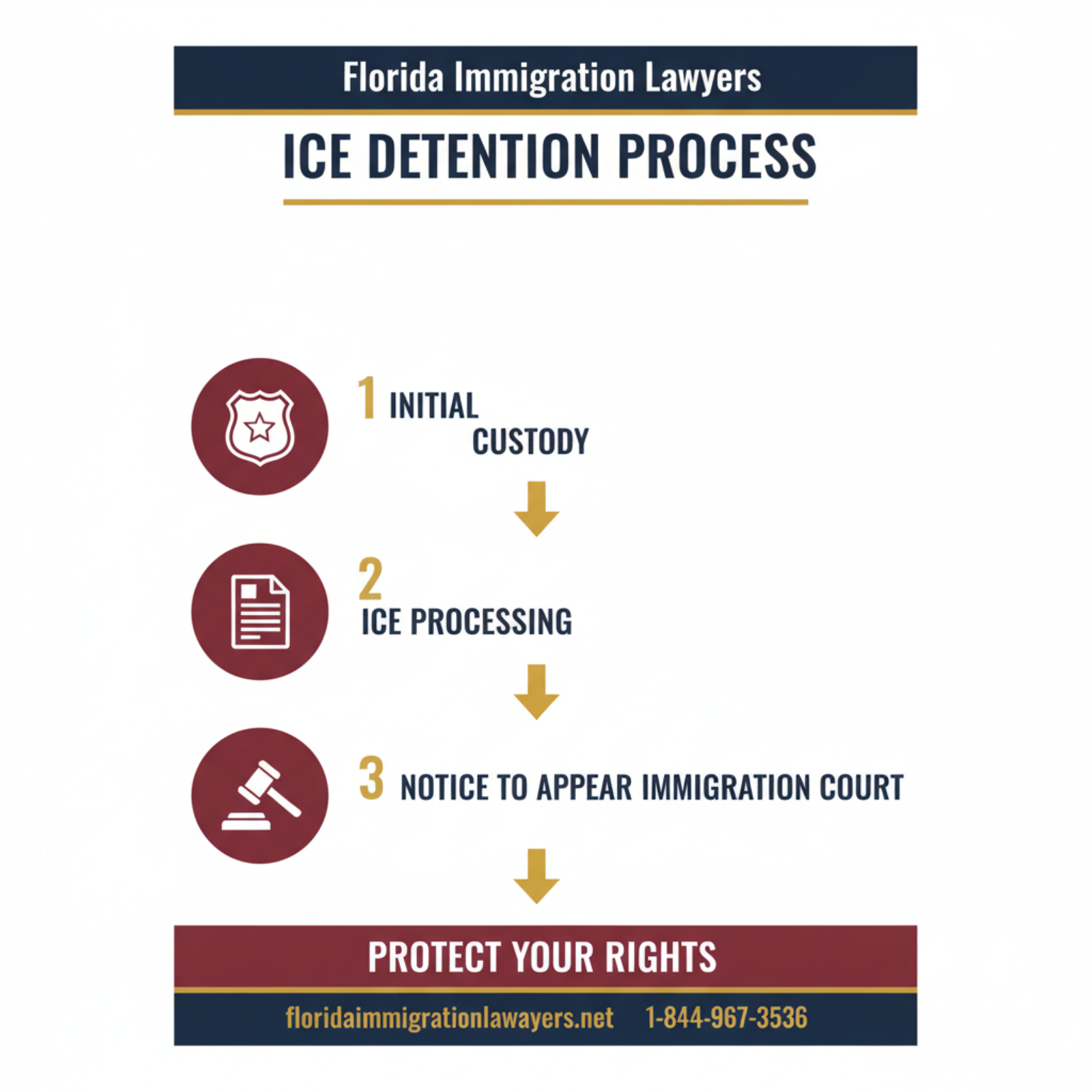
Navigating the immigration detention system can be daunting. Understanding each stage of the process can help you and your family prepare for what lies ahead. Here is a typical step-by-step guide for a green card holder ICE detention:
-
Apprehension and Arrest: Detention by ICE can occur in various ways. You might be arrested at your home, workplace, or during a traffic stop if local law enforcement contacts ICE. For example, in Jacksonville, local authorities might transfer individuals to ICE custody if an immigration detainer is in place. You could also be detained at an airport or seaport upon returning to the U.S.
-
Processing and Initial Interview: Once detained, you will be transported to an ICE processing center or a local jail with an ICE contract. In Florida, common detention centers include Krome Service Processing Center in Miami, Glades County Detention Center, and Broward Transitional Center. During processing, ICE agents may attempt to interview you. Remember, you have the right to remain silent and the right to speak with an attorney before answering any questions.
-
Issuance of a Notice to Appear (NTA): If ICE decides to pursue deportation, they will issue a Notice to Appear (Form I-862). This document formally charges you with being removable from the U.S. and initiates removal proceedings before an immigration judge. The NTA will specify the alleged grounds for your deportability. This is a critical document, and you should immediately share it with your attorney.
-
Custody Determination and Bond Hearing: For many green card holders, the possibility of release on bond is crucial. ICE may initially set a bond amount, or you may need to request a bond hearing before an immigration judge. The judge will consider factors like your ties to the community, criminal history, flight risk, and danger to the community when determining if bond is appropriate and, if so, the amount. Not all green card holders are eligible for bond, particularly if they have certain serious criminal convictions.
-
Immigration Court Proceedings: If released on bond or if you remain in detention, your case will proceed through immigration court. This involves multiple hearings, including a master calendar hearing (initial appearance) and individual hearings (where evidence is presented and arguments are made). Your attorney will present your defense, challenge the charges, and apply for any available forms of relief from deportation.
-
Decision and Appeals: After all hearings, the immigration judge will issue a decision. If the judge orders your removal, your attorney can generally file an appeal with the Board of Immigration Appeals (BIA). Further appeals to federal circuit courts are also possible in some cases. The appeals process can be lengthy but offers additional opportunities to challenge an adverse decision.
Throughout this entire process, having an experienced immigration lawyer from Florida Immigration Lawyers is paramount. We can advocate for your rights, challenge ICE's allegations, and work tirelessly to secure your release and protect your green card status. For insights into the government's perspective on detention, you can review information from the U.S. Immigration and Customs Enforcement (ICE) website.
Essential Documents for Your Defense
To effectively challenge a green card holder ICE detention and fight deportation, you will need to gather a comprehensive set of documents. These documents help establish your identity, your legal status, your ties to the U.S., and any potential defenses you may have. Your attorney will guide you on specific requirements, but a general list includes:
- Your Permanent Resident Card (Green Card)
- Passport and birth certificate (from your country of origin)
- Marriage certificate (if applicable)
- Birth certificates for your U.S. citizen or green card holder children
- Tax returns for the past several years
- Proof of employment (pay stubs, employment letters)
- Mortgage statements or lease agreements
- Bank statements and other financial records
- Letters of support from family, friends, employers, and community leaders
- Medical records, especially if you have serious health conditions
- Any police reports, court dispositions, or sentencing documents related to criminal convictions (even if old or expunged)
- Proof of rehabilitation (e.g., certificates from counseling, community service)
- Military service records (if applicable)
- Any previous immigration applications or notices from USCIS or the immigration court
Collecting these documents quickly can significantly aid your defense. Many of these documents serve to prove your good moral character and strong ties to the United States, which are crucial factors in immigration court. Florida Immigration Lawyers can assist your family in compiling this critical information even while you are in detention.
Timelines and Processing Expectations in ICE Detention Cases
The duration of green card holder ICE detention in Florida cases can vary significantly. There is no single timeline, as each case depends on its unique facts, the complexity of legal issues, court backlogs, and the specific detention facility. However, understanding the typical stages can help manage expectations.
Factors Influencing Detention Length
- Eligibility for Bond: If a bond is granted and paid, release can occur relatively quickly, sometimes within days or weeks of the bond hearing.
- Court Caseload: Immigration courts, including those in Florida (e.g., Miami, Orlando), often have heavy caseloads. This can lead to delays in scheduling hearings and receiving decisions.
- Complexity of the Case: Cases involving serious criminal convictions, multiple forms of relief, or complex legal arguments will generally take longer to resolve.
- Appeals Process: If an appeal to the BIA or a federal court is necessary, it can add months, or even years, to the overall timeline.
- Detention Center Policies: While federal, each detention center may have slightly different processing times for releases.
For individuals held in detention, the goal is always to secure release as quickly as possible. Your Florida Immigration Lawyers attorney will tirelessly work to expedite your case, whether through bond requests, motions to terminate proceedings, or presenting a strong defense at your individual hearing.
Cost Factors and Fee Breakdown for Detention Cases
Facing green card holder ICE detention involves various potential costs. These can include legal fees, immigration bond amounts, and other administrative expenses. It is important to understand these financial aspects to plan accordingly.
- Attorney Fees: Legal fees for immigration detention and removal defense cases vary based on the complexity of your situation, the attorney's experience, and the amount of work required. A comprehensive defense can involve numerous court appearances, extensive document preparation, and legal research. Florida Immigration Lawyers offers transparent fee structures and will discuss all costs upfront during your free consultation.
- Immigration Bond: If an immigration judge grants bond, you or your family will need to pay the specified amount to secure your release. Bond amounts can range from a few thousand dollars to tens of thousands, depending on the individual's circumstances and perceived flight risk. These funds are held by the Department of Homeland Security and are typically refunded once your case concludes, provided you comply with all court orders.
- Administrative Fees: There may be minor fees associated with filing certain motions or obtaining specific documents, though these are typically much smaller than attorney fees or bond amounts.
Investing in skilled legal representation is crucial. While the costs may seem significant, they are often a necessary investment to protect your legal status, your freedom, and your future in the United States. Do not let financial concerns prevent you from seeking help. Your initial consultation with Florida Immigration Lawyers is always free, allowing us to assess your case without obligation.
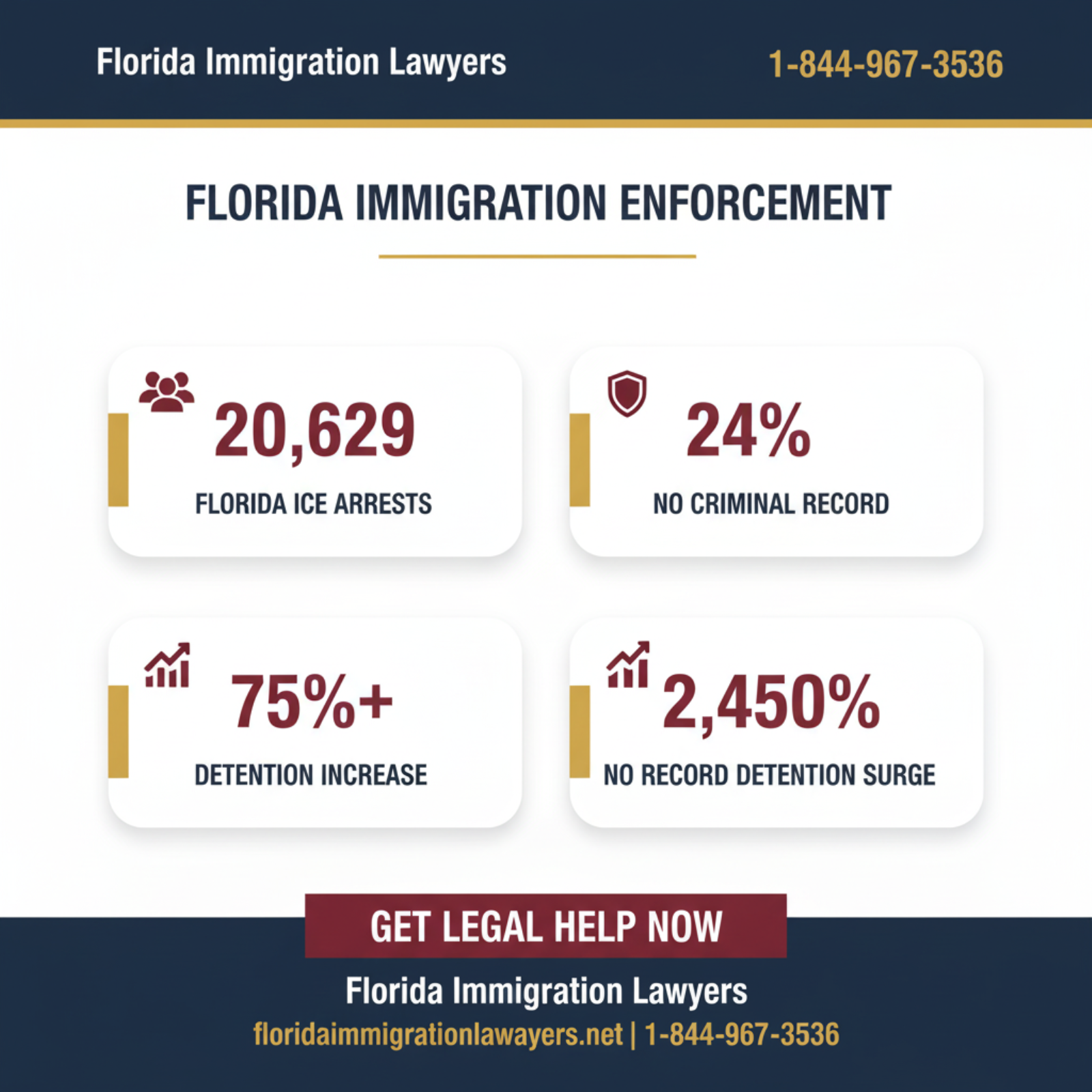
Do not navigate this process alone. The complexities of immigration law, especially concerning green card holder ICE detention, demand expert guidance. Contact Florida Immigration Lawyers today to ensure your rights are protected and your case receives the dedicated attention it deserves.
Common Mistakes Green Card Holders Make in ICE Detention
When detained by ICE, lawful permanent residents often make critical errors that can jeopardize their case. Avoiding these pitfalls is essential for a successful defense against green card holder ICE detention. Here are common mistakes to be aware of:
-
Speaking to ICE Agents Without an Attorney: Anything you say to ICE agents can be used against you in immigration court. Do not answer questions about your immigration status, country of origin, or how you entered the U.S. without your lawyer present. Politely state, "I wish to speak with my attorney."
-
Signing Documents You Do Not Understand: ICE agents might present you with documents to sign, including voluntary departure forms. Signing such a document could mean waiving your right to a hearing and agreeing to be deported without a fight. Never sign anything you do not fully understand or without your attorney's review.
-
Not Informing Family of Your Detention: It is critical to alert family or friends about your detention immediately. They can then contact an attorney on your behalf and begin gathering necessary documents. Many detention centers allow a phone call upon arrival.
-
Failing to Disclose All Criminal History to Your Attorney: Even seemingly minor or old arrests and convictions are relevant in immigration court. Withholding information from your lawyer can severely undermine your defense strategy and lead to unexpected complications.
-
Missing Court Deadlines or Hearings: Failure to appear for a scheduled immigration court hearing can result in an automatic deportation order (an in absentia order). Missing deadlines for filing documents or appeals can also be detrimental. Your attorney will manage these critical dates.
-
Not Gathering Supporting Documentation: A strong defense relies on evidence. Neglecting to collect documents proving your ties to the U.S., good moral character, or eligibility for relief can weaken your case. Work with your family and attorney to compile everything needed.
-
Believing a Green Card Makes You Immune to Deportation: This misconception can lead to complacency. A green card offers significant protection, but it does not make you untouchable. Certain criminal convictions or immigration violations can lead to removal proceedings.
-
Attempting to Represent Yourself: Immigration law is incredibly complex. Trying to navigate the system without legal training is a high-risk endeavor. An experienced attorney knows the laws, procedures, and available defenses, significantly increasing your chances of a positive outcome.
-
Ignoring Previous Deportation Orders: If you have a prior deportation order, attempting to re-enter the U.S. or being found here can lead to immediate reinstatement of that order, making your situation much more difficult. This is a crucial piece of information for your attorney.
-
Not Understanding the Grounds of Deportability: The Notice to Appear (NTA) will list specific charges. Failing to understand these charges means you cannot effectively respond to them. Your attorney will explain the legal basis for your detention and help formulate a defense.
When to Call Florida Immigration Lawyers for ICE Detention
If you or a loved one is facing green card holder ICE detention in Florida, immediate legal assistance is not just recommended-it is absolutely critical. The stakes are incredibly high, and timely intervention by an experienced immigration attorney can make all the difference in protecting your rights and your future.
You should contact Florida Immigration Lawyers immediately in any of the following scenarios:
- Upon Any Detention by ICE: The moment you or a family member is taken into ICE custody, contact us. Early intervention is key to preventing mistakes and beginning your defense.
- If You Receive a Notice to Appear (NTA): This document initiates removal proceedings. Our attorneys can analyze the charges and begin preparing your defense strategy.
- If Bond Has Been Denied or Set Too High: We can represent you at a bond hearing or appeal an unfavorable bond decision, advocating for your release.
- If You Have a Criminal Record: Even old or seemingly minor convictions can trigger deportation. We can assess the immigration consequences of your criminal history.
- If You Are Facing Deportation Proceedings: Regardless of the stage, we can step in to provide robust defense and explore all available forms of relief, such as cancellation of removal for certain permanent residents under INA § 240A(a).
- If You Believe Your Rights Have Been Violated: Our team can investigate allegations of misconduct or ensure you receive due process while in detention.
Florida Immigration Lawyers has extensive experience in handling complex green card holder ICE detention cases across Florida, including in Jacksonville and surrounding areas. We understand the local courts, the detention facilities, and the nuances of immigration law. Our dedicated team is ready to provide the aggressive and compassionate representation you need during this challenging time.
About Florida Immigration Lawyers
Florida Immigration Lawyers is a leading immigration law firm dedicated to serving individuals and families across the entire state of Florida. With a deep commitment to justice and a profound understanding of U.S. immigration laws, we provide unparalleled legal representation to our diverse clientele. Our firm is built on a foundation of empathy, expertise, and unwavering advocacy for our clients' rights and aspirations.
We specialize in a comprehensive range of immigration services, including general immigration matters, deportation defense, asylum claims, citizenship applications, family-based petitions, and business immigration solutions. Our team of experienced attorneys, accessible via our attorney page, is equipped to handle even the most complex cases, ensuring personalized strategies tailored to each client's unique circumstances.
Choosing Florida Immigration Lawyers means choosing a partner who will stand by you every step of the way. We pride ourselves on clear communication, aggressive advocacy, and a compassionate approach to every case. We understand the immense stress and uncertainty that immigration issues can bring, and we are here to provide clarity, support, and effective legal solutions. Our firm is available 24/7 for free consultations, serving all of Florida with dedication and integrity. Visit our website at https://www.floridaimmigrationlawyers.net or call us at 1-844-967-3536 to learn how we can help you.
Frequently Asked Questions (FAQs)
Can ICE legally detain a green card holder?
Yes, ICE can legally detain a green card holder under specific circumstances. While green card holders have significant rights, they are not immune to detention or deportation. Common reasons for detention include certain criminal convictions, violations of immigration law, or issues arising during re-entry into the U.S.
Can green card holders be deported right now?
Yes, green card holders can be deported. If an immigration judge issues a final order of removal, and all appeals are exhausted or waived, a green card holder can be deported. The process involves removal proceedings in immigration court, where the government must prove the grounds for deportability. Having a green card does not automatically prevent deportation if specific legal grounds exist.
Can I sue ICE for detaining me as a citizen?
If you are a U.S. citizen and were wrongfully detained by ICE, you may have legal recourse. Such detentions can be a violation of your constitutional rights. While it is rare for ICE to detain a verified citizen, errors can occur. You should immediately contact an attorney specializing in civil rights or immigration law to explore your options, which may include filing a lawsuit for damages. It is vital to prove your citizenship clearly and unequivocally.
Am I still an immigrant if I have a green card?
Yes, if you have a green card (lawful permanent resident status), you are still considered an immigrant. A green card grants you permanent residency, allowing you to live and work in the U.S. indefinitely, but you are not a U.S. citizen. You retain your original nationality and citizenship of your home country until and unless you naturalize and become a U.S. citizen. You are a permanent resident immigrant.
Sources and References
- U.S. Citizenship and Immigration Services (USCIS)
- U.S. Immigration and Customs Enforcement (ICE)
- Executive Office for Immigration Review (EOIR)
- 8 U.S.C. Chapter 12 - Immigration and Nationality Act (INA)
- INA § 237 (8 U.S.C. § 1227) - Deportable Aliens
- INA § 240A(a) (8 U.S.C. § 1229b(a)) - Cancellation of Removal for Certain Permanent Residents
This article provides general legal information and is not intended as legal advice. Every case is unique, and outcomes depend on specific facts and circumstances. Contact an attorney for advice about your particular situation.
Facing green card holder ICE detention in Florida is a serious challenge that requires immediate and expert legal intervention. Do not delay in seeking the professional guidance you need to protect your rights and your future. Florida Immigration Lawyers are here to offer dedicated support and skilled representation.
Take the first step towards securing your freedom and defending your status. Call Florida Immigration Lawyers now at 1-844-967-3536 for a free, confidential consultation. Se Habla Español - Estamos aquí para ayudarle.
Need help with Immigration?
Our Florida immigration attorneys offer free consultations. Call today or schedule online.
Frequently Asked Questions
Florida Immigration Lawyers
Legal Team
Our experienced attorneys at Florida Immigration Lawyers have been serving clients across Florida for over 20 years. We specialize in immigration, personal injury, criminal defense, workers compensation, and family law.