Immigration Backlog Solutions Florida: Navigating USCIS
The immigration backlog in Florida, exacerbated by increased applications and staffing shortages, causes significant USCIS delays for thousands. This comprehensive guide from Florida Immigration Lawyers explores the causes of these prolonged processing times, particularly affecting communities like Kissimmee, and offers proactive solutions. Learn essential steps to navigate your case, avoid common mistakes, and understand when legal counsel becomes indispensable. With insights into document preparation, cost factors, and leveraging online tools, this article empowers Florida immigrants to better manage their expectations and pursue their goals. Discover how experienced legal advocacy can help mitigate challenges and move your immigration journey forward in 2026.

The immigration backlog in Florida, particularly affecting USCIS processing, stems from increased applications, staffing shortages, and complex legal changes. Solutions involve proactive case management, diligent document submission, and understanding current processing times. Seeking legal guidance from experienced Florida immigration lawyers can significantly help applicants navigate these delays and improve their case outcomes.
- Proactive application strategies can minimize delays.
- Stay informed about USCIS processing times and policy updates.
- Accurate and complete documentation is crucial to avoid RFEs.
- Legal representation offers expert navigation through complex processes.
- Regularly check your case status online and follow up on inquiries.
Are you an immigrant in Florida, perhaps in Kissimmee or a surrounding area, feeling overwhelmed by the endless wait for your immigration case to process? You are not alone. The persistent immigration backlog across the United States, including Florida, has left countless individuals and families in limbo. These significant USCIS delays can be incredibly frustrating, impacting your plans, your family, and your future in the Sunshine State.
At Florida Immigration Lawyers, we understand the anxiety and uncertainty these prolonged processing times create. Our firm is dedicated to providing clear guidance and effective solutions to help you navigate this complex landscape. This comprehensive guide will shed light on the current state of the immigration backlog in Florida, offer practical steps you can take, and explain how our experienced team can advocate on your behalf.
Do not let the waiting game define your immigration journey. Understanding the challenges and knowing your options are the first steps toward a resolution. For personalized advice and to discuss your specific situation, call Florida Immigration Lawyers at 1-844-967-3536 for a free consultation today. We are here to help you move forward.
Understanding the Immigration Backlog in Florida
The current state of the immigration backlog is a nationwide challenge, but its impact is particularly acute in high-demand states like Florida. Our state, with its diverse population and vibrant communities, sees a substantial volume of immigration applications annually. This high volume, coupled with various systemic issues, contributes to the significant USCIS delays many applicants experience.
Florida's immigration courts, including those serving regions like Kissimmee and Orlando, often face some of the highest caseloads in the country. This can lead to extended wait times for court hearings and final decisions. Understanding the underlying causes is crucial for managing expectations and preparing effectively for your journey.
Key Factors Contributing to USCIS Delays
Several factors contribute to the ongoing immigration backlog and the frustrating USCIS delays that plague the system. These issues are often interconnected, creating a ripple effect across different visa categories and application types. Identifying these factors helps us understand the scope of the problem.
One primary contributor is the sheer volume of applications. USCIS has experienced a significant increase in filings for various petitions, including family-based visas, employment-based visas, and naturalization applications. The agency's resources, including staffing and infrastructure, have struggled to keep pace with this demand.
Policy changes and evolving legal interpretations also play a role. Each new regulation or policy shift requires adjustments in processing procedures, often leading to temporary slowdowns as the agency adapts. Furthermore, enhanced vetting procedures, while important for national security, can add layers of review that extend processing times.
Budgetary constraints and staffing shortages within USCIS and other immigration agencies further exacerbate the problem. A reduced workforce means fewer officers are available to review cases, conduct interviews, and issue decisions. This directly translates into longer waits for applicants in Florida and across the nation.
Impact on Florida's Immigrant Community, particularly Kissimmee
The immigration backlog profoundly affects Florida's vibrant immigrant communities, especially in areas like Kissimmee, which is home to a significant and diverse immigrant population. Many residents in Kissimmee rely on timely immigration decisions to secure their future, reunite with family, or pursue employment opportunities.
Prolonged USCIS delays can lead to immense stress and uncertainty. Individuals may face difficulties renewing work permits, delaying career progression, or even losing job opportunities. Families hoping to reunite with loved ones from abroad often endure years of separation, impacting emotional well-being and financial stability.
For those seeking asylum or facing deportation, the stakes are even higher. Lengthy court backlogs can mean years of living with the threat of removal, impacting their ability to integrate into society and plan for a stable future. Florida Immigration Lawyers recognizes these unique challenges faced by our Kissimmee clients and those throughout Florida.
Proactive Strategies to Address Your Immigration Processing Times
While the immigration backlog presents significant challenges, there are proactive steps you can take to mitigate the impact of USCIS delays and potentially expedite your case. Taking control of your application process can make a tangible difference in your processing times.
Our team at Florida Immigration Lawyers encourages all applicants to be meticulous and well-informed. By following these strategies, you can help ensure your application moves as smoothly as possible through the system. We are here to provide comprehensive support for your journey, including services for family immigration and business immigration.
-
Submit a Complete and Accurate Application: This is arguably the most critical step. Any missing documents, incorrect information, or unanswered questions will likely result in a Request for Evidence (RFE) or a Notice of Intent to Deny (NOID), significantly extending your processing times. Double-check every detail before submission.
-
Respond Promptly to RFEs and NOIDs: If you receive an RFE or NOID, respond immediately and thoroughly. Provide all requested information and documents within the specified deadline. Delays in responding will further prolong your case and could lead to denial.
-
Keep Copies of Everything: Maintain a complete file of your application, all supporting documents, and all correspondence with USCIS. This organized record is invaluable if you need to follow up on your case or address any discrepancies.
-
Monitor Your Case Status Online: Use the USCIS online case status tool with your receipt number. This tool provides real-time updates on your application's progress. While it may not always reflect immediate changes, it's an essential resource for staying informed.
-
Submit Inquiries for Cases Beyond Normal Processing Times: If your case falls outside the normal processing times listed on the USCIS website for your specific form and service center, you may be eligible to submit an "e-Request" for an inquiry. This can sometimes prompt a review of your case.
-
Consider Expedite Requests (If Applicable): In certain dire circumstances, such as severe financial loss, urgent humanitarian reasons, or compelling U.S. government interests, you may be able to request an expedited processing of your application. These requests are granted on a case-by-case basis and require substantial evidence.
-
Seek Congressional Assistance: If your case is experiencing extreme and unreasonable delays, and you have exhausted other avenues, you may contact your U.S. Representative or Senator. Their constituent services staff can sometimes make inquiries on your behalf.
-
Consult with an Immigration Attorney: An experienced attorney can review your case, identify potential issues, help you prepare a strong application, and advocate for you with USCIS. This can be particularly beneficial for complex cases or if you are facing a significant immigration backlog.
Essential Documents for Your Immigration Application
Preparing a comprehensive set of documents is paramount to successfully navigating the immigration process and avoiding unnecessary USCIS delays. The specific documents required will vary greatly depending on the type of petition you are filing. However, there are common categories of documents that most applicants will need.
Always refer to the official USCIS instructions for your specific form to ensure you gather every required item. Missing even one document can lead to an RFE, significantly prolonging your processing times. Florida Immigration Lawyers can help you compile this critical information.
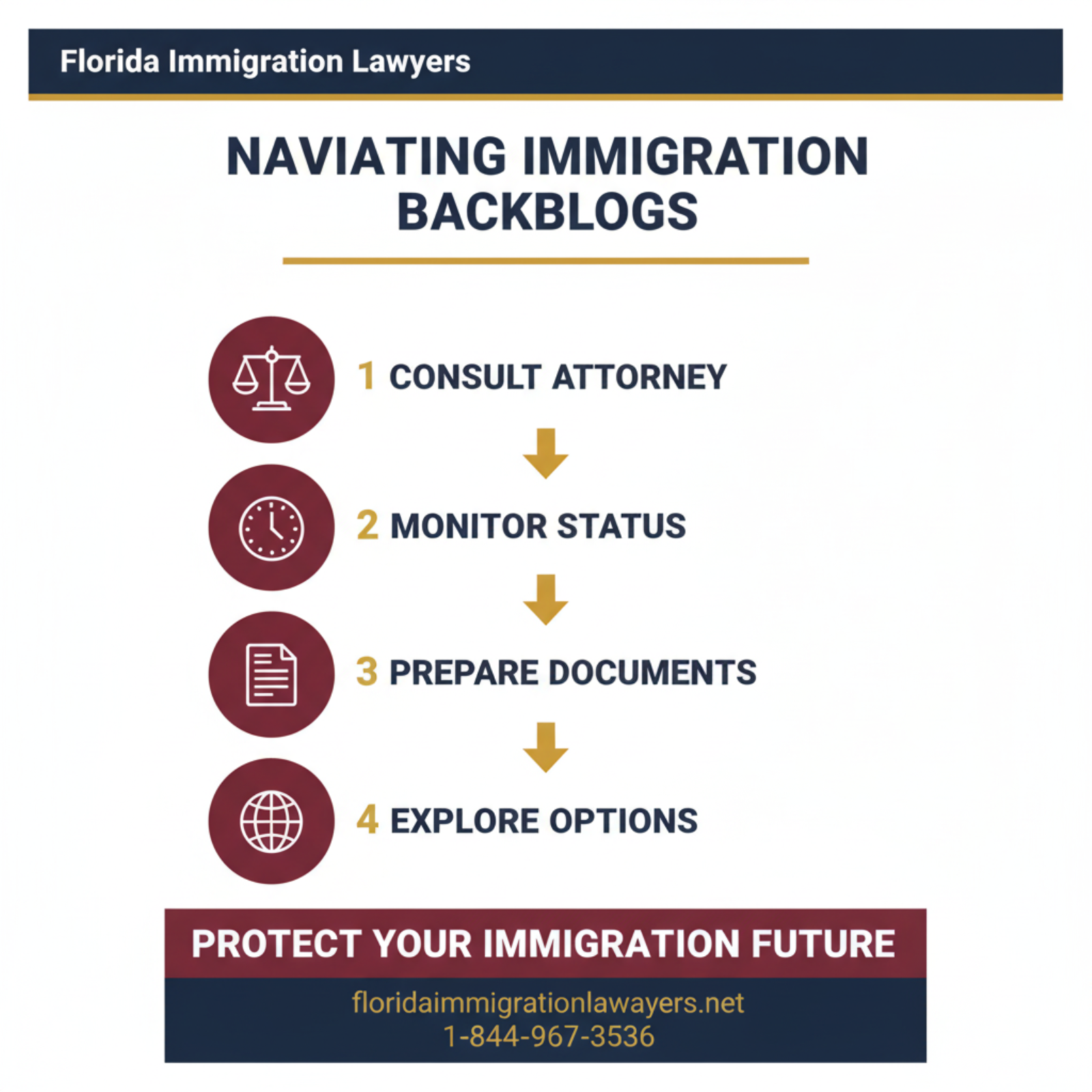
- Proof of Identity and Nationality: Valid passports, birth certificates, national identity cards.
- Proof of Lawful Entry and Status (if applicable): I-94 Arrival/Departure Record, visa stamps, previous approval notices (I-797).
- Photographs: Passport-style photographs meeting USCIS specifications.
- Financial Documents: Tax returns, W-2s, pay stubs, employment verification letters, affidavits of support (Form I-864).
- Proof of Relationship (for family-based petitions): Marriage certificates, birth certificates of children, divorce decrees, adoption papers.
- Educational and Employment Records (for employment-based petitions): Diplomas, transcripts, professional licenses, letters of experience, resumes.
- Police Clearances/Criminal Records: Certificates of good conduct from countries you have resided in, court disposition documents for any arrests or convictions.
- Medical Examination Results: Form I-693, Report of Medical Examination and Vaccination Record, completed by an authorized civil surgeon.
- Translated Documents: Any document not in English must be accompanied by a certified English translation.
Decoding Immigration Processing Times and Expectations in 2026
Understanding current processing times is crucial for setting realistic expectations and planning your future in Florida. USCIS publishes estimated processing times for various forms at different service centers and field offices. These times can fluctuate significantly, reflecting the dynamic nature of the immigration backlog.
It is important to regularly check the USCIS website for the most up-to-date information. While these are estimates, they provide a benchmark for when you might expect a decision on your case. Remember that your individual case may take longer or shorter depending on specific factors.
Factors Affecting Your Wait Time
Several variables can influence the actual processing times for your immigration application. Beyond the general immigration backlog, individual case complexities often play a significant role. Being aware of these factors can help you understand potential delays.
The type of application you file is a major determinant. Some petitions, like certain family-based visas, inherently have longer wait times due to annual numerical limits set by Congress (visa bulletin). The service center or field office handling your case can also have varying workloads, leading to different processing speeds. For example, a USCIS office in a high-volume area like Miami or Orlando might experience longer waits than a less busy one.
Completeness and accuracy of your application are paramount. As mentioned, RFEs or NOIDs will inevitably extend your wait. Background checks, security clearances, and the need for additional interviews can also add time. Any changes in immigration law or policy during your application's pendency may also cause delays.
Leveraging Online Tools and Inquiries
USCIS offers several online tools to help you monitor your case and address concerns about processing times. The primary tool is the Case Status Online, where you can enter your receipt number to get updates. This provides a basic overview of where your case stands.
For more detailed information, or if your case is outside normal processing times, you can use the USCIS e-Request tool to submit an inquiry. You can also contact the USCIS Contact Center by phone. While these tools are helpful, they do not always provide immediate or definitive answers. This is where the expertise of Florida Immigration Lawyers can be invaluable, especially when dealing with persistent USCIS delays.
Understanding the Costs: Fees Associated with Immigration Petitions
Navigating the immigration process involves various costs, and understanding these financial obligations is an important part of your planning, especially when considering potential immigration backlog solutions Florida. While specific fee amounts are subject to change, knowing the categories of expenses will help you prepare.
It is important to budget not only for government filing fees but also for other potential expenses. Being financially prepared can reduce stress during your application journey. Florida Immigration Lawyers is transparent about our fees and helps you understand all associated costs.
USCIS Filing Fees and Biometrics
The U.S. Citizenship and Immigration Services (USCIS) charges fees for most immigration forms and petitions. These fees vary significantly depending on the type of application you are filing (e.g., green card, naturalization, work permit). These fees are non-refundable, even if your application is denied.
In addition to filing fees, many applicants are required to pay a biometrics services fee. This covers the cost of fingerprinting, photographs, and signature collection, which are used for background and security checks. These fees are mandatory for most applications that require biometric services.
It is crucial to submit the correct fee amount with your application. Incorrect payments can lead to your application being rejected and returned, causing significant USCIS delays and further prolonging your processing times. Always check the USCIS website or consult with an attorney for the most current fee schedule.
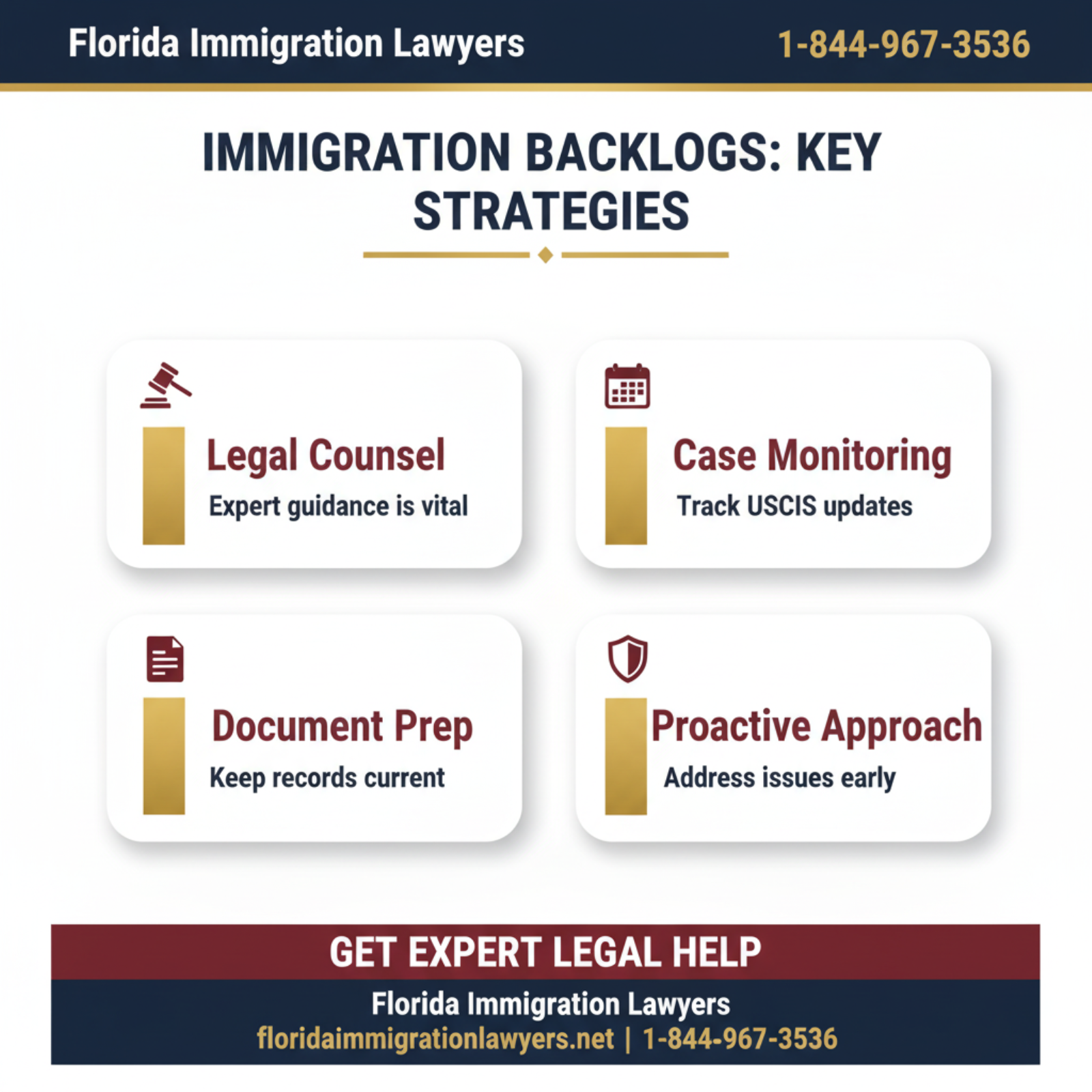
Attorney Fees and Other Expenses
Beyond government fees, you should also factor in potential attorney fees. While not legally required, hiring an experienced immigration attorney can be a wise investment, especially given the complexities of the immigration backlog. Attorneys help ensure your application is accurate, complete, and strategically presented, potentially saving you time and money in the long run by avoiding RFEs or denials.
Other potential costs include fees for medical examinations by a USCIS-approved civil surgeon, translation services for foreign documents, and courier services for secure document delivery. Depending on your specific case, you might also incur costs for obtaining police certificates or other supporting evidence. Discussing all potential costs with your attorney upfront can help you plan your finances effectively.
Do not navigate this process alone. The complexities of the immigration backlog and the ever-changing landscape of immigration law demand experienced guidance. Contact Florida Immigration Lawyers today to schedule your free consultation and get the support you deserve for your immigration journey in Kissimmee and across Florida.
Common Mistakes to Avoid
Navigating the immigration system, especially with the current immigration backlog, can be fraught with pitfalls. Avoiding common mistakes can significantly reduce your processing times and increase your chances of success. Here are some errors to steer clear of:
-
Submitting Incomplete or Inaccurate Applications: This is the leading cause of USCIS delays. Missing information, unsigned forms, or incorrect dates will almost certainly result in an RFE or rejection, forcing you to restart or significantly prolonging your case. Always double-check every field.
-
Failing to Respond to RFEs or NOIDs on Time: If USCIS requests additional evidence or issues a Notice of Intent to Deny, you have a strict deadline to respond. Missing this deadline can lead to a denial of your application, requiring you to refile and incur new fees and even longer waits.
-
Not Keeping Copies of All Submitted Documents: Without a complete record of what you sent, it becomes impossible to verify submissions, respond to inquiries, or refile if necessary. Always keep an organized copy of every document you submit to USCIS.
-
Providing Inconsistent Information: Discrepancies across different forms or applications can raise red flags for immigration officers, leading to further scrutiny, interviews, or even accusations of misrepresentation. Ensure all your records are consistent.
-
Ignoring Changes of Address: You are legally required to notify USCIS within 10 days of moving. Failure to do so can result in missed notices, RFEs, or interview appointments, which can severely jeopardize your case and cause significant USCIS delays.
-
Not Seeking Legal Counsel for Complex Cases: Attempting to handle complicated immigration matters, especially those involving prior denials, criminal history, or deportation proceedings, without an attorney is a major risk. An attorney provides expertise and advocacy.
-
Failing to Disclose All Relevant Information: Hiding information, even seemingly minor details like past arrests or immigration violations, can be considered misrepresentation and lead to serious consequences, including permanent bars to immigration benefits.
-
Submitting Uncertified Translations: Any document not in English must be accompanied by a certified English translation. Submitting uncertified translations will result in an RFE and delay your case. Ensure your translator provides a certification statement.
-
Paying Incorrect Fees: USCIS fees change periodically. Submitting an incorrect payment amount will cause your application to be rejected and returned, wasting precious time and prolonging your processing times.
-
Assuming Your Case Will Be Approved Automatically: Immigration benefits are never guaranteed. Every application is subject to review and discretion. Overconfidence can lead to a lack of diligence in preparation, which can be detrimental.
When to Call a Lawyer
While some immigration processes may seem straightforward, the current immigration backlog and the intricate nature of U.S. immigration law often necessitate professional legal assistance. Knowing when to engage an attorney can be the difference between a successful outcome and prolonged frustration.
Florida Immigration Lawyers stands ready to assist you. Our team has extensive experience navigating the complexities of USCIS delays and advocating for clients in Kissimmee, Orlando, and throughout Florida. We offer expert guidance for various situations, including deportation defense and asylum claims.
You should consider calling an attorney if:
- You have a complex case history, such as previous denials, overstays, or criminal records.
- You are unsure which visa category is most appropriate for your situation.
- You have received an RFE or NOID and need assistance responding effectively.
- Your case has been pending for an unusually long time, significantly beyond published processing times.
- You are facing deportation or removal proceedings in immigration court.
- You need to appeal a USCIS decision or file a motion to reopen your case.
- You are seeking citizenship and want to ensure a smooth naturalization process.
- You simply want peace of mind knowing your application is prepared correctly and strategically.
Frequently Asked Questions About the Florida Immigration Backlog
How long is the immigration court backlog in Florida?
The immigration court backlog in Florida, similar to the national trend, has reached record levels. Average wait times for a hearing can exceed several years, with specific courts like Miami or Orlando often having some of the longest queues. The exact duration depends on the court, the type of case (e.g., asylum, deportation), and current caseloads. For example, as of early 2026, many non-detained cases are scheduled years into the future. You can check the Executive Office for Immigration Review (EOIR) website for general statistics, but your individual case processing time will vary.
Why is USCIS so slow right now?
USCIS is experiencing significant delays for several reasons. These include a massive increase in application filings across all categories, staffing shortages within the agency, and the implementation of new policies and security checks. The COVID-19 pandemic also caused operational disruptions that created a significant ripple effect, further exacerbating the existing immigration backlog. These combined factors contribute to longer processing times for most applications.
What to do if ICE stops you in Florida?
If you are stopped by ICE in Florida, it is crucial to remain calm and remember your rights. You have the right to remain silent and do not have to answer questions about your immigration status, citizenship, or where you were born. You also have the right to speak with an attorney. Do not sign anything without legal counsel. If you are detained, request to speak with a lawyer immediately and contact Florida Immigration Lawyers at 1-844-967-3536. We provide robust deportation defense services.
What is the biggest immigrant group in Florida?
Florida is incredibly diverse, with a rich tapestry of immigrant communities. Historically, and continuing into 2026, Cuban and Haitian immigrants represent significant populations. However, the state also has large and growing communities from Venezuela, Colombia, Mexico, and other Central and South American countries. This diversity contributes to the high volume of immigration cases and the distinct challenges within the Florida immigration backlog.
About Florida Immigration Lawyers
Florida Immigration Lawyers is a leading law firm dedicated to providing exceptional legal services to immigrants across the entire state of Florida. With years of experience and a deep understanding of U.S. immigration law, our attorneys are committed to helping individuals and families achieve their immigration goals.
We offer a comprehensive range of immigration services, including family-based petitions, employment visas, asylum and refugee claims, deportation defense, citizenship and naturalization, and assistance with complex cases involving the immigration backlog and USCIS delays. Our attorneys are passionate advocates who prioritize your needs and work tirelessly to protect your rights.
Choosing Florida Immigration Lawyers means partnering with a team that offers personalized attention, strategic legal advice, and unwavering support throughout your immigration journey. We pride ourselves on our client-focused approach, clear communication, and dedication to achieving the best possible outcomes for our clients. We understand the unique challenges faced by immigrants in Kissimmee, Orlando, Miami, and all Florida communities.
Our firm is available 24/7 to address your urgent legal needs, and we offer free consultations to help you understand your options without financial commitment. Visit our website at https://www.floridaimmigrationlawyers.net or call us directly at 1-844-967-3536 to speak with an attorney today. We serve all of Florida and are ready to be your trusted legal partner.
Sources and References
- U.S. Citizenship and Immigration Services (USCIS)
- Executive Office for Immigration Review (EOIR)
- 8 U.S.C. Chapter 12 - Immigration and Nationality Act (INA)
- 8 CFR Part 103 - Adjudication of Applications and Petitions
- USCIS Policy Manual
This article provides general legal information and is not intended as legal advice. Every case is unique, and outcomes depend on specific facts and circumstances. Contact an attorney for advice about your particular situation.
Do not let the complexities of the immigration backlog or the frustration of USCIS delays deter you from pursuing your American dream. Florida Immigration Lawyers is here to provide the expert legal guidance and dedicated advocacy you need. We invite you to take advantage of a free consultation to discuss your case and explore your best path forward.
Call Florida Immigration Lawyers today at 1-844-967-3536. Se Habla Español - Estamos aquí para ayudarle.
Do Not Navigate This Process Alone
Our experienced immigration attorneys are ready to fight for you. Get a free, confidential consultation today.
Se Habla Español
Frequently Asked Questions
Florida Immigration Lawyers
Immigration Attorney | Founder, Vasquez Law Firm
U.S. Air Force veteran and immigration attorney with thousands of cases resolved. J.D., NCCU School of Law. AILA member. Admitted to the 4th, 5th, and 11th Circuit Courts.
Available 24/7 - Free Evaluations
Related Legal Services
Our Florida immigration attorneys can help you with free immigration consultation, experienced immigration attorneys and business immigration. Call today at 1-844-967-3536 for a free consultation.
Related Links
Related Topics
Free Legal Consultation
Discuss your case with our experienced attorneys. We're available 24/7.
Se Habla Español - Estamos aquí para ayudarle.
Related Articles
Immigration Attorney in Gainesville, North Florida
Navigating immigration law in Gainesville and North Florida can be challenging, especially with recent legal changes. Discover how Florida Immigration Lawyers can assist you. Call 1-844-967-3536 for a free consultation.
Refugee Status Florida Resettlement: Your 2026 Guide
Navigating refugee status and resettlement in Florida requires a thorough understanding of U.S. immigration law and available support systems. This 2026 guide covers eligibility, the step-by-step resettlement process, essential documents, timelines, and financial considerations for refugees seeking to build a new life in Florida, particularly in areas like Homestead. It highlights the critical role of organizations like UNHCR and USCIS, and the importance of avoiding common mistakes. Florida Immigration Lawyers offers expert legal assistance, ensuring a smoother transition and helping refugees adjust status to lawful permanent residents. Learn how to secure your future and access vital resources in the Sunshine State.
Dual Citizenship in Florida: What You Need to Know
Explore the benefits and legal steps of obtaining dual citizenship in Florida. Understand the process, avoid common mistakes, and learn when to seek legal help. Contact Florida Immigration Lawyers at 1-844-967-3536 for guidance.
Understanding Immigration Bond Hearings in Florida
Immigration bond hearings in Florida are critical for those detained by ICE. Understand the process, avoid common mistakes, and learn when to contact a lawyer for assistance. Call Florida Immigration Lawyers for a free consultation.
