H-1B Visa Fee Increase in Florida 2026: Your Essential Guide
The H-1B visa fee increase in Florida for 2026 demands careful attention from employers and foreign nationals. USCIS has implemented significant adjustments to various fees, including registration, base filing, and premium processing, making the H-1B process more costly. This comprehensive guide from Florida Immigration Lawyers breaks down the new fee structure, explains the step-by-step application process, clarifies common misconceptions about a $100,000 fee, and provides essential tips to avoid mistakes. Understanding these changes is crucial for ensuring compliance, managing budgets, and successfully securing an H-1B visa. We emphasize the importance of professional legal counsel to navigate these complexities effectively and protect your application.

The H-1B visa fee increase in Florida for 2026 significantly impacts employers and foreign nationals seeking to work in specialized occupations. These adjustments by USCIS cover various aspects, including base filing fees, premium processing, and the H-1B registration fee, making the process more costly. Understanding these changes is crucial for successful application planning and avoiding delays or denials.
- New USCIS regulations introduce higher H-1B filing and registration fees.
- Employers bear the primary responsibility for paying many H-1B related fees.
- Strategic planning and legal counsel are essential to navigate increased costs.
- The rumored $100,000 H-1B fee is generally a misconception; actual increases are specific.
- Consulting an experienced Florida immigration lawyer is vital for compliance.
Navigating the complex landscape of U.S. immigration law can feel like a daunting journey, especially with frequent changes to regulations and fees. If you are an employer in Florida looking to hire skilled foreign professionals, or a foreign national seeking opportunities in specialized fields, the upcoming H-1B visa fee increase for 2026 is a critical development you cannot afford to overlook.
These adjustments, implemented by U.S. Citizenship and Immigration Services (USCIS), impact everything from initial registration to premium processing services. Understanding these changes is not just about budgeting; it is about ensuring your application remains compliant and competitive. This comprehensive guide from Florida Immigration Lawyers will walk you through what to expect, how to prepare, and why expert legal guidance is more important than ever.
Ignoring these updates could lead to significant financial burdens, processing delays, or even outright denials of your H-1B petitions. We understand the challenges you face and are here to help. Call Florida Immigration Lawyers at 1-844-967-3536 for a free consultation to discuss how these changes affect your specific situation.
Understanding the H-1B Visa and the 2026 Fee Adjustments
The H-1B visa program is a cornerstone of U.S. immigration, allowing employers to temporarily employ foreign workers in specialty occupations. These roles typically require a bachelor's degree or higher in a specific field. Industries across Florida, from technology in Orlando to healthcare in Naples, rely heavily on H-1B visa holders to fill critical skill gaps.
USCIS regularly reviews its fee schedules to ensure it can recover the costs of processing immigration and naturalization petitions and applications. The 2026 fee adjustments reflect a comprehensive analysis of operational costs, inflation, and the need to fund various immigration services. These increases are part of a broader effort to modernize the immigration system and improve service delivery.
For employers and prospective H-1B beneficiaries in Florida, these changes mean a higher financial commitment to the H-1B process. It is crucial to understand that these are not arbitrary increases but rather calculated adjustments aimed at sustaining the immigration infrastructure. Being prepared for these costs is the first step toward a successful H-1B petition.
The H-1B cap-subject petitions, which are subject to an annual limit, are often oversubscribed, necessitating a lottery system. The changes in fees apply to both cap-subject and cap-exempt petitions, though the specific impact may vary. Our firm stays abreast of all USCIS announcements and policy updates to provide you with the most current information.
Why Are H-1B Fees Increasing?
Several factors contribute to the H-1B visa fee increase. USCIS operates primarily on fees collected from applicants and petitioners, not taxpayer funds. Over time, processing costs increase due to inflation, technology upgrades, and the need to hire and train more staff. Furthermore, new security measures and enhanced vetting processes also contribute to higher operational expenses.
The agency must ensure it has sufficient resources to efficiently adjudicate the growing volume of applications and petitions. These fee increases are designed to allow USCIS to maintain and improve its services, reduce backlogs, and implement new technologies. Without adequate funding, the integrity and efficiency of the immigration system could be compromised.
Understanding the rationale behind these increases can help employers and foreign nationals better plan their immigration strategies. While the immediate impact is higher costs, the long-term goal is a more robust and responsive immigration system. We monitor these developments closely to advise our clients effectively.
Clarifying the $100,000 H-1B Fee Rumor
There has been considerable discussion and confusion surrounding a potential $100,000 H-1B fee. It is important to clarify that this is largely a misconception or refers to specific legislative proposals that have not been widely implemented as a standard H-1B fee. The general H-1B visa fee increase for 2026 does not include a universal $100,000 filing fee.
The idea of a $100,000 fee often stems from specific bills introduced in Congress aimed at increasing fees for companies with a high percentage of H-1B and L-1 visa holders, or as a punitive measure. While some proposals have included very high fees, they typically apply to a very narrow set of employers or have not become law. For most employers and applicants, the standard H-1B fees, while increasing, remain significantly lower.
It is crucial not to confuse these legislative discussions with the actual USCIS fee schedule. Our firm helps clients distinguish between rumors and reality, ensuring you have accurate information regarding the fees you will genuinely encounter. This clarity is essential for proper financial planning and avoiding unnecessary panic.
Step-by-Step Guide to the H-1B Visa Process with New Fees
Navigating the H-1B visa process requires meticulous attention to detail and adherence to strict timelines. With the H-1B visa fee increase in 2026, understanding when and what to pay becomes even more critical. Here is a simplified step-by-step guide:
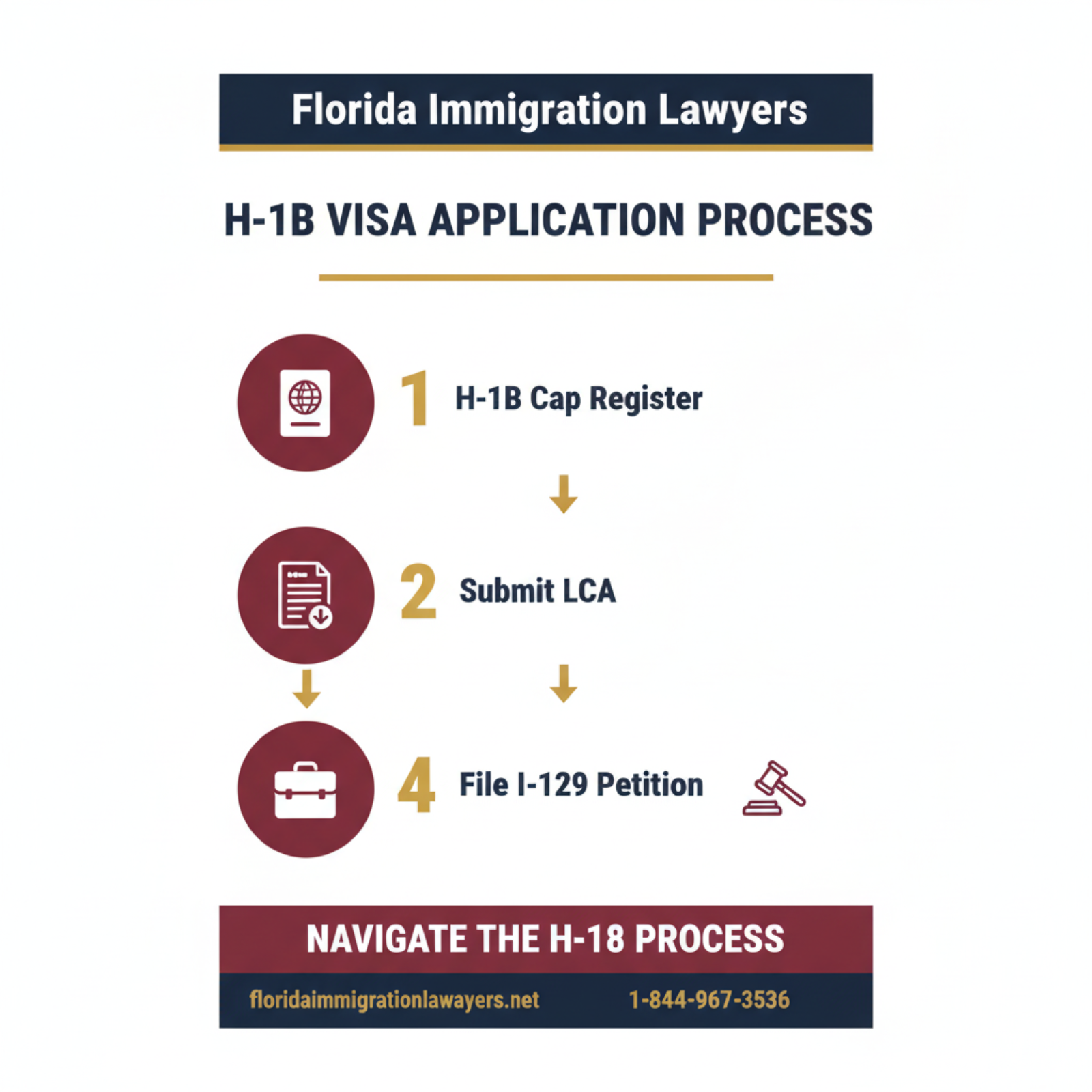
- Employer Determines Need and Files H-1B Registration: The process begins with a U.S. employer identifying a need for a foreign worker in a specialty occupation. If the position is cap-subject, the employer must participate in the H-1B cap registration process, typically in March. A non-refundable H-1B registration fee is paid at this stage.
- H-1B Lottery (If Applicable): If USCIS receives more registrations than available H-1B visas, a lottery is conducted. Only those selected in the lottery are eligible to file an H-1B petition.
- Preparation and Filing of Form I-129, Petition for a Nonimmigrant Worker: If selected, the employer prepares and files Form I-129, along with a certified Labor Condition Application (LCA) from the Department of Labor. This is where the primary H-1B filing fee, ACWIA fee, and Fraud Prevention and Detection Fee are paid. For certain employers, the Public Law 114-113 fee may also apply.
- Request for Evidence (RFE) or Approval: USCIS reviews the petition. If additional information is needed, an RFE will be issued. Timely and comprehensive responses are critical.
- Premium Processing (Optional): Employers can opt for premium processing by paying an additional fee to expedite the adjudication of Form I-129, guaranteeing a response within 15 calendar days. The premium processing fee also sees an increase.
- Consular Processing or Change of Status: If the petition is approved, the foreign national either applies for an H-1B visa stamp at a U.S. embassy or consulate abroad (consular processing) or, if already in the U.S. in a different nonimmigrant status, applies for a change of status to H-1B. Consular processing may involve a separate visa application fee.
- Visa Interview and Issuance (Consular Processing): For consular processing, the applicant attends an interview. If successful, the H-1B visa is issued.
- Entry into the U.S. and Commencement of Employment: Upon successful visa issuance or change of status, the foreign national can begin working for the petitioning employer in the H-1B status.
Essential Document Checklist for H-1B Petitions
A complete and accurate submission of documents is paramount for a successful H-1B petition, especially with the heightened scrutiny that often accompanies fee adjustments. Missing or incorrect documentation can lead to RFEs and significant delays, costing you more time and money. Here is a general checklist:
- Employer-Related Documents:
- Copy of Employer's Federal Employer Identification Number (FEIN).
- Company financial statements, tax returns, and business licenses.
- Organizational chart and details of the company's operations.
- Job offer letter detailing the position, salary, and responsibilities.
- Certified Labor Condition Application (LCA) Form ETA 9035.
- Evidence of employer-employee relationship (if applicable, for third-party placements).
- Employee-Related Documents:
- Copy of passport (all pages, including biographical data and visa stamps).
- Copies of all previous U.S. visas and I-94 records.
- Educational degrees, diplomas, and transcripts (translated to English if necessary).
- Credential evaluations (if degree is from a foreign institution).
- Work experience letters and resumes/CVs.
- Professional licenses or certifications (if applicable).
- Marriage certificate and birth certificates for dependents (for H-4 visa applications).
- Recent pay stubs and employment verification letters (if currently employed).
- Any previous immigration petition approval notices (e.g., I-797 for F-1 OPT, L-1, etc.).
Thorough preparation of these documents is critical. Florida Immigration Lawyers can assist you in compiling and reviewing all necessary paperwork to ensure compliance with USCIS requirements.
H-1B Processing Timeline and Expectations for 2026
The processing timeline for H-1B petitions can vary significantly based on several factors, including the volume of applications, USCIS workload, and whether premium processing is utilized. With the H-1B visa fee increase for 2026, it is reasonable to anticipate some adjustments in processing expectations.
Typically, the H-1B cap registration period occurs in March. If selected, employers have a window to file the I-129 petition, usually starting April 1st. Regular processing of an H-1B petition can take anywhere from 3 to 6 months, or even longer, depending on the service center's current backlog. The USCIS California Service Center and Vermont Service Center are the primary adjudicating bodies for H-1B petitions.
Premium processing, while incurring an additional fee, guarantees a decision within 15 calendar days. This option is highly recommended for those with urgent needs. However, even with premium processing, RFEs can extend the overall timeline. The response time for an RFE is typically 60-90 days, and USCIS then takes additional time to review the response.
It is important to plan ahead and submit your petition as early as possible within the designated filing window. Delays in gathering documents or responding to RFEs can severely impact your timeline. Our attorneys can provide realistic expectations based on current USCIS trends and help you strategize for the most efficient processing possible.
Cost Factors and Fee Breakdown for H-1B Visas in 2026
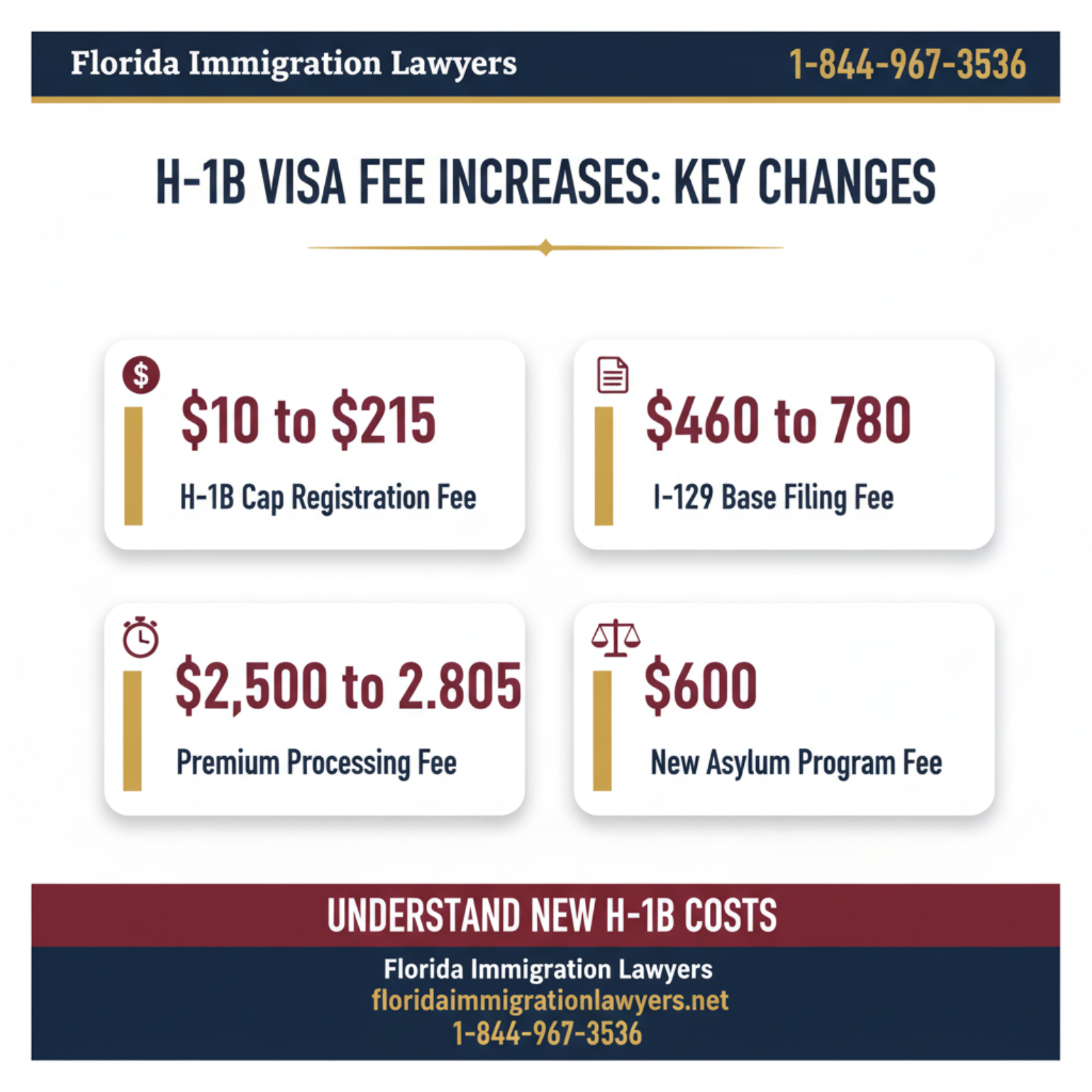
Understanding the full financial commitment for an H-1B visa is crucial for planning, especially with the H-1B visa fee increase in 2026. Here's a breakdown of the typical fees involved. Please note that USCIS fees are subject to change, and specific amounts are not provided here to avoid outdated information. Always refer to the official USCIS website for current fee schedules.
- H-1B Registration Fee: A non-refundable fee paid by the employer for each beneficiary registered in the H-1B lottery. This fee has seen a notable increase.
- Form I-129, Petition for a Nonimmigrant Worker Filing Fee: This is the base filing fee for the H-1B petition. It is paid by the employer.
- American Competitiveness and Workforce Improvement Act (ACWIA) Fee: This fee varies based on the size of the employer. It contributes to U.S. worker training and education programs. Employers with 25 or fewer full-time equivalent employees pay a lower fee than those with 26 or more.
- Fraud Prevention and Detection Fee: A mandatory fee paid by the employer for all initial H-1B petitions and for petitions involving a change of employer.
- Public Law 114-113 Fee (also known as the '50/50' fee): This fee applies to employers who have 50 or more employees in the U.S. and more than 50% of their U.S. workforce in H-1B or L-1 nonimmigrant status. This fee is substantial and is paid by the employer for initial petitions and extensions.
- Premium Processing Fee (Form I-907): An optional fee paid by the employer to expedite processing. USCIS has also adjusted this fee upwards.
- Attorney Fees: Legal fees for the expert assistance of an immigration lawyer. While an additional cost, this investment can save significant time and prevent costly mistakes.
- Visa Application Fee (DS-160): For beneficiaries undergoing consular processing abroad, a separate visa application fee is paid to the U.S. Department of State.
- SEVIS I-901 Fee: If the beneficiary was previously an F-1 student, this fee may have already been paid. It is generally not a new fee for H-1B, but relevant for those transitioning from student status.
The responsibility for paying most of these fees, particularly those associated with Form I-129 and related surcharges, typically falls on the employer. It is generally prohibited for employers to pass these costs directly to the H-1B employee. However, certain fees, like the DS-160 visa application fee for consular processing, are typically paid by the employee.
The overall cost of an H-1B petition, excluding attorney fees, can range significantly depending on the employer's size and whether premium processing is used. With the H-1B visa fee increase, these costs are now higher than ever. Proper budgeting and understanding which fees apply to your specific situation are critical.
Do not navigate this process alone. The financial implications and legal complexities of the H-1B visa process, exacerbated by the recent fee increases, demand professional attention. Contact Florida Immigration Lawyers today to ensure your petition is handled efficiently and correctly.
Common Mistakes to Avoid in Your H-1B Petition
The H-1B visa process is notoriously complex, and even minor errors can lead to significant delays or even denial. With the H-1B visa fee increase, mistakes become even more costly. Here are some common pitfalls to avoid:
- Failing to Meet the Specialty Occupation Requirement: The H-1B position must genuinely require a bachelor's degree or higher in a specific field. Employers sometimes misclassify roles, leading to RFEs or denials. Consequences: Denial of petition, wasted fees, and inability to hire the desired foreign worker.
- Submitting an Incomplete or Inaccurate LCA: The Labor Condition Application (LCA) is a critical component. Errors in wage attestation, job duties, or work location can invalidate the petition. Consequences: Delays, RFEs, or denial, and potential Department of Labor investigations.
- Missing Deadlines or Filing Incorrectly: H-1B cap registrations and petition filings have strict deadlines. Missing these, or submitting an application to the wrong service center, is a common error. Consequences: Ineligibility for the H-1B cap, loss of opportunity for the year.
- Insufficient Documentation: Not providing all required supporting documents, or submitting documents that are unclear, untranslated, or unverified, is a frequent issue. Consequences: RFEs, prolonged processing times, or denial.
- Not Addressing Prevailing Wage Requirements: Employers must pay the H-1B worker at least the prevailing wage for the occupation in the area of intended employment, or the actual wage paid to similarly qualified U.S. workers, whichever is higher. Failing to meet this can lead to issues. Consequences: Petition denial, potential fines, and back pay requirements.
- Improper Employer-Employee Relationship: For third-party placements, USCIS scrutinizes the employer's control over the H-1B worker. A lack of genuine employer-employee relationship can be grounds for denial. Consequences: Denial of petition, inability to place the worker.
- Ignoring Requests for Evidence (RFEs): RFEs from USCIS require prompt and thorough responses. A weak or late response can lead to denial. Consequences: Denial of petition, loss of fees, and starting the process over.
- Assuming the $100,000 Fee is Standard: As clarified earlier, this is a significant misconception. Assuming such a high fee applies universally can lead to unnecessary worry or incorrect financial planning. Consequences: Misallocation of resources, or failure to proceed due to incorrect cost assumptions.
- Not Understanding Fee Responsibilities: Misunderstanding which party is responsible for which H-1B fee can lead to legal issues. Employers generally pay most filing fees. Consequences: Ethical violations, legal penalties, and potential negative impact on the petition.
- Failing to Consult an Experienced Immigration Lawyer: Attempting to navigate the complexities of H-1B petitions, especially with fee changes, without legal expertise is a high-risk strategy. Consequences: Increased likelihood of errors, delays, RFEs, or denials, ultimately costing more than legal fees.
When to Call a Florida Immigration Lawyer
The H-1B visa process, particularly with the new fee structure and evolving regulations, is not something you should tackle without expert guidance. A qualified Florida immigration lawyer can be your strongest ally, ensuring compliance and maximizing your chances of success. Here are specific scenarios where legal assistance from Florida Immigration Lawyers is invaluable:
- Before Starting the Process: If you are an employer considering sponsoring an H-1B worker, or a foreign national exploring H-1B options, a lawyer can assess eligibility, explain the process, and outline the new fee structure.
- Complex Case Scenarios: Cases involving unusual job duties, self-employment, third-party work sites, or a history of immigration issues require specialized legal insight.
- Responding to a Request for Evidence (RFE): An RFE indicates USCIS needs more information or finds an issue with your petition. A lawyer can analyze the RFE, gather appropriate evidence, and craft a compelling response.
- Petition Denials or Appeals: If your H-1B petition is denied, an attorney can help you understand the reasons for denial, explore options for appeal, or advise on refiling strategies.
- Changes in Employment or Status: If an H-1B worker changes employers, or if there are significant changes to the job duties or work location, amendments to the petition may be required.
- Understanding Fee Exemptions: Certain non-profit organizations, government research organizations, and institutions of higher education may be exempt from some H-1B fees. An attorney can help determine if your organization qualifies.
- Navigating the H-1B Cap and Lottery: The annual H-1B cap and lottery system are highly competitive. A lawyer can ensure your registration is accurate and timely, improving your chances.
- Seeking Permanent Residency (Green Card) Options: While H-1B is a nonimmigrant visa, many beneficiaries eventually seek permanent residency. An attorney can help plan this transition, aligning your H-1B strategy with long-term immigration goals.
At Florida Immigration Lawyers, we have extensive experience with H-1B petitions and stay current on all USCIS policy changes, including the recent H-1B visa fee increase. We serve clients across Florida, including Naples, Miami, Orlando, and Tampa, offering personalized and strategic legal solutions. We are dedicated to protecting your interests and guiding you through every step of this critical immigration journey.
About Florida Immigration Lawyers
Florida Immigration Lawyers is a leading immigration law firm dedicated to serving individuals and businesses throughout Florida. Our team of experienced attorneys provides comprehensive legal representation across all areas of immigration law, from family-based petitions to complex business immigration matters and deportation defense. We understand the unique challenges faced by immigrants and employers in Florida and are committed to delivering compassionate, effective, and results-oriented legal services.
We specialize in helping clients navigate the constantly evolving immigration landscape, including intricate visa processes like the H-1B, E-2, L-1, O-1, and various family petitions. Our firm prides itself on its deep legal knowledge, strategic approach, and unwavering commitment to client success. We are available 24/7 to address your concerns and offer free consultations to help you understand your options.
Choosing Florida Immigration Lawyers means partnering with a team that genuinely cares about your future. We are passionate about immigration law and dedicated to providing exceptional service. Let us put our expertise to work for you, ensuring your immigration journey is as smooth and successful as possible.
Contact Florida Immigration Lawyers today:
- Phone: 1-844-967-3536
- Website: https://www.floridaimmigrationlawyers.net
- Services: Immigration, Asylum, Deportation Defense, Citizenship, Family Immigration, Business Immigration, and more.
Sources and References
- U.S. Citizenship and Immigration Services (USCIS) - Fee Schedule
- U.S. Citizenship and Immigration Services (USCIS) - H-1B Specialty Occupations
- U.S. Department of Labor (DOL) - H-1B Program
- 8 U.S.C. § 1101 et seq. - Immigration and Nationality Act (INA)
- 8 C.F.R. Part 214 - Nonimmigrant Classes
This article provides general legal information and is not intended as legal advice. Every case is unique, and outcomes depend on specific facts and circumstances. Contact an attorney for advice about your particular situation.
The H-1B visa fee increase for 2026 presents new challenges, but with the right legal partner, you can navigate them successfully. Don't let these changes deter your plans for skilled employment in Florida. Our experienced immigration attorneys are ready to provide the guidance and representation you need.
Secure your future or the future of your valued employees by taking proactive steps today. Contact Florida Immigration Lawyers at 1-844-967-3536 for a free, confidential consultation. Se Habla Español - Estamos aquí para ayudarle.
Do Not Navigate This Process Alone
Our experienced immigration attorneys are ready to fight for you. Get a free, confidential consultation today.
Se Habla Español
Frequently Asked Questions
Florida Immigration Lawyers
Immigration Attorney | Founder, Vasquez Law Firm
U.S. Air Force veteran and immigration attorney with thousands of cases resolved. J.D., NCCU School of Law. AILA member. Admitted to the 4th, 5th, and 11th Circuit Courts.
Available 24/7 - Free Evaluations
Related Legal Services
Our Florida immigration attorneys can help you with free immigration consultation, experienced immigration attorneys and business immigration. Call today at 1-844-967-3536 for a free consultation.
Related Links
Related Topics
Free Legal Consultation
Discuss your case with our experienced attorneys. We're available 24/7.
Se Habla Español - Estamos aquí para ayudarle.
Related Articles
Understanding the Diversity Visa Lottery in Florida
Discover how the Diversity Visa Lottery can open doors to the American Dream from Pembroke Pines, Florida. Learn the steps, avoid common mistakes, and understand when to call a lawyer for assistance.
U Visa Certification: Guide for Florida Crime Victims
For non-citizen crime victims in Florida, the U visa offers a vital pathway to protection and legal status, but it hinges on obtaining U visa certification from law enforcement. This certification, typically Form I-918 Supplement B, confirms your helpfulness in the investigation or prosecution of a qualifying crime. Navigating the varied policies of Florida law enforcement agencies, understanding eligibility criteria, and preparing a compelling request requires specialized legal knowledge. This comprehensive guide from Florida Immigration Lawyers explains the entire process, from identifying the right certifying agency in Orlando and across Florida to understanding USCIS processing times and potential costs. We also highlight common pitfalls to avoid and emphasize when legal counsel is crucial for ensuring a strong U visa petition. If you are a crime victim in Florida, learn how to secure your future and call us for a free consultation.
Florida PERM Labor Certification: Your Employer Green Card Guide
Navigating PERM Labor Certification in Florida? Get our expert guide on employer-sponsored green card steps, requirements, and strategies for success. Secure
VAWA Self-Petition: Abused Spouse Immigration in Florida
For an abused spouse in Florida, the VAWA self-petition offers a confidential and independent path to a green card, allowing them to escape domestic violence without the abuser's involvement. This crucial provision of the Violence Against Women Act (VAWA) enables eligible individuals to file Form I-360, Petition for Amerasian, Widow(er), or Special Immigrant, based on battery or extreme cruelty by a U.S. citizen or lawful permanent resident spouse. Understanding the eligibility requirements, the detailed step-by-step process, essential documentation, and potential timelines is vital. Florida Immigration Lawyers provides expert legal guidance to help survivors in West Palm Beach, Miami, Orlando, and across the state navigate this sensitive journey, ensuring their safety and securing their immigration future. Learn how to protect yourself and build a new life in Florida.